
人形机器人商业化

Search documents
工业母机ETF(159667)涨超1.6%,人形机器人商业化进程与减速器国产化引关注
Mei Ri Jing Ji Xin Wen· 2025-07-09 02:11
Group 1 - The core viewpoint highlights significant advancements in the humanoid robotics industry, with companies accelerating collaboration to enhance application scenarios [1] - Zengguang Intelligent announced nearly 100 million yuan in new financing for its "maglev magic carpet" technology, achieving a positioning accuracy of 5 micrometers and introducing a "transmission is processing" model [1] - The humanoid robot industry is entering a new phase of vigorous development, with strategic partnerships being formed among key players like Yubiquitous and Kepler in sectors such as automotive and electronics [1] Group 2 - Jianghai Securities notes that the mass production expectations for humanoid robots face significant uncertainty due to the need for further accumulation of general scenario training data and the iteration of core component technologies [1] - The collaboration between Nvidia and Foxconn aims for humanoid robot production in Q1 2026, indicating strong confidence from major companies in the industry's future [1] - The launch of Yubiquitous's industrial humanoid robot Walker S1 marks a critical step towards commercialization, which is expected to drive the domestic industry forward [1]

优必选(9880.HK):国产人形机器人领军者 持续推进商业化进程
Ge Long Hui· 2025-06-26 02:21
Core Viewpoint - The report highlights the technological layout and industrialization progress of UBTECH in the humanoid robot sector, indicating its potential for commercial success and an "Accumulate" investment rating [1]. Group 1: Company Overview - UBTECH is the first publicly listed company in China focusing on humanoid robots, with products targeting three main application scenarios: home, commercial, and industrial [1]. - The home scenario includes consumer-grade robots and educational robots, while commercial and industrial scenarios feature humanoid robots, smart logistics robots, and cleaning robots [1]. Group 2: Financial Performance - Revenue has grown from 740 million yuan in 2020 to an expected 1.295 billion yuan in 2024, with a compound annual growth rate of 15.0%, driven mainly by consumer-grade and smart logistics robots [2]. - The company’s net profit has worsened from a loss of 707 million yuan in 2020 to a projected loss of 1.234 billion yuan in 2023, with a net profit margin declining from -95.5% to -120.8% due to high R&D and market expansion costs [2]. - In 2024, the company aims to improve cost control, narrowing losses to 1.124 billion yuan [2]. Group 3: Technological Development - UBTECH has six humanoid robot models, with the Walker S series focused on industrial applications, addressing high-efficiency needs in sectors like automotive and 3C [2][3]. - The company has established partnerships with major automotive and logistics firms, receiving 500 orders for industrial humanoid robots, with a production target of approximately 1,000 units this year [3]. Group 4: Revenue Contributions - In 2024, revenue from consumer-grade robots, educational robots, and logistics robots is projected to be 477 million yuan, 363 million yuan, and 322 million yuan, respectively, making them the primary revenue sources [3]. - The company plans to enhance its consumer-grade robot offerings and expand offline channels to increase brand reach and repurchase rates [3]. Group 5: Future Projections - The company is expected to generate revenues of 1.891 billion yuan, 2.662 billion yuan, and 3.621 billion yuan from 2025 to 2027, with year-on-year growth rates of 45%, 41%, and 36% respectively [4]. - Despite anticipated losses of 964 million yuan, 771 million yuan, and 442 million yuan during the same period, the company expects to benefit from economies of scale as revenue increases [4].
如何令人形机器人商业化路径更为清晰
Zheng Quan Ri Bao· 2025-06-25 16:24
Group 1 - The humanoid robot sector is gaining significant attention from global investors, with domestic investment reaching 6.106 billion yuan in 2025, surpassing the total of 5.893 billion yuan for 2024 [1] - In the first five months of this year, China saw the establishment of 100,000 new humanoid robot-related companies, marking a 44% year-on-year increase [1] - Despite the growth, there are concerns regarding the short-term commercialization of humanoid robots, particularly in consumer applications due to high demands for functionality and autonomous interaction [1] Group 2 - To clarify the commercialization path for humanoid robots, it is suggested to enhance the research and development of key common technologies through cross-departmental and cross-industry collaboration [2] - The integration of resources from academia and industry can accelerate the development of critical components, such as the "dexterous hand" of robots, improving performance and reliability [2] - There is a need to fully explore application scenarios to reduce data collection complexity and enhance data accumulation for the autonomous development of robots [2] Group 3 - Companies should focus on cultivating their core competencies, emphasizing core technology research, product quality improvement, and brand building [3] - Mastery of core component technologies, such as high-precision reducers and servo controllers, is crucial for companies to maintain a strategic position in the industry [3] - Increased investment in core technology research is essential for enhancing product performance and competitiveness [3]
人形机器人进厂打工,高成本下效率却不及工人一半?
Sou Hu Cai Jing· 2025-06-21 10:28
Core Viewpoint - The automotive industry is increasingly focusing on humanoid robots, driven by Tesla's early initiatives, leading to a surge in interest and investment from various car manufacturers and suppliers [1][3]. Group 1: Market Trends - Several car manufacturers, including Xpeng, Xiaomi, and GAC, have launched their humanoid robot products, following Tesla's lead [1]. - The Chinese humanoid robot market is projected to reach 75 billion yuan by 2029, with an expected shipment of 350,000 units by 2030 [1]. Group 2: Current Developments - Xpeng's humanoid robot, IRON, was a highlight at the Shanghai Auto Show, although most robots are currently showcased as models rather than functional units in factories [3]. - Many plans to deploy robots in factories remain in the conceptual stage, with reports indicating that Tesla's plans to deploy thousands of robots have not yet materialized [3][6]. Group 3: Technical Challenges - The development of humanoid robots is still in its infancy, with hardware and software standardization not yet fully realized [3][4]. - Humanoid robots face more complex technical challenges than autonomous vehicles, requiring advanced training and sensor capabilities to navigate a three-dimensional environment [4]. Group 4: Industrial Application - The automotive assembly line is one of the most challenging environments for automation, with companies like Tesla and BYD still relying heavily on human labor [6]. - The cost of humanoid robots, such as Tesla's Optimus at $60,000, is currently too high to replace human workers, whose average labor costs are significantly lower [6][8]. Group 5: Strategic Considerations - Despite the enthusiasm for humanoid robots, companies should carefully evaluate their strategic positioning and market prospects before making significant investments [8].


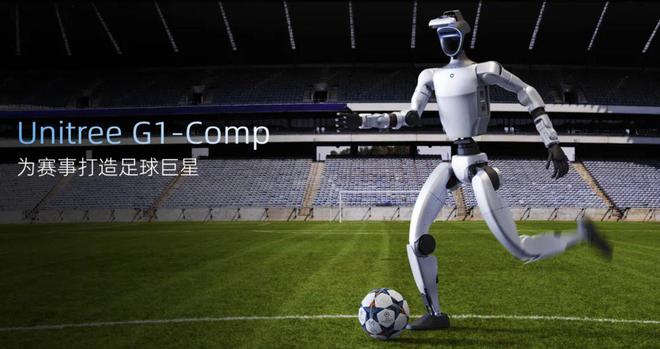
最“出圈”的「宇树科技」,公司及王兴兴正遭遇流量反噬!
Robot猎场备忘录· 2025-06-13 10:03
Core Viewpoint - The article discusses the rise and subsequent challenges faced by Yushu Technology, a leading humanoid robotics company in China, highlighting the impact of public perception and market dynamics on its growth and reputation [1][12][19]. Summary by Sections Company Overview - Yushu Technology gained significant attention after its humanoid robots performed at the Spring Festival Gala, leading to a surge in popularity and market interest [9][10]. - The company was initially celebrated as a potential leader in the humanoid robotics sector, likened to DJI in the drone industry [1]. Public Perception and Criticism - CEO Wang Xingxing's ambitious statements about the capabilities of humanoid robots sparked widespread ridicule, leading to a trust crisis for the company [2][12]. - Following a poorly received performance in a humanoid robot half-marathon, Yushu Technology faced backlash, with many questioning the practicality of its robots [12][15]. Market Dynamics - The company has seen fluctuations in its stock and market interest, with a notable rise in valuation and attention from investors following its initial success [10][22]. - Despite the initial hype, the company is now experiencing a "flow backlash," as the reality of its robots' capabilities does not meet public expectations set by promotional videos [12][19]. Financial Performance - Yushu Technology has maintained profitability, with projected revenues of approximately 2 billion yuan in 2023 and 4 billion yuan in 2024, alongside net profits ranging from 10 million to 70 million yuan [19][20]. - The company has secured numerous project bids, indicating a strong market presence despite recent challenges [20]. Competitive Landscape - Other humanoid robotics companies, such as Songyan Power, have emerged as competitors, capitalizing on Yushu Technology's missteps to gain market share and investor interest [15][17]. - The article highlights a trend where companies focusing on performance and spectacle are gaining traction, but questions the sustainability of such a strategy in the long term [12][19]. Future Outlook - The industry is at a crossroads, with companies needing to balance technological advancements with practical applications to ensure long-term viability [21][22]. - The article suggests that while the humanoid robotics sector has significant potential, the path to commercialization remains fraught with challenges, particularly in achieving meaningful technological breakthroughs [22][23].
那个没敢投人形机器人的投资人,后悔了吗?
Tai Mei Ti A P P· 2025-06-09 11:06
Core Insights - The investment landscape for humanoid robots has shifted dramatically from initial hesitation to a growing consensus among investors to avoid projects focused solely on the physical body of robots [1][2][3] - The year 2024 has seen over 50 financing rounds for humanoid robot companies in China, with total funding exceeding 50 billion RMB, indicating a significant interest in the sector [3][5] - Investors are increasingly focusing on the underlying technology and commercial viability of humanoid robots, rather than just the physical aspects, leading to a diversification in investment strategies [6][8] Investment Trends - The trend has evolved from embracing humanoid robots to recognizing their high valuations, leading to a consensus that projects focused solely on the physical body are less attractive [3][5] - In the first quarter of 2025, over 30 financing events were recorded, totaling more than 40 billion RMB, with a significant portion of investments exceeding 1 billion RMB [5] - Investors are now looking at more nuanced aspects of the industry, such as the algorithms and upstream components, rather than just the humanoid robots themselves [6][8] Market Dynamics - The market for core components of humanoid robots is projected to exceed 500 billion RMB by 2030, highlighting the potential for significant financial returns in this area [5][6] - The investment approach is reminiscent of the early days of the electric vehicle industry, where initial focus on complete vehicles shifted towards components and systems [6][8] - Companies are increasingly tying their products to specific applications and scenarios, which is seen as a more pragmatic approach to commercialization [10][11] Future Outlook - The concept of "body+" is emerging, emphasizing the importance of technological breakthroughs alongside the physical robot, which is crucial for attracting investment [8][9] - Investors are prioritizing companies that demonstrate practical commercial applications and have established partnerships with larger enterprises [10][11] - The overall sentiment among investors is one of cautious optimism, balancing the potential for innovation with the risks associated with high-tech investments [11]
人形机器人融资热潮涌现 今年国内59起投资事件规模达数十亿元
Sou Hu Cai Jing· 2025-06-05 23:11
Group 1 - The humanoid robot industry is experiencing a surge in investment activity, with 59 investment events reported in China this year, totaling several billion yuan [1][3] - Companies such as Juyuan Technology and Luming Robotics have recently completed significant funding rounds, indicating strong investor interest in humanoid robots [3] - The overall investment in the global robotics sector has exceeded 30 billion yuan since 2025, with China's robotics industry accounting for over 82% of global investment activity [3] Group 2 - The commercialization of humanoid robots is accelerating, with companies like Qingbao Engine Robotics signing contracts worth over 50 million yuan and planning applications in various sectors [4] - The year 2025 is projected to be a pivotal year for the mass commercialization of humanoid robots, with expectations for widespread deployment in smart factories and family companionship roles [4] - Despite advancements, the humanoid robot industry faces challenges related to technology and cost, with significant portions of production costs attributed to core components [4][5] Group 3 - The technology framework for China's humanoid robot industry has developed a complete structure, but limitations in training data and hardware still restrict practical applications [5] - Companies need to focus on innovation in key technologies and cost optimization of critical components to facilitate the large-scale commercialization of humanoid robots [5]

人形机器人领域投融资活跃 助推商业化提速
Zheng Quan Ri Bao· 2025-06-05 16:42
Group 1: Industry Overview - The humanoid robot industry is experiencing a historic turning point, with significant growth in financing driven by breakthroughs in AI large model technology and favorable policies [1][2] - As of June 5, 2023, there have been 59 investment events in the humanoid robot sector in China this year, amounting to several billion yuan [1] - The global investment in robotics has exceeded 200 billion yuan since 2025, with China's investment activity accounting for over 82% of the total [2] Group 2: Company Developments - Beijing Accelerated Evolution Technology Co., Ltd. has completed its Series A financing, which will be used for product iteration and large-scale production [2] - Sichuan Embodied Humanoid Robot Technology Co., Ltd. announced the completion of several million yuan in angel round financing and plans to release a robot with an emotional cognition system by the end of the year [2] - Lu Ming Robot Technology (Shenzhen) Co., Ltd. has completed three rounds of financing within six months, with notable investors including Inno Angel Fund and Fosun Ruijing [2] Group 3: Market Trends - The humanoid robot commercialization process is beginning, with significant orders reported by various companies, indicating a shift towards practical applications in sectors like education and tourism [3] - 2025 is anticipated to be a pivotal year for the mass commercialization of humanoid robots, with expectations for widespread deployment in smart factories and emotional companionship robots [3][4] - The number of robot-related enterprises in China has surpassed 900,000, with a 44% increase in new companies compared to the same period in 2024 [3] Group 4: Challenges and Innovations - Despite the optimistic outlook, the humanoid robot industry faces challenges related to technology and cost, with current systems having limitations in decision-making, motion control, and execution [4][5] - The cost structure of humanoid robots remains high, with components like the actuator joint module accounting for a significant portion of the overall cost [5] - Companies are focusing on innovation and collaboration within the core supply chain to overcome these challenges, with notable advancements in key components such as harmonic reducers and 3D vision sensors [6]

天工2.0视频更新,小米向月之暗面转让多个kimi商标
Mei Ri Jing Ji Xin Wen· 2025-06-04 01:10
Market Overview - On June 3, 2025, the Sci-Tech Innovation Artificial Intelligence ETF (Hua Xia, 589010) rose by 0.81%, with leading stocks such as Lanke Technology increasing by 5.77%, Lexin Technology by 4.81%, and Fudan Microelectronics by 4.41% [1] - The Robotics ETF (562500) remained unchanged, with leading stocks including iFlytek (002230) up by 4.02%, while Yingfeng Environment (000967) fell by 2.33% [1] - The trading volume for the day was 384 million yuan, making it the top ETF in terms of trading activity, with a turnover rate of 3% [1] Key Developments - On June 3, Xiaomi's founder Lei Jun revealed at the Xiaomi Investor Conference that the company has been investing in robotics for five years, with current trials of related capabilities in automotive factories [2] - The Beijing Humanoid Robot Innovation Center released a video showcasing the "Tiangong 2.0" humanoid robot's performance in various real-world environments, highlighting its long battery life and applications in commercial services, industrial tasks, logistics, and home use [2] - Recent intellectual property information indicates that Xiaomi Technology has transferred several "kimi" trademarks to Beijing Moonlight Technology Co., Ltd., with these trademarks originally applied for in 2013 and currently mostly registered [2] Industry Insights - Open Source Securities believes that the commercialization of humanoid robots has officially begun, with a surge in orders pushing the industry to expand production capacity, making delivery capabilities crucial for companies competing for orders [3] - The entry of robots into real-world scenarios is accelerating the evolution of intelligence, with high-frequency usage allowing robots to continuously collect real-world data, aiding in algorithm optimization and operational capability enhancement, particularly in unstructured environments [3] ETF Highlights - The Robotics ETF (562500) is the only fund in the market with a scale exceeding 10 billion yuan, offering the best liquidity and comprehensive coverage of the Chinese robotics industry chain, facilitating investors' access to the sector [4] - The Sci-Tech Innovation Artificial Intelligence ETF (Hua Xia, 589010) serves as the "brain" of robotics, with a 20% fluctuation range and the potential to capture "singularity moments" in the AI industry [4]
行业周报:人形机器人订单潮来袭,商业化拉开序幕-20250602
KAIYUAN SECURITIES· 2025-06-02 05:08
Investment Rating - The industry investment rating is "Overweight" [6] Core Viewpoints - The humanoid robot market is experiencing a surge in orders, marking the beginning of commercialization, with significant demand reported from various companies [2][11] - The year 2025 is seen as the inaugural year for humanoid robot mass production, with a focus on key technologies that hold competitive advantages [42] - Major tech giants, led by Tesla, are accelerating the deployment of humanoid robots, with companies like Huawei, Xiaomi, and Apple making significant advancements in their AI and robotics capabilities [3][24][38] Summary by Sections Humanoid Robot Order Surge - Companies like Yushu Technology and Songyan Power have reported substantial order volumes, with Yushu's projects nearing the total for 2024 within the first five months of 2025 [2][13] - Songyan Power's N2 robot orders have surpassed 2000 units, while Leju Robotics has seen a 200% year-on-year increase in orders for Q1 2025 [2][15] - The primary application areas for humanoid robots include factory production and research education, with expansion into sectors like telecommunications and power [19][22] Global Tech Giants Accelerating Industry Deployment - Tesla has established a comprehensive AI system that integrates models, data, algorithms, and computing power, leading the humanoid robot sector [3][23] - Huawei is developing a robust AI ecosystem, collaborating with companies like UBTECH to enhance humanoid robot capabilities [24][26] - Xiaomi and XPeng are leveraging their automotive technology to enter the humanoid robot market, with plans for significant production in the coming years [32][34] Focus on Key Technologies - The report emphasizes the importance of common key technologies such as operating systems, actuators, motors, reducers, lead screws, and sensors for the humanoid robot industry [42] - Companies like Dongtu Technology and Zhenyu Technology are highlighted as beneficiaries in the operating system and assembly sectors, respectively [44] Beneficiary Stocks - Recommended stocks include Dongtu Technology for operating systems, Zhenyu Technology for assemblies, and various companies for lead screws, reducers, motors, sensors, and equipment [44]


