
基因编辑

Search documents
未来10年再造一个中国高技术产业,生物制造重磅入选“十五五规划”未来产业【附合成生物学行业市场分析】
Qian Zhan Wang· 2025-10-29 07:47
Core Insights - The Chinese government has officially recognized biomanufacturing as one of the seven key future industries, alongside quantum technology and hydrogen energy, aiming to establish a high-tech industrial framework [2] - Biomanufacturing is positioned as a critical driver for industrial upgrading and high-quality economic development in China, comparable in importance to semiconductor manufacturing [2] Biomanufacturing Overview - Biomanufacturing utilizes industrial biotechnology to transform living cells into production facilities, converting renewable raw materials into high-value products such as pharmaceuticals, vaccines, biodegradable plastics, and synthetic fuels [2] Gene Editing Industry Analysis - Gene editing is a core technology supporting biomanufacturing, with applications in agriculture and disease treatment [3][4] - In agriculture, gene editing has been successfully applied to develop high-yield, disease-resistant crop varieties and improve livestock breeds [4] - In the medical field, gene editing shows potential in treating genetic diseases and cancers, providing new therapeutic options [4] Synthetic Biology Industry Analysis - Synthetic biology acts as an accelerator for biomanufacturing, impacting various sectors including energy, materials, and pharmaceuticals [8] - It is projected that 35% of petrochemical and coal chemical products could be replaced by biomanufactured products in the next decade, leading to significant economic implications [8] - The global market for synthetic biology in China was approximately $937 million in 2022, with expectations for rapid growth [11] Future Impact and Market Potential - Biomanufacturing is expected to revolutionize manufacturing processes, agricultural practices, and natural product sourcing [13] - By the end of the century, biomanufacturing could account for one-third of global manufacturing output, creating a market valued at $30 trillion [14]


明星基因疗法公司股价一夜暴跌40%,相关药物临床被暂停
Di Yi Cai Jing· 2025-10-28 08:29
Core Insights - Intellia Therapeutics' stock plummeted over 40% following the suspension of two late-stage clinical trials due to a serious liver injury in a trial participant [1] - The suspended trials involve the company's lead product, a gene therapy for ATTR-CM, a rare and fatal heart disease [1][2] - ATTR-CM is projected to be a multi-billion dollar market, with an estimated 200,000 to 300,000 patients globally, many of whom remain undiagnosed [2] Company Overview - Intellia Therapeutics focuses on drug development using CRISPR gene editing technology to treat genetic diseases [1] - The halted clinical trial involved the drug nexiguran ziclumeran (nex-z), which aims to "turn off" the gene responsible for producing transthyretin protein [1][3] - The company is facing significant risks as safety issues in clinical trials are not uncommon, and repeated incidents could jeopardize the drug pipeline [2] Competitive Landscape - Following Intellia's announcement, competitor BridgeBio Pharma's stock rose over 17%, indicating market reaction to the news [2] - Other companies, including Alnylam Pharmaceuticals and Pfizer, have already received approval for treatments targeting ATTR-CM, utilizing different technological approaches to inhibit abnormal transthyretin production [2] Market Potential - The ATTR-CM market is valued in the billions, with significant unmet medical needs due to the number of undiagnosed patients [2] - In China, genetic therapies for ATTR-CM are also in clinical trials, with the first domestic gene editing drug YOLT-201 having completed its initial patient dosing [2]
巴西大豆进口价创新高!农牧渔ETF(159275)微涨0.1%!机构:禽流感高发叠加引种受限或催化养殖链机会
Xin Lang Ji Jin· 2025-10-27 02:05
Group 1 - The agricultural and fishery ETF (159275) showed stable performance with a 0.1% increase in price and a transaction volume of 1.9989 million yuan, bringing the fund's total size to 208 million yuan [1] - Key performing stocks included Zhongxing Junye, Xiaoming Co., and Biological Co., with increases of 4.76%, 4.1%, and 3.16% respectively, while Chenguang Biological, Shennong Seed Industry, and Zhangzidao experienced declines of 2.78%, 1.32%, and 1.27% [1] - Brazil's soybean import prices reached a historic high in mid-October, leading nearly 100 domestic grain and oil companies to suspend purchases of soybeans for December and January, affecting approximately 8 million tons [1] Group 2 - The pig farming industry is experiencing increased supply and rising prices due to higher demand for fat pigs, but continued losses in farming may accelerate capacity reduction [2] - The poultry farming sector faces uncertainty in breeding stock imports due to frequent outbreaks of avian influenza overseas, which may benefit the white feather chicken industry chain prices [2] - The animal health industry is expected to see a recovery in demand, with new product launches providing growth momentum, while the pet market continues to grow rapidly domestically [2]
Cibus (NasdaqCM:CBUS) Conference Transcript
2025-10-21 23:02
Cibus Conference Call Summary Company Overview - **Company Name**: Cibus (NasdaqCM: CBUS) - **Industry**: Gene editing in agriculture - **Location**: San Diego, California - **Management Team**: Co-founders Peter Beetham and Greg Gocal, along with key personnel including Noel Sauer (Tech Development) and Carlo Broos (CFO) [2][3] Core Business Focus - **Mission**: To unlock the power of nature through gene editing, enhancing agricultural productivity traits [2][4] - **Core Platforms**: Focus on canola, rice, and soybean for gene editing [5] - **Business Model**: Licensing traits for royalties, collecting fees per acre annually as seeds are sold [6][19] Product Development and Market Strategy - **Productivity Traits**: Development of herbicide-tolerant and disease-resistant crops to improve yield and reduce costs for farmers [6][10] - **Commercialization Timeline**: Traits expected to launch in Latin America by 2027, with a focus on rapid development cycles of 12 to 15 months [8][23] - **Market Potential**: Estimated annual royalties from rice traits could exceed $200 million, with a target of accessing 10% of the global rice market [13][14] Regulatory Environment - **Gene Editing vs. GMO**: Emphasis on the distinction between gene editing (faster, scalable, and favorable regulatory framework) and traditional GMO methods [15][20] - **Global Regulatory Changes**: Positive developments in Europe regarding gene editing regulations, potentially opening significant markets [22] Financial Projections - **Royalty Estimates**: Potential for over $300 million in annual royalties from canola traits, with comparisons to historical data from major players like Monsanto [19][20] - **Market Size**: Rice is the second-largest crop globally, with significant acreage available for gene-edited traits [13] Additional Insights - **Sustainable Ingredients**: Development of bio-based fermentation products and gene-edited oils as part of the broader business strategy [11][24] - **Stakeholder Education**: Ongoing efforts to educate stakeholders about the benefits of gene editing and its similarities to traditional plant breeding [26][27] - **Labeling Concerns**: Discussion on the implications of labeling gene-edited products versus traditional GMO products [28] Conclusion - Cibus is positioned to capitalize on the growing demand for sustainable agricultural solutions through innovative gene editing technologies, with a clear strategy for commercialization and regulatory navigation [24][23]
「e公司观察」种业掀起增资潮 “耐心资本”瞄准产业机会
Zheng Quan Shi Bao Wang· 2025-10-21 14:36
Core Insights - The recent capital increase and expansion activities by leading seed companies such as Suqian Agricultural Development, Guotou Fengle, Longping High-Tech, and Wens Foodstuff reflect a significant trend in the seed industry, driven by national seed industry revitalization strategies and the influx of long-term capital [1][2][4] - The capital influx is expected to accelerate technological development and support the goal of achieving self-sufficiency in seed sources, thereby fostering industry growth [1][4] Company Summaries - Suqian Agricultural Development plans to raise 1 billion yuan through capital reduction and expansion, aiming to leverage strategic investors to advance its seed industry strategy [1] - Guotou Fengle is set to issue up to 184 million shares at 5.91 yuan each, raising no more than 1.089 billion yuan to strengthen its capital base and focus on seed technology [1][2] - Longping High-Tech has been actively raising capital, with its subsidiary Lianchuang Seed Industry planning to raise 800 million yuan, following a previous 1.2 billion yuan increase from CITIC Agriculture [2][3] - Wens Foodstuff's former subsidiary, Zhongxin Seed Industry, raised approximately 2.33257 billion yuan through cash and equity investments, with a post-investment valuation of 10.057 billion yuan [2] Industry Trends - The seed industry is likened to the "chip" of agriculture, with its development directly impacting national food security, and the current capital influx aligns with both policy direction and market demand [2][4] - The urgency for technological iteration, particularly in gene editing and smart breeding, is a key driver for the current wave of capital increases, as high investment and long development cycles necessitate sustained capital support [3] - The capital structure optimization through these increases allows companies to focus on long-term research and development while enhancing governance and decision-making efficiency [3] Market Implications - The capital influx is facilitating domestic companies to expand internationally, with Longping High-Tech leveraging its capital strength to integrate the rice seed market and further develop corn and vegetable seed sectors, as well as exploring overseas markets [3]


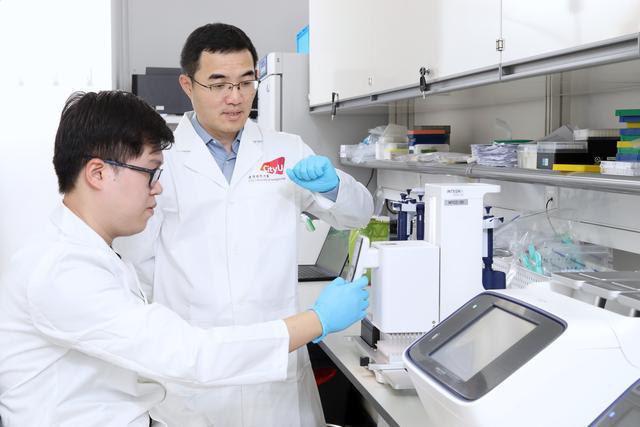
港城大郑宗立:推动“DNA手术”向更安全、更高效方向发展
Huan Qiu Wang Zi Xun· 2025-10-17 02:41
Core Insights - The project led by Zheng Zongli, focusing on in vivo somatic human genome editing for treating genetic diseases, has received significant support from the Hong Kong government under the "Industry-Academia-Research 1+ Plan" [1][4] - The emergence of CRISPR gene editing technology presents a transformative opportunity in medicine, with the FDA's approval of Casgevy, the first CRISPR therapy, highlighting its potential [1][4] Research and Development Environment - Zheng Zongli joined City University of Hong Kong (CityU) in 2015, attracted by the university's commitment to biomedical research and its supportive environment for innovation [3] - The establishment of the Liu Mingwei Regenerative Medicine Research Center by Karolinska Institute in Hong Kong has provided additional resources and collaboration opportunities for Zheng's research [4] Technological Advancements - The "DNA surgery" technique aims to directly repair disease-causing genes, offering a potential alternative to long-term medication [5][6] - Zheng's team has developed a protein-based "gene surgical knife" that acts quickly and degrades rapidly, minimizing off-target effects, which is a significant challenge in gene editing [6] Clinical Applications and Challenges - The innovative use of "viral-like particles" as delivery vehicles for the gene editing components enhances the efficiency of cellular entry while addressing safety concerns [6] - Current challenges include improving gene insertion efficiency and targeting difficult tissues, with aspirations to expand applications to cancer treatment [6][8] Industry Collaboration and Impact - The dual role of researchers as academics and entrepreneurs fosters a synergistic environment for translating scientific discoveries into clinical applications [7] - The growth of the life and health industry in the Guangdong-Hong Kong-Macao Greater Bay Area presents unprecedented opportunities for advancing biomedical innovations [8]
Precision BioSciences (DTIL) Moves 11.1% Higher: Will This Strength Last?
ZACKS· 2025-10-16 13:06
Core Insights - Precision BioSciences (DTIL) shares increased by 11.1% to close at $6.5, with a notable trading volume, reflecting a 25.3% gain over the past four weeks [1][2] Company Overview - The rise in stock price is linked to positive investor sentiment regarding Precision BioSciences' clinical-stage pipeline, particularly the in vivo gene editing therapy PBGENE-HBV aimed at curing chronic hepatitis B [2] - The company has a fully owned pipeline that includes several gene therapy programs in preclinical evaluation and a partnered candidate, ECUR-506, in a first-in-human phase I/II study for treating neonatal onset ornithine transcarbamylase deficiency [2] Financial Performance - Precision BioSciences is expected to report a quarterly loss of $0.31 per share, reflecting a year-over-year change of +89.1%, with revenues projected at $11.1 million, an increase of 1813.8% from the previous year [3] - The consensus EPS estimate for the upcoming quarter has remained unchanged over the last 30 days, indicating that stock price movements may not sustain without trends in earnings estimate revisions [4] Industry Context - Precision BioSciences is part of the Zacks Medical - Biomedical and Genetics industry, where another company, CervoMed Inc. (CRVO), experienced a 1.5% decline in its stock price [4] - CervoMed Inc. has a consensus EPS estimate of -$0.68, representing a year-over-year change of -23.6%, and currently holds a Zacks Rank of 4 (Sell) [5]


一文简览之基因编辑
青侨阳光投资交流· 2025-10-15 08:19
Core Viewpoint - The article emphasizes the significance of gene editing technology as a revolutionary approach to curing genetic diseases, highlighting its potential to provide permanent solutions by directly correcting DNA sequences, unlike traditional therapies that only manage symptoms [3][4][5]. Group 1: Gene Editing Technology Overview - Gene editing is categorized into three generations: ZFN, TALEN, and CRISPR/Cas, with CRISPR/Cas representing a significant leap in efficiency and effectiveness [16][15]. - The CRISPR/Cas system utilizes RNA for target recognition, which simplifies the design and delivery process compared to previous methods [12][13]. - The article discusses the challenges of gene editing, particularly in identifying target sequences within vast genomic data, which has historically limited the technology's development [8][9]. Group 2: Current Market Landscape - The focus of investment in the biotech sector is shifting towards companies that leverage disruptive gene editing technologies, particularly those with proven products at the forefront of the market [5][18]. - Companies like CRISPR Therapeutics and Intellia are highlighted for their advancements in gene editing therapies, with CRISPR's products showing promising early commercial success [20][21]. - The article notes that the delivery of gene editing tools, especially to liver cells, has become more refined, with LNP (lipid nanoparticles) being a key method for effective delivery [21][23]. Group 3: Future Directions and Innovations - The emergence of base editing (BE) and prime editing (PE) technologies represents the next frontier in gene editing, offering more precise editing capabilities with reduced risks of off-target effects [31][36]. - Prime editing, in particular, is noted for its ability to perform complex edits without causing double-strand breaks, thus minimizing unintended genetic alterations [41][42]. - The article concludes with a forward-looking perspective on the potential for gene editing technologies to transform the biopharmaceutical industry, driven by ongoing innovations and the quest for effective treatments [45][46].

同济大学最新Science论文:cGAS的这种突变,可延缓衰老、延长寿命
生物世界· 2025-10-10 04:05
Core Viewpoint - The research reveals that specific mutations in the cGAS protein of naked mole-rats enhance DNA repair mechanisms, potentially leading to extended lifespan and healthspan, suggesting a new strategy for aging intervention in humans [2][3][9]. Summary by Sections Research Findings - The study identifies four specific amino acid mutations in the cGAS protein of naked mole-rats that convert it from a DNA repair inhibitor to a repair enhancer, thereby promoting DNA repair and delaying aging [3][6]. - Compared to humans and mice, naked mole-rat cGAS improves the efficiency of homologous recombination repair, which is crucial for maintaining genomic stability [6][9]. Mechanism of Action - The mutations in cGAS alter its interaction with ubiquitin, extending its retention time on chromatin after DNA damage, which enhances the formation of complexes necessary for DNA repair [6][9]. - The study demonstrates that the naked mole-rat cGAS mitigates stress-induced cellular aging and organ degeneration, contributing to increased lifespan [6][9]. Experimental Validation - Delivery of naked mole-rat cGAS to aged mice using adeno-associated virus (AAV) alleviated signs of frailty, reduced inflammation markers, and decreased cellular aging indicators, thereby extending healthspan [7][9]. Implications for Human Aging - The findings suggest that mimicking the unique mutations of naked mole-rat cGAS through small molecules or gene editing could offer new avenues for delaying aging and enhancing healthspan in humans [3][9].

研判2025!中国镰状细胞病治疗行业产业链、市场规模及重点企业分析:行业迈入基因编辑驱动根治时代,治疗迎来技术突破窗口期[图]
Chan Ye Xin Xi Wang· 2025-10-10 01:27
Core Insights - The Chinese sickle cell disease treatment industry is transitioning from symptomatic treatment to curative treatment, driven by breakthroughs in gene editing technology [1][11] - The market size for sickle cell disease treatment in China is projected to reach approximately 4.287 billion yuan in 2024, representing a year-on-year growth of 66.03% [1][11] Industry Overview - Sickle cell disease is an autosomal recessive genetic disorder caused by mutations in the beta-globin gene, leading to abnormal hemoglobin (HbS) that causes red blood cells to deform into a sickle shape, resulting in hemolysis, vascular occlusion, and multi-organ ischemic damage [2][6] - Current treatment methods include medication, blood transfusions, hematopoietic stem cell transplantation, and gene therapy, with the goal of alleviating symptoms, preventing complications, and improving quality of life [4][11] Industry Development History - The early exploration phase from the 1950s to the 1980s focused on symptom management through blood type screening and family history investigations in high-prevalence areas [6][7] - The standard treatment phase from the 1990s to the 2010s saw the introduction of hydroxyurea and regular blood transfusions, although long-term transfusions led to iron overload [7][11] - The breakthrough phase from the 2010s to present has seen advancements in gene therapy, with significant clinical trials and the approval of therapies like CASGEVY by the FDA [7][11] Industry Value Chain - The upstream of the sickle cell disease treatment industry includes raw materials such as cells, growth factors, and gene editing tools like CRISPR-Cas9 [9][10] - The midstream focuses on research and production of sickle cell disease treatments, while the downstream primarily serves patients suffering from the disease [9][10] Market Size - The sickle cell disease treatment market in China is experiencing significant growth, with a projected market size of approximately 4.287 billion yuan in 2024, reflecting a 66.03% increase from the previous year [1][11] Key Companies' Performance - The industry is characterized by a "technology-driven" competitive landscape, with companies like Zhengxu Bio leading in gene therapy innovations [12][13] - Traditional pharmaceutical companies such as Heng Rui Medicine and Shijiazhuang Pharmaceutical Group leverage their production capabilities and insurance coverage to maintain a strong presence in the basic treatment market [12][13] Industry Development Trends 1. Continuous technological innovation is driving a paradigm shift in treatment approaches, with gene editing tools enabling targeted repair of the beta-globin gene [14] 2. Policy and market developments are fostering industry expansion, with the government prioritizing gene editing in its biopharmaceutical strategy [15] 3. Deepening global collaborations are enhancing the industry ecosystem, with partnerships between multinational and local companies accelerating the localization of gene therapies [16][17]


