
叶酸

Search documents
市场拉开涨价序幕,维生素与抗生素一马当先
摩尔投研精选· 2026-03-31 10:08
Group 1 - The core reason for the strengthening of the US dollar since March is the relatively smaller impact on the US economy amid the Middle East conflict, leading to a return of funds to dollar assets, but this is not indicative of a liquidity crisis [1] - The narrative of a "weak dollar" has ended, reversing the previous trend of funds flowing from dollar assets to physical and other financial assets due to the US-Iran conflict [1] - Recent trends indicate that the strength of the US dollar may be nearing its end, with a potential confirmation of price bottoms for physical and non-US assets [1] Group 2 - Since late February, the vitamin market in Europe and domestically has experienced significant price volatility due to escalating Middle East conflicts and energy cost pressures, with Vitamin A prices increasing by nearly 82% and Vitamin E by over 75% [2] - The pharmaceutical team at Zhongyou Securities notes that the market space for related products may see effective recovery due to the combination of reversed supply-demand dynamics and geopolitical catalysts [2] - The raw material drug sector is currently driven by a dual momentum of "fundamental turning point + price increase expectations," with limited new capital expenditure in the past three years and a significant recovery potential for specific products like sartans and statins [3]


维生素专家交流
2026-03-13 04:46
Summary of the Conference Call on Vitamin Industry Industry Overview - The calcium pantothenate industry is experiencing severe overcapacity, with global production capacity at 50,000-60,000 tons compared to a demand of 23,000-25,000 tons. Major producers Newfa and Yifan have a combined capacity of 22,000 tons, sufficient to meet global demand [2][3] - The supply chain is heavily concentrated in China, with over 80% of global capacity located there [3] Key Points on Pricing and Market Dynamics - Calcium pantothenate prices fell to a historical low of 35 CNY/kg, driven by a 50% increase in raw material costs due to geopolitical tensions. Manufacturers have stopped quoting prices, leading to speculation of a price rebound [2][4][5] - The price recovery ceiling is estimated at 100 CNY/kg, constrained by the weak financial state of the downstream livestock industry, which is currently facing significant losses [2][4][7] - The recovery threshold for second and third-tier manufacturers to resume production is projected to be between 65-70 CNY/kg, as many small producers are currently unprofitable [2][7] Supply and Demand Insights - The global demand for calcium pantothenate is expected to reach approximately 23,000 tons by 2025, with major foreign producers like BASF and DSM contributing around 4,000-5,000 tons [3] - The top domestic producers, Newfa and Yifan, have capacities of 12,000 tons and 10,000 tons, respectively, with additional capacities under construction [3] Historical Context and Future Projections - Historical price surges have been linked to supply disruptions, such as safety incidents and environmental regulations. The current price increase is primarily driven by rising raw material costs and market speculation [6][10] - The market is currently in a state of negotiation between manufacturers and distributors, with a significant focus on the livestock industry's ability to absorb price increases [8][9][12] Other Vitamins Market Dynamics - Vitamin E and A are also under pressure, with Vitamin E's global capacity at 150,000 tons against a demand of 90,000 tons. The entry of new capacities from Wanhua Chemical is expected to impact the market significantly [2][14] - The price of Vitamin A has recently increased from 57 CNY/kg to over 75 CNY/kg due to supply constraints and market speculation [16] Conclusion - The calcium pantothenate market is characterized by overcapacity and fluctuating prices influenced by raw material costs and the financial health of the livestock sector. The interplay between supply and demand, along with geopolitical factors, will continue to shape the market dynamics in the near future [2][10][12]
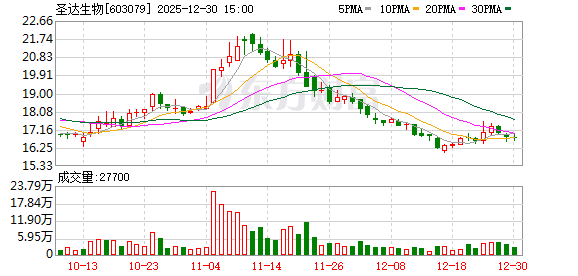
圣达生物:公司维生素产品包括生物素、叶酸等
Zheng Quan Ri Bao· 2025-12-30 12:07
Group 1 - The company, Shengda Bio, has a range of vitamin products including biotin and folic acid [2] - For raw material supply, the company primarily procures folic acid production materials through purchasing methods [2] - The company adopts a centralized procurement model for bulk raw materials to ensure high quality and stability of supply [2]

石油与化工指数涨跌互现(12月15日至19日)
Zhong Guo Hua Gong Bao· 2025-12-23 06:54
Group 1: Chemical Sector Performance - The chemical raw materials index increased by 1.62%, while the chemical machinery index decreased by 0.96%, the chemical pharmaceuticals index fell by 1.69%, and the pesticide and fertilizer index rose by 4.21% [1] - The top five rising petrochemical products included folic acid up by 20%, battery-grade lithium carbonate up by 11.08%, nitric acid up by 10.43%, sulfur up by 9.95%, and petroleum coke up by 7.23% [1] - The top five declining petrochemical products were liquid chlorine down by 34%, butadiene down by 7.69%, 2,4-D down by 6.09%, trichloroethylene down by 6.00%, and SBS down by 5.90% [1] Group 2: Oil Sector Performance - The oil processing index rose by 1.39%, while the oil extraction index fell by 0.22%, and the oil trading index increased by 3.44% [1] - International crude oil prices continued to decline, with West Texas Intermediate crude oil futures settling at $56.66 per barrel, down 1.36% from December 12, and Brent crude oil futures settling at $60.47 per barrel, down 1.06% from December 12 [1] Group 3: Capital Market Performance of Listed Chemical Companies - The top five rising listed chemical companies included Sulihua Co., Ltd. up by 30.69%, Xinri Hengli up by 27.48%, Reborn Technology up by 23.25%, Ruihua Tai up by 20.93%, and Shenjian Co., Ltd. up by 20.50% [2] - The top five declining listed chemical companies were Huarong Chemical down by 20.01%, Enjie Co., Ltd. down by 18.36%, Weike Technology down by 13.15%, Jinbantai down by 12.83%, and Xingye Co., Ltd. down by 12.63% [2]



Immunity:广州医科大学团队揭示铁代谢紊乱会损害新生儿抗病毒免疫并引发致命肝脏病变
生物世界· 2025-12-10 00:11
Core Insights - The article discusses the significant impact of rotavirus infections on neonates, particularly highlighting the severe symptoms and systemic infections that can arise, which are not effectively prevented by existing vaccines [2][5] - A recent study reveals that dysregulation of the hepcidin-iron axis plays a critical role in impairing antiviral immunity and causing liver damage in neonates infected with rotavirus, providing new therapeutic targets for related diseases such as biliary atresia [3][11] Summary by Sections Rotavirus and Its Impact - Rotavirus is a major cause of life-threatening gastroenteritis in children under five, leading to severe symptoms in neonates, including blood in stool and unstable vital signs, with current vaccination strategies offering no protection [2][5] - The prevalence of biliary atresia (BA) is noted, affecting 1 in every 5,000 to 18,000 newborns, with its etiology linked to infections, immune dysregulation, and genetic susceptibility [5] Research Findings - The study published in the journal Immunity identifies iron metabolism dysregulation as a key mechanism in rotavirus-related systemic infections in neonates, suggesting new treatment avenues [3][11] - Single-cell RNA sequencing revealed that iron dysregulation is a driving factor for liver damage in rotavirus infections, with elevated hepcidin levels inhibiting iron export and leading to cellular damage [6][9] Clinical Implications - An open-label clinical trial demonstrated that preoperative folic acid supplementation significantly reduced the incidence of cholangitis from 74% to 21% and liver transplantation rates from 41.1% to 11.1% in biliary atresia patients [8] - The study emphasizes the importance of targeting the hepcidin-iron signaling pathway to mitigate liver damage and improve outcomes in neonates with rotavirus infections [9][11]

石油与化工指数多数下跌(11月17日至21日)
Zhong Guo Hua Gong Bao· 2025-11-25 03:06
Group 1: Market Indices - The chemical sector indices experienced significant declines, with the chemical raw materials index down 8.61%, chemical machinery index down 7.11%, pharmaceutical index down 6.63%, and pesticide and fertilizer index down 5.94% [1] - In contrast, the oil sector indices showed mixed results, with the oil processing index up 1.4% and the oil extraction index up 0.67%, while the oil trade index fell by 4.96% [1] Group 2: Oil Prices - The sentiment in the crude oil market turned bearish due to the Trump administration urging Ukraine and Russia to reach a peace agreement, alongside a strengthening US dollar, leading to a decline in oil prices [1] - As of November 21, the settlement price for West Texas Intermediate (WTI) crude oil futures was $58.06 per barrel, down 3.38% from November 14, while Brent crude oil futures settled at $62.56 per barrel, down 2.84% [1] Group 3: Chemical Products - The top five rising petrochemical products included industrial-grade lithium carbonate up 13.67%, dimethyl carbonate up 12.32%, lithium battery electrolyte up 8%, sulfur up 7.54%, and folic acid up 6.25% [2] - Conversely, the top five declining petrochemical products were liquid chlorine down 6.25%, diethylene glycol down 5.35%, isooctyl acrylate down 5.13%, PVC by ethylene method down 3.49%, and tetrachloroethylene down 3.49% [2] Group 4: Stock Performance - In the capital market, the top five gaining listed chemical companies were Guofeng Plastics up 33.33%, Huarong Chemical up 27.82%, Tongyi Co. up 16.51%, Chenguang New Materials up 16.37%, and Tongcheng New Materials up 14.75% [2] - The top five declining listed chemical companies included Annada down 26.13%, Taihe Technology down 25.64%, Jiaao Enpro down 25.62%, Jianye Co. down 24.85%, and Sanfangxiang down 23.33% [2]
本周叶酸、六氟磷酸锂、浓硝酸价格涨幅居前:基础化工行业周报(20251110-20251116)-20251117
Huachuang Securities· 2025-11-17 13:15
Investment Rating - The report maintains a "Buy" recommendation for the basic chemical industry, highlighting price increases in key products such as folic acid, lithium hexafluorophosphate, and concentrated nitric acid [2]. Core Insights - The basic chemical industry is expected to see a turnaround, with the overall weighted operating rate at historical highs and price differentials at the bottom, indicating potential for recovery [15][18]. - The report suggests four investment strategies: prioritize early turnaround stocks, focus on scarce resource products, invest in growth-oriented companies, and target sectors with favorable supply-demand structures [15]. - The tire industry is showing signs of recovery, with major companies expected to return to high growth by 2026 due to easing tariffs and stabilizing raw material costs [16]. - The Ministry of Industry and Information Technology has introduced a growth plan for the petrochemical industry, aiming for an average annual growth of over 5% from 2025 to 2026 [17]. - The report emphasizes the importance of the fluorine, silicon, and phosphorus sectors, which are expected to have significant valuation elasticity and potential for new cycle star products [19]. Summary by Sections Investment Strategy - The Huachuang Chemical Industry Index is at 67.92, with a week-on-week increase of 1.66% and a year-on-year decrease of 21.52% [14]. - Key products with significant price increases include folic acid (+25.8%), lithium hexafluorophosphate (+22.2%), and concentrated nitric acid (+20.1%) [14]. Price and Price Differential Changes - The report notes that the industry price percentile is at 15.54% over the past decade, indicating a relatively low price level [14]. - The industry inventory percentile is at 87.36%, suggesting a high level of inventory compared to historical data [14]. Tracking Basic Chemical Sub-sectors - The report tracks various sub-sectors, including tire, agricultural chemicals, phosphorus chemicals, coal chemicals, and chlor-alkali, providing insights into their performance and market conditions [7]. - The tire industry is highlighted for its recovery potential, with nine out of eleven listed companies reporting profit growth in Q3 [16]. - The phosphorus chemical sector is noted for favorable policy developments and potential market changes [7][19]. Trading Data - The report includes trading data and performance metrics for various chemical products, indicating trends in supply and demand dynamics [7].




化工有色起飞,周期怎么看?
2025-11-16 15:36
Summary of Key Points from Conference Call Records Industry Overview Chemical Industry - The CCPI price index for the chemical industry increased slightly to 3,868 points, up 1% from the previous week, indicating a stabilization in prices [7][8] - Fixed asset investment growth in the chemical raw materials and products sector decreased to -7.9% in October, down from -5.6% previously, signaling a slowdown in investment [7][8] - Improvement in liquidity and anti-dumping policies are seen as catalysts for a potential recovery in the chemical sector in Q4 2025, with a focus on chemical fiber, nickel-chromium, agricultural chemicals, and lithium battery materials [8] Oil Shipping Industry - Oil shipping rates reached a five-year high of $126,000, driven by OPEC production cuts and increased demand, with supply tightness expected in 2025 [3][4] - The U.S. sanctions on Russian and Iranian fleets have further tightened compliant shipping capacity [3] - Recommendations include招商轮船 (Zhongshan Shipping) and 海南港股 (Hainan Port Stocks) due to favorable market conditions [4] Express Delivery Industry - During the Double Eleven shopping festival, 极兔速递 (Jitu Express) reported a global average daily package volume of 94.59 million, a 15% year-on-year increase, with significant growth in Southeast Asia and new markets [5] - The average daily package volume in Brazil exceeded 1 million, confirming the company's expansion potential in new markets [5] - The overall growth rate of express delivery volume slowed to less than 10% due to price increases, particularly in Guangdong where prices rose by approximately 0.5 yuan [6] Lithium Battery Materials - The price of lithium hexafluorophosphate surged from 50,000 yuan to 135,000 yuan per ton, reflecting strong market demand [9][10] - The price of additives like vinyl carbonate (VC) increased significantly due to supply disruptions, with VC prices rising from 77,000 yuan to 115,000 yuan [9][10] - Recommendations include 新宙邦 (New Zobon) and关注莲花科技 (Lianhua Technology) for their strong positions in the lithium battery supply chain [10] Organic Silicon Industry - The organic silicon industry has seen a price increase for DMC to 13,000 yuan, driven by a consensus to reduce production by 30% [11] - No new production capacity is expected from 2025 to 2026, while demand is projected to grow by 8-10%, indicating a potential supply-demand improvement by 2026 [11] Vitamin Market - The vitamin market is showing signs of seasonal demand, with prices for vitamin E and A recovering due to low inventory levels [12][13] - Recommendations include focusing on leading companies like 新和成 (New Hecheng) and 花园生物 (Garden Bio) for investment opportunities [13] Metal Sector - The metal sector has performed strongly, with expectations for continued interest in aluminum and energy metals [14] - Recommendations include 盛新锂能 (Shengxin Lithium) and 雅化集团 (Yahua Group) as key players in the market [14] Coal Industry - The coal sector is experiencing price fluctuations, with port coal prices rising but at a slower rate [15][16] - Anticipated increases in demand due to colder weather could drive prices higher, presenting a good investment opportunity in coal stocks [16] Conclusion - The conference call highlighted various sectors with distinct trends and investment opportunities, particularly in the chemical, oil shipping, express delivery, lithium battery materials, organic silicon, vitamin, metal, and coal industries. Each sector presents unique dynamics influenced by market conditions, regulatory changes, and consumer demand.
市面上有五万多种膳食补充剂,哪四种确实有效?
Di Yi Cai Jing· 2025-11-16 03:00
Core Viewpoint - The alternative medicine industry in the U.S. is a $34 billion market, gaining mainstream acceptance despite concerns about its efficacy and potential for exploitation [1][2]. Industry Overview - Alternative medicine includes practices like acupuncture, chiropractic care, and herbal supplements, with 42% of hospitals offering some form of alternative therapy due to patient demand [1][2]. - The National Center for Complementary and Integrative Health (NCCIH) has spent approximately $1.6 billion on research into alternative therapies since its establishment in 1999, often finding that many popular treatments lack scientific support [4][5]. Efficacy of Popular Treatments - Studies funded by NCCIH have shown that several widely used alternative treatments, such as ginkgo biloba for memory enhancement and St. John's wort for depression, do not outperform placebos [7][8]. - Research on garlic for cholesterol management and saw palmetto for prostate enlargement also revealed no significant benefits compared to placebo treatments [9][10][11]. Regulatory Environment - The Dietary Supplement Health and Education Act allows dietary supplements to be sold without prior FDA approval, leading to a lack of regulation and potential misinformation about their effectiveness [3]. - The NCCIH may conduct post-market evaluations, but ineffective products are not recalled or relabeled, leaving consumers unaware of misleading claims [3]. Conclusion - The distinction between effective and ineffective treatments is crucial, as only those proven effective through rigorous testing should be considered valuable [16].

石油与化工指数多数上涨
Zhong Guo Hua Gong Bao· 2025-11-11 02:39
Group 1: Chemical Industry Performance - The chemical raw materials index increased by 3.79%, and the chemical machinery index rose by 8.33% last week, while the chemical pharmaceuticals index decreased by 2.91% [1] - The pesticide and fertilizer index saw an increase of 4.32% [1] - In the oil sector, the oil processing index rose by 3.72%, the oil extraction index increased by 5.63%, and the oil trading index went up by 4.41% [1] Group 2: Oil Price Trends - International crude oil prices experienced slight fluctuations downward, with West Texas Intermediate crude oil futures settling at $59.75 per barrel, down 2.02% from October 31 [1] - Brent crude oil futures settled at $63.63 per barrel, down 2.21% from October 31 [1] Group 3: Chemical Product Price Changes - The top five chemical products with the highest price increases included folic acid up 20%, nitric acid up 10.43%, sulfur up 9.95%, industrial-grade lithium carbonate up 9.51%, and petroleum coke up 7.23% [1] - The top five chemical products with the largest price decreases included liquid chlorine down 34%, butadiene down 7.69%, trichloroethylene down 6%, styrene-butadiene-styrene copolymer (SBS) down 5.9%, and carbon black down 5.53% [1] Group 4: Capital Market Performance of Chemical Companies - The top five chemical companies in the capital market with the highest stock price increases were Qing Shui Yuan up 47.78%, Zhenhua Co. up 37.19%, Fuluo Technology up 33.38%, Unified Co. up 32.93%, and Zhuoyue New Energy up 26.38% [2] - The bottom five chemical companies with the largest stock price decreases were Huidet Technology down 24.78%, Yashichuang Energy down 19.09%, Kaimete Gas down 18.64%, Weike Technology down 8.98%, and Yokogawa Precision down 8.86% [2]