
安倍经济学

Search documents
高市早苗当选日本女首相,宁德时代前三季净利490亿 | 财经日日评
吴晓波频道· 2025-10-22 00:41
Group 1: Political Developments in Japan - Takashi Sawa was elected as Japan's first female Prime Minister, winning 125 votes in the second round of the Senate election and 237 votes in the first round of the House of Representatives [2] - Sawa is a proponent of expansionary fiscal policies and plans to increase defense spending, which may delay the Bank of Japan's interest rate hike plans [2][3] - The new government may face internal challenges in policy implementation due to its cross-party coalition [3] Group 2: Semiconductor Industry and China-Netherlands Relations - The Netherlands is seeking dialogue with China to resolve the deadlock surrounding Nexperia Semiconductor, which has implications for global automotive chip supply chains [4][5] - The Dutch government's intervention in Nexperia's affairs was prompted by U.S. pressure and aims to prevent the transfer of business and intellectual property out of Europe [4] - The intervention has disrupted normal production and created uncertainty in the global automotive manufacturing sector [5] Group 3: Real Estate Market in Shanghai - Shanghai's Xuhui Riverside area set a new record for land prices, with China Overseas acquiring a plot for 44.65 billion yuan, resulting in a floor price of 148,500 yuan per square meter [6] - The new home sales in Shanghai showed a significant increase in September, with a 35.9% month-on-month rise [6] - The cancellation of housing type controls in Shanghai's land auction indicates a shift in real estate market regulation, allowing market demand to dictate new home sizes [7] Group 4: Smart Glasses Market Growth - The global smart glasses market is projected to reach 4.065 million units shipped in the first half of 2025, marking a 64.2% year-on-year increase [8] - Meta's recent launch of Ray-Ban Display smart glasses has generated significant consumer interest, indicating market potential [8] - Despite initial enthusiasm, challenges such as limited battery life and high prices remain barriers to mainstream adoption [9] Group 5: CATL Financial Performance - CATL reported a revenue of 283.072 billion yuan for the first three quarters, a 9.28% increase year-on-year, with a net profit of 49.034 billion yuan, up 36.2% [10] - The company's cash flow from operating activities was 80.66 billion yuan, reflecting a 19.6% increase [10] - CATL's profit growth is constrained by near-full production capacity and the need for new capacity expansion [11] Group 6: Lithium Carbonate Prices and Inventory Pressure - Lithium carbonate prices have started to recover, but CATL's battery prices have not followed suit, as the company focuses on maintaining product competitiveness [12] - The increasing share of energy storage products in CATL's sales has led to longer payment cycles and inventory pressure [12] Group 7: Cambrian Technology's Fundraising and Performance - Cambrian Technology completed a nearly 4 billion yuan private placement, raising approximately 3.985 billion yuan after expenses [13] - The company reported a 1332.52% year-on-year increase in third-quarter revenue, reaching 1.727 billion yuan, and a net profit of 567 million yuan, marking a turnaround [13] - Despite significant revenue growth, Cambrian's valuation remains high compared to global competitors, raising concerns about its long-term performance [14] Group 8: Kering's Sale of Beauty Business to L'Oréal - Kering announced the sale of its beauty division to L'Oréal for 4 billion euros, expected to close in the first half of 2026 [15] - The sale is part of Kering's strategy to reduce debt, which has reached 95 billion euros, amid declining performance in its core luxury brands [15][16] - L'Oréal aims to strengthen its position in the high-end fragrance market through this acquisition, while Kering focuses on its core business [16] Group 9: Stock Market Performance - The stock market experienced a rebound, with the Shanghai Composite Index rising 1.36% to 3916.33 points, and the ChiNext Index increasing over 3% [17] - Market sentiment has shifted positively due to easing tensions regarding the Russia-Ukraine conflict and expectations of supportive real estate policies [18] - The market remains volatile, with significant trading volume and a mix of sector performances, indicating ongoing investor interest [18]




日本首位女首相上任,高市早苗在动荡和妥协中开局
阿尔法工场研究院· 2025-10-22 00:08
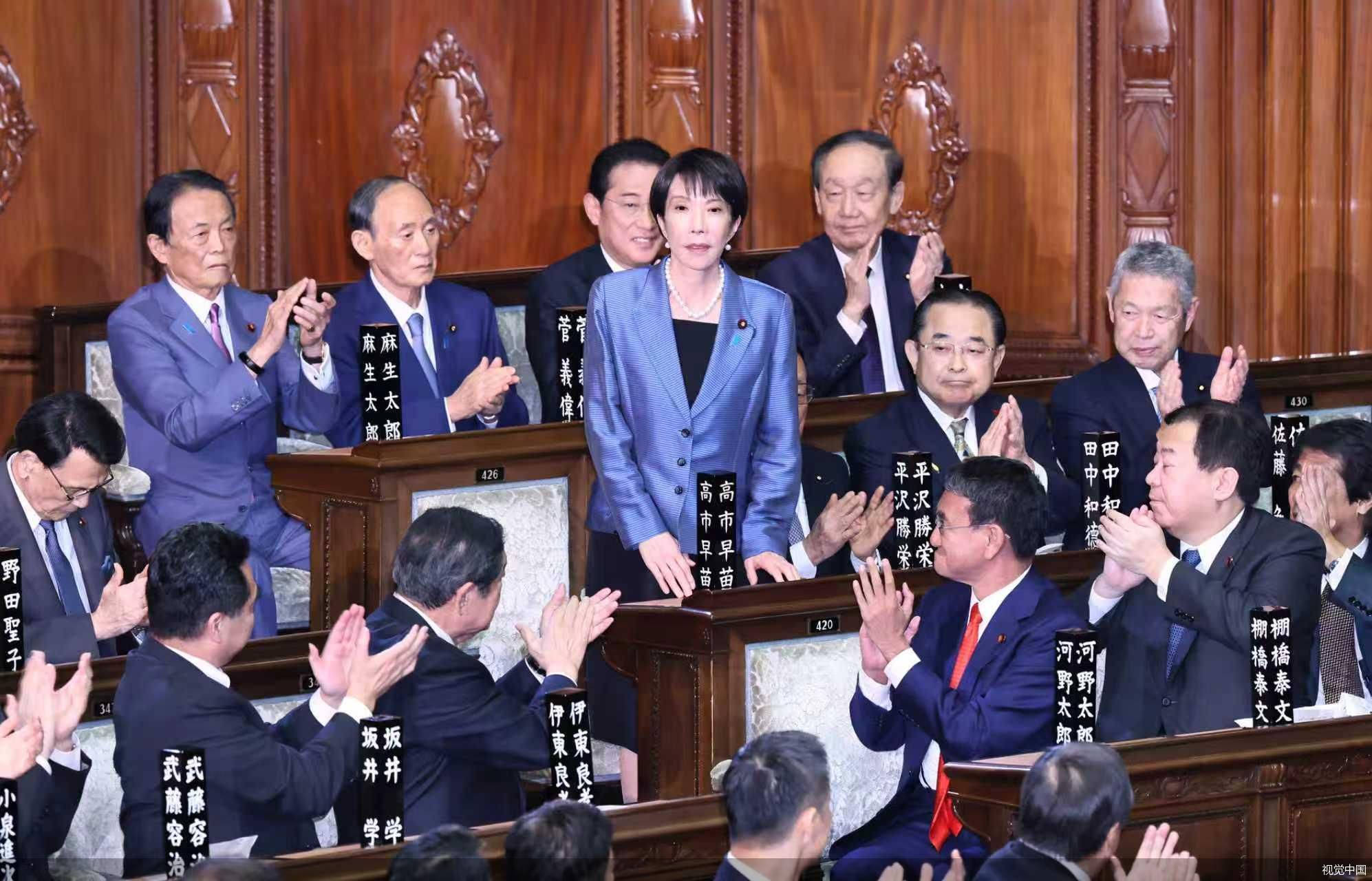
图源:山崎雄一/Pool/Gett y Images 导语:盟友退出、日元贬值、民众不满......在动荡局势下, 日本首位女首相 会选择什么路线? 日本的高市早苗成为该国首位女性首相,她将面临多重挑战: 平息民众对生活成本的不满、与特朗普政府打交道,以及重振在选举中失去主导地位的执 政党运势。 她的任命将成为日本男性主导社会的分水岭时刻,这标志着女性有望打破"玻璃天花板",担任该国最重要的要职。 与此同时,这也将体现出日本正逐渐向右翼倾斜。越来越多民众表达不满,认为生活水平未能跟上全球趋势,且对外国人涌入、地区安全局势日益紧张 感到担忧。 周二下午早些时候,议会将通过投票决定首相人选,随后高市早苗的任命正式公布。她与日本创新党(又称"维新党",Ishin)组建的新联盟,在众议院 仅差两席就能获得多数席位。 高市早苗的执政之路 不过,由于 新联盟在议会中缺乏多数席位,且联盟内部在部分政策上的分歧仍存疑问,她的政府开局恐难稳固 。维新党已表示,将仅参与合作,不谋求 内阁职位,这释放出谨慎的信号。 高市早苗还需让自民党党内成员相信,她是重建该党民众支持率的合适人选。同时,她也需留意日本首相通常面临的"一年任期魔咒 ...

高市早苗“涉险过关”成日本首位女首相 “早苗经济学”或难奏效
2 1 Shi Ji Jing Ji Bao Dao· 2025-10-21 23:16
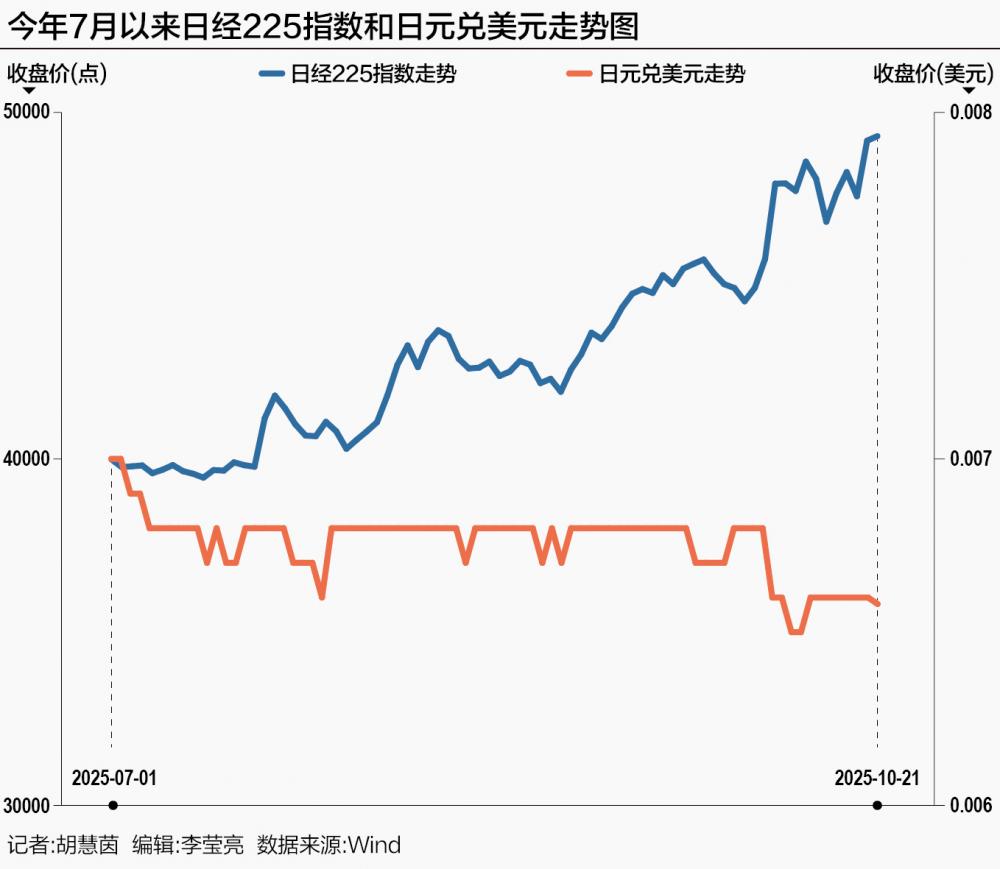
Core Points - Japan's first female Prime Minister, Sanae Takaichi, has been elected as the 104th Prime Minister after overcoming significant political challenges [2][5] - Takaichi's election has triggered a market phenomenon known as "Takaichi trade," characterized by a surge in the Nikkei 225 index and a decline in the yen [2][9] - The new administration will face numerous challenges, including a weak foundation within the ruling Liberal Democratic Party (LDP) and insufficient parliamentary seats [2][8] Political Landscape - Takaichi won the Prime Minister election with 237 votes, marking a significant political milestone [5] - The LDP's coalition with the Komeito party has collapsed, leading to a new alliance with the Japan Innovation Party to secure governance [6][8] - The coalition's stability is uncertain, as policy disagreements may arise, particularly regarding political funding reforms [7][8] Economic Policies - Takaichi aims to continue and strengthen "Abenomics," focusing on expansive fiscal and monetary policies, which she refers to as "Sanae economics" [10][11] - The market anticipates that her policies will inject momentum into the Japanese economy, particularly in strategic sectors like semiconductors and AI [10][11] - However, there are concerns about the long-term risks associated with increased national debt and potential inflationary pressures [11][12] Market Reactions - Following Takaichi's election, the Nikkei 225 index reached historical highs, reflecting investor optimism regarding her economic policies [9][10] - The yen has depreciated against the dollar, indicating market expectations of continued monetary easing [9][10] - Experts caution that the "Takaichi trade" may only be a short-term phenomenon, dependent on her ability to implement significant reforms and manage inflation [12]
高市早苗“涉险过关”成日本首位女首相 “早苗经济学”能否奏效
2 1 Shi Ji Jing Ji Bao Dao· 2025-10-21 14:29
Core Points - Japan's first female Prime Minister, Sanae Takaichi, has been elected as the 104th Prime Minister after overcoming significant political challenges [1][2] - Takaichi's election has led to a surge in the Nikkei 225 index, reaching historical highs, while the yen continues to depreciate against the dollar [1][7] - The coalition between the Liberal Democratic Party (LDP) and the Japan Innovation Party is seen as a strategic move to ensure governance and policy implementation amid a minority government situation [3][5] Group 1: Political Landscape - Takaichi's election was marked by a tumultuous path, including the collapse of the ruling coalition and opposition from rival parties [1][2] - The LDP's alliance with the Japan Innovation Party is crucial for maintaining a majority in the Diet, as the LDP lost stable support from its traditional ally, Komeito [3][5] - The coalition's agreement is not fully settled, indicating potential uncertainties in governance and policy direction [5] Group 2: Economic Policies - Takaichi aims to continue and strengthen "Abenomics," focusing on aggressive fiscal and monetary policies, which she refers to as "Sanae Economics" [8][10] - The market has reacted positively to Takaichi's proposed policies, anticipating significant fiscal stimulus and investment in strategic sectors like semiconductors and AI [8][11] - However, there are concerns about the long-term sustainability of these policies, including rising national debt and potential inflationary pressures [9][10][11] Group 3: Market Reactions - The "Takaichi trade" phenomenon has emerged, characterized by a bullish stock market response to her election, with the Nikkei 225 index hitting record highs [7][8] - The yen's depreciation against the dollar reflects market expectations of increased monetary easing and fiscal expansion under Takaichi's leadership [7][8] - Analysts caution that the current market optimism may be short-lived if Takaichi faces challenges in implementing her economic agenda [11]
日本迎首位女首相
Bei Jing Shang Bao· 2025-10-21 14:23
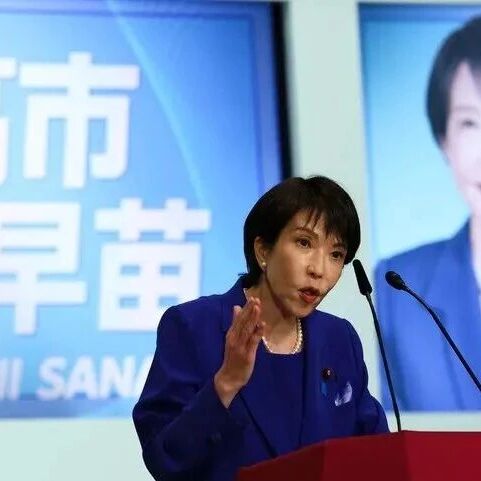
Core Viewpoint - Japan has elected its first female Prime Minister, Sanae Takaichi, who is seen as a successor to "Abenomics" and is expected to maintain a right-wing conservative stance in both domestic and international policies [2][4]. Group 1: Political Background - Sanae Takaichi, 64, won the Prime Minister election on October 21, securing a majority in the House of Representatives [2]. - Takaichi has a diverse background, including experience in media and academia, which has contributed to her political career [3]. - She has been a prominent figure in the Liberal Democratic Party (LDP) and has held various significant positions, including Minister of Internal Affairs and Communications [4]. Group 2: Economic Policies - Takaichi's economic policies, referred to as "Sanae Economics," emphasize aggressive fiscal and monetary stimulus, similar to "Abenomics" [6]. - Key proposals include increasing subsidies for local governments, raising personal income tax deductions, and eliminating temporary fuel taxes to boost consumer spending [6]. - There is a cautious approach towards interest rates, with a call for the Bank of Japan to maintain ultra-low rates, while also hinting at the possibility of future rate hikes [6][7]. Group 3: Political Stability and Challenges - Takaichi's government may face instability due to the historical trend of short tenures among Japanese Prime Ministers, averaging just over a year [8]. - The coalition with the Japan Innovation Party has introduced several policy conditions that could lead to internal dissent within the LDP if not fulfilled [8][9]. - The lack of deep trust and significant policy alignment between coalition partners raises concerns about the longevity and effectiveness of Takaichi's administration [9].
日本首位女首相,将面临一系列严峻考验
21世纪经济报道· 2025-10-21 13:52
Core Viewpoint - The election of Sanna Takichi as Japan's first female Prime Minister marks a significant political shift, with her expansionary fiscal policies expected to impact the economy and markets positively in the short term, but raising concerns about long-term risks such as debt and inflation [1][12][13]. Political Landscape - Sanna Takichi was elected as Japan's 104th Prime Minister on October 21, 2023, after overcoming challenges including a fractured ruling coalition and opposition from rival parties [1][4]. - The alliance between the Liberal Democratic Party (LDP) and the Japan Innovation Party was formed to secure political power and facilitate policy advancement in the Diet, following the exit of the Komeito party from the coalition [6][8]. - The new coalition faces uncertainties, particularly regarding political funding reforms and the potential for internal conflicts that could destabilize the government [8][9]. Economic Policies - Takichi's economic agenda, termed "Sanna Economics," aims to continue and strengthen the "Abenomics" approach, focusing on aggressive monetary easing and fiscal stimulus, particularly in strategic sectors like semiconductors and AI [12][13]. - The market reacted positively to her election, with the Nikkei 225 index reaching historical highs, driven by expectations of increased government spending and economic growth [11][12]. - However, experts warn that while short-term growth may be stimulated, long-term risks include heightened national debt and inflationary pressures, which could undermine economic stability [12][13]. Market Reactions - Following Takichi's election, the Japanese stock market experienced significant gains, reflecting investor optimism about her proposed policies, while the yen continued to depreciate against the dollar [11][12]. - The phenomenon known as "Takichi trading" indicates a speculative market response to anticipated policy changes that could enhance corporate profitability and economic performance [11][12]. Future Challenges - Takichi's administration will likely face challenges in implementing policies due to a minority government status, which may hinder the passage of key legislation and budgets [9][10]. - The potential for political instability remains high, with the risk of coalition breakdowns and the possibility of early elections if support wanes [9][10].
高市早苗“涉险过关”成日本首位女首相,“早苗经济学”能否奏效
2 1 Shi Ji Jing Ji Bao Dao· 2025-10-21 12:41
Core Points - Japan has elected its first female Prime Minister, Sanae Takaichi, who won the election on October 21, becoming the 104th Prime Minister of Japan [1][2] - Takaichi's election was marked by challenges, including a fractured ruling coalition and opposition from rival parties, but she secured support from the Japan Innovation Party [1][2] - The election results have led to a significant market reaction, with the Nikkei 225 index reaching historical highs, while the yen continues to depreciate against the dollar [1][6] Political Landscape - Takaichi's political stance is characterized by a strong conservative approach, closely aligned with former Prime Minister Shinzo Abe's policies, particularly in economic and security matters [2][7] - The coalition between the Liberal Democratic Party (LDP) and the Japan Innovation Party is seen as a strategic move to maintain political power and facilitate policy implementation in a context of reduced parliamentary majority [3][4] - The partnership is not without its challenges, as there are unresolved issues regarding political funding reforms, which could lead to tensions between the coalition partners [4][5] Economic Policies - Takaichi aims to continue and enhance "Abenomics," focusing on aggressive monetary easing and fiscal expansion, which she refers to as "Sanae Economics" [7][8] - The market has reacted positively to her proposed policies, anticipating increased government spending in key sectors like semiconductors, AI, and defense, which could stimulate economic growth [7][8] - However, there are concerns about the long-term sustainability of these policies, particularly regarding Japan's rising national debt and potential inflationary pressures [8][9] Market Reactions - The stock market has shown optimism, with the Nikkei 225 index hitting record highs, driven by expectations of Takaichi's expansionary fiscal policies [6][7] - The yen has depreciated against the dollar, reflecting market sentiment regarding the anticipated economic policies and their implications for inflation and currency stability [6][9] - Analysts caution that the current market enthusiasm may be short-lived if Takaichi faces significant obstacles in implementing her agenda due to her minority government status [9]
“先上台再说”?日本史上首位女首相能当多久
Di Yi Cai Jing· 2025-10-21 08:13
本文字 数:2034,阅读时长大约4分钟 作者 | 第一财经 潘寅茹 封图 | 新华社 在成功说服了日本第二大在野党后,日本自民党总裁高市早苗圆了首相梦。 据央视新闻,10月21日,在日本众议院首相指名选举第一轮投票中,自民党总裁高市早苗获得过半票 数,当选日本第104任首相。高市早苗的当选,也让她成为日本历史上第一位女首相。她现年64岁,是 日本右翼政客代表人物之一,主张实施扩张性财政政策,并提高防卫开支。 21日上午石破内阁集体辞职。统计显示,石破担任首相的天数为386天,成为战后在任时间第24长的首 相,超过菅义伟,仅次于森喜朗。 值得注意的是,在自民党与维新会确认合作后,"高市交易"重获动能。21日午盘,日经225指数突破 49900.00关口,逼近50000点大关,日内涨1.46%。日元汇率下跌。 有惊无险过半数 在21日的首相指名选举前,高市所在的自民党成功联手维新会,成为她此次顺利接任首相的最重要因 素。在21日众议院的投票中,自民党(196票)结合维新党(35票),再加上多位无党派议员票,超过 众议院席位的半数(233票)。尽管依据日本法律,参议院和众议院原则上享有同等的权力,但众议院 在立法 ...
一上任就要对中国打“铁拳”?日本首位女首相正式登场
Hu Xiu· 2025-10-21 07:55
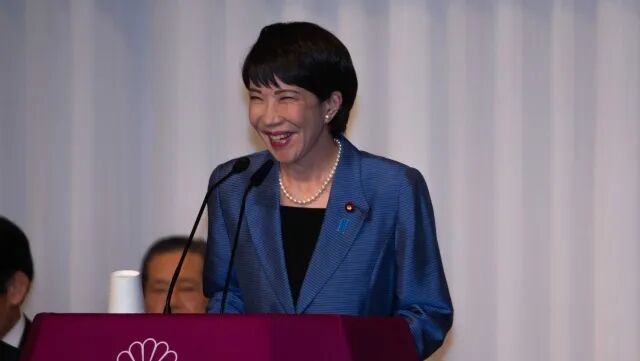
Core Viewpoint - The political landscape in Japan is shifting with the rise of Sanae Takaichi, who has the potential to become Japan's first female Prime Minister, drawing comparisons to former UK Prime Minister Margaret Thatcher [2][4][10]. Group 1: Political Developments - Takaichi was recently elected as the new president of the Liberal Democratic Party (LDP) and is seen as a strong candidate for Prime Minister [2][4]. - The LDP has formed an alliance with the Japan Innovation Party, which will support Takaichi in the upcoming elections [1][4]. Group 2: Personal Background and Comparisons - Takaichi's upbringing mirrors that of Thatcher, both coming from non-political backgrounds and rising through the ranks due to their intelligence and resilience [4][5]. - Both women faced significant challenges in male-dominated political environments, with Takaichi emphasizing hard work and dedication to her role [6][10]. Group 3: Economic Policies - Takaichi's economic approach, termed "Sanae Economics," focuses on responsible fiscal policies, including lowering gasoline taxes and supporting struggling businesses, which contrasts with Thatcher's more laissez-faire approach [12][13]. - Her policies align closely with the previous Abenomics framework, suggesting continuity in Japan's economic strategy [12][14]. Group 4: Challenges Ahead - Japan faces unique challenges compared to the UK during Thatcher's time, including a stagnant economy and demographic issues such as an aging population [7][9]. - Takaichi's hardline stance on foreign relations, particularly regarding China, may complicate her ability to navigate Japan's geopolitical landscape [8][9].
美元/日元上涨高市早苗为首相
Jin Tou Wang· 2025-10-21 07:41
Core Viewpoint - The recent appointment of Sanna Marin as Japan's first female Prime Minister has led to a reevaluation of the yen's exchange rate, with market participants reacting positively to potential expansionary policies despite official statements against returning to "Abenomics" [1][2] Group 1: Market Reaction - The USD/JPY exchange rate rose to approximately 151.25, with a 0.38% increase from the previous close of 150.74 [1] - The exchange rate peaked at 151.60, reflecting a 0.58% increase due to overseas buying and the confirmation of Sanna Marin as Prime Minister [1] - The rise in the exchange rate slowed after hitting a resistance level at the 200-hour moving average of 151.54 [1] Group 2: Economic Policy Outlook - Market expectations suggest that the new government may implement expansionary fiscal measures, although officials have stated they will not revert to "Abenomics" [1] - The potential new Finance Minister, Katsuyuki Kitayama, indicated that the "real value" of USD/JPY should be between 120 and 130, suggesting a focus on yen depreciation concerns [1] Group 3: Technical Analysis - The intraday low for USD/JPY was recorded at 150.47, with key support levels identified at 149.39 (Ichimoku base line) and short-term support at 151.00, 150.90, and 150.75 [2] - Investors are closely monitoring the new government's policy direction and its impact on the yen's performance [2]