机构库存

Search documents
寒武纪16亿融资狂欢:你看懂机构布局了吗?
Sou Hu Cai Jing· 2025-11-09 17:23
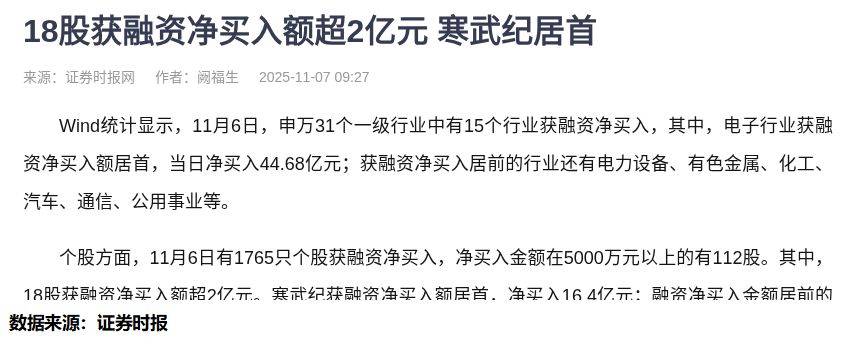
Core Insights - The electronic industry has seen a significant net inflow of 4.468 billion yuan, with Cambrian's financing amounting to 1.64 billion yuan, indicating a strong market sentiment [1] - Historical market trends suggest that retail investors often miss out on actual gains despite initial excitement, highlighting the importance of understanding market dynamics rather than merely holding stocks [3][5] - Institutional behavior is crucial in identifying investment opportunities, as large funds exhibit distinct characteristics such as continuity, scale, and repetitiveness [5][7] Industry Analysis - The data shows that while some stocks experience price rebounds, the lack of institutional activity can lead to poor performance, emphasizing the need to track institutional inventory levels [5] - The case of Jinling Sports illustrates how early institutional investment can lead to significant gains before widespread market awareness [7] - A quantitative approach to analyzing institutional behavior can provide more reliable insights than relying solely on emotional market reactions [7][8] Investment Strategy - Investors should focus on stocks with sustained institutional inventory and compare financing data with institutional actions to gauge market health [9] - It is advised to abandon the mindset of trying to time the market for bottom buying, as institutional accumulation is a gradual process [9] - Establishing a quantitative mindset can help investors navigate emotional market fluctuations and make more informed decisions [9]


900点大涨背后暗藏杀机
Sou Hu Cai Jing· 2025-10-31 16:55
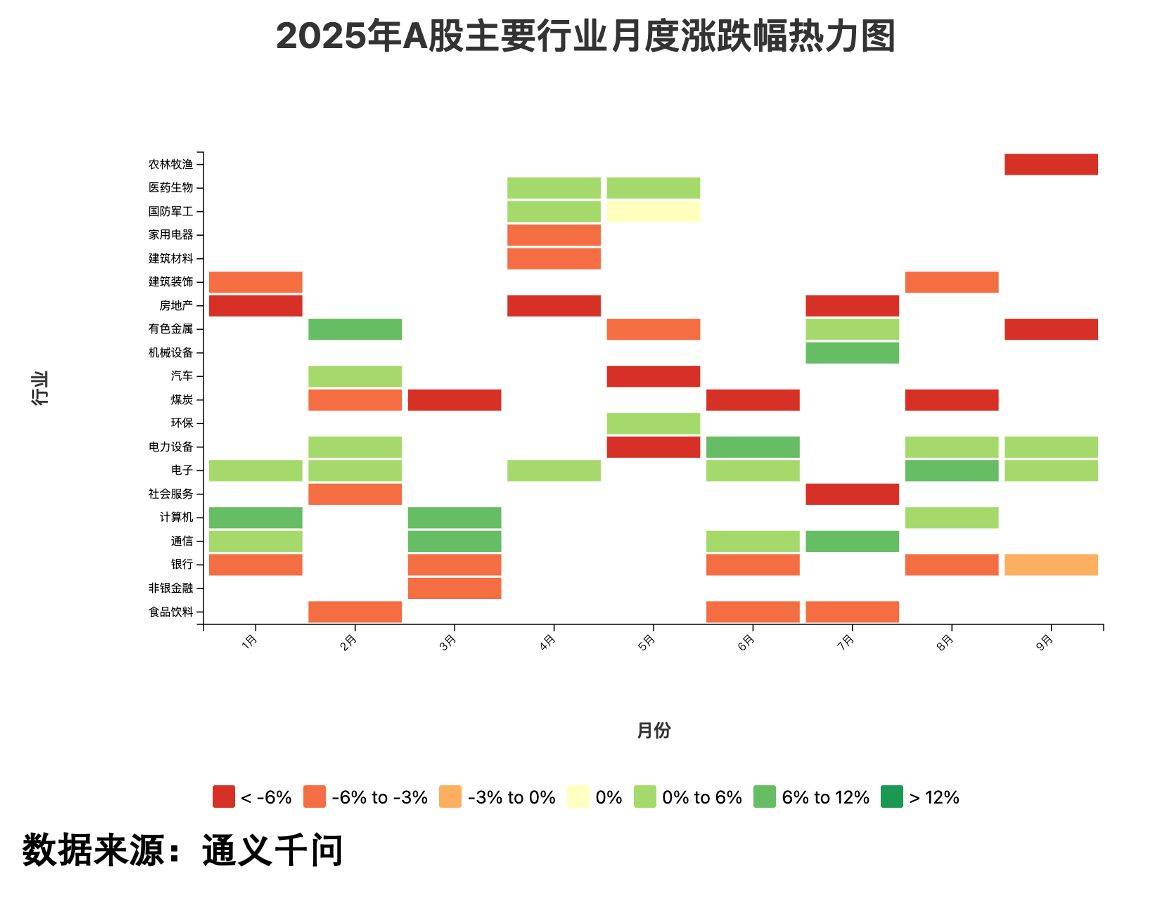
Core Insights - The article emphasizes that retail investors often lose money during bull markets, contrary to the common belief that stock prices will continue to rise [1] - It highlights the misconception that market rebounds present opportunities, noting that no sector has consistently performed well over the first nine months of 2025 [1][6] - The piece argues that institutional investors have been quietly withdrawing from the market, leaving retail investors to engage in self-deception during market rebounds [6] Group 1: Market Behavior - The article points out that the stock market is a zero-sum game, where one investor's profit is another's loss [12] - It mentions the significant drop in the liquor sector following the implementation of a liquor ban, which resulted in a 6% decline over 20 days [4] - The case of Guoju Energy is presented, illustrating how a stock can rise 50% in the first quarter but subsequently lose 60% of that gain [1] Group 2: Institutional vs. Retail Investors - The article discusses how institutional investors have been exiting the market, as indicated by a quantitative indicator called "institutional inventory" [6] - It highlights the case of Notai Bio, which saw a 25% increase after being designated as ST, suggesting that institutional investors had already entered the market beforehand [8] - The author asserts that market movements without institutional participation are unreliable and should be viewed with skepticism [10] Group 3: Data and Analysis - The article stresses the importance of relying on quantitative data rather than intuition or luck in trading decisions [12] - It criticizes technical analysis as largely ineffective, claiming that 90% of it is irrelevant [12] - The author encourages retail investors to adopt a data-driven approach to trading, viewing it as their last line of defense in an information-asymmetric market [11]
金价暴涨50%,为何散户依然赚不到钱?
Sou Hu Cai Jing· 2025-10-27 12:33
Core Viewpoint - The article discusses the competitive landscape of the gold mining industry, highlighting the potential for Chinese companies to rise in global rankings while emphasizing the challenges faced by individual investors in a market dominated by institutional players [1][2]. Group 1: Market Dynamics - The international gold price is projected to rise significantly, with an increase of over 50% in 2025, reaching highs of $4,300 per ounce [2]. - Chinese companies like Zijin Mining and Shengtun Mining are actively pursuing international acquisitions, indicating a trend towards globalization in the mining sector [2]. - The market has evolved into a "winner-takes-all" scenario, where institutional investors dominate, leading to significant losses for individual investors [2][3]. Group 2: Institutional Behavior - The behavior of institutional investors is characterized by continuity, scale, and repeatability, which can be tracked through quantitative analysis [2]. - The concept of "FOMO" (Fear of Missing Out) is prevalent, particularly in the A-share market, where institutional investors often dictate market trends [2]. - The performance of stocks can vary significantly based on the activity level of "institutional inventory," with some stocks showing sustained growth while others falter [5]. Group 3: Investment Strategies - Investors are encouraged to focus on observing institutional behavior rather than attempting to predict market movements or company rankings [9]. - Understanding the differences in market structures and cultural factors between domestic and international markets is crucial for investment decisions [9]. - Patience is advised, with a recommendation to wait for sustained activity in "institutional inventory" before making investment decisions [9]. Group 4: Industry Insights - The ability of Chinese companies to enhance their overseas acquisition capabilities is linked to improvements in technological and operational competencies [7]. - The concept of resource nationalism is discussed, suggesting that it should not be viewed negatively but rather as a strategic consideration in investment [8]. - Continuous tracking and timely adjustments are essential for successful investment in the competitive global mining landscape [8].


消费电子暴涨18%,我却看到危险信号!
Sou Hu Cai Jing· 2025-10-21 21:46
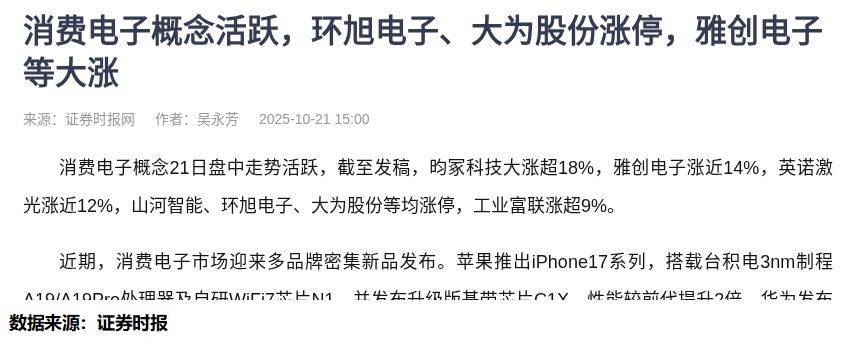
Group 1 - The recent surge in the consumer electronics sector, with companies like Yunzuka Technology, Yachuang Electronics, and Yingchuang Laser seeing stock increases of 18%, 14%, and 12% respectively, is driven by major players like Apple, Huawei, and Xiaomi releasing new products featuring advanced technologies such as 3nm chips and foldable screens [1][3] - There is a historical parallel drawn to the 2007 launch of Nokia's N95, suggesting that while the current excitement is palpable, it may overlook fundamental aspects such as capital movements [3] - The analysis emphasizes that the difference between retail investors and institutions lies in data processing capabilities, indicating that the apparent market rally may not reflect the underlying financial health of the companies involved [3] Group 2 - The concept of "reverse catching" is introduced, where fundamentally strong stocks may decline alongside the market, highlighting the importance of monitoring "institutional inventory" data to discern genuine breakouts from false dips [5] - A specific example illustrates that a stock may rebound after a breakdown, but if "institutional inventory" is depleted, it indicates a lack of institutional support, leading to further declines [7] - The article stresses the importance of focusing on overlooked quantitative indicators rather than being swayed by market hype, suggesting that survival in the market is more about rationality than intelligence [8][9]
量化数据说话:利好利空谁说了算
Sou Hu Cai Jing· 2025-10-20 13:11
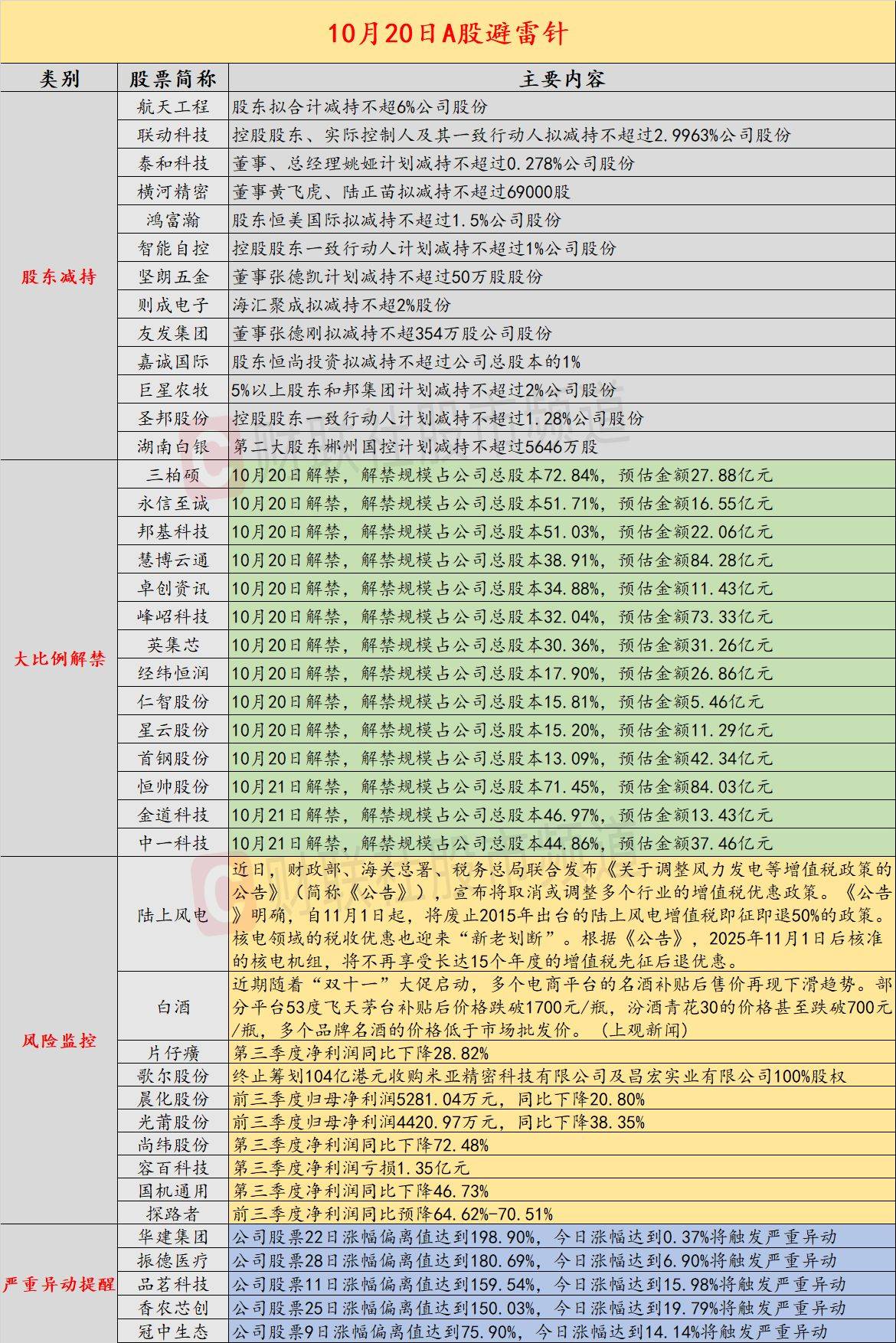
Group 1 - The recent announcement by the Ministry of Finance to abolish tax incentives for the wind power industry, which have been in place for eight years, and the countdown for nuclear power subsidies, indicates significant policy shifts in the energy sector [1][3] - The price of Moutai has dropped below 1700 yuan per bottle ahead of the "Double Eleven" shopping festival, suggesting a potential price war among e-commerce platforms [1][3] - The article highlights the historical context of market behavior, noting that during previous bull markets, retail investors often faced significant losses despite apparent gains in stock prices [4][6] Group 2 - The article discusses the implications of the recent tax policy changes on the wind and nuclear power sectors, emphasizing that these adjustments are not coincidental and may lead to market volatility [3][4] - It mentions that the price drop of premium liquor brands, including Moutai, reflects broader market dynamics and consumer behavior during promotional events [1][3] - The text emphasizes the importance of understanding institutional trading behavior and market sentiment, suggesting that retail investors should not be swayed by surface-level news [15][12]

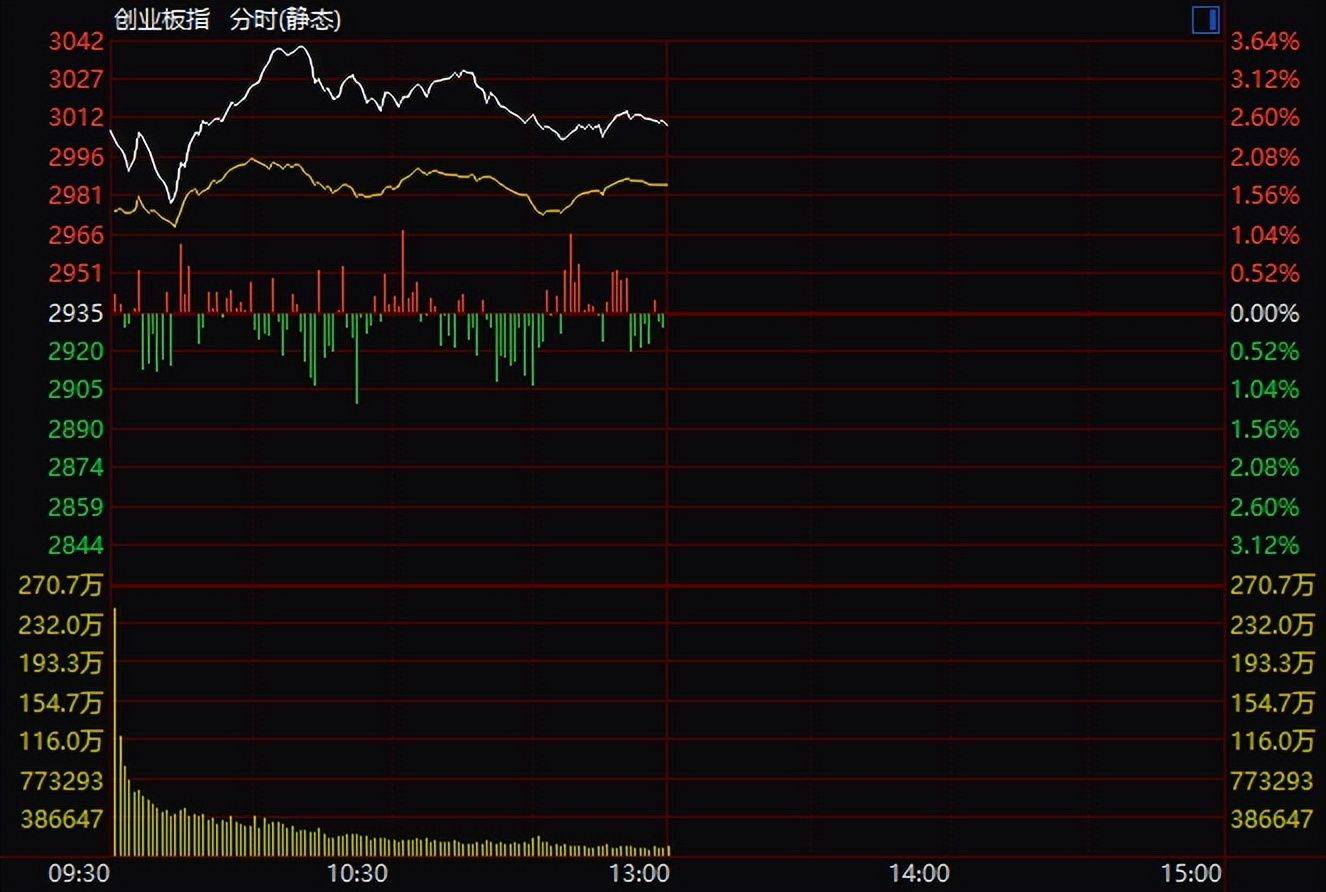
4200只个股飘红,为何你还在亏?
Sou Hu Cai Jing· 2025-10-20 08:27
Group 1 - The article discusses the performance of the ChiNext Index, which shows fluctuations in the index values throughout the trading day, with a peak at 3042 and a low at 2844 [1] - The trading volume indicates significant activity, with 270.7 million shares traded at one point, suggesting a high level of market engagement [1] - The data presented is sourced from Bohr Quantitative, emphasizing that historical performance does not predict future outcomes [2][3][4] Group 2 - The article highlights the increase in institutional inventory, indicating a potential shift in market dynamics as institutions adjust their positions [3][4] - The analysis includes various time frames for market performance, such as daily, weekly, and monthly, providing a comprehensive view of market trends [2][3][4] - The data reflects a recovery trend among retail investors, as indicated by the mention of retail buybacks [3]
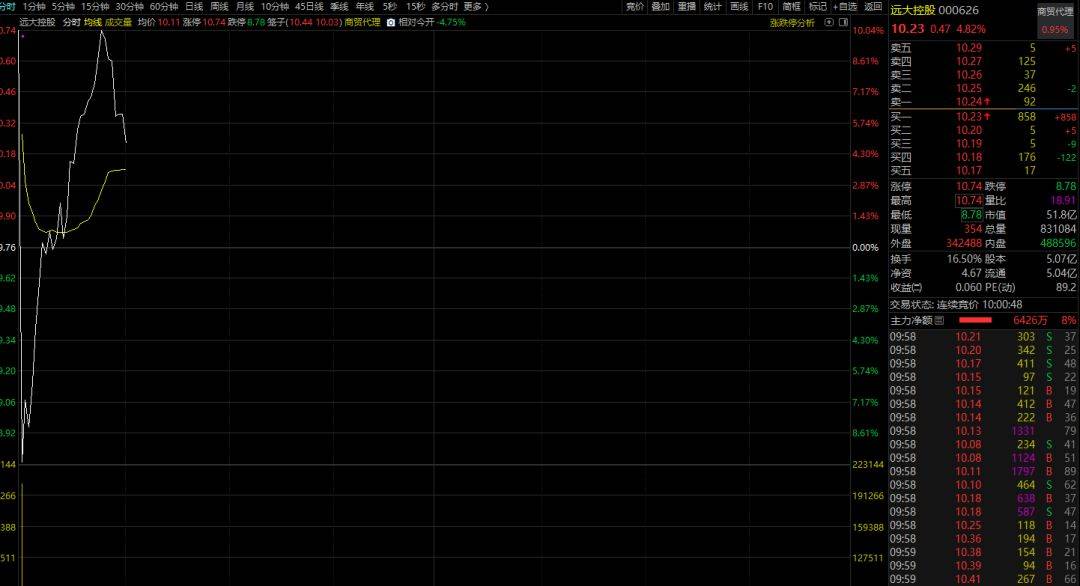
5天60%涨幅的真相:大数据还原机构操盘轨迹
Sou Hu Cai Jing· 2025-10-20 06:50
Core Viewpoint - The extreme volatility of Yuanda Holdings (000626) in a single trading day, characterized by a significant price fluctuation of 20%, highlights the underlying capital dynamics and potential institutional manipulation in the stock market [1][11]. Group 1: Stock Performance - Yuanda Holdings experienced a remarkable surge, with a cumulative increase of over 60% over five consecutive days of trading, making it a focal point for short-term investors [1][5]. - The stock's trading data indicated a daily high of 10.74 and a low of 8.78, with a trading volume of 51.8 billion and a turnover rate of 16.50% [2]. Group 2: Market Behavior - The phenomenon of "buying high and selling low" is prevalent among investors, who often shy away from high-performing stocks in favor of seemingly safer low-priced stocks, reflecting a cognitive bias [4]. - Historical patterns show that stocks can continue to rise significantly despite already high valuations, as seen with stocks like Moutai and the recent rise of Cambrian [4]. Group 3: Institutional Influence - The current market dynamics suggest that the apparent frenzy among retail investors may be orchestrated by institutional players, who leverage their capital to create volatility and attract retail participation [5][11]. - The importance of monitoring institutional capital flows is emphasized, as it can provide insights into market trends that are not immediately visible through traditional analysis [11][12]. Group 4: Investment Philosophy - The narrative stresses the necessity for investors to rely on quantitative data rather than solely on expert opinions, which may be influenced by conflicts of interest [5][12]. - A focus on understanding the true flow of capital in the market is deemed more reliable than attempting to predict future movements based on speculative trends [12].

A股遭遇无妄之灾,看懂的人动手了!
Sou Hu Cai Jing· 2025-10-20 01:36
Group 1 - The core point of the article highlights a significant decline in the A-share market, with the absence of government intervention being particularly surprising [1] - The drop in the market is attributed to the collapse of two regional banks in the U.S., reminiscent of past financial crises, leading to heightened fear across global capital markets [3][5] - Despite the panic, the scale of the bank failures is not comparable to that of Silicon Valley Bank, suggesting that the Federal Reserve may manage the situation without drastic measures [5] Group 2 - The current market sentiment is characterized by a "short-selling dominance," but the focus should be on identifying stocks that are being "wrongly killed" during this downturn [9] - There is a clear distinction in market behavior, with some stocks entering a phase of institutional accumulation, while others face significant adjustments [10] - The increase in "high-level control" stocks indicates that some large funds are actively engaging in the market, despite the overall decline [14] Group 3 - The article emphasizes the importance of being prepared for potential rebounds in the market, rather than dwelling on past declines [17][18] - It suggests that understanding institutional behavior is crucial for determining the sustainability of any market recovery [20][22] - The increase in "institutional inventory" data provides insights into market dynamics, helping to clarify whether a rebound or reversal is more likely [22]

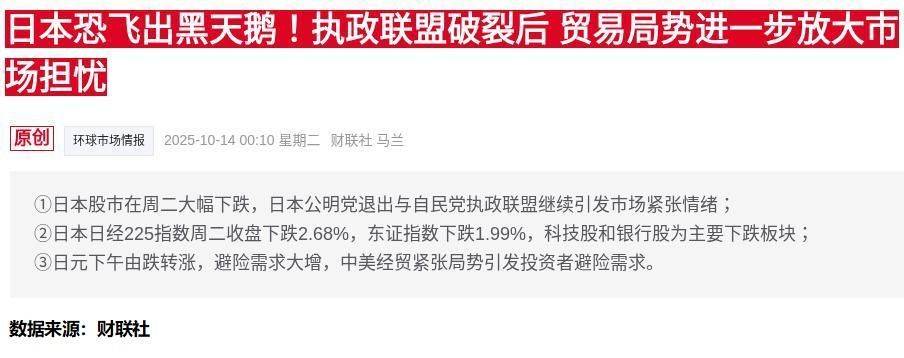
日本政坛地震!华尔街巨鳄却在悄悄布局
Sou Hu Cai Jing· 2025-10-14 14:13
Group 1 - The sudden political shift in Japan, with the Komeito party exiting the ruling coalition with the Liberal Democratic Party (LDP), has created significant market uncertainty, leading to a 2.68% drop in the Nikkei 225 index and a 1.99% decline in the TOPIX index [1][3] - Despite the market panic, certain sectors showed unusual activity in "institutional inventory" data, indicating potential investment opportunities during times of fear [3][6] - The breakdown of the ruling coalition may allow opposition parties to form a large alliance, impacting the political future of LDP President Sanna Takashi [3] Group 2 - The current market environment is characterized by structural and differentiated trends, necessitating careful selection of investment directions [4] - Investors should focus on understanding how institutional investors are positioning themselves, as this can provide insights into potential market movements [4][6] - The "institutional inventory" data reflects the level of institutional participation, with active inventory suggesting strong institutional interest in certain stocks [6][8] Group 3 - The example of "Jinling Sports" illustrates how stock performance can be linked to external events, such as the start of a popular sports league, highlighting the importance of timely information [8] - The political crisis in Japan, while creating uncertainty, also presents opportunities as certain sectors show active capital inflows according to "institutional inventory" data [8] - Quantitative data analysis is emphasized as a valuable tool for investors to discern real capital flows and identify genuine opportunities amidst market volatility [8]
贵金属牛市来了!但90%的人会错过
Sou Hu Cai Jing· 2025-10-12 16:33
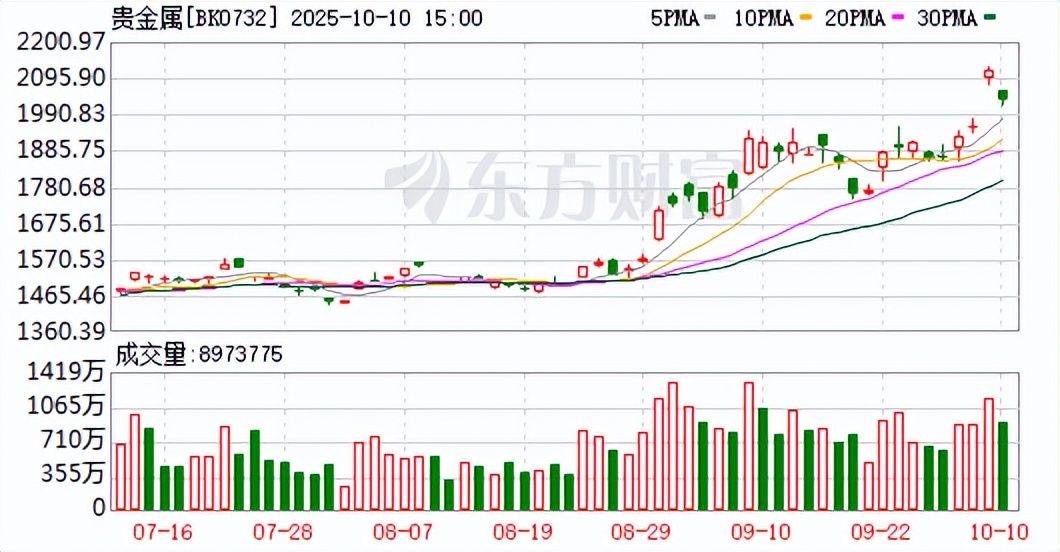
Core Insights - The precious metals market is experiencing significant growth, with gold surpassing $4000 and silver increasing by 75% year-to-date, attracting many investors [1] - Despite the bullish market, retail investors often face higher probabilities of losses during such rallies due to a lack of understanding of market dynamics [3] Market Dynamics - Factors such as rising expectations for Federal Reserve interest rate cuts and geopolitical uncertainties are driving gold prices upward [3] - The importance of understanding macroeconomic factors and translating them into actionable strategies is emphasized for ordinary investors [3] Investor Behavior - Many investors tend to overestimate their judgment during price increases and doubt their decisions during price declines, illustrating the "hindsight bias" phenomenon [4] - Historical examples show that even during significant price rallies, few investors manage to retain their profits due to premature exits or panic selling [4] Quantitative Investment Concepts - The concepts of "empty rise" and "virtual drop" are introduced, where "empty rise" refers to price increases without substantial support, and "virtual drop" indicates price declines despite strong fundamentals [5] - The analysis of institutional trading behavior is crucial for distinguishing between these two phenomena, as market pricing power lies with institutional investors [7] Institutional Indicators - The "institutional inventory" metric is highlighted as a key indicator of institutional trading activity, with higher levels indicating active participation [9] - Continuous institutional activity can provide reassurance during price corrections, suggesting that such moments may represent buying opportunities [9] Future Projections - Predictions from UBS and Mingming suggest potential future gold prices of $4200 and $4500 per ounce, respectively, but the focus should remain on institutional movements rather than speculative top guessing [13] - Data from the World Gold Council indicates that central bank gold purchases are expected to reach 415 tons in the first half of 2025, providing a solid foundation for gold prices [13] Silver Market Insights - The silver market is characterized by increased investment demand and low supply elasticity, with significant increases in holdings in the largest silver ETF [13] Strategic Recommendations - Investors are advised to avoid being misled by short-term fluctuations and to focus on concrete data indicators for decision-making [14] - Distinguishing between "empty rises" and "virtual drops" is essential, with the latter presenting potential buying opportunities [14] - Utilizing quantitative tools like "institutional inventory" can help investors understand market fundamentals and avoid emotional trading [15]