生态治理

Search documents
(活力中国调研行)“绿”与“电”绣出鄂尔多斯新图景
Zhong Guo Xin Wen Wang· 2025-08-26 06:41
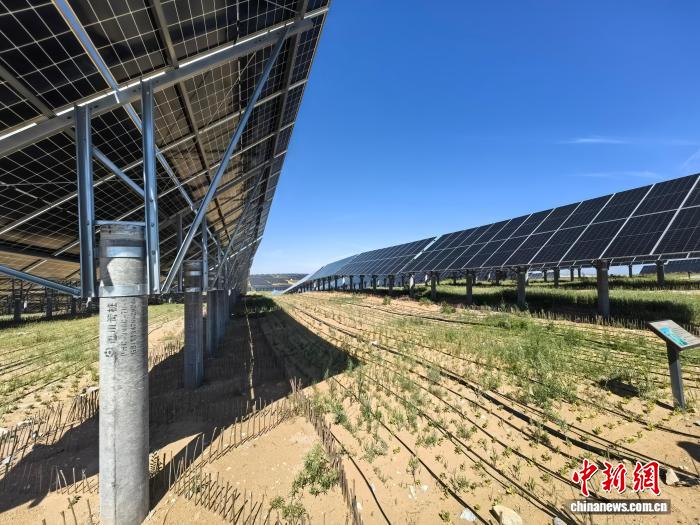
Core Insights - The article highlights the transformation of Ordos City in Inner Mongolia from a resource-based economy to a renewable energy hub, utilizing solar power and ecological restoration methods to achieve economic and environmental benefits [1][5]. Group 1: Renewable Energy Development - The "Juma" solar power station, the world's largest solar panel-shaped power station, symbolizes Ordos's commitment to renewable energy development [1]. - The solar power initiatives in the Dala'tai region include a 400-kilometer "Solar Great Wall" and a 544-kilometer sand control road, which together form a protective barrier against desertification [2][3]. Group 2: Ecological Restoration - The combination of engineering and vegetation ("engineering sand fixation + tree and shrub planting") has significantly improved soil and water conservation rates, with the water and soil conservation rate in the "Ten Kongdui" area expected to reach 59.39% by 2025 [4]. - The ecological restoration project in the Ulanmulun Town mining subsidence area has transformed 42,000 acres of damaged land into a "sunshine bank," providing job opportunities and additional income for local herders [4][6]. Group 3: Economic Impact - The solar projects not only contribute to environmental sustainability but also enhance local economic conditions, with an estimated annual income increase of approximately 1,000 yuan per person for around 1,200 local herders from land leasing fees [4].


震撼!“日光城”拉萨的光影巨变
Xin Hua She· 2025-08-24 02:23
Core Viewpoint - The article highlights the transformation of Lhasa over the past 60 years, showcasing its evolution from a small, traditional city to a modern urban center with significant infrastructure and ecological improvements [2][20]. Urban Development - Before 1951, the urban area of Lhasa was less than 3 square kilometers, with over 50% of buildings classified as dangerous [5][6]. - As of 2024, the built-up area of Lhasa has expanded to 126.9 square kilometers, with an urbanization rate of 73.06% [6]. Infrastructure and Transportation - The completion of the Qinghai-Tibet Railway in 2006 integrated Lhasa into the national railway network, and the Lalin Railway opened in 2021, enhancing connectivity [12]. - In 2024, Lhasa's passenger throughput at the airport exceeded 6 million, indicating a significant increase in accessibility [13]. Economic Growth - Lhasa's GDP surpassed 99 billion yuan in 2024, with urban residents' per capita disposable income reaching 58,171 yuan [18]. - The city received over 43.24 million domestic and international tourists in 2024, generating tourism revenue exceeding 50 billion yuan [18]. Environmental Improvements - The ecological restoration efforts have led to the completion of over 1 million acres of afforestation by July 2025, and the city has developed a water system spanning 62.5 kilometers [9]. - The restoration of urban wetlands has increased by approximately 14 hectares, contributing to a greener and more livable environment [9].

天蓝、地绿、水清共绘多彩生态画卷 生态治理擦亮城市名片 | 看见美丽中国
Yang Shi Wang· 2025-08-20 07:22
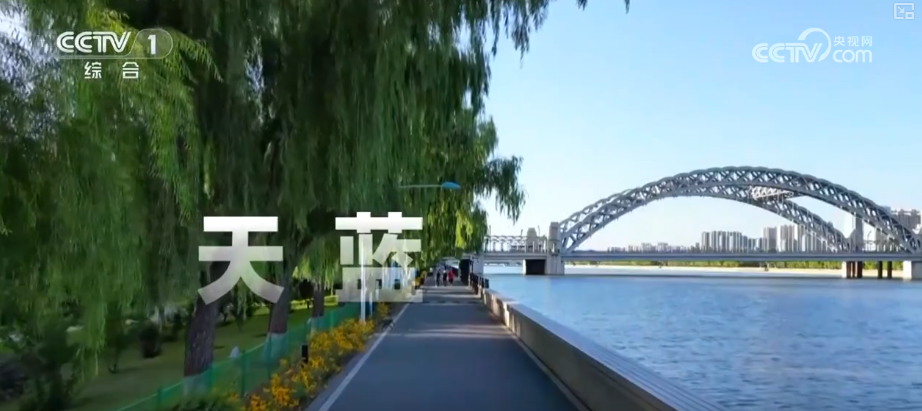
Core Viewpoint - Datong has transformed from a city plagued by air pollution to one with improved air quality, now recognized for its "Datong Blue" as a significant urban brand [1][44]. Group 1: Environmental Improvements - Datong was once ranked among the bottom ten cities in air quality in China, particularly from 2003 to 2005 [9]. - The city government initiated comprehensive measures to combat air pollution, including the closure of non-compliant coal mines and the upgrade of existing coal production facilities [15][21]. - The implementation of advanced pollution control technologies has led to significant reductions in emissions, with some power plants achieving dust emission levels lower than household dust [23][25]. Group 2: Policy and Regulatory Framework - National policies, such as the 2013 Air Pollution Prevention Action Plan, set stringent targets for PM10 concentration reductions, aiming for a decrease of over 10% from 2012 levels [18]. - The introduction of the strictest environmental protection laws in 2015 has further compelled local governments and industries to enhance their environmental standards [27]. Group 3: Economic and Tourism Development - Datong has been recognized as one of 25 key tourist cities in China, alongside cities like Xiamen and Sanya, reflecting its successful transition to a tourism-driven economy [40]. - The transformation of former pollution sources, such as the Jinhuagong Mine, into tourist attractions demonstrates the city's commitment to both environmental restoration and economic diversification [32]. Group 4: Community and Cultural Impact - The improvement in air quality has positively affected local heritage sites, such as the Yungang Grottoes, leading to increased visitor numbers and better preservation of cultural artifacts [30][36]. - The city's efforts in ecological governance have not only enhanced its image but also improved the quality of life for its residents, showcasing the benefits of sustainable development [44].
“织绿”、轮休、保护齐发力 绘就“人与自然和谐共生”大美画卷
Yang Shi Wang· 2025-08-18 08:30
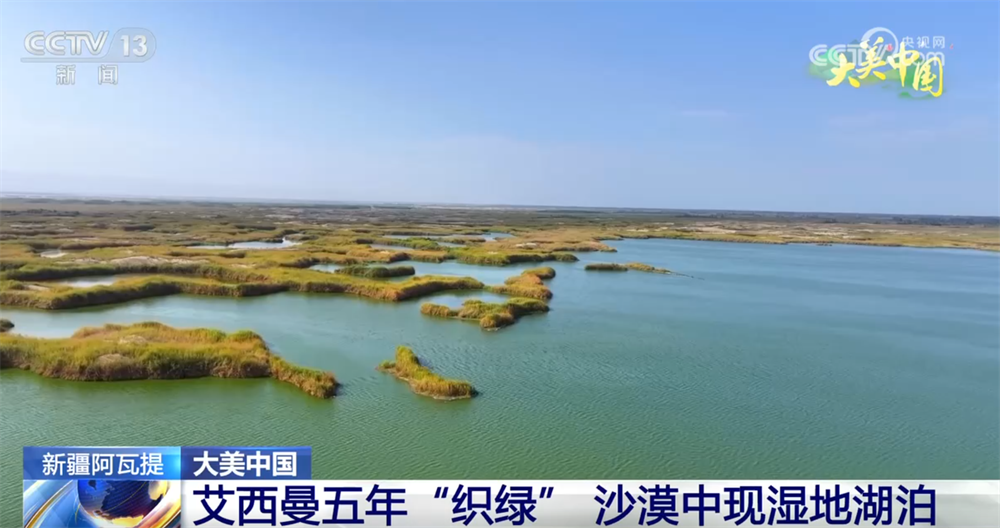
Group 1 - The ecological restoration project in Aixi Man Wetland, Xinjiang, has successfully transformed the area from desert to oasis, marking its completion after five years [1] - The Aixi Man region, located at the confluence of the Akesu River alluvial fan and the Taklamakan Desert, has seen significant ecological improvements, with 788,500 acres restored and forest coverage increasing from 4.5% to 45% since 2020 [4] - The project has led to the formation of a lake wetland ecosystem at the desert's edge, resulting in the return of over 200 species of wildlife and a notable increase in biodiversity [4] Group 2 - In Huangshan, Anhui Province, the implementation of a rotational protection mechanism for the maple poplar wetland aims to preserve the natural beauty and enhance tourism [5][9] - The rotational protection will involve closing one of the two tourist routes every two months during the peak season from May to August, allowing the wetland to rest and recover [9] - The village of Xixinan has developed over 80 types of accommodations and various cultural tourism formats, creating job opportunities for over a thousand local residents [11] Group 3 - In Yinjiang, Guizhou Province, efforts to strengthen the protection of wild flora and fauna have been ongoing, promoting harmony between humans and nature [12] - The number of wild mandarin ducks, a national second-class protected species, has reached a ten-year high, with over 100 individuals observed this year [14] - The establishment of nature reserves and ecological corridors, along with measures like reforestation and the protection of rare tree species, has been implemented to enhance conservation efforts [18]
从黄沙漫天到绿意蔓延 卫星瞰四大沙地生态巨变
Yang Shi Xin Wen Ke Hu Duan· 2025-08-17 07:21
Core Insights - The articles highlight the significant progress in ecological restoration efforts in arid and sandy regions of China, showcasing the transformation from barren landscapes to green ecosystems through technological advancements and dedicated initiatives [1][3][4][6]. Group 1: Ecological Restoration Efforts - The Maowusu Sandy Land in Shaanxi has seen extensive ecological restoration, with 120,000 acres of Chinese fir planted, achieving over 60% vegetation coverage, creating a green ecological barrier [1]. - In the Hunsandake Sandy Land of Inner Mongolia, a comprehensive management initiative was launched, resulting in a checkerboard pattern of grass grids that effectively stabilize shifting sands [3]. - The area in Liaoning Province, previously known for its moving sand dunes, has been transformed with significant vegetation coverage, indicating successful restoration efforts [4]. Group 2: Impact of Restoration Initiatives - In the Chen Barag Banner of Inner Mongolia, an ecological restoration project initiated in 2020 has effectively controlled over 95% of the moving sand area, with vegetation coverage increasing to over 85% [6].
“三北”工程三大标志性战役成效如何?一组数据带你了解
Yang Shi Wang· 2025-08-16 12:25
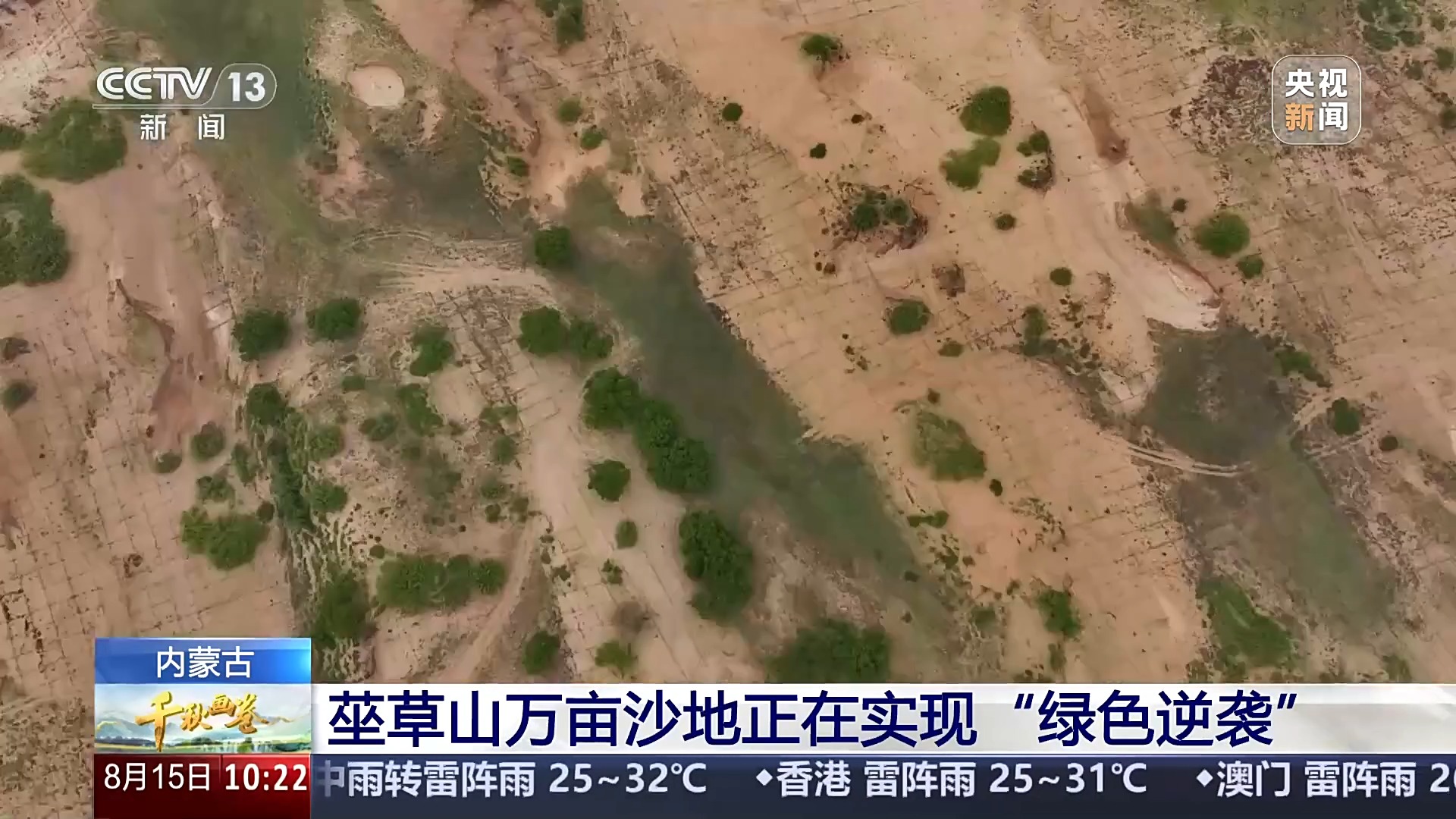
Core Points - The "Three North" project has implemented 415 projects, achieving a construction task completion of 1.64 million acres [1] - The project includes three major battles: Eastern Elimination Battle, Central Offensive Battle, and Western Blockade Battle [1] Group 1: Eastern Elimination Battle - The "Green Progress, Sand Retreat" strategy has accelerated significantly in the eastern region, with Inner Mongolia leading the way in sand control efforts [1] - The average width of the "Thousand-Mile Locking Edge" forest and grass belt in Liaoning and Inner Mongolia has increased from 11 kilometers to 31 kilometers [1] - Over 4,000 local herders have participated in sand control projects, receiving labor compensation [1] Group 2: Central Offensive Battle - The Central Offensive Battle focuses on addressing ecological issues such as wind and sand hazards and soil erosion, ensuring the safety of the Yellow River [4] - A regional joint prevention and control pattern has been established in the Central Offensive Battle area [4] - In Shaanxi, 5.13 million acres of shifting sand land are planned for treatment this year, with an 80% treatment rate in the Maowusu Sandland [7] Group 3: Western Blockade Battle - The Western Blockade Battle aims to build composite sand-blocking protective belts around oases and desert edges [8] - A 380-kilometer green barrier has been completed in the Minqin oasis, effectively blocking the encroachment of the Badain Jaran and Tengger deserts [8] - Various scientific methods and ecological engineering techniques are being applied to enhance sand control efficiency [10] Group 4: Economic Impact - The ongoing "Three North" project not only improves the environment but also transforms ecological value into economic benefits for local communities [11] - The "Sandy Sea" area has seen the development of a "three-dimensional economy," with an annual output value of 39 billion yuan from the forestry and grassland industry [13] - The innovative "photovoltaic + sand control + agriculture + animal husbandry" model has been implemented, enhancing soil moisture and crop survival rates [15]
你好,三江源!变迁“诉说”守护力量 | 看见美丽中国
Yang Shi Wang· 2025-08-16 02:34
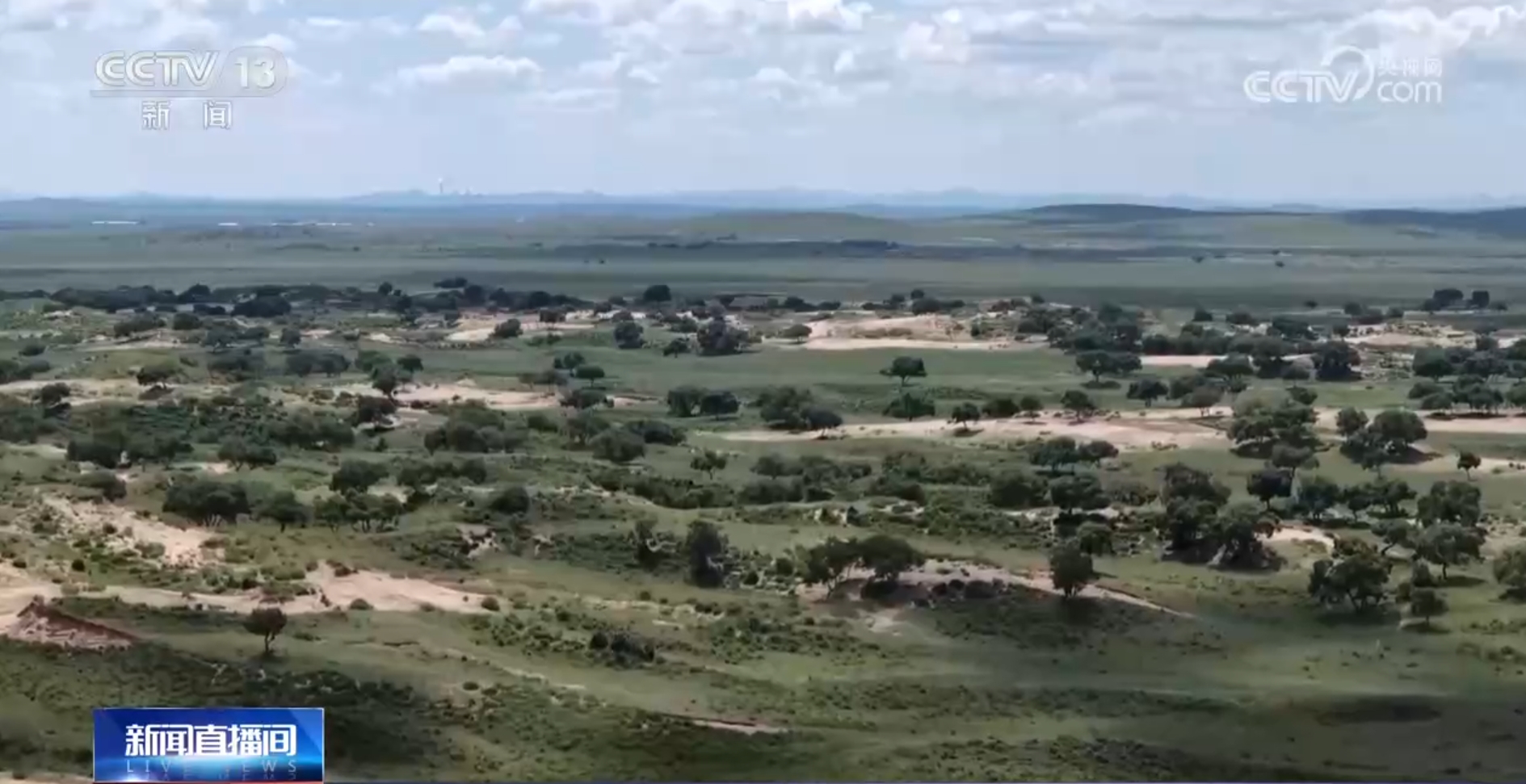
Group 1 - The core idea of the article revolves around the 20th anniversary of the "Two Mountains Theory," proposed by Xi Jinping, emphasizing the importance of ecological civilization in China's sustainable development [1] - The "Two Mountains Theory" has become a central concept in Xi Jinping's ecological civilization thought, leading to significant ecological transformations across China [1] Group 2 - The Sanjiangyuan region, known as the "Water Tower of China," is crucial for the water supply of major rivers, providing nearly 1,000 billion cubic meters of quality water annually [5] - The Sanjiangyuan National Park, with an average altitude of over 4,000 meters, features numerous lakes and wetlands, contributing to the region's ecological diversity [7] Group 3 - Over the past 20 years, the Sanjiangyuan area has undergone significant ecological restoration, with efforts to combat desertification, restore grasslands, and eliminate rodent infestations [15][17] - The area has seen a remarkable recovery, with vegetation coverage increasing from less than 20% to over 80%, and the number of lakes in the region rising from 1,800 to 5,849 [30] Group 4 - The restoration efforts have led to a resurgence of wildlife, including the population of Tibetan antelopes increasing from under 20,000 to over 70,000 [36] - The establishment of a comprehensive monitoring network and designated protected areas has facilitated the safe habitation of wildlife in the Sanjiangyuan region [36] Group 5 - The article highlights the transformation of the Sanjiangyuan region from a crisis of river source depletion to a flourishing ecosystem, showcasing the power of ecological protection and sustainable development [45]
60秒看雄安|蓝绿交织生态美
Xin Hua She· 2025-08-15 13:16
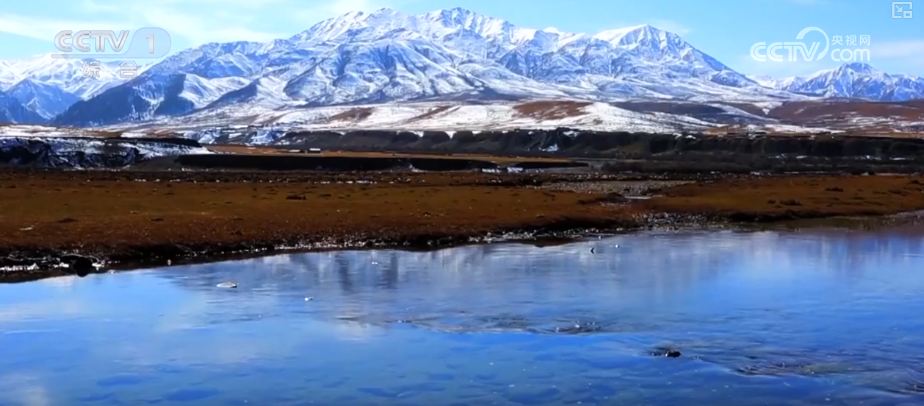
Core Viewpoint - The establishment of Xiong'an New Area has led to significant ecological improvements, particularly in Baiyangdian, showcasing a successful model of ecological governance and urban development [1] Group 1: Ecological Governance - Baiyangdian has undergone the largest systematic ecological governance in its history since the establishment of Xiong'an New Area [1] - The water quality in Baiyangdian has consistently maintained a level of Class III for several years, ranking it among the good lakes in the country [1] - The area has transformed into a "bird paradise," with lush greenery and vibrant lotus flowers [1] Group 2: Urban Development Philosophy - The urban development philosophy of Xiong'an New Area emphasizes "planting trees first, then building cities" [1] - The ecological vision includes accessibility to nature, with plans for "3 kilometers into the forest, 1 kilometer into the forest belt, and 300 meters into parks" [1] - This vision is becoming a tangible reality for the local residents, enhancing their quality of life [1]
习近平总书记关切事丨生态守护亮“新”技
Xin Hua She· 2025-08-14 12:28
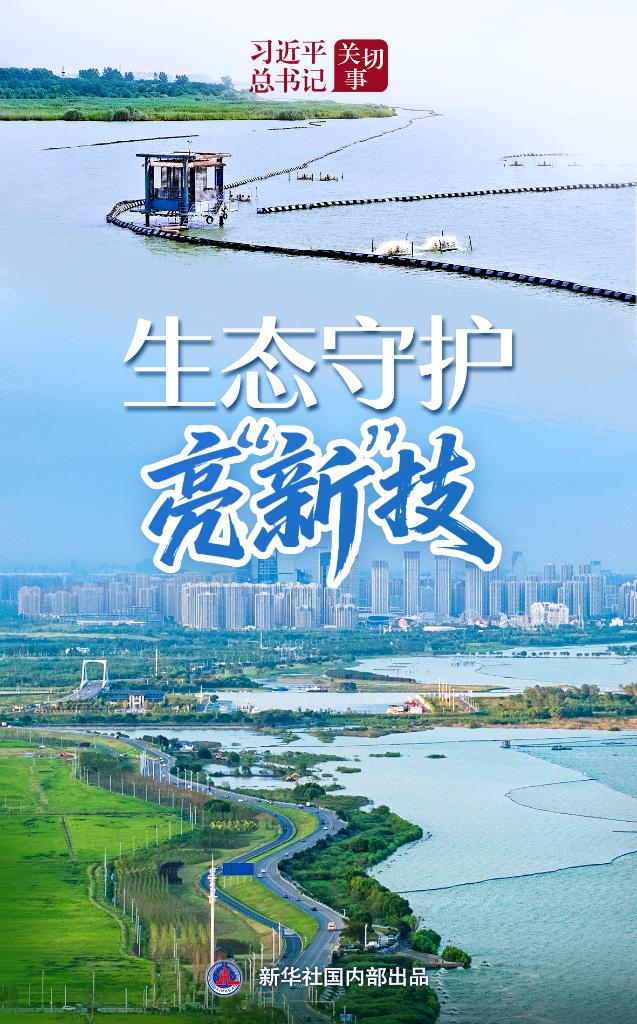
Group 1 - The concept of "Green Mountains and Clear Water are as Valuable as Mountains of Gold and Silver" has been emphasized by General Secretary Xi Jinping, marking its 20th anniversary this year [2] - Technology is identified as a key force in ecological governance and supporting high-quality development, facilitating green development and the protection of natural resources [2] - Various regions have adopted technological innovations in ecological restoration and environmental governance, enhancing the effectiveness of green development initiatives [2] Group 2 - The Chaohu Lake, one of China's five major freshwater lakes, has been highlighted for its ecological importance and the need for effective governance [4] - Local volunteers have been actively involved in cleaning up the lake, addressing severe blue-green algae pollution that previously affected water quality [5][6] - Technological advancements, such as the "Digital Chaohu" system and deep well algae control platforms, have significantly improved the efficiency of blue-green algae removal, processing up to 786,000 cubic meters daily [7][8] Group 3 - In Ningxia, new technologies for desertification control, such as "grass grids + artificial blue-green algae crusts," have been developed to enhance ecological restoration in arid regions [14] - The artificial blue-green algae crusts can effectively stabilize sandy surfaces and promote ecosystem recovery, even under drought conditions [16] - The successful application of these technologies has expanded to 3,600 acres in the Tengger Desert, demonstrating significant progress in combating desertification [17] Group 4 - The "Qinghai Ecological Window" remote video monitoring system has been established to enhance wildlife protection efforts in ecologically sensitive areas [20][21] - The number of monitoring points has increased from 6 to 76, allowing for comprehensive real-time monitoring of various ecological types and landscapes [21] - Technological advancements have improved the efficiency of ecological patrols, enabling better tracking and protection of endangered species like the snow leopard and Tibetan antelope [23][26]
沙源变清波:中国东北“小黄河”变形记
Xin Hua Wang· 2025-08-13 01:39
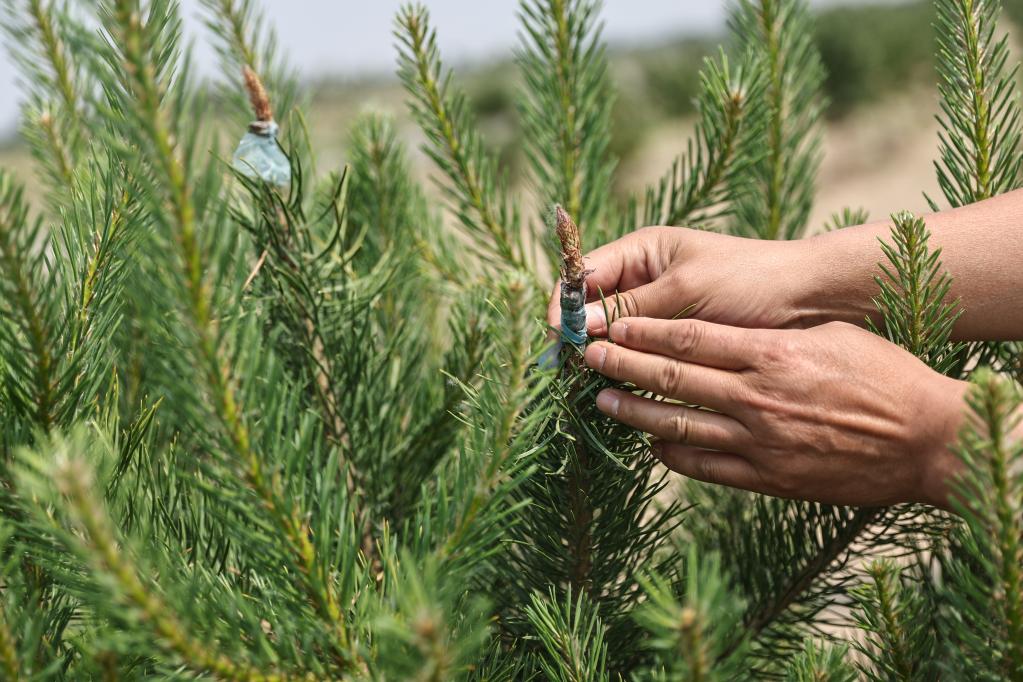
新华社沈阳8月12日电 题:沙源变清波:中国东北"小黄河"变形记 新华社记者洪可润、丁非白 漫步在位于辽宁省阜新市彰武县的柳河临水休闲区,站在观景台远眺柳河,只见清澈的河水倒映蓝天白云,两岸翠绿的水稻正拔节生长,不时有 水鸟在湿地上飞过。 "面对今年汛期以来的几场急雨,我不用再像以前那样担心'悬河'入城了,河中泥沙也大量减少。"彰武县水利事务服务中心河道管理部部长韩丽 霞说。 2025年5月29日,彰武县大德镇林业站工作人员在樟子松嫁接红松穗条示范项目现场检查嫁接后植物的生长情况。新华社记者 潘昱龙 摄 如何重塑母亲河成为摆在彰武面前的难题。2020年,阜新市启动柳河彰武县段综合治理与土地整理工程,实现"留住水、含住沙、改良田、护生 态"。 彰武在北部乡镇选出沙化比较严重的土地,实施旱田改水田,以水含沙发挥水田湿地效应,并通过实施引水入田工程,保障水田的用水需求。 位于彰武县西北部的大冷蒙古族镇曾经是风沙弥漫的"沙窝子"。如今,在大冷镇水田湿地的稻田里,沙地水稻正奋力拔节。今春,这片土壤积累 的营养耕层已经从5年前的极度稀薄,达到了35厘米。 大冷镇上三家子村村民吴百灵说:"将原本的玉米旱田,改成现在的水稻田 ...