
科技创新和产业创新深度融合

Search documents
开盘:三大指数集体低开 稀土永磁板块跌幅居前
Xin Lang Cai Jing· 2025-10-16 02:10
Market Overview - The three major indices opened lower, with the Shanghai Composite Index at 3900.68 points, down 0.29%, the Shenzhen Component at 13064.26 points, down 0.42%, and the ChiNext Index at 3008.37 points, down 0.58% [1] Economic Indicators - As of the end of September, the broad money supply (M2) stood at 335.38 trillion yuan, reflecting a year-on-year growth of 8.4%. The cumulative increase in social financing scale for the first three quarters of 2025 reached 30.09 trillion yuan, which is 4.42 trillion yuan more than the same period last year. Additionally, RMB loans increased by 14.75 trillion yuan in the first three quarters [1] Industry Developments - The Ministry of Industry and Information Technology's Minister Li Lecheng met with Apple CEO Tim Cook to discuss Apple's business development in China and strengthen cooperation in the electronic information sector [2] - The National Development and Reform Commission announced plans to establish 28 million charging facilities nationwide by the end of 2027, including 40,000 "super fast combined" charging guns in highway service areas [1] Company Announcements - Three Flowers Intelligent Control announced that it has noticed rumors regarding large robot orders, which have been confirmed as untrue [5] - Junpu Intelligent plans to raise no more than 1.161 billion yuan through a private placement for smart robot R&D and industrialization projects [5] - Chip Origin announced plans to acquire control of Zhudian Semiconductor, while Nair announced plans to acquire at least 51% of Feilai Testing [6] - Shuo Beid announced a projected net profit increase of 2837%-3204% year-on-year for the third quarter, while Guanghua Technology reported a 1234% increase in net profit for the first three quarters [6] Market Sentiment - Zhongyuan Securities noted that the A-share market experienced narrow fluctuations in the morning and a rebound in the afternoon, with sectors like chemical pharmaceuticals, consumer electronics, and automobiles performing well. The market sentiment is expected to improve due to policy expectations and potential earnings rebounds in the upcoming third-quarter reports [8] - Dongwu Securities observed a similar trend, with the A-share market showing positive movement, particularly in engineering machinery and communication equipment sectors, while cautioning about potential volatility in the ChiNext Index [8]
7个国家数字经济创新发展试验区将推出158项改革举措
Yang Shi Xin Wen· 2025-10-15 09:41
Core Viewpoint - The Chinese government is launching 158 reform measures across seven national digital economy innovation development pilot zones to enhance the market-oriented allocation of data elements, promote technological and industrial innovation, and create internationally competitive digital industry clusters [1] Group 1: Key Areas of Focus - The pilot zones include Tianjin, Xiong'an New Area in Hebei, Shanghai, Jiangsu, Zhejiang, Guangdong, and Sichuan [1] - The reform measures will focus on seven key areas, including the market-oriented allocation of data elements, integration of technological and industrial innovation, and the establishment of data infrastructure [1] Group 2: Goals and Objectives - The initiative aims to accelerate the cultivation of innovative digital economy enterprises and collaboratively advance the foundational systems and infrastructure for data [1] - The ultimate goal is to form a source of regional industrial upgrading, a growth pole for regional economic development, and a new engine for international trade cooperation [1]
放大科技创新和产业创新深度融合的乘数效应
Jing Ji Ri Bao· 2025-10-09 00:54
Core Viewpoint - The integration of technological innovation and industrial innovation is crucial for driving high-quality development and fostering new productive forces in China, as emphasized by President Xi Jinping [1][2]. Group 1: Importance of Integration - The rapid evolution of new technologies, particularly artificial intelligence, underscores the urgency of deepening the integration of technological and industrial innovation [2]. - The multiplier effect from the integration of these innovations can significantly enhance productivity and economic growth, leveraging China's vast market and comprehensive industrial system [2][4]. Group 2: Mechanisms of Value Realization - The multiplier effect refers to the non-linear value increase achieved through the coupling of innovation chains with industrial, financial, and talent chains, facilitating dynamic collaboration between technology and industry [3]. - This integration can transform technological achievements into tangible productivity, thereby enhancing the overall vitality of technological innovation [3]. Group 3: Enhancing Growth Dynamics - As China's economy transitions from high-speed growth to high-quality development, it is essential to overcome traditional constraints through technological and industrial innovation [4]. - The integration can provide robust technical support for industrial upgrades, enhancing both existing industries and fostering new ones, thus injecting sustainable growth into the economy [4]. Group 4: Ensuring Supply Chain Security - The disconnect between technological innovation and industrial application has led to vulnerabilities in critical sectors, necessitating a focus on integrating these innovations to ensure supply chain security [5]. - By aligning research with industrial needs, the integration can address key technological bottlenecks and enhance the resilience of supply chains [5]. Group 5: Transitioning to High-End Manufacturing - The integration of technological and industrial innovation is vital for advancing China's manufacturing capabilities from low-end to high-end, supporting the transition to a manufacturing powerhouse [6][7]. - This shift requires a focus on innovation as the primary driver of development, emphasizing the need for technological breakthroughs to escape the "low-end lock-in" in global supply chains [6]. Group 6: Achievements in Dual Empowerment - Years of technological innovation have established a solid foundation for industrial innovation, with significant increases in R&D investment projected to exceed 3.6 trillion yuan in 2024, reflecting a commitment to enhancing technological supply [8]. - The industrialization rate of enterprise invention patents is expected to reach 53.3% in 2024, indicating improved efficiency in converting technological achievements into economic value [8]. Group 7: Feedback Loop from Industry to Technology - The actual demands of industrial transformation are driving technological innovation towards critical areas, with a significant proportion of patents generated through R&D reflecting this trend [9]. - The economic benefits from industrial innovation are providing stable funding for technological advancements, creating a virtuous cycle of profitability, increased R&D investment, and enhanced technological leadership [9]. Group 8: Systemic Innovation and Collaboration - To effectively stimulate the multiplier effect, a systemic approach is necessary, replacing isolated development with collaborative efforts across the entire innovation chain [10]. - Establishing a diverse technology transfer and financing system is crucial for supporting the commercialization of technological innovations and enhancing cooperation between different stakeholders [10]. Group 9: Demand-Driven Innovation - A mechanism for regularly collecting and publishing industrial technology demands should be established to ensure that technological innovations align with market needs [11]. - Strengthening intellectual property protection and facilitating technology transfer will help bridge the gap between research institutions and enterprises, enhancing the overall innovation ecosystem [11]. Group 10: Optimizing the Innovation Ecosystem - Empowering enterprises as the main players in innovation is essential, with a focus on fostering leading companies that can drive technological advancements in their respective fields [12]. - Continuous improvement of the innovation system and creating an environment that encourages innovation while tolerating failures will be vital for sustaining long-term growth [12].
闫相斌:放大科技创新和产业创新深度融合的乘数效应
Jing Ji Ri Bao· 2025-10-09 00:09
Core Viewpoint - The integration of technological innovation and industrial innovation is crucial for fostering new productive forces and driving high-quality development in China, as emphasized by President Xi Jinping [1][2]. Group 1: Technological and Industrial Innovation Integration - Technological innovation serves as the internal driving force for industrial innovation and development, generating new industries, models, and momentum, while also enhancing the quality of technological supply [1][4]. - Industrial innovation can stimulate technological innovation and provide a critical platform for realizing the value of technological achievements, ensuring that innovations are applied effectively within industries [1][4]. - The deep integration of technological and industrial innovation can create a multiplier effect, enhancing the value of innovations through systematic coupling of innovation chains, industrial chains, funding chains, and talent chains [3][9]. Group 2: Economic Transition and Growth - China's economy has shifted from high-speed growth to a phase of high-quality development, necessitating breakthroughs in technological and industrial innovation to overcome traditional constraints and development bottlenecks [4][5]. - The integration of technological and industrial innovation can provide robust technical support for industrial upgrades, enhancing both existing industries and fostering new ones, thereby injecting sustainable growth into the economy [4][5]. Group 3: Addressing Key Challenges - There are still "bottleneck" issues in critical areas, primarily due to a disconnect between technological innovation and industrial application, which can hinder the quality of industrial chains [5][6]. - The integration of technological and industrial innovation can help ensure the autonomy and security of supply chains by focusing on key areas and weak links in the modern industrial system [5][6]. Group 4: Enhancing Innovation Ecosystem - The long-term accumulation of technological innovation has laid a solid foundation for industrial innovation, with significant increases in R&D investment expected to exceed 3.6 trillion yuan in 2024, reflecting a strong commitment to enhancing technological capabilities [7]. - The collaboration between industries and research institutions has transformed the landscape of technological development, as seen in sectors like intelligent connected vehicles, where joint efforts have led to significant breakthroughs [8][9]. Group 5: Systematic Collaboration and Policy Support - To effectively stimulate the integration of technological and industrial innovation, a systematic approach is required, replacing isolated development with collaborative efforts across various stakeholders [9][10]. - Establishing a mechanism for regular collection and dissemination of industrial technology demands can ensure that technological innovations align with market needs, enhancing the strategic and practical relevance of R&D activities [10][11].
杭州城西科创大走廊与浙江大学启动专项合作
Hang Zhou Ri Bao· 2025-09-30 02:05
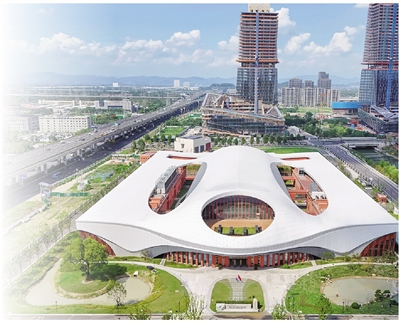
Core Insights - The launch of the "Hangzhou Supergravity Field" marks a significant advancement in China's scientific infrastructure, featuring the world's largest centrifuge, CHIEF1300, which has commenced operations [3][4] - A strategic partnership between Hangzhou's West Science and Technology Innovation Corridor and Zhejiang University aims to enhance the integration of education, technology, and talent development, focusing on the operational efficiency of the supergravity facility [3][5] Group 1: Collaboration and Objectives - The collaboration is designed to ensure the smooth transition of the supergravity facility from trial operation to formal operation, addressing the "last mile" of scientific output [4] - The partnership will establish a research and incubation platform centered around the supergravity facility, fostering an innovation ecosystem that leverages both "Zhejiang University" and "supergravity" technological achievements [4] Group 2: Economic and Technological Impact - The supergravity facility is expected to drive transformative technologies in key industries such as life sciences and new materials, thereby facilitating industrial upgrades [5] - The facility's operation will enhance Hangzhou's recognition within the Yangtze River Delta's innovation landscape, contributing to national scientific and economic goals [5] Group 3: Public Engagement and Future Plans - The agreement includes initiatives to organize public engagement activities to raise awareness of major scientific facilities, thereby fostering a culture of innovation within the city [5] - Future efforts will focus on maximizing the innovative potential of the supergravity facility, promoting collaboration between government and academia to achieve higher levels of technological self-reliance [5]

为扛好经济大省挑大梁的责任担当提供有力金融支撑
Jin Rong Shi Bao· 2025-09-24 03:39
Core Insights - Jiangsu Province is focusing on high-quality financial development to support its economic responsibilities, emphasizing the importance of financial services in achieving this goal [1][2] Group 1: Financial Development Strategies - The provincial government aims to enhance financial services to support the expansion of domestic demand and promote the integration of technological and industrial innovation [2] - There is a call for improved financial service quality for the real economy, particularly in enhancing financial services for consumer goods [2] - The government plans to leverage the role of strategic emerging industry funds to attract long-term capital and establish a comprehensive financing mechanism for technology-based SMEs [2] Group 2: Financial Market Reforms - There is an emphasis on expanding diverse financing channels for private enterprises, encouraging financial institutions to innovate in product and service development [2] - The government is committed to deepening financial market reforms and promoting high-level financial openness [2] - Strengthening local financial regulation and supporting debt resolution efforts are key priorities, alongside combating illegal financial activities [2]
2025现代服务业高质量发展大会聚焦“创新发展”
Xin Hua Wang· 2025-09-18 14:46
Core Insights - The 2025 Modern Service Industry High-Quality Development Conference was held in Chongqing, focusing on the theme "New Engine, New Prospects - Writing a New Chapter for High-Quality Development of the Modern Service Industry" [1] - The conference gathered representatives from various enterprises and experts to discuss the future of high-quality development in China's service industry [1] Group 1: Government Initiatives - Chongqing is promoting the deep integration of technological and industrial innovation to accelerate the establishment of a leading area for modern service industry development in the inland region [1] - The city plans to leverage the logistics and operational organization center role of the Western Land-Sea New Corridor to deepen the comprehensive pilot for expanding service industry openness [1] - Efforts will be made to accelerate the construction of a modernized transportation and comprehensive service system [1] Group 2: Media and Communication - Xinhua News Agency aims to fulfill its role as a mouthpiece and think tank for the Party Central Committee, expanding channels for communication and cooperation [1] - The agency will focus on discovering new trends, movements, and cases in the development of the modern service industry to create a favorable public opinion environment for innovation and high-quality development [1] Group 3: Conference Activities - The conference will host multiple forums and thematic exchanges centered on "Integration of Intelligent Manufacturing and Service Innovation: Collaborative Development of Advanced Manufacturing and Modern Service Industries" and "New Heights of Openness: Service Industry Institutional Openness Driven by the Western Land-Sea New Corridor" [1]
“未来”号科考船开展深海试验
Zhong Guo Zi Ran Zi Yuan Bao· 2025-09-18 07:58
"未来"号总长110.8米,满载排水量7000吨,最大航速超15节,定员80人,续航力大于10000海里, 自持力超60天,具备无限航区航行能力,在绿色技术、智能化等方面实现了多项创新突破。值得一提的 是,与传统科考船或试验船相比,"未来"号全船采用模块化设计,预留了舱室空间和30多个标准化接 口,如同"乐高积木"一般,可实现发电机组、雷达、科考设备、智能系统等多种船用器件、设备机系统 的便捷加换装。 "未来"号的建设以及后期的产学研合作,将为无锡、连云港南北共建开创崭新模式——变传统"输 血式"帮扶,为更大力度推动科技创新和产业创新深度融合,立足沿江沿海城市的自然地理位势和创新 优势,跨区域分工,实现"江强海兴"的生动图景。 9月15日,随着一声长长的鸣笛,"未来"号船从母港连云港港口缓缓驶出,标志着这艘江苏无锡、 连云港合作共建的我国首艘深远海绿色智能技术试验船,正式进入深海试验阶段。 据介绍,无锡是"未来"号诞生地与"智慧核心",肩负着研发设计、关键技术攻关和船舶建造的重 任;而连云港则是母港与"实战舞台",为其提供了深远海装备起锚地、完善的船舶保障和广阔的试验场 景。 ...
如何推进“十五五”科技强国建设?科技部回应
Yang Shi Xin Wen· 2025-09-18 07:46
Core Viewpoint - The Chinese government emphasizes the importance of the next five years as a critical period for achieving the goal of becoming a technology powerhouse by 2035, focusing on five key areas of work in the technology sector [1][2] Group 1: Key Areas of Focus - Strengthening original and leading technological breakthroughs by planning and launching new major national science and technology projects, enhancing organized basic research, and continuously increasing high-quality technology supply [1] - Promoting deep integration of technological innovation and industrial innovation, reinforcing the role of enterprises as the main body of technological innovation, and accelerating the establishment of concept verification and pilot testing platforms to facilitate large-scale application of new technologies, products, and scenarios [1] - Advancing the development of education and technology talent in a coordinated manner, enhancing collaboration between education and research, and cultivating top-tier leading talents and innovative teams through major scientific research tasks to build a competitive advantage in talent [1] - Deepening reforms in the technology system, enhancing collaboration among national strategic technological forces, accelerating the transformation and application of major technological achievements, and establishing a favorable environment for unleashing the vitality and potential of technological innovation [1] - Building a globally competitive open innovation ecosystem by continuing to implement the "Belt and Road" technology innovation action plan, actively initiating and organizing international large-scale scientific plans and projects, and participating deeply in global technology governance [2]
浙江市场监管“一站式”服务迭代升级赋能企业创新发展
Mei Ri Shang Bao· 2025-09-02 22:16
Group 1 - The Zhejiang Provincial Market Supervision Administration is enhancing the quality infrastructure one-stop service platform to support the integration of technology and industry innovation, aiming to establish 25 provincial key platforms by the end of the year and develop at least 120 comprehensive service plans for enterprises [1][3] - The upgraded service platform integrates various market supervision functions and policy tools, creating a "quality housekeeper" service package to provide comprehensive quality technical services for enterprises [3] - The platform has already established 177 service points across the province, serving over 50,000 enterprises annually, and aims to increase public awareness and usage through open month activities [3] Group 2 - The one-stop service model in Hangzhou has successfully facilitated knowledge property pledge financing, helping companies address financing challenges, with one company receiving 50 million yuan in financing and 83,000 yuan in interest subsidies [2] - The service model integrates national quality infrastructure resources and has established 31 service stations covering 20 service items, including business registration and quality standards [2]