
开放创新生态

Search documents
政府发文:力争新设新型研究型大学
Xin Lang Cai Jing· 2026-02-27 10:38
Group 1: Core Objectives of the Plan - The plan aims to optimize the structure of higher education in Hainan Province and promote the classification development of local universities, with the goal of establishing new research-oriented universities [2][12][19] Group 2: Technology Innovation System - The plan includes the construction of a multi-level technology innovation system, establishing a laboratory matrix led by national laboratories and key laboratories, supported by provincial laboratories [4][15] - It emphasizes the development of technology innovation platforms and the establishment of innovation alliances in key industries such as natural rubber, wind power, and biomedicine [4][15] Group 3: Open Innovation Ecosystem - The plan promotes strengthening technological exchanges and cooperation with key countries along the Belt and Road Initiative in fields like aerospace and deep-sea exploration [5][16] - It encourages foreign R&D institutions to set up research centers in Hainan and fosters international scientific collaboration among higher education institutions and research institutes [5][16] Group 4: Integration of Education, Technology, and Talent - The plan focuses on the integration of education, technology, and talent development, establishing a coordinated mechanism for strategic implementation [7][18] - It aims to expand the enrollment of specialized graduate programs and promote the establishment of a high-level research institute in Hainan [7][18] Group 5: Advancement of Higher Education - The plan supports the continuous development of Hainan University and the establishment of first-class local universities, including Hainan Normal University and Hainan Medical University [8][19] - It emphasizes the adjustment and optimization of academic programs to cultivate distinctive and advantageous disciplines [8][19] Group 6: Vocational Education Integration - The plan seeks to optimize the layout of vocational education by integrating various resources and designing a cohesive framework that connects different levels of vocational education [9][20] - It aims to strengthen the construction of high-level vocational education and foster industry-education integration [9][20]


陈吉宁分别会见勃林格殷格翰股东委员会主席冯保和、蔡司集团总裁兼首席执行官裴安德
Di Yi Cai Jing· 2026-02-09 00:22
Group 1 - Shanghai is focusing on creating a long-term, stable, transparent, and predictable development environment to provide new opportunities for global enterprises [2] - The "14th Five-Year Plan" emphasizes high-level opening up and prioritizes technological innovation, aiming for high-quality development in Shanghai [2] - The biopharmaceutical industry is one of the three key leading industries in Shanghai, with a call for increased innovation and collaboration in drug development from global leaders like Boehringer Ingelheim [2] Group 2 - Zeiss, a leading manufacturer of optical and optoelectronic equipment, is encouraged to enhance its regional headquarters functions and increase R&D and manufacturing presence in Shanghai [2] - Both companies expressed commitment to deepening innovation and collaboration in the Chinese market, with Boehringer Ingelheim focusing on human pharmaceuticals and animal health [4] - Zeiss highlighted the importance of Shanghai's business environment and strategic development plans, reinforcing its investment confidence in the region [4]

马来西亚科学院CEO:中国证明非西方国家亦可打造惠民AI平台
2 1 Shi Ji Jing Ji Bao Dao· 2026-02-05 07:22
Core Viewpoint - China has positioned openness, innovation, and cooperation as priority themes for this year's APEC meeting, aiming to address regional challenges such as food security and public health through collaborative efforts with APEC economies [1]. Group 1: China's Role in APEC - China is taking a leading role in promoting technological innovation cooperation among APEC economies, as highlighted by the CEO of the Malaysian Academy of Sciences, Hazami Habib [1]. - The emergence of Chinese-developed AI platforms like DeepSeek and WeChat demonstrates China's capability to break the technological monopoly traditionally held by Western countries, showcasing a more diverse and inclusive platform ecosystem [1]. Group 2: Benefits of Multiple AI Platforms - From a security perspective, having multiple AI platform options is beneficial for Asia-Pacific economies, as it enhances technological inclusivity [1]. - The development of autonomous AI and digital platforms in China has illustrated the concept of technology's universality, according to Habib [1]. Group 3: Collaborative Initiatives - The Malaysian Academy of Sciences is engaging in cultural exchange projects with Chinese research institutions, including a six-month training program for researchers and biennial seminars to explore collaboration opportunities [2].
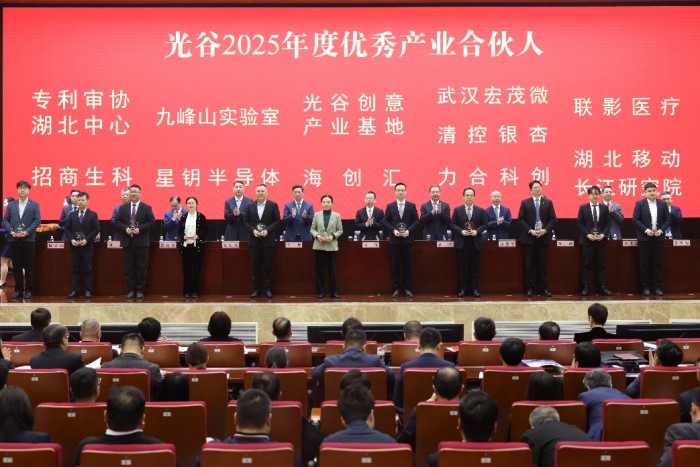
海创汇荣获“光谷2025年度优秀产业合伙人”,双向赋能助力“世界光谷”建设
Sou Hu Wang· 2026-01-28 08:55
Group 1 - The East Lake High-tech Zone held an economic work conference and a mobilization meeting for the "World Optics Valley" construction, recognizing individuals, enterprises, and institutions for their significant contributions to regional development [1] - Wuhan Haichuanghui Technology Co., Ltd. was awarded the title of "Outstanding Industrial Partner" for its exceptional contributions in promoting innovation and building an industrial ecosystem for large, medium, and small enterprises [1][7] Group 2 - Haichuanghui, as a global entrepreneurial acceleration platform created by Haier Group, established the Central China Ecological R&D Center in Optics Valley in January 2024, focusing on Haier's industrial chain needs and collaborating with universities, research institutions, and various enterprises [3] - The center has released over 150 technical cooperation demands and facilitated more than 60 connections between large, medium, and small enterprises, resulting in over 10 direct collaborations and orders with Haier's industrial chain [3] - In January 2026, Haichuanghui will lead the establishment of the "Haier-Optics Valley Scenario-Driven Center," leveraging Haier's rich scenario resources in smart home, health, industrial internet, and automotive sectors to foster innovation and collaboration with local institutions [5] - The recognition as an outstanding industrial partner reflects Haichuanghui's role in promoting regional industrial upgrades and building an open innovation ecosystem, with plans to deepen cooperation in smart home, optoelectronics, and life health sectors [7]
开放创新的生态才是“杀手锏” | 经观社论
Jing Ji Guan Cha Bao· 2025-12-20 05:41
Core Viewpoint - The article discusses the supply chain competition between DJI and Yingshi, highlighting a broader trend across various industries where leading companies require exclusive agreements from suppliers, raising questions about the implications for innovation and competition in China's manufacturing sector [1][2]. Group 1: Supply Chain Dynamics - The phenomenon of "one or the other" in supply chain agreements is not unique to the drone industry but is observed in consumer electronics and home appliances [1]. - Leading companies seek influence over their supply chains, which can be justified as a means to protect prior innovation investments [1]. - However, when exclusivity extends beyond core components to semi-custom parts and secondary suppliers, it can lead to excessive control over the supply chain, potentially resulting in non-market resource squeezing [1]. Group 2: Long-term Implications - Short-term strategies to control resources may hinder competitors but could ultimately obstruct knowledge flow and weaken the overall innovation capacity of the supply chain [2]. - The true competitiveness of Chinese manufacturing relies on a complete, collaborative, and flexible industrial system, supported by numerous small and medium enterprises [2]. - An advanced manufacturing nation thrives not on closed-off competitive advantages but on an open ecosystem that fosters growth and innovation among all participants [2]. Group 3: Recommendations for Improvement - Clearer regulations are needed to define the boundaries of monopoly and unfair competition, protecting smaller players and guiding market leaders to avoid endless commercial disputes [3]. - Companies should adopt tiered supply chain cooperation models, ensuring necessary protections for unique technologies while maintaining openness for standardized components [3]. - Industry leaders must balance protecting innovation with promoting industry progress, recognizing that true competition lies in advancing the entire ecosystem rather than merely defeating rivals [3].
长沙力争到2030年整体创新能力迈入全球创新城市前列
Zhong Guo Xin Wen Wang· 2025-12-15 17:33
Core Viewpoint - Changsha aims to establish itself as a global research and development center city by 2030, enhancing its overall innovation capabilities to rank among the world's leading innovative cities [1][2] Group 1: Innovation and Development Goals - During the "14th Five-Year Plan" period, Changsha will focus on the "three highs and four new" blueprint to drive innovation [1] - The city plans to create a high-quality innovation space and accelerate the construction of the Xiangjiang Science City as a key driver for scientific innovation [1] Group 2: Research and Development Infrastructure - Changsha will enhance the proportion of R&D institutions with "four global" attributes and establish high-level R&D institutions in cutting-edge fields [1] - The city aims to attract more national key laboratories and innovation centers, as well as large-scale scientific facilities [1] Group 3: Industry and Technology Focus - The city is focusing on modern industrial systems, aligning innovation chains with industrial chains to strengthen technological support in key areas such as equipment manufacturing, materials, and seed industry [1] - Changsha seeks to develop unique advantages in key fields like brain-computer interfaces, quantum technology, and embodied intelligence [1] Group 4: Technology Transfer and Ecosystem - The city is working to create an efficient technology transfer system and aims to establish the Chang-Zhu-Tan National Technology Transfer Demonstration Zone [2] - Efforts will be made to promote the growth of technology-based enterprises and ensure comprehensive coverage of R&D institutions in large-scale industrial enterprises [2] Group 5: Talent and Global Integration - Changsha is committed to fostering a high-level open innovation ecosystem by deepening collaboration with regions like the Guangdong-Hong Kong-Macao Greater Bay Area and promoting "technology going global" [2] - The city emphasizes investment in human resources and aims to build a vibrant and well-structured innovation talent pool [2]
锻造新兴支柱产业硬实力
Jing Ji Ri Bao· 2025-12-11 21:37
Core Viewpoint - The article emphasizes the importance of developing emerging pillar industries as a key task in building a modern industrial system, which is crucial for enhancing the foundation of the real economy and achieving effective qualitative and reasonable quantitative economic growth [1]. Group 1: Development of Emerging Industries - The "14th Five-Year Plan" period has seen rapid development of strategic emerging industries and significant progress in the modernization of industrial chains, necessitating a focus on overcoming development bottlenecks during the "15th Five-Year Plan" period [1]. - Emerging industries such as new materials, aerospace, and low-altitude economy have a solid development foundation in China, highlighting the urgency to transform these into pillar industries to enhance competitiveness in global supply chains [1]. Group 2: Practical Approaches to Industry Development - The development of emerging pillar industries must be pragmatic and tailored to local conditions, avoiding blind imitation and overreaching ambitions that waste resources and miss opportunities [2]. - It is essential to identify local strengths and focus on optimizing the combination of production factors to achieve differentiated development while ensuring a coordinated national strategy [2]. Group 3: Innovation and International Cooperation - Creating an open innovation ecosystem is vital, which includes expanding international cooperation and attracting investment and talent during the "going out" process [3]. - The establishment of platforms for technological innovation, service trade, and industrial development is crucial for fostering globally competitive emerging pillar industries [3].
多所港澳高校发布共同倡议 助大湾区建开放创新生态
Zhong Guo Xin Wen Wang· 2025-12-07 10:18
Core Viewpoint - Twelve universities from Hong Kong and Macau have jointly launched an initiative to enhance the integration of their institutions into the Greater Bay Area's international technology innovation center, aiming to establish a globally competitive open innovation ecosystem [1][2] Group 1: Initiative Details - The initiative involves collaboration among twelve universities, including notable institutions such as the University of Hong Kong and the Chinese University of Hong Kong, to create a new paradigm of deep technological cooperation [1] - The focus will be on organized research to tackle significant scientific and technological challenges, aiming to produce globally influential original and leading technological achievements [1] Group 2: International Collaboration and Innovation - The universities will lead or participate in international scientific programs and organizations to facilitate the Greater Bay Area's involvement in global innovation governance [2] - Efforts will be made to simplify the cross-border use of research equipment and samples within the Greater Bay Area, as well as to enable compliant cross-border flow of research data [2] Group 3: Industry Collaboration and Application - The initiative emphasizes leveraging the Greater Bay Area's rich application scenarios and industrial chain advantages to accelerate the validation of research outcomes and foster partnerships with industry parks, technology transfer institutions, and incubators [2] - There will be a focus on deepening collaboration with enterprises in the Greater Bay Area for joint technology research and development, technology transfer, and industrialization, creating an efficient innovation ecosystem driven by enterprises and guided by universities [2]
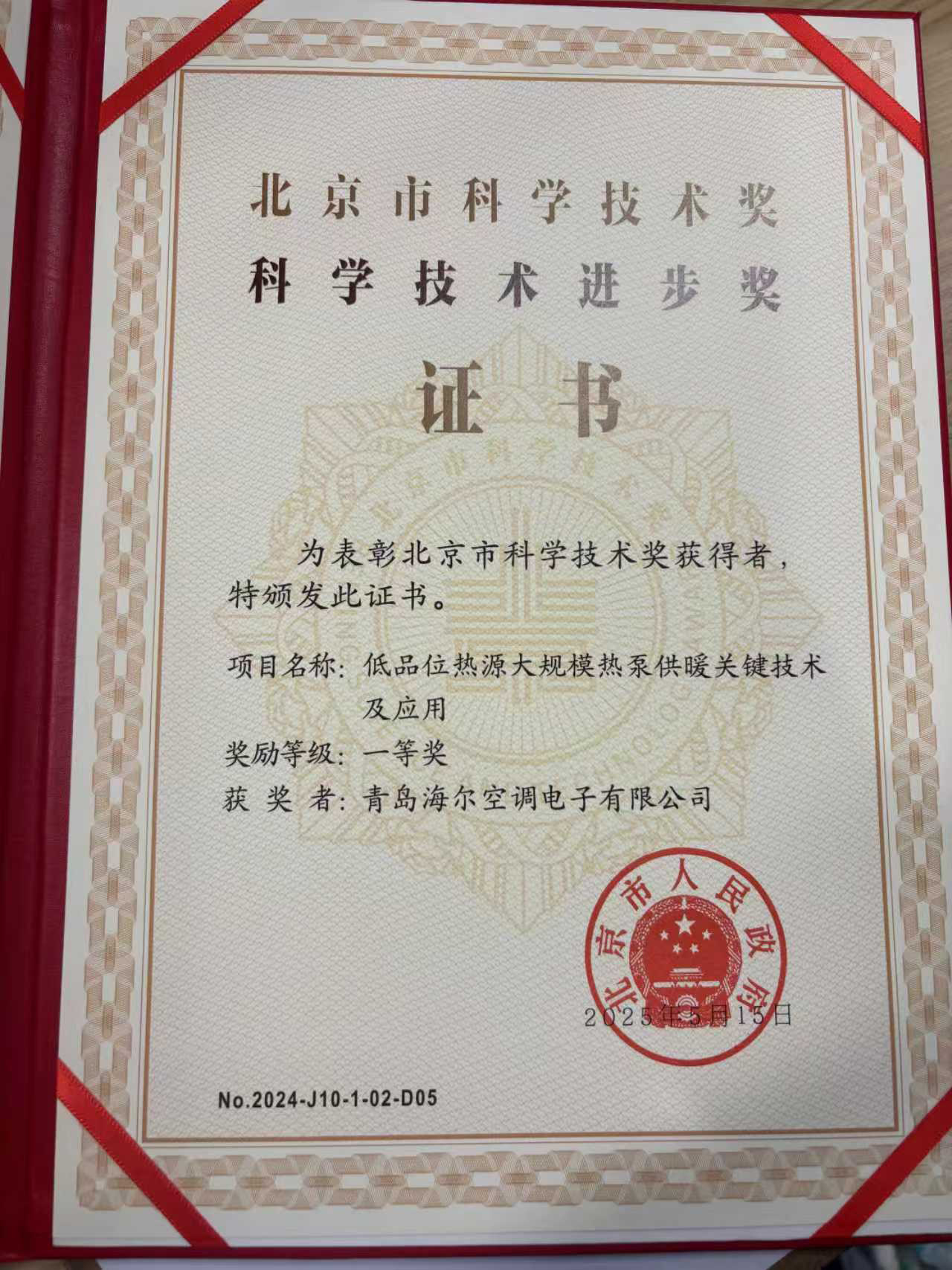
海尔智慧楼宇荣获北京市科学技术进步一等奖
Xi Niu Cai Jing· 2025-11-20 03:00
Core Insights - Haier Smart Building won the First Prize for Scientific and Technological Progress at the 2024 Beijing Science and Technology Awards, being the only equipment company among the eight awardees to achieve technology implementation [1] Group 1: Technological Breakthroughs - Haier Smart Building made significant advancements in low-grade heat source heat pumps, particularly with the introduction of the megawatt-level multi-condition magnetic levitation heat pump unit, addressing industry pain points and differentiating itself from competitors [3][7] - The COP (Coefficient of Performance) of the heat pump unit reached 5.1, representing a 20% efficiency improvement over traditional large heat pumps, thus meeting user demands for heating stability and energy savings in harsh and variable conditions [7] Group 2: Innovation and Recognition - Haier has received the National Science and Technology Progress Award three times, with notable projects including the variable frequency multi-unit technology in 1998 and the research on building thermal environment theory in 2021 [8][10] - The company has established an open innovation ecosystem, linking over 250,000 global technology experts and more than 1 million top resources, which facilitates rapid responses to user needs [10] Group 3: Market Performance - Haier's magnetic levitation central air conditioning has maintained the global number one position for seven consecutive years, while its multi-connected units and air source heat pumps have also led the Chinese market for five years [10] - Despite a double-digit decline in the industry, Haier Smart Building achieved double-digit growth, contributing new value to the HVAC market [10]

营造创新生态 让年轻人有盼头、有干劲
Zhong Guo Qing Nian Bao· 2025-10-30 22:44
Core Viewpoint - The recent proposal by the Central Committee emphasizes the importance of developing a globally influential education, science, and talent center, highlighting the need for a competitive open innovation ecosystem to support young scientific talent in innovation and entrepreneurship [1] Group 1: Challenges Faced by Young Talent - Young talent development is constrained by traditional hierarchies in some fields, limiting their access to project leadership and resources despite innovative ideas [2] - Institutional pressures in research units push young scientists towards short-term results, hindering long-term, high-risk foundational research [2] - Real-life issues such as housing, marriage, and children's education create additional pressures for young talent in urban environments, affecting their ability to integrate and contribute effectively [2] Group 2: Recommendations for Improvement - Institutional innovation is crucial to dismantle outdated hierarchies, advocating for a talent evaluation system based on innovation capability and contribution rather than seniority [2] - Optimizing the research ecosystem is essential to foster an environment that encourages exploration and tolerates failure, including longer evaluation periods for foundational research [3] - Addressing practical concerns through housing support, educational access for children, and healthcare can help retain talent and allow them to focus on their work [3] Group 3: Building an Open Innovation Ecosystem - Creating platforms for global collaboration is vital for young talent, including participation in international conferences and joint research projects [4] - Improving the business environment by streamlining innovation and entrepreneurship approval processes and establishing incubation bases can facilitate the transformation of innovative ideas into productive outcomes [4] - The proposal outlines a clear direction for talent development, emphasizing the need for institutional innovation, quality services, and an open ecosystem to unleash the creative potential of young talent [4]
