AI for Science

Search documents
数字经济双周报(2025年第22期):美国启动“创世纪计划”,以AI驱动科研革命-20251210
Yin He Zheng Quan· 2025-12-10 08:12
美国启动"创世纪计划",以 AI 驱动科研革命 —— 数字经济双周报(2025 年第 22 期) 2025 年 12 月 10 日 核心观点 ⚫ 本期焦点:美国近期启动的"创世纪计划"显示其试图通过人工智能全面 重塑国家科研体系,并在全球科技竞争中保持主导地位。 该计划由总统行政令推出,由能源部负责执行,重点是整合国家实验室的超级 计算机、科研数据与安全云环境,建设统一的"美国科学与安全平台"。平台 将支撑高性能计算、科学基础模型与自动化实验等能力,使科研人员能够在统 一框架 下利用 数十年 积累 的 实验数 据开展 模型训 练与 实 验推演 ,提高 科研效 率。计划同时推动企业深度参与,OpenAI、谷歌、微软、英伟达等公司获得 优先合作机会,并在标准制定中拥有更大影响力,企业也将以算力和工程能力 反哺政府项目。 当前,欧洲、中国等地区都在积极发展"AI for Science"。美国也尝试通过 制度与 资源整 合把人 工智 能 纳入科 研主链 条,以 争取 下 一阶段 科学创 新的主 导权。 分析师 彭雅哲 :010-80927607 :pengyazhe_yj@chinastock.com.cn 分析师 ...
NeurIPS 2025大洗牌:清华390篇险胜Google,一张图看懂全球AI权力迁徙
Xin Lang Cai Jing· 2025-12-09 13:43
Core Insights - NeurIPS 2025 showcased a significant shift in the AI landscape, with a record 5825 accepted papers, indicating a new order emerging in the field [1][29] - The bipolar structure between China and the US is solidifying, with diminishing returns on the architecture of large language models (LLMs) as reinforcement learning and embodied intelligence take center stage [1][28] - The boundary between academia and industry has blurred, with computational power and talent becoming the key to achieving state-of-the-art (SOTA) results [1][28] Group 1: Overall Statistics - Tsinghua University surpassed Google in total accepted papers, achieving 390 papers (2.18%) compared to Google's 388 papers (2.17%), marking a significant achievement for Chinese academia [4][32] - In the Top 50 weighted share, Google leads with 4.84%, while Tsinghua follows closely at 4.73%, highlighting the concentration of AI resources globally [5][34] Group 2: Regional Insights - The global AI research landscape is dominated by three key regions: Beijing, Shanghai, and the San Francisco Bay Area, with Tsinghua, Peking University, and Shanghai Jiao Tong University representing China's academic strength [6][35] - The structural differences in the research ecosystem between the US and China are evident, with US strengths lying in tech giants like Google and Meta, while China's core engines are its top universities [6][35] Group 3: Quality of Research - In terms of high-quality papers (Oral + Spotlight), Google regained the top position with a share of 2.82% (72 papers), while Tsinghua maintained a strong second place with 2.54% (65 papers), indicating a competitive edge in breakthrough work [10][39] - The gap in high-quality research between Tsinghua and Google is narrowing, with only a 7-paper difference, suggesting that Chinese universities are making significant strides in quality [10][39] Group 4: Trends in AI Research - The field of Reinforcement Learning (RL) and Robotics has become the fastest-growing segment, with a total of 2302 papers, reflecting a 39.4% year-over-year growth [12][14] - China has captured 29.9% of the RL and Robotics market share, with an impressive growth rate of 81.1%, while the US holds 32.1% [17][47] Group 5: Emerging Areas - The AI for Science sector is experiencing a 37.4% annual growth rate, with balanced contributions from the US (31.7%), China (29.5%), and Europe (23.1%), indicating a competitive global landscape [20][52] - Europe is focusing on Explainable AI, holding a 23.5% share, second only to the US, as it seeks to establish regulatory frameworks for AI [25][55]



为什么一些公司和行业会变得比别的公司、行业更好?|36氪WISE2025商业之王大会嘉宾超级金句
3 6 Ke· 2025-12-09 08:28
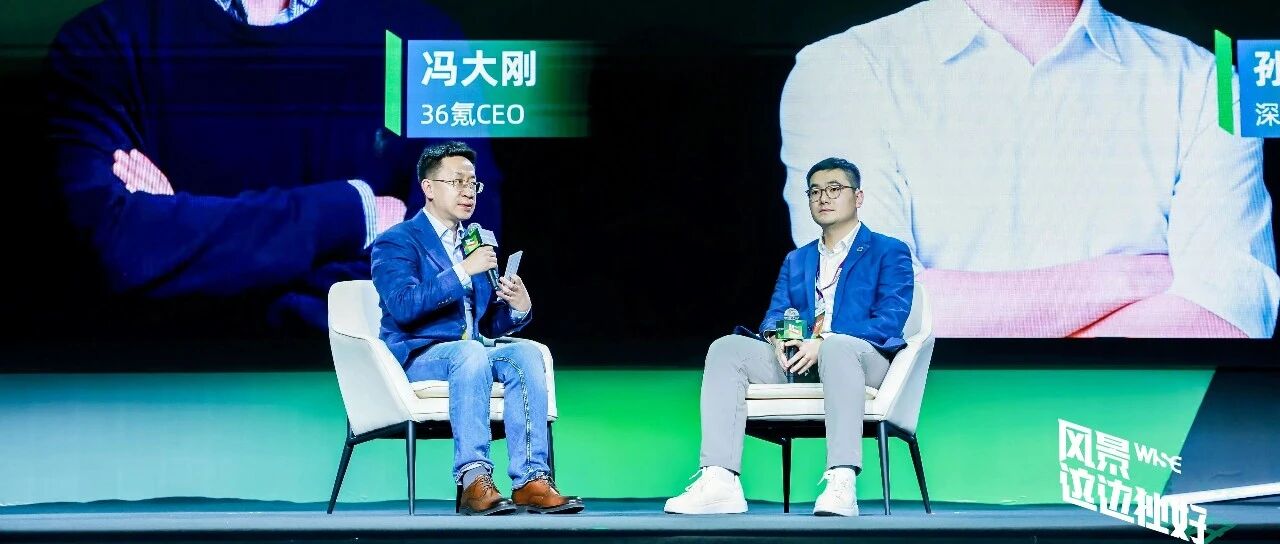
11月27-28日,36氪WISE2025商业之王大会在北京朝阳798艺术区传导空间举办。大会在融合传统工业美学 与当代艺术氛围的独特场域中,聚集了来自智能硬件、人工智能、机器人、生命科学、零售、投资等兼具 前沿和传统领域的商业领袖与创新实践者,围绕"风景这边独好"的大会主题,展开了一场场高质量的思想 碰撞与对话,在初冬时节为中国商业界注入信心与能量。 "为什么有一些公司、有些行业会变得比别的公司、行业更好?'风景这边独好'的本质到底是什么?"36氪 CEO冯大刚在开场致辞中便向在场所有人发问,他以三个关键词"坚持、科技、创新"给出了答案。"对于创 业者来说,创新是一场'艰难求生'的冒险,因热爱而坚定方向,因勇气而拥有力量。"影石Insta360创始人 刘靖康也在与冯大刚的对话之中意味深远地回顾了自己的创业之路。 让我们一起通过现场嘉宾的超级金句再次重温刚刚落幕的WISE2025,回顾2025中国商业的一幕幕"好风 景"。 冯大刚 36氪CEO 为什么有一些公司、有些行业会变得比别的 公司、行业更好?"风景这边独好"的本质 到底是什么? 今天我们可以总结出三个词: 坚持、科技、创新。那些以科技为工具,把 创新 ...

大湾区多样性算力应用创新峰会在深举行 “灵机晟算 鹏乘万芯”
Shen Zhen Shang Bao· 2025-12-05 16:27
Core Insights - The "Diversity Computing Application Innovation Summit" was held in Shenzhen, focusing on the development of diverse computing applications in the Greater Bay Area [1] - The establishment of the Greater Bay Area Diversity Computing Application Innovation Research Institute aims to promote autonomous application innovation and the development of super-intelligent integration technology [1][2] - The summit featured reports from prominent academicians discussing advancements in earthquake risk assessment, the integration of AI with high-performance computing, and sustainable development of supercomputing [2] Group 1 - The summit was attended by over 200 representatives from government, universities, research institutions, leading enterprises, and innovation platforms [1] - The research institute will focus on creating a high-level computing innovation platform that integrates technology research, application development, and talent cultivation [1] - A total of 16 initial projects were launched, covering various fields such as earthquake prediction, drug design, and materials research [1] Group 2 - Academician Chen Xiaofei presented on earthquake disaster risk assessment, highlighting the importance of physical modeling for accurate earthquake information [2] - Academician Zheng Weimin emphasized the necessity of AI and high-performance computing collaboration, discussing the evolution of supercomputing systems [2] - Academician Qian Depei addressed the challenges of supercomputing sustainability, advocating for a collaborative investment and operation mechanism among government, enterprises, and application sectors [2] Group 3 - A roundtable discussion focused on exploring new paradigms for supercomputing applications across various fields, including biomedicine and new material development [3] - Experts from institutions like Tsinghua University and the Chinese University of Hong Kong (Shenzhen) participated in the dialogue [3]
重磅标准:我国牵头组建国际标准化组织生物技术委员会类器官工作组
仪器信息网· 2025-12-05 09:07
Core Insights - The sixth China Stem Cell and Regenerative Medicine Conference has made significant strides in the standardization of biotechnology, marking a milestone for the industry’s high-quality development [3][4]. Group 1: Conference Overview - The conference, themed "Standardization, Integration, Innovation," aimed to create a high-level platform for collaboration and discussion on the standardization of stem cell and regenerative medicine [3]. - Representatives from research institutions, universities, hospitals, enterprises, and regulatory bodies gathered to discuss core topics such as regulatory systems, resource and quality standards, cutting-edge technology applications, and clinical translation [3][4]. Group 2: International Standards and Collaborations - Chinese researchers led the establishment of the International Organoid Working Group under the International Organization for Standardization (ISO), which aims to create international benchmarks for organoid technology [4][5]. - The conference featured the release of two international standards and five group standards developed by the Chinese Society for Cell Biology, emphasizing China's role as a leader in the field [4][5]. Group 3: Technological Advancements and Applications - Organoids, which are miniature tissue models cultivated from stem cells, can accurately simulate the physiological states and disease processes of human organs, holding significant value in biomedical research [5]. - The establishment of a standard system is expected to enhance China's participation in international cooperation and contribute positively to the global scientific innovation ecosystem [5][6]. Group 4: Resource Sharing and Network Expansion - The conference also marked the official announcement of the first sub-library of the National Stem Cell Resource Bank in Chongqing, enhancing the resource network layout [6]. - New members were added to the collaborative platform, enriching the types of resources and technical capabilities available for shared applications [6].

国产GPU第一股诞生!摩尔线程正式登陆科创板
Xin Lang Cai Jing· 2025-12-05 02:49
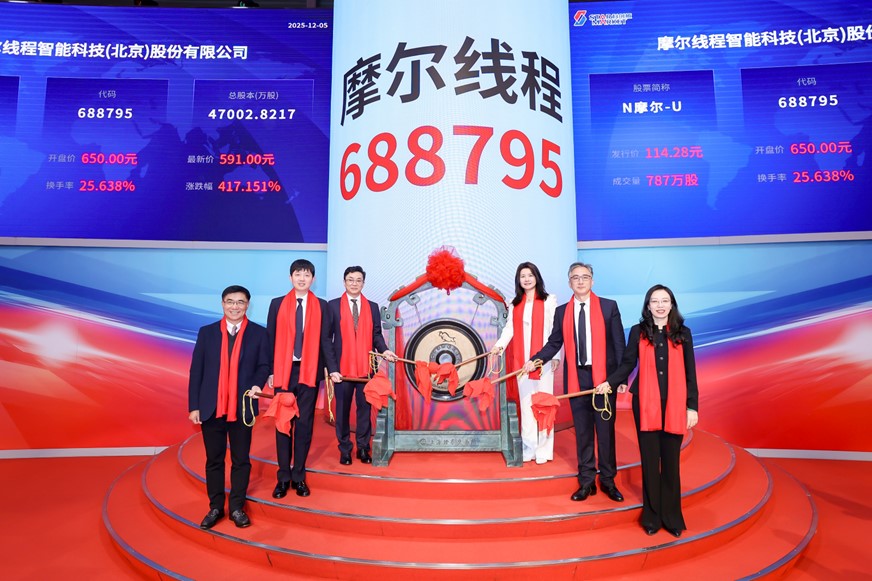
Core Viewpoint - Moer Technology has officially listed on the Shanghai Stock Exchange's Sci-Tech Innovation Board, becoming the first fully functional GPU company in China to enter the capital market [1] Group 1: Company Overview - Moer Technology is recognized as a leading domestic enterprise in the fully functional GPU sector, emphasizing independent innovation and forward-looking vision in its development [1] - The company's growth aligns with national strategies aimed at promoting high-level technological self-reliance and building a secure and reliable computing power system [1] Group 2: Technological Capabilities - Moer Technology has established a robust differentiated advantage and full-stack technical capabilities through its "full-function + MUSA" collaborative technology system [1] - The company is equipped to address future computing scenarios such as embodied intelligence, digital twins, physical AI, and AI for Science, showcasing its critical architectural capabilities [1] Group 3: Product Matrix - Moer Technology has developed a comprehensive product matrix that covers artificial intelligence, scientific computing, and graphics rendering, supporting a full range of computing acceleration products [1] - The company's offerings are designed to comprehensively support "cloud-edge-end" scenarios, indicating a versatile approach to computing solutions [1]
股票代码688795!摩尔线程正式挂牌科创板!
Zhong Jin Zai Xian· 2025-12-05 02:44
Core Insights - Moore Threads officially listed on the Shanghai Stock Exchange's Sci-Tech Innovation Board on December 5, 2025, becoming the first fully functional GPU company in China to enter the capital market, marking a significant milestone in its five-year entrepreneurial journey [1] - The listing is a recognition of the company's commitment to independent innovation and rapid product iteration in the GPU computing power sector, symbolizing a new starting point for the independent development of high-end GPUs in China [1][4] Company Development - Since its establishment in 2020, Moore Threads has focused on independent innovation and has made significant advancements in the design and research of fully functional GPU chips, aligning with national strategies for technological self-reliance and building a secure computing power system [4][5] - The company has successfully mass-produced five chips and iterated four generations of GPU architectures and intelligent SoC products, creating a comprehensive product matrix that supports AI, scientific computing, and graphics rendering across various scenarios [5][8] Technological Advancements - Moore Threads has developed the MUSA unified system architecture, achieving breakthroughs that allow a single chip to support AI computing acceleration, graphics rendering, physical simulation, scientific computing, and ultra-high-definition video encoding [5] - The company has established a strong differentiation advantage and full-stack technical capability, positioning itself uniquely in the industry and enabling it to address future computing scenarios such as embodied intelligence and AI for Science [5][6] Market Performance - From 2022 to 2024, the company's revenue grew at a compound annual growth rate of 208.44%, with 2025's first half revenue reaching 702 million yuan, surpassing the total of the previous three years [8] - The AI computing business contributed 94.73% of the revenue, reflecting the company's focus and leading advantage in its core sector [8] Strategic Positioning - The national strategy emphasizes high-end chips as a key area for development, establishing GPUs as essential components in driving industrial upgrades and shaping future competitiveness [10] - The funds raised from the IPO will be directed towards the research and development of next-generation AI training and inference chips, graphics chips, and AI SoC chips, aiming to strengthen the company's technological leadership in AI computing and graphics [10]
摩尔线程成功登陆科创板,首发募集资金80亿元
Xin Lang Cai Jing· 2025-12-05 02:27
Core Viewpoint - The listing of Moer Technology on the Shanghai Stock Exchange marks a significant milestone in the company's development, reflecting recognition of its commitment to core technology innovation and product iteration speed [3][6]. Group 1: Listing Details - Moer Technology has issued 70 million shares at a price of 114.28 yuan per share, raising a total of 8 billion yuan [1][4]. - The raised funds will primarily be allocated to the development of next-generation AI training and inference chips, graphics chips, and AI SoC chips, as well as to supplement working capital [1][4]. Group 2: Technological Advancements - The company has achieved a technological breakthrough with its self-developed MUSA unified system architecture, enabling a single chip to support AI computing acceleration, graphics rendering, physical simulation, scientific computing, and ultra-high-definition video encoding and decoding [3][6]. - Moer Technology has established a differentiated advantage and full-stack technical capability, positioning itself uniquely in the industry and enhancing its competitiveness [3][6]. Group 3: Product Development and Intellectual Property - Over five years, Moer Technology has successfully mass-produced five chips and iterated four generations of GPU architectures and intelligent SoC products, creating a comprehensive product matrix that covers AI, scientific computing, and graphics rendering [4][7]. - The company has strengthened its intellectual property system, having obtained 514 authorized patents by June 2025, ranking among the top in the domestic GPU industry [4][7].
三维天地研发总监张京日:集中推出创新产品 推动AI技术重塑企业工作模式
Zhong Zheng Wang· 2025-12-04 03:56
Core Insights - The launch of innovative products by Sanwei Tiandi aims to transform cutting-edge AI technology into practical solutions that can significantly change enterprise work models [1] - The company is pursuing a dual-track strategy: embracing AI to drive core product intelligence while focusing on key technologies for the localization and self-control of high-end industrial software [1] Group 1: Product Development - Sanwei Tiandi plans to release the enterprise-level AI intelligent agent development platform SunwayLink and the domestic quality statistical analysis software QRS by 2025, along with intelligent upgrades to data asset and low-code platforms [1] - The design of SunwayLink focuses on lowering the application threshold of AI, enabling business experts to quickly create specialized "digital employees" that understand their business processes [1] Group 2: QRS Data Processing Analysis Platform - The QRS platform is based on a fully self-developed statistical engine that overcomes complex algorithm bottlenecks and optimizes anomaly detection sensitivity for the characteristics of Chinese manufacturing data [2] - The platform includes a localized quality template library compliant with GB/T and ISO standards, developed through in-depth research of over 200 domestic manufacturing enterprises [2] - QRS has integrated AI-assisted decision-making features, improving analysis efficiency by over 40% in scenarios like predicting the lifespan of new energy vehicle batteries [2] Group 3: AI's Impact on Work - AI is seen as a transformative force in the workplace, not just as an efficiency tool but as a means to restructure the essence of work, organizational forms, and core human capabilities [2] - In the inspection and testing industry, AI is liberating scientists from repetitive tasks, allowing them to focus on experimental design and strategic judgment [2] Group 4: Future Vision - In the next three to five years, "AI for Science" is expected to drive a paradigm shift in research, with intelligent agents becoming the core link between data and business decision-making [3] - Sanwei Tiandi aims to deeply integrate AI technology with industry knowledge in fields such as inspection and testing and data asset management, positioning AI as an essential component of enterprise operations in the digital age [3]
AI重新定义「我」 与AI交融后,每个人都能成为科学家丨36氪 WISE2025 商业之王大会
36氪· 2025-12-03 13:41
Core Viewpoint - The WISE2025 Business King Conference aims to anchor the future of Chinese business amidst uncertainty, focusing on the transformative impact of technology and the redefinition of commercial narratives [3][4]. Group 1: AI for Science - AI for Science is a burgeoning field that aims to leverage AI to assist in scientific discoveries, potentially creating AI systems that can autonomously conduct scientific research [9][10]. - The ultimate goal of AI for Science is to transform scientific research into a production-like process, enabling the mass generation of high-value scientific outcomes [11][12]. - The integration of AI in scientific research is expected to lower the barriers to entry, allowing more individuals to participate in scientific endeavors, thus democratizing knowledge and scientific contributions [13][14]. Group 2: China's Position in AI for Science - China is positioned to be competitive in the AI for Science sector, with a strong talent pool and a significant number of scientific papers published by Chinese researchers [21][22]. - The country is focusing on building foundational infrastructures such as scientific databases, computational resources, and automated laboratories, which are crucial for advancing AI for Science [20][22]. - The potential for China to produce Nobel Prize-winning research in the future is linked to its advancements in AI for Science, with expectations of significant breakthroughs by 2035 [23][24]. Group 3: Commercial Viability - The global investment in scientific research is approximately $2.8 trillion, with China contributing around 3.6 trillion RMB, indicating a substantial market for AI-driven scientific research [27][28]. - AI for Science is seen as a lucrative market with clear applications and outcomes, making it an attractive field for entrepreneurs and investors [28][29]. - The commercial value of AI for Science is expected to grow as it enhances the efficiency of scientific research, leading to a continuous stream of new knowledge and innovations [26][27]. Group 4: Future Outlook - By 2035, it is anticipated that millions of individuals will actively participate in scientific research, facilitated by AI technologies that simplify the research process [30][31]. - The integration of AI and robotics in daily life is expected to shift human focus towards pursuits in sports, arts, and sciences, enhancing personal fulfillment and self-actualization [31][32]. - The current landscape of AI for Science presents significant opportunities for young entrepreneurs, with the potential for substantial financial success by addressing specific market needs [37][38].