
太空光伏

Search documents
钧达股份控股股东拟减持不超3%股份,股价近一个月因“太空光伏”大涨
Di Yi Cai Jing· 2026-01-12 14:33
Group 1 - The controlling shareholder of JunDa Co., Ltd. plans to reduce its stake by up to 8.7254 million shares, representing 3% of the total share capital after excluding shares in the repurchase account, due to funding needs [1] - As of the announcement date, the controlling shareholder holds 46.5171 million shares, accounting for 15.90% of the total share capital [1] - JunDa Co., Ltd. has gained significant market attention due to its strategic layout in the space photovoltaic sector, particularly following a partnership with Hangzhou Shangyi Optoelectronics Technology Co., Ltd. [3] Group 2 - The strategic cooperation agreement with Shangyi Optoelectronics focuses on the research and industrialization of flexible perovskite technology for space energy applications [3] - The management of JunDa Co., Ltd. indicated that the space photovoltaic market has enormous potential, with the low Earth orbit satellite sector expected to generate trillions in value [3] - Since the announcement of the partnership, the company's stock price has experienced a cumulative increase of 63.43% from December 24, 2025, to January 12, 2026, and a maximum increase of 111% from the low point on December 5, 2025 [3] Group 3 - Despite the stock price surge, the company's main photovoltaic business has not shown significant improvement, reporting a net loss of 419 million yuan for the first three quarters of 2025, with a year-on-year increase in losses of 0.48% [4] - The company's cash flow has deteriorated, with a net cash flow from operating activities of -855 million yuan, a decrease of 222.32% year-on-year [4] - The international trade situation and tariff policies have impacted the planned investment progress of a 5GW high-efficiency battery production base in Oman, with a total investment expected to reach 280 million USD [4] Group 4 - The strategic cooperation agreement with Shangyi Optoelectronics is preliminary and does not have legal binding force, indicating uncertainty in the specific product development and investment collaboration [5]


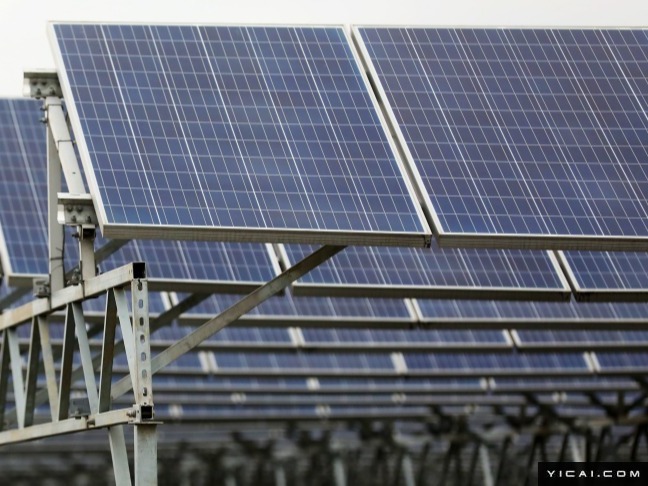
“太空光伏”催热股价后 钧达股份控股股东拟减持不超3%公司股份
Xin Lang Cai Jing· 2026-01-12 12:11
Core Viewpoint - The rapid rise and subsequent shareholder cash-out plan of JunDa Co., Ltd. in the "space photovoltaic" sector highlights the volatility and speculative nature of emerging technologies in the commercial aerospace market [1][2]. Group 1: Company Developments - JunDa Co., Ltd. announced that its controlling shareholder, Jindi Technology, plans to reduce its stake by up to 8.7254 million shares, representing 3% of the total share capital after excluding shares in the repurchase account [1]. - The company was one of the first to enter the space photovoltaic business, signing a strategic cooperation agreement with Shangyi Optoelectronics on December 21, focusing on the application of perovskite solar cell technology in space energy [1][2]. - Following the announcement of the strategic partnership, JunDa's stock price experienced significant volatility, with a cumulative increase of 63.43% from December 22 to January 12, and a maximum increase of 111% from the low point on December 5 [1]. Group 2: Market Reactions and Concerns - Investor skepticism arose regarding the timing of the partnership announcement with Shangyi Optoelectronics, coinciding with a surge in interest in commercial aerospace concepts [2]. - The lack of detailed disclosures about the cooperation with Shangyi Optoelectronics has raised questions among investors, as the company has not publicly shared operational information about Shangyi [2]. Group 3: Industry Insights - The space photovoltaic technology is still in its early stages, with various solutions being explored, including gallium arsenide, crystalline silicon, and perovskite solar cells [3][4]. - JunDa Co., Ltd. believes that perovskite technology could address limitations in current space energy solutions, such as cost control and lightweight design, potentially revolutionizing the sector [4]. - The company acknowledges that the space energy solutions are in a phase of rapid iteration and have not yet established a fixed technical or structural model, with most current solutions being small-scale and low-power [5].
光伏板块迎市场政策双重变局 苏州固锝等企业把握发展机遇
Zheng Quan Shi Bao Wang· 2026-01-12 11:00
Group 1: Industry Overview - The photovoltaic (PV) industry is currently a market focus, with significant stock price movements among related companies due to the "anti-involution" policy and a market price recovery [1] - The Ministry of Finance and the State Taxation Administration announced the cancellation of the VAT export tax rebate for PV products effective April 1, 2026, which is expected to create a "window period" for companies to manage domestic demand pressures [1] - This policy aims to accelerate the exit of uncompetitive capacities and enterprises, marking a shift towards high-quality development in the PV industry [1] Group 2: Space Photovoltaics - Space photovoltaics, as a core segment of commercial aerospace, is gaining market recognition due to its high value, inflation-resistant properties, and significant industry barriers [1] - The market is seeing a shift from leading companies to equipment and materials segments, further highlighting the value of space photovoltaics [1] Group 3: Company Insights - Suzhou Gude - Suzhou Gude (002079) is positioned to benefit from the industry's recovery, enhancing its profitability as a key player in the PV silver paste sector [2] - The company has developed a comprehensive product matrix covering various PV technologies, including high-temperature silver paste for PERC and TOPCon cells, low-temperature silver paste for HJT cells, and silver-coated copper paste [2] - Suzhou Gude is the first in the industry to achieve mass production of low-temperature silver paste, maintaining a technological edge and responding quickly to market changes [2] Group 4: Market Demand and Future Outlook - Long-term growth in overseas demand for PV products is expected, despite current export losses, with price increases likely to offset the cost rise from the cancellation of tax rebates [3] - Stronger bargaining power and superior product quality among leading companies may lead to increased market share and accelerated elimination of inefficient capacities [3] - The market's low demand expectations may improve with advancements in AI computing, manufacturing recovery, and new domestic pricing models, creating potential opportunities in the PV sector [3]

商业航天迈入奇点时刻,东方日升领跑太空光伏布局
Quan Jing Wang· 2026-01-12 10:12
Core Viewpoint - China has submitted an application to the International Telecommunication Union (ITU) for the addition of 203,000 low Earth orbit satellites, marking a strategic move to secure dominance in the space communication sector, which is expected to significantly benefit leading companies in the industry, such as Dongfang Risheng [1] Group 1: Industry Developments - The commercial space market is poised for substantial growth due to China's strategic actions in low Earth orbit satellite internet [1] - The establishment of space data centers is crucial for advancing from satellite manufacturing to space resource development and commercialization, potentially creating a demand for over 800GW of space photovoltaic installations [2] - The photovoltaic industry is experiencing a policy shift aimed at eliminating outdated production capacity, which will strengthen competitive barriers for leading companies [3] Group 2: Company Insights - Dongfang Risheng has successfully commercialized P-type ultra-thin HJT batteries, which have advantages in production cost control, power-to-weight ratio, and adaptability to flexible solar wing structures [2] - The company is actively developing next-generation battery technologies, including perovskite/silicon heterojunction stacked solar cells, achieving a conversion efficiency of 30.99% [3] - With the cancellation of export tax rebates for photovoltaic products, the industry is expected to see a consolidation of resources towards leading companies, enhancing their profitability [4] Group 3: Future Opportunities - Dongfang Risheng is well-positioned to leverage policy benefits and industry opportunities in both terrestrial and space photovoltaic markets, opening up long-term growth potential [5]

中银国际:太空打开光伏增长空间 优势企业有望率先开启新一轮成长期
智通财经网· 2026-01-12 09:10
Group 1 - Core viewpoint: Musk sees photovoltaic technology as a viable energy source for satellites, linking space photovoltaics with commercial aerospace, thus expanding the demand for photovoltaics [1] - Musk's strategic plan includes deploying 100GW of solar AI satellite energy networks annually by November 2025, with the potential to launch 300-500GW solar-powered AI satellites into orbit each year [1][2] - The commercial aerospace sector is rapidly developing, and space photovoltaics have two major application scenarios: commercial aerospace and computing centers, which opens up the photovoltaic application market [1] Group 2 - The space photovoltaic technology scheme is not yet finalized, and the core barrier in the industry chain lies in the supply channels [2] - The current mainstream engineering solution is gallium arsenide batteries, but other technologies like PERC, HJT, and perovskite also have energy supply capabilities [2] - The focus should be on manufacturers' actual supply experience and the stability of supply channels rather than the finality of the technology scheme [2] Group 3 - The basic material system for space photovoltaics is undergoing significant changes, which will disrupt the leading position of traditional crystalline silicon manufacturers [3] - There is an increasing emphasis on customized development by battery and component manufacturers for downstream clients, leading to a gradual differentiation among companies in the photovoltaic industry chain [3] - New material companies are expected to find new growth points due to these changes [3] Group 4 - The cost sensitivity in space scenarios is relatively low, with gallium arsenide batteries priced at 1000 yuan/W, indicating a high-value market [4] - Companies that are early adopters in developing space photovoltaics are likely to achieve rapid profits through high-margin markets and initiate a new growth phase in specific markets [4]
东兴证券:太空光伏或成行业第二成长曲线 利好HJT、钙钛矿新技术等方向
智通财经网· 2026-01-12 08:02
Core Viewpoint - The report from Dongxing Securities highlights that solar energy is the preferred energy source for space activities, with the potential for significant growth in the space photovoltaic market driven by the concept of space data centers and advancements in technology [1][2]. Market Demand - Solar energy is identified as the primary energy source for space activities, with current demand mainly for satellite solar wings. The industry is small but rapidly expanding. If the concept of space data centers is realized, it could lead to over 800GW of space photovoltaic installation demand, surpassing current global ground photovoltaic annual additions [2]. - Leading domestic companies are focusing on the space photovoltaic market, accelerating technology research and scenario exploration, indicating a shift from concept validation to explosive growth in the sector [2]. Technology Development - The main requirements for space photovoltaic technology include high efficiency, lightweight, and adaptability to extreme temperatures and strong radiation. The current mainstream technology on the ground is TOPCON, which faces limitations in radiation resistance and lightweight modifications [3]. - Gallium arsenide (GaAs) is the current mainstream technology for space photovoltaics, achieving over 30% efficiency but with high production costs due to the scarcity of gallium, leading to prices around 1000 RMB/W, significantly higher than ground photovoltaic systems [3]. - P-type HJT batteries are seen as a potential replacement for GaAs due to their compatibility with space conditions, offering lightweight and excellent low-temperature performance [3]. Future Prospects - Perovskite tandem batteries are expected to become a significant option for next-generation space photovoltaics, with theoretical efficiencies reaching 45%, surpassing GaAs. They are lightweight and flexible, which could lead to substantial weight reductions for satellites and lower launch costs [4]. - Perovskite's flexibility allows for diverse solar wing designs, making it suitable for the unique requirements of space equipment [4]. Related Companies - Companies to watch include Junda Co., Ltd. (02865), Dongfang Risheng (300118.SZ), Mingyang Smart Energy (601615.SH), and GCL-Poly Energy (03800) [5].

行业周报:太空光伏引领新技术应用,动储电池竞争秩序进一步规范-20260112
Ping An Securities· 2026-01-12 07:00
Investment Rating - The report maintains an "Outperform" rating for the industry [2] Core Insights - The space photovoltaic sector is gaining attention as leading companies increase investment in perovskite solar cell research and industrialization, which is expected to open new application scenarios for photovoltaics [6][7] - The deep-sea wind power project in Shandong has received approval, marking significant progress in the development of offshore wind energy, with expectations for substantial growth in this sector [6][11] - The energy storage and hydrogen sectors are seeing regulatory efforts to standardize competition, aiming to improve market order and sustainability [7] Summary by Sections Wind Power - The Shandong deep-sea wind power project has been approved, with a total capacity of 3000MW, utilizing 214 wind turbines of 14MW each [11] - The wind power index increased by 10.39%, outperforming the CSI 300 index by 7.60 percentage points, with a current PE_TTM of approximately 27.30 times [12] - The approval of the project indicates a significant advancement in offshore wind energy, supported by technological maturity and favorable policies [11] Photovoltaics - The space photovoltaic concept is gaining traction, with companies focusing on perovskite solar cells due to their lightweight and high-efficiency characteristics, which are suitable for space applications [6] - The photovoltaic equipment index rose by 3.86%, with the solar cell component index increasing by 5.82% [5] - The current PE_TTM for the photovoltaic sector is around 47.28 times, indicating strong market interest [5] Energy Storage & Hydrogen - A meeting held by various government bodies highlighted the rapid development of the energy storage and hydrogen battery industries, emphasizing the need for regulatory measures to curb irrational competition [7] - The energy storage index increased by 5.74%, with a current PE_TTM of 31.06 times, reflecting a healthy market outlook [5] - Recommendations for investment include companies with strong competitive positions in energy storage and distributed energy sectors [7]




太空光伏或为2026年电新板块最强主线?光伏ETF招商(认购代码:516233)重磅发行!
Sou Hu Cai Jing· 2026-01-12 06:45
Group 1 - The satellite industry, brain-computer interfaces, semiconductor equipment, and AI applications have seen significant growth, with the photovoltaic sector also experiencing upward movement due to multiple catalysts [1] - The Ministry of Finance and the State Taxation Administration announced the cancellation of the export VAT rebate for photovoltaic products starting April 1, 2026, marking a shift in China's new energy policy focus from "scale expansion" to "high-quality development" [3] - China's photovoltaic and battery industries hold a dominant global position, with over 80% of global photovoltaic module production and over 90% in polysilicon, silicon wafers, and battery cells [3] Group 2 - The end of the "rebate era" in the photovoltaic industry may lead to a surge in orders and installations before the policy takes effect, while also encouraging companies to innovate and build brands [3] - The space photovoltaic sector is gaining attention as a key branch of commercial aerospace, with its high value and market recognition expected to grow, potentially becoming a leading segment in the new energy sector by 2026 [4] - Space photovoltaic technology is favored for its cost reduction potential, with P-type HJT and perovskite batteries expected to become mainstream solutions due to their advantages in weight, radiation resistance, and efficiency [5] Group 3 - The photovoltaic ETF (subscription code: 516233) was officially launched from January 12 to January 23, 2026, aiming to help investors capitalize on the new cycle in the photovoltaic industry [6] - The photovoltaic industry is projected to enter a new phase of high-quality development, with price recovery trends expected to continue [6] - The overall revenue growth rate of the photovoltaic industry is showing signs of recovery, with profitability indicators stabilizing as of the third quarter of 2025 [9]
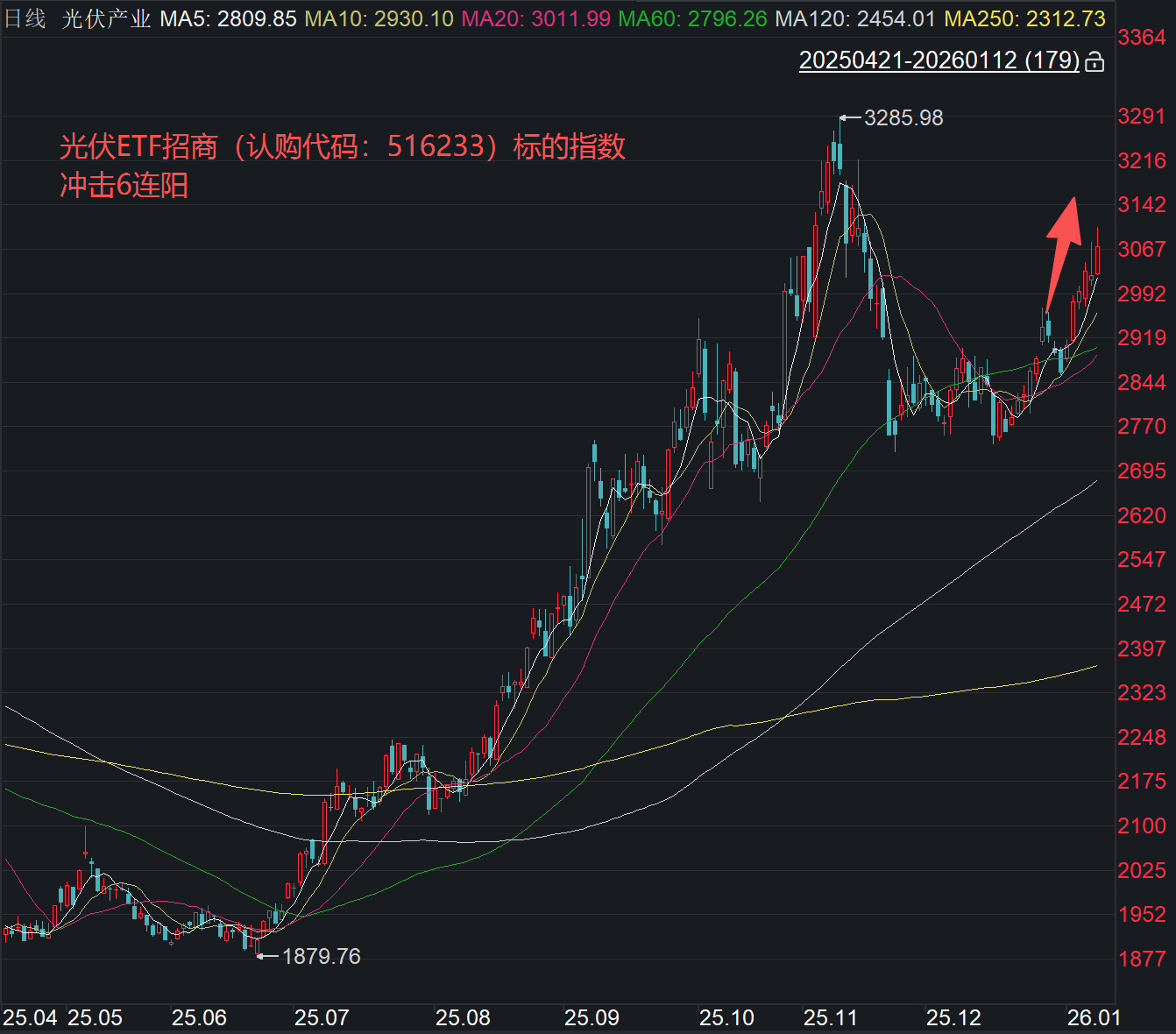
光伏退税清零+太空光伏崛起,行业拐点多重催化,光伏ETF招商(认购代码:516233)顺势发行
Sou Hu Cai Jing· 2026-01-12 06:07
Core Viewpoint - The solar industry is experiencing significant developments, with the cancellation of export tax rebates marking a shift towards high-quality growth, while the space solar sector is anticipated to see increased demand and investment opportunities in the coming years [3][4][5]. Group 1: Solar Industry Developments - The Ministry of Finance and the State Taxation Administration announced the cancellation of the value-added tax export rebate for solar products starting April 1, 2026, following a previous reduction in the rebate rate from 13% to 9% in 2024 [3]. - This policy shift indicates a transition in China's renewable energy strategy from "scale expansion" to "high-quality development," with the solar and battery industries maintaining a dominant global position, accounting for over 80% of global solar module production and over 90% in several key segments [3]. - The end of the "rebate dividend" era is expected to lead to a surge in orders and installations before the policy takes effect, while also encouraging technological innovation and brand development among companies [3]. Group 2: Space Solar Opportunities - The commercial space sector has gained traction, with space solar technology recognized for its high value and potential, positioning it as a leading segment in the new energy sector by 2026 [4]. - Space solar is becoming the preferred power solution for spacecraft due to abundant sunlight in space and the simplicity of deploying solar panels on satellites [5]. - P-type HJT and perovskite batteries are projected to become mainstream solutions for space solar, with advantages such as lightweight design and high efficiency, respectively [5]. Group 3: Investment Opportunities - The solar ETF (subscription code: 516233) was officially launched from January 12 to January 23, 2026, focusing on the core solar industry chain and leading companies, providing investors with a chance to capitalize on the new growth cycle in the solar sector [6]. - The China Securities Index for the solar industry has shown an annualized return of 8.73% and a Sharpe ratio of 0.36%, outperforming other indices in the solar sector [6]. - The solar industry is expected to enter a new phase of high-quality development, with signs of recovery in revenue and net profit growth starting from the first quarter of 2025 [9].
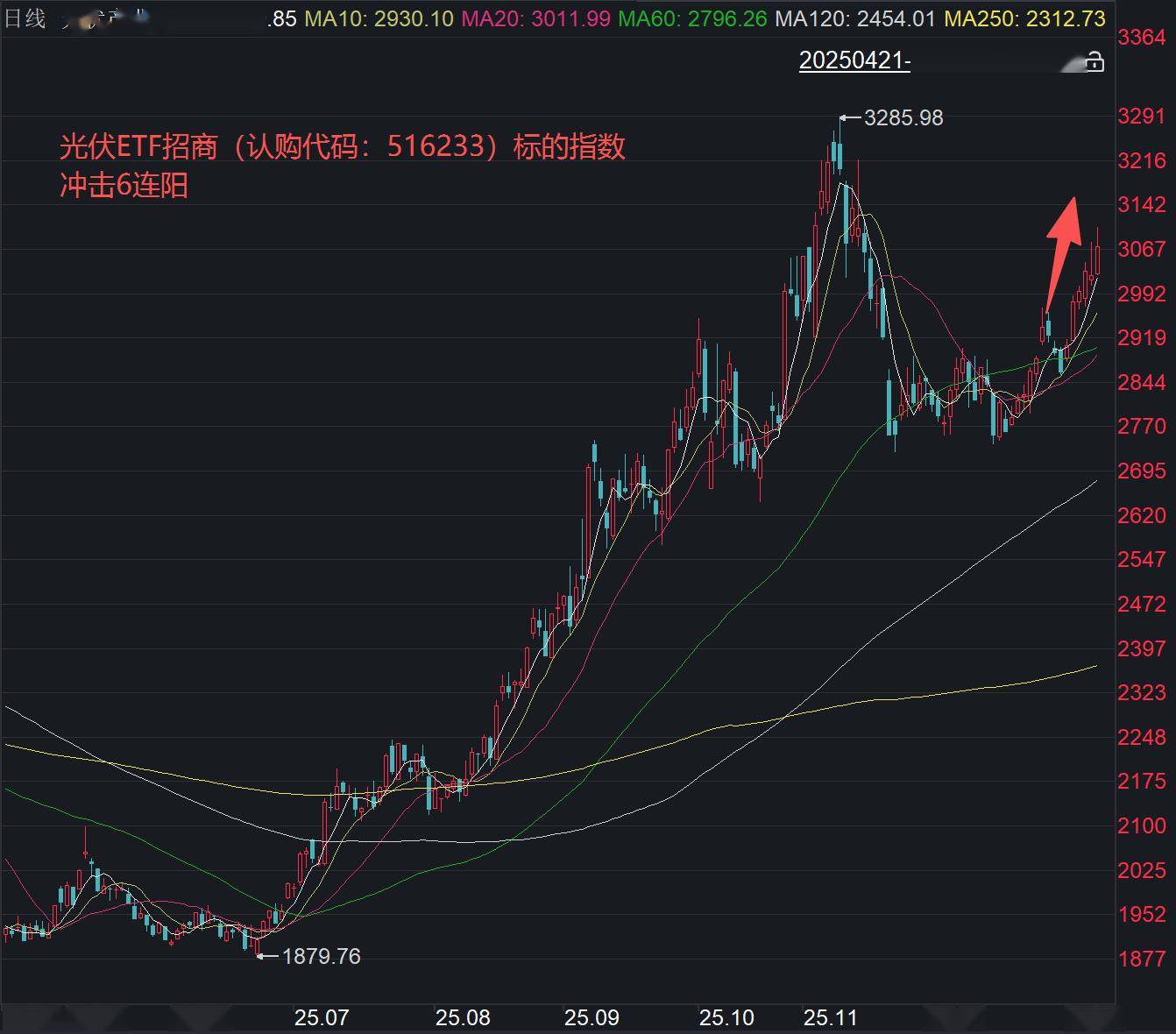
商业航天系列报告之一:太空打开光伏增长空间,重启从0到1成长之旅
Bank of China Securities· 2026-01-12 05:57
Investment Rating - The industry investment rating is "Outperform the Market," indicating that the industry index is expected to perform better than the benchmark index over the next 6-12 months [12]. Core Insights - The report highlights that commercial space applications are opening new growth opportunities for photovoltaic (PV) technology, particularly in satellite energy supply, as endorsed by Elon Musk. The demand for PV in space is expected to grow significantly [2][4]. - Current space PV technology solutions are not yet standardized, and the core barrier in the industry lies in distribution channels. The limited number of manufacturers with experimental capabilities indicates a potential for differentiation among companies in the PV supply chain [2][4]. - The extreme conditions in space require PV materials to have strong radiation resistance and temperature tolerance, leading to a significant change in the basic material systems used in PV technology. This change is expected to disrupt the leading positions of traditional silicon manufacturers and create new growth points for material companies [4]. - The cost sensitivity in space applications is relatively low, allowing leading companies to capitalize on high-margin markets and initiate a new growth phase [4]. Summary by Sections Industry Overview - The report discusses the strategic planning by SpaceX to deploy 100GW of solar-powered AI satellite energy networks annually, with potential future plans for lunar PV capacity to meet AI energy demands [4]. - The current stage of the space PV industry is characterized as an introduction phase, with limited rocket launches affecting the maturity of technology solutions [4]. Technology and Market Dynamics - The report emphasizes that the debate over the final technology solutions for space PV is less critical at this stage. Instead, the focus should be on manufacturers' actual supply experience and the stability of their supply channels [4]. - The report notes that the price of gallium arsenide batteries, a common engineering solution for space PV, is significantly higher than traditional silicon components, indicating a lower cost sensitivity in space scenarios [4]. Investment Recommendations - The report recommends specific companies for investment, including JunDa Co., Maiwei Co., Jiejia Weichuang, JinkoSolar, Trina Solar, and Haiyou New Materials, while suggesting to pay attention to Dongfang Risheng, Shanghai Port Bay, Jing Shan Light Machine, and Taisheng Wind Energy [4].