
人工智能(AI)

Search documents
HealthEquity(HQY) - 2026 Q3 - Earnings Call Transcript
2025-12-03 22:32
Financial Data and Key Metrics Changes - Revenue increased by 7% year-over-year, with service revenue up 1% to $120.3 million and custodial revenue growing 13% to $159.1 million [19] - Net income surged by 806% year-over-year to $51.7 million, or $0.59 per share, while non-GAAP net income increased by 26% to $87.7 million [21] - Adjusted EBITDA rose by 20% to $141.8 million, with an adjusted EBITDA margin of 44%, up 460 basis points from the previous year [21][23] Business Line Data and Key Metrics Changes - Health Savings Accounts (HSAs) grew by 6%, with total accounts increasing by 5% and HSA assets up 15% to over $34 billion [5][10] - The number of HSA members who invest grew by 12%, and HSA invested assets increased by 29% to $17.5 billion [10] - The average HSA balance grew by 8% year-over-year, contributing to the 15% increase in HSA assets [8] Market Data and Key Metrics Changes - The annualized yield on HSA cash was 3.53% for the quarter, reflecting higher placement rates and increased balances [19] - Interchange revenue grew by 6% to $42.8 million, outpacing total account growth of 5% [19] Company Strategy and Development Direction - The company aims to help members save, spend, and invest for health, addressing the affordability challenge faced by American families and employers [6] - A new direct HSA enrollment platform was launched to facilitate HSA adoption, particularly for those choosing bronze plans on the ACA exchanges [8] - The company is focused on expanding the use of HSAs and enhancing consumer control, with ongoing efforts to educate policymakers about the benefits of HSAs [12][17] Management's Comments on Operating Environment and Future Outlook - Management expressed optimism about new account growth in Q4, driven by partnerships with employers and plan design [8] - The company is well-prepared for the busy season with enhanced security features and a member-first mobile experience [10] - Management highlighted the importance of AI in improving service efficiency and personalizing member experiences [11] Other Important Information - The company repurchased approximately $94 million of its outstanding shares during the quarter, with $259 million remaining on the share purchase authorization [22][26] - Fraud costs were approximately $0.3 million, significantly below the target run rate [11] Q&A Session Summary Question: What are the marketing plans for the direct HSA enrollment platform? - The company aims for a seamless enrollment experience and will market through integrated plan partners, focusing on brand marketing and growth initiatives [31][32] Question: Will there be a material contribution from standalone HealthEquity versus integrated plan partners? - The majority of business comes through partners, and the company is investing in retail experience to attract new members [40][41] Question: Is there an opportunity to increase the minimum threshold before HSA consumers can invest? - The minimum threshold is typically set by enterprise clients, and there is a significant opportunity to drive engagement and education around HSAs [44][46] Question: Are employer sponsors moving towards HSAs at an accelerating rate for 2026? - There is a realization among employers about rising healthcare costs, and the company expects greater adoption this year compared to last [56][58] Question: Are there new custodial opportunities as markets develop? - The company is actively exploring new market opportunities, particularly in light of the affordability crisis and the need for HSAs [58][59]

HealthEquity(HQY) - 2026 Q3 - Earnings Call Transcript
2025-12-03 22:32
Financial Data and Key Metrics Changes - Revenue increased by 7% year-over-year, with service revenue up 1% to $120.3 million and custodial revenue growing 13% to $159.1 million [19] - Net income surged by 806% year-over-year to $51.7 million, or $0.59 per share, while non-GAAP net income increased by 26% to $87.7 million [21] - Adjusted EBITDA rose by 20% to $141.8 million, with an adjusted EBITDA margin of 44%, up 460 basis points from the previous year [21][26] Business Line Data and Key Metrics Changes - Health Savings Accounts (HSAs) grew by 6%, with total accounts increasing by 5% and HSA assets up 15% to over $34 billion [5][10] - The number of HSA members who invest grew by 12%, and HSA invested assets increased by 29% to $17.5 billion [10] - The average HSA balance grew by 8% year-over-year, contributing to the overall increase in HSA assets [8] Market Data and Key Metrics Changes - The annualized yield on HSA cash was 3.53% for the quarter, reflecting higher placement rates and increased balances [19] - Interchange revenue grew by 6% to $42.8 million, outpacing total account growth of 5% [19] Company Strategy and Development Direction - The company aims to help members save, spend, and invest for health, addressing the affordability challenge faced by American families and employers [6] - A new direct HSA enrollment platform was launched to facilitate retail HSA openings, particularly for those choosing bronze plans on ACA exchanges [8] - The company is focused on expanding the use of HSAs and enhancing consumer control, with ongoing efforts to educate policymakers about the benefits of HSAs [12][17] Management's Comments on Operating Environment and Future Outlook - Management expressed optimism about new account growth in Q4, driven by partnerships with employers and plan design support [8] - The company is well-prepared for the busy season with enhanced security features and a member-first mobile experience [10] - Management highlighted the importance of AI in improving service efficiency and personalizing member experiences [11] Other Important Information - The company repurchased approximately $94 million of its outstanding shares during the quarter, with $259 million remaining on the share purchase authorization [22][26] - Fraud costs were approximately $0.3 million, significantly below the target run rate [11] Q&A Session Summary Question: What are the marketing plans for the direct HSA enrollment platform? - The company aims for a seamless enrollment experience and will market through integrated plan partners, offering a $25 match for new accounts [31][32] Question: Will there be a material contribution from standalone HealthEquity versus integrated plan partners? - The majority of business comes through partners, and the company is focusing on educating the market about HSA eligibility [40][41] Question: Is there an opportunity to increase the minimum threshold before HSA consumers can invest? - The minimum threshold is typically set by enterprise clients, and there is a significant opportunity to drive engagement and education around HSAs [44][46] Question: Are employer sponsors moving towards HSAs at an accelerating rate for 2026? - There is a realization among employers about rising healthcare costs, and the company expects greater adoption of HSAs this year compared to last [56][58] Question: Are there opportunities for new markets similar to the Dell accounts? - The company is actively exploring new custodial opportunities and believes HSAs are gaining focus in the national healthcare discussion [58]
HealthEquity(HQY) - 2026 Q3 - Earnings Call Transcript
2025-12-03 22:30
Financial Data and Key Metrics Changes - Revenue increased by 7% year-over-year, with net income up 806% year-over-year, driven by a significant reduction in service costs and improved margins [5][20][19] - Adjusted EBITDA rose by 20%, with an adjusted EBITDA margin of 44%, up from 39% in the same quarter last year [5][20] - Cash on hand was $309 million, with cash flows from operations amounting to $339 million in the first nine months of fiscal 2026 [20][21] Business Line Data and Key Metrics Changes - Service revenue increased by 1% year-over-year to $120.3 million, while custodial revenue grew by 13% to $159.1 million [18] - HSA accounts grew by 6%, with CDB accounts up 3%, leading to a total account growth of 5% [5][6] - HSA assets increased by 15%, with average HSA balances growing by 8% year-over-year [5][7] Market Data and Key Metrics Changes - The annualized yield on HSA cash was 3.53%, reflecting higher placement rates and increased balances [18] - Interchange revenue grew by 6% to $42.8 million, outpacing total account growth [18] Company Strategy and Development Direction - The company aims to address the affordability challenge in healthcare by promoting HSAs as a solution for consumers and employers [6][11] - A new direct HSA enrollment platform was launched to facilitate retail HSA openings, particularly for those choosing bronze plans on ACA exchanges [7][8] - The company is focusing on enhancing member experience through technology investments, including AI capabilities to improve service and security [10][11] Management's Comments on Operating Environment and Future Outlook - Management expressed optimism about new account growth in Q4, supported by ongoing collaborations with employers and partners [7] - The regulatory environment is seen as favorable, with discussions in Washington about expanding HSA access to more Americans [13][16] - The company expects continued growth in HSA adoption as healthcare costs rise and employers seek cost-saving strategies [50][51] Other Important Information - Fraud costs were approximately $0.3 million, significantly below the target run rate, indicating effective fraud prevention measures [10][19] - The company repurchased approximately $94 million of its outstanding shares during the quarter, with $259 million remaining on the share purchase authorization [21][25] Q&A Session Summary Question: What are the marketing plans for the direct HSA enrollment platform? - The company plans to ensure a seamless enrollment experience and will market through integrated plan partners, emphasizing a $25 match for new accounts [28][30] Question: Are you seeing an acceleration in employer sponsors moving towards HSAs? - Management noted that rising healthcare costs are prompting employers to consider HSAs more seriously, with expectations for greater adoption in 2026 compared to 2025 [45][51] Question: Will there be more custodial opportunities as new markets develop? - The company is actively exploring new market opportunities and believes that the demand for HSAs will continue to grow as healthcare affordability becomes a pressing issue [45][52]
Market is on its way to a Santa Claus rally, says Bank of America's Chris Hyzy
Youtube· 2025-12-03 21:16
Market Outlook - The current market momentum is described as an "elf rally" leading towards a "Santa Claus type of rally," indicating a positive outlook for the near term [1] - Anticipated tailwinds in early 2024, particularly between February and April, include potential tax refunds and fiscal relief for consumers, contributing to consumer resilience [2] Corporate Performance - Corporate tax relief and ongoing capital expenditures (Capex) are expected to support economic growth, although the Federal Reserve's history of cutting rates in a growing economy is noted as unusual [3] - Profit growth is projected at around 14%, with confidence in maintaining margins, particularly among larger companies benefiting from Capex investments [6] Market Dynamics - There is a noted decline in forward multiples for major tech companies, such as Nvidia and Microsoft, indicating market skepticism about valuation despite rising earnings [7] - The market is experiencing a broadening effect, with improved participation across sectors, although only a quarter of all stocks are outperforming the S&P [9][10] Sector Analysis - Energy is highlighted as an underowned sector that has recently performed well, suggesting potential for growth in 2026 and beyond [10][11] - The distinction between high-performing stocks in the AI sector and those that are underperforming is emphasized, with a focus on identifying which companies will thrive in the evolving market landscape [11] Productivity Expectations - Companies are shifting their focus towards deploying capital efficiently, which is expected to lead to a significant productivity boom, not just a short-term phenomenon [12][13]


Tariffs not to blame for jobs number, says U.S. Commerce Sec. Lutnick
Youtube· 2025-12-03 15:41
Let's bring in US Commerce Secretary Howard Lutnik at the center of all of these discussions. Welcome, Mr. . Secretary.It's good to have you. >> Great to see you. >> So, before we get into some of these these trade negotiations and deals, I I do want to ask you about the the recent economic data because today we learned that the private sector is losing jobs, small business getting hit really hard, negative number in front of of ADP and one of the reasons that they cite is tariffs. So, so do you worry about ...

尽管季度营收预期向好,CrowdStrike股价仍下滑
Xin Lang Cai Jing· 2025-12-03 15:36
Core Viewpoint - CrowdStrike has provided a positive earnings outlook for Q4, expecting revenue to exceed analyst expectations due to the increasing adoption of AI features across its product suite [1][5]. Group 1: Earnings Forecast - CrowdStrike anticipates Q4 revenue to be between $1.29 billion and $1.30 billion, surpassing the previous analyst estimate of $1.22 billion [2][6]. - The company has raised its full-year revenue forecast to between $4.80 billion and $4.81 billion [3][7]. Group 2: Recent Performance - In Q3, CrowdStrike reported revenue of $1.23 billion, representing a 22% year-over-year increase, which was above the analyst expectation of $1.22 billion [4][8]. Group 3: Market Context - The demand for AI-driven security systems is strong as companies increase investments to combat rising digital threats, benefiting CrowdStrike and similar firms [2][6]. - CrowdStrike has launched several AI-driven features on its Falcon platform, including a new detection and classification tool released in September [2][6].

海外视点丨经合组织预测26年全球经济增2.9%,中国4.4%
Sou Hu Cai Jing· 2025-12-03 13:51
Group 1 - The OECD forecasts a global economic growth rate of 2.9% for 2026 and 3.2% for 2025, maintaining the previous predictions from September [2] - The agreement on tariffs between the US and China is expected to support global economic growth, alleviating initial concerns about a significant slowdown in the US-centered economy [2] - The OECD predicts that the impact of increased US tariffs will become more apparent in the future, leading to a slowdown in global economic growth in 2026 compared to 2025 [2] Group 2 - The average effective tariff rate in the US has decreased to 14% as of late November, down from 15.4% in June, but remains significantly higher than the pre-Trump administration levels of just over 2% [2] - Trade tariffs, particularly between the US and China, are expected to raise business costs, suppressing investment and trade activities, with economic growth anticipated to slow down from the second half of 2025 [2] - In the US, factors such as government layoffs and reduced immigration are expected to hinder economic growth, although strong investment in the AI sector is projected to provide support [3] Group 3 - The OECD has raised Japan's economic growth forecast for 2026 to 0.9%, an increase of 0.4 percentage points from the previous prediction, due to the stimulating effects of fiscal policy [3]
初代苹果鼠标设计公司,正在与AI做朋友
财富FORTUNE· 2025-12-03 13:08
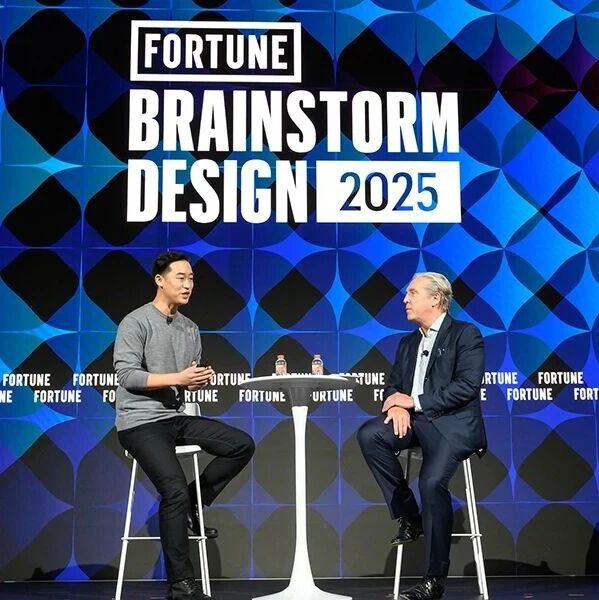
Core Insights - The article discusses the evolution of design thinking and the role of AI in the design industry, emphasizing the importance of human empathy in the creative process [1][4][6]. Group 1: Historical Context - Jim Yurchenco designed the first general-purpose mouse for Apple, inspired by game controllers, which significantly reduced costs and set a standard for future designs [1]. - Although Apple Lisa was not commercially successful, Yurchenco's mouse design contributed to the success of the Macintosh [1]. Group 2: AI and Design - Mike Peng, CEO of IDEO, highlights the contradiction between creativity and AI, stating that AI tends to produce average results, while creativity seeks to break away from the norm [4]. - AI is viewed as a powerful tool for iteration and analysis, but human empathy is essential for understanding the emotional experiences associated with design [4][5]. - IDEO's approach involves challenging AI-generated answers to create superior designs, emphasizing the importance of human perspectives in the design process [5]. Group 3: Human-AI Collaboration - The combination of humans and AI is crucial, with the focus on how to effectively utilize AI to enhance design outcomes [6]. - AI can achieve 60% to 80% quality in design tasks, but true excellence requires a deep understanding of human experiences and interactions [6]. - The nuances of human behavior and emotions are often missed by AI, which presents opportunities for designers to create innovative solutions [6].
Standard Chartered (SEHK:02888) Conference Transcript
2025-12-03 13:02
Summary of Standard Chartered Conference Call Company Overview - The conference call focused on Standard Chartered, with CEO Bill Winters providing insights into the company's performance and strategic direction [1][4]. Key Points Financial Performance - Standard Chartered reported a strong year with good earnings progression and strategic positioning [4]. - Flow income in the financial markets business continues to grow year-on-year, with Q3 showing particularly strong growth [5]. - The global banking sector has seen good momentum, with growing pipelines and execution [5]. - Wealth management is also showing strong momentum, although Q4 may see a slight slowdown due to market volatility [6]. Affluent Business Strategy - Standard Chartered aims to increase relationship managers (RMs) by 50% over five years, with significant progress made in the past year [7][11]. - The company has invested $1.5 billion over five years in this affluent strategy, which is on track [11]. - Customer satisfaction has improved significantly, contributing to net new money and client flows [10]. - The affluent business is expected to grow at a structural high single-digit to low double-digit rate, with potential for additional market share [18]. Risks and Compliance - The company is focused on maintaining high compliance standards to avoid regulatory issues, especially concerning offshore wealth from China and India [26][28]. - Three main risks identified: conduct and compliance, market sensitivity, and the source of future business [29][31]. - Standard Chartered has a strong track record in compliance and is diligent in vetting RMs [28]. Corporate and Investment Banking (CIB) - Clients are diversifying supply chains, particularly post-COVID, with India emerging as a key destination [36][38]. - The company is well-positioned to support clients in their supply chain reconfigurations, providing financing and local currency needs [43]. - The financial institution business is growing, with a focus on correspondent banking and asset managers [49][50]. Market Dynamics - The markets business has a consistent flow income, driven by day-to-day hedging activities and transaction banking [56][58]. - The episodic income is growing but at a slower pace, with a focus on capturing market share in core operational services [59][62]. Digital Assets and Technology - Standard Chartered has been proactive in developing digital asset infrastructure, positioning itself well against peers [63]. - The bank aims to leverage its network and technology to capture market share and provide solutions to clients [70][72]. Future Outlook - The company is optimistic about growth opportunities, betting on the ability to adapt and respond to market changes [73]. - Standard Chartered is focused on organic growth, with no immediate need for inorganic strategies to accelerate growth [19]. Additional Insights - The transfer of $40 billion in assets from the custody business is expected to generate significant revenue, although the timeline for full investment remains medium-term [21][23]. - The company emphasizes the importance of maintaining a diversified earnings stream to mitigate market risks [31]. This summary encapsulates the key insights and strategic directions discussed during the conference call, highlighting Standard Chartered's performance, growth strategies, and risk management approaches.
热门中概股多数下跌;今晚9:15美国重要数据发布;亚马逊推出全新AI芯片;比特币反弹一度逼近9.4万美元【美股盘前】
Mei Ri Jing Ji Xin Wen· 2025-12-03 11:08
② 【加密货币概念股走强】加密货币概念股盘前走强,Bitfarms涨近4%,Coinbase涨近2.4%,Strategy和MARA Holdings涨超2%。消息面上,比特币一度 逼近94000美元,创11月17日以来的盘中高位,现报92874美元。 ③ 【热门中概股多数下跌】热门中概股多数下跌,哔哩哔哩跌超2%,小鹏汽车跌近1.5%,京东、蔚来汽车跌超1%,拼多多跌近1%,爱奇艺跌0.5%。 ④ 【Marvell涨近10%】芯片设计企业Marvell盘前涨近10%。消息面上,该公司12月2日表示,将以32.5亿美元收购半导体初创公司Celestial AI,并预计第 四季度营收将高于华尔街预期。 ⑤ 【微芯科技涨超3%】半导体制造商微芯科技盘前涨超3%。消息面上,微芯科技上调第三财季净销售额和每股收益的预期,主要是因为期内的预订表现 强劲。 每经记者|郑雨航 每经编辑|何小桃 兰素英 ① 【三大期指齐涨】道指期货涨0.17%、标普500指数期货涨0.12%、纳指期货涨0.07%。 ⑩ 北京时间21:15,被称为"小非农"的美国11月ADP就业人数变动发布,在非农数据缺失的情况下,ADP成为市场关注焦点。A ...
