
数字金融

Search documents
先行者更前行,同心者更同频
Nan Fang Du Shi Bao· 2025-08-25 23:14
Core Insights - The article highlights the significant role of the financial industry, particularly the Shenzhen Branch of China Merchants Bank, in supporting the economic development of Shenzhen, especially as the city celebrates the 45th anniversary of its economic zone establishment [2]. Group 1: Financial Support for Enterprises - A technology company in Bao'an District received a credit loan of 2.55 million yuan within three days to address cash flow issues, showcasing the bank's commitment to timely financial support [3]. - From January to June 2025, the Shenzhen Branch of China Merchants Bank ranked first in the city for the issuance of small and micro enterprise loans, indicating its strong position in the local financial market [3]. - The bank has successfully transformed intellectual property into tangible assets, with a total of 3.813 billion yuan in intellectual property pledge financing completed from January to June 2025, leading the industry in Shenzhen [5]. Group 2: Pension and Retirement Financial Services - The Shenzhen Branch has seen a net increase of 609 million yuan in corporate annuities by July 2025, ranking first in the entire bank system, reflecting its focus on enhancing pension financial services [6]. Group 3: Green Finance Initiatives - The bank successfully launched the first green asset-backed commercial paper in the Guangdong-Hong Kong-Macao Greater Bay Area, aimed at supporting renewable energy projects, demonstrating its commitment to sustainable finance [7]. Group 4: Digital Financial Transformation - The bank has implemented a digital transformation in its quality management processes, shifting from reactive to proactive measures, which enhances operational efficiency and customer service [7]. - The Shenzhen Branch is actively promoting customized financing solutions for enterprises looking to expand internationally, leveraging its cross-border services [8]. Group 5: Innovation and Future Outlook - The Shenzhen Branch aims to continue its innovative drive and deepen the application of financial technology, positioning itself as a leader in the financial industry and contributing to the economic development of Shenzhen and beyond [8].


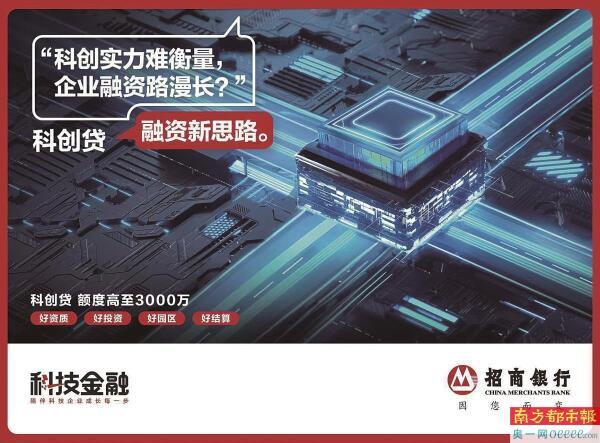
践行大行担当 多维赋能湾区高质量发展
Nan Fang Du Shi Bao· 2025-08-25 23:14
Core Insights - The Industrial and Commercial Bank of China (ICBC) is actively providing financial services in the Hengqin Guangdong-Macao Deep Cooperation Zone, focusing on supporting the local economy and enhancing consumer rights [2][3][4][6][8]. Group 1: Financial Services and Innovations - ICBC Zhuhai Branch has introduced various financing products tailored for technology enterprises, such as "Yueke e-loan" and "Specialized and Innovative Loan," to support the full lifecycle financing needs of tech companies [3][4]. - The bank has issued over 67 billion yuan in credit for innovative projects in green finance, including renewable energy initiatives [3]. - ICBC has launched the "Guangdong Agriculture e-loan" and "Aquaculture e-loan," providing 4.3 million yuan and 1.3 million yuan respectively to support rural revitalization and agriculture [4]. Group 2: Digital and Inclusive Finance - The bank has embedded digital solutions into its services, facilitating over 1,000 corporate account openings through the "One Network" system [5]. - ICBC has established a micro-enterprise financing coordination mechanism and conducted outreach to thousands of businesses to address their financial challenges [4][6]. - The bank has developed a financial knowledge promotion program targeting vulnerable groups, enhancing awareness of financial risks and consumer rights [7]. Group 3: Cross-Border Financial Services - ICBC Hengqin Branch has successfully implemented 17 cross-border financial innovations, serving nearly 1,000 Australian enterprises and facilitating cross-border financing of nearly 7 billion yuan [8][10]. - The bank has established a "Digital Innovation Laboratory" with the Gongbei Customs Data Center, launching the "Guangdong-Hong Kong-Macao Supply e-loan" to streamline financing processes for businesses [9]. - ICBC has facilitated over 230 billion yuan in fund transfers through Free Trade Accounts, significantly improving cross-border remittance efficiency [9][10].

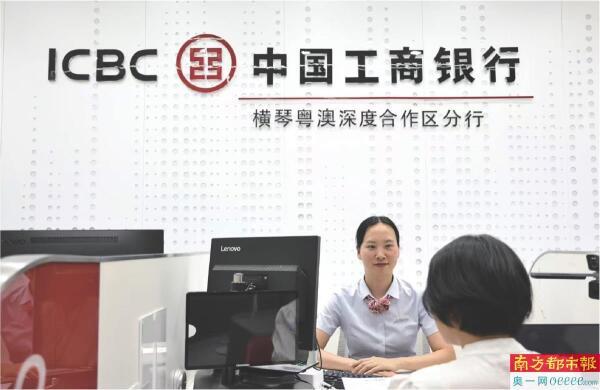
做好“五篇大文章” 擦亮“金融为民”新名片
Sou Hu Cai Jing· 2025-08-25 23:13
Core Viewpoint - Shenzhen is actively promoting the construction of a world-class automotive city, focusing on new energy vehicles and modern industrial systems, supported by financial services from Postal Savings Bank of China [3][4]. Group 1: Economic Development - Shenzhen is transforming from a small border town to an international innovation city over 45 years, with financial empowerment being a crucial support [4]. - The Postal Savings Bank of China has established a comprehensive financial service system to support Shenzhen's "20+8" industrial cluster planning [4][5]. Group 2: Financial Support and Innovation - Since 2022, the Postal Savings Bank has supported major projects in the Deep-Shan Cooperation Zone, including a marine industry research center with a loan of 760 million yuan and a storage industry park with a loan of 205 million yuan [5]. - The bank has provided over 1 trillion yuan in funding to major projects in the Guangdong-Hong Kong-Macao Greater Bay Area, covering key projects like the Shenzhen Bay Biological Industry Park [5]. Group 3: Digital and Green Finance - The bank has successfully launched a cross-border remittance service using central bank digital currency, enhancing efficiency in logistics payments [6]. - As of mid-2025, the bank's green loan balance reached 25.15 billion yuan, growing by 4.8% since the beginning of the year, indicating a strong commitment to sustainable finance [7]. Group 4: Consumer Services and Support - The bank has initiated a consumer re-loan of 150 million yuan to support a leading enterprise in the cultural and entertainment sector, aligning with national policies to boost consumption [8]. - The bank has increased housing loan support, ranking second in net housing loan growth in the system for the first half of 2025 [9].
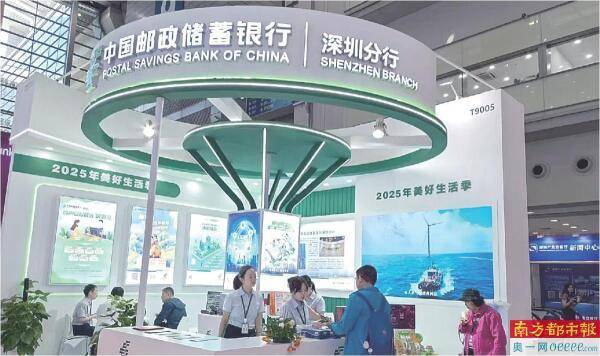
同频共振数十载 中国平安与深圳特区的时代交响
Shen Zhen Shang Bao· 2025-08-25 22:53
Core Insights - The establishment of the Shenzhen Special Economic Zone in August 1980 marked the beginning of a transformative journey for both Shenzhen and China Ping An, which evolved from a small property insurance company to a global financial giant with assets exceeding 13 trillion yuan and nearly 245 million customers [2][4] - China Ping An's growth trajectory is closely intertwined with Shenzhen's development, showcasing a narrative of reform, innovation, and breakthroughs [3][4] Group 1: Historical Development - China Ping An was founded in 1988 in Shekou, becoming China's first joint-stock insurance company and pioneering several industry innovations [4][5] - Shenzhen's GDP grew from 2.7 million yuan in 1980 to 180.4 billion yuan in 1999, reflecting the rapid economic development of the region [4] - In the new millennium, China Ping An transitioned from an insurance company to a comprehensive financial group, aligning with Shenzhen's goal of becoming a regional financial center [4][5] Group 2: Strategic Innovations - China Ping An's comprehensive financial strategy received strong support from Shenzhen's government, contributing to its successful IPO in 2007, which set a record for the largest insurance company IPO globally [5] - The company has invested over 100 billion yuan in technology research and development, applying for more than 55,000 technology patents, positioning itself among the leading financial institutions globally [5][6] Group 3: Financial Services and Initiatives - China Ping An is actively involved in various financial sectors, including technology finance, green finance, inclusive finance, pension finance, and digital finance, responding to national mandates for sustainable development [6][9][13][15] - The company has developed a comprehensive technology finance service system for tech enterprises, supporting Shenzhen's ambition to become a global innovation hub [8][9] Group 4: Future Outlook - As Shenzhen celebrates its 45th anniversary, China Ping An continues to play a significant role in the region's economic development, embodying the spirit of innovation and reform [16][17] - The company aims to leverage its financial capabilities to support national strategies and contribute to the modernization of China [17]


数字金融湘财证券样本:AI驱动生态重构及效能升级
Zheng Quan Shi Bao· 2025-08-25 18:19
Core Insights - Digital finance is a crucial part of the financial industry's innovation and transformation, driving efficient, inclusive, and intelligent development of financial services [1] - Xiangcai Securities is a pioneer in the digital transformation of small and medium-sized brokerages, adopting a "technology-driven business" strategy to explore a differentiated path [1][2] Group 1: Strategic Positioning - Xiangcai Securities adopts a "light asset, heavy technology, strong ecosystem" strategy to differentiate itself amid competition from leading brokerages and internet platforms [2] - The company views digital finance as a core pillar of its overall strategy, focusing on "financial technology + collaborative innovation" to build a business model centered on wealth management supported by boutique investment banking and innovative services [2] Group 2: Technological Integration - The company has established a "smart enterprise architecture" that integrates online and offline channels, creating three digital touchpoints: "Baibao Xiang" APP, "Xiangju Wealth" platform, and the quantitative service system "Jingangzuan" [2] - Xiangcai Securities has seen significant improvements in customer intent recognition accuracy and online service response times, with technology investments growing over 30% annually for the past three years, and the technology team now comprising 25% of the workforce [2][3] Group 3: AI Implementation - The company emphasizes the application of artificial intelligence (AI) as a key factor for business success, integrating machine learning, deep learning, and large language models into its operations [4] - The launch of the DeepSeek R1 service has transformed the company's "intelligent business" transition, significantly enhancing customer service capabilities and operational efficiency [4][5] Group 4: Mergers and Acquisitions - Xiangcai Securities is pursuing a "strategic merger + ecological collaboration" approach to overcome resource constraints faced by small and medium-sized brokerages, exemplified by its merger with Dazhihui [6][7] - The merger is expected to create an "AI advisory brokerage," leveraging the strengths of both companies to enhance competitive positioning in the market [7] Group 5: Future Directions - The company plans to deepen its digital transformation over the next three years, focusing on building and optimizing a smart enterprise architecture, enhancing core technology research and development, and strengthening technology talent and ecosystem development [8][9] - Key initiatives include embedding big data analysis capabilities in wealth management, enhancing customer profiling, and fostering collaboration with fintech partners to expand digital financial services [9]


阳光保险公布2025年中期业绩
Zheng Quan Ri Bao· 2025-08-25 09:13
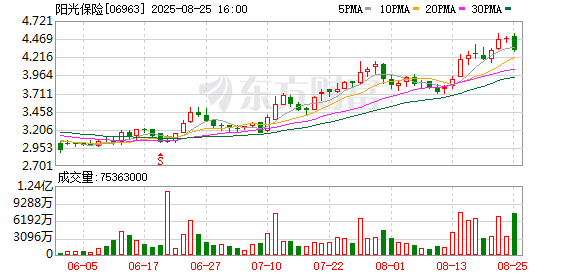
Core Insights - Sunshine Insurance reported a total premium income of 80.81 billion yuan for the first half of 2025, representing a year-on-year growth of 5.7% [2] - The net profit attributable to shareholders reached 3.39 billion yuan, up 7.8% year-on-year [2] - The group's embedded value increased to 128.49 billion yuan, reflecting an 11.0% growth compared to the end of the previous year [2] Life Insurance Segment - Sunshine Life achieved total premium income of 55.44 billion yuan, a year-on-year increase of 7.1% [2] - The new business value for the first half of the year was 4.01 billion yuan, with a comparable year-on-year growth of 47.3% [2] - The contract service margin balance reached 56.08 billion yuan, up 10.3% from the end of the previous year [2] - Individual insurance business saw a total premium income of 15.34 billion yuan, growing 12.1% year-on-year, with new business value at 1.23 billion yuan, up 23.6% [2] - The proportion of floating income products and protection products exceeded 50%, an increase of 26 percentage points year-on-year [2] Health Insurance and Other Channels - The bancassurance business reported total premium income of 35.44 billion yuan, a growth of 4.2% [2] - Other channels, including group insurance, online sales, and agency business, generated a total premium income of 4.66 billion yuan, up 14.9% [2] Property Insurance Segment - Sunshine Property achieved original premium income of 25.27 billion yuan, a year-on-year increase of 2.5% [3] - The combined underwriting cost ratio improved to 98.8%, a 0.3 percentage point optimization [3] - The underwriting profit reached 290 million yuan, up 42.4% year-on-year [3] - In the auto insurance sector, original premium income was 12.5 billion yuan, with a 3 percentage point increase in the proportion of household vehicle premiums [3] - Non-auto insurance premium income grew by 12.5% to 12.78 billion yuan [3] Asset Management - As of June 30, 2025, the total investment assets of the group amounted to 591.86 billion yuan, a 7.9% increase from the end of the previous year [3] - Total investment income reached 10.7 billion yuan, reflecting a year-on-year growth of 28.5% [3] - Comprehensive investment income was 16.33 billion yuan, up 9.2% year-on-year [3] Technological Advancements - The company has enhanced its AI capabilities to improve quality, reduce costs, and increase efficiency [4] - Sunshine Life upgraded its proprietary "Customer Family Protection Needs Recommendation System" for more precise and customized services [4] - Sunshine Property improved its mobile sales management platform "All-in-One Insurance" App, increasing batch quotation efficiency by over three times [4] Support for the Real Economy - In the first half of the year, the company provided risk protection amounting to 35 trillion yuan for the real economy [4] - The investment balance exceeded 480 billion yuan [4] Financial Services Initiatives - The company provided various technology insurance guarantees totaling approximately 37 billion yuan [5] - In the green finance sector, it offered nearly 7.5 trillion yuan in green insurance guarantees [5] - The company provided 830 billion yuan in agricultural and rural insurance, along with 16 trillion yuan in various inclusive financial protections [5] - Innovations in pension financial products were introduced to enrich the pension protection product matrix [5] - The company is deepening its digital transformation and enhancing AI application capabilities across major business areas [5]
《中国金融监管报告(2025)》在京发布
Zhong Guo Jing Ji Wang· 2025-08-25 08:22
Core Insights - The report titled "Financial Regulatory Blue Book: China Financial Regulatory Report (2025)" was jointly released by the Chinese Academy of Social Sciences Financial Research Institute, the National Financial and Development Laboratory, and the Social Sciences Academic Press, focusing on the evolution of digital finance and its regulation in China [1][2] - The report indicates that digital finance has transitioned from version 1.0 to 2.0, with innovations such as blockchain and artificial intelligence potentially creating new paradigms for financial services while also posing multiple risks and challenges in areas like cybersecurity, consumer rights protection, and financial data openness [1] - The report provides a comprehensive overview of significant events in China's financial regulatory landscape in 2024 and forecasts the development trends for 2025 [1] Summary by Sections General Report - The general report emphasizes the need for China to enhance research and exploration in areas such as technological innovation application, digital assets, and the construction of a digital financial ecosystem [1] - It aims to improve the digital financial development system, effectively balancing innovation and regulation to ensure the stability and security of the financial system [1] Sub-reports - The sub-reports analyze the progress of regulatory developments in various sectors including banking, securities, insurance, trust, and foreign exchange in 2024, presenting a panoramic view of China's financial regulatory landscape [1] Special Research - The special research section focuses on systemic financial risk observation, providing an overall assessment of financial risks in China and analyzing the evolution of risks in key areas [2] - It delves into significant issues in the current financial regulatory landscape, including financial legal construction, local debt management, green finance risks and regulation, public data usage, advancements in quantum computing, and legal regulation of crypto assets [2] - The report serves as an annual reference for financial institutions, theorists, and regulatory bodies, reflecting the current state, development, and reform history of China's financial regulatory system [2]
《中国金融监管报告》在京发布
Zhong Guo Jing Ji Wang· 2025-08-25 07:30
Core Insights - The report emphasizes the transition of China's digital finance from version 1.0 to 2.0, highlighting the potential of technologies like blockchain and artificial intelligence to create new paradigms for financial services while also posing risks in areas such as cybersecurity, market integrity, and consumer protection [1][2] - The report provides a comprehensive overview of significant events in China's financial regulatory landscape in 2024 and forecasts the development trends for 2025, aiming to enhance the stability and security of the financial system [1] - The specialized research section focuses on systemic financial risk assessment, analyzing the evolution of risks in key areas and addressing major issues in financial regulation, including legal frameworks, local debt management, green finance risks, and the regulation of crypto assets [2] Summary by Sections General Report - The general report aims to deepen the understanding of digital finance development and regulation in China, stressing the need for research in technology innovation, digital assets, and the digital financial ecosystem [1] - It also reviews the regulatory practices of major developed economies in digital finance, suggesting that China should focus on balancing innovation with regulation to ensure financial system stability [1] Sub-reports - The sub-reports analyze the progress of regulatory measures in various sectors including banking, securities, insurance, trust, and foreign exchange, providing a panoramic view of China's financial regulatory landscape [1] Specialized Research - The specialized research section centers on systemic financial risk, offering a comprehensive judgment on the overall financial risk in China and delving into specific areas such as financial legal construction and quantum computing advancements [2] - It serves as an annual report reflecting the current state, development, and reform history of China's financial regulatory system, providing valuable insights for financial institutions and policymakers [2]
双轮驱动,共筑未来:华兴资本与YZi Labs的战略协作打开全球数字金融新想象
Xin Lang Cai Jing· 2025-08-25 06:44
Group 1 - The core value of the partnership between Huaxing Capital and YZi Labs is to create a complete innovation capital closed loop, combining YZi Labs' project capture capabilities with Huaxing's capital market experience [1][2] - The collaboration aims to establish a "primary entry + secondary support" model, facilitating the growth of innovative projects on the BNB Chain and providing liquidity through Huaxing's capital platform [1] - The partnership marks a significant step in integrating the BNB ecosystem into mainstream capital circulation, providing a compliant channel for global investors to participate in digital asset growth [1][2] Group 2 - The strategic collaboration is expected to set a new benchmark for institutional-level digital asset allocation with a dedicated $100 million BNB allocation [1] - The initiative includes plans to promote the listing of BNB on licensed exchanges in Hong Kong, thereby opening traditional capital entry channels [1] - A multi-hundred million dollar RWA fund will be established to facilitate the tokenization of traditional assets such as real estate and bonds on the BNB Chain [1][2]
中行研究院资深研究员王家强:加快银行业高质量发展,着力做好“五篇大文章”|财富领航征程
Xin Lang Cai Jing· 2025-08-25 02:11
Core Viewpoint - The financial industry is entering a new phase filled with challenges and opportunities, emphasizing the importance of serving the real economy and supporting high-quality development through five key areas: technology finance, green finance, inclusive finance, pension finance, and digital finance [1][3]. Group 1: Importance of the Five Key Areas - The five key areas are essential for enhancing the banking sector's revenue, controlling bad debt risks, cultivating new customer groups, seizing blue ocean markets, and accelerating cost reduction and efficiency [2][3]. - Focusing on these areas is not only a political and social responsibility but also a necessity for the banking industry's own high-quality development [3][4]. Group 2: Challenges in Implementing the Five Key Areas - Some business models within the five key areas are still immature, and supporting mechanisms are not fully developed, leading to potential difficulties and challenges in implementation [2][4]. - The rapid decline in net interest margins, which fell to a historical low of 1.43% in the first quarter, restricts banks' ability to accumulate necessary capital for these initiatives [4][5]. Group 3: Addressing Aging Population Financial Needs - Banks should leverage offline branches to serve elderly clients effectively, as many older individuals prefer face-to-face interactions over digital platforms [6][7]. - A comprehensive service platform for elderly clients should be developed, connecting various services and enhancing customer loyalty by acting as a "pension steward" [7][8]. Group 4: Digital Transformation and AI Integration - The banking sector is transitioning towards a more intelligent and digital operation model, with AI technologies expected to play a significant role in marketing, credit assessment, risk control, compliance, and decision-making [9][11]. - However, challenges such as data hallucination, model resonance, and algorithm opacity must be addressed to mitigate risks associated with AI applications in finance [10][11]. Group 5: Supporting Technological Innovation - The banking industry plays a crucial role in supporting technological innovation by optimizing resource allocation, managing risks, and converting short-term savings into long-term capital for R&D [12][13]. - A comprehensive service system should be established to support technology-driven enterprises, including innovative financial products and collaborative efforts across various financial institutions [13]. Group 6: Expanding Financial Services to Small and Micro Enterprises - Digital platforms should be developed to enhance financial service accessibility for small and micro enterprises, providing a one-stop solution for various financial and non-financial needs [14][15]. - Addressing data integrity issues and promoting data sharing among financial institutions and regulatory bodies are essential for improving the accuracy of credit evaluations for small businesses [16]. Group 7: Green Finance Opportunities - The banking sector should focus on supporting green finance initiatives, particularly in renewable energy and technology innovation, to align with national goals for sustainable development [17][18]. - International cooperation in green finance and the establishment of global standards for green bonds are critical for enhancing China's role in the global green finance landscape [20].