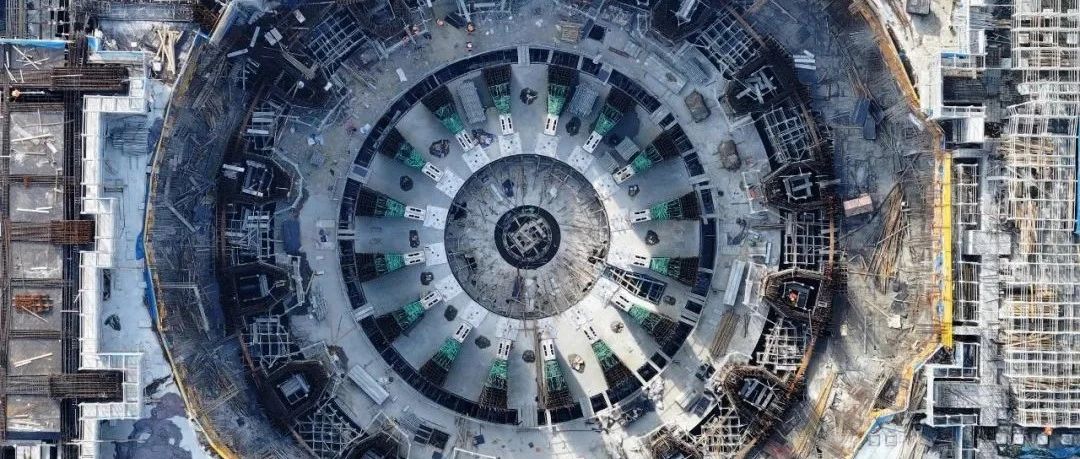
人造太阳

Search documents
中国聚变公司成立!获投资超百亿
Sou Hu Cai Jing· 2025-07-24 09:35
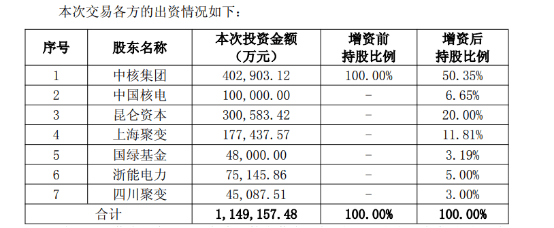
Group 1 - The establishment of China Fusion Energy Co., Ltd. marks a significant step in advancing China's fusion energy commercialization and engineering efforts [1] - The company will focus on overall design, technology validation, and digital R&D, while also building technology research and capital operation platforms [1] - The investment round raised approximately 11.49 billion yuan, with major stakeholders including China National Nuclear Corporation, China Nuclear Power, and Zhejiang Energy [2][3] Group 2 - The shareholding structure post-investment shows China National Nuclear Corporation's stake reduced from 100% to 50.35%, while new investors acquired significant shares [3] - The company aims to develop fusion energy through a phased approach, including pilot experimental reactors, demonstration reactors, and commercial reactors [3] - Nuclear fusion is viewed as a potential ultimate solution to global energy challenges, but significant technical and financial hurdles remain [4] Group 3 - The Chinese government has emphasized the need for nuclear power development, with projections indicating that nuclear energy's share of total electricity generation could double by 2035 [6] - The global investment landscape for fusion energy has accelerated, with the U.S. and China leading in equity financing, attracting substantial investments [6]

中国核电参股聚变能源公司
Sou Hu Cai Jing· 2025-07-23 02:52
Core Insights - China's nuclear power company has strategically invested in a domestic fusion energy enterprise, marking its entry into the "artificial sun" sector, which is seen as a significant move in the clean energy landscape [2][5] - Fusion energy is recognized as a potential ultimate solution for energy needs, offering advantages such as near-unlimited fuel supply and high safety, but faces substantial technical and economic challenges before commercialization [4][6] Group 1: China's Nuclear Power Involvement - The fusion energy company that China’s nuclear power has invested in is one of the few in the country with comprehensive R&D capabilities, with a team comprising members from national research institutions [5] - The collaboration is viewed as a dual approach where traditional nuclear energy expertise supports the engineering of fusion devices, while advancements in fusion technology can enhance existing nuclear operations [5][6] - This strategic move is seen as a proactive response to the global shift towards cleaner energy, positioning China’s nuclear power to avoid falling behind in the next generation of energy competition [5][6] Group 2: Global Context and Collaboration - The fusion energy sector is entering a new phase characterized by collaboration among governments, enterprises, and capital, with significant international efforts underway, including projects in the US and Europe [6] - China's nuclear power's investment highlights the unique advantages of the country's system, integrating state and market mechanisms to accelerate the transition from laboratory research to industrial application [6] - The partnership aims to focus on the development of key components for fusion reactors and the construction of demonstration facilities, with a target to achieve sustained fusion ignition by 2030 [6] Group 3: Challenges and Future Outlook - Despite the promising outlook, the commercialization of fusion energy must overcome significant hurdles, including reducing the costs of superconducting magnets and improving plasma confinement efficiency [6] - Initial investments for fusion energy projects may reach hundreds of billions, necessitating diverse financing models involving government funds, social capital, and international cooperation [6] - Public perception and acceptance of nuclear technology will also play a crucial role in the advancement of fusion energy [6][7] - The entry of China's nuclear power is expected to accelerate the development cycle of fusion technology, potentially transforming the country from a participant to a rule-maker in the global energy transition [7]


“人造太阳”引巨头争抢!中国核电、浙能电力重金入局
Ge Long Hui· 2025-07-22 16:34
Core Viewpoint - Two major nuclear power companies, China Nuclear Power and Zhejiang Energy Power, announced their investment in China Fusion Energy Co., aiming to strengthen their positions in the nuclear fusion sector and support the national energy transition strategy [2][6]. Investment Details - China Nuclear Power plans to invest 1 billion yuan (approximately 100 million) to acquire a 6.65% stake in the fusion company, while Zhejiang Energy Power intends to invest 751 million yuan (approximately 75.1 million) for a 5% stake [1][6]. - The overall investment round involves multiple institutions, totaling approximately 11.49 billion yuan (around 1.15 billion) for the new registered capital of the fusion company [5][6]. Strategic Importance - The investments are part of a broader strategy to enhance the core leadership of central enterprises in China's fusion industry and to facilitate the commercialization of fusion technology [6][12]. - Both companies view this as a proactive move to maintain competitiveness in the energy transition process [6][10]. Market Trends - The controlled nuclear fusion sector has seen significant interest, with a reported 41.78% increase in related stocks in the A-share market during the first half of 2025 [10][11]. - The global market for controlled nuclear fusion is projected to reach 496.5 billion by 2030 and potentially exceed 1 trillion by 2050 [12]. Technological Advancements - Recent breakthroughs in controlled nuclear fusion technology in China include achieving over 1 million degrees Celsius in plasma operation and the successful ignition of a commercial linear fusion device [11][12]. - The Chinese government has incorporated controlled nuclear fusion into its strategic emerging industry development plan, providing strong policy support for the sector [12][13].

可控核聚变央企,获百亿投资
财联社· 2025-07-22 13:08
Core Viewpoint - The article highlights the significant investment in China's controllable nuclear fusion sector, indicating a strategic move towards advancing nuclear energy technology and addressing the urgent demand for nuclear power in the country [1][4]. Group 1: Investment and Corporate Structure - China Fusion Energy Co., a subsidiary of China National Nuclear Corporation (CNNC), is set to receive an investment of approximately 11.49 billion yuan, marking a substantial step in the country's nuclear fusion development [1]. - Following the investment, CNNC will hold 50.35% of the shares in the fusion company, while China National Nuclear Power will hold 6.65% [2]. - The investment is part of a broader strategy to accelerate the development of controllable nuclear fusion technology, which is still in its early stages and requires significant funding and research [2]. Group 2: Industry Context and Technological Advancements - The Chinese government has emphasized the need for nuclear power development, with projections indicating that nuclear energy's share of total electricity generation could double to 10% by 2035 compared to 2022 [4]. - Various technological routes for nuclear fusion are being pursued, including Tokamak experiments and the Z-pinch fusion-fission hybrid reactor, with significant milestones achieved in recent months [4]. - The successful ignition of plasma in China's first commercial linear field-reversed configuration fusion device marks a critical breakthrough in the commercialization of controllable nuclear fusion technology [4]. Group 3: Market Opportunities and Recommendations - Analysts predict that the controllable nuclear fusion industry will enter a phase of accelerated capital expenditure, with opportunities arising from the construction of FRC and Z-pinch devices [5]. - Companies involved in the supply of critical components for fusion reactors, such as superconducting materials and power systems, are expected to benefit from increased orders and market demand [5]. - Specific companies to watch include those engaged in low-temperature superconducting materials, capacitor switches, and other essential technologies for nuclear fusion applications [5].

中国“人造太阳”,大消息!
Zhong Guo Ji Jin Bao· 2025-07-22 10:07
Group 1 - China National Nuclear Corporation (CNNC), China Nuclear Power, and Zhejiang Energy Power jointly invested approximately 11.49 billion yuan in China Fusion Energy Co., Ltd. [2][5] - Following the announcement, nuclear fusion concept stocks such as Changfu Co., Guoguang Electric, and Zhongzhou Special Materials experienced significant price fluctuations [2] - As of July 22, China Nuclear Power's stock closed at 9.34 yuan per share, with a market capitalization of 192.1 billion yuan, while Zhejiang Energy Power's stock closed at 5.23 yuan per share, with a market capitalization of 70.1 billion yuan [2] Group 2 - The investment was made at a price of 1.0019 yuan per registered capital, with China Nuclear Power contributing 1 billion yuan for a 6.65% stake, and Zhejiang Energy Power investing approximately 751 million yuan for a 5% stake [5][6] - After the capital increase, the registered capital of the fusion company will be 15 billion yuan, with CNNC holding 50.35% of the shares [5][6] Group 3 - The total assets of the fusion company increased to 5.369 billion yuan as of June 30, 2025, with total equity of 5.367 billion yuan [7] - The company aims to achieve commercial application of fusion energy through a three-step development phase: pilot experimental reactor, demonstration reactor, and commercial reactor [7]

活力中国调研行走进安徽 | 安徽合肥核聚变能加速冲刺:用一杯海水点亮万家灯火
Huan Qiu Wang Zi Xun· 2025-07-03 07:51
Core Insights - The article discusses the advancements in controlled nuclear fusion technology, highlighting its potential as a clean and virtually limitless energy source for humanity [3][5][6]. Group 1: Nuclear Fusion Technology - Controlled nuclear fusion mimics the sun's energy production by fusing hydrogen isotopes deuterium and tritium, which can be extracted from seawater [5][6]. - One liter of seawater can produce fusion fuel deuterium, releasing energy equivalent to 300 liters of gasoline during nuclear fusion [5]. - Nuclear fusion is considered safer than nuclear fission, as the reaction stops immediately if conditions fail, eliminating risks of nuclear leakage or radiation [6]. Group 2: Recent Achievements - The Experimental Advanced Superconducting Tokamak (EAST) has achieved significant milestones, including a world record of 1 billion degrees Celsius for 1066 seconds in January [6][11]. - The new compact fusion energy experimental device (BEST) focuses on energy output, aiming to exceed input energy, which is crucial for commercialization [8][9]. Group 3: Industry Development - Over 30 small to medium-sized tech companies related to nuclear fusion have been established in Hefei, with some already listed [9]. - Hefei has nearly 60 companies covering the entire nuclear fusion energy industry chain, from superconducting materials to operational design [9][11]. - The establishment of the Fusion Industry Alliance in Hefei in 2023 has gathered over 200 member companies, enhancing collaboration across the industry [9]. Group 4: Future Prospects - The BEST device is expected to be completed by 2027, with the first demonstration of fusion energy generation planned for 2030, and a demonstration fusion engineering pile by 2035 [11]. - The industry anticipates a transition to a clean energy era, where fossil fuels will primarily serve as chemical raw materials, and fusion energy will play a central role [11].
大跨界!中国石油强化布局可控核聚变
Zhong Guo Dian Li Bao· 2025-07-03 03:17
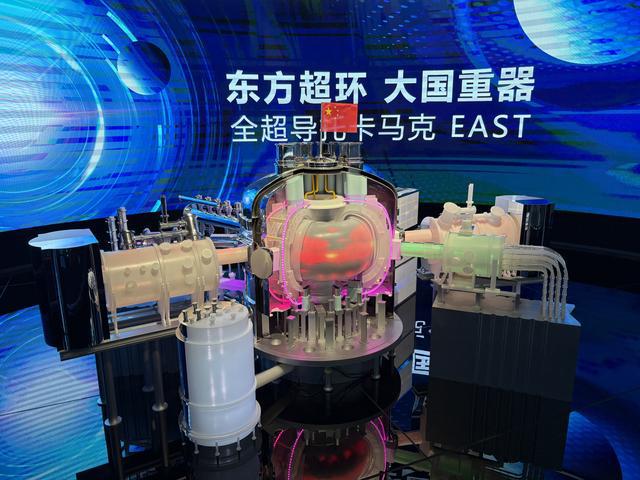
Group 1 - China National Petroleum Corporation (CNPC) Capital announced an investment of 655 million yuan in Kunlun Capital for a total capital increase of 3.275 billion yuan, aimed at investing in controllable nuclear fusion projects [1] - This is not CNPC's first venture into nuclear fusion; last year, Kunlun Capital and Hefei Science Island Holdings became shareholders in a fusion energy company, each investing 2.9 billion yuan for a 20% stake [1] - Controllable nuclear fusion is referred to as the "ultimate energy" source, with the potential to provide limitless energy without high-level radioactive waste [3][4] Group 2 - The principle of nuclear fusion mimics the sun's energy production, utilizing isotopes of hydrogen (deuterium and tritium) to release significant energy [4] - The key technologies for achieving controllable nuclear fusion are magnetic confinement fusion and inertial confinement fusion, with the tokamak device being the most mainstream approach [4] - China has made significant advancements in nuclear fusion research, transitioning from a follower to a core player in the field, with projects like the EAST tokamak and participation in the ITER project [3][8] Group 3 - The ITER project, initiated in 1985, aims to create a large-scale fusion reactor through international collaboration, with China joining in 2006 and taking on a significant portion of the research tasks [9][10] - The CFEDR (China Fusion Engineering Demonstration Reactor) project is a strategic initiative to develop a demonstration reactor, with plans to achieve commercial fusion energy by 2050 [11][12] - The CRAFT (Comprehensive Research Facility for Fusion Technology) project is set to be completed by 2025, providing a platform for high-parameter testing and supporting the CFEDR project [12]


英伟达投了比尔·盖茨47亿
投中网· 2025-06-27 06:31
Core Viewpoint - The article discusses the emerging competition in the nuclear energy sector, particularly focusing on investments in nuclear fusion technology by major players in Silicon Valley and Chinese state-owned enterprises, indicating a significant shift towards nuclear energy as a solution to future energy demands driven by climate change and AI growth [4][13]. Investment Trends - Nvidia's venture capital arm NVentures invested $650 million in TerraPower, a nuclear technology company founded by Bill Gates, alongside other investors like HD Hyundai and Gates himself [4][6]. - China National Petroleum Corporation (CNPC) announced a capital increase of 3.275 billion yuan for Kunlun Capital to invest in controlled nuclear fusion projects, specifically targeting the China Fusion Energy Company [4][16]. Technological Developments - TerraPower is focusing on the Natrium reactor technology, which utilizes liquid sodium as a coolant and aims to complement renewable energy sources [6][8]. - The U.S. Department of Energy has provided $2 billion in funding to TerraPower, supporting its development of the Natrium reactor [7]. Market Dynamics - The number of nuclear fusion companies has surged, with 43 companies globally by the end of 2023, over half of which are based in the U.S. [12]. - Major investments in nuclear energy are being made by various tech leaders, including Google and Amazon, indicating a consensus among Silicon Valley investors on the importance of nuclear energy [11]. Future Outlook - TerraPower plans to build its first small modular reactor in Wyoming, aiming for commercial operation by fall 2030, with plans for further expansion [8]. - The article highlights the increasing urgency for nuclear energy as AI and other sectors drive up electricity demand, with predictions of a 25% increase in U.S. electricity demand from 2023 to 2030 [14]. Competitive Landscape - China is rapidly advancing in nuclear fusion technology, with significant investments from state-owned enterprises and private companies, indicating a dual approach to development [16][18]. - The article emphasizes the competitive nature of nuclear fusion development between the U.S. and China, suggesting that if the U.S. does not lead, China will take the initiative [15][18].


中东战火未冷,全球资本抢滩“人造太阳”
财富FORTUNE· 2025-06-24 12:42
Core Viewpoint - The article emphasizes the accelerating development and investment in controllable nuclear fusion technology, which is seen as a "ultimate energy" solution amid geopolitical tensions and energy security concerns in China [1][7]. Group 1: Energy Security and Nuclear Fusion - China's energy import dependency is at 20%, with oil strategic reserves only sufficient for 24 days, highlighting severe energy security issues [1]. - Controllable nuclear fusion offers significant advantages, such as the energy released from 1 gram of deuterium-tritium fuel being equivalent to 8 tons of oil, and the cost of generating electricity can be controlled below 0.005 yuan per kilowatt-hour [1][6]. - The Chinese government has included nuclear fusion in its "Top Ten Future Industries" initiative, planning over 300 billion yuan investment by 2030 [1]. Group 2: Investment and Commercialization - Social capital is actively investing in nuclear fusion projects, with notable investments like the 3.275 billion yuan increase in Kunlun Capital aimed at controllable nuclear fusion [2]. - The establishment of Fusion New Energy, a core platform for commercializing nuclear fusion technology, has attracted significant investment, with registered capital reaching 14.5 billion yuan [2]. Group 3: Technological Advancements - The CRAFT project, a key system for fusion reactors, achieved full domestic production of its low-noise current drive system, marking a significant technological milestone [3]. - The HL-3, China's largest and most advanced nuclear fusion experimental device, achieved new operational records, indicating rapid progress in fusion technology [3]. Group 4: Market Potential and Future Outlook - The global controllable nuclear fusion market is projected to reach $496.5 billion by 2030 and may exceed $1 trillion by 2050 [6]. - The article notes a decline in China's crude oil imports for the first time in 20 years, reflecting a strategic shift towards reducing oil dependency and increasing focus on nuclear fusion as a viable energy solution [6][7].
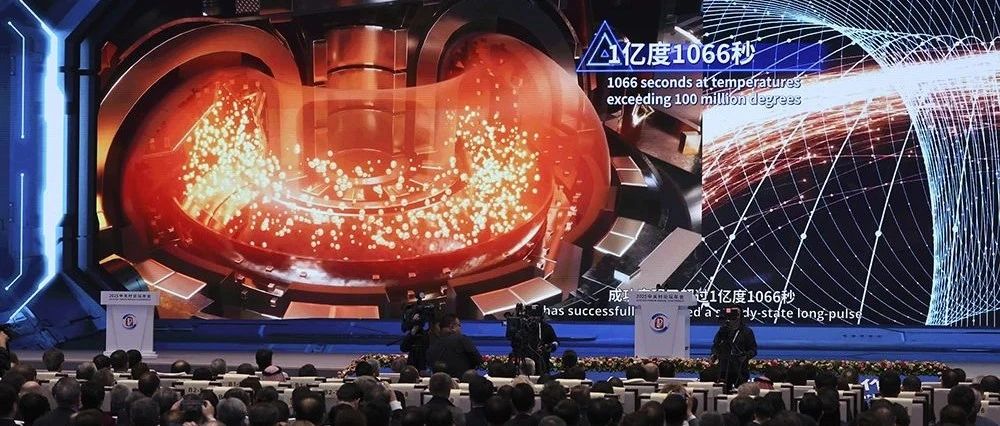
合肥,为人类“种太阳”
AI研究所· 2025-06-20 09:17
Core Viewpoint - The article highlights the significant advancements in nuclear fusion research in Hefei, particularly the achievements of the EAST (Experimental Advanced Superconducting Tokamak) device, which has set world records in plasma operation, marking a crucial step towards the realization of nuclear fusion as a viable energy source [1][4][8]. Group 1: Progress of "Artificial Sun" - The EAST device achieved a plasma temperature of 100 million degrees Celsius for 1066 seconds, setting a new world record for high confinement mode operation [1][4]. - The CRAFT (Kua Fu) low ripple current drive system has passed expert testing and has been fully domesticated, playing a key role in heating plasma to extreme temperatures [1][4]. - Since its establishment in 2006, the EAST device has conducted over 150,000 experiments, contributing valuable data for understanding nuclear fusion processes [7][8]. Group 2: Energy Industry's "Butterfly Effect" - Nuclear fusion energy offers unique advantages such as abundant raw materials, safety, efficiency, and low carbon emissions, with deuterium extracted from seawater providing energy equivalent to 300 liters of gasoline per liter of seawater [11]. - The nuclear fusion industry chain is expected to grow significantly, with upstream materials like lithium and beryllium becoming increasingly in demand as research progresses [12]. - The midstream involves high-precision equipment manufacturing, which will accelerate the overall upgrade of China's high-end equipment manufacturing industry [13]. - The downstream sector will see a transformation in energy supply, potentially replacing traditional fossil fuels with clean nuclear fusion energy, enhancing energy security and reducing environmental pollution [14]. Group 3: Hefei's Support for "Artificial Sun" - Hefei has become a focal point for nuclear fusion research, establishing itself as a national scientific center with significant infrastructure and innovation platforms [16]. - The city has formed a fusion industry alliance with over 1,000 units to collaboratively tackle key technologies and accelerate the full industry chain layout [18]. - Hefei is actively promoting the transformation of scientific achievements into production, providing a conducive environment for technology commercialization [19].