
可控核聚变

Search documents
消费占比25%、单位GDP二氧化碳排放下降17%、能源综合生产能力
Orient Securities· 2026-03-27 09:45
Group 1: Energy Security - By 2030, China's energy comprehensive production capacity is targeted to reach 5.8 billion tons of standard coal, a 13% increase from 5.13 billion tons in 2025[6] - The energy consumption total is expected to reach 7 billion tons of standard coal by 2030, with a production coverage ratio of approximately 82.9% during the 14th Five-Year Plan period[6] - The oil production is aimed to stabilize at around 200 million tons annually, with natural gas production steadily increasing[6] Group 2: Energy System Construction - The goal is to increase the share of non-fossil energy in total energy consumption to 25% by 2030, up from 16% in 2020 and 21.7% in 2025[13] - The plan includes the construction of major clean energy bases, with a cumulative installed capacity of offshore wind power expected to exceed 100 million kilowatts and nuclear power capacity reaching approximately 110 million kilowatts[15][17] - The new energy system will focus on multi-energy complementarity and innovation mechanisms, with a target of adding over 30 million kilowatts of new energy base capacity during the 15th Five-Year Plan[15] Group 3: Green Low-Carbon Transition - A 17% reduction in carbon emissions per unit of GDP is necessary to achieve the carbon peak by 2030, with projections indicating a decrease to approximately 0.78 tons per 10,000 yuan by that year[18][19] - The plan emphasizes dual control of carbon emissions, focusing on total emissions and intensity, with specific measures for high-energy-consuming industries[24] - Key actions include enhancing energy efficiency in major sectors, promoting circular economy initiatives, and implementing non-CO2 greenhouse gas management[25][27] Group 4: Future Energy Industry Development - The plan aims to foster technological breakthroughs in future energy industries, focusing on smart driving, new solar cells, and energy storage technologies[28] - Hydrogen energy and nuclear fusion are highlighted as key areas for future development, with a focus on creating a comprehensive hydrogen energy ecosystem[29] - The investment in nuclear fusion technology is expected to yield results during the 15th and 16th Five-Year Plans, positioning China at the forefront of future energy technology[29]
媒体报道丨详解“十五五”:109项重大工程如何托起中国的未来
国家能源局· 2026-03-18 02:47
Core Viewpoint - The article discusses China's "14th Five-Year Plan" and its implications for national development amidst global instability, emphasizing the importance of strategic projects in energy and transportation to support economic growth and stability [5][7][10]. Group 1: Strategic Projects - The "14th Five-Year Plan" includes 109 major projects, categorized into three batches, with the first batch focusing on strategic projects that serve as the foundation for national development [8][10]. - Key areas of these strategic projects include energy and transportation, which are essential for supporting the country's development and addressing external uncertainties [13][14]. - The development of energy projects, such as the Yarlung Tsangpo River hydropower project, aims to provide approximately 300 billion kilowatt-hours of clean electricity annually, replacing 90 million tons of standard coal [15][20]. Group 2: Energy and Transportation - Energy projects are designed to reduce China's dependence on external sources, thereby enhancing resilience against global fluctuations [20][21]. - Transportation infrastructure, such as the "Eight Vertical and Eight Horizontal" high-speed rail network, aims to improve internal connectivity, facilitating logistics and economic activity [26][30]. - The completion of these projects is expected to create efficient transportation networks, reducing costs and enhancing the movement of goods and people [27][28]. Group 3: Future Industries - The second batch of projects focuses on promoting leading future industries, including artificial intelligence, satellite internet, and controlled nuclear fusion, which are expected to become new pillar industries for the economy [34][35]. - These industries are projected to generate significant economic output, with estimates suggesting a potential increase from 6 trillion yuan in 2025 to over 10 trillion yuan by 2030 [38][39]. - The emphasis is on overcoming technological challenges and establishing a robust industrial foundation to support these emerging sectors [41][42]. Group 4: Investment in People - The third batch of projects aims to implement social welfare initiatives that enhance the quality of life and address social issues, reflecting a shift towards investing in human capital [47][48]. - This approach includes improving education, social security, and public services, which are essential for adapting to the challenges posed by the AI era [60][62]. - The focus on human investment is intended to create a more equitable distribution of growth benefits and enhance overall societal well-being [66][68].


郑栅洁主任在十四届全国人大四次会议经济主题记者会上答记者问
国家能源局· 2026-03-07 02:20
Core Viewpoint - The article discusses the strategic focus of China's economic development, emphasizing the establishment of six emerging pillar industries and six future industries, alongside significant investments in energy and infrastructure projects to support modernization and enhance living standards [4][5][6]. Group 1: Emerging and Future Industries - The six emerging pillar industries include integrated circuits, aerospace, biomedicine, low-altitude economy, new energy storage, and intelligent robotics, with an estimated output value approaching 6 trillion by 2025 and potentially doubling to over 10 trillion by 2030 [5]. - The six future industries encompass quantum technology, biomanufacturing, green hydrogen energy, nuclear fusion energy, brain-computer interfaces, embodied intelligence, and the nascent 6G technology, which are on the brink of technological breakthroughs [5]. Group 2: Major Energy Projects - The "14th Five-Year Plan" outlines 109 major projects, including the continued advancement of significant energy projects such as the Yaxia Hydropower, "Shagao Desert" new energy base, and offshore wind power bases, each involving investments exceeding 1 trillion [6]. - These projects aim to ensure national modernization and improve the quality of life for citizens, while also focusing on energy conservation and carbon reduction initiatives [6]. Group 3: Infrastructure and Investment - The construction of the "Six Networks" (water network, electricity network, computing power network, new communication network, urban underground pipeline network, and logistics network) is prioritized, with an estimated investment exceeding 7 trillion [8]. - The government aims to enhance domestic consumption and investment, implementing new policies to stimulate consumption and increase government investment while encouraging private sector participation [8].

两会速览︱“十五五”109项重大工程项目 涉及能源有哪些?
中关村储能产业技术联盟· 2026-03-06 08:41
Core Viewpoint - The article emphasizes the importance of enhancing industrial foundational capabilities and competitiveness, focusing on the development of new energy systems and technologies to drive green and low-carbon transitions [6][7][9]. Industrial Foundation and Competitiveness Enhancement - Significant technological equipment is highlighted as a key area for development, including high-end new materials, basic components, and industrial software [10]. - New industries and tracks are being cultivated, particularly in new battery technologies and green hydrogen [6][12]. Cutting-edge Technology Research - The article discusses advancements in artificial intelligence and controllable nuclear fusion as critical areas for technological breakthroughs [6][13]. Modern Infrastructure System Construction - The construction of a modern infrastructure system is essential, with a focus on major hydropower and integrated wind-solar bases, as well as offshore wind power and coastal nuclear power [9][16]. Green and Low-Carbon Transition - The transition towards carbon peak and carbon neutrality is a priority, with initiatives aimed at energy conservation and carbon reduction in key industries [7][25]. - The development of zero-carbon parks and transportation corridors is also emphasized, alongside the promotion of a circular economy to assist in carbon reduction [9][25]. Safety Assurance in Key Areas - Enhancing safety assurance capabilities in critical sectors is crucial, including food security and oil and gas exploration and development [8][29].

亚太股市集体反弹,A股超4500股上涨,Mini LED、智能电网掀涨停潮
21世纪经济报道· 2026-03-05 04:12
Market Overview - Major Asia-Pacific stock indices rebounded collectively, with the Nikkei 225 index rising by 2.7%, gaining over 1400 points, and the Korean Composite Index increasing by over 10%, triggering a trading halt [1] - The Shanghai Composite Index rose nearly 1%, while the Shenzhen Component Index increased by over 1.6%, with the ChiNext and Sci-Tech Innovation indices both up by over 2% [1] Sector Performance - Mini LED and smart grid concept stocks saw a surge, with 20 stocks hitting the daily limit up, including Huacan Optoelectronics and Jufei Optoelectronics, both up by 20% [2] - Power grid equipment and CPO concepts continued to perform strongly, with China Western Power hitting the daily limit and reaching a historical high [3] Notable Stocks - Key stocks with significant gains included: - Jiaru Optoelectronics: 20.02% increase - Jufei Optoelectronics: 20.02% increase - Lehman Optoelectronics: 20.00% increase - Aibisen: 20.00% increase - Ruifeng Optoelectronics: 19.97% increase [4] - Other notable performers included: - China Western Power: 10.02% increase - Huanli Zhihui: 16.49% increase - Hai Lian Xun: 15.15% increase [5] Emerging Concepts - The controllable nuclear fusion concept stocks experienced rapid growth, with companies like China Nuclear Engineering and Baoli Electric hitting the daily limit [6] - Brain-computer interface concept stocks also saw a rise, with Yanshan Technology and Nanjing Panda both hitting the daily limit, supported by government initiatives to foster future industries [6] Commodity Market - International precious metals showed upward movement, with spot gold rising over $66, approaching $5190 per ounce, and spot silver increasing nearly 1.8% [7]

未来产业2026年或迎“破茧”时刻
Xin Lang Cai Jing· 2026-02-12 20:33
Core Viewpoint - The integration of technological and industrial innovation is expected to lead to significant advancements in China's future industries by 2026, with key breakthroughs in various sectors such as quantum technology, biomanufacturing, and controllable nuclear fusion [1][2] Group 1: Future Industry Development - The report from the China Center for Information Industry Development indicates that by 2026, multiple tracks in future industries are likely to achieve critical transitions from technological breakthroughs to industrial applications [1] - Quantum technology is moving from laboratory settings to specific applications in fields like financial risk control and drug development [1] - Biomanufacturing technologies are maturing, with deepening applications in pharmaceutical research and agricultural breeding [1] - Controllable nuclear fusion is entering a critical phase of engineering feasibility verification, accelerating its commercialization [1] Group 2: Investment and Policy Initiatives - Beijing plans to invest 100 million yuan annually to discover and cultivate over 100 "future-winning" enterprises [1] - Guangdong Province has released policy guidelines to establish a strategic emerging industry investment guidance fund with a total scale of 100 billion yuan, with an initial phase of 50 billion yuan [1] - The fund will implement mechanisms for error tolerance and long-term performance assessment [1] Group 3: Challenges in Future Industry Investment - The future industries face challenges such as high capital intensity, long investment cycles, and significant risks, necessitating tailored strategies to address the question of "who will invest" [2] - Government funding should focus on "patient investment" to leverage fiscal resources for early, small, long-term, and hard technology investments [2] - Social capital needs to address the "reassuring investment" issue by activating venture capital and private capital [2] - Financial institutions should facilitate "coordinated investment" by utilizing various channels such as bank credit, capital markets, technology insurance, and bond issuance [2]
刘德顺:谱写“十五五”高水平能源科技自立自强新篇章
Zhong Guo Dian Li Bao· 2026-02-12 02:15
Core Viewpoint - The "15th Five-Year Plan" marks a significant starting point for energy development in China, emphasizing the importance of building a strong energy nation and establishing a new energy system to support national modernization efforts [1] Group 1: Energy Development Strategy - The "15th Five-Year Plan" outlines strategic tasks for building an energy powerhouse, focusing on high-quality development and technological self-reliance [2][3] - The plan aims to establish a new energy system by the end of the "15th Five-Year Plan" period, which is crucial for the overall development of the country [3] Group 2: Technological Innovation - The emphasis is placed on enhancing the overall effectiveness of the energy technology innovation system, integrating various innovation elements and organizations [5] - The plan highlights the need for original innovation and tackling key core technologies to support the construction of a new energy system [3][4] - The integration of technological and industrial innovation is crucial, with a focus on developing new industries such as artificial intelligence and hydrogen energy [4][5] Group 3: Implementation and Goals for 2026 - Key areas of focus for 2026 include strengthening the energy technology innovation system and advancing major technological equipment demonstrations [6] - The plan includes the implementation of national technology major projects and enhancing energy efficiency while promoting green development [5][6] - The cultivation of new industries and business models in the energy sector is prioritized, particularly in areas like artificial intelligence and new energy storage [6]
万象更“新” 无限可“能” ——探访中国新能源项目建设运营一线 | 2026新春走基层
Zhong Guo Hua Gong Bao· 2026-02-10 03:09
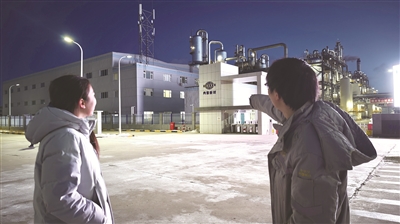
Group 1: Biomass Gasification Project - The "Donghua Furnace," developed by Donghua Engineering Technology Co., is a biomass gasification device that successfully converts agricultural waste into synthesis gas, significantly reducing carbon emissions by 70% to 90% compared to fossil fuels [4][6] - The project aims to enhance the value of agricultural waste and promote local economic development while ensuring ecological protection [6][7] - The team is focused on continuous optimization of the gasification process and aims to replicate the technology in other regions [7] Group 2: Hydrogen Production Project - The "Hydrogen Boat" project in Panzhihua, utilizing "concentrated solar water splitting" technology, is set to produce approximately 200 tons of hydrogen annually by December 2025 [8][10] - The technology boasts a hydrogen production efficiency significantly higher than current global standards, with a cost projection of 8 to 12 yuan per kilogram for large-scale production [10][11] - The project has garnered interest from multiple government entities and enterprises, indicating strong market potential for green hydrogen applications in industries such as metallurgy and chemicals [9][12] Group 3: Geothermal Heating in Xiong'an - Xiong'an New Area has implemented geothermal heating, replacing traditional coal heating and achieving significant reductions in carbon emissions, with one heating season replacing 4,847 tons of standard coal [15][16] - The geothermal system utilizes underground heat sources and has expanded to cover the entire urban area, with over 100 geothermal stations operational [16][19] - The integration of geothermal energy with other renewable sources is being explored to create a smart energy microgrid, enhancing energy efficiency and sustainability [18][19] Group 4: Controlled Nuclear Fusion Research - New Hope Group has made significant advancements in controlled nuclear fusion, with the "Xuanlong-50U" device achieving several world-first milestones in fusion technology [22][23] - The project aims to make fusion energy a viable and clean energy source within the next two decades, addressing the growing global energy demand [21][22] - The team emphasizes the importance of talent development and collaboration with various research institutions to support the long-term goals of fusion energy commercialization [23]

国防军工行业周报(2026年第6周):持续关注军工,继续推荐商业航天、大飞机等板块-20260209
Shenwan Hongyuan Securities· 2026-02-09 10:30
Investment Rating - The report maintains a positive outlook on the defense and military industry, recommending continued focus on commercial aerospace and large aircraft sectors [4][5]. Core Insights - The defense and military industry is expected to see a recovery in performance and orders, with a trend of acceleration anticipated in the second quarter of 2026. Increased military spending intentions from Europe and the US, along with potential catalysts from the upcoming Two Sessions military budget, suggest a sustained interest in the military sector [4]. - The report indicates that the military industry is entering a new cycle of quality improvement and growth, driven by the 14th Five-Year Plan and ongoing geopolitical tensions [4]. - The commercial aerospace sector is highlighted as a key area for investment, with significant developments expected in reusable spacecraft technology and a focus on nearly 30 launch missions in 2026 [4]. - The report emphasizes investment opportunities driven by domestic demand growth and technological advancements in the military sector, including areas such as smart technology, unmanned systems, and military trade [4]. Market Performance - Last week, the Shenwan Defense and Military Index rose by 0.21%, while the CSI Military Leaders Index increased by 0.6%. In contrast, the Shanghai Composite Index fell by 1.27%, and the ChiNext Index dropped by 3.28%, indicating that the defense sector outperformed the broader market indices [5][12]. - The top five performing stocks in the defense sector included Shenjian Co. (up 28.07%), Galaxy Electronics (up 21.58%), and TeFa Information (up 20.17%), while the bottom five performers included Tongyou Technology (down 18.37%) and Chunxing Precision (down 13.65%) [12][13]. Valuation Changes - The current PE-TTM for the Shenwan military sector is 95.29, indicating it is in the upper range historically, with a valuation percentile of 74.63% since January 2014 [12][21]. - The report notes a differentiation in valuations among sub-sectors, with aerospace and aviation equipment showing relatively high PE valuations since 2020 [12][21].





聚焦“从1到10”,临港未来5-10年建成国际一流科创城
Di Yi Cai Jing· 2026-01-21 14:34
Core Viewpoint - The establishment of the "Lingang Innovation City" aims to transform Lingang from an "industrial highland" to an "innovation and entrepreneurship highland," supporting Shanghai's development as an international technology innovation center [1][2]. Group 1: Development Goals - By the end of 2027, Lingang aims to establish at least 7 world-class research institutions, over 2,000 high-tech enterprises, and attract more than 40,000 innovative talents [3]. - By 2030, Lingang seeks to solidify its strategic technological capabilities and significantly enhance its technology transfer capabilities, becoming an important base for Shanghai's international technology innovation center [3]. Group 2: Unique Advantages - Lingang's strengths lie in its robust industrial foundation and open institutional environment, making it an ideal area for the transformation of results from "1 to 10" and the industrial expansion from "10 to 100" [2]. - The region contributes over 1/9 of the city's industrial output value, gathers about 1/5 of manufacturing fixed asset investment, and accounts for 2/5 of major advanced manufacturing projects [2]. Group 3: Solutions for Technology Transfer - Lingang proposes a solution characterized by "low cost, supportive environment, and practical scenarios" to facilitate technology transfer [4]. - The area offers attractive low-cost entrepreneurial spaces, with 100,000 square meters of "zero rent" incubation space and 200,000 square meters of low-cost development space [4]. Group 4: Financial Support and Ecosystem - A comprehensive financial support system covering the entire lifecycle of enterprise development has been established, including the Lingang Qihang Fund and various specialized support programs [4]. - The region encourages major enterprises to open application scenarios and engage in "challenge-based" initiatives to help startups quickly secure initial orders [4]. Group 5: Future Industry Layout - Lingang Innovation City has outlined five major action plans focusing on technology transfer, leading edge industries, talent aggregation, capital acceleration, and innovation ecosystem construction [6]. - The region aims to leverage its strengths in integrated circuits, civil aviation, smart vehicles, and high-end equipment to foster future industry sectors such as fourth-generation semiconductors and controlled nuclear fusion [6][7]. Group 6: Support for Emerging Technologies - Lingang will support existing successful models like the "photovoltaic hydrogen production and hydrogen integration" demonstration project to accelerate the application and commercialization of new technologies [7]. - A collaborative approach will be taken in the fourth-generation semiconductor field to establish specialized transformation platforms and industry clusters [8].