半导体

Search documents
牛市未央,但逻辑已换
Jing Ji Guan Cha Bao· 2026-02-20 02:04
Group 1 - The core viewpoint of the articles highlights a significant shift in investment behavior among residents, moving from traditional bank deposits to diversified financial products such as bank wealth management, stocks, and gold, driven by declining deposit rates [1][2][3] - In 2025, gold emerged as a standout asset, achieving a price of over $4,300 per ounce with a 65% annual increase, while silver also performed well, rising by 129.83% due to demand in green energy sectors [5][6] - The A-share market experienced a notable recovery, with the Shanghai Composite Index rising from a low of 3,096 points to over 4,000 points by October 2025, driven by technological advancements and institutional support [6][15] Group 2 - The global economic landscape in 2025 was characterized by a slowdown in growth and geopolitical tensions, yet capital markets saw a bull run in commodities, particularly in gold and silver, while the bond market remained stable [2][3] - Institutions surveyed indicated a strong preference for equities, with 70.80% believing stocks would be the most valuable asset in 2025, a significant increase from 46.15% in 2024 [1] - The investment strategy for 2026 is expected to focus on managing uncertainty, with a continued emphasis on A-shares and gold as primary assets [2][10] Group 3 - The outlook for 2026 suggests that the bull market may continue, with expectations of a weaker dollar and ongoing demand for precious metals, particularly gold and silver, which are projected to reach prices of $6,300 to $6,600 per ounce by the end of 2026 [9][10] - The anticipated increase in the Chinese yuan's value may influence foreign investment behavior, with a gradual appreciation expected to support market liquidity [10][12] - Analysts predict that the investment landscape will shift towards a more balanced approach, focusing on corporate earnings recovery and technological advancements as key drivers for market performance in 2026 [13][14]
牛市进行时
Jing Ji Guan Cha Wang· 2026-02-20 01:32
Group 1 - The core viewpoint of the article highlights the significant shift in investment behavior among residents due to declining bank deposit rates, leading to increased interest in financial products, stock markets, and commodities like gold [2][6][10] - In 2025, 40% of investors reported substantial returns, with some achieving over 140% annual gains through diversified financial strategies [3][5] - The article notes that despite global economic slowdowns and geopolitical tensions, capital markets experienced a transformation driven by factors such as interest rate cuts by the Federal Reserve and deep industry changes, resulting in a bull market for commodities like gold and silver [6][8][10] Group 2 - The performance of gold was particularly notable in 2025, with prices reaching over $4,300 per ounce, marking a 65% increase, and gold ETFs doubling in size [10] - The A-share market also saw significant movements, with the Shanghai Composite Index rising from 3,096 points to over 4,000 points during the year, driven by technological advancements and demand for industrial metals [11] - Looking ahead to 2026, institutions predict continued investment in A-shares and gold, with a focus on managing uncertainty and adapting to changing market conditions [7][12][14] Group 3 - The article discusses the anticipated trends for 2026, including a potential continued bull market for gold and silver, with forecasts suggesting gold could reach $6,300 to $6,600 per ounce by the end of 2026 [13] - Analysts expect the Chinese yuan to appreciate steadily, influenced by the Federal Reserve's policies and domestic economic conditions, which may alter foreign investment behaviors [14] - The investment landscape for 2026 is expected to focus on technology and domestic demand, with a balanced market style anticipated, emphasizing the importance of corporate earnings recovery [16][17][18]


研判2026!中国钌行业产业链、需求量、市场价格及发展趋势分析:数据中心与氢能需求激增,供需矛盾引爆价格[图]
Chan Ye Xin Xi Wang· 2026-02-20 01:11
Core Viewpoint - The Chinese ruthenium industry is at a critical development juncture characterized by severe supply-demand imbalance, with significant risks and opportunities arising from increasing demand in data centers, hydrogen fuel cells, and quantum computing by 2025, while facing supply instability from major producers like South Africa and Russia due to geopolitical risks and logistical challenges [1][9]. Industry Overview - Ruthenium (Ru) is a rare transition metal with a high melting point (approximately 2334°C) and boiling point (approximately 4150°C), primarily extracted from platinum or nickel refining by-products, with global resources concentrated in South Africa and Russia [2][4]. Industry Chain - The upstream of the ruthenium industry involves extraction from associated minerals like platinum, nickel, and copper sulfide ores, with no large independent deposits. Ruthenium can also be recovered from electronic waste and industrial catalysts [4][6]. Current Industry Status - Ruthenium, once an obscure metal, is rapidly becoming a strategic material driving the global digital economy and green transition, with a projected global demand of approximately 1197 megajoules in 2024, reflecting a year-on-year increase of 10.73% [8][9]. Key Enterprises - The competitive landscape of the Chinese ruthenium industry is marked by a heavy reliance on imports and a focus on circular economy practices. Major players include Jinchuan Group, which leverages its resources for strategic metal development, and Guizhou Platinum Group, which leads in precious metal recycling and processing [10][11]. Industry Development Trends 1. **Strategic Demand Restructuring**: The growth logic of the ruthenium industry is shifting, with explosive growth expected from the renewable energy and semiconductor sectors, particularly in hydrogen energy applications where ruthenium is becoming a key material [14]. 2. **Industry Paradigm Shift**: The development of a circular economy and efficient recovery from urban mining is essential for ensuring supply chain security in China, with a focus on improving recovery technology and product purity [14]. 3. **Optimized Development Environment**: The healthy development of the industry relies on comprehensive top-level design and policy support, including the establishment of a national recycling network and financial tools to stabilize the market [15].


Solstice Advanced Materials (NasdaqGS:SOLS) FY Conference Transcript
2026-02-19 15:52
Summary of Solstice Advanced Materials FY Conference Call Company Overview - **Company**: Solstice Advanced Materials (NasdaqGS:SOLS) - **Date of Conference**: February 19, 2026 Key Highlights Financial Performance - **Q4 Earnings**: Achieved 8% top-line growth, driven by strong secular trends [7] - **Business Segments**: - Nuclear business: Double-digit growth - Refrigerants and thermal management: Double-digit growth - Electronics: Double-digit growth - **EBITDA Guidance for 2026**: Mid-single-digit growth expected [7] Nuclear Business - **Unique Position**: Only nuclear conversion site in the U.S. with a total of 4 sites globally [11] - **Product**: Produces uranium hexafluoride (UF6) from mined uranium ore [11] - **Market Demand**: Anticipated 400% growth in nuclear energy over the next 25 years, with 75 new reactors under construction and another 100 announced [11][12] - **Expansion Plans**: 20% debottlenecking planned for 2026, with the site sold out through 2030 [15][16] Refrigerants Business - **Growth Drivers**: Transition to hydrofluoroolefins (HFOs) due to regulatory mandates, with significant demand in HVAC and automotive sectors [29][32] - **Market Position**: Strong intellectual property (IP) position and co-development of HFO technology [29] - **Financial Performance**: Double-digit growth in Q4 and 2025, with expectations for margin expansion as aftermarket business kicks in [29][41] Electronics Business - **Market Demand**: 19% growth in Q4, driven by semiconductor demand and advanced packaging [66] - **Manufacturing Expansion**: Doubling the manufacturing site for sputtering targets to meet demand [68] - **Unique Offering**: Only U.S. manufacturer of copper-manganese sputtering targets, crucial for leading-edge semiconductor nodes [64] Data Centers - **Growth Opportunity**: Significant demand for cooling solutions in data centers, with Solstice positioned to provide refrigerants and thermal management solutions [49][55] - **Technological Edge**: Focus on next-generation cooling technologies, including immersion cooling [57] Capital Allocation and Strategy - **Balance Sheet**: Healthy balance sheet with low leverage, allowing for flexibility in capital deployment [73][76] - **R&D Investment**: Increased spending on R&D to drive innovation and develop next-generation solutions [76][101] - **Dividend Announcement**: First dividend announced, indicating a balance between reinvestment and shareholder returns [104] Global Economic Outlook - **Market Conditions**: Stable outlook for construction and building materials, with potential tailwinds if interest rates decrease [82][84] - **Sector Performance**: Robust growth expected in electronics, refrigerants, and nuclear sectors, while cyclical areas remain stable [92] Strategic Positioning Post-Spin - **Operational Flexibility**: Ability to deploy capital quickly and respond to growth opportunities post-spin from Honeywell [120][122] - **Focus on Innovation**: Emphasis on co-innovation with customers to ensure alignment with market needs [116][118] Defense Sector - **Market Demand**: Increased global defense spending, with Solstice's next-generation technology positioned for military applications [126][129] - **Capacity Expansion**: Plans to expand capacity to meet anticipated demand in the defense sector [131] Conclusion Solstice Advanced Materials is well-positioned for growth across multiple sectors, including nuclear, refrigerants, electronics, and defense. The company is leveraging its unique market position, strong financial health, and commitment to innovation to capitalize on emerging opportunities in a rapidly evolving market landscape.
2026公募投资展望:这些方向被看好
Zhong Guo Zheng Quan Bao· 2026-02-19 10:53
Group 1 - A-shares are presenting structural opportunities amidst fluctuations, with public funds initiating a new round of investments in sectors like artificial intelligence, semiconductors, and consumption due to moderate economic recovery and accelerated industrial upgrades [1] - The manufacturing investment and A-share capital expenditure contraction are driving supply-demand rebalancing, providing support for corporate profits, while fiscal changes in special bonds will impact A-share pricing [2] - The market is expected to continue attracting significant incremental capital inflows in 2026, with major contributions from insurance funds and financing, while individual investors are primarily high-net-worth individuals with high-risk preferences [2] Group 2 - The AI sector is a focal point for public fund strategies, with expectations for continued strong performance in the AI industry chain in the first half of 2026, driven by breakthroughs in AI model capabilities and significant growth in annual recurring revenue from AI-native applications [4] - The semiconductor industry is experiencing rapid changes driven by AI large models, with a focus on domestic production and R&D, while non-AI semiconductor sectors may face pressure [5] - The consumption sector is anticipated to see a resurgence in investment opportunities in 2026, driven by the release of wealth effects and an upgrade in high-end and service consumption demands [5]
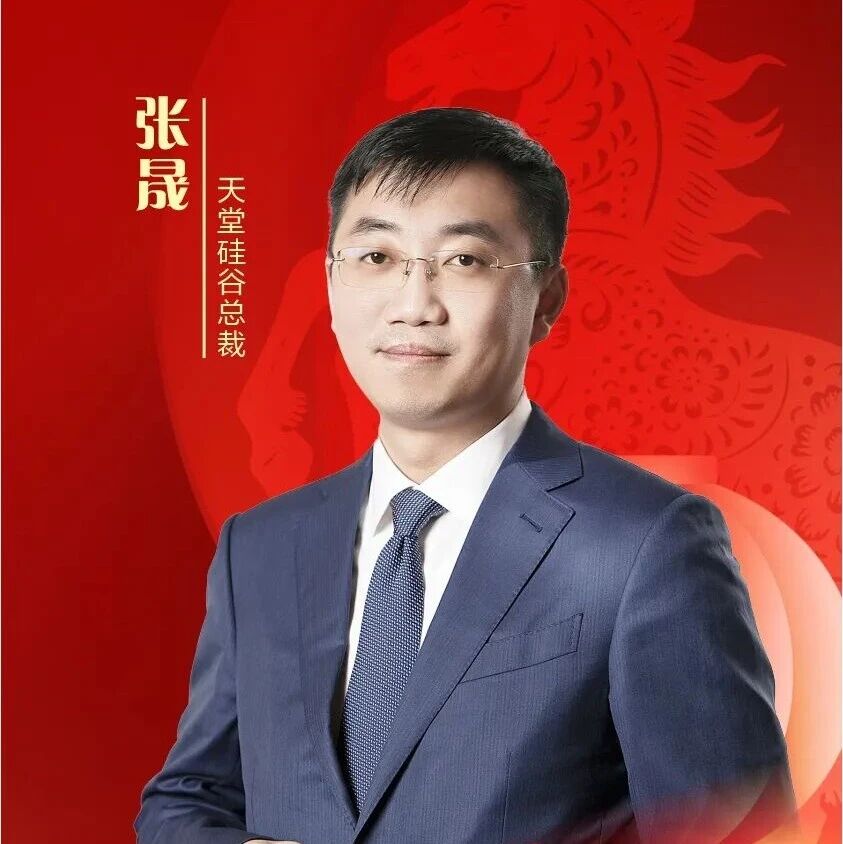
天堂硅谷张晟:2026年继续脚踏实地走在产业深水区丨创投贺新春
证券时报· 2026-02-19 07:34
Core Insights - The venture capital industry is entering a recovery phase in 2025, with a clear focus on hard technology investments driven by technological advancements and market recovery [3] - The establishment of the "growth tier" on the Sci-Tech Innovation Board and the resumption of the fifth set of listing standards have revitalized the IPO market, providing broader opportunities for hard tech companies [3] - Key sectors attracting investment include artificial intelligence, robotics, semiconductors, and biomedicine, with significant increases in financing activity throughout the year [3] Group 1 - In the past year, four portfolio companies successfully went public, demonstrating the effectiveness of the company's value investment methodology [4] - Notable IPOs include Xi'an Yicai and Heyuan Biotechnology on the Sci-Tech Innovation Board, Han Shuo Technology on the ChiNext, and Cao Cao Travel on the Hong Kong Stock Exchange [4] - Over 25 years, the company has invested in over 230 enterprises, with 54 achieving IPOs, adhering to strict investment principles focused on potential returns and understanding of the business [4] Group 2 - Looking ahead to 2026, the company will focus on breakthroughs in underlying technology capabilities, new materials, and core components [5] - In the smart technology sector, the company is optimistic about hardware innovations with global perspectives and local supply chain advantages, as well as the application of AI across industries [5] - The company believes that the driving force behind industrial evolution lies in genuine demand, clear pathways, and consistent execution by teams, rather than merely following trends [5]
银河基金总经理史平武:策马启新程,春山待奋蹄
Sou Hu Cai Jing· 2026-02-18 10:22
旧岁峥嵘皆过往,新年奋楫再出发。站在新起点,银河基金将坚守中国特色金融发展之路,与投资者、 合作伙伴携手,以专业谋发展、以稳健守初心、以温暖传使命,在金融强国征程中策马扬帆、笃行不 怠,共绘高质量发展华彩画卷!最后,再次祝愿大家马年安康顺遂、事业腾达、阖家幸福! 史平武 银河基金党委书记、总经理简介 曾任中国农业银行山西省太原市分行副行长,大华银行(中国)有限公司金融机构部负责人,农银金融 租赁有限公司国际业务部总经理,中建投租赁股份有限公司党委副书记、总经理等职。 律转鸿钧,春临华夏。值此2026年丙午马年春节来临之际,我谨代表银河基金全体同仁,向长期信赖相 伴的万千投资者致以诚挚新春祝福,向同心致远的各界伙伴致以崇高敬意!愿大家马驰新途、福暖盈 门,投资之路蹄疾步稳、硕果满枝,阖家团圆喜乐常伴! 回首乙巳旧岁,世界经济格局深度调整,中国经济于风浪中彰显强劲韧性,以新质生产力为引擎的高质 量发展态势愈发鲜明。国内科技创新迭代提速,AI、半导体等前沿领域多点突破,产业升级与绿色转 型纵深推进,为"十五五"规划开局筑牢根基,给资本市场注入持久动能。 中国经济独有的韧性和底气,在资本市场上表现尤为显著。A股科技板 ...
高市早苗正式连任日本首相 料加速推进预算审议
Xin Lang Cai Jing· 2026-02-18 06:57
Core Viewpoint - The confirmation of Sanna Marin as Japan's Prime Minister marks a significant political development, allowing her to focus on budget reviews and the implementation of the US-Japan trade agreement [1][2]. Group 1: Election and Confirmation - Sanna Marin's ruling Liberal Democratic Party won a decisive victory in the House of Representatives election on February 8, securing 354 out of 464 votes in the procedural vote [1][2]. - The Senate's vote can be overturned by the House, ensuring Marin's re-election as Prime Minister is without doubt [1][2]. Group 2: US-Japan Trade Agreement - Marin announced the first projects under the $550 billion investment commitment from the US-Japan trade agreement, emphasizing close cooperation to ensure swift implementation [1][2]. - Initial investment projects include a natural gas power plant with a capacity of 9.2 gigawatts, a deep-water crude oil export facility, and a synthetic industrial diamond manufacturing plant [1][2]. Group 3: Political Mandate and Economic Policies - The recent election victory provides Marin with the political mandate to advance various campaign promises, including increased investment in artificial intelligence and semiconductors, as well as strengthening defense capabilities [1][2]. - Marin also pledged to expedite the plan to suspend the food consumption tax for two years, although the International Monetary Fund advised against lowering the consumption tax to avoid exacerbating fiscal risks [1][2].
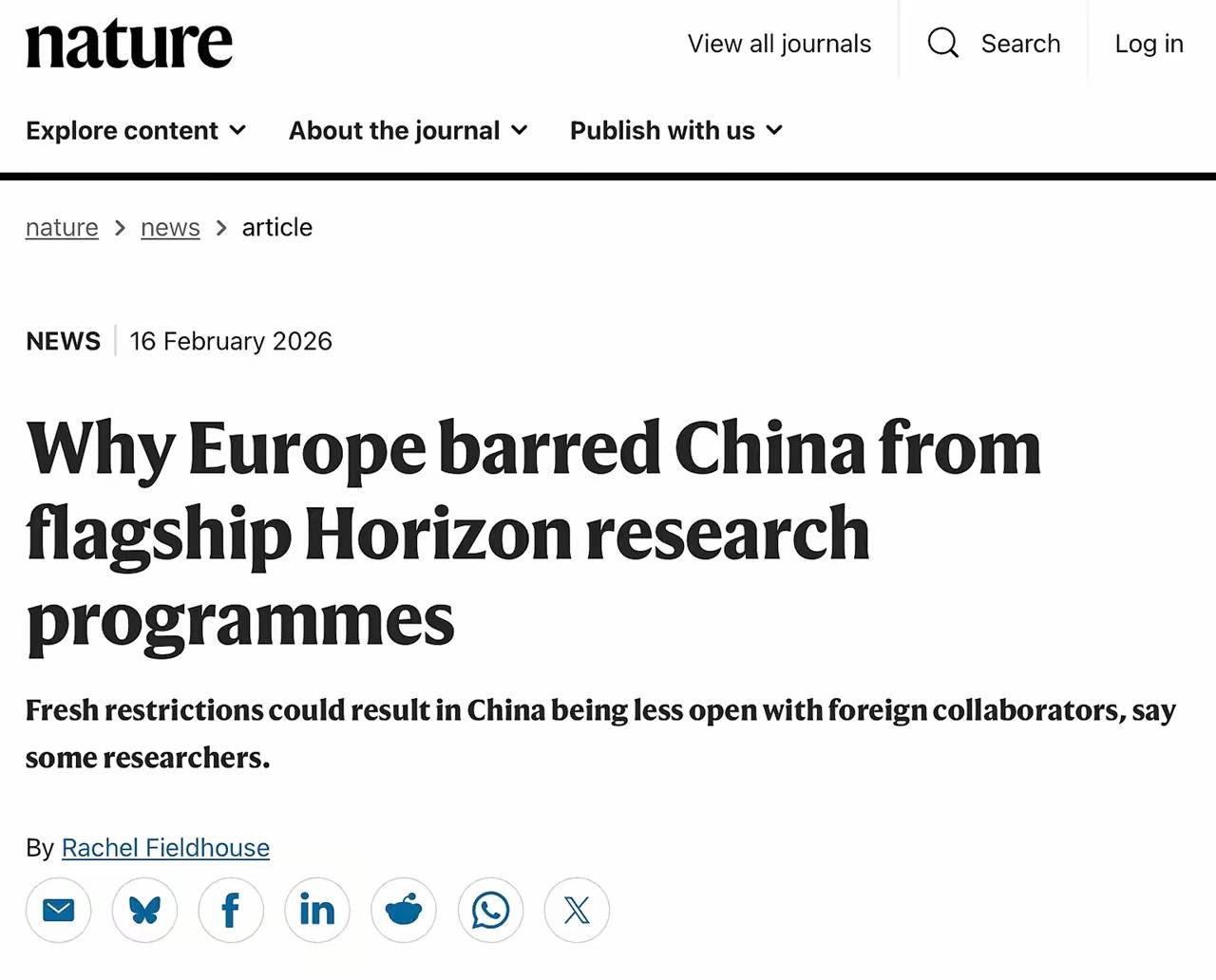
Nature:欧洲为何将中国排除在“地平线”旗舰研究计划之外?
Sou Hu Cai Jing· 2026-02-17 10:17
Group 1 - The new round of restrictions may lead to a decrease in China's openness to foreign partners [2] - Chinese research institutions will no longer be able to participate in most research funding projects under the EU's Horizon Europe program, which has a total budget of €93.5 billion (approximately $111 billion) [2] - The EU's concerns are related to the sharing of sensitive technologies with China, which could jeopardize regional security [2] Group 2 - Starting this year, institutions based in China or controlled by Chinese entities will be prohibited from applying for funding in areas such as artificial intelligence, 5G communication technology, healthcare, semiconductors, biotechnology, and quantum technology [4] - The "Seven Sons of National Defense" universities under China's Ministry of Industry and Information Technology are fully banned from participating in all funding projects [4] - However, Chinese institutions can still apply for or participate in specific research projects mainly related to climate, biodiversity, food, and agriculture [4] Group 3 - The European Commission, which manages the Horizon Europe program, emphasizes the need for caution in actions and cooperation partners due to the current economic and geopolitical critical juncture [4] - Intellectual property (IP) protection is also a concern for the EU [4] - The Chinese Ministry of Science and Technology has not yet responded to requests for comments regarding the changes in participation eligibility for the Horizon Europe program [4]
不减科技,但不再躺平:大摩四季度持仓的真正信号
美股研究社· 2026-02-17 04:25
Core Viewpoint - The article discusses Morgan Stanley's latest 13F holdings report, highlighting a shift in investment strategy amidst macroeconomic uncertainty and high valuation pressures, emphasizing the importance of stock selection over passive index exposure [1][9]. Group 1: Investment Strategy - Morgan Stanley's total market value of U.S. stocks increased by only 1.2%, indicating a cautious approach rather than a dramatic repositioning [1]. - The firm is reducing passive exposure while increasing the weight of active selection, suggesting a focus on individual stock performance rather than relying on overall market movements [3][4]. - The report signals a transition from a "rising tide lifts all boats" mentality to a more discerning investment environment where individual stock fundamentals matter more [4][10]. Group 2: Sector Focus - Technology remains a core focus, with major holdings in Apple, Nvidia, Microsoft, Google, and Amazon, reflecting confidence in the sector's long-term growth despite short-term volatility [2][7]. - The report indicates that technology giants are viewed as safe havens due to their strong cash flows and market positions, reinforcing their role as key drivers of global economic growth [2]. Group 3: Stock Selection - Morgan Stanley's top ten holdings account for only 22.15% of the portfolio, lower than typical concentrated portfolios, indicating a strategy that favors individual stock selection over broad market exposure [3]. - The firm is making nuanced adjustments within the same companies and sectors, such as reducing voting shares of Google while increasing non-voting shares, optimizing for liquidity and index inclusion [6]. - The adjustments in holdings reflect a preference for companies with clearer cash flows and more stable business models, as seen in the reduction of Amazon's shares due to its exposure to economic cycles [6][7]. Group 4: Market Dynamics - The report suggests that the market is transitioning from a "broad rally" phase to a "differentiation" phase, where simple index investments may obscure individual stock risks [4][9]. - Investors are encouraged to focus on companies with strong competitive advantages and cash flow resilience, as these will be better positioned to navigate economic uncertainties [10][13]. Group 5: Conclusion - Morgan Stanley's 13F report serves as a guide for investors, emphasizing the need to prioritize quality and capability in stock selection rather than merely following market trends [12][13]. - The article concludes that in an uncertain market, companies with real value-creating capabilities will be the safest harbor for capital [13].