智能网联汽车

Search documents
利好来袭!上海,重磅发布!明确9项重点任务
券商中国· 2026-01-14 15:17
Core Viewpoint - The article discusses the significant policy boost for the autonomous driving sector in Shanghai, highlighting the "Mosu Zhixing" action plan aimed at accelerating the transformation of autonomous driving technology into industrial competitiveness [1][2]. Group 1: Action Plan Overview - The "Mosu Zhixing" action plan outlines a strategy based on "model-driven leadership, application demonstration, industrial collaboration, and policy support" to promote innovation in autonomous driving technology [2]. - The plan includes nine key tasks across three main areas: promoting the application of autonomous driving equipment, enhancing data monitoring platforms, and expanding open areas for autonomous driving [2][3]. Group 2: Goals and Targets - By 2027, the plan aims for large-scale implementation of high-level autonomous driving scenarios, with public service platforms supporting industry innovation and achieving international leadership in key technologies and industrial scale [3]. - The plan targets over 6 million passenger trips and more than 80,000 TEU in cargo transport through L4-level autonomous driving technology in smart public transport, taxis, and heavy trucks [5]. Group 3: Infrastructure and Ecosystem Development - The action plan emphasizes the establishment of a digital twin training ground for autonomous driving and aims to create a comprehensive industrial ecosystem covering vehicles, components, data, maps, safety, and services [5][9]. - It proposes to expand the autonomous driving open area to 2,000 square kilometers, with over 5,000 kilometers of roads featuring diverse types and scenarios [5]. Group 4: Financial and Innovation Support - The plan encourages social capital investment in smart connected vehicles and key component startups, supporting quality enterprises in accessing multi-tiered capital markets [5]. - It also highlights the need for innovative insurance products that align with the advancements in autonomous driving technology [5][7]. Group 5: Industry Collaboration and Technology Development - The action plan calls for deepening commercial vehicle demonstration scenarios and advancing the operational model from "platooning with human oversight" to "fully unmanned" operations [7]. - It aims to foster collaboration between universities, research institutions, and key enterprises to accelerate the industrial application of cutting-edge technologies like autonomous driving models [9].


自动驾驶,利好来了!上海发布行动计划
Zheng Quan Shi Bao· 2026-01-14 14:50
Core Insights - Shanghai aims to establish itself as a global leader in high-level autonomous driving by 2027, with significant advancements in technology and industry competitiveness [1][4]. Group 1: Action Plan Overview - The "Mosu Zhixing" action plan outlines a strategy for accelerating the transformation of autonomous driving technology into industrial competitiveness, focusing on model-driven leadership and policy support [1]. - By 2027, the plan targets the large-scale application of L4 autonomous driving in public transport and logistics, with over 600 million passenger trips and 80,000 TEU in cargo transport [1]. Group 2: Expansion of Testing Areas - The plan includes the gradual expansion of autonomous driving testing areas, with a focus on the full opening of the Pudong New Area and other regions like Fengxian and Minhang [2]. - As of December last year, Shanghai has opened approximately one-third of its urban area for autonomous driving testing, with a new platform for real-time traffic signal data to support development [2]. Group 3: Infrastructure and Application Scenarios - By December 2025, Shanghai aims to have 3,173 open testing roads covering 5,238.82 kilometers, facilitating a comprehensive testing environment for autonomous vehicles [3]. - The action plan encourages the organization of smart taxi operations and the trial of L3 autonomous passenger vehicles, as well as the transition of intelligent heavy trucks from semi-autonomous to fully autonomous operations [3]. Group 4: Automotive Industry Development - The plan emphasizes the creation of a world-class automotive industry cluster, focusing on regions like Pudong, Jiading, and Lingang, and promoting the development of key components and software for smart connected vehicles [4]. - It aims to foster innovation in automotive technology, including high-performance chips and operating systems, while supporting the growth of specialized and competitive enterprises [4]. Group 5: Financial Support and Market Growth - The action plan encourages investment in smart connected vehicles and key component startups, promoting diverse financing channels for enterprise development [5]. - By 2024, Shanghai's automotive industry is projected to reach a production value of 703.5 billion yuan, with a cumulative promotion of 1.645 million new energy vehicles, maintaining its position as a global leader [5].

自动驾驶,利好来了!上海发布行动计划
证券时报· 2026-01-14 14:47
Core Viewpoint - Shanghai aims to establish itself as a global leader in high-level autonomous driving by 2027, focusing on technology innovation, industry competitiveness, and the creation of a robust smart connected vehicle industry cluster [1][6]. Group 1: Action Plan Goals - By 2027, Shanghai plans to achieve large-scale application of L4 autonomous driving technology in scenarios such as smart buses and heavy trucks, with over 6 million passengers and 80,000 TEU of cargo transported [1]. - The city aims to expand the autonomous driving open area to 2,000 square kilometers and road length to over 5,000 kilometers, with over 90% of new vehicles featuring L2 and L3 capabilities, and L4 vehicles entering mass production [1]. Group 2: Expansion of Testing Areas - The action plan includes the gradual expansion of autonomous driving testing areas, with a focus on achieving full openness in the Pudong New Area and promoting similar initiatives in other districts [3]. - As of December last year, Shanghai has opened approximately one-third of its testing roads, with a total of 3,173 roads covering 5,238.82 kilometers [3]. Group 3: Application Scenarios - The plan emphasizes organized trials for L3 autonomous passenger vehicles and supports the transition of intelligent heavy trucks from semi-autonomous to fully autonomous operations [4]. - It also aims to create innovative application scenarios for autonomous vehicles in urban inspection, logistics, and municipal sanitation [5]. Group 4: Automotive Industry Cluster - The action plan outlines the creation of a world-class automotive industry cluster, focusing on areas like Pudong, Jiading, and Lingang, to develop leading smart connected vehicle and key component industries [7]. - It encourages the establishment of specialized automotive parks and the development of high-performance software and hardware solutions [7]. Group 5: Financial Support - The plan calls for encouraging social capital investment in smart connected vehicle startups and supporting quality enterprises in accessing multi-tiered capital markets [8]. - By 2024, Shanghai's automotive industry is projected to reach an output value of 703.5 billion yuan, with a cumulative promotion of 1.645 million new energy vehicles [8].
2025城市NOA汽车辅助驾驶研究报告发布 搭载城市NOA功能的乘用车销量超300万辆
Zhong Zheng Wang· 2026-01-14 13:18
Core Insights - The report indicates that 2025 will be a pivotal year for the commercialization of urban NOA (Navigation Assisted Driving) in China, with rapid market growth expected [1] - By 2030, urban NOA is projected to become a mainstream feature in assisted and autonomous driving [1] Group 1: Market Growth and Projections - In the first three quarters of 2025, new car sales in China with Level 2 (L2) driving assistance features increased by 21.2% year-on-year, achieving a penetration rate of 64%, expected to rise to 66.1% by the end of 2025 [1] - By November 2025, cumulative sales of passenger cars equipped with urban NOA reached 3.129 million units, with a penetration rate of 15.1%, an increase of 5.6 percentage points compared to the entire year of 2024 [2] Group 2: Industry Dynamics and Competitiveness - Major automotive manufacturers are accelerating the adoption of intelligent driving assistance, with domestic brands accounting for 81.1% of urban NOA-equipped passenger car sales, totaling 2.5373 million units [2] - Global automotive brands, including Mercedes-Benz, BMW, Audi, Cadillac, Buick, and Toyota, are collaborating with leading domestic third-party suppliers to achieve breakthroughs in intelligent driving assistance [2] Group 3: Future Outlook and Challenges - The Ministry of Industry and Information Technology anticipates that by 2030, combined driving assistance and connected collaborative functions will be widely adopted, with advanced autonomous driving features entering the market at scale, potentially creating trillions in value for the automotive industry [2] - Challenges remain for the high-quality development of NOA, including insufficient core technology, the need for enhanced data security and computing power, and the necessity for a more comprehensive standards and regulatory framework [2]
有序扩大自动驾驶开放区域 上海印发“模速智行”行动计划
Zheng Quan Shi Bao Wang· 2026-01-14 11:21
Group 1 - The core idea of the plan is to accelerate the transformation of autonomous driving technology innovation into industrial competitiveness, aiming to establish a leading area for high-level autonomous driving by 2027 [1] - The plan targets the large-scale application of L4-level autonomous driving technology in smart public transport, smart taxis, and smart heavy trucks, with a goal of serving over 6 million passengers and transporting over 800,000 TEUs [1] - A public service platform will be established, including a digital twin training ground for autonomous driving, with an open area of 2,000 square kilometers and over 5,000 kilometers of roads for diverse scenarios [1] Group 2 - The plan aims for over 90% of new car production to feature L2 and L3 level autonomous driving capabilities, with L4 level vehicles entering mass production and key technologies being independently controllable [2] - It emphasizes the organization of smart taxi demonstration operations and the exploration of innovative applications for L3 level autonomous vehicles in personal and unit user travel scenarios [2] - The plan includes the development of key technologies such as onboard high-performance chips and intelligent computing platforms, fostering a complete industrial ecosystem [2] Group 3 - The focus areas for developing intelligent connected vehicles and key component industries include Pudong, Jiading, and Lingang, promoting collaboration and unique characteristics in these regions [3] - The plan supports the establishment of testing and verification platforms for intelligent connected vehicles and traffic safety, enhancing the capabilities for system validation and application services [3]
量产L4级自动驾驶汽车、有序扩大开放区域……上海发布“模速智行”计划
Xin Lang Cai Jing· 2026-01-14 10:20
Core Viewpoint - The "Mosu Zhixing" Action Plan aims to establish Shanghai as a leading area for high-level autonomous driving by 2027, focusing on technology innovation, application demonstration, and industry collaboration [2]. Group 1: Development Goals - The plan outlines a vision for large-scale implementation of Level 4 autonomous driving applications, targeting over 6 million passenger trips and 80,000 TEU in cargo transport by 2027 [2]. - It aims to create a comprehensive ecosystem for smart connected vehicles, achieving international competitiveness in key technologies and industry scale [2]. Group 2: Key Tasks - **Diverse Application Scenarios**: - Expand passenger vehicle applications through organized smart taxi operations and pilot projects for Level 3 autonomous vehicles [3]. - Enhance commercial vehicle applications in key locations like airports and train stations, transitioning to fully unmanned operations [3]. - Promote the deployment of autonomous equipment in urban inspection, logistics, and municipal services [3]. - **High-Energy Innovation Elements**: - Establish a digital twin training ground for autonomous driving, accumulating extensive data for model training [4]. - Develop a unified data monitoring platform for smart connected vehicles to ensure real-time operational oversight [4]. - Gradually expand open areas for autonomous driving, focusing on major urban zones and transport hubs [4]. - **Innovative Industry Ecosystem**: - Implement key technology research initiatives for advanced hardware and software solutions in autonomous driving [6]. - Build a world-class automotive industry cluster in regions like Pudong and Jiading, focusing on smart connected vehicles and key components [6]. - Strengthen testing and validation capabilities for autonomous systems through dedicated laboratories and simulation technologies [6]. Group 3: Support Measures - **Policy Support**: - Enhance data management mechanisms and establish a comprehensive safety assurance system for autonomous driving [7]. - **Financial Support**: - Encourage investment in startups focused on smart connected vehicles and support established companies in accessing diverse financing channels [7]. - **Talent Development**: - Promote talent acquisition in the smart connected vehicle sector and foster collaboration between enterprises and educational institutions [7]. Group 4: Regional Collaboration - Streamline testing and application management across the city, ensuring data sharing and coordinated operations [8]. - Foster collaboration within the Yangtze River Delta region to enhance testing capabilities and facilitate large-scale applications [8].
中汽协:我国城市NOA汽车辅助驾驶已进入规模化落地阶段
Zhong Guo Jing Ying Bao· 2026-01-14 08:41
Core Insights - The report from the China Automobile Industry Association indicates that the sales of passenger cars equipped with urban NOA (Navigate On Autopilot) reached 3.129 million units from January to November 2025, with a penetration rate of 15.1%, an increase of 5.6 percentage points compared to the entire year of 2024 [1] - The sales of mainstream passenger cars priced below 300,000 yuan with urban NOA reached 2.155 million units, accounting for over 68.9% of the total sales [1] - Urban NOA has transitioned from a feature exclusive to high-end models to a standard configuration in mainstream vehicles, indicating rapid market penetration [1] - By November 2025, there were 45 brands offering passenger cars with urban NOA, an increase of 18 brands from 2024 [1] - A total of 135 models equipped with urban NOA accounted for 14.1% of the sales models in 2025, highlighting its importance for enhancing product competitiveness among automakers [1] - The China Automobile Association predicts that urban NOA will become mainstream in passenger vehicles by 2030 [1] Brand Performance - Among the passenger cars equipped with urban NOA, domestic brands sold 2.5373 million units, representing 81.1% of the total sales, showcasing their innovation and competitiveness in the smart connected vehicle sector [2] - The share of domestic brand models with urban NOA reached 18.7%, doubling compared to 2024 and significantly exceeding the average penetration rate of 15.1% [2] - In contrast, the sales share of joint venture brands with urban NOA was only 8.3%, with a modest increase of 1.3 percentage points from 2024, indicating a slower growth in this segment [2]
小马智行+北汽新能源合作升级,中东欧洲成新战场
Nan Fang Du Shi Bao· 2026-01-13 15:19
Core Viewpoint - The strategic partnership between Pony.ai and BAIC New Energy has evolved into a comprehensive collaboration, marking a transition from a single project phase to a full-system synergy phase, focusing on product co-creation, market expansion, industry chain integration, ecosystem development, and capital collaboration [2][4]. Group 1: Partnership Development - The collaboration is based on previous successful outcomes, including a technical cooperation agreement signed in November 2024, which integrates Pony.ai's seventh-generation autonomous driving system with BAIC's redundant chassis architecture to develop the L4-level Arcfox Alpha T5 Robotaxi [2][4]. - The first mass-produced vehicle is set to roll off the production line in July 2025, with rapid progress in delivery, achieving 100 units in one month and 300 units in three months, totaling over 600 units produced to date [2][5]. Group 2: Commercial Operations - Starting from November 2025, the Arcfox Alpha T5 Robotaxi will be fully operational in key areas of Beijing, Shenzhen, and other regions, effectively creating a closed-loop system for production, testing, and operation, allowing users to experience fully autonomous travel services [2][4]. Group 3: Future Plans and Goals - The partnership aims to expand from a single model to a comprehensive L4 Robotaxi product matrix, leveraging the successful mass production experience of the Arcfox Alpha T5 [4]. - The companies plan to promote the "Chinese solution" internationally, focusing on markets in the Middle East and Europe, utilizing Pony.ai's localized experience in eight countries to support this expansion [4]. - The collaboration is expected to enhance the entire value chain from research and development to operation and maintenance, accelerating commercialization and profitability [4][5]. - The partnership's investment is projected to stimulate the development of a trillion-dollar intelligent driving industry, with a goal of achieving a scale of 3,000 units by the end of 2026 [5].

小马智行+北汽新能源合作升级 中东欧洲成新战场
Nan Fang Du Shi Bao· 2026-01-13 15:09
Core Viewpoint - The strategic partnership between autonomous driving company Pony.ai and BAIC New Energy has evolved into a comprehensive "five-in-one" collaboration, marking a transition from a single project phase to a fully integrated system phase, enhancing product co-creation, market expansion, industrial collaboration, ecosystem building, and capital integration [1][2]. Group 1: Product Co-Creation - The collaboration will leverage the successful mass production experience of the Extreme Fox Alpha T5 Robotaxi to develop a broader range of L4 Robotaxi products, transitioning from a "single model" to a "full spectrum" approach [2]. - The partnership aims to extend proven technology solutions to high-end smart driving models in the passenger car market, facilitating strategic resource integration [2]. Group 2: Market Expansion - The companies plan to deepen their domestic market presence while also promoting the "Chinese solution" internationally, focusing on the Middle East and European markets, thereby achieving comprehensive global output of vehicles, technical standards, operational models, and business ecosystems [2]. - Pony.ai's prior localization experience in eight countries, including Luxembourg and Qatar, will support their international expansion efforts [2]. Group 3: Ecosystem Building - BAIC New Energy will integrate its travel platforms and after-market resources, such as maintenance and charging, with Pony.ai's Robotaxi fleet, creating a seamless value chain from research and development to production, operation, and maintenance [2]. Group 4: Capital Integration - The partnership will deepen existing mutual investments, forming a long-term strategic bond around technology research and development, supply chain investment, and global market expansion [2]. Group 5: Future Development - The mass production of 600 units has not only helped Pony.ai exceed its 2025 target of 1,000 Robotaxis but also strengthens its confidence in achieving a target of 3,000 units by the end of 2026, marking a significant step for China's intelligent connected vehicle industry [3].
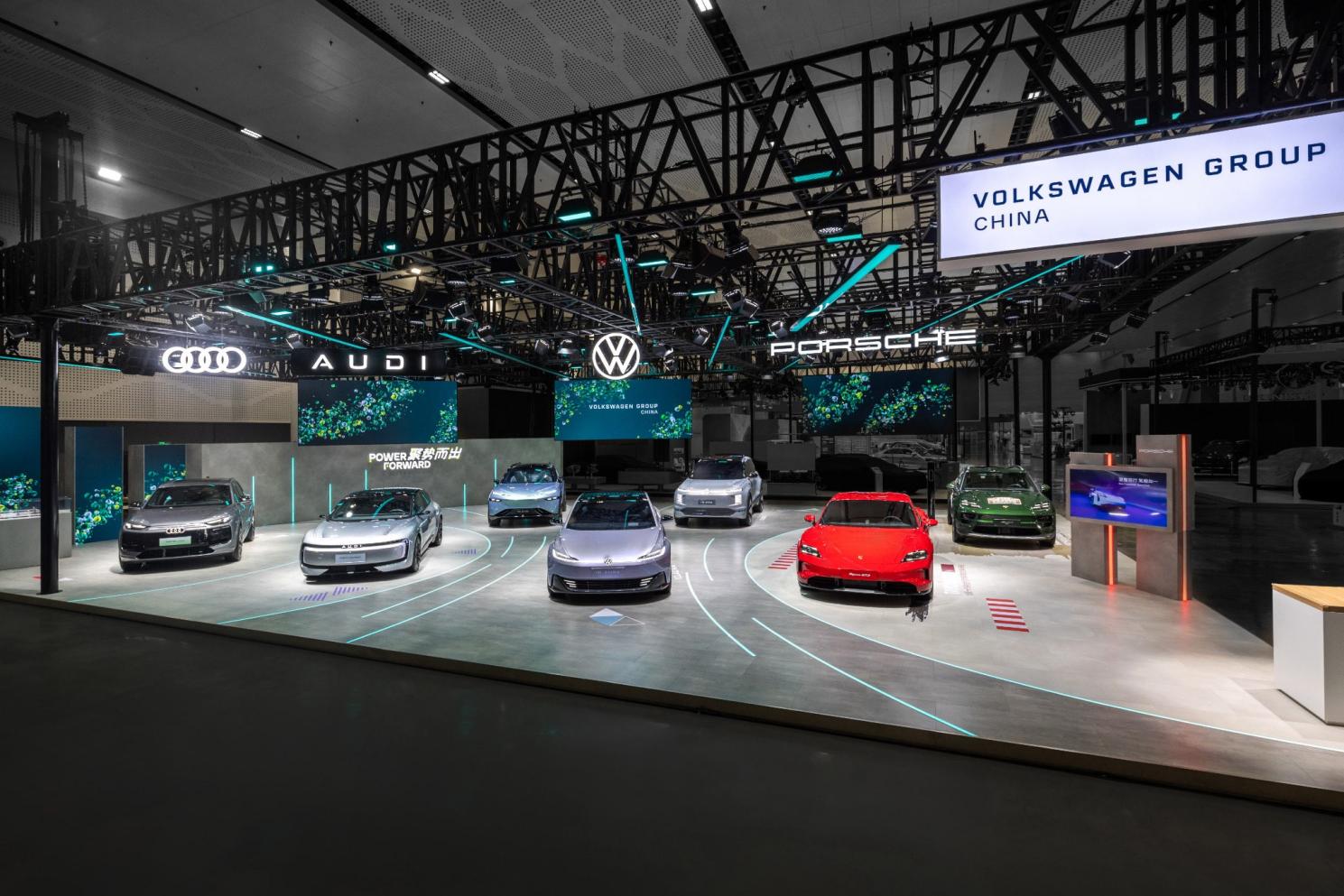
聚焦盈利 大众中国达成2025目标 ,2026加速交付新能源
Zhong Guo Qi Che Bao Wang· 2026-01-12 13:38
Core Insights - Volkswagen Group delivered over 8.98 million vehicles globally in 2025, with electric vehicle deliveries reaching 983,100 units, a 32% year-on-year increase, accounting for 10.9% of total sales, up 2.7 percentage points from the previous year [1] Group 1: Global Performance - Volkswagen Group's global vehicle deliveries exceeded 8.98 million units in 2025 [1] - The electric vehicle segment saw deliveries of 983,100 units, marking a 32% increase year-on-year [1] - Electric vehicles represented 10.9% of the group's total sales, an increase of 2.7 percentage points compared to the previous year [1] Group 2: Performance in China - In China, Volkswagen Group delivered over 2.69 million vehicles in 2025, achieving its annual target and maintaining its position as the top foreign carmaker in the market [2] - The group delivered over 2.57 million fuel vehicles in China, capturing over 22% of the fuel vehicle market share [4] - Volkswagen brand (including Jetta) ranked first in China's fuel vehicle market, with models like Passat leading the B-class segment and Audi returning to the top of the luxury fuel vehicle market [4] Group 3: Strategic Focus - Volkswagen Group emphasized "value first" amidst intense price competition, focusing on profitability rather than merely increasing market share [4] - The group is preparing to launch a new batch of locally developed electric models in China, including the Audi Q6L e-tron and Audi E5 Sportback, which have received positive market feedback [4] - The "In China, For China" strategy has been implemented since 2022, aligning with the rapid innovation and electrification trends in the Chinese automotive market [7] Group 4: Future Plans and Innovations - By 2026, Volkswagen Group plans to accelerate product launches in China, introducing over 20 new energy models, including the first range-extended model, the SAIC Volkswagen ID. ERA 9X [7] - The group aims to launch over 30 electric models in China by 2027, expanding to approximately 50 by 2030, with around 30 being fully electric [8] - Volkswagen Group has invested over €3.5 billion in Hefei since 2023 to establish a smart connected vehicle innovation center, enhancing its local R&D capabilities [8] Group 5: Technological Advancements - The group has developed a local electronic architecture (CEA) and a vehicle platform (CMP) tailored for the Chinese market, optimizing development cycles by approximately 30% and costs by about 40% [10] - Volkswagen Group's software company CARIAD China has established a joint venture to enhance local capabilities in advanced driver assistance systems, with the first self-developed system delivered in 2025 [10] - The group plans to design and develop system-level chips in China for models equipped with L3 and above autonomous driving features, strengthening its local autonomous driving capabilities [10] Group 6: Market Leadership Goals - Volkswagen Group aims to maintain its position as the leading foreign carmaker in China and continue to play a leading role in the smart connected vehicle era [12] - The group plans to launch over 20 new energy models in China by 2026, featuring advanced electric and intelligent technologies, including L2++ driver assistance capabilities [12] - Volkswagen Group is focused on increasing the share of new energy vehicles in its overall sales, striving to become a leader in the new energy vehicle market [12]