
L4级自动驾驶汽车

Search documents
英伟达联手比亚迪、吉利等车企打造L4级自动驾驶汽车
Cai Jing Wang· 2026-03-18 02:22
Core Insights - NVIDIA announced partnerships with leading automotive companies including BYD, Geely, Isuzu, and Nissan to develop L4 autonomous vehicles based on the NVIDIA DRIVE Hyperion platform [1] Group 1 - NVIDIA is collaborating with major automotive manufacturers to enhance the development of Level 4 (L4) autonomous driving technology [1] - The partnerships aim to leverage the NVIDIA DRIVE Hyperion platform for creating advanced autonomous vehicles [1]



汽车早餐 | 英伟达联手比亚迪、吉利等车企打造L4级自动驾驶汽车;雷军再回应停售初代SU7; 大众与小鹏第二款联合开发车型今年发布
Zhong Guo Qi Che Bao Wang· 2026-03-18 01:44
Domestic News - Beijing government promotes universal access for new energy logistics vehicles within the Fifth Ring Road, improving urban delivery services and implementing "enjoy without application" for transport permits and vehicle annual inspections [2] - In the first two months of this year, Shanghai's electric vehicle exports increased by 112.6%, while lithium battery exports rose by 94.9%, contributing 5.9 percentage points to the city's overall export growth [3] - The first China-Russia Logistics Business Forum was held in Moscow, focusing on new opportunities and perspectives for logistics cooperation between the two countries [4] - Shenzhen Port Logistics Group and Hainan Province Logistics Group signed a strategic cooperation agreement to enhance cross-regional logistics networks and smart logistics platforms [5] International News - Nissan plans to reduce production by approximately 1,200 vehicles at its Kyushu plant in Japan due to disruptions in Middle Eastern export transportation caused by tensions in Iran [6] - Renault announced plans to deploy 350 humanoid industrial robots named Calvin-40 in its factories by 2027, aiming to reduce production time per vehicle by 30% [7] - Tesla and LG Energy signed a supply agreement to build a $4.3 billion lithium iron phosphate battery manufacturing plant in Lansing, Michigan, with production expected to start in 2027 [9] - Volkswagen is recalling 48,165 Jetta vehicles in the U.S. due to potential short circuits caused by improperly connected ground wires during assembly [10] Corporate News - NVIDIA collaborates with leading automakers including BYD and Geely to develop L4 autonomous vehicles based on the NVIDIA DRIVE Hyperion platform [11] - Xiaomi's founder Lei Jun addressed the impact of the early discontinuation of the first-generation SU7 on sales, emphasizing the company's commitment to existing users [12] - CATL's subsidiary received a development notice from GAC Group to supply power batteries, with supply expected to begin in the first half of 2027 [14] - The first humanoid robot from Hefei Dingli Kexing Intelligent Robot Co., Ltd. has been officially launched, with a majority stake held by a subsidiary of Zhongding股份 [15]


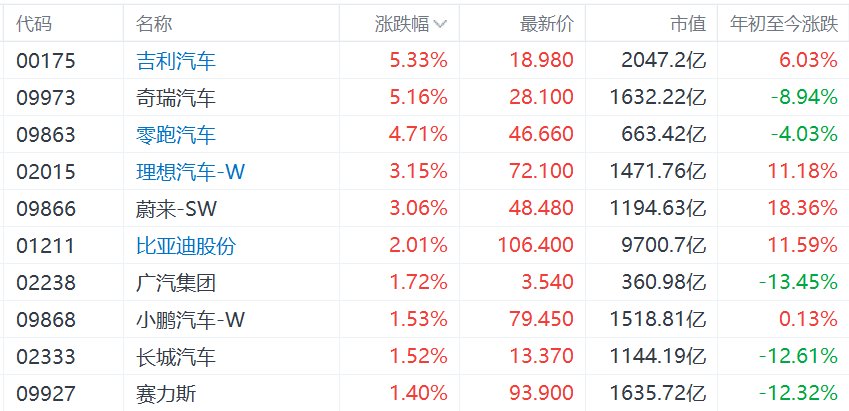
港股异动丨汽车股走强,吉利汽车涨超5%,英伟达与比亚迪吉利等车企合作打造L4级自动驾驶汽车
Ge Long Hui A P P· 2026-03-17 04:07
Group 1 - The Hong Kong stock market saw a strong performance in the automotive sector, with companies like Geely Auto and Chery Auto rising over 5%, and Li Auto and NIO increasing by over 3% [1] - NVIDIA announced collaborations with several automakers, including BYD, Geely, Hyundai, and Nissan, to develop L4 autonomous vehicles using the NVIDIA DRIVE Hyperion platform [1] - BYD, Geely, and Nissan are working on next-generation L4 passenger vehicle projects that will feature advanced autonomous capabilities for complex urban road scenarios [1] Group 2 - The stock performance of key automotive companies includes: - Geely Auto: up 5.33% to HKD 18.980, market cap of HKD 204.72 billion, year-to-date increase of 6.03% [2] - Chery Auto: up 5.16% to HKD 28.100, market cap of HKD 163.22 billion, year-to-date decrease of 8.94% [2] - Li Auto: up 3.15% to HKD 72.100, market cap of HKD 147.18 billion, year-to-date increase of 11.18% [2] - NIO: up 3.06% to HKD 48.480, market cap of HKD 119.46 billion, year-to-date increase of 18.36% [2] - BYD: up 2.01% to HKD 106.400, market cap of HKD 970.07 billion, year-to-date increase of 11.59% [2]
经济持续向好,汽车业迎长期增长动能
Zhong Guo Qi Che Bao Wang· 2026-02-02 11:15
Core Viewpoint - The automotive industry is positioned as a crucial pillar of the national economy, with significant implications for economic stability and growth, particularly in the context of the 2026 economic outlook and policies aimed at expanding domestic demand [1][4]. Group 1: Economic Outlook and Policy Implications - The National Development and Reform Commission (NDRC) anticipates that consumption, investment, technology, and industry will unleash substantial development potential by 2026, with a focus on formulating a strategy for expanding domestic demand from 2026 to 2030 [1][2]. - The "Two New" policies will lower investment thresholds and refine project conditions, which will create new opportunities for the automotive industry [1][4]. - The automotive sector is expected to play a vital role in driving economic growth, with a shift from quantity to quality, emphasizing technological innovation and ecological development [2][3]. Group 2: Consumer Demand and Investment Dynamics - The automotive industry is set to benefit from a dual push of consumer demand and investment, with policies aimed at optimizing the "Two New" initiatives, including the continuation and enhancement of vehicle trade-in programs [3][5]. - The focus on high-efficiency and high-technology models in subsidy policies is expected to guide consumer choices towards advanced products, thereby compelling manufacturers to innovate [5][6]. - The shift from price competition to value competition is being encouraged by policies that support technological advancements and the automotive aftermarket [5][6]. Group 3: Innovation and Industry Transformation - The automotive industry is anticipated to undergo significant transformation driven by technological innovation, particularly in areas such as solid-state batteries and autonomous driving [7][8]. - The integration of artificial intelligence with automotive applications is seen as a key driver for sustainable growth, with emphasis on scaling innovations to benefit traditional industries [8]. - The government is urged to facilitate the downscaling of innovation capabilities to support small and medium enterprises in their digital and intelligent transformations [8].
秦朔:中国新质企业家时代的来临
Xin Lang Cai Jing· 2026-02-02 00:21
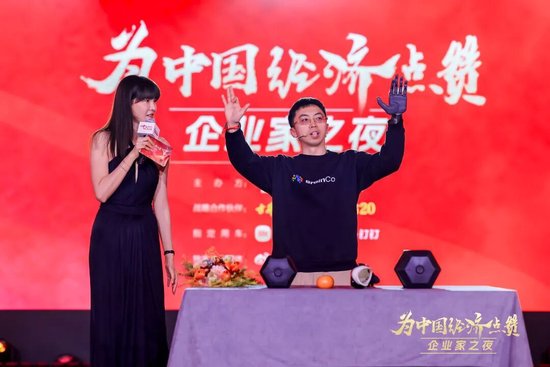
Core Viewpoint - The event "For China's Economy, Cheers to Entrepreneurs" highlighted the emergence of a new generation of entrepreneurs in China, focusing on advanced technologies such as brain-machine interfaces, autonomous driving, and low-altitude economy, showcasing their impact on society and the economy [1][3][29]. Group 1: Technological Innovations - Strong Brain Technology's smart bionic hand has assisted over 10,000 individuals with upper or lower limb disabilities, allowing them to live and work normally [29]. - The L4 autonomous vehicle from Pony.ai operates without a driver, demonstrating advancements in autonomous driving technology [29]. - The flying car developed by Huitian has received 7,000 global orders and plans to start deliveries by the end of 2026, with a next-generation model capable of carrying six people for 500 kilometers [29]. Group 2: New Quality Entrepreneurs - The 2025 "Top Ten Economic Figures" includes four entrepreneurs associated with cutting-edge technologies: Liu Debing from Zhipu, Peng Jun from Pony.ai, Han Bicheng from Strong Brain Technology, and Zhao Deli from Huitian [31]. - The evaluation committee also recognized groups involved in "China's Chip Infrastructure," highlighting the shift towards new quality productivity driven by technological breakthroughs and innovative resource allocation [31][32]. Group 3: Economic Strategy and Consumer Focus - The "14th Five-Year Plan" emphasizes enhancing the competitiveness of traditional industries while promoting new demand to drive supply [32]. - Three representatives from the consumer and lifestyle sector were recognized: Leng Youbin from China Feihe, Ma Yin from Anaya, and Wu Xiangdong from Zhenjiu Lidu Group [32]. Group 4: Historical Context of Entrepreneurs - The evolution of Chinese entrepreneurs has gone through 15 stages since the reform and opening up, from the emergence of individual private economies to the current focus on high-quality development and innovation [35][36][37]. - The current entrepreneurial landscape is characterized by a significant shift towards new quality productivity, with a focus on advanced manufacturing and technology-driven solutions [51]. Group 5: Future Outlook - The future of China's economy is expected to continue along the path of high-quality development, leveraging new technologies and innovative business models [52]. - The "single person + AI as a company" model represents a new entrepreneurial path empowered by technology, indicating a shift in how businesses operate and innovate [52].
干春晖:汽车行业抓住三大潜能实现三个转变
Zhong Guo Qi Che Bao Wang· 2026-01-26 06:48
Group 1 - The core viewpoint is that the automotive industry in China is at a critical juncture, transitioning from scale expansion to quality enhancement, driven by technological innovation, ecological reconstruction, and global competitiveness [11][12] - The three major potentials identified for 2026 are consumption and investment, technology and industry, and urban-rural and regional coordination, which will synergistically promote economic growth and provide key opportunities for the automotive sector [3][6] - The expansion of domestic demand strategy and the adjustment of the "two new" policies are expected to shift the automotive industry from a focus on scale to a focus on quality, enhancing market vitality and promoting a virtuous cycle of supply and demand [7][8][10] Group 2 - The automotive industry is expected to leverage new technologies such as solid-state batteries and L4-level autonomous driving, transforming vehicles into mobile smart terminals and energy carriers [4][5][12] - The integration of technology and industry is reshaping the competitive landscape of the automotive sector, allowing companies to explore new business models and enhance their ecological systems [5][6] - The policy adjustments are designed to address structural contradictions in the industry, such as excess low-end capacity and insufficient high-end supply, by promoting technological upgrades and encouraging consumer confidence [9][10][12] Group 3 - The automotive industry is increasingly focusing on creating a comprehensive ecosystem rather than just manufacturing vehicles, with an emphasis on smart energy and low-altitude economy [2][6] - The development of regional innovation clusters is facilitating the flow of resources and enhancing the industry's resilience to global supply chain changes [5][6] - The shift towards a value-driven market is evident, as policies encourage technological advancements and high-efficiency models, moving away from price wars to value competition [10][12]
上海公布重磅文件:量产L4级汽车,拓展自动驾驶开放区域
Di Yi Cai Jing· 2026-01-15 09:24
Core Viewpoint - Shanghai aims to accelerate the construction of a leading area for high-level autonomous driving by fostering industry-leading autonomous driving models and implementing the "Mosu Zhixing" action plan by 2027 [2][3] Group 1: Action Plan Overview - The action plan outlines the goal of achieving large-scale implementation of high-level autonomous driving applications by 2027, forming a competitive smart connected vehicle industry cluster [2] - The plan includes the exploration of innovative business models for L4-level autonomous driving technology in scenarios such as smart buses, taxis, and heavy trucks, with an open area of 2000 square kilometers and over 5000 kilometers of roads designated for autonomous driving [2][3] - The production ratio of new vehicles with combination driving assistance (L2) and conditional autonomous driving (L3) features is expected to exceed 90%, with L4 autonomous vehicles achieving mass production [2] Group 2: Infrastructure and Testing - Shanghai has opened 3173 testing roads with a total length of 5238.82 kilometers, covering about one-third of the city's area, with full-area openness in the Pudong New Area [3] - The city plans to gradually expand the autonomous driving open areas, focusing on key locations such as the Hongqiao hub, Pudong Airport, and Disneyland [2][3] Group 3: Data and Technology Development - The autonomous driving industry is currently in a "data-driven" phase, facing challenges such as high costs and difficulties in obtaining training data, insufficient scene distribution, and inadequate model testing [4] - Shanghai is promoting data sharing applications to support the training and iteration of benchmark intelligent driving models, including the deployment of data collection vehicles and the establishment of a secure data sharing mechanism [4] - A digital twin training ground for autonomous driving will be built, utilizing both real data collection and virtual generation to accumulate high-quality training datasets [4]
上海提出“模速智行”行动计划,推动L4级自动驾驶量产
Huan Qiu Wang· 2026-01-15 01:13
Core Insights - The inter-ministerial meeting on the development of energy-saving and new energy vehicles emphasized enhancing the self-controllable capabilities of the supply chain and accelerating breakthroughs in solid-state batteries and advanced autonomous driving technologies [1] - The "Mosu Zhixing" action plan in Shanghai aims to promote the innovation of autonomous driving technology and its transformation into industrial competitiveness through model-driven leadership and application demonstration [1] - The plan includes pilot projects for L3 autonomous passenger vehicles and large-scale applications of L4 autonomous driving technology in smart buses, taxis, and heavy trucks, with L4 vehicles expected to achieve mass production [1] Industry Trends - The sales of vehicles equipped with preliminary autonomous driving systems in mainland China have significantly increased, driven by consumer acceptance of new technologies [1] - Currently, most smart vehicles are at L2 level, with L3 requiring drivers to remain alert in certain situations, indicating a move towards broader deployment of autonomous driving technology [5] - The rapid growth in demand for autonomous driving technology suggests potential regulatory relaxations in the market [5]
量产L4级自动驾驶汽车、有序扩大开放区域……上海发布“模速智行”计划
Xin Lang Cai Jing· 2026-01-14 10:20
Core Viewpoint - The "Mosu Zhixing" Action Plan aims to establish Shanghai as a leading area for high-level autonomous driving by 2027, focusing on technology innovation, application demonstration, and industry collaboration [2]. Group 1: Development Goals - The plan outlines a vision for large-scale implementation of Level 4 autonomous driving applications, targeting over 6 million passenger trips and 80,000 TEU in cargo transport by 2027 [2]. - It aims to create a comprehensive ecosystem for smart connected vehicles, achieving international competitiveness in key technologies and industry scale [2]. Group 2: Key Tasks - **Diverse Application Scenarios**: - Expand passenger vehicle applications through organized smart taxi operations and pilot projects for Level 3 autonomous vehicles [3]. - Enhance commercial vehicle applications in key locations like airports and train stations, transitioning to fully unmanned operations [3]. - Promote the deployment of autonomous equipment in urban inspection, logistics, and municipal services [3]. - **High-Energy Innovation Elements**: - Establish a digital twin training ground for autonomous driving, accumulating extensive data for model training [4]. - Develop a unified data monitoring platform for smart connected vehicles to ensure real-time operational oversight [4]. - Gradually expand open areas for autonomous driving, focusing on major urban zones and transport hubs [4]. - **Innovative Industry Ecosystem**: - Implement key technology research initiatives for advanced hardware and software solutions in autonomous driving [6]. - Build a world-class automotive industry cluster in regions like Pudong and Jiading, focusing on smart connected vehicles and key components [6]. - Strengthen testing and validation capabilities for autonomous systems through dedicated laboratories and simulation technologies [6]. Group 3: Support Measures - **Policy Support**: - Enhance data management mechanisms and establish a comprehensive safety assurance system for autonomous driving [7]. - **Financial Support**: - Encourage investment in startups focused on smart connected vehicles and support established companies in accessing diverse financing channels [7]. - **Talent Development**: - Promote talent acquisition in the smart connected vehicle sector and foster collaboration between enterprises and educational institutions [7]. Group 4: Regional Collaboration - Streamline testing and application management across the city, ensuring data sharing and coordinated operations [8]. - Foster collaboration within the Yangtze River Delta region to enhance testing capabilities and facilitate large-scale applications [8].
元旦假期出行活力足 运输新场景成为假期经济新动力
Zhong Guo Zheng Quan Bao· 2026-01-04 22:17
Core Insights - The travel market experienced significant growth during the New Year holiday, with a total of 595 million cross-regional trips made from January 1 to January 3, 2026, representing a 19.62% increase compared to the same period last year [1] Group 1: Transportation Statistics - Railway passenger volume reached 48.09 million during the New Year holiday, with a daily average of 16.03 million, marking a year-on-year increase of 52.66% [2] - Self-driving remains the dominant mode of travel, with non-commercial small passenger vehicles accounting for 442 million trips, averaging 147 million trips per day, a 14.6% increase year-on-year [2] - Waterway passenger volume was 2.25 million, with a daily average of 749,300, reflecting a 32.9% year-on-year growth [2] - Civil aviation passenger volume reached 5.88 million, averaging 1.96 million per day, up 10.4% year-on-year [2] Group 2: Travel Trends and Innovations - The launch of the "China Snow Capital: My Altay" ice-themed train service aims to enhance the ice and snow tourism experience, reducing travel time by up to 4 hours [3] - The rental car market saw a surge, with Didi's rental bookings increasing by 243% during the holiday, with about half of users planning 2 to 4-day self-driving trips [2][5] - The development of autonomous driving technology is enhancing the self-driving experience, with L4 autonomous vehicles being piloted in Hainan, providing a unique travel experience [6] Group 3: Future Outlook - The integration of travel and tourism is expected to create new consumption scenarios, with the number of tourist trains increasing by 33.6% in 2025 [3] - The cruise and yacht sectors are anticipated to become significant growth points in transportation consumption [4]
