自动驾驶商业化

Search documents
10家上市8家亏损!自动驾驶投资人们悄悄“逃离”
Xin Lang Ke Ji· 2025-09-15 04:34
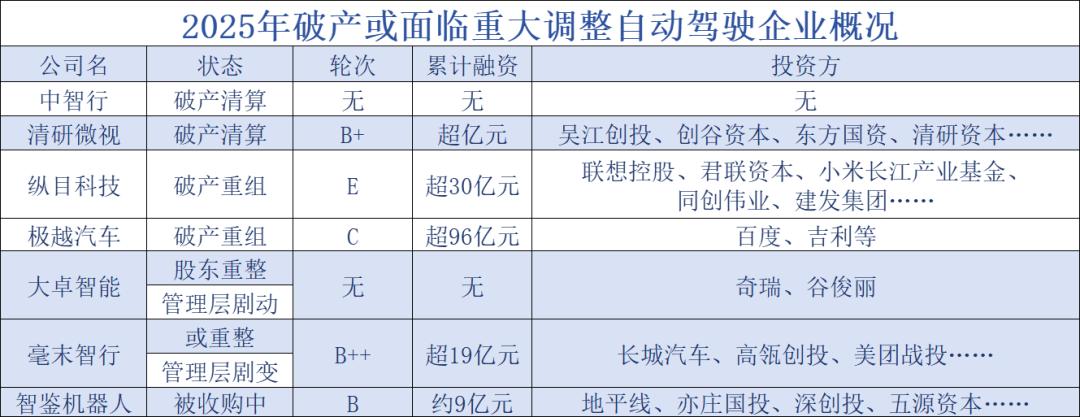
Core Viewpoint - The recent bankruptcy of Zhongzhixing Technology, founded by Wang Jin, highlights the challenges faced by the autonomous driving industry, with many companies struggling financially and undergoing significant changes [1][5][7]. Industry Overview - In 2023, the autonomous driving sector has seen two companies go bankrupt and two others facing restructuring, with many experiencing personnel changes and acquisition discussions [3][7]. - Only 2 out of 10 mainstream autonomous driving companies reported profitability in their 2025 semi-annual reports, while 8 remain in a loss-making state [3][10]. - The industry is transitioning into a commercialization phase, with a shift away from reliance on financing for technological development [3][9]. Company Status - Zhongzhixing Technology has entered bankruptcy liquidation due to an inability to repay debts [1][4]. - Other companies facing similar fates include Qingyan Weishi and Zongmu Technology, which are undergoing bankruptcy restructuring [4][7]. - Notable companies like Jiyue Automobile and Haomo Zhixing are also experiencing significant management changes and potential restructuring [4][8]. Market Dynamics - The autonomous driving industry is witnessing a bifurcation, where some companies are thriving while others are failing [3][7]. - A significant number of autonomous driving companies have initiated IPO plans, with over 10 successfully listed since late 2023, although only 2 have achieved profitability [10][11]. - The market is expected to see new entrants like New Stone Technology preparing for IPOs, indicating ongoing interest despite the challenges [12][13]. Financial Performance - The financial landscape for listed autonomous driving companies shows that only 2 out of 10 have turned profitable, with the rest still incurring losses [10][11]. - The losses reported by these companies have been narrowing, suggesting improvements in operational efficiency and revenue generation capabilities [10][11].


10上市8亏损,智驾投资人们悄悄「逃离」
3 6 Ke· 2025-09-15 01:57
Group 1: Industry Overview - The autonomous driving industry is facing significant challenges, with multiple companies experiencing bankruptcy or restructuring, indicating a harsh reality for many players in the market [1][4]. - As of 2025, two companies have already gone bankrupt, while two others are undergoing restructuring, highlighting the financial difficulties within the sector [4]. - The industry is transitioning from a reliance on financing for technology development to a focus on commercialization, with many companies struggling to adapt [5]. Group 2: Company-Specific Developments - Zhongzhixing Technology, founded by Wang Jin, has entered bankruptcy liquidation due to an inability to repay debts, marking a significant event in the industry [1][3]. - Other companies facing similar fates include Qingyan Microvision and Zongmu Technology, both of which are either bankrupt or undergoing restructuring [2][4]. - Notably, only two out of ten mainstream autonomous driving companies have achieved profitability, with the remaining eight still operating at a loss [1][6]. Group 3: Market Trends and Future Outlook - The autonomous driving sector is witnessing a wave of IPOs, with over ten companies successfully listing on the capital market since late 2023, although most remain unprofitable [6][7]. - Companies like New Stone and others are preparing for IPOs, indicating a potential influx of new players into the market [8]. - The market is expected to see a divergence where some companies thrive while others may fail, reflecting the increasing competition and investment withdrawal in the industry [1][4].
哈啰首款Robotaxi“HR1”亮相
Shen Zhen Shang Bao· 2025-09-15 00:03
Core Insights - The commercialization of Robotaxi services is accelerating among leading players in the industry, with significant developments reported in September 2023 [1][2]. Group 1: Company Developments - Hello's first mass-produced Robotaxi model, "HR1," was unveiled, featuring a comprehensive safety design across six dimensions [1]. - Hello, Ant Group, and CATL established Zhaofu Intelligent Technology Co., Ltd. to promote Robotaxi development [2]. - Hello signed strategic cooperation agreements with key industry partners, including Qichen Automotive and Alibaba Cloud, to cover essential areas such as vehicle manufacturing and cloud computing [2]. Group 2: Market Expansion and Goals - Hello aims to scale its Robotaxi business within two years, with pilot operations already launched in Zhuzhou, Hunan [2]. - The company plans to achieve mass production of front-mounted models by 2026, targeting over 10 cities and a fleet size of 10,000 vehicles, with a global deployment of over 50,000 vehicles by 2027 [2]. Group 3: Industry Growth and Financial Performance - The Robotaxi sector is witnessing explosive revenue growth, with Xiaoma Zhixing reporting a 75.9% year-on-year increase in total revenue for Q2, and a staggering 157.8% increase in Robotaxi business revenue [2]. - WeRide reported a total revenue of 127 million yuan in Q2, a 60.8% increase year-on-year, with Robotaxi revenue surging by 836.7% [2]. - Goldman Sachs predicts that the Robotaxi market in China will reach $14 billion by 2030, with a fleet of approximately 535,000 vehicles, and grow to $61 billion by 2035 [3].
文远、小马、萝卜,本是同根生?
新财富· 2025-09-12 08:06
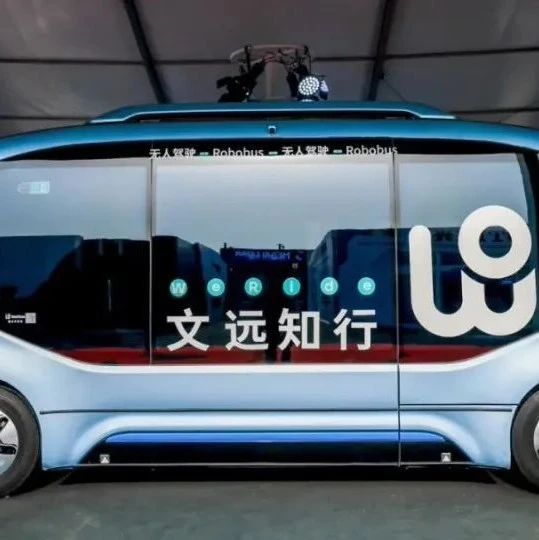
Core Viewpoint - Baidu plays a pivotal role in China's autonomous driving sector, particularly in the Robotaxi market, similar to Google's influence with Waymo. The development paths of companies like WeRide, Pony.ai, and Apollo Go reflect the broader commercialization process of Robotaxi in China [1]. Group 1: WeRide - WeRide was founded by Han Xu, a former chief scientist at Baidu's autonomous driving division, and initially operated under the name Jingchi Technology. The company faced legal challenges from Baidu over alleged trade secret violations [3][4]. - The company shifted its focus from solely Robotaxi services to a multi-scenario approach, including the launch of RoboBus, a Level 4 autonomous minibus, and Robosweeper, an autonomous cleaning vehicle [4][5]. - In Q1 2023, WeRide reported revenue of approximately 72.44 million yuan, with Robotaxi contributing only 22.3% of that. However, by Q2 2023, revenue surged to 127 million yuan, with Robotaxi revenue increasing to 36.1% [5]. Group 2: Pony.ai - Pony.ai was co-founded by Peng Jun and Lou Tiancheng, both of whom have strong backgrounds in technology and experience at Baidu. The company established partnerships with automakers like Toyota to integrate autonomous driving into mass-produced vehicles [8][11]. - By 2023, Pony.ai had provided over 2.5 million autonomous rides, with a peak daily order volume of 15,000. The company also launched a "driverless heavy truck" business, completing over 500,000 kilometers of testing [12]. - Pony.ai's strategy emphasizes dual engines of Robotaxi and commercial freight, allowing it to diversify revenue streams and maintain a robust R&D team despite industry challenges [12]. Group 3: Apollo Go - Apollo Go, Baidu's in-house Robotaxi brand, benefits from the company's extensive resources in AI, mapping, and computing power. It was launched in 2021 and has rapidly expanded its operations across multiple cities [14][15]. - By Q2 2023, Apollo Go had provided over 14 million rides globally, with a quarterly order volume exceeding 1.4 million, making it the largest Robotaxi platform in China [16][18]. - Unlike its competitors, Apollo Go is fully funded by Baidu, allowing it to focus on scaling operations without the immediate pressure for profitability [18].

曹操出行(02643.HK):科技重塑共享出行 打造服务口碑最好品牌
Ge Long Hui· 2025-09-06 01:57
Group 1 - The Chinese ride-hailing market is transitioning from "wild growth" to "regulated intelligence," with the core conflict shifting from capital subsidies to the institutional reconstruction of autonomous driving and human-vehicle relationships [1] - The market is expected to reach nearly 1 trillion yuan by 2030, with aggregation platforms and multi-location "non-one-car-one-platform" policies creating opportunities for other players [1] - Robotaxi, leveraging L4 autonomous driving technology, is seen as a key breakthrough, with leading companies like Waymo reducing accident rates by over 80% compared to human drivers [1] Group 2 - The company is actively seizing industry opportunities by deepening cooperation with aggregation platforms, leading to a rapid expansion of market share and driver income above industry averages from 2022 to 2024 [2] - In H1 2025, the company reported 544,000 active drivers (up 53.5% YoY) and 38 million orders (up 49.0% YoY), indicating strong market penetration through a light-asset model [2] - The company’s customized vehicle fleet reached 37,000 units, the largest in the industry, enhancing service comfort and standardizing the travel experience [2] Group 3 - The integration of vehicle technology and operations is accelerating the rollout of Robotaxi, with the company planning to launch the Zeekr RT in collaboration with Waymo in 2025 [3] - The company is evolving into an integrated Robotaxi platform, combining vehicle manufacturing, operational services, and technology research and development, aiming to replicate the success of its ride-hailing business [3] - A strategic integration within the Geely Group aims to enhance R&D efficiency and accelerate the commercialization of L4 technology [3] Group 4 - The company is expected to improve brand strength and market share in first- and second-tier cities, with projected revenues of 20.67 billion, 26.24 billion, and 32.37 billion yuan from 2025 to 2027 [4] - The average PS ratios for comparable companies from 2025 to 2027 are projected to be 22.4, 15.0, and 7.1 times, respectively [4] - The company is given a "buy" rating based on steady development in ride-hailing and broad opportunities in the Robotaxi business [4]
广州黄埔,24小时任意点到点,纯无人驾驶商业运营来了
Nan Fang Du Shi Bao· 2025-09-05 15:25
Core Insights - The article highlights the launch of the first 24-hour fully autonomous Robotaxi service in Guangzhou's Huangpu District by WeRide, marking a significant milestone in the commercialization of autonomous driving in urban settings [2][4]. Group 1: Robotaxi Features and Technology - The WeRide GXR Robotaxi is designed specifically for urban travel, featuring Level 4 (L4) autonomous driving capabilities for public road operations [4]. - It is equipped with the NVIDIA DRIVE Thor X chip, enabling over 20 trillion calculations per second, and the Sensor Suit 5.6, which allows it to operate in adverse weather conditions [4][5]. - The vehicle includes a robust redundancy system across its architecture, control chassis, and braking systems, ensuring safe and reliable operation in complex traffic environments [5]. Group 2: User Experience and Design - The GXR offers a spacious interior designed for five passengers, with features such as a dedicated luggage area, VIP seating, voice-controlled sliding doors, and remote climate control via an app [5]. - User feedback indicates that the vehicle's design enhances the overall travel experience, making it convenient and comfortable for passengers [5]. Group 3: Operational Milestones and Expansion - WeRide's transition from human-driven to fully autonomous operations took only 11 months, from the launch of the new GXR model to obtaining necessary operational licenses [5]. - The Robotaxi service covers approximately 145 square kilometers in Huangpu, with plans for expansion to key landmarks and transportation hubs in Guangzhou by May 2025 [7]. - The company has been operating its Robotaxi service for over 2,200 days, establishing a "Guangzhou model" for global expansion in autonomous vehicle commercialization [7]. Group 4: Industry Context and Future Outlook - The autonomous driving industry is shifting from a focus on technological competition to a phase of commercial validation, with WeRide's cost reductions and real-world data accumulation being critical to its business model [7].

马斯克官宣:Robotaxi年底将无安全员!你敢上吗?
Sou Hu Cai Jing· 2025-09-05 08:02
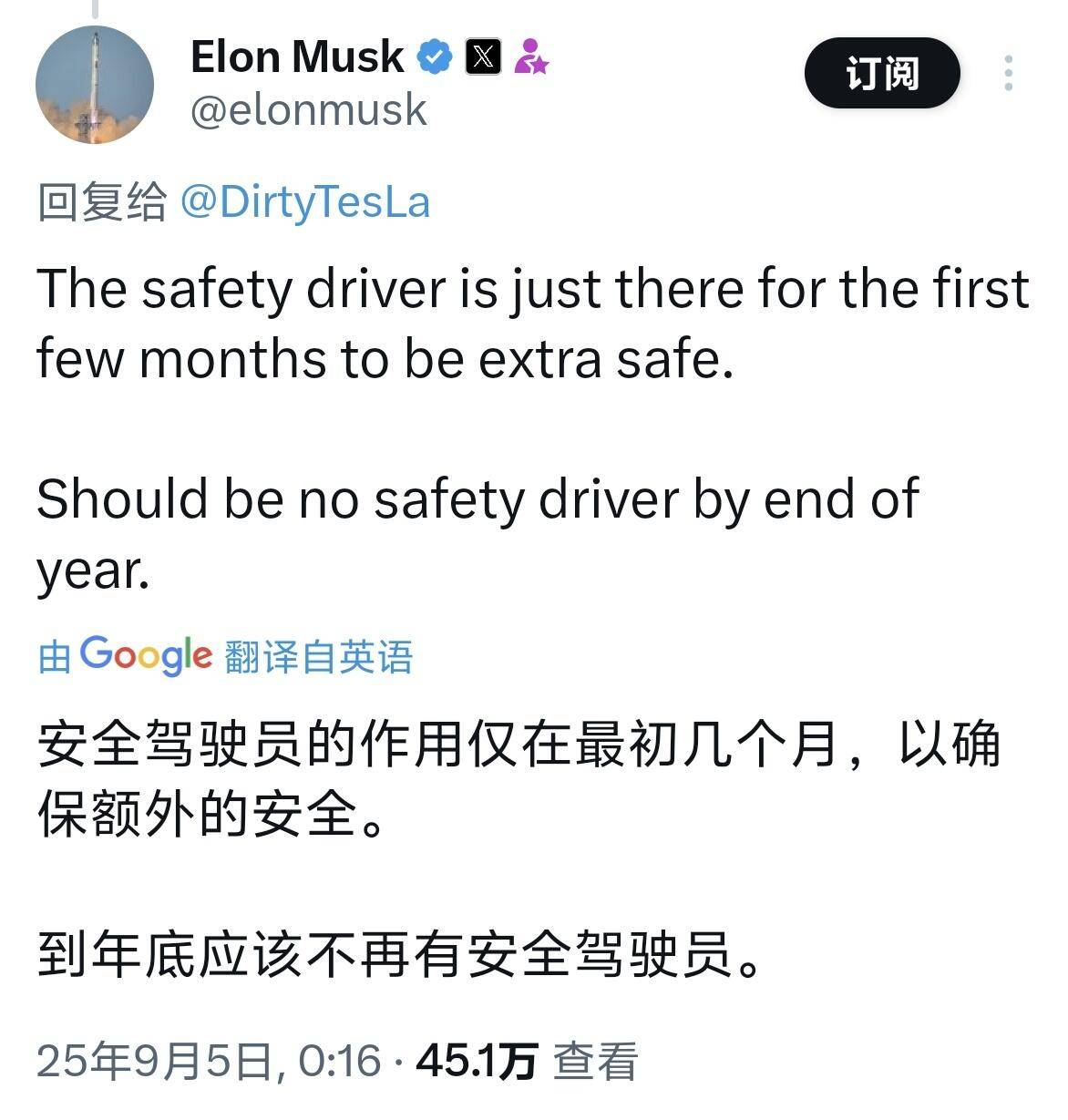
Core Insights - Tesla plans to eliminate safety drivers in its Robotaxi service by the end of 2025, marking a significant step towards fully autonomous driving [1] - The Robotaxi app is now available for download in the U.S. and Canada, with initial operations in Austin, Texas, and a gradual rollout expected [2] - Tesla's pricing strategy for Robotaxi is aggressive, with a fixed fare of $4.2 per ride in Austin, significantly lower than Uber's average fare of $15 [8] Group 1 - Tesla has launched the Robotaxi app for users in the U.S. and Canada, allowing them to join a waiting list for access [2] - Currently, about 20 Robotaxis are operating in Austin, Texas, with safety drivers present as a temporary measure for initial safety [2] - The National Highway Traffic Safety Administration (NHTSA) is investigating Tesla's Full Self-Driving (FSD) software following a fatal accident involving over 2.4 million vehicles [4] Group 2 - Competitor Waymo has adopted a more cautious approach by keeping safety drivers during its testing phase and using a combination of cameras and lidar sensors for its autonomous operations [4] - Tesla's Robotaxi service aims to cultivate user habits rather than focusing on short-term profits, as indicated by its low pricing strategy [8] - Goldman Sachs estimates that if Tesla's Robotaxi fleet reaches 100,000 vehicles, it could generate annual revenues of $8 billion with a gross margin exceeding 30% [8] Group 3 - Achieving profitability for Tesla's Robotaxi service may be challenging, as industry leader Waymo only reached $100 million in annual revenue with a fleet of 1,500 vehicles [10] - The entry of Tesla's Robotaxi into the market is expected to intensify competition in the autonomous driving commercialization space [10]

Robotaxi自动驾驶专线在上海首开
Yang Zi Wan Bao Wang· 2025-08-25 07:22
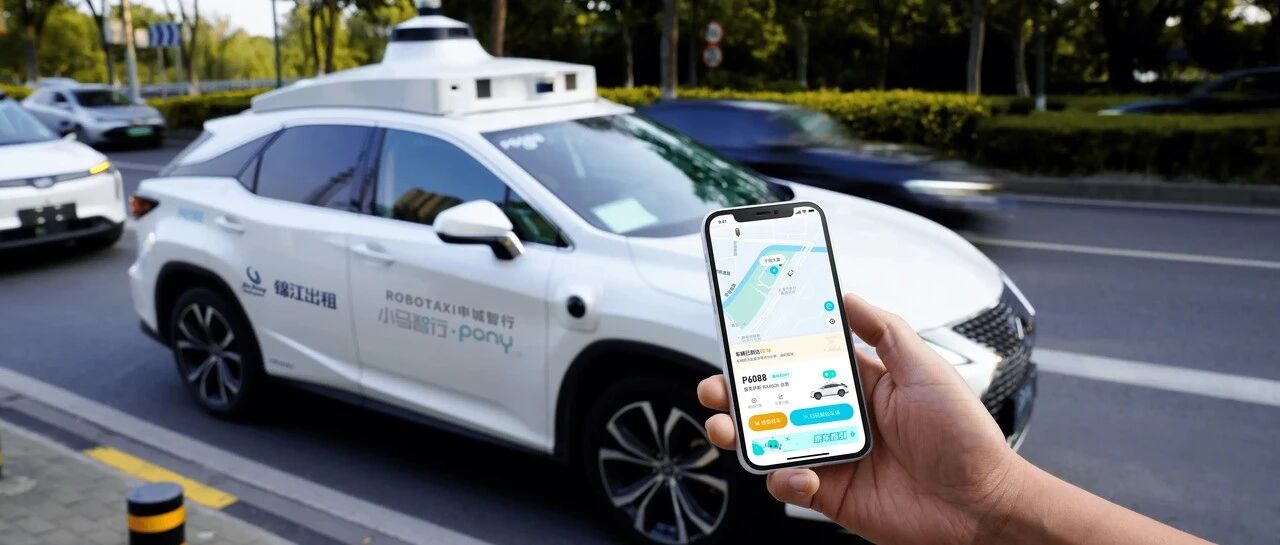
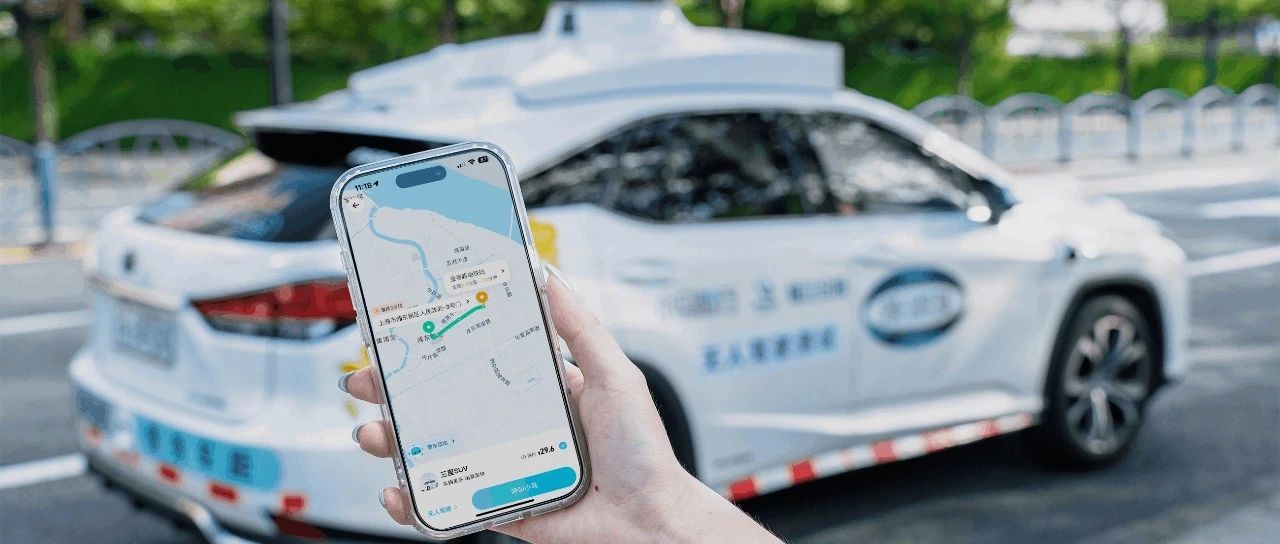
Core Insights - The launch of the L4-level Robotaxi tourist line from Shanghai International Resort to Pudong International Airport marks a significant step in autonomous driving technology, utilizing AI and sensors for navigation and decision-making [1] - The Robotaxi service is currently free and operates with a safety driver present in the vehicle to ensure safety during the demonstration phase [1] - The commercial operation of the L4-level Robotaxi in the Lingang area has already begun, with over 300,000 orders and a total driving distance exceeding 7 million kilometers [2] - The global Robotaxi market is projected to experience explosive growth, with estimates suggesting a market size of $40 billion to $45.7 billion by 2030, reflecting a compound annual growth rate (CAGR) of over 60% [2] - The rapid advancement of generative AI technology is seen as a catalyst for the commercialization of autonomous taxi services, comparable to the transformative impact of the iPhone in 2007 [3] Summary by Sections Robotaxi Launch and Operations - The L4-level Robotaxi tourist line has been officially launched, connecting key locations including Shanghai Disney Resort and Pudong Airport, with an estimated travel time of around 30 minutes [1] - The service allows users to book rides in real-time through the Enjoy Travel App, with complex driving maneuvers executed without human intervention [1] Safety Measures - A safety driver is present in the vehicle to take control in emergencies, ensuring a dual layer of safety for passengers [1] Commercialization and Market Potential - The L4-level Robotaxi has commenced paid operations in the Lingang area, featuring 58 main pickup points and a user-friendly booking system [2] - The Robotaxi service has achieved significant milestones, including over 300,000 orders and a total distance of more than 7 million kilometers [2] - The global market for Robotaxis is expected to grow significantly, with projections indicating a market size of $40 billion to $45.7 billion by 2030, driven by a CAGR exceeding 60% [2] Technological Advancements - The development of generative AI is believed to have propelled autonomous driving technology to a point where large-scale commercialization is feasible, marking a pivotal moment in the industry [3]

小马智行获“木头姐”ARK基金核心持仓:国际资本对其布局正在形成共识
IPO早知道· 2025-08-19 13:59
Core Viewpoint - ARK Invest, led by Cathie Wood, has significantly invested in Pony.ai, marking its first investment in a Chinese L4 autonomous driving company, indicating confidence in the company's growth potential in the Robotaxi sector [3][6]. Group 1: Investment Details - On August 12, ARK Invest purchased $12.9 million worth of Pony.ai shares, accounting for 36.3% of the total active fund purchases that day [3]. - As of August 13, ARK's holdings in Pony.ai amounted to 899,930 shares [5]. Group 2: Company Performance and Strategy - Pony.ai's CEO, Peng Jun, announced a 70% reduction in costs for the seventh-generation Robotaxi compared to the previous generation, with over 200 units already produced and plans to scale the fleet to 1,000 by year-end [6]. - The company has received L4 testing permits in four major Chinese cities and aims for positive unit economics by 2025-2026 [6]. - The Robotaxi user base grew by 136% year-over-year, with passenger revenue increasing over 300% [9]. Group 3: Market Outlook and Analyst Ratings - Analysts from multiple institutions, including Goldman Sachs, have given "buy" ratings for Pony.ai, with Goldman Sachs setting a target price of $24.5, suggesting a potential upside of approximately 54.5% from its recent closing price [8]. - The global Robotaxi market is projected to exceed $10 trillion by 2030, with a fleet size potentially reaching 50 million vehicles [8]. Group 4: Institutional Interest - At least 14 top international institutions increased their stakes in Pony.ai in Q2, with Baillie Gifford acquiring 7.137 million shares [11]. - Major shareholders, including Toyota, did not reduce their holdings post-lockup, indicating long-term confidence in the company [11].
中东爆火后,文远又以技术先锋×超级应用打法锁定东南亚!跨区域复制启动?
美股研究社· 2025-08-18 12:09
Core Viewpoint - The partnership between WeRide and Grab marks a significant milestone in the globalization of autonomous driving technology and regional ecosystem integration, aiming to accelerate the deployment of Robotaxi services in Southeast Asia [3][15]. Group 1: Strategic Partnership - WeRide, known as the "first global Robotaxi stock," has secured a multi-million dollar equity investment from Grab, a leading Southeast Asian super app platform [2][6]. - This collaboration aims to leverage WeRide's autonomous driving technology and Grab's extensive operational network to enhance the quality and safety of regional transportation services [7][8]. - Grab's CEO emphasized the need for reliable transportation services in Southeast Asia, particularly in areas facing driver shortages, and sees autonomous vehicles as a complementary solution [8]. Group 2: Market Expansion and Financial Performance - WeRide has expanded its operations to 10 countries and 30 cities, developing a product matrix that includes Robotaxi, Robovan, Robosweeper, and Robobus [6][12]. - In Q2 2023, WeRide reported revenue of 127 million yuan (approximately 17.8 million USD), a year-on-year increase of 60.8%, with Robotaxi business revenue soaring by 836.7% [12][16]. - The company is focusing on a dual strategy of "globalization + scaling," with significant growth in its Abu Dhabi Robotaxi fleet and plans for further expansion in the Middle East and Southeast Asia [13][14]. Group 3: Technological Advancements - WeRide's proprietary WeRide One platform supports a full stack of autonomous driving technologies from L2 to L4, allowing for adaptability to complex traffic conditions [7][16]. - The company aims to deploy thousands of Robotaxis in Southeast Asia, gradually adapting to local regulations and societal acceptance [10][15]. - The partnership with Grab is expected to create synergistic effects, enhancing user engagement and revenue per customer compared to standalone service providers [10][18]. Group 4: Industry Context and Future Outlook - The global Robotaxi market is projected to reach between 40 billion to 45.7 billion USD by 2030, with significant growth anticipated in the autonomous vehicle sector [18]. - WeRide's collaborations with major players like Uber and Grab highlight a trend towards combining technological prowess with local operational expertise, moving away from isolated business models [18]. - Despite the promising outlook, challenges remain in Southeast Asia due to lower consumer spending power and complex traffic conditions, which may hinder short-term commercialization efforts [19].