数字化

Search documents
香港证监会梁凤仪:积极将人民币柜台纳入南向通 期望年底前开通
Zhi Tong Cai Jing· 2025-06-13 06:27
Core Viewpoint - The Hong Kong Securities and Futures Commission (SFC) is actively working to enhance the competitiveness of Hong Kong's capital markets by integrating the Renminbi counter into the Southbound Trading scheme and optimizing the listing process for companies, particularly those from mainland China [1][2] Group 1: Market Resilience and Regulatory Framework - The SFC emphasizes the need for a flexible yet robust regulatory approach to ensure market resilience amid capital market volatility [2] - The SFC has maintained a strong regulatory framework that has effectively managed systemic risks and monitored market conditions, including conducting stress tests on exchanges and intermediaries [2][3] Group 2: Growth Strategies - The SFC's strategy includes strengthening Hong Kong's position as a premier financing and asset management center, with recent successful H-share listings, such as CATL raising $5.3 billion [3] - The SFC aims to deepen the integration of mainland and Hong Kong markets, expanding the scope of mutual market access to include more products like ETFs and derivatives [3][4] Group 3: Innovation and Technology - The SFC is focusing on fostering a robust virtual asset ecosystem, supporting the listing of virtual asset ETFs, and exploring blockchain technology for securities tokenization [4][5] - New initiatives like the "Tech Company Fast Track" aim to facilitate the listing of tech and biotech firms in Hong Kong, aligning with national goals for technological self-reliance [5]
香港证监会梁凤仪重磅发声!
Sou Hu Cai Jing· 2025-06-13 05:31
Core Viewpoint - The Hong Kong Securities and Futures Commission (SFC) is adopting a strategy of "one shield and three arrows" to navigate the challenges and opportunities arising from global changes, including geopolitical complexities and US-China competition [1][3]. Group 1: Market Resilience - The SFC emphasizes the importance of a resilient market in the face of capital market volatility, which has become the new norm [3]. - The recent increase in US tariffs led to significant market declines, with the Hang Seng Index experiencing its largest single-day drop in nearly 30 years, yet the Hong Kong market demonstrated resilience through effective regulatory frameworks and risk management measures [4]. - The SFC has been closely monitoring market conditions and conducting stress tests on exchanges and intermediaries to assess risk management capabilities [4]. Group 2: Seizing Opportunities - Hong Kong is positioned as the third-largest international financial center, relying on proactive strategies to capitalize on emerging opportunities [6]. - In May, international funds significantly flowed back into A-shares and Hong Kong stocks, indicating a potential restructuring of global asset allocation [7]. Group 3: Three Arrows Strategy - The first arrow focuses on enhancing Hong Kong's core competitiveness as a top financing and wealth management center, with recent H-share listings, such as CATL, raising a record $5.3 billion [8]. - The second arrow aims to deepen connections between Hong Kong and both emerging and mature markets, expanding the scope of mutual access to include funds, ETFs, and derivatives [9]. - The third arrow emphasizes innovation through technology, including digitalization, blockchain, and generative AI, to maintain long-term competitiveness [11].

四川白酒产业解析:根基深厚,创新驱动破局未来
Sou Hu Cai Jing· 2025-06-12 05:10
Core Insights - Sichuan is the core region of China's liquor industry, with a unique "concentrated aroma and sauce aroma" production layout, contributing over 45% of the national liquor manufacturing revenue and 18.7% of total profits in 2023 [1] - The "region + brand + culture" development model has established a rare ecological system in the liquor industry [1] Industry Foundation - Sichuan's liquor industry benefits from significant cluster effects, with key production areas like Yibin, Luzhou, and Deyang forming a differentiated competitive landscape [3] - Yibin's Wuliangye leads with sales revenue exceeding 80 billion yuan in 2023, while Luzhou Laojiao focuses on green brewing and smart production, producing over 100,000 tons of quality base liquor annually [3] - The brand hierarchy is clear, with top brands like Wuliangye and Luzhou Laojiao complementing smaller brands, and Wuliangye's classic series driving price increases through brand strength [3] Cultural Integration - Sichuan is leveraging "liquor and tourism integration" as a strategic approach, exemplified by Luzhou Laojiao's "1573 National Treasure Cellar Group" cultural tourism IP, attracting over 2 million visitors annually [4] Current Challenges - The industry faces three core contradictions: overcapacity versus quality upgrades, channel pressure from traditional distribution models, and generational shifts in consumer preferences [5] - Despite a slight decline in production in 2023, profits have increased, indicating a painful transition towards quality over quantity [5] - The penetration rate of instant retail in Sichuan is 10%, significantly higher than the national average of 3%, leading to a split in terminal sales channels [5] Path to Resolution - The industry must embrace digitalization, internationalization, and sustainability to overcome challenges [6] - Innovations in production, such as smart brewing and green transformation, are being adopted, with companies like Luzhou Laojiao utilizing IoT technology to enhance quality [6] - Marketing strategies are shifting towards comprehensive traffic operations, with platforms like Douyin achieving significant sales growth [6] Future Outlook - The Sichuan liquor industry is expected to evolve through three major trends: technology-driven industry collaboration, ESG value reshaping, and the continuous evolution of new consumer ecosystems [8] - The provincial government aims for the liquor industry's profits to exceed 120 billion yuan by 2027, integrating ESG scores into policy assessments [8] - The future competition will focus on the entire ecosystem's symbiosis rather than individual companies [10]



5家保险资管机构一季度合计实现净利润超10亿元
Zheng Quan Ri Bao· 2025-06-11 16:56
Core Insights - The insurance asset management industry has shown positive performance in Q1, with five major institutions reporting a total revenue of 2.627 billion yuan, a year-on-year increase of 7.8%, and a net profit of 1.07 billion yuan, up 23% year-on-year [1][2] Group 1: Performance Overview - All five insurance asset management institutions reported profitability in Q1, with a total revenue of 2.627 billion yuan, a 7.8% increase year-on-year [2] - Among these, Taikang Asset led with a revenue of 1.471 billion yuan, a 7.0% increase, while Allianz Asset Management achieved the highest growth rate at 38.7%, with a revenue of 67 million yuan [2] - The total net profit for these institutions was 1.07 billion yuan, reflecting a 23% year-on-year growth, with Taikang Asset again leading at 612 million yuan, a 22.9% increase [2] Group 2: Market Trends and Expert Opinions - The overall performance of insurance asset management companies is significantly influenced by the performance of their parent insurance businesses, as internal funds dominate their operations [3] - The "Matthew Effect" is evident in the industry, with a clear performance divide between leading and smaller institutions, where the top three firms accounted for 50% of the total net profit of 34 firms [4] - Experts suggest that smaller firms can enhance competitiveness by focusing on niche markets, fostering collaborations, and investing in talent development [4] Group 3: Future Outlook - The insurance asset management industry is expected to experience four major trends: increased scale and concentration due to market competition and regulatory guidance, diversification and specialization of business operations, greater investment in financial technology, and expansion into international markets and cross-border collaborations [5]
奇瑞入局?鸿合科技控制权生变
Jing Ji Guan Cha Wang· 2025-06-11 07:32
Core Viewpoint - Honghe Technology (002955) is undergoing a significant change in control as its actual controllers are planning to transfer shares, which may lead to a change in the company's control structure [1] Group 1: Share Transfer and Control Change - On June 10, Honghe Technology announced that its actual controllers, Xing Xiuqing and Xing Zheng, are planning a share transfer that could result in a change of control [1] - Hefei Ruicheng Private Fund Management Co., Ltd. signed a share transfer agreement to acquire 59.16 million shares from Hongdacheng Co., Ltd. and other parties, representing 25.00% of the total shares [1] - After the completion of this equity change, Hefei Ruicheng will hold 25.00% of the shares and gain control of the company, resulting in no actual controller [1] Group 2: Market Reaction and Valuation - On June 11, Honghe Technology's stock opened with a limit increase, trading at 28.04 yuan per share, with a total market value of 6.635 billion yuan [2] - The acquiring party, Hefei Ruicheng, is backed by Wuhu Chery Capital Management Co., Ltd., which is jointly owned by Chery Holding Group and Chery Automobile Co., Ltd. [2] Group 3: Business Overview and Financial Performance - Honghe Technology focuses on the education technology sector, providing digital and intelligent products and solutions for educational institutions [3] - In 2024, the company reported a revenue of 3.525 billion yuan, a year-on-year decrease of 10.29%, and a net profit of 222 million yuan, down 31.2% [3] - In Q1 of the current year, the company achieved a revenue of 510 million yuan, a decline of 7.40%, with a net profit of 5.85 million yuan, down 76.67% [3] - The company believes that the transaction will help leverage Hefei Ruicheng's resources to enhance its operational governance and competitive strength [3]

家庭护理龙头碰撞新消费“风口”,圣贝拉年利润增长103%释放高盈利价值预期
智通财经网· 2025-06-11 06:00
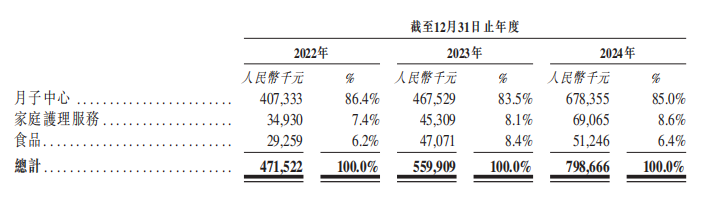
Core Viewpoint - The company, Saint Bella, is leading a revolution in the high-end home care industry by standardizing, professionalizing, customizing, and digitizing home care services and products, and is set to become the "first global home care stock" after passing the hearing for its Hong Kong IPO [1] Group 1: Business Overview - Saint Bella has grown rapidly since its establishment in 2017, becoming the largest postpartum care group in Asia and China, with a market share that remains at the top [2] - The company operates three main business lines: postpartum care services, postpartum recovery services, and home care services, which contribute to a comprehensive business model that enhances customer lifetime value [2] - By the end of 2024, Saint Bella plans to have 81 postpartum care centers, expanding its reach to Hong Kong, Singapore, and Los Angeles [2] Group 2: Financial Performance - Revenue increased from 472 million RMB in 2023 to 799 million RMB in 2024, marking a doubling of income [2] - The company achieved a gross profit of 270 million RMB in 2024, with adjusted profits turning positive, reaching 72.47 million RMB by the end of 2024 [2] - The postpartum care centers contributed over 80% of the revenue, while home care and food services are showing strong growth, with their revenue share increasing year by year [2][3] Group 3: Growth Drivers - The family care service and food business have seen significant growth, with contract values for family care services increasing by 157% and food business values rising by 120% [5] - The company has established a high-end brand strategy, attracting loyal customers and ensuring business growth through a combination of high-end branding and professional services [4] - Digitalization and a light asset operation model are enabling efficient expansion and profit elasticity, allowing the company to enter new cities and increase market share [6] Group 4: Market Potential - The postpartum care industry has significant growth potential, driven by increasing consumer demand and evolving fertility policies [7] - The company is positioned to fill market gaps in high-end postpartum care services, with a standardized operational service system ensuring consistent quality [8] - Saint Bella's success may prompt a reevaluation of standards and digitalization in the home care sector, benefiting the industry's long-term development [8][9]
数字技术或将重构化学工业格局
Zhong Guo Hua Gong Bao· 2025-06-11 03:14
Group 1 - The chemical industry is experiencing a digital revolution driven by AI, which is expected to significantly impact the sector and lead to consolidation among companies that adapt quickly versus those that do not [1][2] - Companies like Dow and Westlake are leveraging Microsoft Copilot to enhance various functions, indicating that merely having data is insufficient without technological empowerment and strategic focus [1][2] - The integration of digital tools has allowed companies like Henkel to advance innovation and improve product quality through comprehensive data collection across their R&D organizations [3] Group 2 - Schneider Electric is leading in automation digital transformation, providing software-defined automation solutions that enhance flexibility and scalability for the chemical industry [3] - The collaboration between Schneider Electric and GR3N aims to industrialize chemical recycling technology for PET, showcasing how automation can unlock production potential in traditionally challenging areas [3] - Nalco Water, a subsidiary of Ecolab, is developing digital solutions to manage scaling and corrosion risks in natural gas processing, emphasizing the importance of proactive management to enhance operational efficiency [4][5]
扩大“买全球、卖全球”商贸网络 中欧班列累计开行突破11万列
Zheng Quan Ri Bao· 2025-06-10 17:12
6月10日,《证券日报》记者从中国国家铁路集团有限公司(以下简称"国铁集团")获悉,2025年6月10日 8时32分,随着75052次中欧班列从青岛胶州站开出,中欧班列历年累计开行突破11万列,发送货值超 4500亿美元,保持安全稳定畅通运行,中欧班列高质量发展取得新成效。 中欧班列是共建"一带一路"的旗舰项目,被誉为"钢铁驼队"。多年来,中欧班列为服务高质量共建"一 带一路"、助推我国高水平对外开放、保障国际供应链稳定畅通持续注入动能。 据国铁集团货运部负责人介绍,目前,中国境内已有128个城市开通了中欧班列,通达欧洲26个国家229 个城市以及11个亚洲国家超过100个城市。 "中欧班列作为贯通亚欧大陆的国际物流大动脉,为稳定中国外贸基本盘提供了关键性的战略支撑。"对 外经济贸易大学国家对外开放研究院教授陈建伟在接受《证券日报》记者采访时表示,首先,其以时效 快、成本低、全天候的独特优势,为外贸企业开辟了一条稳定可靠的陆路运输新通道,有效对冲了海运 价格波动和地缘政治风险带来的不确定性;其次,中欧班列的高效运行促进了产业链供应链的深度融合 与安全稳定,保障了跨境顺畅流转,增强了中国外贸的韧性;最后,通过构 ...
Ingersoll Rand (IR) 2025 Conference Transcript
2025-06-10 14:00
Ingersoll Rand (IR) 2025 Conference Summary Company Overview - **Company**: Ingersoll Rand (IR) - **Date**: June 10, 2025 - **Speakers**: Vic Kinney (CFO), Matthew Fort (IR and FP&A) Key Industry Insights Demand Trends - **Q1 Organic Orders**: Increased by 3% to 3.5% across both segments (ITS and PST) [2][3] - **Regional Performance**: Positive organic orders momentum observed in all three regions for ITS, with stabilization noted in China [4] - **April Performance**: Demand environment remained stable with no dramatic changes noted [5][6] - **Leading Indicators**: Marketing Qualified Leads (MQLs) continued to trend positively, indicating healthy demand [10] Market Dynamics - **Tariff Impact**: Ongoing uncertainty due to tariffs has created a wait-and-see environment, but demand disruption was less than expected [6][8] - **Short to Medium Cycle Orders**: Contributed significantly to organic orders growth, with long cycle projects also showing positive trends [11][12] Financial Performance Revenue Guidance - **Volume Growth Expectations**: Initial expectations of low single-digit growth revised to a potential decline of about 2% [18] - **Pricing Actions**: All necessary pricing actions have been implemented to offset tariff impacts, with a focus on maintaining dollar neutrality [22][25] Segment Performance - **ITS Segment Growth**: Organic volume up approximately 20-25% since 2020, driven by a combination of product technology and acquisitions [27][29] - **PST Segment Challenges**: Flat performance attributed to the decline in the legacy Ingersoll Rand Medical business post-COVID, which saw a drop from $400 million to around $300 million [37][38] Strategic Initiatives Recurring Revenue Growth - **Target**: Aiming for $1 billion in recurring revenue, with current figures exceeding $300 million [44][46] - **Adoption Year**: 2024 is viewed as a pivotal year for expanding recurring revenue across various product lines [48] M&A Strategy - **Acquisition Focus**: Emphasis on smaller bolt-on acquisitions rather than large transformative deals, with a healthy pipeline of opportunities [66][68] - **Life Sciences Positioning**: The ILC Dover acquisition has strengthened Ingersoll Rand's position in the life sciences sector, with a combined platform valued at $600-700 million [71][72] Margin Expansion Opportunities PST Segment Margins - **Current EBITDA Margins**: Approximately 30%, with a target to reach mid-30s over the medium term [73][78] - **Growth Drivers**: Self-help initiatives, organic growth in the IR Medical business, and integration of ILC Dover assets are expected to contribute to margin improvement [81][82] Conclusion Ingersoll Rand is navigating a complex demand environment with stable order growth and strategic initiatives aimed at enhancing recurring revenue and margin expansion. The company remains focused on leveraging its technological capabilities and M&A strategy to drive future growth.

慕尼黑物流展盛大闭幕:DrayEasy与全球巨头共绘智慧物流新未来
Sou Hu Cai Jing· 2025-06-10 10:55
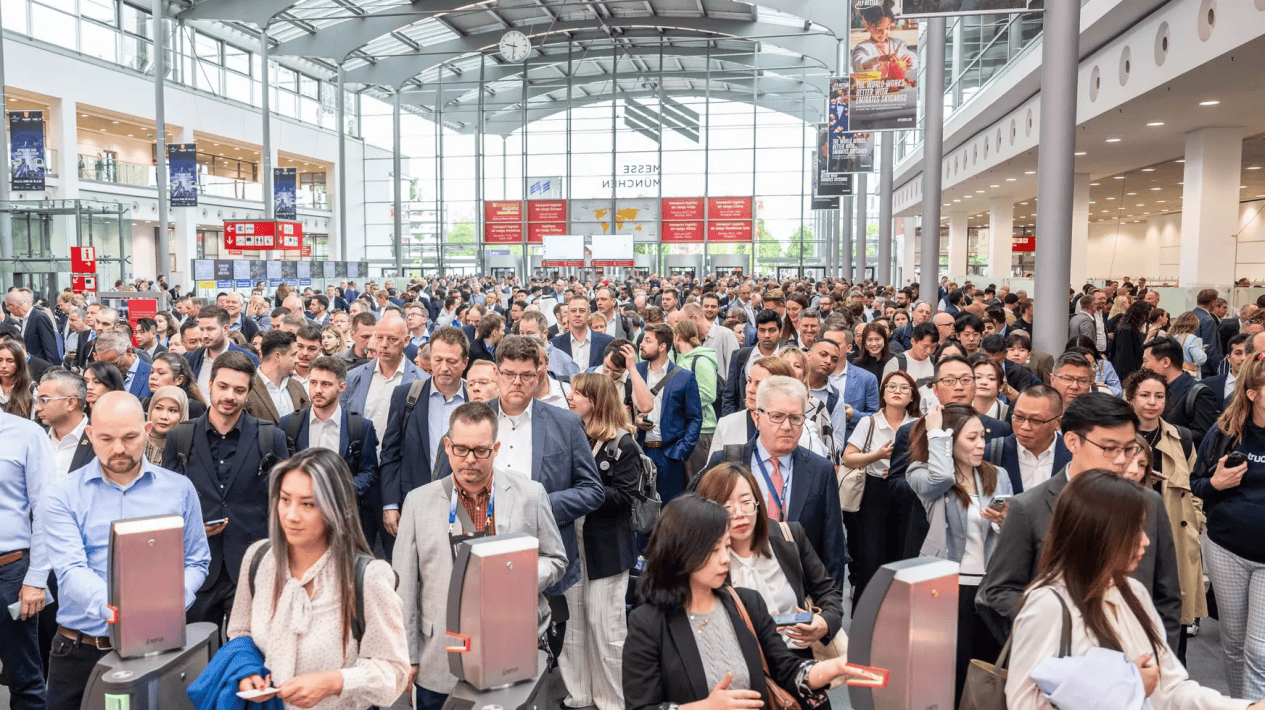
Core Insights - The Transport Logistic 2025 exhibition in Munich highlighted the transformation of the global logistics industry under the themes of "green compliance, full transparency, and enhanced resilience" amidst the backdrop of EU carbon tariffs and new supply chain regulations [1] Group 1: Exhibition Scale and Impact - The exhibition attracted over 2,600 exhibitors from more than 70 countries, marking a 15% increase from the previous event, with international exhibitors accounting for 65% [2] - The event covered an area of 150,000 square meters and drew over 70,000 professional visitors, reinforcing Munich's position as a global logistics resource integration center [2] - The CEO of Munich Exhibition Group emphasized that logistics is the invisible backbone of the global economy, with the exhibition showcasing critical infrastructure [2] Group 2: Digitalization and AI in Logistics - Digitalization is identified as a key lever for enhancing logistics efficiency and optimizing processes, with 54% of participating companies already applying AI technology [2] - AI is reshaping logistics operations across various aspects, including optimal route planning and predictive vehicle maintenance, although 60% of companies still view talent as a more critical competitive advantage than technology investment [2][3] Group 3: Innovations in Last-Mile Delivery - DrayEasy's digital solutions for U.S. domestic transportation were a focal point, addressing long-standing issues such as low transparency and high costs [6][8] - Key features of DrayEasy's solution include full-process visibility, covering 1.5 million routes across the U.S., and real-time tracking of cargo status [8][9] - The system integrates seamlessly with mainstream TMS, reducing operational errors and enhancing efficiency through API integration [9][10] Group 4: China's Role in Global Logistics - The exhibition served as a platform for Chinese logistics solutions to gain international exposure, transitioning from participation to co-construction [12] - Chinese companies are increasingly seeking reliable U.S. partners with intelligent and high-reliability solutions to enhance their global competitiveness [12] - The event underscored that green, intelligent, and digital logistics are essential for industry survival, with Chinese solutions contributing diverse strategies to global logistics challenges [12]