
数字金融

Search documents
苏州打造工业软件创新生态雨林
Su Zhou Ri Bao· 2025-08-24 23:19
Core Insights - Suzhou's industrial software sector is rapidly advancing, with significant developments in various software products and platforms aimed at enhancing manufacturing capabilities and digital transformation [1][2][3] Group 1: Industrial Software Developments - Tongyuan Soft Control launched the MWOKRS2025b version, adding over 200 optimized features [1] - QJCAM series industrial software by Qianji Intelligent achieves autonomy in the machining industry [1] - Haocen Software's CAD series now supports multiple operating systems, covering over 175 countries and regions [1] - Yuyun Simulation Technology won a project for domestic welding simulation software, indicating further application of autonomous industrial simulation software in high-end manufacturing [1] Group 2: Industrial Park Development - Suzhou has established 10 characteristic software industrial parks with a total area exceeding 5.6 million square meters, focusing on AI, industrial software, and digital finance [2] - The Jinji Lake Software Industrial Park covers 2.2 million square meters and includes over 140 key software enterprises, generating software business revenue exceeding 91.3 billion yuan by the end of 2024 [3] - The Suzhou (Taihu) Software Industrial Park focuses on digital economy and IT application innovation, aiming for software business revenue of 13.9 billion yuan in 2024 [3] Group 3: Talent and Ecosystem Development - Suzhou is attracting high-end talent and innovative enterprises, with 216 high-end software talents, including 35 PhDs, in the Kunshan Global Digital Innovation Port [6] - The city has introduced 22,000 high-level talents from both domestic and international sources through the Suzhou Overseas Students Entrepreneurship Park [6] - Public service platforms, such as the Industrial Software Application Innovation Center and AI Computing Power Center, provide essential support for enterprise growth [7] Group 4: Policy Support and Growth - Suzhou's policies are designed to support the software industry across all stages, from startup to maturity, including financial support and market expansion [8] - The software and information service industry in Suzhou has maintained steady growth, with software business revenue achieving double-digit growth for three consecutive years [9] - The city aims to transition from "Suzhou Manufacturing" to "Suzhou Intelligent Manufacturing," contributing to China's path toward autonomous industrial software [9]


徽商银行金融科技部副总经理俞阳国:科技赋能新场景,商业银行新机遇 | 银行家论道
清华金融评论· 2025-08-24 10:07
Core Viewpoint - Chinese commercial banks are committed to high-quality development amidst a complex macro environment, maintaining stable operations, enhancing capital strength, and achieving steady growth in profitability while managing risks effectively [1][2]. Group 1: Current Challenges and Opportunities - The pressure on interest margins is a significant challenge faced by commercial banks, while there remains substantial growth potential in retail banking, particularly in product management and wealth management [1][2]. - The Central Financial Work Conference emphasizes the importance of technology finance, green finance, inclusive finance, pension finance, and digital finance, marking digital finance as a key focus area for future development [2]. Group 2: Digital Financial Transformation - The application of emerging technologies is reshaping financial service scenarios, leading to a shift towards customer-centric, comprehensive financial solutions that cater to diverse consumer behaviors and preferences [5]. - Commercial banks should focus on five business objectives: digital scenarios, digital products, digital channels, digital operations, and digital risk control to leverage technology effectively [6][7][8][10]. Group 3: Financial Technology Applications - In digital scenarios, banks can collaborate with external institutions to provide personalized financial services through mobile banking and open banking, covering various aspects of customers' daily lives [6]. - For digital products, banks can create differentiated product lines based on customer characteristics and integrate blockchain technology for supply chain financing [7]. - Digital channels should be integrated to ensure seamless customer experiences across various platforms, enhancing service continuity and convenience [8]. Group 4: AI Empowerment in Financial Services - AI technologies can enhance service capabilities in various areas, including smart remote banking, smart operations, smart marketing, smart risk control, and smart office [11][12]. - In smart marketing, AI can assist customer managers in generating marketing strategies and improving customer engagement through personalized services [12]. - The integration of AI in risk control can enhance the accuracy and comprehensiveness of risk assessments, thereby improving overall risk management [12]. Group 5: Conclusion and Future Directions - The ongoing application of financial technology and AI can significantly improve the quality and efficiency of financial services provided by commercial banks, enabling them to offer superior service experiences to customers [13].


杭州银行持续优化金融供给 为实体企业高质量发展保驾护航
Zhong Guo Jing Ji Wang· 2025-08-24 01:54
Group 1 - The core viewpoint of the articles emphasizes Hangzhou Bank's commitment to enhancing financial services for the real economy, focusing on key areas such as manufacturing, private enterprises, and inclusive finance [1] - Hangzhou Bank has developed a comprehensive financing solution using pollution rights as collateral, successfully providing 50 million yuan in supply chain financing to a textile company undergoing industrial transformation [2] - The bank has actively promoted online supply chain financing, injecting 2.5 billion yuan into over 200 upstream enterprises since 2020, thereby supporting the real economy [2] Group 2 - Hangzhou Bank's Lishui branch has implemented a "1+3+N" inclusive finance team model to address the financing difficulties faced by small and micro enterprises, resulting in over 300 clients served and a credit amount exceeding 300 million yuan [3] - The bank has conducted extensive outreach activities to identify financing needs among small businesses, successfully disbursing 588 million yuan to various sectors, including logistics and automotive parts [3] - The bank has tailored a "swap financing" solution for export-oriented enterprises to mitigate risks associated with high dollar financing costs and exchange rate fluctuations, enhancing the financial service experience [4] Group 3 - Hangzhou Bank aims to continuously improve production efficiency and customer experience through a long-term strategy focused on digitalization, internationalization, and agile transformation [4]

平安银行书写“金融五篇大文章”深圳答卷
Sou Hu Cai Jing· 2025-08-22 23:29
Core Viewpoint - The development history of Shenzhen as a Special Economic Zone over 45 years is a remarkable narrative of reform and innovation, with Ping An Bank playing a significant role as both a witness and a participant in this journey [3] Group 1: Technology Finance - Ping An Bank actively constructs a "customer + product + policy + ecosystem" operational system to provide comprehensive financial services for technology enterprises [4] - The bank has increased support for advanced manufacturing and technology innovation sectors, with a focus on specialized small and medium enterprises, enhancing customer cultivation and professional support [4] - As of mid-2025, the number of technology enterprise clients reached 29,270, a 6.7% increase from the previous year, and the loan balance for technology enterprises was 193.436 billion yuan, up 13.2% [4] Group 2: Green Finance - Ping An Bank elevates green finance to a strategic level, supporting Shenzhen's green transformation through innovative products and services [5] - The bank has established a diversified product system including green loans, green bonds, and carbon finance, providing comprehensive financial support for the green low-carbon circular economy [5][6] - As of mid-2025, the balance of green loans was 251.746 billion yuan, reflecting a 6.0% increase from the previous year [5] Group 3: Inclusive Finance - Ping An Bank has developed a digital inclusive finance model, enhancing financing efficiency and reducing costs for small and micro enterprises through online products [7] - The bank actively participates in community financial projects, supporting affordable housing and old community renovations to ensure equitable access to financial development [7] - As of mid-2025, the total amount of loans and advances issued by the bank reached 3.4 trillion yuan, a 1.0% increase, with new loans for inclusive small and micro enterprises amounting to 133.917 billion yuan, a 33.6% year-on-year growth [7] Group 4: Pension Finance - Ping An Bank is proactively planning for the aging population by offering a range of stable financial products tailored to retirement needs [9] - The bank collaborates with its insurance subsidiary to create solutions for home-based and community-based elderly care, enhancing the pension service rights system [9] - Over 2 million pension accounts have been opened, supporting diverse retirement needs for residents [9] Group 5: Digital Finance - Ping An Bank prioritizes digital transformation as a core driver of development, implementing a comprehensive digital operation strategy [10] - As of mid-2025, the number of registered users on the Ping An Pocket Bank APP reached 178 million, a 2.0% increase from the previous year [10] - The bank's technological advancements are not only enhancing its own operations but also empowering the financial industry in Shenzhen and the Greater Bay Area [10]


云知声(09678)获纳入恒生综合指数 有望成为港股通标的
智通财经网· 2025-08-22 12:42
Group 1 - The Hang Seng Index Company announced the inclusion of Yunzhisheng (09678) in the Hang Seng Composite Index, effective from September 8, 2025, following the quarterly review on June 30, 2025 [1] - Yunzhisheng is likely to be included in the Hong Kong Stock Connect due to meeting various criteria such as market capitalization, liquidity, and listing duration [1] - The company signed a memorandum of understanding with South Pacific Digital Technology Holdings in July 2023 to collaborate on the application of artificial intelligence technology in the issuance and management of stablecoins [1] Group 2 - Guozheng International highlighted the strong technical capabilities of Yunzhisheng, which has developed a self-researched model with 60 billion parameters, ranking first in the MedBench evaluation in the medical field [1] - The company's applications are widespread, covering smart living and medical AI, with voice interaction systems used in smart homes, commercial spaces, and subways [1] - In the medical AI sector, Yunzhisheng provides voice input and quality control systems to 166 hospitals, significantly improving input efficiency and quality control levels [1]
活动报名|2025“银行家论道”研讨会暨中国银行业排行榜200强发布会
清华金融评论· 2025-08-22 09:42
Group 1 - The core theme of the event is "Embracing AI Technology Transformation, Serving the Real Economy - Enhancing Financial Quality and Efficiency to Support High-Quality Economic Development" [3][10] - The event will feature the release of the "China Banking Industry Top 200 Ranking" and "Outstanding Cases of Innovation in the Banking Industry," providing insights into the latest industry trends and best practices [5] - The event aims to create a multi-dimensional communication platform for the banking industry, facilitating cross-sector collaboration and innovative synergy [4][9] Group 2 - The event will gather top experts from policy regulation, senior bankers, and scholars in banking research to deeply interpret and discuss pressing domestic and international topics in the banking sector [6] - There will be in-depth discussions on banking operational logic, focusing on five key areas: fintech, green finance, inclusive finance, pension finance, and digital finance, to derive practical methodologies for serving national strategic initiatives [7] - The event will include authoritative experts sharing insights on the application, challenges, and future landscape of artificial intelligence in core banking scenarios such as risk control, marketing, operations, and product innovation [8] Group 3 - The event is organized by Tsinghua University Wudaokou School of Finance and the editorial department of "Tsinghua Financial Review," with the aim of promoting high-quality development in the banking sector [10][18] - The agenda includes a keynote speech on banking operational logic and practical exploration, the release of the 2025 China Banking Industry Top 200 Ranking research report, and a high-level dialogue on banking management in the AI era [14]

多家中小银行下调存款利率,如何面对低利率的机遇与挑战?| 封面专题
清华金融评论· 2025-08-22 09:42
Core Viewpoint - The article discusses the recent trend of declining deposit interest rates in various regions of China, highlighting the implications of a low interest rate environment on the banking sector and the broader economy [3][5][6]. Summary by Sections Deposit Rate Adjustments - Several village banks in regions such as Zhejiang, Guizhou, and Jilin have announced reductions in deposit interest rates, with decreases ranging from 10 to 20 basis points [3]. - For instance, Jilin Longtan Huayi Village Bank adjusted its interest rates for various deposit types, including a reduction of the annual interest rate for demand deposits from 0.20% to 0.15% and for 1-day notice deposits from 0.65% to 0.55% [3]. - Similarly, other banks like Jilin Baishan Hunjiang Hengtai Village Bank and Shengzhou Ruifeng Village Bank have also lowered their rates for different term deposits, with reductions of 10 to 20 basis points [5]. Current Interest Rate Trends - As of July 2025, the average interest rates for various term deposits have shown a downward trend, with the 3-month rate at 0.943% and the 1-year rate at 1.278%, reflecting a decrease compared to the previous month [6]. - The article suggests that the decline in deposit rates is not a short-term trend but may become a long-term norm due to structural and cyclical factors affecting the economy [6][9]. Low Interest Rate Environment - The low interest rate scenario is attributed to both structural constraints, such as declining potential economic growth and demographic changes, and cyclical factors like output and inflation gaps [7][9]. - The article emphasizes that the current low interest rates may persist for an extended period, influenced by global trends and domestic economic conditions [9]. Financial Sector Response - The financial sector is encouraged to focus on five key areas: technology finance, green finance, inclusive finance, pension finance, and digital finance, to adapt to the low interest rate environment [8]. - The article highlights the need for banks to enhance their financial services and product offerings to meet the evolving demands of the economy [8][14]. Challenges and Opportunities - The low interest rate environment presents both challenges and opportunities for various financial institutions, including the need for banks to innovate in asset-liability management and risk control [11][14]. - The article discusses the importance of policy coordination and the need for financial institutions to adapt to the changing landscape to ensure sustainable growth [12][14].

景建国:在开放与安全间构建上海离岸金融中心全球范式丨金融百家
2 1 Shi Ji Jing Ji Bao Dao· 2025-08-22 01:46
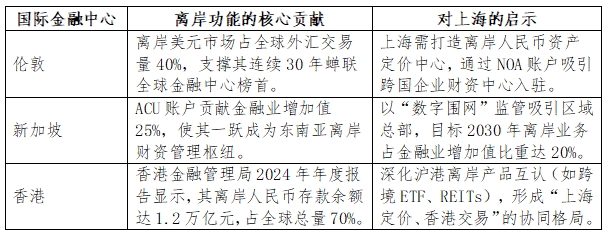
Core Viewpoint - The construction of Shanghai's offshore financial center is a strategic initiative aimed at enhancing global resource allocation capabilities, driven by the dual transformation of "dollar hegemony loosening + digital technology reconstruction" in the global financial order [1][2]. Group 1: Offshore Financial Center as a Core Component - Offshore financial centers are essential for international financial centers, as evidenced by New York, London, Hong Kong, and Singapore, which have developed comprehensive offshore ecosystems that balance cross-border capital flow and risk control [2]. - Establishing a matching offshore financial center in Shanghai is crucial for the national financial opening strategy and is necessary for enhancing global resource pricing power and attracting international capital [2]. Group 2: Institutional Innovation for Dynamic Balance - The core competitiveness of offshore financial centers lies in their ability to balance "open efficiency" and "risk prevention" through institutional design [3]. - Shanghai can innovate by establishing a "digital enclosure" regulatory system that integrates existing accounts into a new offshore account model, allowing for flexible management of offshore and onshore funds [4]. Group 3: Tax Policy Neutrality and Precision - Tax policy is a double-edged sword for offshore financial centers; Shanghai should find a balance between attractiveness and compliance by implementing a low tax burden combined with strong regulation [7]. - A proposed 5% capital gains tax on general offshore business could reduce cross-border financing costs for Chinese enterprises by 1.8 percentage points while generating approximately 2 billion yuan in annual tax revenue [7]. Group 4: Technological Empowerment in Offshore Finance - Digital technology is reshaping the underlying logic of offshore finance, with blockchain and digital currency at the core of creating a leading digital financial testing ground in Shanghai [8]. - Blockchain technology can significantly reduce transaction costs and time in cross-border settlements, as demonstrated by successful pilot projects in Shanghai [9]. Group 5: Gradual Capital Account Opening - The proposed "three-step" strategy for capital account opening includes initial, mid-term, and mature phases, focusing on gradually relaxing restrictions on offshore investments and cross-border financing [14]. - By 2030, a faster opening of the capital account could create an additional $1.2 trillion space for global RMB asset allocation [15]. Group 6: International Collaboration and Rule Integration - Shanghai should transition from being a "rule follower" to a "rule co-creator" in the global financial landscape, enhancing its attractiveness to international investors through compatible legal and dispute resolution mechanisms [18][19]. - Collaborative efforts with RCEP member countries and the establishment of a "Shanghai Offshore Financial Rules Alliance" could enhance Shanghai's role in global offshore finance [21]. Group 7: Paradigm Value of Offshore Financial Centers - The development of offshore financial centers is fundamentally about the mutual empowerment of offshore and onshore functions, which can provide significant support for Shanghai's international financial center construction [22][23]. - Shanghai's unique value lies in breaking away from traditional low-tax arbitrage paths by constructing a new paradigm through institutional innovation and technological empowerment [23].
湖南20条举措支持做好金融“五篇大文章”
Zhong Guo Chan Ye Jing Ji Xin Xi Wang· 2025-08-22 01:11
近日,湖南省人民政府办公厅印发《关于做好湖南金融"五篇大文章"服务经济高质量发展的实施意 见》,提出20条政策举措,明确到2027年末要实现金融总量有增长、信贷结构有优化、融资成本有降 低、金融产品有特色、融资效率有提升,引导更多金融资源科学高效配置到我省经济社会发展需要的领 域。 该实施意见要求,打造分工协作的金融机构组织体系、运行高效的内部管理体系、高度适配的产品服务 体系、多元联动的直接融资服务体系、科学有效的风险管理体系等"五大体系",完善企业融资综合信用 服务平台(征信平台)、金融与产业协同创新服务平台、金融机构数字化运营管理平台、产融信息对接服 务平台、金融宣传推介平台等"五大平台",帮助各类经营主体高效获取金融资源。(记者黄炜信) 立足区域发展实际,实施科技金融提升、绿色金融攻坚、普惠金融赋能、养老金融守护、数字金融强基 等"五大工程"。科技金融重点推行"湘伴前行"计划,探索"利率定价动态调整+投贷债股保联动+多元化 风险缓释"服务模式;绿色金融实施"碳求未来"行动,开发环境权益质押融资等金融产品,完善"碳账户 +"金融服务,制定地方转型金融标准,支持绿色低碳发展;普惠金融着力构建"金惠万家"服 ...
数字人民币债务领域应用场景持续拓展
Zheng Quan Ri Bao· 2025-08-21 16:42
本报记者李冰 日前,湖南省人民政府办公厅发布《关于做好湖南金融"五篇大文章"服务经济高质量发展的实施意见》 (以下简称《意见》),提及探索数字人民币应用于连环债清偿。 经梳理,2025年以来已有北京、广州、上海等多地发布数字人民币试点工作发展计划,总体来看,各地 对数字人民币的布局呈现出政策导向明确、技术架构成熟、应用场景多元化、区域差异化发展等特点。 探索应用于连环债清偿 货币桥项目的推进,将助力数字货币重构跨境支付规则。" (文章来源:证券日报) 南开大学金融学教授田利辉在接受《证券日报》记者采访时表示,数字人民币应用于连环债清偿与上海 地方债分销试点,两者核心差异在于应用场景与目标。连环债清偿是聚焦债务链条的"后端治理",通过 智能合约实现自动清偿,解决历史债务积压问题。地方债分销试点则属于债券市场的"前端创新",以数 字人民币钱包为支付渠道,拓宽个人和中小机构投资者参与渠道,提升市场活跃度。在技术层面,连环 债需深度嵌入智能合约规则,而地方债分销更依赖支付便捷性。总之,前者是债务风险化解的"手术 刀",后者是金融市场的"扩音器",均体现了数字人民币的场景适配能力。 应用场景不断拓展 2025年以来,数 ...
