
量子计算

Search documents
热点问答丨特朗普访英助推美英深化合作还是加深裂痕
Xin Hua Wang· 2025-09-19 09:03
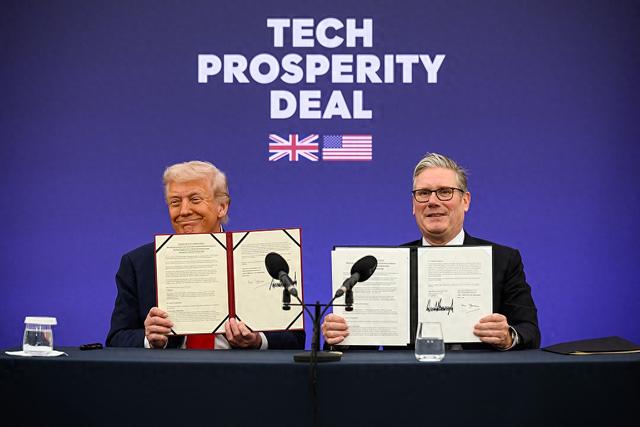
Group 1: Technology Cooperation - The signing of the "Technology Prosperity Agreement" focuses on collaboration in artificial intelligence, quantum computing, and civil nuclear energy, aiming for the US and UK to dominate the global AI landscape [1] - Major US tech companies, including Microsoft, Google, Nvidia, and OpenAI, have committed to invest £31 billion (approximately $42 billion) to enhance the UK's AI infrastructure and advanced technologies [1] - Critics argue that the agreement offers little support for the UK’s domestic tech industry and raises concerns about potential concessions in regulation and taxation for US tech firms [1][2] Group 2: Trade Relations - Despite the emphasis on the "special relationship," there has been limited progress on reducing tariffs and addressing trade friction, particularly regarding steel and aluminum products, which still face a 25% tariff when exported to the US [2][3] - The indefinite postponement of a deal to eliminate US tariffs on UK steel and aluminum products highlights ongoing trade challenges [2][3] Group 3: Political Disagreements - Significant political differences have emerged between the US and UK regarding their approaches to Russia and the Middle East, particularly in the context of the Israel-Palestine conflict [4][5] - Trump expressed opposition to the UK’s consideration of recognizing Palestine, while emphasizing Israel's challenges, contrasting with Starmer's call for humanitarian aid to Gaza and a commitment to peace [4][5]
【环球财经】特朗普时代的美英特殊关系,还“特殊”吗
Xin Hua She· 2025-09-19 08:32
Group 1: Core Views - The visit of President Trump to the UK highlights the "special relationship" between the US and the UK, with significant royal ceremonies emphasizing this bond [1][2] - The UK is leveraging its royal family as a diplomatic tool to enhance its international standing, especially in light of its declining global economic and military power [2][3] Group 2: Economic and Trade Aspects - The UK aims to secure practical benefits from the visit, including a $42 billion "Technology Prosperity Agreement" focusing on cooperation in AI, quantum computing, and civil nuclear energy [3] - Major US tech companies, including Microsoft and Google, have committed to investing £31 billion (approximately $42 billion) in the UK's AI infrastructure [3] Group 3: Political and Strategic Dynamics - There are ongoing tensions regarding digital service taxes and regulatory frameworks that the US tech industry finds unfavorable in the UK [4] - The UK and US have differing views on international issues such as the Ukraine conflict and the Gaza situation, indicating a growing divergence in their strategic interests [5][6] Group 4: Historical Context and Future Outlook - The "special relationship" has historically been characterized by an imbalance of power, with the US emerging as the dominant global force post-World War II [6][7] - The future of the US-UK relationship may hinge on their ability to align on common strategic interests, especially as the UK seeks to regain its influence post-Brexit [8][10]
特朗普访英签署重大核电协议,打造英国“核能黄金时代”?
Xin Lang Cai Jing· 2025-09-19 07:35
Core Points - The UK Prime Minister Keir Starmer and US President Donald Trump signed a multi-billion-pound agreement to expand nuclear power cooperation between the two countries [1][3] - The agreement, known as the "Atlantic Advanced Nuclear Partnership," focuses on collaboration in nuclear energy, AI data centers, and nuclear regulation, aiming to reduce reliance on Russian nuclear materials [1][3][5] Nuclear Energy Expansion - The partnership aims to accelerate the construction of new reactors and provide reliable low-carbon energy for high-demand industries, including energy-intensive AI data centers [3][4] - X-energy and British Gas will build 12 advanced modular reactors (AMRs) in Hartlepool, creating approximately 2,500 jobs and generating enough electricity to power 1.5 million UK homes [3] - Holtec International, EDF, and Tritax Group will invest £11 billion to construct advanced data centers powered by small modular reactors (SMRs) in Nottinghamshire [3] Regulatory and Material Independence - The agreement includes provisions for nuclear regulation, aiming to reduce the licensing time for reactors from 3-4 years to 2 years [3] - The UK government aims to eliminate dependence on Russian nuclear materials by the end of 2028, with both countries accelerating domestic production of high-assay low-enriched uranium (HALEU) [5] - A $4.6 million agreement was signed between Urenco and Radiant to supply HALEU to the US market [5] Technological Focus - The focus is on small modular reactors and advanced modular reactors, which are smaller and have a power capacity about one-third that of traditional reactors, allowing for faster construction and lower costs [6] - The UK government is pursuing a significant nuclear expansion plan, seeking to enhance energy independence and achieve net-zero emissions by 2050 [6] Economic and Political Context - The agreement is expected to generate an estimated £40 billion in economic value and strengthen US nuclear technology exports [7] - The UK government is facing domestic challenges and aims to boost business confidence and public trust through this cooperation [9] - The deal comes amid ongoing discussions about trade agreements, including tariffs on UK steel and aluminum products exported to the US [10]

关税威胁下,提供5500亿美元投资的美日协议能否重振美国制造业?
Di Yi Cai Jing· 2025-09-19 06:46
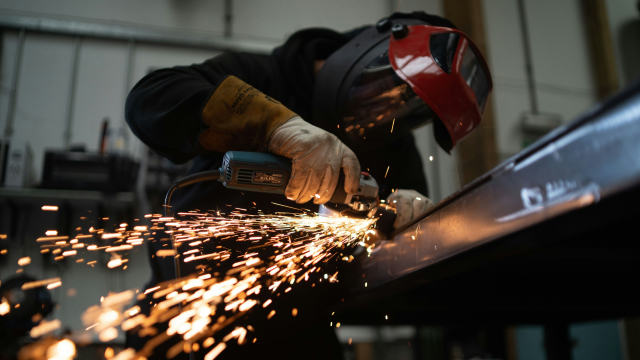
Group 1: Economic Context - The willingness of U.S. companies to invest remains low, with recruitment activities and investment intentions not recovering [1] - The U.S. manufacturing sector is showing signs of weakness, as evidenced by the New York Fed manufacturing index dropping from 11.9 to -8.7 in September [1] - Consumer confidence has not shown significant improvement, contributing to the overall pessimism in the manufacturing outlook [1] Group 2: U.S.-Japan Trade Agreement - The U.S. government is exploring how to utilize Japan's commitment of $550 billion to revitalize domestic manufacturing [1] - The trade agreement includes a governance structure for investment decisions, with Japan required to complete the allocation of the $550 billion before the end of Trump's term [3] - Investments are expected to focus on sectors critical to economic and security interests, including semiconductors, pharmaceuticals, and energy [3][4] Group 3: Investment Mechanism - The investment mechanism allows the U.S. to submit project plans for Japanese review, with Japan required to respond within 45 days [4] - Profits from projects will initially be split evenly until Japan recoups its investment, after which the U.S. will receive 90% of profits [4] - The structure provides significant control to the U.S. government over the investment process, while Japan has limited power to influence project selection [4] Group 4: Uncertainty and Corporate Response - Many multinational companies have announced large-scale investment plans, but the actual implementation remains uncertain due to changing policy environments [6] - Tariff policies have led to profit shrinkage and investment stagnation among U.S. companies, with John Deere reporting a $300 million increase in costs related to steel and aluminum imports [6][7] - The current economic uncertainty has caused companies to adopt a wait-and-see approach, delaying investments and reducing hiring [7] Group 5: Supply Chain Dependencies - U.S. manufacturers remain highly dependent on global markets for raw materials and components, with 69% of intermediate inputs sourced domestically and nearly one-third reliant on imports [8] - Approximately 94% of U.S. imports by value are industrial goods, highlighting the importance of global supply chains for U.S. manufacturing operations [8]
隆重仪式、百亿协议、加沙分歧……英美“特殊关系”的“面子”和“里子”
Xin Hua She· 2025-09-19 06:40
Group 1: Technology Cooperation - The US and UK signed the "Technology Prosperity Agreement" focusing on AI, quantum computing, and civil nuclear energy, aiming to establish global dominance in AI [1] - Major US tech companies, including Microsoft, Google, Nvidia, and OpenAI, committed to investing £31 billion (approximately $42 billion) to enhance the UK's AI infrastructure and advanced technologies [1] - The effectiveness of this investment in boosting the UK's competitiveness depends on addressing local companies' financing gaps and fostering larger tech firms [2] Group 2: Trade Relations and Tariffs - Despite the high-profile visit, discussions on trade agreements, such as the removal of tariffs on UK steel and aluminum products, remain unresolved, with a 25% tariff still in place [3] - The UK whiskey industry faces a 10% tariff on exports to the US, resulting in losses of £4 million (approximately $5.4 million) per week [3] - The UK Steel Association expressed concerns that trade protectionism could severely impact the steel industry's development amid shrinking demand and rising costs [3] Group 3: Political and Diplomatic Discrepancies - There are significant differences in the UK and US positions regarding the Israel-Palestine conflict, with the UK planning to recognize Palestine if Israel does not take substantial action to end the situation in Gaza [4] - The UK Prime Minister emphasized the need for humanitarian aid to Gaza, while the US President downplayed the suffering of the Palestinian people, highlighting a divergence in perspectives [4][5] - The UK may need to adopt a more interest-based approach in its cooperation with the US, moving away from traditional ally dynamics [5]
美英“特殊关系”?英国民众:那是我们“一厢情愿”
Xin Hua She· 2025-09-19 05:49
Group 1 - The core focus of the visit was the signing of the "Technology Prosperity Agreement," emphasizing cooperation in artificial intelligence, quantum computing, and civil nuclear energy [1] - There were limited advancements in trade discussions, particularly regarding tariffs, with no substantial breakthroughs on reducing tariffs or addressing steel and aluminum friction [1] - The meeting between Trump and UK Prime Minister Starmer highlighted disagreements on the recognition of Palestine, with both leaders agreeing on the need for peace in Gaza and humanitarian aid [1] Group 2 - Public sentiment in the UK regarding the "special relationship" with the US is waning, with only about 36% of the population believing in its existence [2] - Some views consider the "special relationship" as an outdated notion, with perceptions of it being a one-sided attachment from the UK [2] - The shared language and history are increasingly seen as insufficient justification for the UK's continued loyalty to the US [2]
英欢呼“2500亿英镑横跨大西洋”
Huan Qiu Shi Bao· 2025-09-19 02:57
Group 1: Agreement Overview - The US and UK signed a "Technology Prosperity Agreement" to enhance cooperation in advanced technology fields such as artificial intelligence, quantum computing, and nuclear energy [1][2] - The agreement is described as the largest investment plan of its kind in UK history, with a total investment of £250 billion, which includes both US investments in the UK and UK investments in the US [1][2] Group 2: Investment Details - Approximately £150 billion of investment is expected from US companies, with Blackstone Group committing £90 billion over the next decade, including £10 billion for AI data centers [2] - The agreement is projected to create over 7,600 high-quality jobs across various sectors in the UK, including clean energy and biotechnology [2] Group 3: Company Contributions - Microsoft announced a £22 billion investment in AI infrastructure in the UK, marking its largest investment commitment outside the US [3] - Nvidia plans to deploy 120,000 advanced GPU chips in the UK, its largest deployment in Europe to date [3] - Google is set to open a data center in Hertfordshire as part of a £5 billion investment plan over two years [3] Group 4: Economic Context and Reactions - The investments are seen as a testament to the UK's economic strength and a signal of its ambition and leadership [2] - There are criticisms regarding the substance of these investments, with some viewing them as pre-existing plans rather than new commitments [3] - A recent poll indicated that 45% of the UK population viewed Trump's visit negatively, highlighting the political context surrounding the economic discussions [3]


本源量子由创始人郭国平持30%表决权,董事长、总经理都是中国科大博士
Sou Hu Cai Jing· 2025-09-19 01:31
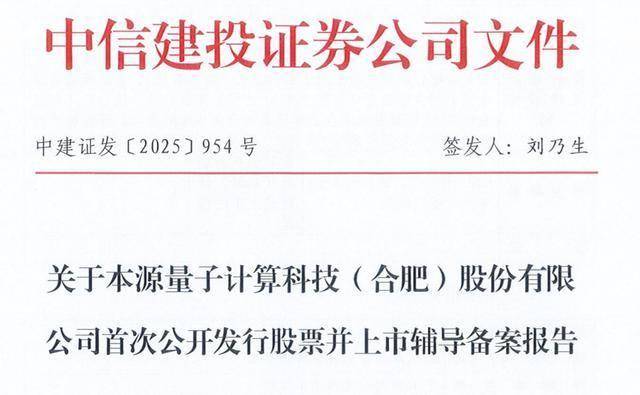
Company Overview - Benyuan Quantum Computing Technology (Hefei) Co., Ltd. has initiated IPO counseling registration with the Anhui Securities Regulatory Bureau, with CITIC Securities as the counseling institution [2] - The company was established on September 11, 2017, and is a leading domestic quantum computing enterprise [3] - The registered capital of the company is 3,000,000.08 yuan [3] Shareholding Structure - As of June 30, 2025, Guo Guoping directly holds 21.08% of the company's shares and controls over 30% of the voting rights through various investment partnerships [4] - The controlling shareholder and actual controller of the company is Guo Guoping, who leads a consortium of investment platforms [4] Leadership and Team - The chairman of Benyuan Quantum is Kong Weicheng, and the general manager is Zhang Hui, both of whom are PhD graduates from the University of Science and Technology of China [6] - Kong Weicheng has developed over twenty quantum measurement and control products and successfully released the first domestically produced quantum computer control system [6] - Zhang Hui oversees the company's strategic research and development, project planning, and has achieved significant results in quantum computing and simulation [6] Industry Position - The company aims to create self-controllable, engineered quantum computers and a complete industrial ecosystem, promoting the practical application of quantum computing [3]
英国欢呼:2500亿英镑横跨大西洋
Huan Qiu Shi Bao· 2025-09-19 01:29
Group 1 - The core agreement signed between the US and UK is the "Technology Prosperity Agreement," aimed at enhancing cooperation in advanced technology fields such as artificial intelligence, quantum computing, and nuclear energy [1][2] - The total investment announced is reported to be £250 billion, which includes both US investments in the UK and UK investments in the US, marking it as a record-breaking investment initiative [1][2] - The agreement is expected to create over 7,600 high-quality jobs across various sectors in the UK, with significant contributions from major US companies like Blackstone, Google, and Microsoft [2][3] Group 2 - Blackstone has committed to investing £90 billion in the UK over the next decade, with £10 billion specifically allocated for building AI data centers [2] - Microsoft plans to invest £22 billion in the UK's AI infrastructure, marking its largest investment outside the US to date [3] - Nvidia will deploy 120,000 advanced GPU chips in the UK, representing its largest deployment in Europe [3] Group 3 - There are concerns regarding the actual impact of these investments, with critics suggesting that they may not significantly alter the current lack of external funding driving economic growth in the UK [3] - The UK government is actively promoting the economic benefits of this visit to counter negative public sentiment towards Trump's presence, as a recent poll indicated that 45% of the British public viewed the invitation as a mistake [3][4] - Discussions between Trump and UK Prime Minister Starmer also included contentious topics such as tariffs on steel and aluminum, as well as geopolitical issues like the situation in Ukraine and the recognition of Palestine [4]
科学家让两个原子核实现“远距离聊天”
Ke Ji Ri Bao· 2025-09-19 00:40
【总编辑圈点】 团队此次通过让每个原子核与一个独立的电子耦合,再让这两个电子在空间中相互作 用,从而实现原子核之间的远距离通信。此前,原子核就像被关在隔音房间里的个体,虽然 同处一室时对话清晰,但无法与外界沟通。现在,团队相当于给了它们一部"电话",可与其 他房间进行通话。每个房间依然安静、隔离良好,但交流范围却大大扩展。 实验中,两个原子核相距约20纳米(仅为人头发丝直径的千分之一)。团队解释称,这 听起来微小,但如果将原子核放大到一个人的大小,它们之间的距离相当于悉尼与波士顿之 间的跨度。更重要的是,20纳米正是当前用于制造手机和电脑芯片的现代硅技术标准尺度。 测试中,团队利用日本庆应义塾大学提供的超纯硅晶圆,将磷原子精准植入芯片。 基于原子核自旋的硅量子计算机,正在规模化道路上前进,此次成果扫清了一个最大障 碍,且新方法既稳健又可扩展。目前实验仅使用两个电子,未来可引入更多电子,实现相互 作用的快速、精确开关。 一组国际科学家团队在量子计算领域取得重大突破:首次利用两个原子核的自旋实现 了"量子纠缠态",让原子核实现了"远距离聊天"。这一纠缠是量子计算机超越传统计算机的 核心资源,显示出利用现有半导体技 ...