AI

Search documents
Netflix Stock Drops 6.5% This Week Amid Warner Bros Acquisition Battle and AI Concerns
247Wallst· 2026-02-14 17:33
Core Viewpoint - Netflix's stock has dropped 6.5% this week amid concerns over the Warner Bros acquisition and AI disruptions, with the stock trading near its 52-week low of $76.87, down 18% year-to-date [1] Group 1: Stock Performance - Netflix shares fell 6.48% from February 6, significantly underperforming the broader market's 1.29% decline [1] - The stock is currently near its 52-week low of $79, marking a sharp reversal from earlier momentum in 2024 [1] - Analysts maintain a consensus rating of "Moderate Buy" with 30 buy or strong buy ratings against 14 holds or sells, suggesting a potential upside of 45% based on an average target of $111.43 [1] Group 2: Acquisition Battle - Netflix's $82.7 billion all-cash bid for Warner Bros Discovery faces opposition from activist investor Ancora Holdings, which favors a competing offer from Paramount Global [1] - Paramount has enhanced its offer by adding a "ticking fee" of 25 cents per share per quarter if the deal does not close by year-end and is willing to cover Warner's $2.8 billion breakup fee to Netflix [1] - Concerns about leverage arise as acquiring Warner would significantly increase Netflix's debt, altering its historically low-debt profile [1] Group 3: AI Disruption Concerns - The release of ByteDance's Seedance 2.0 model has raised fears of IP infringement and potential disruption in the media sector, impacting investor sentiment [1] - Monday.com experienced a 25% drop after withdrawing its 2027 guidance due to AI disruption fears, which has affected media stocks broadly [1] - Netflix is addressing AI concerns by deploying GenAI tools internally and leveraging machine learning for personalization, although the threat from AI-generated content remains a question [1]



一个行业一个行业排队被枪毙
Xin Lang Cai Jing· 2026-02-14 17:22
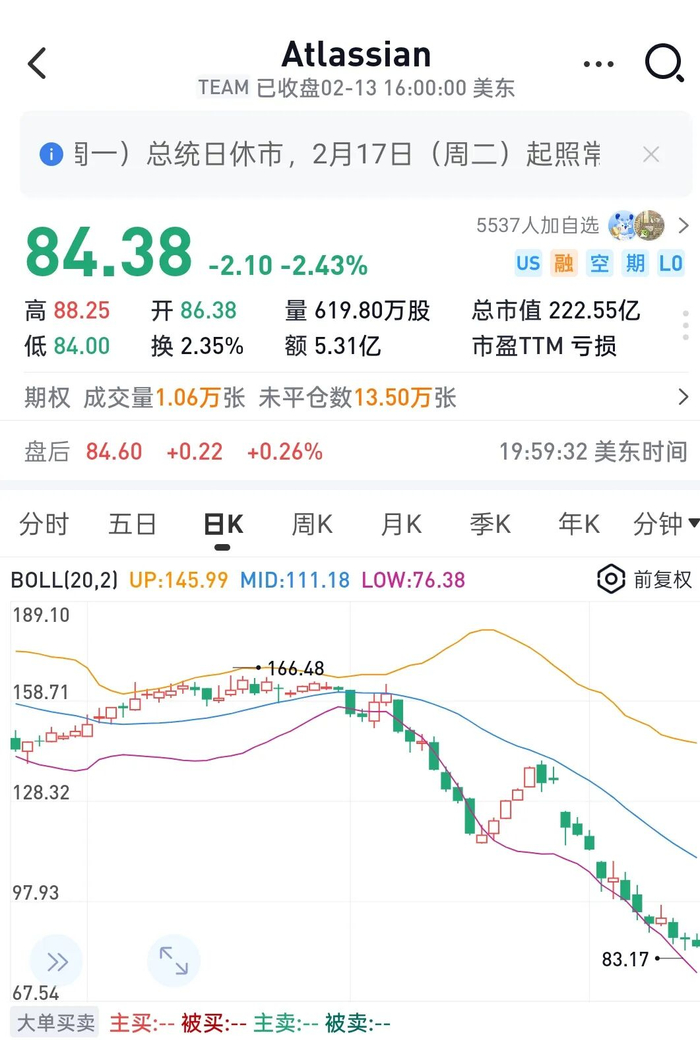
Group 1: Software Sector Impact - Software stocks have experienced significant declines, with Adobe down 25%, Atlassian down 47%, Intuit down 40%, Salesforce down approximately 30%, and Workday losing one-third of its market value [1][3]. Group 2: Insurance Brokerage Sector - The introduction of AI tools like Insurify has severely impacted insurance brokers, leading to declines in stock prices: Willis Towers Watson down 15%, Aon down 9%, and Arthur J. Gallagher down 15% [3][6]. Group 3: Wealth Management Sector - AI tools from Altruist have disrupted wealth management, causing stocks of firms like Charles Schwab, LPL Financial, and Raymond James to drop over 7% each [9]. Group 4: Logistics and Transportation Sector - Companies in logistics have faced stock declines, with CBRE down 20% over two days, JLL down around 20%, and Cushman & Wakefield experiencing a drop of 14% [11][12]. Group 5: Commercial Real Estate Sector - The expectation of layoffs and remote work due to AI advancements has led to a decline in demand for commercial real estate, negatively affecting companies like CBRE [14]. Group 6: Broader Market Impact - Other companies affected include Cisco down 12%, S&P Global down over 25%, and AppLovin down 20%, indicating a widespread concern about traditional sectors being threatened by AI [15]. Group 7: Future Employment Landscape - The article suggests that jobs reliant on information processing and standardization are at high risk of being replaced by AI, leading to potential large-scale unemployment while capital and technology flourish [16][17].
Synopsys Week In Review: China Headwinds, NVIDIA Partnership, and Margin Expansion
247Wallst· 2026-02-14 17:06
Performance Overview - Synopsys shares increased by 2.4% this week, outperforming broader software indexes, while year-to-date performance shows a decline of 6.95% and a 13.51% drop over the past month [1] - The broader software sector only gained 0.33% during the same period, while semiconductor stocks rose by 1.76% [1] Design IP Weakness and China Headwinds - The Design IP segment saw an 8% year-over-year revenue decline, totaling $1.75 billion in fiscal 2025 [1] - Revenue from China dropped by 18%, with no near-term improvement anticipated, indicating a structural headwind for the company [1] NVIDIA Partnership - NVIDIA invested $2 billion in Synopsys at a share price of $414.79, marking a strategic partnership [1] - The collaboration includes GPU acceleration of Synopsys products, integration with Omniverse for intelligent systems, and leveraging ANSYS's channel partnerships for market reach [1] - This investment is expected to enhance debt repayment and positively impact fiscal 2026 earnings per share [1] Ansys Integration and Margin Expansion - The acquisition of Ansys has positioned Synopsys as a leader in engineering solutions, contributing $668 million in Q4 fiscal 2025 and projected to deliver $2.9 billion in fiscal 2026 with double-digit growth [1] - The company is targeting a non-GAAP operating margin of 40.5% in fiscal 2026, up from 37.3%, representing a 320 basis points expansion [1]



Core Scientific Stock Up 45% This Past Year: Fund Lifts Stake Despite Volatility and $147 Million Q3 Loss
The Motley Fool· 2026-02-14 16:17
Core View - Helix Partners Management increased its stake in Core Scientific by purchasing 350,000 additional shares, valued at approximately $6.10 million, reflecting confidence in the company's future prospects [2][8]. Company Overview - Core Scientific is a leading provider of digital asset mining and blockchain infrastructure services in North America, utilizing advanced data center facilities and proprietary software to enhance mining efficiency [6][9]. - The company operates a dual business model, generating revenue from both direct digital asset mining and recurring fees from hosting services for institutional clients [9]. Financial Performance - For the trailing twelve months (TTM), Core Scientific reported revenue of $334.18 million, with a net income loss of $768.31 million [4]. - In the third quarter, the company generated $81.1 million in revenue, with high-density colocation revenue increasing to $15.0 million from $10.3 million year-over-year, despite a decline in total revenue [11]. - As of February 12, 2026, Core Scientific's stock price was $17.48, reflecting a 44.58% increase over the past year, outperforming the S&P 500 by 31.68 percentage points [4][8]. Investment Implications - Core Scientific now constitutes 27.41% of Helix Partners Management's assets under management, indicating a strong conviction in the company's potential [8][10]. - The company is pivoting towards high-density colocation services tied to AI workloads, with significant capital expenditures funded by CoreWeave [12].


车企“比惨大会”召开!全是特朗普惹的祸?
电动车公社· 2026-02-14 16:05
Core Insights - The global automotive landscape is undergoing significant changes due to the rise of new energy vehicles, with Chinese automakers emerging as top competitors while traditional giants face strategic transformation challenges [1][2]. Group 1: Tesla - Tesla's 2025 financial report shows total revenue of $94.827 billion, a 3% year-over-year decline, marking the first revenue drop in its history [7]. - The company delivered 1.636 million vehicles in 2025, an 8.6% decrease from 2024, leading to a 10% drop in automotive revenue, which constitutes over 70% of total income [9]. - Despite record revenue from energy generation and storage, Tesla's overall revenue decline remains unmitigated [10]. - R&D investment surged by 41% to $6.411 billion, focusing on autonomous driving and humanoid robots, indicating a shift in strategic priorities [14]. Group 2: General Motors - General Motors reported 2025 revenue of $185 billion, down 1.3%, with net profit falling 55.1% to $2.697 billion due to a $7.9 billion charge for strategic restructuring [17][19]. - The company maintains strong cash flow of $10.6 billion despite the profit drop, attributed to one-time restructuring costs and market adjustments [20]. - GM's outlook for 2026 is optimistic, expecting net profit between $10.3 billion and $11.7 billion, supported by a solid market position in the U.S. and new product launches in China [24]. Group 3: Ford - Ford's 2025 revenue reached $187.3 billion, a 1% increase, but it reported a net loss of $8.2 billion, primarily due to a $19.5 billion charge related to electric vehicle restructuring [26][30]. - The company faces challenges similar to GM, with traditional vehicles performing well while electric vehicle strategies require adjustment [32]. Group 4: Hyundai - Hyundai's 2025 revenue was 186.3 trillion KRW (approximately 888.7 billion RMB), a 6.3% increase, but operating profit fell 19.5% to 11.47 trillion KRW [34]. - The decline in profit is largely due to increased tariffs on exports to the U.S., despite a reduction in tariffs effective November 2025 [38]. - The company is also navigating the transition to electric vehicles, which requires adjustments to its product lineup [39]. Group 5: Volvo - Volvo's 2025 revenue was 357.3 billion SEK (approximately 278.8 billion RMB), down 11%, with operating profit plummeting 99% [42]. - The decline is attributed to tariffs, weak demand, and price pressures, prompting a cost-cutting plan involving layoffs [45]. - Despite challenges, Volvo's electric vehicle offerings are performing well, particularly in the Chinese market [48]. Group 6: Great Wall Motors - Great Wall Motors reported 2025 revenue of 222.79 billion RMB, a 10.19% increase, but net profit fell 21.71% to 9.912 billion RMB [52]. - The company achieved record sales of 1.3237 million vehicles, indicating strong growth despite profit declines due to increased investments in new technologies and marketing [54]. - The focus on electric vehicle development, particularly through its premium brand WEY, is expected to enhance growth potential [56]. Group 7: GAC Group - GAC Group's 2025 sales fell 14.06% to 1.72 million vehicles, with a projected loss of 8-9 billion RMB [58]. - The decline is linked to poor performance in traditional fuel vehicles and slower growth in its electric vehicle segment [59]. - The company is pursuing deep collaborations with local suppliers to accelerate its electrification strategy [60]. Group 8: Toyota - Toyota's revenue for the first three quarters of the 2026 fiscal year was 38.09 trillion JPY (approximately 1.72 trillion RMB), a 6.8% increase, but net profit dropped 26.1% to 3.03 trillion JPY [63]. - The profit decline is primarily due to the impact of U.S. tariff policies, despite a 10.5% profit increase in the Chinese market [66][68]. - Toyota is implementing a company-wide plan to reduce its breakeven point and improve operational efficiency [71].





字节怎么了?一边卖游戏资产,一边狂招芯片人才
程序员的那些事· 2026-02-14 15:57
Group 1 - ByteDance plans to sell its gaming subsidiary, Mu Tong Technology, for over $6 billion, with the buyer being Savvy Games Group, a subsidiary of the Saudi Public Investment Fund [1] - The core product of Mu Tong is the overseas MOBA mobile game "Decisive Peak," which ByteDance acquired in 2021 for approximately $4 billion, indicating asset appreciation [1] - This sale is viewed as ByteDance's strategy to continue shrinking its non-core gaming business and refocus on AI and cloud computing [1] Group 2 - ByteDance's chip team is undergoing large-scale recruitment across cities like Beijing, Shanghai, and Shenzhen, focusing on key positions in chip architecture and SoC design [2] - The chip team has grown to over a thousand members, covering multiple product lines including AI inference chips, server CPUs, VPU, and DPU [2] - Several chips have successfully completed the tape-out process and are advancing towards mass production to support the computational needs of large models, Douyin, and Volcano Engine [2] Group 3 - The sale of Mu Tong is aimed at capital recovery, while the expansion of the chip team signifies a deepening commitment to computational power [3]

新春走基层丨特效道具师:用一双巧手,造银屏“万物”
Xin Lang Cai Jing· 2026-02-14 15:37
Core Insights - The article highlights the innovative work of special effects prop makers at the Xina Magic Studio in Qingdao, showcasing their ability to create lifelike props for films, particularly in the context of the upcoming Spring Festival [1][2]. Group 1: Company Overview - Xina Magic Studio is engaged in producing various special effects props for multiple film projects, demonstrating a blend of artistic and technical skills in a spacious workshop [1]. - The studio employs a multidisciplinary approach, integrating skills in art design, industrial design, mechanical processing, and software programming to create advanced props [2][3]. Group 2: Technological Advancements - The studio utilizes cutting-edge technologies such as motion capture and AI to enhance the interaction between animatronic animals and human actors, thereby improving the overall filming experience [3]. - The creation of a lifelike robotic dog for the film "I Will Be Fine" exemplifies the studio's commitment to realism, requiring extensive research and development over four months [2]. Group 3: Industry Trends - The rise of Chinese sci-fi films has increased demand for high-quality prop production, pushing studios like Xina Magic to adopt new technologies and improve their craft [3]. - The studio's order backlog extends to mid-2023, indicating a robust demand for their services in the film industry [3].
悦享控股股价异动,业绩与市场情绪成关注焦点
Xin Lang Cai Jing· 2026-02-14 15:34
Stock Performance - The stock price of Enjoy Holdings (CHR.OQ) experienced significant fluctuations, with a daily increase of 5.07% on February 13, closing at $1.45, and a daily volatility of 14.49%, reaching a high of $1.54 [1] - Over the five trading days from February 9 to 13, the stock rose by a cumulative 18.85%, with a price range volatility of 24.59%, significantly higher than the overall 5.76% increase in the U.S. advertising and marketing sector during the same period [1] Reasons for Stock Movement - Financial stability is indicated by the latest financial report (as of June 30, 2025), showing a revenue of $70.99 million and a net profit of $7.76 million, with a gross margin of 70.7%, suggesting no major changes in performance fundamentals [2] - An event-driven factor includes the submission of a 6-K report to the SEC on January 29, 2026, and the disclosure on January 31 that shareholder Brueckner Frank Ulrich holds 12.0% of Class A shares, which may attract market attention but does not indicate significant business changes [2] - Market sentiment and liquidity have increased, with a maximum turnover rate of 5.01% on February 9 and notable fluctuations in trading volume, such as $199,800 on February 10, indicating heightened short-term capital activity, although no institutional ratings have been released to support a clear fundamental outlook [2] Future Developments - The company is expected to release its annual performance report in the first quarter, with the full-year results for 2025 being a key upcoming milestone [3] - Attention should also be given to the commercialization progress of its AI business, particularly the CHEERS Telepathy platform, and any announcements regarding shareholder ownership changes [3]
永利澳门(01128.HK):永利皇宫新主席俱乐部开业有望带来强劲的春节预定量
Ge Long Hui· 2026-02-14 14:45
Core Viewpoint - Wynn Macau's Q4 2025 performance fell short of Visible Alpha consensus expectations, with net revenue of $968 million, a year-on-year increase of 4% but a quarter-on-quarter decline of 3%, recovering to 87% of Q4 2019 levels [1] Performance Review - Q4 2025 adjusted property EBITDA was $271 million, down 7% year-on-year and down 12% quarter-on-quarter, recovering to 78% of Q4 2019 levels, which was below the $298 million consensus expectation [1] - The decline in total gaming revenue market share from 13.0% in Q3 2025 to 12.0% in Q4 2025 contributed to the underperformance [1] - The win rate was below expectations, and daily operating costs along with the reinvestment rate at Wynn Palace were relatively high [1] Development Trends - Based on hotel booking outlook, the company anticipates a strong performance during the 2026 Spring Festival, aided by the new 63,000 square feet Chairman's Club gaming area at Wynn Palace [1] - Strong business trends are expected to continue into 2026, with January 2026 business volume exceeding that of Q4 2026 [1] - Despite a competitive marketing rebate environment in the Macau gaming industry, the overall situation has stabilized, with the high-end segment continuing to drive industry growth [1] - Management believes AI will have a dual positive impact on demand growth (wealth creation for customers) and cost control (AI-based reinvestment rates, operational cost efficiency, and product visibility) [1] - Capital expenditures for 2026 are projected to be between $400 million and $450 million, with some projects pending government approval [1] Earnings Forecast and Valuation - The company maintains EBITDA forecasts for 2026 and 2027, currently trading at 7x 2026e EV/EBITDA [2] - The company maintains an outperform rating and a target price of HKD 7.20, corresponding to 8x 2026e EV/EBITDA, indicating an 18% upside from the current stock price [2]

“Seedance时刻”来袭,好莱坞距离被颠覆还有多远?特朗普:美军第二艘航母将派往中东;美股“AI恐慌”蔓延,亚马逊跌入熊市;更多西方名流卷入爱泼斯坦案 | 一周国际财经
Mei Ri Jing Ji Xin Wen· 2026-02-14 14:44
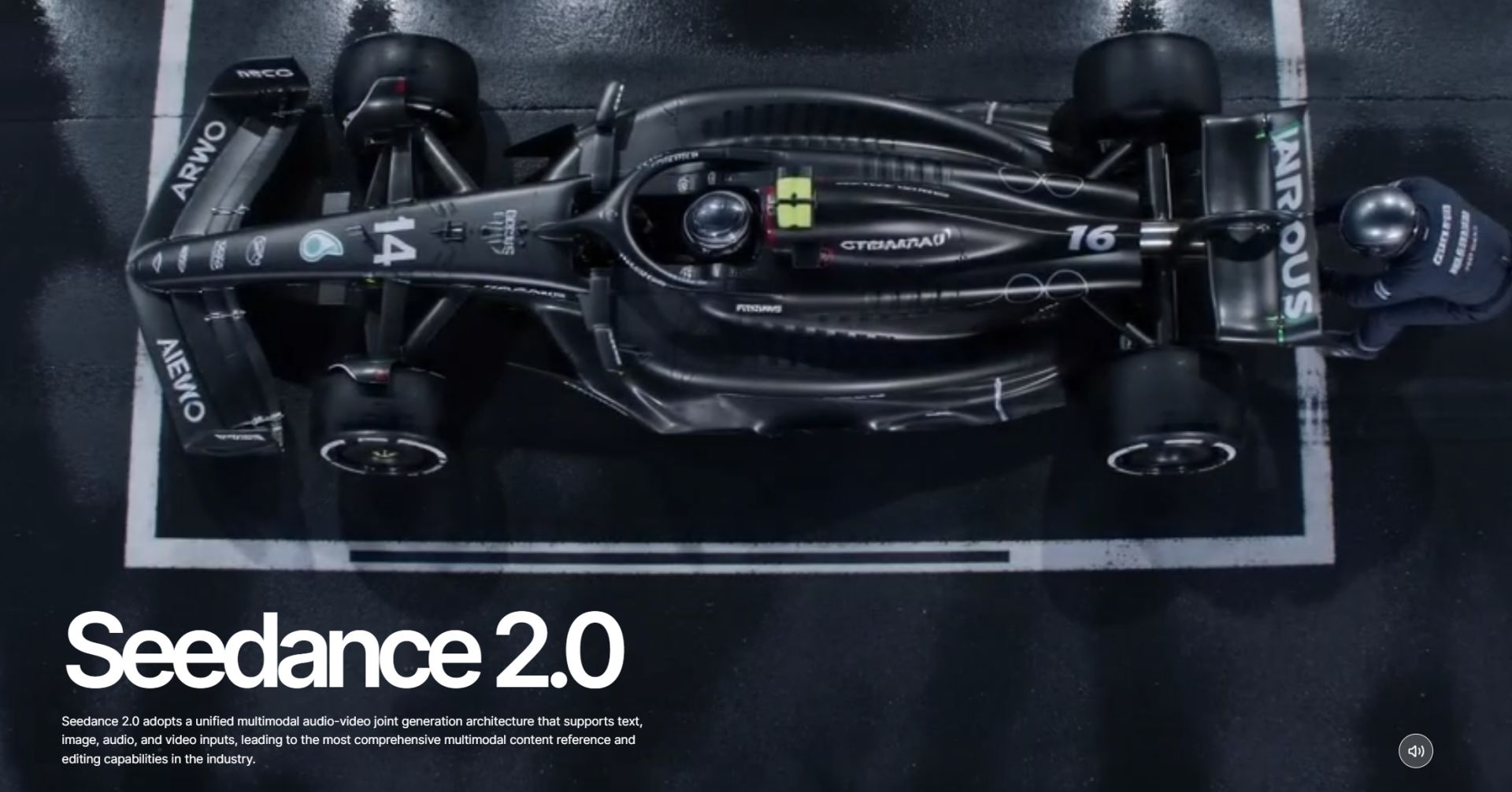
Group 1 - The AI video model Seedance 2.0 has generated significant buzz in the overseas film industry, with claims that it could "revolutionize the future" of filmmaking by producing a "movie-level" trailer in just 20 minutes at a cost of $60 [1][5][6] - The model is praised for its high controllability and output rate, addressing long-standing pain points in AI video production, and is referred to as a "director-level model" [1][7][10] - Users can upload multiple images, videos, and audio clips to customize the output, allowing for a high degree of creative control and efficiency in video production [7][8] Group 2 - Seedance 2.0 has significantly improved the "output rate" of AI video production, reducing the number of attempts needed to generate satisfactory visuals from 10-20 to just 1-5 [8][9] - Cost estimates suggest that the production cost for a 90-minute video could drop from over 10,000 yuan to around 2,000 yuan, with production cycles potentially shortened from 7-10 days to under 3 days [9][10] - The model's ability to generate visually stunning content quickly is expected to lower the trial-and-error costs for creators, allowing them to focus more on creative decision-making [9][10] Group 3 - Despite the advancements, there are concerns that Seedance 2.0 cannot fully replace directors, as filmmaking involves more than just creating visually appealing shots; it requires narrative coherence, emotional depth, and performance nuances [10][11] - The discussion around the potential job displacement of directors and other roles in the film industry is ongoing, with some experts suggesting that the role of directors will evolve rather than disappear [10][11] - The commercial adoption of AI-generated content faces challenges, including concerns over public acceptance, quality consistency, and legal uncertainties regarding copyright and intellectual property [12][12]