
中华优秀传统文化

Search documents
发布“中华优秀传统文化推广计划”厦门机场举办通航纪念
Zhong Guo Min Hang Wang· 2025-10-22 06:01
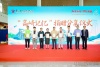
高崎记忆捐赠现场(厦门机场供图) 活动现场还启动了"中华优秀传统文化进机场推广计划",中医药文化、非遗文化、闽南文化等中华优秀 传统文化将在厦门机场具象化,转化为可体验、可互动、可传播的公共产品,机场由此打造兼具文化厚 度和待客温度的往来通道。 活动现场,厦门机场专属IP形象"翔燕"兄妹也正式与广大旅客见面。IP形象取自闽南常见"吉祥鸟"家 燕,未来IP形象将逐步融入航站楼引导服务、文创产品、线下活动等场景。 "高崎机场凝结着一代代民航人的初心,未来翔安机场将定位为'两岸交流门户机场',进一步优化厦 金'半小时交通圈',构建连接东南亚、通达欧美澳的国际航线网络,为厦门建设两岸融合发展示范区、 打造航空枢纽注入新动能",厦门机场相关负责人表示。(编辑:贾昊天 校对:李海燕 审核:程凌) 《中国民航报》、中国民航网 记者钱擘 报道:"各位旅客朋友,欢迎来到厦门高崎机场,让我们一起穿 越时光,回到1983年那架三叉戟客机起飞的时刻……"10月22日,随着如是闽南话播报声响起,厦门高 崎国际机场举行了通航42周年纪念日活动,市民、台胞、侨胞齐聚活动现场,捐赠回忆物件,共叙暖心 故事,并见证开启"中华优秀传统文化进机场 ...

第一学习 | 习近平总书记这样谈全体人民共同富裕的现代化
Xin Hua She· 2025-10-14 02:40
中华优秀传统文化中蕴含许多关于共同富裕的思想精华,反映人们对合理分配社会财富的渴望,以 及对祥和安定生活的期许,深刻影响中国历史进程,也为今天扎实推动共同富裕提供了丰富的智慧源 泉。 中国共产党立足国情、世情、民情,根据时代要求,不断推进理论创新,实现了共同富裕思想的创 新性发展。 提出"全体人民共同富裕"是中国的伟大创举,这既是中国共产党先进性的充分体现,也是以人民为 中心的发展思想的充分体现。 在习近平新时代中国特色社会主义思想的科学指引下,我国打赢脱贫攻坚战,历史性地解决了绝对 贫困问题,全面建成小康社会,为促进共同富裕创造了良好条件。 文 | 范为 党的二十届三中全会审议通过的《中共中央关于进一步全面深化改革、推进中国式现代化的决定》 指出,推动人的全面发展、全体人民共同富裕取得更为明显的实质性进展。 "中国式现代化是全体人民共同富裕的现代化。"习近平总书记指出,我们坚持把实现人民对美好生 活的向往作为现代化建设的出发点和落脚点,着力维护和促进社会公平正义,着力促进全体人民共同富 裕,坚决防止两极分化。 将推动全体人民共同富裕作为进一步全面深化改革、推进中国式现代化的一项重要任务进行安排部 署,充分体 ...
第十五届墨子鲁班学术研讨会暨第十届墨子鲁班科技文化节10月17日至19日举行
Da Zhong Ri Bao· 2025-10-14 01:00
Group 1 - The 15th Mozi-Luban Academic Seminar and the 10th Mozi-Luban Science and Culture Festival will be held from October 17 to 19 in Tengzhou, organized by the Chinese Mozi Society, Shandong University, and local government [2] - The event will feature five main meetings, including an opening ceremony, a conference of the Chinese Mozi Society, keynote speeches, and discussions on Mozi-Luban culture and benevolence culture, along with six themed activities [2][3] - The core theme of the seminar focuses on the integration of Mozi-Luban cultural heritage with contemporary humanities and natural sciences under the perspective of the "Four Global Initiatives" [2][3] Group 2 - The seminar aims to promote the Mozi-Luban culture to the public and make it more relevant to everyday life, emphasizing cultural inheritance and practical needs [2][3] - The event will include discussions on the practical implications of Mozi's thoughts on frugality and the integration of Mozi's "universal love" philosophy with Chinese "benevolence culture" [3] - Shandong University is working on establishing a collaborative innovation laboratory for humanities and natural sciences, aiming to become a leading and influential center in this field within 3 to 5 years [4] Group 3 - Tengzhou has been promoting its cultural tourism brand "Mozi's Hometown, Benevolent City Tengzhou," and has developed projects like the Mozi-Luban Ancient Science and Technology Cultural Exhibition Hall [4] - Tengzhou has been recognized as one of the top 100 counties in China for comprehensive tourism strength for seven consecutive years [4]
江苏打造习近平文化思想生动实践地①“加强文化建设要有主心骨”
Xin Hua Ri Bao· 2025-10-13 23:22
Group 1 - The core message emphasizes the importance of cultural construction and the promotion of socialist core values as a driving force for societal progress in Jiangsu [1][2][3] - Jiangsu aims to become a vibrant practice ground for Xi Jinping's cultural thoughts, focusing on cultural confidence and innovation since the 14th Five-Year Plan [1][2] - The promotion of traditional Chinese culture is seen as essential for nurturing socialist core values and strengthening the spiritual foundation of society [2][3] Group 2 - The cultivation and practice of socialist core values are illustrated through various initiatives, including the integration of red culture into education and community activities [3][4] - Jiangsu has seen a rise in moral exemplars and role models, which serve as effective demonstrations of the core values, inspiring societal admiration and emulation [4][5] - The "Moral Power" tour and other cultural events have been organized to spread the stories of these role models, enhancing community engagement and moral education [4][5] Group 3 - The implementation of cultural initiatives, such as the "Art Direct to the People" program, aims to enhance cultural accessibility and meet the growing spiritual and cultural needs of the public [6][8] - The introduction of multifunctional mobile stage vehicles has improved the efficiency of cultural performances, bringing high-quality artistic resources directly to communities [6][7] - Jiangsu's public cultural service reforms have led to increased museum accessibility and a rise in visitor numbers, reflecting a commitment to enriching the cultural landscape [8][9] Group 4 - Jiangsu has achieved recognition as a leader in creating civilized cities, with 37 cities designated as national civilized cities, focusing on addressing community needs [10][11] - The integration of socialist core values into daily life is evident through community activities and initiatives that promote moral education and civic responsibility [11][12] - The cultivation of cultural practices in rural areas is highlighted, showcasing the blend of cultural heritage and modern development in enhancing community spirit [12][13] Group 5 - The emphasis on moral education for children is crucial, with initiatives aimed at nurturing their spiritual needs and instilling core values from a young age [13] - The establishment of numerous civilization practice centers across Jiangsu facilitates grassroots engagement in cultural and moral activities, promoting a shared sense of community values [13] - Jiangsu is poised for a new phase of cultural prosperity, driven by a collective commitment to cultural and moral development among its citizens [13]
学习新语丨文化传承发展,总书记言传身教
Xin Hua She· 2025-10-13 14:52
Group 1 - Culture is the soul of a nation and a strong culture leads to a strong nation, emphasizing the importance of creative transformation and innovative development in continuing the Chinese cultural heritage [2][3] - During the "14th Five-Year Plan" period, significant efforts are being made to promote the revitalization of Chinese culture through various initiatives and activities [2][3] - Xi Jinping's cultural footprints span across the country, showcasing his commitment to the promotion and protection of traditional Chinese culture [3] Group 2 - The ancient city of Lijiang, with over 800 years of history and recognized as a World Cultural Heritage site, is highlighted for its unique culture and tourism development potential [5] - In Qiandongnan, the importance of protecting both tangible and intangible cultural heritage of ethnic minorities is emphasized, alongside the need for creative transformation and innovative development [9] - The significance of historical cultural heritage is underscored, as it carries the essence and bloodline of the Chinese nation, which must be preserved for future generations [36][40] Group 3 - The exploration of the Sanxingdui site provides strong archaeological evidence for the multi-faceted nature of Chinese civilization and its historical interactions [21][22] - The Dagu Canal is recognized as a vital cultural heritage site, with efforts focused on its protection, transmission, and utilization to revitalize its historical significance [20] - The importance of the Yin Ruins in advancing the understanding of ancient Chinese legal systems and cultural heritage is highlighted [29][30] Group 4 - The preservation and promotion of traditional culture in historical districts, such as Pingjiang Historical and Cultural Block, are essential for enhancing socialist spiritual civilization [24] - The need for a comprehensive approach to protect historical cultural heritage while promoting tourism and local economies is emphasized [37][40] - The integration of Marxism with the promotion of traditional Chinese culture is seen as crucial for maintaining cultural vitality and national identity [46]

习近平总书记这样谈全体人民共同富裕的现代化
Xin Hua Wang· 2025-10-13 02:24
Core Ideas - The essence of common prosperity is deeply rooted in traditional Chinese culture, reflecting the desire for equitable distribution of social wealth and a stable life, which has historically influenced China's development and provides wisdom for promoting common prosperity today [1][4][5] - The Communist Party of China (CPC) has innovatively developed the concept of common prosperity based on national, global, and public sentiments, emphasizing that it is a significant achievement for the CPC and a manifestation of a people-centered development philosophy [1][8] - Under the guidance of Xi Jinping's thought, China has successfully addressed absolute poverty and built a moderately prosperous society, creating favorable conditions for advancing common prosperity [1][11] Group 1: Theoretical Foundations - The idea of common prosperity is a continuation of the traditional Chinese ideal of "Tianxia Datong" (Great Harmony), which reflects the aspiration for a harmonious society and equitable wealth distribution [4][7] - The CPC emphasizes that common prosperity is a fundamental requirement of socialism and a key characteristic of Chinese-style modernization, aiming to enhance the well-being of all people [7][8] Group 2: Practical Implementation - The CPC has committed to ensuring that the benefits of development are shared by all, focusing on high-quality development and the establishment of a coordinated system for initial distribution, redistribution, and third distribution [10][12] - Zhejiang Province is highlighted as a model for common prosperity, with initiatives aimed at reducing disparities and enhancing public services, showcasing successful practices that can be replicated nationwide [13][14] Group 3: Economic and Social Development - The transition from a low-income to a moderately high-income country has laid a solid foundation for common prosperity, with significant improvements in living standards and social welfare [12][14] - The relationship between material and spiritual wealth is emphasized, with both dimensions being crucial for enhancing people's sense of gain and happiness [9][10]

(文化中国行)从“活下来”到“活起来” 新疆解码“古籍智慧”
Zhong Guo Xin Wen Wang· 2025-10-11 06:41
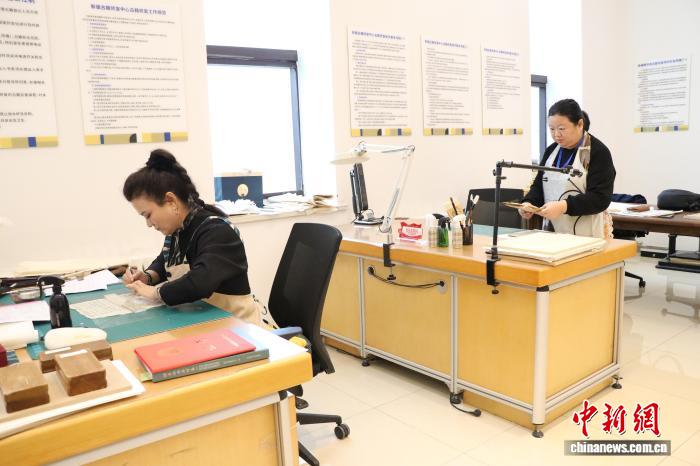
Core Viewpoint - The article discusses the efforts in Xinjiang to preserve and revitalize ancient texts, highlighting the importance of ancient book restoration and its cultural significance [1][5]. Group 1: Ancient Book Restoration Efforts - The Xinjiang Ancient Book Restoration Center aims to guide and enhance the restoration work of ancient texts across various institutions in Xinjiang, focusing on training talents in multi-lingual ancient book restoration [4][5]. - In 2023, the center's key project involves the restoration of the Ming Dynasty ancient book "Selected Poems of Famous Figures," which is over 700 years old and has been included in the second batch of the National Precious Ancient Books Directory [1][4]. - Since its establishment, the center has completed the restoration of 48 ancient texts, totaling over 6,000 leaves [4]. Group 2: Cultural Significance and Community Engagement - The Xinjiang Library houses over 124,000 ancient texts in various languages, including many rare items, reflecting the social life and historical interactions of diverse ethnic groups in the region [4][5]. - Recent initiatives include organizing ancient book protection courses in schools and community activities to raise public awareness and appreciation of ancient texts [5]. - The establishment of a national-level ancient book restoration training center in Xinjiang in 2024 will provide a new platform for cultivating restoration talents [5].
“哪怕只有一个学生,也要办下去”(一辈子一件事)
Ren Min Ri Bao· 2025-10-08 22:11
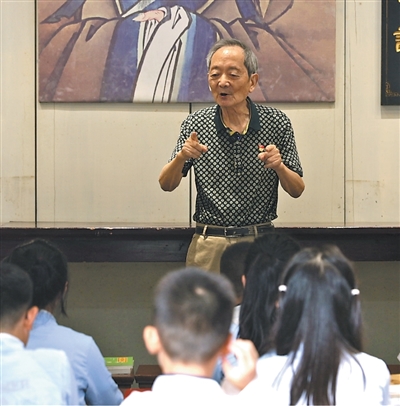
Core Viewpoint - The article highlights the dedication of Hua Jieyou, a retired teacher, who has been instrumental in promoting traditional Chinese culture through his reading class at Donglin Academy for over 22 years, impacting thousands of children [3][6][10]. Group 1: Background and Initiatives - Hua Jieyou, born in 1935 in Wuxi, Jiangsu, established the first youth palace in Wuxi and has been committed to education since graduating from Wuxi Normal School in 1954 [2][3]. - In 2003, at the age of 68, he founded the "Langyu Reading at Donglin" class, which has since instilled the seeds of traditional Chinese culture in tens of thousands of children [3][4]. - The reading class is held in the historic Donglin Academy, where children engage in reciting classics like "The Analects" under Hua's guidance [3][6]. Group 2: Teaching Methodology and Philosophy - Hua employs innovative teaching methods, transforming ancient texts into relatable stories for children, making the classics accessible and engaging [5][8]. - He emphasizes experiential learning, often taking students outdoors to connect with nature while learning, thus fostering a joyful and interactive educational environment [7][8]. - Hua believes in the importance of continuous learning and adaptation in education, encouraging both students and parents to participate actively in cultural transmission [11][12]. Group 3: Community Impact and Legacy - The reading class has attracted a diverse group of students, including both Chinese and foreign children, demonstrating its broad appeal [6][10]. - Hua's approach has inspired former students to return as teachers, ensuring the continuity of his educational philosophy and the transmission of traditional culture [12]. - He actively seeks to mentor new educators, emphasizing the need for passion and creativity in teaching traditional culture to the younger generation [10][11].
镜观·回响丨以文化人 以文育人
Xin Hua She· 2025-10-08 12:50
Group 1 - The core viewpoint emphasizes the importance of both material and spiritual civilization for national strength and cultural revival [1] - Cultural construction focuses on people and aims to enhance their cultural identity [7] - The excellent traditional culture of China is seen as the spiritual lifeline of the nation, with increasing recognition among the public through educational initiatives [8] Group 2 - Various schools and communities are integrating traditional cultural courses and activities to foster appreciation and understanding of heritage among youth [9][10] - Red culture is being utilized in educational settings to instill values and historical awareness in students, contributing to the cultivation of responsible citizens [12][13][15] - New technologies and innovative formats are reshaping cultural education, enhancing engagement and understanding of cultural heritage [16][17][20][21]
指尖上的非遗光影里的戏韵共赴一场传统文化盛宴
Shan Xi Ri Bao· 2025-10-08 01:41
Core Insights - The event at the Shaanxi Provincial Cultural Center showcased a blend of traditional culture and modern trends, attracting numerous visitors during the National Day and Mid-Autumn Festival celebrations [1][2] - The activities included interactive experiences such as non-heritage courses, folk song performances, and shadow puppet shows, aimed at enhancing public engagement with Chinese traditional culture [1][2] Group 1: Event Highlights - The non-heritage experience center featured various activities, including a "knotting skills" workshop led by a representative inheritor, which allowed participants to learn about the history and cultural significance of Chinese knots [1] - Children participated in a "mooncake-themed fan painting" class, creating unique designs that reflected the festive spirit of the Mid-Autumn Festival [1] - Performances of Shaanxi folk songs and Huashan magic captivated audiences, showcasing the diversity of Shaanxi culture through different musical styles [1][2] Group 2: Audience Engagement - The event attracted families, with participants expressing enjoyment from hands-on experiences such as flower arrangement and dough modeling, highlighting the immersive nature of the activities [2] - The theme of the event, "Moon Round, Country Prosperous - Non-Heritage Fun Garden Party," was designed to promote understanding and appreciation of traditional Chinese culture among the youth [2] - The event was organized by the provincial cultural center and the non-heritage experience center, running until October 8, aiming to provide an engaging and educational experience for visitors [2]