换电模式

Search documents
宁德时代(300750):业绩稳健增长,盈利韧性强劲
HTSC· 2025-04-15 09:01
证券研究报告 宁德时代 (300750 CH) 业绩稳健增长,盈利韧性强劲 | 华泰研究 | | | 季报点评 | | --- | --- | --- | --- | | 2025 年 | 4 月 | 15 日│中国内地 | 新能源及动力系统 | 公司公布一季度业绩:收入 847.05 亿元,同比+6.18%,环比-17.74%;归 母净利润 139.63 亿元,同比+32.85%,环比-5.30%。公司 Q1 业绩同比增 长稳健,环比下滑系季节性因素,我们继续看好公司新技术与全球化布局助 力公司提升全球市场竞争力,同时带动盈利能力稳中有升。维持买入评级。 Q1 业绩稳健增长,现金情况表现亮眼 25Q1 公司盈利水平稳步提升,毛利率/归母净利率分别为 24.41%/16.48%, 同比+1.16/+3.31pct,主要受益于产品结构优化以及降本、费用管控。期间 费用方面,25Q1 财务费用-22.88 亿元,同比-831.10%,主要系持有的欧元、 美元等外币货币性项目受汇率变动影响。经营性现金流强劲,达 328.68 亿 元,同比+15.91%;现金储备充裕、期末货币资金达 3213.24 亿元。 Q1 电 ...

透视宁德时代换电生态:交通强国战略下的绿色革命
格隆汇APP· 2025-04-14 09:29
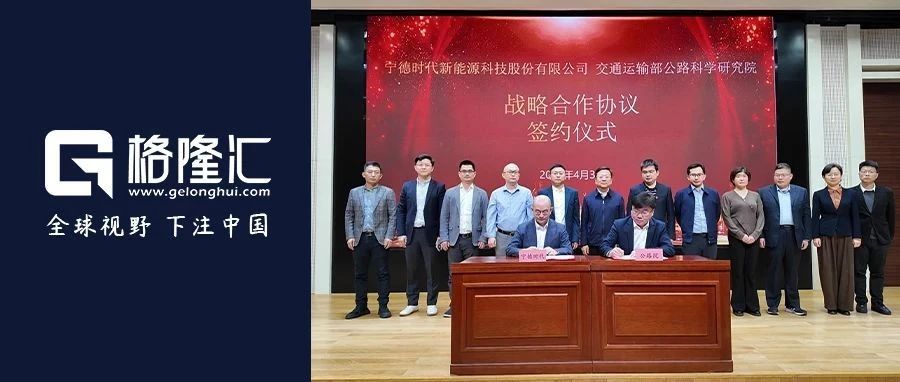
Core Viewpoint - The collaboration between CATL and the Ministry of Transport's Highway Research Institute marks a significant step in China's electric vehicle industry, particularly in the battery swapping sector, driven by both technological innovation and policy support [1][2][16] Group 1: Strategic Collaboration - The partnership focuses on multiple aspects including research on battery swapping technology, policy preparation, standard system construction, and scenario applications, aligning with the Ministry of Industry and Information Technology's guidance on promoting battery swapping models [1][2] - This collaboration aims to create an ecosystem for battery swapping technology, facilitating the integration of policy, innovation, and industry chains, thus forming a comprehensive cooperation platform [1][3] Group 2: Market Dynamics - The battery swapping model is seen as a crucial component of the energy revolution and transportation transformation, fostering a new industrial landscape that benefits multiple stakeholders [1][7] - The commercial vehicle sector, which currently has a low electrification rate compared to passenger vehicles, is identified as a key area for growth, with the need for effective solutions to accelerate the electrification of commercial vehicles [7][15] Group 3: Infrastructure Development - The collaboration will enhance the networked construction of infrastructure, including the development of a nationwide battery swapping facility layout plan to improve energy supply capabilities along major transport routes [3][4] - The goal is to establish at least 500 battery swapping stations this year, with a long-term target of expanding to 10,000 stations, which could unlock trillion-level industry opportunities [4][12] Group 4: Economic and Environmental Impact - The battery swapping network is expected to reconstruct the spatial relationship between energy and logistics, integrating renewable energy resources with logistics demands, thus contributing to energy security and carbon reduction [9][10] - The anticipated market size for China's battery swapping industry is projected to reach 133.4 billion yuan by 2025, with significant growth rates across various segments [12][14] Group 5: Competitive Advantage - CATL's battery swapping solutions are positioned to benefit from compliance premium and technical leadership, establishing a three-dimensional barrier that enhances its competitive edge in the market [5][15] - The standardization of battery swapping modules is expected to provide a new solution for the electrification of commercial vehicles, positioning CATL to capitalize on the emerging blue ocean market [15][16]

【政策综述】关于对2025年两会汽车界代表委员促进新能源汽车高质量发展建议的综合分析
乘联分会· 2025-04-09 07:57
Core Viewpoint - The article emphasizes the Chinese government's strong commitment to the development of the new energy vehicle (NEV) industry, highlighting various policies and initiatives aimed at promoting high-quality growth in this sector [4][5][14]. Group 1: Government Policies and Initiatives - In 2024, the production of new energy vehicles reached over 13 million units, and the government plans to implement special actions to boost consumption, including a long-term special bond of 300 billion yuan to support the replacement of old consumer goods [4]. - Seven key policies were introduced in 2024 to promote NEVs, including trade-in incentives, government procurement requirements, tax exemptions, and pilot projects for electric public transport [4][5]. - The government has set a target for public sector vehicle electrification, with pilot programs in 15 cities, aiming to save over 1.4 million tons of fuel and reduce carbon emissions by 4.5 million tons annually [10]. Group 2: Financial Incentives for Consumers - New policies provide special incentives for consumers purchasing NEVs, including increased subsidies for replacing old public buses and personal vehicles, with subsidies reaching up to 8,000 yuan per bus and 2,000 yuan per passenger vehicle [6][8]. - The exemption of vehicle purchase tax for NEVs will continue through 2025, with a maximum exemption of 30,000 yuan per vehicle [8]. - The government has also introduced a differentiated subsidy scheme for scrapping old commercial vehicles, with subsidies varying based on vehicle type and emissions standards [7]. Group 3: Technological Development and Infrastructure - The article discusses the importance of developing smart connected vehicles, with recommendations for increased funding for core technology research and the establishment of a legal framework for autonomous driving [15]. - There is a focus on enhancing charging infrastructure, with suggestions for improving policies, technical standards, and planning for charging stations, especially in rural areas [16]. - The promotion of battery swapping models is highlighted as a solution to charging challenges, with calls for unified standards and increased policy support [17][18]. Group 4: Recycling and Sustainability - The government has approved an action plan to establish a comprehensive battery recycling system, addressing the growing need for efficient recycling as the number of retired batteries increases [19][20]. - Recommendations include creating specific regulations for battery recycling, enhancing market supervision, and promoting technological innovation in the recycling industry [20]. Group 5: Export and Consumption Policies - Suggestions for boosting NEV exports include enhancing technological innovation, building a common database for overseas markets, and improving export policies and service systems [21]. - The article advocates for a long-term mechanism to encourage automobile consumption, including reducing vehicle purchase tax rates and easing restrictions in purchase-limited cities [22].
“宁王”、蔚来联手换电 比亚迪推兆瓦闪充,补能之战的炮火声已经传来
Zhong Guo Qi Che Bao Wang· 2025-04-07 07:52
Core Viewpoint - The collaboration between CATL and NIO aims to establish the world's largest battery swapping network and promote unified industry standards, marking a new phase of high-quality development in the electric vehicle sector [2][3] Group 1: Strategic Collaboration - NIO and CATL will leverage their technological, managerial, and brand resources to create a leading battery swapping service network, enhancing convenience for electric vehicle users [3] - CATL plans to invest up to 2.5 billion yuan in NIO to strengthen their strategic partnership [3] - The battery swapping network will adopt a "dual network" model to improve the efficiency of battery swapping services [3] Group 2: Expansion Plans - NIO aims to achieve battery swapping coverage in over 1,200 county-level administrative regions by June 30, 2025, and expand to over 2,300 regions by December 31, 2025 [4] - The partnership will also focus on developing national standards for battery swapping technology, promoting cross-brand and cross-model battery compatibility [4] Group 3: Charging Technology Developments - BYD has introduced a megawatt fast charging technology that can reach a peak power of 1 MW, significantly improving charging efficiency [5][6] - BYD plans to establish 4,000 megawatt fast charging stations, with an estimated total investment of 4 billion yuan [7] - The megawatt fast charging stations will face technical challenges, including grid load capacity and the need for advanced charging equipment [5][6] Group 4: Market Dynamics - The competition between battery swapping and fast charging technologies is intensifying, with both models expected to coexist and serve different market needs [8][9] - As the electric vehicle market matures, differentiated services will emerge, catering to various user scenarios and preferences [8][9] - NIO's partnership with CATL is expected to accelerate the development of the battery swapping model, positioning it as a mainstream energy replenishment method [9]



中国石化宁德时代要建万座换电站,对于车主们这究竟意味着什么?
Sou Hu Cai Jing· 2025-04-04 04:51
Core Viewpoint - China Petroleum & Chemical Corporation (Sinopec) is entering a strategic partnership with Contemporary Amperex Technology Co., Limited (CATL) to develop a nationwide battery swapping network, marking a significant collaboration between traditional energy and new energy sectors [1][5]. Group 1: Strategic Partnership - Sinopec and CATL signed a framework agreement to deepen their long-term strategic cooperation, aiming to build at least 500 battery swapping stations this year and a total of 10,000 in the future [1][5]. - This partnership represents a milestone in the transportation energy sector, symbolizing a significant integration of traditional and new energy [1][5]. Group 2: Sinopec's Energy Transition - Sinopec is transitioning towards becoming a comprehensive energy service provider, focusing on "oil, gas, hydrogen, electricity, and services" [2][3]. - The company has established 30,000 comprehensive energy stations and nearly 100,000 charging terminals, serving over 20 million customers daily [2][3]. Group 3: Battery Swapping Model - The battery swapping model is strategically valuable for Sinopec, positioned as a "new infrastructure" for energy transition [3][4]. - Sinopec aims to become a leading charging operator and direct sales platform, with over 4,000 battery swapping stations built in 2024 alone [3][4]. Group 4: Economic Indicators - Investment and operational cost comparisons between gas stations and battery swapping stations indicate varying profitability and recovery periods, with battery swapping stations showing a quicker return on investment [4]. - The internal rate of return (IRR) for battery swapping stations is projected to be between 10%-15%, benefiting from policy subsidies [4]. Group 5: Industry Outlook - The battery swapping industry is expected to exceed 200 billion yuan by 2025, with a global market size of 200 billion USD by 2030 [7][8]. - The integration of light storage and charging systems is anticipated to become mainstream, supported by strong policy backing and local pilot projects [8].

“油”“电”联手!中国石化与宁德时代未来计划建设一万座换电站
Jing Ji Guan Cha Wang· 2025-04-02 12:41
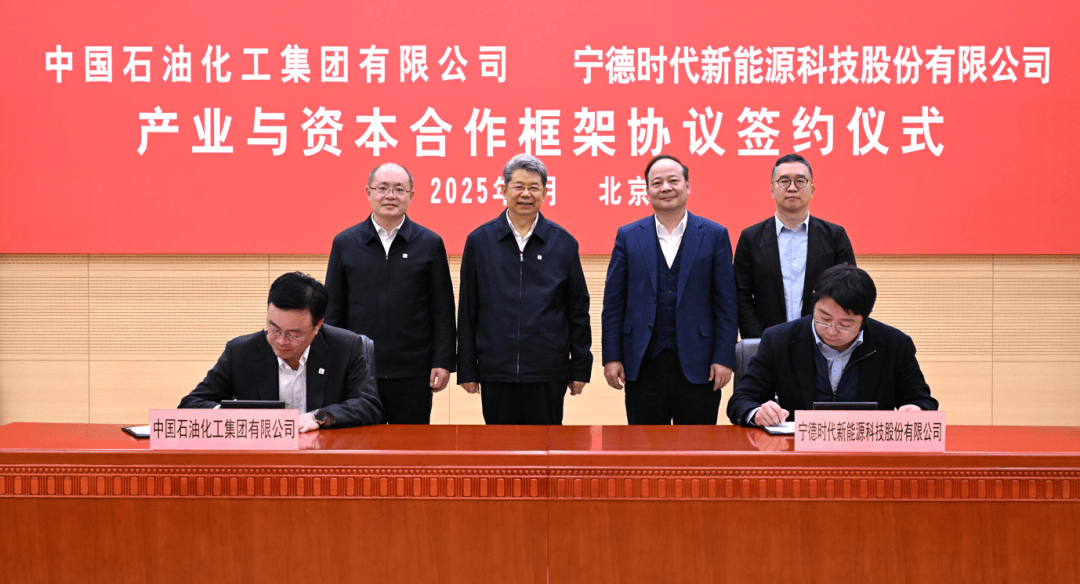
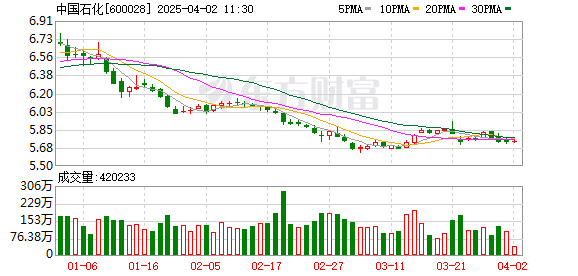
宁德时代换电业务总经理杨峻表示:"汽车行业全面电动化的趋势越发明朗,市场正在呼吁更完善的能 源补给网络。本次和中国石化合作,我们希望实现'换电如加油'。这就是换电行业共同的使命和愿 景。" 经济观察报 记者 郑晨烨 2025年4月2日,经济观察报记者从宁德时代(300750)处获悉,中国石化 (600028)(600028.SH)与宁德时代(300750.SZ)在北京签署了产业与资本合作框架协议,双方将深 化战略合作,共同推进全国换电网络的建设。 根据协议,双方计划在今年内建设至少500座换电站,长期目标是扩展至10000座。此外,双方计划 以"产业合作+资本合作"的方式,共同构建全国换电网络生态和标准建设,统一管理运营换电资产。 此前,宁德时代与中国石化在综合能源站建设运营、储能业务、能源产品和新材料、科技创新等方面已 建立良好合作关系,下一步将充分发挥各自优势,进一步就换电领域拓展合作空间。 中国石化董事长马永生表示:"公司将充分发挥自身在能源供应、网络布局和客户服务等方面的优势, 与宁德时代共同探索技术创新、模式创新,携手打造全国性综合能源基础设施。" 值得注意的是,早在2024年3月,中国石化就曾与宁 ...
宁德时代换电牵手能源“国家队”
高工锂电· 2025-04-02 11:07
Core Viewpoint - CATL aims to build no less than 500 battery swap stations this year, with a long-term goal of expanding to 10,000 stations, marking a significant step in establishing a comprehensive battery swap ecosystem in collaboration with Sinopec [1][2]. Group 1: Strategic Partnerships - CATL has signed a cooperation framework agreement with Sinopec to deepen their long-term strategic partnership, focusing on building a nationwide battery swap ecosystem that supports the "dual carbon" goals [2][5]. - The collaboration leverages Sinopec's extensive gas station network to establish battery swap stations, optimizing land resources and enhancing entry into the new energy service market [4][5]. Group 2: Industry Transformation - The battery swap model is a crucial part of CATL's transition from a pure battery manufacturer to an energy service provider, allowing for battery sharing and reducing vehicle ownership costs through battery leasing and swap services [4][6]. - This model promotes efficient energy replenishment and battery recycling, contributing to reduced energy consumption and carbon emissions, thus facilitating low-carbon transformation in the transportation and energy sectors [4]. Group 3: Market Expansion - CATL's battery swap ecosystem is rapidly expanding, with partnerships established with several major automotive manufacturers to develop compatible vehicles, including models from Chang'an, Aion, and FAW [6]. - The collaboration with Sinopec marks a new phase in the systematic construction of the battery swap ecosystem, aiming to create a nationwide integrated energy infrastructure [7].
宁德时代又成立四家公司!
起点锂电· 2025-04-02 10:43
01 时代电服作用凸显 四家公司背后均是时代电服,预示着今年宁德时代换电市场 "作战"开始进入纵深阶段。 今年以来宁德时代不断成立新公司,三月份共计有十余家,近一周有 4 家。 第一家为沈阳时代电服科技有限公司,注册资本 1000 万元,经营范围有新能源汽车整车 / 换电设施 / 附件销售;电动汽车充电基础设施运 营等,由宁德时代间接全资持股。 第二家为北京时代电服科技有限公司,注册资本 5000 万元,经营范围有新能源汽车整车 / 换电设施 / 附件销售;电动汽车充电基础设施运 营等,由宁德时代旗下的时代电服全资持股。 第三家为济南时代电服新能源科技有限公司,注册资本 500 万元,经营范围有电力高效节能研发、新能源汽车整车 / 换电设施销售等,同样 由时代电服全资持股。 第四家为南通润时新能源有限公司,注册资本 874 万人民币,经营范围有电力高效节能技术研发、新能源汽车整车 / 换电设施销售等,也是 时代电服全资持股。 宁德时代曾经发过 "豪言壮志"称要在 2025 年建设 1000 座换电站,覆盖 30 座以上城市,去年还推出了巧克力换电,时代电服自 2021 年成立后一直较为低调,如今巧克力换电已经 ...
中国石化携手宁德时代 打造万站换电“新基建”
Xin Hua Cai Jing· 2025-04-02 04:42
Core Viewpoint - China Petroleum & Chemical Corporation (Sinopec) and Contemporary Amperex Technology Co., Ltd. (CATL) have signed a framework agreement to deepen their long-term strategic cooperation, focusing on building a nationwide battery swapping network and infrastructure for new energy vehicles [1][2]. Group 1: Partnership Details - The agreement aims to construct at least 500 battery swapping stations this year, with a future goal of 10,000 stations to enhance energy services for new energy vehicle owners [1][2]. - Sinopec has a vast network of 30,000 comprehensive energy stations and over 28,000 convenience stores, serving more than 200 million customers daily [2][3]. - CATL is the world's largest supplier of power batteries and has established partnerships with major automotive manufacturers to launch multiple battery-swappable vehicle models [2][3]. Group 2: Industry Impact - The battery swapping model is recognized as a key solution to alleviate charging anxiety and promote low-carbon development in the transportation sector [1][2]. - The collaboration signifies a new phase in the systematic construction of the battery swapping ecosystem, integrating resources from both companies to accelerate the development of new infrastructure [2][3]. - The partnership will also focus on standardization in energy and electricity, aiming to contribute to the high-quality development of China's new energy vehicle industry and serve as a model for global energy transition [2][3].
2025,蔚来生死攸关
城市财经· 2025-04-02 03:42
Core Viewpoint - NIO's 2024 financial report reveals a net loss of 22.4 billion RMB, with an average loss of approximately 100,000 RMB per vehicle sold, despite a 38.7% increase in vehicle deliveries and an 18.2% rise in revenue [1][2][29]. Group 1: Financial Performance - In 2024, NIO's vehicle delivery reached 222,000 units, generating revenue of 65.73 billion RMB, but the net loss expanded by 8.1% year-on-year [1][29]. - NIO's gross margin was 9.8%, significantly lower than the ideal 20.5% and compared to competitors like Li Auto and Xpeng, which reported higher margins [25][29]. - Cumulative net losses since 2018 have reached 109.3 billion RMB, indicating a persistent lack of profitability [27]. Group 2: High Investment and Strategic Challenges - NIO's R&D expenses for 2024 were 13.04 billion RMB, accounting for nearly 20% of total revenue, reflecting a high investment strategy that has not yielded proportional returns [22][25]. - The company has invested heavily in its battery swap network, with over 3,000 stations built, but this has led to significant operational costs that negatively impact gross margins [34][35]. - NIO's multi-brand strategy aims to cover various market segments but faces challenges in execution, particularly with the launch of the new brands struggling to gain traction [42][46]. Group 3: Market Position and Competitive Landscape - Despite achieving a record delivery number, NIO's sales and administrative expenses grew by 22.8% to 15.74 billion RMB, far outpacing revenue growth [32][66]. - NIO's average sales and administrative cost per vehicle sold was 71,000 RMB, significantly higher than its competitors, indicating inefficiencies in cost management [32][66]. - The competitive landscape is tightening, with Tesla and BYD establishing strong market positions, putting pressure on NIO's high-end market strategy [47][48]. Group 4: Future Outlook and Strategic Adjustments - NIO plans to reduce costs and improve efficiency by closing underperforming stores and focusing on high-value cities, alongside debt reduction strategies [70][71]. - The company aims for a delivery target of 41,000 to 43,000 vehicles in Q1 2025, which would represent a year-on-year growth of 36% to 43% [71]. - NIO's future hinges on balancing its technological ambitions with the need for financial sustainability in a competitive market [71][72].