
边缘AI

Search documents
英特尔的AI芯片战略,变了?
半导体行业观察· 2025-07-15 01:04
Core Viewpoint - Intel's CEO, Pat Gelsinger, stated that the company is "too late" in catching up in the AI training sector, acknowledging Nvidia's strong market position [3] Group 1: AI Market Position - Intel is shifting its focus from AI training to inference, particularly in edge computing and agentic AI, as predictions suggest the inference market will eventually surpass the training market [3] - The current AI training data centers are dominated by Nvidia (H100) and AMD (MI300X) GPUs, with major cloud operators like Google, Amazon, and Microsoft developing their own AI chips [3] Group 2: Company Restructuring - Intel is undergoing a restructuring process, which includes significant layoffs, with reports indicating up to 2,392 layoffs in Oregon and around 4,000 in other states [4] - The layoffs will affect various positions, including hundreds of technical staff and engineers, and represent about 20% of Intel's workforce in Oregon [4] - Following the layoffs, Intel's workforce will decrease by approximately 16,000, with a projected market value of $102 billion by July 2025 [4]



博通集成收近千万元政府补贴 董事长回应业绩亏损原因
Zheng Quan Shi Bao Wang· 2025-07-08 12:55
Core Viewpoint - Broadcom Integrated (博通集成) has been facing continuous losses in recent years, primarily due to the impact of macroeconomic conditions on the downstream market demand in the consumer electronics sector. The company received a government subsidy of 9.3708 million yuan, which accounts for approximately 37.9% of its audited net profit attributable to shareholders over the past year [1]. Group 1: Financial Performance - The company reported a net profit of -24.72 million yuan last year, indicating ongoing financial struggles [1]. - In the latest performance briefing, the company acknowledged a significant reduction in net profit loss by about 70% year-on-year, despite an increase in revenue [1]. Group 2: Inventory Management - Broadcom Integrated recorded an inventory impairment loss of 21.7404 million yuan for the fiscal year 2024, which represents 87.93% of the audited net profit [2]. - The company is actively working on inventory management and has significantly reduced its inventory impairment provisions compared to the end of 2023 [2]. Group 3: Project Adjustments - The company announced changes and delays in some fundraising projects, shifting focus from smart transportation and intelligent driving to edge AI processor product development, with an investment amount of 458 million yuan [2][3]. - The adjustment in project focus is due to the need for continuous product technology upgrades in response to macroeconomic conditions and changes in industry policies [3]. Group 4: R&D Focus - The company is concentrating on developing low-power, high-performance, and secure edge AI chips and solutions for smart home, wearable devices, and automotive electronics [3]. - Broadcom Integrated has already achieved partial mass production of its IoT-related chips and has also produced several Beidou satellite navigation chips with independent intellectual property rights, applicable in various markets [3].

DDR4火爆 下游存储器模组厂沾光
Jing Ji Ri Bao· 2025-07-07 23:14
Group 1 - DDR4 prices have surged, benefiting upstream chip suppliers like Nanya Technology and Winbond, as well as downstream memory module manufacturers such as ADATA, Apacer, and I-DATA, leading to strong performance in June [1] - ADATA reported June revenue of NT$46.98 billion, marking a 12.69% month-over-month increase and a 59.05% year-over-year increase, achieving the highest monthly revenue in over 15 years [1] - The company anticipates continued growth momentum into Q3, supported by increased customer inventory demand and improving gross margins compared to Q1 [1] Group 2 - I-DATA's June revenue exceeded NT$10 billion, reaching NT$10.3 billion, with a year-over-year increase of 37.52%, driven by stable industrial control projects and initial success in edge AI deployment [1][2] - Looking ahead to the second half of the year, I-DATA has prepared inventory to maintain supply stability amid global economic uncertainties, expecting performance to surpass the first half due to project implementation and growing edge AI demand [2] - Apacer's revenue for the first half of the year reached NT$47.61 billion, reflecting a year-over-year increase of 24.31%, as major manufacturers announced DDR4 production halts, leading to a surge in urgent orders to fill potential demand gaps [2]
中国台湾成熟制程 不跟着拼量
Jing Ji Ri Bao· 2025-07-01 23:16
Group 1 - The core viewpoint highlights that while Chinese mainland wafer foundries are aggressively expanding capacity, Taiwanese manufacturers like TSMC are focusing on advanced processes and maintaining dominance in the global market by securing orders from major clients such as Apple, AMD, NVIDIA, and Qualcomm [1] - TSMC continues to lead in advanced process technology, while other Taiwanese foundries like UMC, GlobalFoundries, and Powerchip are forming alliances with international companies or enhancing niche products to avoid direct price competition with Chinese counterparts [1] - UMC is collaborating with Intel to develop 12nm technology in the U.S. and is considering entering advanced processes with a focus on 6nm technology for producing advanced WiFi, wireless RF, Bluetooth components, AI accelerators, and core processing chips for automotive applications [1] Group 2 - GlobalFoundries has been developing special process applications, focusing on silicon carbide (SiC) and gallium nitride (GaN) technologies, with plans to start mass production of 8-inch SiC wafers by the second half of 2026, targeting industrial control and consumer products initially, and later expanding into electric vehicles, AI data centers, and green energy applications [1] - Powerchip is gradually moving away from low-margin processes and seeking high-value product lines, having initiated the Wafer-on-Wafer (WoW) 3D stacking technology since 2019, particularly suitable for edge AI, automotive electronics, and high-performance computing (HPC) [2] - Motech is clearly positioning itself in the niche application market, focusing on high flexibility and customized orders, thereby strengthening its relationships with automotive and industrial control clients [2]

90%展位已售罄!边缘AI软硬件方案创新汇聚!
半导体行业观察· 2025-06-27 01:20
Group 1 - The core event is the elexcon Shenzhen International Electronics Show, scheduled for August 26-28, 2025, focusing on the electronics, semiconductor manufacturing, and embedded industries [1][11][12] - The theme of the exhibition is "All for AI, All for GREEN," aiming to integrate electronic design and embedded technology, providing a one-stop learning and selection platform for engineers and decision-makers [12][30] - The exhibition will feature over 400 top global technology companies and is expected to attract more than 30,000 professional visitors [11][15] Group 2 - The global edge AI market is projected to grow from $12.5 billion in 2024 to $25 billion in 2025, with hardware devices exceeding 2 billion units and a chip market size of $73 billion [3] - The compound annual growth rate (CAGR) for the global edge AI market from 2025 to 2034 is expected to reach 24.8% [3] - Key applications driving edge AI growth include industrial vision technology, predictive maintenance, autonomous driving assistance, and wearable devices for remote monitoring [3][4] Group 3 - The architecture for edge AI systems must focus on four core elements: hardware platform, software stack, network connectivity, and algorithm models [4][6] - Hardware platforms need to balance computational power, energy consumption, and thermal management, while software stacks can utilize lightweight deployment environments and AI frameworks for optimization [6][7] - Network connectivity should support various protocols like 5G, Wi-Fi, and LoRaWAN to meet different application requirements [6][8] Group 4 - The exhibition will showcase innovations in hardware and software architecture for edge AI from companies like Arm, Advantech, and Renesas [10][12] - There will be three major application zones: AI toys, embodied robots, and AI glasses, highlighting the latest breakthroughs in embedded systems [24][26][27] - The event will host over 15 technical forums and seminars, including the 7th China Embedded Technology Conference and AI Power Technology Conference [29][33]

边缘AI的下一跳:迈向"智能体操作系统"
3 6 Ke· 2025-06-25 02:35
我们似乎距离这样的场景一望可及:在某一天的夜色中,一架无人巡检机在高空低鸣,摄像头精准锁定了主控泵房的机械抖动异常。与此同时,地面上的 四足机器人接收到异常码,避开障碍物迅速前往现场。两者并非通过云端调度,而是在本地通过"边缘智能体操作系统"自组织形成任务协同:无人机负责 视觉识别与路径分析,地面机器人完成执行与反馈。整个过程无需人的干预,也无需连接远程云平台。 这不是科幻,而是边缘AI从推理引擎迈向协作智能体的真实演进。 过去几年里,边缘AI的演进路径清晰可见——从最初的TinyML微型机器学习探索低功耗AI推理,到边缘推理框架的落地应用,再到平台级AI部署工具的 兴起,以及最近大热的垂类模型,我们已经实现了"让模型跑起来"的任务。 然而,边缘AI的下一步,不是继续堆叠更多模型、更多参数,而是回答一个更根本的问题:当AI模型跑起来之后,它们能否协作起来? 这一局限,正是边缘AI走向更高智能形态的"隐形天花板"。 真正的边缘智能,不止于做出判断,而是要做出决策、组成系统、执行任务。这正是边缘AI从静态推理向动态智能体演进的起点。 我们需要的不再是一个更大的模型,而是一群能协作的模型。可以认为,模型让设备看见世 ...
【金牌纪要库】今年DDR4存储芯片涨幅已达50%-80%,三大存储厂商相继减产将留下巨大市场真空,Ta们有望短时间获得市场份额
财联社· 2025-06-20 01:47
Group 1 - The DDR4 memory chip prices have surged by 50%-80% this year, leading to significant production cuts by the three major storage manufacturers, which will create a substantial market vacuum, allowing these companies to gain market share and generate considerable cash flow [1] - As the industry transitions to DDR5, the demand for clock drivers (RCD) and data buffer (DB) chips is expected to strengthen, with one company being a "dual oligopoly" in the industry [1] - Customized 3D DRAM for edge AI may create a new high-value market, with one company being a key supplier in the industry chain [1]

边缘AI国产新突破,小设备也能“跑”百亿级参数大模型
Bei Jing Ri Bao Ke Hu Duan· 2025-06-11 10:43
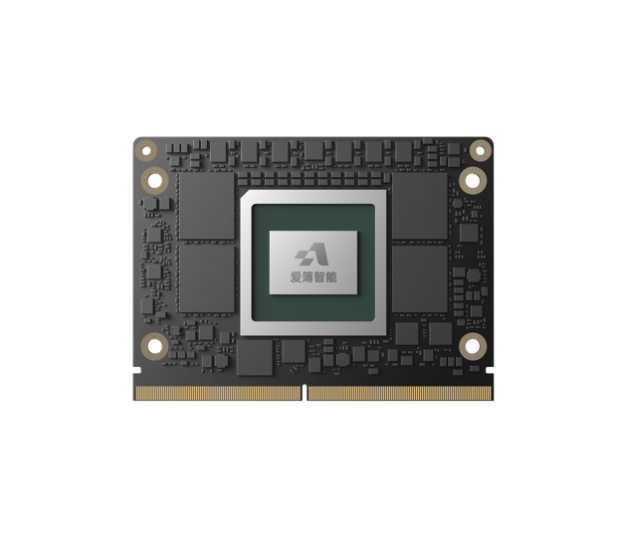
Core Viewpoint - The acceleration of digital transformation emphasizes the importance of autonomous and controllable computing power, with the launch of the E300 AI computing module aimed at edge scenarios being a significant development in this area [1][2]. Group 1: Product Development - The E300 AI computing module achieves a breakthrough in domestic computing power with 50 TOPS (50 trillion integer operations per second) and allows for the lightweight deployment of a 320 billion parameter model locally [1][2]. - The E300 is equipped with a self-developed domestic AI SoC chip AB100, and its modular design condenses powerful computing capabilities into a module smaller than 10 cm, making it easier to deploy in space-constrained edge devices [2]. Group 2: Market Applications - The E300 supports edge inference for mainstream open-source large models such as DeepSeek, Qwen, and Llama, enabling local deployment of large language models and supporting hundreds of visual models [4]. - The local data processing and private deployment capabilities of the E300 enhance data privacy and system security, catering to high-security and high-reliability AI application requirements in critical sectors like industry, energy, water conservancy, meteorology, government, and education [4].
博通集成: 博通集成2024年年度股东大会会议资料
Zheng Quan Zhi Xing· 2025-06-11 09:31
Core Viewpoint - The company reported a revenue of 828.36 million yuan in 2024, representing a year-on-year growth of 17.49%, while the net profit attributable to shareholders was a loss of 24.72 million yuan, a significant reduction in losses by 73.70% [2][11]. Group 1: Company Overview - The company focuses on the development of wireless communication chips, particularly in the fields of Wi-Fi, Bluetooth, and high-precision positioning [2][6]. - The company has launched several new products, including Wi-Fi 6 and Bluetooth SoC chips, which have been well received in the market [6][9]. - The company has established a strong market presence, becoming a leading supplier of Wi-Fi MCU chips and achieving significant sales in various sectors, including smart home appliances and automotive electronics [9][10]. Group 2: Financial Performance - The company achieved a total revenue of 828.36 million yuan, with a gross profit margin of 34.01%, indicating a healthy financial performance despite the net loss [13][14]. - The company's revenue from the domestic market reached 530.05 million yuan, while revenue from overseas markets decreased due to intense competition [14][15]. - The company’s R&D expenses amounted to 273.10 million yuan, accounting for 32.99% of total revenue, reflecting a strong commitment to innovation [11][12]. Group 3: Governance and Management - The board of directors has held multiple meetings to ensure compliance with legal regulations and to promote effective governance [4][29]. - Independent directors have actively participated in board meetings and committees, ensuring that decisions are made in the best interest of all shareholders, particularly minority shareholders [18][21]. - The company has implemented a robust internal control system to manage risks and ensure compliance with relevant laws and regulations [12][27]. Group 4: Future Outlook - The company plans to continue focusing on the development of wireless connection chips and artificial intelligence platforms to enhance its market share and operational efficiency [17][29]. - The company aims to strengthen its supply chain relationships and optimize its operational processes to support future growth [12][17]. - The company is committed to improving its corporate governance and enhancing the quality of information disclosure to maintain investor confidence [17][28].
泰凌微:无线连接芯片技术领航者,AIoT全场景物联网应用打开成长空间-20250611
Soochow Securities· 2025-06-11 00:23
Investment Rating - The report gives a "Buy" rating for the company, marking its first coverage [3][4]. Core Insights - The company, TaiLing Microelectronics, is a leader in low-power wireless IoT system-on-chip (SoC) technology, focusing on multi-protocol connectivity solutions that cater to smart home, wearable devices, and industrial IoT applications. Its products are widely adopted by major clients like Xiaomi and Alibaba, showcasing strong commercialization capabilities [2][3]. - The company has established a comprehensive low-power wireless IoT technology system through years of R&D, enhancing its competitive edge in the market. It has introduced new core technologies in 2024, further solidifying its position in BLE, Zigbee, and Thread protocols, while also expanding into edge AI applications [2][3]. - The company is diversifying its product matrix across high-value application scenarios, including smart audio, healthcare, and automotive electronics, which are expected to drive significant revenue growth in the coming years [2][3]. Summary by Sections Company Overview - TaiLing Microelectronics was founded in 2010 and specializes in the R&D, design, and sales of low-power wireless IoT chips. It has become a representative enterprise in this niche, with a complete range of products that meet international standards [16][19]. Financial Analysis - In 2023, the company achieved a revenue of 636.09 million yuan, a year-on-year increase of 4.4%. The revenue is projected to grow to 844.03 million yuan in 2024, reflecting a 32.69% increase, driven by a recovery in market demand and increased shipments from major clients [28][3]. Technology and Product Development - The company has developed a robust core technology system for low-power wireless IoT, covering chip design, protocol stack development, and large-scale networking. It has also introduced innovative products that help clients quickly implement solutions [43][44]. - The company’s product offerings include low-power Bluetooth chips, Zigbee chips, and multi-mode chips, which are recognized for their performance and reliability in various applications, including smart home and healthcare [20][46]. Market Position and Growth Potential - The company is well-positioned in the market with a diverse product matrix that spans smart home, healthcare, and automotive sectors. Its proactive approach in these high-growth areas is expected to enhance its revenue potential significantly [2][3].
