
双碳战略

Search documents
总投资1.2万亿!电力央企再添“猛将”
Xin Hua Wang· 2025-07-21 01:03
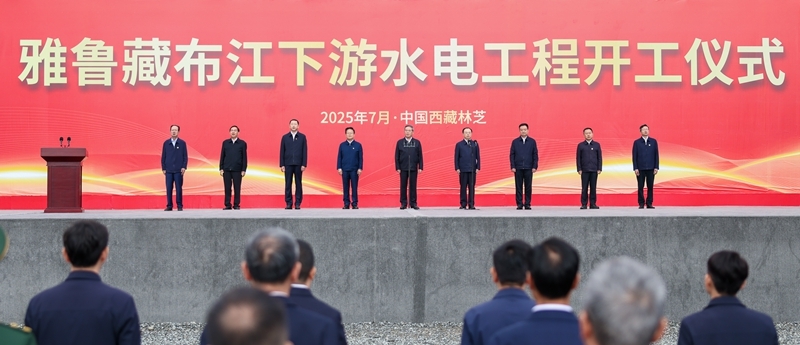
从工程定位来看,雅鲁藏布江下游水电工程是推进低碳发展的绿色工程——将利用雅鲁藏布江丰富的水 能资源,带动周边太阳能、风能资源开发,建设水风光互补的清洁能源基地,成为我国推动能源绿色低 碳转型的重大举措;同时,工程也是实现富民兴藏的民心工程,工程建设将直接带动当地工程建造、物 流运输、商贸服务等产业快速发展,创造大量新增就业岗位,建成后更将提升电力、水利、交通等基础 设施水平,加强西藏地区与其他地区的发展对接,为西藏各族人民带来更多获得感、幸福感和安全感; 此外,工程还是坚持生态优先的安全工程,通过大量地质勘探和技术积累,已为科学、安全、高质量开 发工程奠定坚实基础,工程建设中还将依托项目健全当地生态环境监测网络体系,实现点上开发、面上 保护,促进人与自然和谐共生。 作为这一重大工程的项目业主单位,中国雅江集团有限公司将负责推进雅鲁藏布江下游水电工程。工程 位于西藏自治区林芝市,主要采取截弯取直、隧洞引水的开发方式,建设5座梯级电站,总投资约1.2万 亿元,电力以外送消纳为主,兼顾西藏本地自用需求。 回溯工程进程,2024年12月,中国政府已正式核准雅鲁藏布江下游水电工程。据新华社报道,该工程将 为加快构建新发 ...
【私募调研记录】盘京投资调研众鑫股份
Zheng Quan Zhi Xing· 2025-07-21 00:08
Company Insights - Panjing Investment recently conducted research on Zhongxin Co., indicating that the first phase of its factory in Thailand has been completed and is operating at full capacity with stable product quality and good cost control [1] - The company addressed the potential impact of the proposed 36% tariff on Thai products by the U.S., stating that the policy is not finalized, but even if implemented, the Thai factory would still hold advantages [1] - Zhongxin Co. has not disclosed specific data for Q2 performance but suggests monitoring the semi-annual report for updates [1] - The company plans to enhance profitability through technological innovation, process optimization, and product diversification, with a focus on expanding both international and domestic markets over the next three years [1] - The competitive advantage of Zhongxin Co. lies primarily in production and R&D, with a promising industry outlook driven by global trends towards "plastic reduction" and "dual carbon strategies," which are expected to create a trillion-level market for biodegradable green packaging [1] Industry Outlook - The global push for "plastic reduction" and "dual carbon strategies" is anticipated to significantly expand the market for biodegradable green packaging, potentially reaching a trillion-level market size [1]
新央企中国雅江集团成立,雅下水电工程总投资约1.2万亿
Di Yi Cai Jing· 2025-07-20 04:33
Core Viewpoint - The establishment of China Yajiang Group is a strategic decision by the central government to ensure the successful construction and operation of the Yajiang Hydropower Project, which is crucial for energy security and regional development [1][2][4]. Group 1: Company Formation and Structure - China Yajiang Group was officially established with a total investment of approximately 1.2 trillion yuan for the construction of five hydropower stations [1][4]. - The group is positioned as the 22nd central enterprise in the updated list by the State-owned Assets Supervision and Administration Commission (SASAC) [1]. - The company aims to implement a flat and efficient management structure, alongside a digital and intelligent command and dispatch system [2]. Group 2: Project Significance and Impact - The Yajiang Hydropower Project is part of the "14th Five-Year Plan" and is expected to play a significant role in promoting high-quality development and addressing climate change [4][5]. - The project will utilize abundant hydropower resources and promote the development of surrounding solar and wind energy resources, contributing to a green energy transition [5]. - It is anticipated that the project will create new job opportunities and enhance local infrastructure, thereby improving the quality of life for residents in Tibet [5]. Group 3: Government Support and Strategic Goals - The project has received strong backing from the central government, emphasizing the importance of energy security and the overall national strategy [1][2]. - The government aims to optimize the layout of state-owned enterprises and enhance their roles in key industries through strategic restructuring and integration [6]. - The focus will be on consolidating resources and enhancing core competitiveness in critical sectors related to national security and public services [6].

三部门印发《绿色金融支持项目目录(2025年版)》,英国放弃可持续金融分类计划
Xinda Securities· 2025-07-19 14:25
Investment Rating - The report does not provide a specific investment rating for the industry [2] Core Insights - The People's Bank of China, along with the Financial Regulatory Administration and the China Securities Regulatory Commission, issued the "Green Finance Support Project Directory (2025 Edition)" to enhance green finance tools for environmental improvement and sustainable development [3][11] - The UK government announced on July 15 that it would no longer pursue its sustainable finance taxonomy, indicating a shift in focus towards other policies [3][17] Summary by Sections Domestic Developments - The issuance of the "Green Finance Support Project Directory (2025 Edition)" aims to align with green development goals and enhance the green finance system [11] - Changzhou has launched an action plan to promote ESG system construction, targeting a 60% disclosure rate for listed companies by 2027 [12] - Hainan's low-carbon island construction plan aims for carbon peak by 2030 and carbon neutrality by 2060 [13] - Shandong's zero-carbon park construction plan emphasizes high standards and gradual implementation [14] - Fujian has issued trial regulations for forestry carbon credits [15] - Guizhou is organizing applications for national-level zero-carbon parks [16] ESG Financial Products Tracking - As of July 19, 2025, China has issued 3,631 ESG bonds with a total outstanding amount of 5.59 trillion RMB, where green bonds account for 61.80% [4][28] - The market has 906 existing ESG public funds with a total net asset value of 10,418.17 billion RMB, with ESG strategy products making up 51.78% [4][34] - There are 994 existing ESG bank wealth management products, with pure ESG products constituting 55.53% [4][39] Index Tracking - As of July 18, 2025, major ESG indices have shown positive performance, with the CSI 300 ESG index increasing by 0.21% and the Shenzhen ESG 300 index rising by 1.14% [5][40] Expert Opinions - The report highlights the acceleration of ESG policy development in China, emphasizing the need for systematic planning, international cooperation, and innovative thinking to enhance ESG practices [6][41]
新能源产业国际合作对话对接会举行
Sou Hu Cai Jing· 2025-07-19 05:27
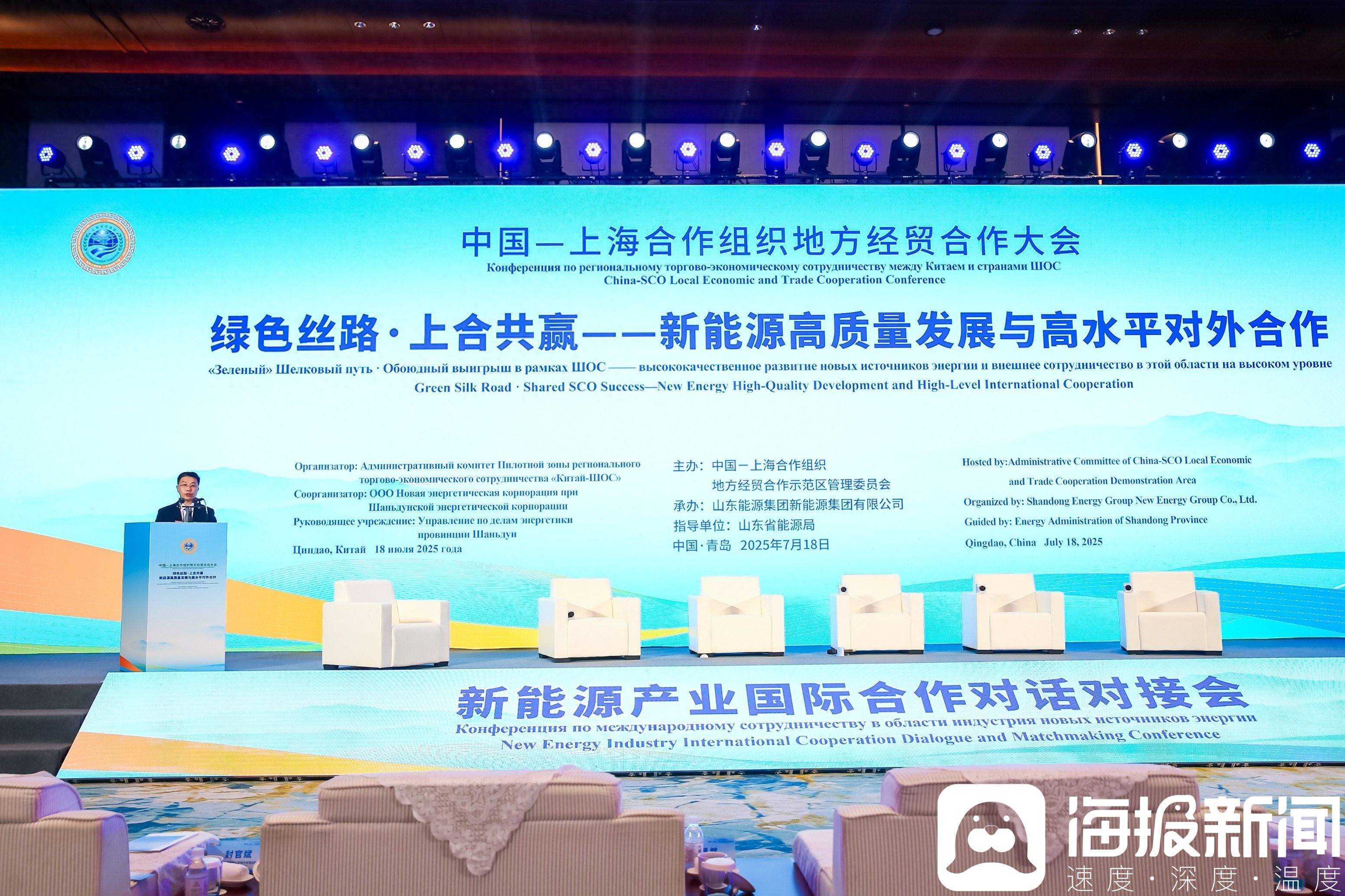
Group 1 - The international cooperation dialogue on the new energy industry was held in Qingdao, focusing on "Green Silk Road and SCO Win-Win" for high-quality development and external cooperation in new energy [1] - Approximately 150 guests from various countries attended the meeting to discuss green development strategies [1] - The meeting highlighted the achievements and contributions of China in the new energy sector, emphasizing the importance of energy cooperation within the Shanghai Cooperation Organization (SCO) over the past 24 years [6] Group 2 - The Deputy Director of the Shandong Provincial Energy Bureau stated that Shandong is actively implementing the "dual carbon" strategy and seizing opportunities for green and low-carbon energy transformation [6] - Shandong aims to establish itself as a significant base for new energy equipment manufacturing and a key source of energy technology innovation in northern China [6] - The conference included sharing of classic cases and thematic promotions by representatives from various research institutions and companies in the new energy sector [12]
中国海油亮相第三届中国国际供应链促进博览会
Xin Hua Cai Jing· 2025-07-19 00:51
Core Viewpoint - The China National Offshore Oil Corporation (CNOOC) is showcasing its commitment to energy stability and sustainable development at the third China International Supply Chain Promotion Expo, emphasizing its role as a leading offshore oil and gas producer in China and its efforts in technological innovation and environmental protection [1][2]. Group 1: Company Performance and Achievements - CNOOC has achieved a net proven reserve of 7.27 billion barrels of oil equivalent by the end of 2024, marking a year-on-year increase of 7.2%, with a stable reserve life of 10 years [1]. - The company has made 11 new oil and gas discoveries and successfully evaluated 30 oil and gas structures in 2024 [1]. - CNOOC is the largest LNG importer in China and the second largest in the world, with a cumulative LNG import of 330 million tons from 2006 to 2024, accounting for 39.3% of China's total LNG imports in 2024 [1]. Group 2: Environmental and Social Responsibility - CNOOC is actively pursuing a dual carbon strategy, focusing on building a new energy system and promoting green transformation in energy development, including investments in wind power, shore power, and carbon capture, utilization, and storage (CCUS) [2]. - The company has implemented nearly 200 marine ecological protection projects through its marine environment and ecology protection foundation, with a total investment exceeding 200 million RMB [2]. Group 3: International Cooperation and Community Engagement - CNOOC has established a presence in 20 countries and regions worldwide, with over 70% of its local employees, reflecting its commitment to mutual benefit and open cooperation [2]. - The company hosted the first "Blue Ocean Lecture" at the expo, highlighting its 40-year journey and commitment to building a maritime power, attracting nearly 100 participants from academia, industry, and media [3].

东方园林: 《公司章程》(2025年7月修订)
Zheng Quan Zhi Xing· 2025-07-18 16:30
Core Points - The company aims to support China's dual carbon strategy, focusing on achieving "carbon peak and carbon neutrality" goals through clean energy and advanced storage systems [5][6] - The registered capital of the company is RMB 599,932.2117 million [3] - The company was established in 2001 and listed on the Shenzhen Stock Exchange in 2009 [2][3] Company Overview - The company is named Beijing Orient Landscape & Environment Co., Ltd., and is located in Chaoyang District, Beijing [3][4] - The company operates as a public limited company under the Company Law of the People's Republic of China [2] Business Scope - The company's business scope includes water pollution control, flower planting, aquatic plant cultivation, and various engineering and technical services [6] - The company is committed to providing solutions for low-carbon energy structure transformation and renewable energy consumption [5][6] Share Structure - The total number of shares issued by the company is 599,932.2117 million, with each share having a par value of RMB 1 [9][10] - The company has a total of 3,366.13 million shares at the time of establishment, with major shareholders including He Qiaonü and Tang Kai [9] Governance and Management - The company has established a party organization to ensure the implementation of national policies and enhance its competitive advantages [4][5] - The legal representative of the company is the manager, who is responsible for civil activities conducted in the company's name [3][4] Shareholder Rights - Shareholders have the right to receive dividends, attend meetings, and supervise the company's operations [13][14] - The company must provide necessary information to shareholders and allow them to inspect relevant documents [14][15] Financial Management - The company is prohibited from providing financial assistance for others to acquire its shares, except under specific conditions [21][22] - The company can increase capital through various methods, including issuing new shares and distributing bonus shares [10][11]

磁材新能源产业齐头并进 横店东磁2025年上半年扣非净利润大增69.4%-84.3%
Quan Jing Wang· 2025-07-18 11:32
Core Viewpoint - Hengdian East Magnetic (横店东磁) is expected to achieve significant growth in its net profit for the first half of 2025, driven by advancements in multiple industries, particularly in magnetic materials, photovoltaic, and lithium battery sectors [1] Group 1: Financial Performance - The company forecasts a net profit attributable to shareholders of 9.60 billion to 10.50 billion yuan for the first half of 2025, representing a year-on-year increase of 49.6% to 63.6% [1] - The non-deductible net profit is projected to be between 10.20 billion and 11.10 billion yuan, with a year-on-year growth of 69.4% to 84.3% [1] - Basic earnings per share are estimated to be between 0.60 yuan and 0.66 yuan [1] Group 2: Industry Position and Product Development - The magnetic materials industry is crucial for energy conversion, signal transmission, and power adaptation, with a projected global market size of 82 billion dollars by 2024 and a compound annual growth rate of 6.8% from 2025 to 2030 [2] - China contributes 60% of the global permanent magnet material output and 45% of soft magnetic material capacity, although the localization rate for high-end products is below 30% [2] - Hengdian East Magnetic has established a production capacity of 290,000 tons of magnetic materials, offering a wide range of products from raw materials to components [2] Group 3: Strategic Partnerships and Competitive Advantage - The company has become a strategic partner for numerous Fortune 500 companies, receiving accolades such as Bosch's Best Supplier in the Asia-Pacific region and global recognition [3] - By deepening its involvement in the magnetic materials industry, the company aims to enhance its capabilities from core material research to complete solution delivery, thereby creating higher barriers to entry [3] Group 4: Renewable Energy Initiatives - The company is accelerating its integrated layout in battery components and has achieved a production capacity of 23 GW for batteries and 17 GW for components [3] - Hengdian East Magnetic is focusing on differentiated competition strategies in the photovoltaic sector, offering a variety of products tailored to different market needs [4] - The company has successfully achieved full production of its overseas high-efficiency battery projects, marking a significant step in its international strategy [4] Group 5: Technological Innovation - The company has reached a TOPCon battery efficiency of 26.85%, maintaining a leading position in the industry [4] - It has introduced various innovative products, including anti-dust components and customized solutions for diverse applications [4] - The company is proactively developing new packaging technologies to enhance its product matrix and meet market demands [4]

长青科技(001324) - 001324长青科技投资者关系管理信息20250718
2025-07-18 10:36
Group 1: Company Performance and Growth - The company has seen steady progress in its operations during the first half of the year, with significant revenue growth needed to meet the 2025 performance targets [3] - The company aims to enhance its operational performance through domestic and international market expansion and continuous technological innovation [3] - The gross profit margin is expected to improve due to the rail transit business, with ongoing efforts to increase market share and profitability [3][4] Group 2: Business Segments and Strategies - The decline in revenue from the building decoration business is attributed to external environmental factors, with plans to innovate and upgrade equipment to meet customer needs [4] - The company is focusing on the development of sandwich lightweight composite materials, which align with national carbon neutrality strategies and are gaining traction in the rail transit and construction sectors [4] - Future overseas revenue and orders are projected to grow, with plans to strengthen the overseas marketing network and increase new product development [4] Group 3: Future Outlook and Strategic Initiatives - The company plans to concentrate on its core business of sandwich lightweight composite materials, aiming for multi-field applications and enhanced market presence [5] - There is a commitment to digital and intelligent transformation to improve management efficiency and promote sustainable high-quality development [5] - The company is cautious about expanding into a second core business or pursuing acquisitions, focusing on steady and sustainable growth while evaluating risks and opportunities [5]
国恩股份(002768):深化“一体两翼”布局,业绩或进入放量期
NORTHEAST SECURITIES· 2025-07-18 09:28
Investment Rating - The report initiates coverage with a "Buy" rating for the company [3][7]. Core Views - The company is enhancing its integrated industrial chain in the large chemical sector, which is expected to boost future profitability through various strategic projects [2]. - In the health sector, the company is focusing on collagen products and expanding its hollow capsule production capacity, anticipating significant growth in performance [3]. - The overall performance is projected to enter a growth phase, with expected net profits of 742 million, 947 million, and 1,095 million yuan for the years 2025, 2026, and 2027 respectively [3]. Summary by Relevant Sections Large Chemical Sector - The company is extending its upstream industrial chain in chemical new materials, with projects such as a 1 million tons/year polystyrene project and a 200,000 tons/year high-performance polyolefin elastomer project [2]. - The focus is on achieving cost advantages through scale effects and enhancing the complete industrial chain from monomers to end products [2]. Health Sector - The company holds a leading position in the collagen field through its subsidiary Dongbao Biological, which has an annual production capacity of 13,500 tons of gelatin [3]. - The hollow capsule production capacity is set to expand significantly, with a projected output of nearly 70 billion capsules annually, positioning the company as a major player in this market [3]. Financial Projections - Revenue is expected to grow from 19,220 million yuan in 2024 to 28,646 million yuan in 2027, reflecting a compound annual growth rate (CAGR) of approximately 14.23% [5]. - The net profit is projected to increase from 676 million yuan in 2024 to 1,095 million yuan in 2027, indicating a strong growth trajectory [5]. - The report estimates a price-to-earnings (P/E) ratio of 12.57X for 2025, decreasing to 8.52X by 2027, suggesting improving valuation metrics [5].
