
文旅融合

Search documents
正式易主!海昌海洋公园获祥源控股22.95亿港元注资控股
Sou Hu Cai Jing· 2025-10-19 11:07
Core Viewpoint - The announcement by Haichang Ocean Park Holdings Limited indicates a significant investment from Xiangyuan Holdings, which has acquired a 38.60% stake, marking a new phase of collaboration focused on resource restructuring and strategic synergy in the cultural tourism sector [1][2]. Group 1: Investment and Shareholding - Xiangyuan Holdings has invested HKD 22.95 billion, acquiring 51 billion shares at HKD 0.45 per share, resulting in a new ownership structure where Xiangyuan becomes the controlling shareholder [1][2]. - After the investment, Zeqiao Holdings retains a 29.04% stake, indicating a shift in control dynamics within Haichang Ocean Park [1]. Group 2: Utilization of Funds - The funds raised will be primarily used for daily operations, enhancing core business areas such as theme park operations, operational services, and intellectual property development, as well as debt repayment [2]. - Key focuses include upgrading park facilities, strengthening animal conservation capabilities, and expanding light asset output and IP business [2]. Group 3: Company Background and Performance - Haichang Ocean Park has developed a diverse portfolio of marine-themed projects across major cities in China, employing a "theme park + IP ecosystem + OAAS" model [2]. - In the first half of 2025, Haichang reported revenues of RMB 686 million, a 14.2% decline year-on-year, with a loss of approximately RMB 296 million [3]. - Xiangyuan Holdings operates over 50 cultural tourism projects, attracting over 40 million visitors annually, and has two publicly listed companies, indicating a robust operational capacity [3]. Group 4: Market Implications and Challenges - The partnership is seen as a potential reshaping of the tourism market and cultural industry landscape, although concerns remain regarding Haichang's high operational costs and debt issues [4]. - Experts suggest that Xiangyuan's primary goal may be capital operation rather than deepening its engagement in the cultural tourism sector, raising questions about the long-term viability of theme park operations [4].
资本赋能、资源重构、价值共创——海昌海洋公园与祥源控股开启文旅合作新范式
Xin Lang Cai Jing· 2025-10-18 11:02
Core Insights - The announcement from Haichang Ocean Park Holdings indicates that Xiangyuan Holdings has completed a capital injection of HKD 22.95 billion, acquiring a 38.60% stake and becoming the controlling shareholder, marking a new phase of collaboration in the cultural tourism sector [1][3][5] - This partnership is expected to accelerate Haichang's development and potentially reshape the value chain of China's cultural tourism industry, driving it into a new era of resource integration and innovation [1][3] Group 1: Capital Injection and Shareholding Structure - Haichang Ocean Park issued 5.1 billion shares at a subscription price of HKD 0.45 per share, raising a total of HKD 22.95 billion, with a net amount of HKD 22.84 billion after expenses [3][5] - Following the subscription, Xiangyuan Holdings holds a 38.60% stake, while Zeqiao Holdings maintains a 29.04% stake [3][5] Group 2: Utilization of Funds - The funds raised will be primarily used for daily operations, enhancing core business areas such as theme park operations, operational services, and intellectual property development, as well as repaying part of the debt [5] - The focus will be on upgrading park facilities, strengthening animal conservation capabilities, and expanding light asset output and IP business [5] Group 3: Strategic Collaboration and Governance - The governance structure will remain stable, with a focus on strategic, business, and core team continuity, leveraging both companies' resource advantages for enhanced management and operational efficiency [5][10] - The collaboration is seen as a strategic fit in terms of development philosophy, aiming for long-term growth through resource complementarity and synergy [5][10] Group 4: Market Position and Competitive Advantage - Haichang Ocean Park is recognized as a leading developer and operator of marine-themed parks in China, with a unique three-pronged model of "theme parks + IP ecosystem + OAAS" [6][7] - The company has established several flagship projects and has a strong brand influence, supported by a rich operational management experience [6][7] Group 5: Future Outlook and Innovation - The partnership aims to drive deep integration and innovative development across various aspects of the cultural tourism industry [10][11] - There will be a focus on shared customer resources, innovative product offerings, and the creation of unique cultural tourism experiences through IP collaboration and OAAS business models [11][10]


文物活化、非遗传承、文旅融合 多视角感知中华文脉在传承中创新、在开放中焕彩
Yang Shi Wang· 2025-10-18 08:43
Core Perspective - The article highlights the significant advancements in cultural heritage and tourism in China during the "14th Five-Year Plan" period, showcasing the integration of technology and cultural preservation efforts [1]. Group 1: Cultural Heritage and Technological Integration - Over 130,000 new cultural heritage sites have been discovered, and nearly 2,000 national protection units are undergoing restoration [1]. - The use of virtual reality (VR) technology at the Sanxingdui Museum allows visitors to experience archaeological sites, enhancing engagement with ancient artifacts [3][7]. - AI technology has been employed to reconstruct ancient artifacts, such as the 2.53-meter bronze bird-foot statue, by accurately matching and assembling fragments from different excavation sites [9]. Group 2: Cultural and Tourism Industry Growth - The cultural tourism industry in China has seen a revenue surge, exceeding 10 trillion yuan, with museums receiving nearly 1.5 billion visitors annually [1]. - The Sanxingdui Museum has introduced various creative cultural products, such as bags and keychains featuring bronze figures, making ancient culture more accessible and appealing to younger audiences [10][12]. - In Gansu, the "Digital Dunhuang" project aims to reunite lost artifacts through digital means, attracting nearly 30,000 visitors from 29 countries since its launch [21]. Group 3: Regional Cultural Developments - Tibet's cultural tourism sector has welcomed over 57 million visitors in the first eight months of 2025, marking an 11.3% increase year-on-year, with cultural industry output exceeding 10 billion yuan [28]. - The "Village T" fashion show in Guizhou has gained national attention, showcasing local ethnic cultures and significantly boosting sales of traditional handicrafts [38].

去旅游、品美食、看科普 一张电影票根“+”出消费新活力
Yang Shi Xin Wen· 2025-10-18 06:45
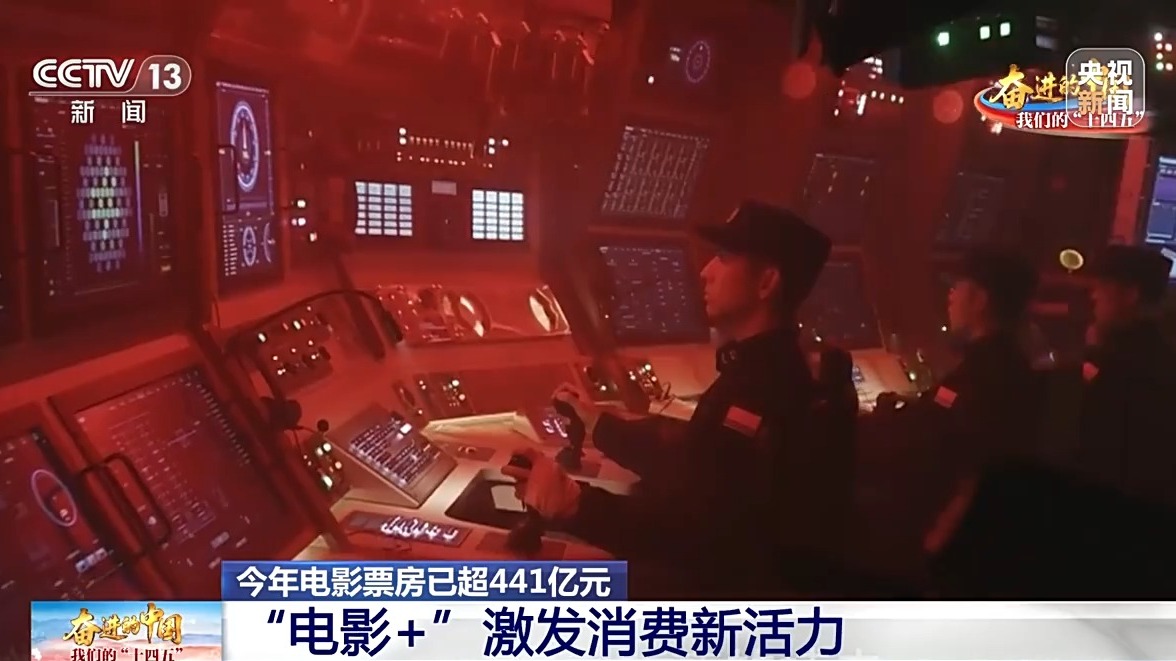
Group 1 - The Chinese film market is experiencing significant growth, with total box office revenue exceeding 441 billion yuan in 2025, driven by a diverse consumption ecosystem and technological advancements in film production [1] - The integration of technology and culture is enhancing the film industry's potential, moving from a focus solely on box office revenue to a multi-faceted consumption model [1] - Activities such as "traveling with movies," "tasting food from movies," and "educational experiences through films" are fostering innovation in the film-related economy, positioning the film industry as a new engine for economic growth [1] Group 2 - The Qingdao Oriental Movie Metropolis has become a popular tourist destination, with attractions like the real-life submarine set from the film "Operation Dragon" drawing visitors [3][4] - The immersive experiences offered at film sets, including interactive activities like real-life CS battles, are enhancing visitor engagement and satisfaction [6] - The increase in tourism linked to films is evident, with a notable rise in visitor numbers during peak seasons, such as the National Day holiday, where daily foot traffic reached around 10,000 [11]
首届“闪现全球”众信旅游世界文化节在京启幕
Bei Jing Shang Bao· 2025-10-18 03:56
Core Points - The first "Flash Global" World Culture Festival organized by Zhongxin Tourism took place in Beijing, offering an immersive travel experience that combines cultural activities, tourism promotion, and destination interaction [1] - The event featured participation from multiple overseas tourism boards and global partners, aiming to create a new IP in the cultural tourism industry and provide consumers with a one-stop experience of global cultures [1] - The festival transformed the Longfu Temple Art District into a "window to the world," showcasing various international tourism booths and allowing visitors to engage in hands-on activities and enjoy authentic cultural performances [1] Food Experience - The food area included renowned dining brands such as Qiao Dongbei, Niu Jiao Shao Rou, Wen Ye Cai, Leon's Bistro, Chu Zi Jin Jing, Tan Suo, and Lan Song, providing visitors with a diverse culinary experience [2]

我国新一批乡村入选联合国旅游组织“最佳旅游乡村”
Ren Min Ri Bao· 2025-10-17 22:01
Core Points - The United Nations World Tourism Organization held the "Best Tourism Villages" award ceremony in Huzhou, Zhejiang Province, announcing the list for 2025, which includes 52 villages from 29 countries, with four villages from China making the list [1][2] Group 1: Selected Villages - The four selected villages from China are Huanggang Village in Guizhou, Jikayi Village in Sichuan, Dongluo Village in Jiangsu, and Digan Village in Zhejiang, contributing to a total of 19 selected villages from China [1][2] Group 2: Characteristics of Selected Villages - The selected villages exhibit diverse characteristics in natural geography, cultural forms, and development paths, showcasing a rich and varied development context for rural tourism [2] - Geographically, the villages are located in diverse terrains, including southwestern mountainous areas, highland canyons, and Jiangnan water towns, reflecting different ecological conditions for rural development [2] - Culturally, the villages display rich forms of expression, such as the living heritage of the Dong ethnic group's songs, the agricultural civilization of the Su Bei water town, the colorful customs of the Ganzi Tibetan people, and the ecological wisdom of Jiangnan's mulberry-fish ponds, highlighting the depth and vibrancy of Chinese culture [2] Group 3: Development Models - Each village has adopted unique development models tailored to their local conditions: Huanggang Village promotes comprehensive rural revitalization through the protection of intangible cultural heritage, Dongluo Village integrates agriculture and tourism through flower fields, Jikayi Village explores the synergy between natural ecology and colorful customs, and Digan Village creatively transforms traditional fishing and mulberry culture into modern business formats [2] - These practices exemplify the principle that "lucid waters and lush mountains are invaluable assets" and showcase the significant achievements of ethnic cultural characteristics in the integration of culture and tourism [2]
“文旅+”点亮乡村经济
Jing Ji Ri Bao· 2025-10-17 21:43
Core Insights - The integration of cultural tourism and agriculture in Taiyuan has led to significant economic development and improved living standards for local residents [1][2] Group 1: Cultural Tourism Development - Taiyuan has adopted a "cultural tourism integration" strategy, leveraging top-level design and precise policy support to create new development paths [1] - The establishment of the first "On Protracted War" exhibition hall in Xipu Village highlights the focus on red tourism and non-material cultural heritage [1] - The village has received over 20,000 visitors from more than 200 organizations, showcasing the success of the "on-site teaching + situational experience" educational model [1] Group 2: Agricultural and Tourism Synergy - Jinyuan District serves as a model for deep integration of agriculture and cultural tourism, creating a development loop of "industry foundation - cultural tourism empowerment - shared benefits" [2] - The "Rice Dream Light" Ferris wheel and "Rice Front Small Forest" camping site have become popular tourist attractions, significantly boosting local tourism [2] - The "Rice Field Music Festival" attracted 42,000 attendees in 2024, generating over 18 million yuan in revenue, transforming rice fields into cultural tourism consumption spaces [2]
十余年磨一剑 北京非遗丛书百卷成果发布
Zhong Guo Jing Ji Wang· 2025-10-17 21:00
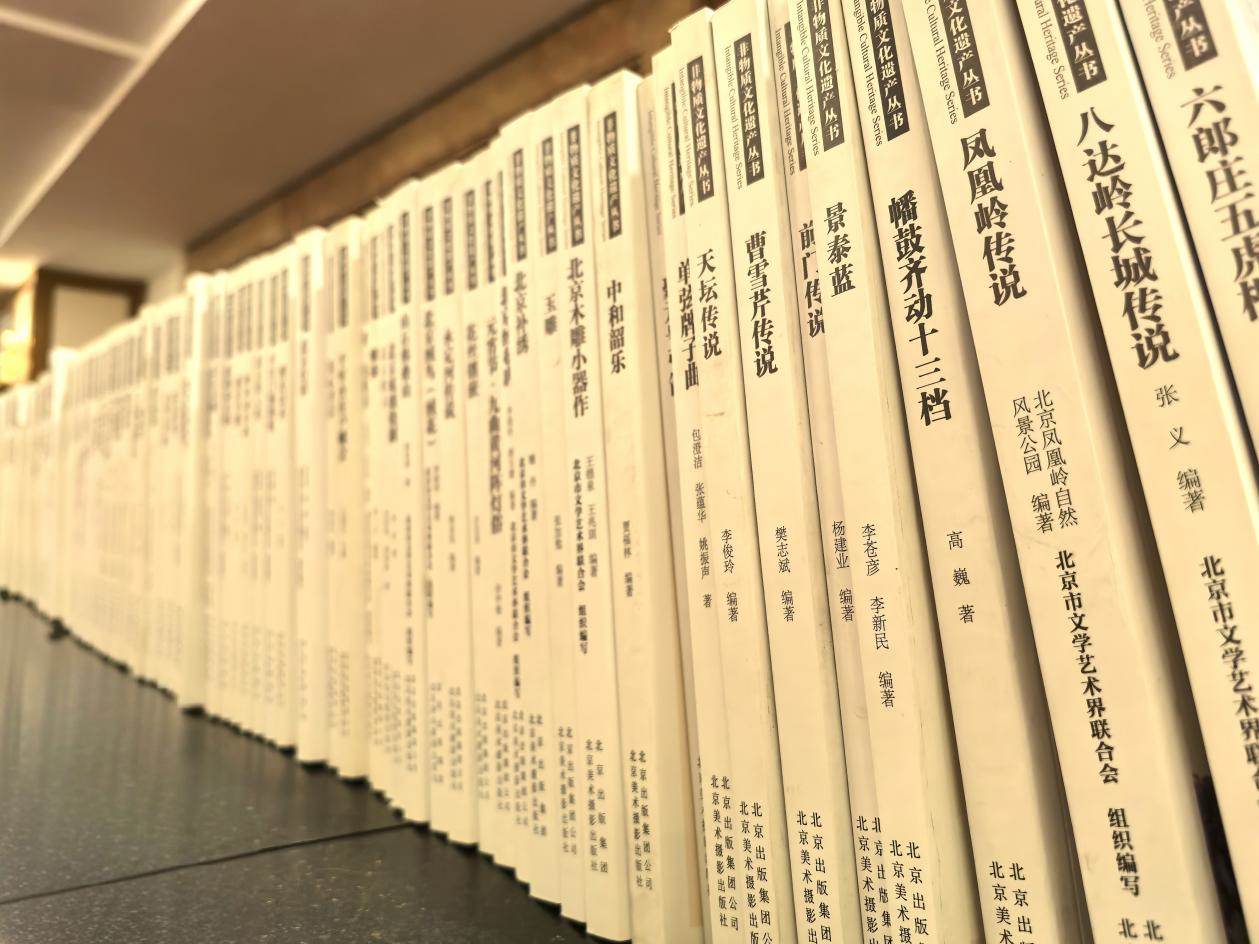
Core Points - The publication of the "Non-Material Cultural Heritage" series is a significant step in preserving and promoting Chinese cultural heritage, with 100 volumes published since 2012, covering various categories such as folk literature, traditional music, and crafts [1][3] - The series has created a systematic "cultural gene bank" for non-material cultural heritage, providing substantial support for its transmission, protection, and research [1][3] - 29 volumes have been translated into English, gaining popularity among international readers and serving as a new medium for showcasing Chinese traditional culture globally [1][3] Group 1 - The publication of the non-material heritage series is a practical effort to transmit Chinese cultural heritage and empower high-quality development in Beijing [3] - Future initiatives will focus on three main areas: continuous excavation and preservation of non-material heritage, collaboration with various cultural institutions for innovative development, and enhancing the visibility of Beijing's cultural heritage on a larger platform [3] - The series provides essential resources for future research and protection of non-material heritage, offering a platform for inheritors and inspiring the revitalization of these cultural practices [3] Group 2 - The launch event featured performances from representatives of four non-material heritage projects, showcasing the living traditions and skills associated with these cultural practices [5]
由江苏省政府和文旅部主办的2025世界运河城市论坛在扬州举行
Yang Zi Wan Bao Wang· 2025-10-17 15:27
Core Points - The 2025 World Canal Cities Forum was held in Yangzhou, focusing on the theme of "Canal Culture Tourism" [1] - Key attendees included government officials from Jiangsu Province, Yangzhou City, and international representatives from Panama, Egypt, Cambodia, and Thailand [1] - The forum aimed to promote the integration of culture and tourism along the Grand Canal, leveraging its historical significance [2][3] Group 1 - Jiangsu Province is recognized as the origin of the Grand Canal and aims to enhance its cultural heritage through systematic research and development [2] - The province plans to improve environmental governance and promote low-carbon transformation along the canal, creating a modern model of harmonious coexistence [2] - The forum emphasized the importance of international dialogue among canal cities to foster cultural exchange and mutual learning [2] Group 2 - Yangzhou, as the original city of the Grand Canal, is committed to deepening the integration of culture and tourism, aiming to become a "city of ten billion" [3] - The city is focused on enhancing its cultural tourism appeal and ecological value, while expanding its international presence [3] - The forum provided a platform for discussions on strengthening tourism and cultural management, highlighting the shared heritage of the Panama Canal and the Grand Canal [3][4] Group 3 - The forum featured the release of the "World Canal Cities Tourism Development Initiative," with speeches from various industry leaders and officials [4] - Key figures included the heads of tourism research institutes and representatives from international organizations, emphasizing collaborative efforts in canal tourism [4]
新时代中国调研行之文化中华|感受兴安盟红色之旅的魅力
Xin Hua She· 2025-10-17 10:33
Core Insights - The article highlights the development of red tourism in the Xingan League, focusing on the historical significance of the "Gegenmiao" uprising and the promotion of cultural heritage through immersive experiences and themed activities [1][2][3] Group 1: Historical Significance - The "Gegenmiao" uprising on August 11, 1945, involved over 600 patriotic youths who initiated a rebellion against Japanese invaders, leading to the formation of the Inner Mongolia Cavalry First Division [1] - The region is recognized as a "red hot land," with efforts to explore and promote its red cultural connotations through various creative products [1] Group 2: Tourism Development - The "One Museum and Three Sites" initiative, which includes the Wuyi Meeting Site and other historical locations, attracts approximately 900,000 visitors annually [2] - In 2024, the Xingan League plans to invest 8.95 million yuan in enhancing the exhibition and presentation of revolutionary sites, improving visitor experience through advanced technology [2] Group 3: Cultural Activities - The Xingan League has implemented multiple strategies to bring red stories to life, including the creation of immersive plays and online AR experiences [3] - From January to September 2025, over 260 cultural and tourism activities were held, with nearly 30% incorporating red themes, showcasing the integration of red culture with local tourism offerings [4]