
AI算力

Search documents
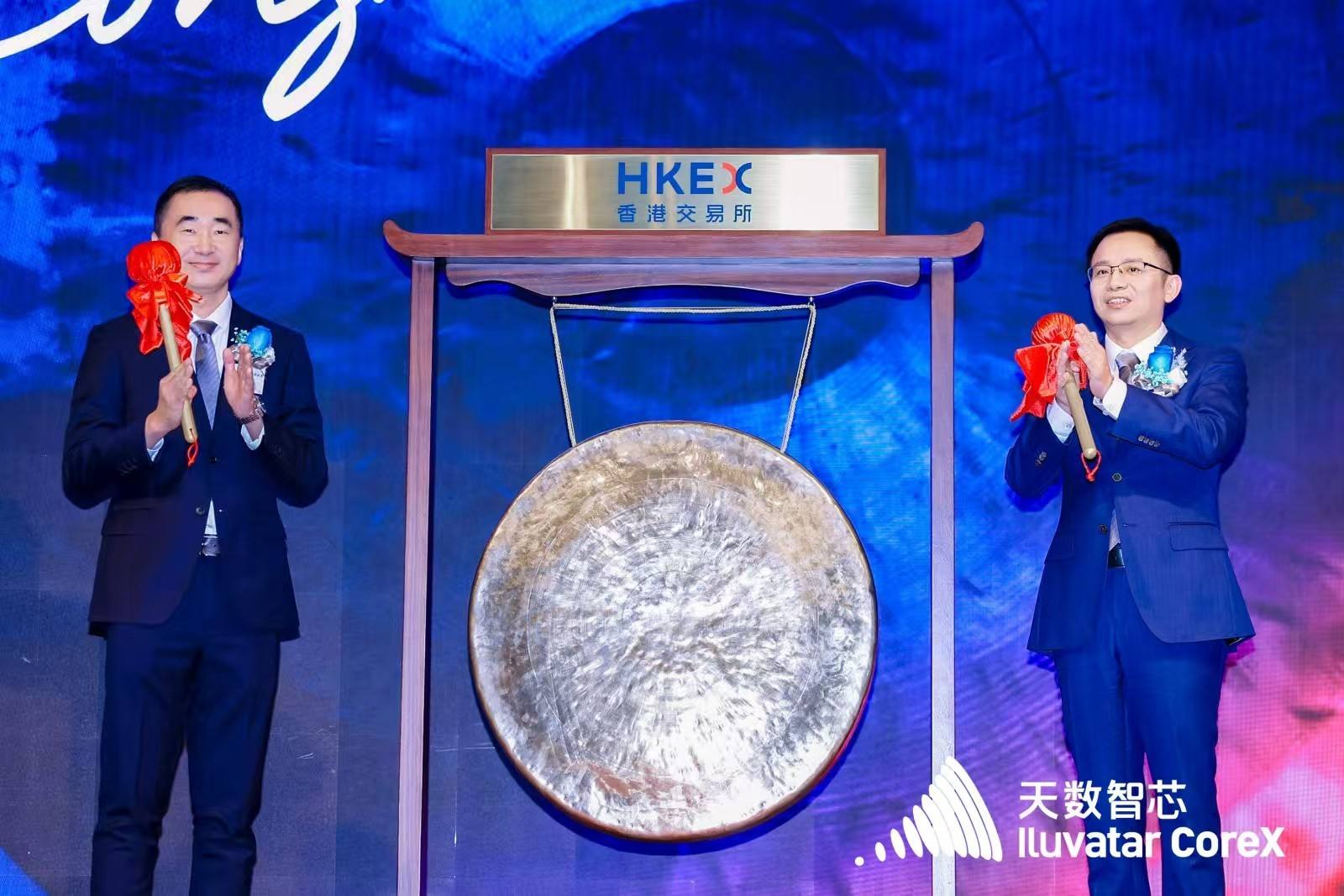
天数智芯港交所敲钟,发行定价为每股144.60港元
Jin Rong Jie· 2026-01-08 05:46
Group 1 - The core point of the article is that TianShu Intelligent Chip Co., Ltd. has officially listed on the Hong Kong Stock Exchange, raising approximately HKD 3.7 billion through its IPO priced at HKD 144.60 per share [1] - TianShu is the first domestic company to achieve mass production of general-purpose GPU chips for training and inference, utilizing 7nm process technology [1] - The company has shown rapid revenue growth over the past three years, with revenues of CNY 189 million, CNY 289 million, and CNY 540 million for 2022, 2023, and 2024 respectively, reflecting a compound annual growth rate of 68.8% [1] Group 2 - As of June 30, 2025, TianShu has delivered over 52,000 general-purpose GPU products to more than 290 customers, with applications deployed over 900 times in sectors such as financial services, healthcare, and transportation [2] - The company plans to allocate 80% of the funds raised from the IPO for R&D and commercialization of general-purpose GPU chips and AI computing solutions, 10% for sales and marketing, and the remaining 10% for working capital [2] - The domestic GPU industry is seeing increased activity in the capital market, with other companies like Moole, Muxi, and Biran Technology also completing their IPOs recently [2]
上海GPU芯片“四小龙”之一 成功赴港上市
Shang Hai Zheng Quan Bao· 2026-01-08 05:34
Core Viewpoint - The successful IPO of Shanghai Tensu Zhixin Semiconductor Co., Ltd. marks a significant milestone in the rise of the domestic general-purpose GPU industry in China, with the company aiming to leverage its market position to drive innovation and support AI transformation across various sectors [2][4]. Group 1: IPO Details - Tensu Zhixin raised a total of HKD 3.7 billion through its IPO, with 25.43 million shares issued, and saw an oversubscription of approximately 414.24 times for the public offering and 10.68 times for the international offering [4]. - The company attracted 18 cornerstone investors, including industry leaders like ZTE Corporation and financial institutions such as UBS and Huaxia Fund, with a total subscription amount of HKD 1.583 billion [4]. Group 2: Financial Performance - From 2022 to 2024, the company's revenue is projected to grow from CNY 189 million to CNY 540 million, reflecting a compound annual growth rate (CAGR) of 68.8%. In the first half of 2025, revenue reached CNY 324 million, a year-on-year increase of 64.2% [4]. - As of June 30, 2025, the company has shipped over 52,000 units and expanded its customer base from 22 in 2022 to 290, with over 900 actual deployments in key sectors such as finance, healthcare, transportation, and manufacturing [4]. Group 3: Market Position and Strategy - Tensu Zhixin has successfully transitioned from the "concept validation" phase to a period of large-scale commercial realization, positioning itself as a leader in the domestic GPU market [5]. - Approximately 80% of the funds raised will be allocated to the research and commercialization of general-purpose GPU chips and AI computing solutions, while 10% will be used for sales and market expansion, and the remaining 10% for working capital and general corporate purposes [8]. - The company has established a complete general-purpose computing system and an ecosystem for GPU technology, becoming a key player in enabling AI applications across various industries [7][8].


2025年中国光模块市场需求分析 数据通信市场需求最大【组图】
Qian Zhan Wang· 2026-01-08 04:10
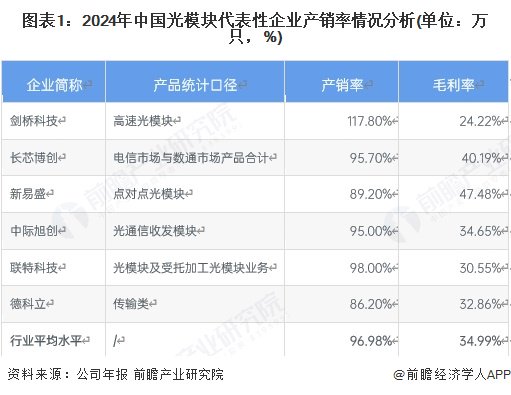
Core Insights - The report highlights the strong performance of China's optical module industry, with an average production and sales rate of 96.98% and an average gross profit margin of 34.99% for 2024, indicating overall good profitability [1] - The demand for optical modules in the telecommunications market is primarily driven by lower-speed modules, with significant growth in 5G base station construction projected for 2024 [2][4] - The data communication market is identified as the largest and fastest-growing segment for optical modules, fueled by increased data center traffic and evolving network architectures [7] Group 1: Optical Module Industry Overview - Major listed companies in the optical module industry include Guangxun Technology, Zhongji Xuchuang, Xinyi Sheng, Changxin Bochuang, Taicheng Guang, and others [1] - The average production and sales rate for representative optical module companies in China is projected to be 96.98% in 2024, with a gross profit margin of 34.99% [1] - Cambridge Technology has reported a production and sales rate exceeding 100% [1] Group 2: Telecommunications Market Demand - The telecommunications market is the origin of optical modules, with 5G transmission networks comprising front-haul, mid-haul, and back-haul segments [2] - In 2024, China is expected to build 874,000 new 5G base stations, bringing the total to 4.251 million by the end of the year [2] - The demand for optical modules is primarily for lower-speed modules, particularly in the front-haul subsystem, which has the highest demand due to its long-distance, high-density characteristics [2] Group 3: Capital Expenditure Trends - The capital expenditure of China's three major telecom operators is gradually shifting towards cloud computing and computing power networks as a second growth curve [4] - In 2023, the total fixed asset investment by major telecom companies and China Tower reached 420.5 billion yuan, with 5G investment accounting for 190.5 billion yuan, a year-on-year increase of 5.7% [4] - The overall market for optical modules is expected to show steady growth, supported by the expansion of fiber-to-the-home and the increase in 10G PON port numbers [4] Group 4: Data Communication Market Growth - The data communication market is currently the largest and fastest-growing market for optical modules, driven by significant increases in data center traffic and changes in network architecture [7] - By mid-2025, the total number of operational computing center racks in China is expected to reach 10.85 million standard racks [7] Group 5: Fixed Network Access Market - The "14th Five-Year" information and communication industry development plan aims to fully deploy gigabit optical fiber networks and accelerate the construction of gigabit cities [9] - By the end of 2025, the number of 10G PON ports is projected to grow from over 5 million at the end of 2021 to 12 million, with gigabit broadband users expected to increase nearly tenfold to 60 million [9] - The Ministry of Industry and Information Technology has initiated pilot projects for 10G optical networks to address key challenges and promote the development of a complete industrial chain [9]




又一国产GPU港股鸣锣上市,天数智芯首秀市值超400亿
Sou Hu Cai Jing· 2026-01-08 03:51
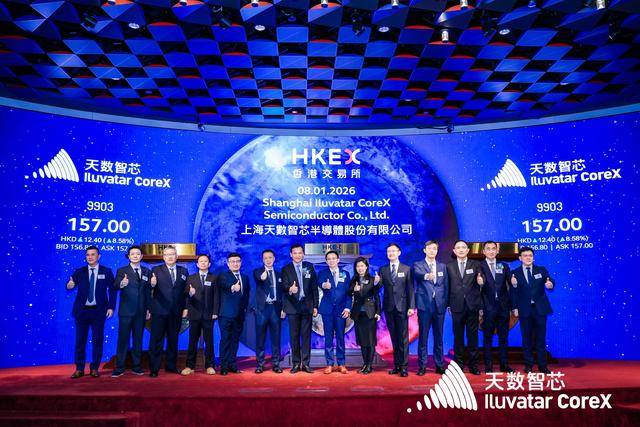
Group 1 - Shanghai Tensu Zhixin Semiconductor Co., Ltd. officially listed on the Hong Kong Stock Exchange on January 8, with an opening price of HKD 190.2, representing a 31.54% increase and a market capitalization exceeding HKD 40 billion [1] - The IPO raised a total of HKD 3.677 billion, with a strong investor response leading to an oversubscription of approximately 414.24 times for the public offering and 10.68 times for the international offering [3] - The company has transitioned from the "concept validation" stage to the commercialization phase, with projected revenue growth from HKD 189 million in 2022 to HKD 540 million in 2024, reflecting a compound annual growth rate of 68.8% [3] Group 2 - Approximately 80% of the funds raised will be allocated to the research and commercialization of general-purpose GPU chips and AI computing solutions over the next five years [4] - The listing of Tensu Zhixin is part of a broader trend of domestic GPU companies entering the capital market, driven by the exponential growth in global AI computing demand and the urgent need for domestic high-end computing solutions [4] - The company has achieved significant operational milestones, with over 52,000 units shipped and an increase in client base from 22 in 2022 to 290, along with over 900 actual deployments in key sectors such as finance, healthcare, transportation, and manufacturing [3]
中国首家通用GPU天数智芯正式挂牌港交所,开盘大涨31.54%
Zheng Quan Shi Bao Wang· 2026-01-08 03:21
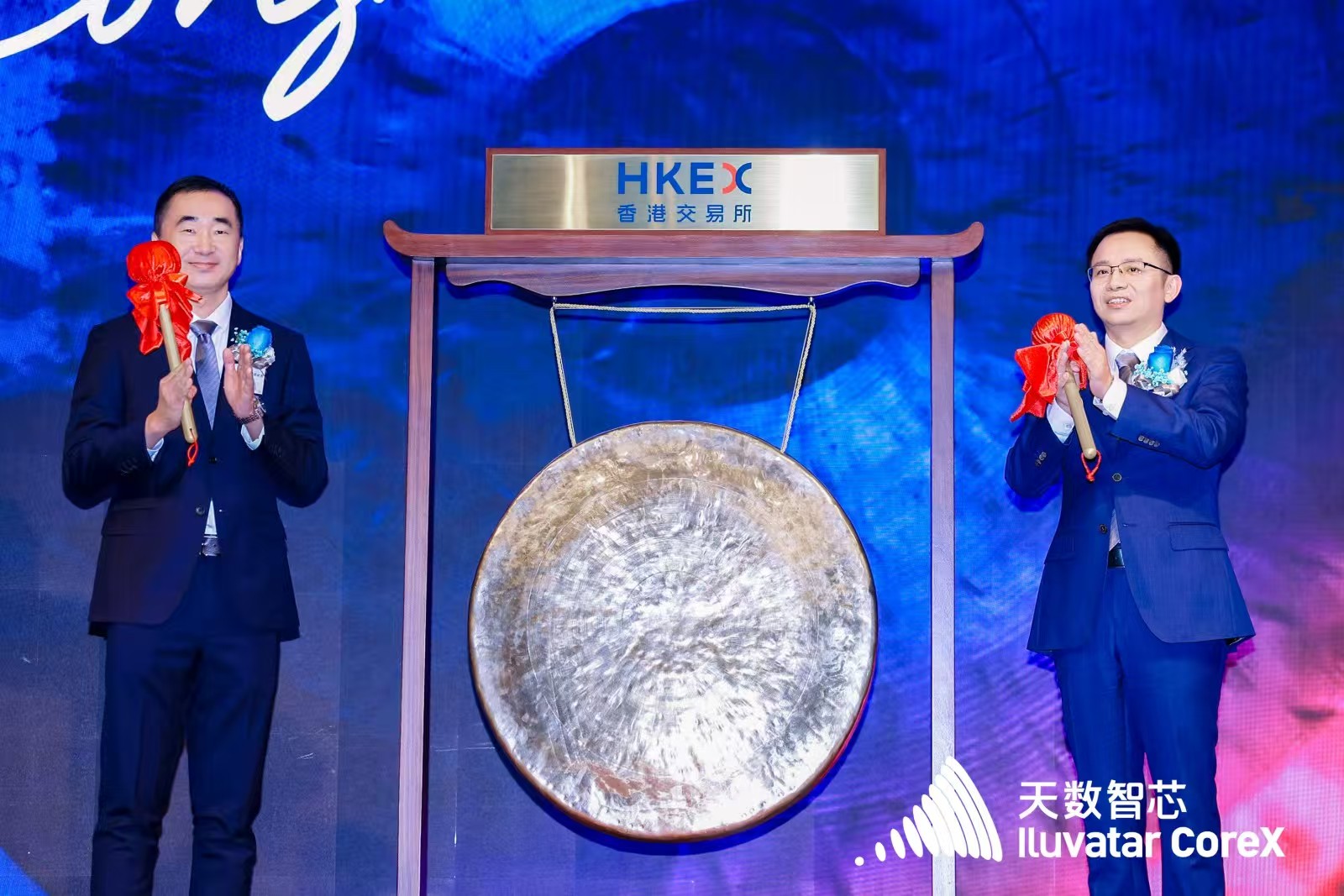
Core Viewpoint - The successful IPO of TianShu ZhiXin Semiconductor Co., Ltd. on January 8, 2026, reflects strong market confidence in the domestic general GPU sector and the company's core value, with a significant opening price increase of 31.54% from the issue price [1][3]. Fundraising and Market Response - TianShu ZhiXin raised a total of HKD 3.677 billion through its IPO, with a remarkable oversubscription rate of approximately 414.24 times for the public offering and 10.68 times for the international offering, indicating strong investor enthusiasm [3]. - The IPO attracted 18 cornerstone investors, with a total subscription amount of HKD 1.583 billion, showcasing the confidence of both industry leaders and top financial institutions in the company's products and long-term growth potential [7]. Technological and Ecological Advantages - The company has developed a comprehensive ecosystem through self-research in both hardware and software, creating core product lines such as the "TianGai" training series and "ZhiKai" inference series, which cover a full range of domestic computing power needs [4][5]. - TianShu ZhiXin emphasizes the importance of "soft-hard collaboration" in building a complete ecosystem, ensuring compatibility with major AI frameworks and significantly reducing customer migration costs [5]. Business Performance and Growth - Financial data indicates strong growth, with revenue projected to increase from CNY 189 million in 2022 to CNY 540 million in 2024, representing a compound annual growth rate of 68.8% [8]. - The company has successfully transitioned from the concept validation phase to a period of scalable commercial realization, with over 52,000 units shipped and a customer base expanding from 22 to 290 across key sectors [8]. Future Development and Market Position - Approximately 80% of the funds raised will be allocated to the R&D and commercialization of general GPU chips and AI computing solutions, reinforcing the company's market capabilities and enabling it to meet larger market demands [9]. - The domestic general GPU market share is expected to grow from 8.3% in 2022 to 17.4% in 2024, with projections indicating it could exceed 50% by 2029, highlighting the structural transformation within the industry [9]. Strategic Implications - The growth trajectory of TianShu ZhiXin illustrates a paradigm shift in the Chinese technology industry, moving from passive response to active demand definition, and from "usable technology" to "commercially viable solutions" [10].
中国首家通用GPU天数智芯登陆港股,开盘大涨31.54%!
Zhi Tong Cai Jing· 2026-01-08 03:08
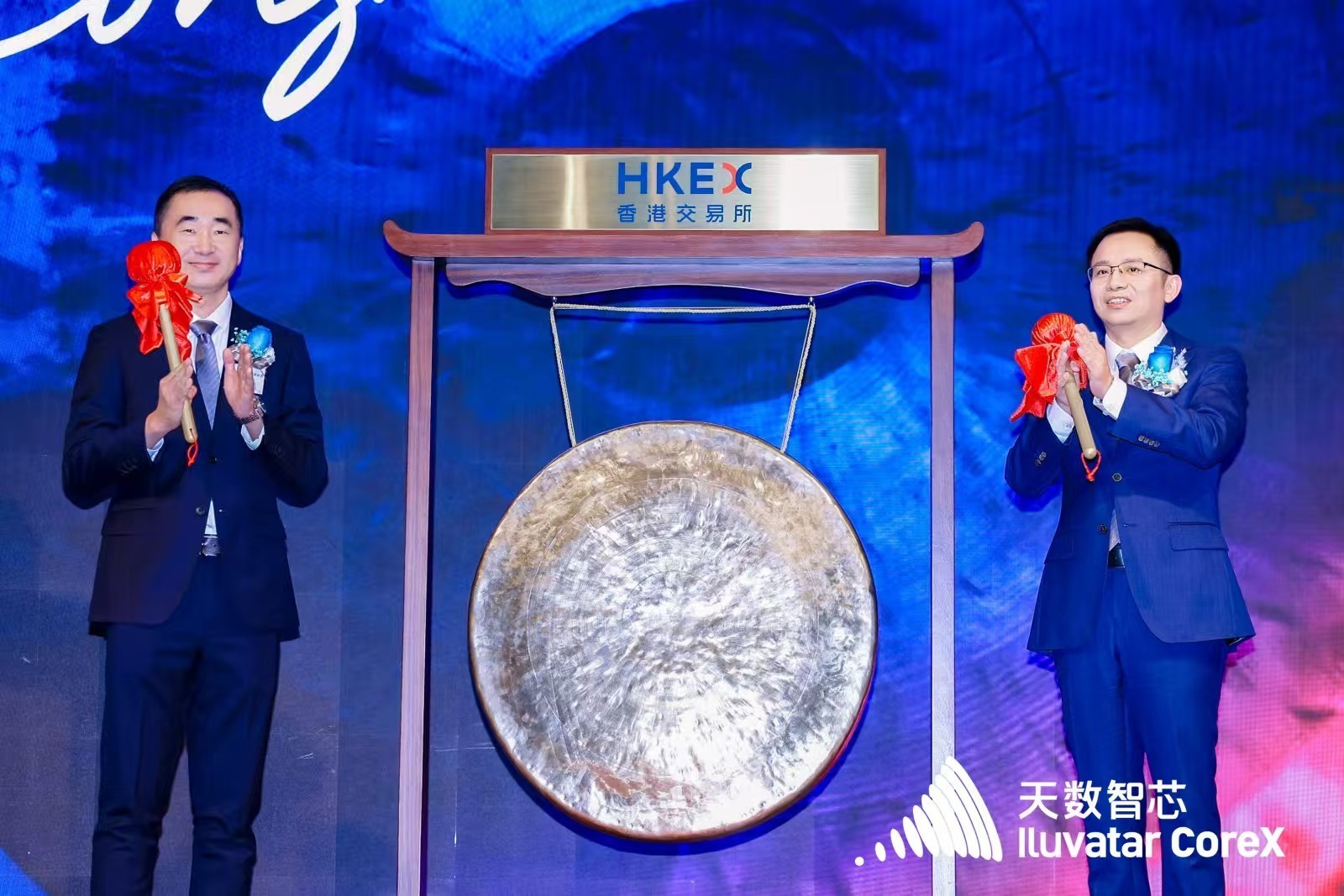
Core Insights - The successful IPO of TianShu ZhiXin on January 8, 2026, reflects strong market confidence in the company's core value and the domestic general GPU sector, with a significant opening price increase of 31.54% from the issue price [1] - The company raised HKD 36.77 billion through the IPO, with an impressive oversubscription rate of 414.24 times for the public offering and 10.68 times for the international offering, indicating robust investor enthusiasm [1] Group 1: Market Trends and Company Positioning - The global demand for AI computing power is experiencing exponential growth, while the need for domestic high-end computing power that is self-controlled is becoming increasingly urgent, creating a significant market gap [3] - TianShu ZhiXin has developed core product lines, including the "TianGai" training series and "ZhiKai" inference series, establishing a comprehensive domestic computing power system that covers cloud training, edge inference, and large model deployment [3][4] Group 2: Technological and Ecological Advantages - The company emphasizes the importance of a complete ecosystem through "soft-hard collaboration," achieving end-to-end self-control from compilers to application frameworks, which significantly reduces customer migration costs and ensures stable operation in complex environments [4] - TianShu ZhiXin's self-developed software stack is fully compatible with mainstream AI frameworks, enabling a seamless deployment experience and creating a closed-loop ecosystem that translates technical advantages into tangible commercial value [4] Group 3: Commercial Viability and Financial Performance - The company has garnered significant attention during its IPO phase, indicating that its technology roadmap and business model have been widely validated [5] - Financial data shows strong growth, with revenue increasing from CNY 189 million in 2022 to CNY 540 million in 2024, representing a compound annual growth rate of 68.8%, and a continued strong growth momentum in the first half of 2025 [6] Group 4: Future Development and Market Impact - Approximately 80% of the funds raised will be allocated to the R&D and commercialization of general GPU chips and AI computing solutions, creating a positive feedback loop that enhances both technical and market capabilities [7] - The domestic general GPU market share has increased from 8.3% in 2022 to 17.4% in 2024, with expectations to exceed 50% by 2029, driven by the ongoing logic of demand-driven technology breakthroughs and commercial validation [7][8]
中国首家通用GPU天数智芯(09903)登陆港股,开盘大涨31.54%!
智通财经网· 2026-01-08 03:03
Core Viewpoint - The successful IPO of TianShu ZhiXin Semiconductor Co., Ltd. on January 8, 2026, reflects strong market confidence in the domestic general GPU sector, with a significant opening price increase of 31.54% from the issue price [1][3]. Group 1: IPO and Market Response - TianShu ZhiXin raised HKD 36.77 billion through its IPO, with a remarkable oversubscription of 414.24 times for the Hong Kong public offering and 10.68 times for the international offering, indicating robust investor enthusiasm [1]. - The company’s opening price was HKD 190.2, significantly higher than the issue price of HKD 144.6, showcasing market recognition of its core value [1]. Group 2: Technological and Market Positioning - The company has developed a comprehensive ecosystem through self-research in both hardware and software, focusing on core technologies that enable it to meet the surging global AI computing demand [3][4]. - TianShu ZhiXin has established a full-stack capability, including its "TianGai" training series and "ZhiKai" inference series, which cover cloud training, edge inference, and large model deployment [3]. Group 3: Business Model and Financial Performance - The company has attracted 18 cornerstone investors, raising HKD 15.83 billion, which reflects strong validation of its technology and business model from both industry leaders and top financial institutions [6]. - Financial data indicates a strong growth trajectory, with revenue increasing from CNY 189 million in 2022 to CNY 540 million in 2024, representing a compound annual growth rate of 68.8% [7]. Group 4: Market Trends and Future Outlook - The domestic general GPU market share has increased from 8.3% in 2022 to 17.4% in 2024, with expectations to exceed 50% by 2029, driven by demand, technological breakthroughs, and commercial validation [8]. - The company’s growth trajectory aligns with the structural transformation of the Chinese general GPU market, positioning it to play a crucial role in the AI transformation across various industries [8].
重磅策略会 | 2026梦幻开局!该投资何方?
格隆汇APP· 2026-01-08 01:41
Core Insights - The article emphasizes that 2026 is not a distant future but a reality that is unfolding, marked by technological leaps, global restructuring, and a rewriting of capital logic [1] - It highlights the need for investors to be positioned at the forefront of information as significant changes are occurring in liquidity structures, AI technology, and the interconnection of capital, technology, and productivity [1] Group 1: Event Overview - The event titled "2026潮起新程·开门红联名策略会" is a collaborative effort between various financial institutions to present in-depth insights into the current investment landscape [1][4] - The event aims to provide a macro perspective on global trends, focusing on the underlying logic of technology, capital, and asset allocation [1] Group 2: Key Speakers and Topics - Dr. Gu Long, a renowned economist and founder of Gelonghui, will analyze the development trends of the global AI and semiconductor industries in 2026 [6] - Mai Lei, a fund manager at Huatai-PineBridge, will share insights from the Phoenix Technology Summit regarding real changes in the global AI and semiconductor sectors [6] - Xia Haoyang, a fund manager at GF Fund, will discuss structural opportunities in the Hong Kong and US tech sectors, emphasizing a comprehensive decoding of the logic behind the tech explosion [6] - Yang Zhengwang, a senior researcher at E Fund, will provide a new understanding of dividend strategies, focusing on balancing defense and cash flow as risk preferences rise [6]

网络交易平台新规发布,雀巢中国召回多批婴儿奶粉 | 财经日日评
吴晓波频道· 2026-01-08 00:29
Monetary Policy - The People's Bank of China emphasizes the use of flexible and efficient monetary policy tools, including interest rate cuts and reserve requirement ratio reductions, to promote high-quality economic development and reasonable price recovery [2][3] - The central bank's focus on maintaining ample liquidity and relatively loose financing conditions aims to ensure balanced credit growth and prevent excessive fluctuations in the RMB exchange rate [2] E-commerce and Platform Regulations - New regulations from the State Administration for Market Regulation and the National Internet Information Office prohibit unreasonable restrictions on platform operators and unfair fees, aiming to enhance transparency and fairness in the platform economy [4][5] - The regulations address issues like "big data pricing discrimination" and clarify the responsibilities and obligations of platforms, providing clearer avenues for consumer and merchant rights protection [4][5] Postal and Express Delivery Industry - China's postal and express delivery industry has established the world's largest delivery network, with annual business revenue increasing from 1.1 trillion yuan to 1.8 trillion yuan, reflecting a growth rate exceeding 10% [6] - The volume of express deliveries surged from over 80 billion to nearly 200 billion packages, with per capita annual usage rising from 59 to 141 packages [6] Semiconductor Market - The price of high-capacity memory modules, particularly 256G DDR5 server memory, has skyrocketed, with prices reaching nearly 50,000 yuan per unit, driven by demand from AI chip manufacturers [8][9] - The overall price increase in storage products may lead to higher consumer product prices, although the demand for AI computing power is not limitless due to infrastructure and energy consumption constraints [9] xAI Funding and Growth - xAI raised $20 billion in its latest funding round, surpassing its initial target of $15 billion, and its valuation has doubled to $230 billion, indicating strong institutional confidence in its future [10] - The involvement of major investors like Nvidia and Cisco highlights the strategic importance of xAI's developments in AI technology and infrastructure [10][11] Nestlé Recall - Nestlé China announced a voluntary recall of specific batches of infant formula due to potential contamination, demonstrating proactive measures in response to quality concerns [12][13] - The recall reflects the critical importance of safety in the infant formula sector, where past incidents have severely impacted public trust [13] IKEA Store Closures - IKEA China plans to close seven stores starting February 2026, shifting focus from expansion to targeted growth in key markets like Beijing and Shenzhen, while enhancing online operations [14][15] - The decision to close underperforming stores is part of a strategy to adapt to changing market dynamics and consumer preferences for lower-priced products [15]

沪指“14连阳” 散户、机构都在入场
Sou Hu Cai Jing· 2026-01-07 17:15
Group 1 - The A-share market has shown strong performance, with the Shanghai Composite Index achieving a 14-day consecutive rise and reaching a new high in the current bull market by January 7, 2026 [1] - In 2025, the total number of new A-share accounts opened reached 27.4369 million, a year-on-year increase of 9.75%, with individual investors contributing 27.3324 million accounts and institutions 104,539 accounts [2][5] - The monthly new account openings peaked in March 2025 with 3.0655 million accounts, followed by September with 2.9372 million accounts [2][3] Group 2 - The A-share market's upward trend is linked to investor enthusiasm, with the Shanghai Composite Index rising 18.41% in 2025, an increase of nearly 6 percentage points compared to 2024 [5] - Following the New Year, the market is expected to continue its structural trend, supported by positive investor sentiment from the Hong Kong market and the renminbi exchange rate [7] - The focus for January includes performance disclosures, with expectations for significant year-on-year growth in earnings due to low comparative bases from the previous year [7][8]