非银金融

Search documents
证券类App用户活跃程度持续提升,持续看好非银板块
SINOLINK SECURITIES· 2026-03-01 13:04
Investment Rating - The report suggests a strong recommendation for high-quality brokerages with significant valuation and performance mismatches, particularly focusing on Guotai Junan [2] Core Insights - The securities sector is experiencing a positive development trend, with a notable increase in user engagement and market attractiveness. The monthly active user count for securities service applications reached 184 million in January 2026, reflecting a month-on-month growth of 5.11% and a year-on-year increase of 13.86% [2] - Insurance institutions are expected to slightly increase their allocation to A-shares in 2026, with a focus on equity assets. The report highlights a generally optimistic outlook for A-shares, particularly in sectors such as electronics, non-ferrous metals, and pharmaceuticals [3] - The report identifies three main investment themes: (1) high-quality brokerages with valuation mismatches, (2) companies in the biotechnology sector benefiting from investment themes, and (3) multi-financial firms with impressive performance growth [2][3] Market Review - The A-share market showed a 1.1% increase in the CSI 300 index, while the non-bank financial sector underperformed, declining by 1.2%. The securities and insurance sectors also saw declines of 0.4% and 3.7%, respectively [9] - The average daily trading volume for A-shares was 24,403 billion yuan, reflecting a 15.6% increase week-on-week. The new issuance of equity public funds reached 127.3 billion units in January-February 2026, marking a 110.4% year-on-year increase [15] Industry Dynamics - The report notes that major insurance companies are increasingly focusing on customized insurance products for humanoid robots, addressing emerging risks associated with advanced technologies [38] - The introduction of a new dividend insurance product by Zhongying Life with a predetermined interest rate of 1.25% indicates a shift in the insurance market towards lower guaranteed returns [36]



广发证券首席策略分析师刘晨明 备战马年第一波上涨期
Shen Zhen Shang Bao· 2026-02-12 18:47
Core Viewpoint - The A-share market is expected to experience its first wave of upward momentum in the Year of the Horse, with optimism surrounding sectors such as the AI industry chain, space photovoltaics, and non-bank financials [1][2]. Group 1: Market Timing - The spring market rally is anticipated to begin in February, historically the strongest period for such movements, with a 100% probability of small-cap indices rising between the Spring Festival and the National People's Congress [1]. - Previous instances of early spring rallies occurred during economic upturns or policy shifts, with notable years being 2013, 2014, 2015, and 2020 [2]. Group 2: Market Conditions - The release of annual report forecasts has alleviated negative fundamental disturbances, with a record high of companies reporting low expectations or losses in 2025 [2]. - As negative financial news is digested, the market is expected to be in a better position starting in February, allowing for a more favorable trading environment [2]. Group 3: Investment Strategy - The correlation between spring rallies and corporate performance is strong, with recommended sectors including the ByteDance industry chain, space photovoltaics, and non-bank sectors such as brokerage and insurance [2]. - Other sectors to consider for investment include optical modules, semiconductors, humanoid robots, chips, PCBs, and innovative pharmaceuticals, with additional tracking suggested for metals, satellites, storage, chemicals, and power grids [2].

行业研究|行业周报|投资银行业与经纪业:回调后建议积极配置,持续关注板块绩优个股-20260210
Changjiang Securities· 2026-02-10 08:44
Investment Rating - The report maintains a "Positive" investment rating for the industry [7] Core Insights - The non-bank financial sector has shown weak overall performance this week, with a recommendation to seize allocation opportunities in the brokerage sector as market trading has slightly declined but remains at historical highs. In the insurance sector, the long-term outlook is optimistic due to improved return on equity (ROE) and valuation recovery potential, suggesting a positive allocation strategy for insurance stocks [2][4] - The report continues to recommend stable dividend-paying stocks such as Jiangsu Jinzhong, China Ping An, and China Pacific Insurance, which exhibit strong profitability and market positions. Additionally, it highlights companies like New China Life, China Life, Hong Kong Stock Exchange, CITIC Securities, Dongfang Caifu, Tonghuashun, and Jiufang Zhitu Holdings based on performance elasticity and valuation [4] Summary by Sections Market Performance - The non-bank financial index decreased by 0.6% this week, with an excess return of +0.7% relative to the CSI 300, ranking 20th out of 31 sectors. Year-to-date, the non-bank financial index is down 1.1%, with an excess return of -1.4% compared to the CSI 300, ranking 29th out of 31 [5] - The average daily trading volume in the two markets was 24,066.54 billion yuan, down 21.43% week-on-week, with a daily turnover rate of 2.36%, down 60.83 basis points [5][35] Insurance Sector Insights - In December 2025, the cumulative insurance premium income reached 61,194 billion yuan, reflecting a year-on-year increase of 7.43%. Life insurance premiums increased by 8.91%, while property insurance premiums rose by 3.92% [20][21] - The total assets of insurance companies reached 41.31 trillion yuan, with life insurance companies holding 36.39 trillion yuan, representing 88.09% of the total [25][26] Brokerage and Investment Business - The brokerage business is experiencing a gradual recovery in profitability, with the average daily trading volume exceeding the 2025 average. The report notes that the commission fee rates are stabilizing, which is expected to support the profitability of the brokerage sector [35][41] - In January 2026, the equity financing scale rebounded to 134.86 billion yuan, up 103.4% month-on-month, while bond financing decreased by 15.6% [45] Asset Management and Fund Issuance - The report indicates a recovery in the issuance of collective asset management products, with January 2026 seeing a new issuance of 9.104 billion units, up 40.1% from the previous month. The new fund issuance also increased to 1,094.51 billion units, reflecting a 41.3% month-on-month rise [47][49]


非银金融行业周报:1月基金新发显著增长,头部券商业绩预告符合预期-20260201
KAIYUAN SECURITIES· 2026-02-01 11:13
Investment Rating - The industry investment rating is "Overweight" (maintained) [1] Core Viewpoints - In January 2026, the market transaction volume and new fund issuance showed significant year-on-year improvement, benefiting the fundamentals of the securities IT and brokerage sectors. Investment banking, asset management, and overseas expansion are expected to further enhance the ROE of leading brokerages. The insurance sector has also achieved a strong start in both individual and bank insurance channels, with a bullish trend in the equity market, indicating a high certainty of growth and high ROE, which is likely to attract additional funds [3][4] Summary by Sections Brokerage Sector - In January 2026, the average daily stock fund transaction volume was 3.71 trillion, up 7.7% month-on-month and 157% year-on-year. The newly established stock and mixed funds totaled 81.2 billion, up 66% month-on-month and 187% year-on-year. The performance forecast of leading brokerages aligns with expectations, with a total net profit of 118.05 billion for 22 listed brokerages, up 54% year-on-year [3][4] - The stock market's trading activity has significantly increased at the beginning of 2026, benefiting brokerage and securities IT companies. The current valuation and institutional holdings in the brokerage sector remain low, with past year performance stagnating, indicating a positive outlook for the spring market [3][4] Insurance Sector - In December 2025, the total premium income for the life insurance sector increased by 8.9% year-on-year, with the overall insurance industry achieving a premium income of 6.12 trillion, up 7.4% year-on-year. The life insurance sector's premium income reached 4.36 trillion, with growth rates of 11.4% for life insurance, -0.4% for health insurance, and -9.9% for accident insurance [4] - The insurance sector is well-prepared for the new year, with favorable conditions for dividend insurance and a positive outlook for individual insurance channels. The stabilization of long-term interest rates and a favorable equity market are expected to improve net assets and profitability for insurance companies [4] Recommended Stocks - Recommended stocks include China Life, China Pacific Insurance, and Ping An; in the brokerage sector, Guangfa Securities, Guotai Junan, Huatai Securities, and CICC are highlighted. Other recommended stocks include CITIC Securities and Guosen Securities, along with Jiangsu Jinzu, Hong Kong Exchanges, and Jiufang Zhitu Holdings [5]
证券ETF(512880)收跌超1%,非银金融前景广阔,回调或可布局
Sou Hu Cai Jing· 2026-01-27 13:47
Group 1 - The core viewpoint of the article highlights that the securities industry is benefiting from a market recovery and favorable policy environment, suggesting potential investment opportunities despite a recent decline in the securities ETF [1] - As of January 23, the average daily trading volume of stock-based funds reached 34,578 billion yuan, representing a 58.18% increase compared to the previous month, indicating a significant rise in trading activity [1] - The balance of margin financing and securities lending has also seen substantial year-on-year growth, further supporting the positive outlook for the industry [1] Group 2 - The China Securities Regulatory Commission (CSRC) has officially released guidelines for the performance comparison benchmarks of publicly offered securities investment funds, aimed at improving the foundational system and promoting standardized management of fund performance benchmarks [1] - The transformation within the industry is expected to create new business growth points, benefiting brokerage, investment banking, and capital intermediary services [1] - The current valuation of the sector is at a relatively low level, providing a safety margin for potential investors [1] Group 3 - The securities ETF (512880) tracks the securities company index (399975), which reflects the overall performance of the securities industry and includes a high concentration of securities companies in the A-share market [1] - The index combines cyclical and growth-oriented styles, showing significant performance fluctuations in line with market volatility [1]
超70亿“爆款”重现!市场风向变了
Zhong Guo Zheng Quan Bao· 2026-01-26 14:13
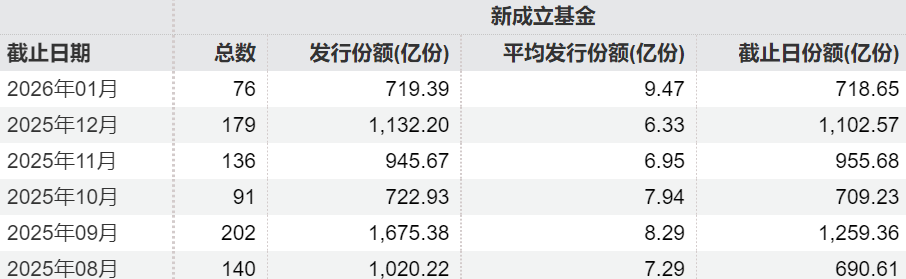
Group 1 - The core viewpoint of the articles indicates a significant rebound in the issuance of actively managed equity funds, highlighted by the launch of the Guangfa Research Smart A fund, which achieved an issuance of 7.221 billion shares, marking it as a "blockbuster product" [1][4] - As of January 25, 76 new funds have been established in 2026, with a total issuance of 71.939 billion shares, showing a recovery in the fund issuance market [2][3] - The average issuance of new funds in January 2026 reached 9.47 billion shares, significantly higher than the 6.33 billion shares in December 2025, indicating a notable improvement in market conditions [3] Group 2 - The issuance of actively managed equity funds is gaining momentum, with several funds exceeding 2 billion shares, including the E Fund Balanced Selection with 3.408 billion shares [5] - The upcoming issuance of 50 new funds before the Spring Festival suggests a balanced market between actively managed equity funds and passive index funds, with both types of funds having equal representation [5] - Institutions are cautiously optimistic about the equity market in 2026, with expectations of significant style and structural shifts, driven by positive policies and improving fundamentals [6]

ETF盘中资讯|大金融反攻,券商、银行携手发力,顶流券商ETF(512000)摸高2%,银行ETF(512800)吸金超4亿,人气回归?
Sou Hu Cai Jing· 2026-01-26 06:14
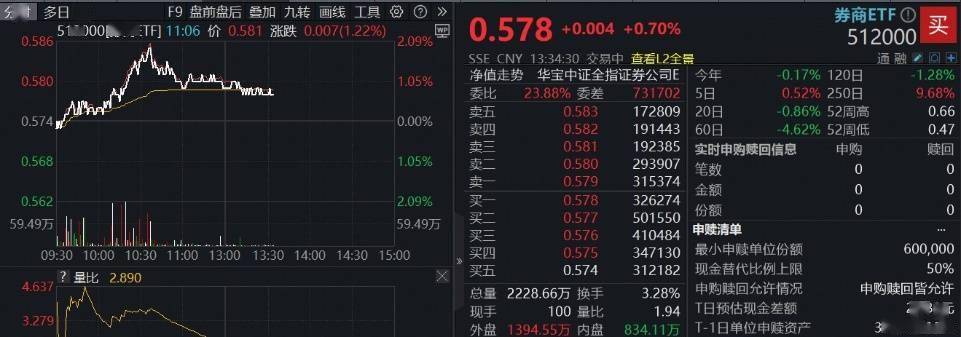
Group 1 - The market showed mixed performance on January 26, with major indices fluctuating, while blue-chip stocks rebounded, particularly in the brokerage and banking sectors [1] - Notable stock movements included a surge in Citic Securities, which approached a daily limit, and significant gains in Ningbo Bank, Industrial Securities, and Hangzhou Bank, all exceeding 3% [1] - The top-performing ETFs included the leading brokerage ETF (512000), which saw a price increase of 2% at one point, and the largest banking ETF (512800), which rose over 1%, with a total inflow of 414 million yuan over the past four days [1] Group 2 - The brokerage sector experienced substantial growth in performance due to increased trading volume, with Guotai Junan Securities noting a 3.08 percentage point under-allocation in the non-bank sector [4] - Long-term capital inflows are expected to accelerate, particularly from retail investors, creating investment opportunities in wealth management-focused brokerages [4] - Citic Securities recommended increasing allocations to non-bank financials, suggesting that investors have ample time to adjust their positions without chasing prices during periods of ETF redemptions [4] Group 3 - The first batch of listed banks reported stable recovery in their performance, driven by favorable policies, low interest rates, and significant dividend distributions [4] - The banking sector continues to exhibit dividend characteristics, with long-term capital, particularly from insurance funds, increasing their holdings, thereby enhancing pricing efficiency and valuation reconstruction [4] - The banking ETF (512800) is highlighted as an efficient investment tool, tracking the performance of 42 listed banks, with a fund size exceeding 11.3 billion yuan and an average daily trading volume of over 800 million yuan [5]
“专业买手”,持仓曝光!
中国基金报· 2026-01-24 04:10
Core Viewpoint - The latest heavy holdings of public FOFs reveal a strong preference for bond funds and ETFs, indicating a cautious investment strategy in the current market environment [2][4]. Group 1: FOF Heavy Holdings - As of the end of Q4 2025, bond funds dominate the top 50 holdings of FOFs, with 40 out of 50 being bond-related [4]. - The top five funds favored by FOFs include Hai Fudong Zhongzheng Short Bond ETF, Guotai Lixiang Short and Medium-term Bond C, and others, with Hai Fudong holding a market value exceeding 5.98 billion yuan [4][5]. - The total market value of the top 50 funds held by FOFs reflects a significant investment in passive index products, highlighting a shift towards index-based strategies [4][5]. Group 2: Active Equity Fund Holdings - The top active equity fund held by FOFs is Xingquan Commercial Model Preferred A, with a total holding value of 406.73 million yuan, held by 16 FOFs [8][9]. - Other notable active equity funds include E Fund Information Industry Selected C and E Fund Supply Reform, both with substantial holdings, indicating a diversified approach within equity investments [8][9]. Group 3: Fund Increases - The most increased fund in Q4 2025 was Hai Fudong Zhongzheng Short Bond ETF, which saw an increase of 2.69 billion yuan, bringing its total holding value to 5.98 billion yuan [10][12]. - Other funds with significant increases include Guotai Lixiang Short and Medium-term Bond C and Jingshun Changcheng Short Bond F, each with increases exceeding 600 million yuan [11][12]. Group 4: Sector Focus - FOF managers are increasingly optimistic about sectors such as technology, resources, and non-bank financials, with a focus on gold and rare earth stocks as key investment areas [13][14]. - The strategy includes a long-term asset allocation approach, emphasizing consumer sectors and non-bank financials, while also exploring overseas bond markets and REITs [14][15].
南方改革机遇灵活配置混合:2025年第四季度利润958.37万元 净值增长率2.65%
Sou Hu Cai Jing· 2026-01-23 13:25
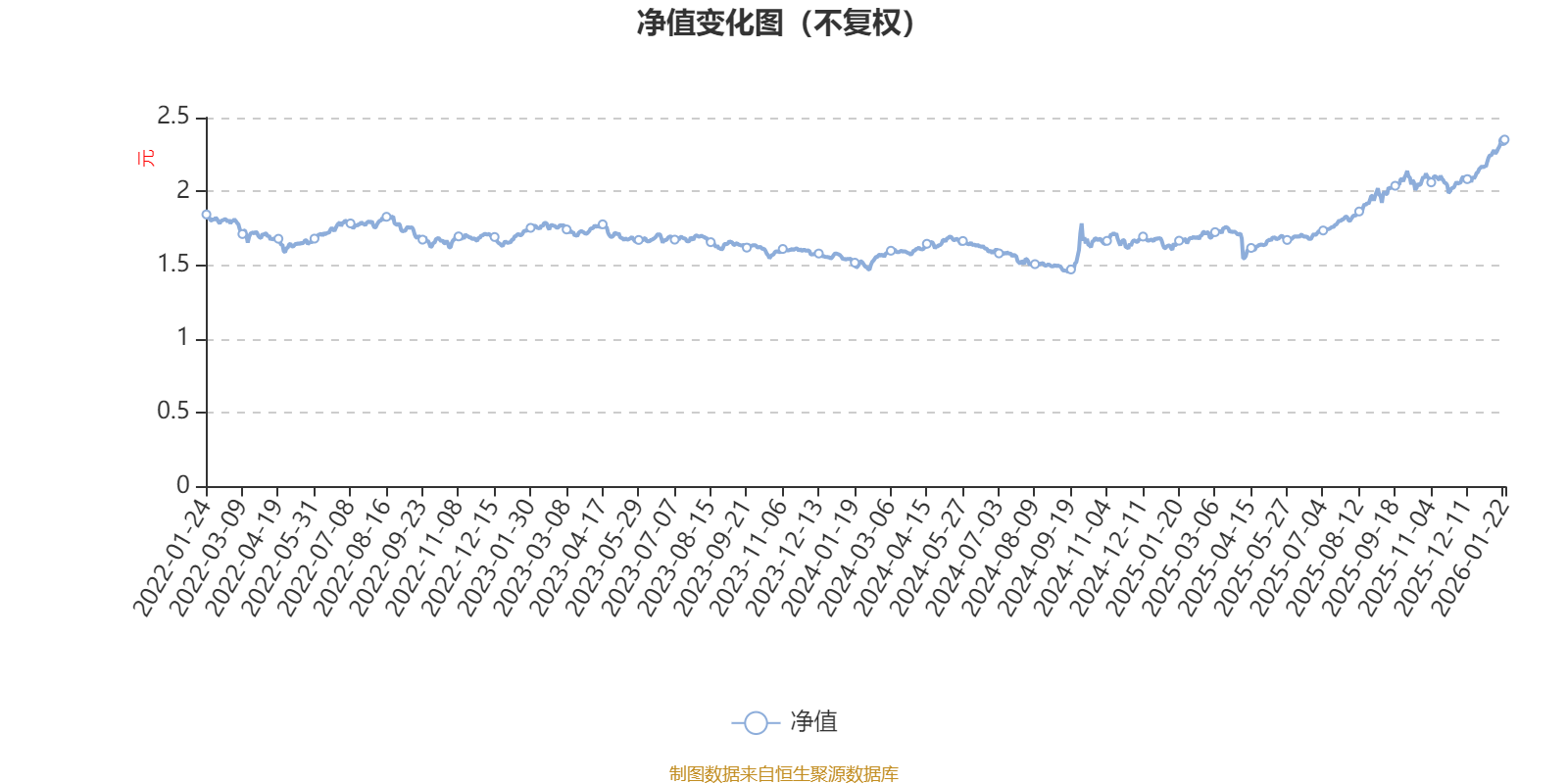
Core Viewpoint - The AI Fund Southern Reform Opportunity Flexible Allocation Mixed Fund (001181) reported a profit of 9.5837 million yuan for Q4 2025, with a weighted average profit per fund share of 0.0579 yuan. The fund's net value growth rate was 2.65%, and its total size reached 363 million yuan by the end of Q4 2025 [3][15]. Fund Performance - As of January 22, the fund's unit net value was 2.351 yuan. The fund manager, Lu Yushan, oversees six funds, all of which have shown positive returns over the past year. The highest one-year growth rate among these funds was 47.08% for the Southern Junxuan Flexible Allocation Mixed Fund, while the lowest was 36.07% for the Southern Junyu Mixed A Fund [3]. - The fund's one-month, six-month, and one-year growth rates were 15.02%, 30.39%, and 40.95%, respectively, ranking 288/1286, 434/1286, and 498/1286 among comparable funds [4]. Risk and Return Metrics - The fund's Sharpe ratio over the past three years was 0.8252, ranking 255/1275 among comparable funds [9]. - The maximum drawdown over the past three years was 18.69%, with the highest single-quarter drawdown recorded at 16.86% in Q1 2020 [11]. Investment Strategy - The fund's average stock position over the past three years was 78.66%, compared to the industry average of 72.57%. The fund reached a peak stock position of 89.72% at the end of Q1 2023, while the lowest was 41.63% at the end of Q1 2022 [14]. - The fund's top ten holdings as of December 31 included Ningde Times, Jereh Group, Shengyi Technology, Pan-Asia Micro-Transparent, Yara International, XCMG, Luoyang Molybdenum, Jiuli Special Materials, China Glass, and Dongfang Electric Cable [18]. Market Outlook - The fund manager anticipates a stable macroeconomic environment in Q1 2026, with a positive and loose fiscal and monetary policy. The market's risk appetite is expected to remain high, with a potential orderly spring rally. Key focus areas include trends in the AI industry, improvements in supply-demand dynamics in materials and midstream manufacturing, as well as sectors like commercial aerospace, AI applications, AI computing power, and semiconductor equipment [3].
最新!超990亿元,“跑了”!
Zhong Guo Ji Jin Bao· 2026-01-22 06:59
Group 1 - The core point of the article highlights a significant outflow of funds from stock ETFs, exceeding 990 billion yuan, with broad-based ETFs collectively experiencing a net outflow of over 1 trillion yuan [2][3] - On January 21, the total net outflow from the stock ETF market (including cross-border ETFs) reached 994.94 billion yuan, with broad-based ETFs seeing a decline in scale by 940.9 billion yuan [3] - The SGE Gold 9999 index recorded the highest net inflow of 19.29 billion yuan, while the CSI 300 index faced the largest net outflow of 581.98 billion yuan on the same day [3] Group 2 - The top-performing ETFs in terms of net inflow included the Electric Grid Equipment ETF and the Chemical ETF, with net inflows of 14.38 billion yuan and 8.26 billion yuan, respectively [6][7] - Notable inflows were also observed in the Gold Stock ETF and the Semiconductor ETF, with net inflows of 5.74 billion yuan and 5.20 billion yuan, respectively [6] - The report indicates that the Electric Grid Equipment ETF and the Semiconductor ETF from Huaxia Fund saw significant inflows, reflecting investor interest in these sectors [3][4] Group 3 - The article mentions that the CSI 300 ETF and the CSI 1000 ETF were among the largest "bloodletting" ETFs, with substantial net outflows of 168.28 billion yuan and 138.52 billion yuan, respectively [5][7] - The overall market sentiment remains cautiously optimistic, with expectations for a continued upward trend in the Chinese stock market, particularly in growth sectors such as AI and industrial metals [8] - The investment strategy suggested includes focusing on core growth assets, which are currently at historical median valuations, providing potential for valuation recovery [8]