
普惠金融

Search documents
规模质量双升 责任发展并行 中邮消费金融交出一份普惠答卷
Sou Hu Cai Jing· 2025-10-20 18:40
Core Insights - 中邮消费金融在2025年上半年实现营业收入39.72亿元,净利润6.33亿元,净利润同比增长165.97% [1] - 公司积极践行金融"五篇大文章",为行业高质量发展提供实践范本 [1] Financial Performance - 中邮消费金融上半年营业收入为39.72亿元,净利润为6.33亿元 [1] - 净利润同比大幅增长165.97% [1] Business Strategy - 公司致力于提升金融服务的可得性与覆盖率,秉持"金融为民"理念 [1] - 贷款综合定价较上年末下降21个基点,发放普惠贷款1038亿元 [2] - 为2.53万名客户提供专项息费减免、延期、展期、信贷支持计划和调解服务 [2] Product and Service Innovation - 中邮消费金融构建了以"邮你贷"为核心的产品体系,覆盖多个消费场景 [1] - "中邮钱包APP"完成焕新升级,贷款流程精简至3步,提升用户体验 [1] - 创新"消费金融+"异业合作模式,与多家企业开展跨界合作 [2] Future Outlook - 公司将继续构建便捷、高效、普惠的金融服务体系,提供个性化、多样化的消费金融体验 [2]

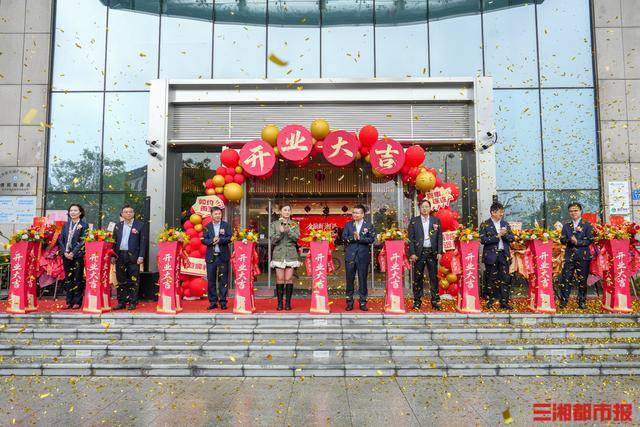
硬件升级服务提质,中国民生银行长沙分行营业部焕新启航
Sou Hu Cai Jing· 2025-10-20 11:32
Core Viewpoint - China Minsheng Bank's Changsha branch has undergone a significant renovation, enhancing its service capabilities and technological integration to better serve local citizens and businesses, reflecting its commitment to regional development and financial empowerment [1][9]. Group 1: Renovation and Upgrades - The Changsha branch has introduced upgraded smart devices and restructured service areas to create a more comfortable and efficient banking environment [3][4]. - New features include a redesigned lobby with advanced equipment such as cash intelligent cabinets and a dedicated wealth management center, optimizing customer experience [3][7]. - The branch aims to enhance service efficiency, reducing transaction times significantly, with average processing times for certain services cut from 8 minutes to 3 minutes [3][10]. Group 2: Targeted Services for Diverse Demographics - The bank has implemented tailored services for different customer segments, including a digital financial service package for younger clients and a dedicated financial manager service for the elderly [7][8]. - Specialized services for small and micro enterprises include simplified loan processes and tailored financial products to meet specific industry needs [8][10]. Group 3: Commitment to Local Economic Development - The renovation aligns with the bank's strategy to support local economic growth, particularly focusing on small and micro enterprises through innovative financing solutions [9][10]. - The bank has actively engaged in providing financial support to local industries, exemplified by a recent case where a company received 30 million yuan in funding to enhance production efficiency by 40% [10][11]. - The bank's ongoing initiatives reflect its dedication to serving the community and contributing to the high-quality development of Hunan province [11].

三农金融事业部涉农贷款利息收入可选择适用简易计税方法缴纳增值税相关政策
蓝色柳林财税室· 2025-10-20 08:33
Core Viewpoint - The article discusses the preferential tax policy for agricultural loans provided by China Postal Savings Bank's Rural Financial Division, allowing eligible branches to choose a simplified tax method for VAT calculation at a rate of 3% on interest income from agricultural loans [4][5]. Group 1: Policy Details - The policy is applicable until December 31, 2027, for branches under the Rural Financial Division of China Postal Savings Bank in various provinces and municipalities [4]. - Eligible agricultural loans include those provided to farmers, rural enterprises, and various rural organizations, which can opt for the simplified VAT calculation method [5][6]. Group 2: Eligibility Criteria - Farmers are defined as individuals residing in rural areas for over one year, including those in townships and certain collective households [5][9]. - Loans to rural enterprises and organizations must be registered in rural areas to qualify for the tax benefits [5][9]. Group 3: Policy Basis - The policy is based on announcements from the Ministry of Finance and the State Administration of Taxation regarding the extension of tax incentives for agricultural loans [8][10].

金融机构与小型微型企业签订借款合同免征印花税
蓝色柳林财税室· 2025-10-20 08:33
Group 1 - The article discusses the promotion of inclusive finance development, specifically focusing on tax exemptions for loans between financial institutions and small and micro enterprises [1][4]. - Financial institutions and small and micro enterprises will be exempt from stamp duty on loan contracts signed before December 31, 2027 [1][4]. - The criteria for small and micro enterprises are defined according to the "Standards for Classification of Small and Medium-sized Enterprises" issued by the Ministry of Industry and Information Technology [2][8]. Group 2 - The total assets and number of employees of small and micro enterprises are determined based on their actual status at the time of loan issuance [2]. - The revenue indicator for these enterprises is calculated based on the cumulative revenue over the 12 months prior to the loan issuance [2][3]. - If the enterprise has not been in operation for 12 months, the annual revenue is calculated using a specific formula [3].

保险公司农业大灾风险准备金税前扣除
蓝色柳林财税室· 2025-10-20 08:33
Group 1 - The article discusses the promotion of inclusive financial development through tax incentives for banking financial institutions and agricultural insurance companies [1][2]. - Agricultural insurance companies that receive premium subsidies from the government can deduct the disaster risk reserve from their taxable income, which is calculated based on a specified percentage of premium income [1][2]. - The calculation for the deductible disaster risk reserve is defined as the current year's premium income multiplied by the specified ratio minus the balance of the disaster risk reserve already deducted in the previous year [2]. Group 2 - The policy basis for these tax incentives includes notifications from the Ministry of Finance and the State Administration of Taxation regarding the tax treatment of reserves for insurance companies [3]. - Specific regulations and guidelines are outlined in the "Management Measures for Agricultural Insurance Disaster Risk Reserves" issued by the Ministry of Finance [2][3].

2025中金财富1018发布会举办
Ren Min Wang· 2025-10-20 08:17
Core Insights - The event "2025 CICC Wealth 1018 Release Conference" highlighted the unique attractiveness of the Chinese market, driven by technological breakthroughs and resilient manufacturing upgrades, which are reshaping global capital flows [1] - CICC Wealth's buy-side advisory model has achieved significant growth, surpassing 1 trillion yuan in assets under management (AUM) in July and recently exceeding 1200 billion yuan [1] - The international asset management scale of CICC's wealth management division has reached 2.2 billion USD, covering various areas such as asset allocation and discretionary portfolio management [1] AI Empowerment - CICC Wealth is enhancing client investment decisions through AI tools that provide efficient access to information and knowledge, while also developing AI-powered "super advisors" to improve service efficiency [2] - The company is upgrading its digital platforms, including E-Space, RITAS, and the CICC Wealth APP, to deepen the application of AI in investment research, advisory services, and client interactions [2] - AI technology enables the customization of investment solutions within 30 seconds based on thousands of market products, tailored to current market conditions [2] Inclusive Finance - CICC Wealth is strengthening the supply of passive investment products and translating professional asset allocation logic into services that are easily understandable for the general public [2] - The establishment of a service center for specialized and innovative small and medium-sized enterprises (SMEs) aims to create an inclusive financial service system, integrating internal and external resources to support these businesses [2]

中小企业融资(信用)担保机构有关准备金企业所得税税前扣除
蓝色柳林财税室· 2025-10-20 07:56
Core Viewpoint - The article discusses tax incentives for small and medium-sized enterprise (SME) financing guarantee institutions, focusing on the tax deductions for reserves related to guarantee compensation and unexpired liabilities [3][4]. Summary by Sections Tax Incentives for SME Financing Guarantee Institutions - Eligible SME financing guarantee institutions can deduct certain reserves from their corporate income tax. This includes: 1. Guarantee compensation reserves, capped at 1% of the year-end guarantee liability balance, which can be deducted from taxable income. Previous year's reserves can be converted into current income [3]. 2. Unexpired liability reserves, capped at 50% of the current year's guarantee fee income, which can also be deducted from taxable income. Previous year's reserves can similarly be converted into current income [3]. Eligibility Criteria - To qualify for these tax incentives, SME financing guarantee institutions must meet the following criteria: 1. Compliance with the "Interim Measures for the Administration of Financing Guarantee Companies" and possess a valid operating license issued by the regulatory authority [5]. 2. The volume of credit guarantee and re-guarantee business for SMEs must account for over 70% of the total credit guarantee business for the year, excluding income from credit rating, consulting, and training [5]. 3. The average annual guarantee fee rate for SME financing must not exceed 50% of the bank's benchmark loan interest rate [5]. 4. Other conditions as stipulated by the finance and tax authorities [5]. Policy Basis - The article references the policy notifications from the Ministry of Finance and the State Administration of Taxation regarding the tax deductions for reserves of SME financing guarantee institutions [10].

为农户及小型微型企业提供融资担保及再担保业务免征增值税
蓝色柳林财税室· 2025-10-20 07:56
Core Viewpoint - The article discusses tax incentives for financing guarantees and re-guarantees aimed at promoting inclusive finance for farmers and small and micro enterprises, exempting them from value-added tax until December 31, 2027 [2][3]. Summary by Sections Financing Guarantee and Re-guarantee Business Tax Incentives - Financing guarantees and re-guarantees provided to farmers, small enterprises, micro enterprises, and individual businesses will be exempt from value-added tax [2][3]. Eligible Entities - Eligible entities include farmers, small enterprises, micro enterprises, and individual businesses that provide financing guarantees and re-guarantees for loans and bond issuances [2][3]. Conditions for Enjoying Tax Exemption - Farmers are defined as households residing in rural areas for over a year, including those in townships and certain collective households [4]. - Small and micro enterprises must meet the criteria set by the Ministry of Industry and Information Technology, with asset totals and employee counts determined at the time of the original guarantee [4]. - If a re-guarantee contract corresponds to multiple original guarantee contracts, all original contracts must apply for the tax exemption [4]. Policy Basis - The policy is based on regulations from the Ministry of Industry and Information Technology, National Bureau of Statistics, National Development and Reform Commission, and the Ministry of Finance [5].

小额贷款公司相关税收优惠政策
蓝色柳林财税室· 2025-10-20 07:56
Core Viewpoint - The article discusses tax incentives for microfinance companies, specifically focusing on loan loss provisions and interest income from loans to farmers, aimed at promoting inclusive finance development. Group 1: Loan Loss Provisions - Microfinance companies approved by provincial financial regulatory authorities can deduct 1% of their year-end loan balance as loan loss provisions from corporate income tax until December 31, 2027 [1][2]. Group 2: Interest Income from Loans to Farmers - Microfinance companies can reduce the taxable income from interest earned on loans to farmers by 90% until December 31, 2027 [4][5]. - The definition of "farmers" includes long-term residents in rural areas and specific criteria for loan eligibility, with loans capped at 100,000 yuan (including principal) [5][11]. Group 3: VAT Exemption - Interest income from loans to farmers is exempt from value-added tax (VAT) until December 31, 2027, for microfinance companies approved by provincial financial regulatory authorities [9][10].

资本市场普惠价值显现 业者建议关注功能激活与制度完善
Zhong Guo Jing Ying Bao· 2025-10-20 06:45
Core Viewpoint - The value of capital markets in supporting inclusive finance is increasingly recognized, with a focus on activating the functions of the New Third Board (NTB) and improving its system to enhance resource allocation for small and medium-sized enterprises (SMEs) [1][3]. Group 1: Capital Market and Inclusive Finance - The NTB is inherently a financing market for SMEs, possessing characteristics of inclusive finance, with approximately 25% of main board IPOs originating from the NTB [3]. - As of October 2025, there are over 6,000 companies listed on the NTB, primarily in innovative SMEs, indicating its role in facilitating financing for these enterprises [1][2]. - The China Securities Regulatory Commission (CSRC) emphasizes the unique advantages of capital markets in sharing innovation risks and promoting the formation of innovative capital [4]. Group 2: Financing Mechanisms and Benefits - Direct financing through capital markets improves funding efficiency for innovative SMEs, providing sustainable capital support, unlike traditional bank loans which are rigid and constrained [5][6]. - The NTB allows companies to obtain not only funds but also resources and credibility, establishing long-term partnerships based on shared values and growth [6]. - The NTB's lower listing thresholds and costs compared to the main board enhance its accessibility for SMEs, promoting a more inclusive financial environment [3][5]. Group 3: Future Directions and Recommendations - There is a call for greater attention to the activation of NTB functions and system improvements to support the financing of SMEs, which could help alleviate IPO review pressures [7]. - The development of the NTB could significantly benefit the over 60 million SMEs in China, highlighting the need for a sustainable development path for capital market support of inclusive finance [7]. - The essence of inclusive finance extends beyond mere financing to building a service network that integrates capital, industry, and policy, positioning it as a true engine for innovation [7].