养老金融

Search documents
圆桌讨论:专家呼吁多方协同发力,以全生命周期视角提升家庭养老金融健康韧性
清华金融评论· 2025-06-14 09:51
Core Viewpoint - The article discusses the challenges and opportunities in enhancing the health of family pension finance in China amidst an aging population and the need for quality elderly care solutions [2]. Group 1: Current State of Pension Finance - The current pension finance system in China is characterized by a three-pillar structure, with the first pillar being basic pension insurance, which is insufficient for quality retirement living due to rapid aging and rising living standards [4]. - China's pension asset accumulation is significantly lower than that of high-income countries, with personal pension assets accounting for only about 4% of GDP compared to nearly or over 90% in OECD countries [4]. - The coverage rate of the third pillar personal pension can be significantly improved, as evidenced by the 93% coverage rate among employees of the State Grid Hubei Company [4]. Group 2: Policy and Structural Challenges - Current pension finance policies have a framework in place but lack sufficient funding, precision, and regional coordination, particularly for low-income groups [5]. - The second pillar, which includes enterprise and occupational annuities, has low participation, especially among private and small enterprises, necessitating policy incentives to broaden coverage [13]. - The third pillar relies on voluntary participation, which is insufficiently attractive, indicating a need for enhanced incentives to encourage participation [13]. Group 3: Role of Insurance in Pension Finance - Insurance plays a unique role in providing stable, long-term cash flow for retirement, which is crucial for meeting diverse family pension needs [7]. - The focus should be on creating a network that integrates insurance with services and experiences, addressing the growing demand for accessible elderly care resources [7]. Group 4: Recommendations for Improvement - To enhance personal pension systems, it is essential to explore diversified incentive mechanisms that can increase participation rates, especially among low- and middle-income groups [8]. - The design of pension financial products should prioritize long-term cash flow stability and cater to varying income levels and retirement plans [11]. - There is a need for better integration of pension finance with elderly care services, ensuring that facilities meet the actual needs of the elderly and leveraging technology to improve service efficiency [12].

张栋:锚定家庭养老金融产品需求,创新养老模式助力家庭养老金融健康 | 养老金融健康专题
清华金融评论· 2025-06-14 09:51
Core Viewpoint - The article emphasizes the urgent need to address the challenges posed by an aging population, highlighting the importance of developing a robust pension finance system to support elderly care and financial security for future generations [1][2]. Group 1: Challenges Faced by the 70s and 80s Generations - The 70s and 80s generations are experiencing dual pressures from supporting their elderly parents while managing their own family financial burdens, often leading to increased economic and emotional stress [4]. - Many in this demographic face insufficient savings for retirement, with high housing costs consuming over 50% of their income, limiting their ability to save for elderly care [5]. - The reliance on children for support is diminishing due to the one-child policy and increasing economic pressures on the younger generation, exacerbating the long-term care risk for the elderly [5]. Group 2: Recommendations for Improving Pension Preparedness - There is a need to enhance personal savings awareness and action, particularly during the critical 40-50 age range, by participating in the "three pillars of pension" system [5]. - Families should optimize their financial structures to avoid excessive debt and incorporate retirement savings into their budgets [5]. - Health management should be prioritized to mitigate future medical expenses, emphasizing the importance of regular health check-ups and insurance [5]. Group 3: Enhancing Acceptance of Pension Financial Products - Strengthening policy guidance and incentive mechanisms is crucial for increasing participation in pension financial products, including tax benefits and subsidies for low-income groups [6]. - Financial institutions should tailor pension products to meet the specific needs of the 70s and 80s generations, offering diverse options that align with their financial situations and risk preferences [8]. Group 4: Demand and Misconceptions Regarding Pension Financial Products - Families primarily seek safety and stability in pension financial products, preferring low-risk options that ensure the security of their retirement funds [9]. - There are common misconceptions, such as neglecting personal needs and risk tolerance, leading to unsuitable product choices [10][11]. - A tendency to pursue high returns without understanding associated risks can result in poor investment decisions [12]. Group 5: Innovations in Pension Financial Products - The "reverse mortgage" model, allowing seniors to leverage their home equity for retirement income, is gaining traction but faces acceptance challenges due to traditional views on inheritance [18][20]. - The valuation of properties for reverse mortgages can be contentious, with both parties often at odds over property worth [21]. - Regulatory frameworks and public trust are essential for the successful implementation of reverse mortgage products, which currently face legal and operational hurdles in China [22][24]. Group 6: International Insights and Best Practices - Successful international models of reverse mortgages highlight the importance of government involvement and legal protections to foster market confidence [23]. - Public acceptance and understanding of reverse mortgage products are critical for their success, necessitating effective communication and education strategies [25]. - A mature industry ecosystem involving finance, real estate, and elder care services is vital for the sustainable development of reverse mortgage products [26].
每周股票复盘:上海银行(601229)2024年不良贷款“双降”,净息差承压应对策略明确
Sou Hu Cai Jing· 2025-06-13 21:45
Core Viewpoint - Shanghai Bank has achieved a "double decline" in non-performing loan (NPL) ratio and balance for 2024, while also addressing challenges related to net interest margin and focusing on growth in technology, inclusive, and green finance [1][2][3][4]. Group 1: Non-Performing Loans - Shanghai Bank has seen a year-on-year decline in non-performing loan ratio and balance, attributed to enhanced credit risk management and a focus on resolving existing risks, maintaining an annual resolution scale of over 20 billion yuan [1][4]. - The bank has implemented a data-driven risk management system to further reduce the generation rate of non-performing assets [1]. Group 2: Net Interest Margin - The bank anticipates continued pressure on net interest margin due to expected monetary policy stability and declining market interest rates, leading to a decrease in the yield on interest-earning assets [2]. - Strategies to counteract this include improving the asset-liability structure and managing deposit pricing to lower interest-bearing liabilities [2]. Group 3: Financial Services and Growth Areas - In Q1 2025, Shanghai Bank reported significant growth in loans for technology finance (64.6 billion yuan), inclusive finance (52.6 billion yuan), and green finance (19.1 billion yuan), with year-on-year growth rates of 26.48%, 6.17%, and 10.05% respectively [3][4]. - The bank is committed to supporting the real economy and diversifying its financial service offerings in alignment with national strategic directions [3]. Group 4: Dividend Policy - Shanghai Bank has increased its cash dividend payout ratio to 31.22% for the 2024 fiscal year, with plans to maintain a minimum of 30% in cash dividends over the next three years [3][4].

宗良:完善家庭养老金融健康政策制度,充分发挥养老金融在社会保障中的作用 | 养老金融健康专题
清华金融评论· 2025-06-13 11:01
Core Viewpoint - The article emphasizes the urgent need for optimizing pension finance policies in response to the unprecedented wave of global population aging, highlighting the importance of developing a robust pension finance system to support social security and economic stability [2][3]. Group 1: Current Status of Pension Finance in China - The pension finance system in China is entering a critical phase of quality improvement, with a projected 15.6% of the population aged 65 and above by the end of 2024 [4]. - China has established a three-pillar pension finance system, which includes basic pension insurance, enterprise occupational annuities, and personal pensions, with a growing variety of pension financial products available [4]. - As of June 2024, there are 762 personal pension products available, including 465 savings products, 192 fund products, 82 insurance products, and 23 wealth management products, indicating a rapid increase in product diversity [4]. Group 2: Challenges in Pension Finance Development - The third pillar of personal pension finance needs faster development, as it currently covers less than one-tenth of the national population, with a phenomenon of "hot openings but cold contributions" [5]. - The shift from "intergenerational support" to "self-reliance" in pension finance is evident, with 61.64% of respondents in a survey considering "self-reliance" as the most reliable pension model [6]. - The current pension finance system shows a significant imbalance, with basic pension insurance achieving full coverage while personal pension systems lag behind [7]. Group 3: Government's Role in Pension Finance - The government should strengthen the third pillar by expanding the audience for pension finance, addressing the low coverage of personal pensions, and enhancing the system's multi-tiered development [8]. - There is a need to leverage the long-term and stable advantages of pension funds to reduce risks and increase returns by encouraging pension investments in capital markets [8]. - Establishing a robust risk management system and enhancing transparency in information disclosure are crucial for improving public trust in pension finance [9]. Group 4: Policy Improvements for Family Pension Finance - Current pension finance policies lack coordination and precision, with only 15.9 million employees covered by enterprise annuity plans, representing less than 20% of urban employment [10][11]. - Expanding tax incentives for low- and middle-income families could enhance participation in pension finance, as current tax benefits are limited [11]. - Diversifying pension financial products to meet various family needs and improving market regulation to increase awareness and trust in pension products are essential [12]. Group 5: Regional Development and Support for Underdeveloped Areas - There is a regional imbalance in pension finance, with a need for targeted policies to support underdeveloped areas, including the issuance of special pension bonds [14]. - Differentiated policies should be designed based on regional and urban-rural disparities, such as developing small-scale inclusive pension insurance products for rural areas [14]. Group 6: Integration of Technology and Pension Finance - Promoting the integration of technological innovation with pension finance and the pension industry is essential for optimizing the structure and enhancing development [15]. - The government should encourage social capital participation in the pension service industry, utilizing financial tools to support the development of diverse pension services [15]. - Effective management of pension assets and risk control is vital for ensuring the sustainable growth of the pension industry and meeting diverse social needs [16].
中国银行上海市分行亮相2025上海国际养老、辅具及康复医疗博览会
第一财经· 2025-06-12 11:11
赋能银发经济高质量发展,为加快构建与我国人口老龄化进程相适应的金 融服务体系贡献中行力量。 来源: 中国银行上海市分行公司金融与投资银行部 老博会开幕首日,在上海市养老服务和老龄产业协会主办的"大城养 老"创新发展大会养老金融专场活动上,中行上海市分行正式发布《"中银 长护+"综合金融服务方案》,为在沪从事长护险服务的小微企业、民非机 构及护工等提供综合金融支持,助力长护险事业高质量发展。 近年来,中行上海市分行全方位布局养老金金融、养老服务金融、养 老产业金融三大领域,围绕服务政府、企业、个人三个维度,着力打造全 球化、综合化、场景化三大核心优势。如,推出"金账户养成计划",为市 民提供个人养老金开户、缴费、投资、领取等在内的一站式便利化服务。 今年,更是在设立服务消费与养老再贷款新政出台后迅速行动,率先落地 上海地区首笔养老产业贷款投放,为养老产业蓬勃发展注入源源不断的金 融动能。 未来,中行上海市分行将持续深入践行金融工作的政治性、人民性, 在书写"养老金融大文章"中持续探索创新,扎实推进养老金融提质增效, 6月11日,2025上海国际养老、辅具及康复医疗博览会(简称"老博 会")拉开帷幕。中行上海市分 ...


孙思毅:穿越全生命周期 锻造家庭养老金融韧性
清华金融评论· 2025-06-12 10:15
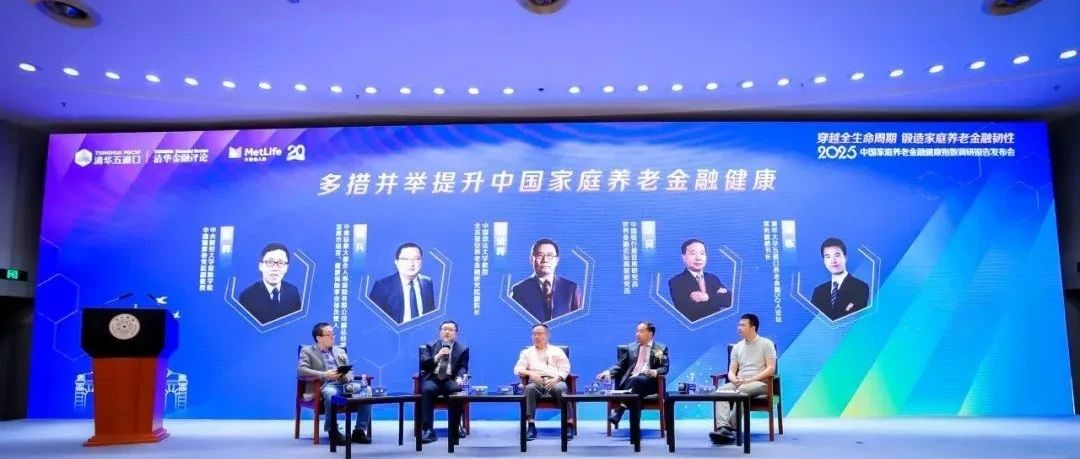
孙思毅表示,随着中国社会迈入长寿时代,养老问题日益成为民生焦点。公众对养老的期 待正从基本的"老有所养、老有所依"向"老有所乐"升级,凸显出家庭养老金融需求的多样 化与前瞻性。这一趋势不仅要求家庭及早筹划,更需要政府、市场和社会三方共同推动养 老金融体系的供给侧改革与服务升级。在此背景下,《2025中国家庭养老金融健康指数调 研报告》应运而生。亦标志着大都会人寿进入中国20年来,在服务中国家庭、深耕养老金 融领域所积淀的使命与担当。未来,大都会人寿将继续加强与学界、业界和政策部门的协 同合作,探索更具创新性、普惠性和韧性的养老金融解决方案,助力构建更健全的社会养 老保障体系。 6月6日,由清华大学五道口金融学院《清华金融评论》携手中美联泰大都会人寿保险有限 公司(以下简称"大都会人寿")联合主办。本次发布会汇聚养老金融领域专家学者及三百 余企业代表,共同探讨中国养老金融发展现状与未来。活动现场,中美联泰大都会人寿保 险有限公司总经理兼首席执行官孙思毅作为报告发起方代表之一,在开场致辞中表明了大 都会人寿在康养生态领域的深度布局和肩负的社会责任。 图为孙思毅 分享 以下为嘉宾演讲全文 尊敬的各位领导、各位来宾, ...

胡继晔:推动养老金融与养老服务协同创新,助力家庭养老金融健康发展 | 养老金融健康专题
清华金融评论· 2025-06-12 10:15
Core Viewpoint - The article emphasizes the urgent need for optimizing pension finance policies in response to the unprecedented wave of global population aging, highlighting the importance of developing a robust pension finance system to support economic growth and social stability [2][4]. Group 1: Current State of Pension Finance - The overall development of pension finance in China is characterized by a reliance on bank deposits, while the U.S. has a more developed system based on personal pension assets [4]. - As of the end of 2024, China's financial institutions have total assets of 495.59 trillion yuan, with the banking sector dominating at 89.7% [5]. - The M2/GDP ratio in China is significantly higher at 2.27 compared to the U.S. at 0.71, indicating a focus on savings for retirement rather than investment [6]. Group 2: Government Role in Pension Finance - The government should analyze the collaborative development mechanism between multi-level capital markets and pension systems, utilizing new financial tools to enhance pension investment [9]. - A "long money long investment" ecosystem should be established to facilitate the transition from savings-based to investment-based retirement planning [9][11]. Group 3: Policy Shortcomings and Improvements - There is a significant lack of support for the second pillar of pension finance, with only 54.2% of respondents having access to enterprise or occupational pensions compared to 81.4% for housing provident funds [12]. - Young individuals face a shortage of funds for retirement; thus, the introduction of a subsidy program similar to Germany's Riester Plan could encourage investment in personal pensions [13]. Group 4: Regional Development Disparities - There is a notable disparity in pension benefits between urban and rural areas, with ongoing discussions aimed at increasing rural pension standards to 500-600 yuan per month by 2035 [14]. - The design of inclusive pension financial products should be tailored to low-income groups and rural populations to ensure broader coverage [14]. Group 5: Recommendations for Policy Enhancement - Policies should promote "long money long investment" by optimizing pension system designs and expanding the investable pension fund size [16]. - The first pillar of basic pension insurance should consider issuing special government bonds and increasing the basic pension for farmers [17]. - The second pillar should implement automatic enrollment mechanisms and integrate various pension accounts, while the third pillar could adopt financial subsidy policies to attract younger investors [18].
中行亮相2025上海老博会,发布《“中银长护+”综合金融服务方案》
Zhong Guo Jin Rong Xin Xi Wang· 2025-06-12 07:49
Group 1 - The 2025 Shanghai International Elderly Care, Aids, and Rehabilitation Medical Expo (referred to as "Elderly Expo") commenced on June 11, showcasing various financial services and products aimed at the elderly care sector [1][2] - Bank of China Shanghai Branch has participated in the Elderly Expo for five consecutive years, presenting the "BOC Long-term Care+" comprehensive financial service plan, which attracted significant interest from attendees [1][2] - The bank's exhibition focused on three main areas: pension finance, elderly service finance, and elderly industry finance, highlighting its quality services for social security funds, basic pension insurance, corporate annuities, occupational annuities, and personal pensions [1][2] Group 2 - The bank officially launched the "BOC Long-term Care+" comprehensive financial service plan at the "Big City Elderly Care" innovation development conference, aimed at providing financial support to small and micro enterprises engaged in long-term care insurance services [2] - The bank has strategically positioned itself in three key areas: pension finance, elderly service finance, and elderly industry finance, focusing on serving government, enterprises, and individuals [2] - The bank introduced the "Golden Account Cultivation Plan," offering a one-stop service for personal pension account opening, payment, investment, and withdrawal [2]
“专业投研+科技赋能” 南方基金迈向高质量发展新征程
Cai Jing Wang· 2025-06-12 02:37
Core Viewpoint - Financial institutions are actively entering the market to enhance equity allocation, stabilize capital markets, and promote value investment, thereby contributing to the healthy and orderly development of the capital market [1] Group 1: High-Quality Development - Southern Fund has implemented the central financial work meeting's spirit, focusing on serving the real economy through five key areas: technology finance, green finance, inclusive finance, pension finance, and digital finance [2] - The company emphasizes technology finance as a core strategy for modern industrial system construction, enhancing research and asset allocation in strategic emerging industries like semiconductors, artificial intelligence, and biomedicine [2] Group 2: Green Finance and ESG Practices - Southern Fund actively practices ESG investment principles, covering over 5,100 A-share companies and 7,100 bond issuers in its ESG rating system, significantly impacting ESG performance and risk assessment [3] - The company has developed a comprehensive carbon emission database for all A-share listed companies and received two awards from UNPRI for its ESG practices [3] Group 3: Inclusive Finance and Digital Transformation - The company adheres to the "finance for the people" philosophy, enhancing investor experience through innovative platforms like "Sinan Investment Advisory" for comprehensive asset allocation solutions [3] - Southern Fund prioritizes financial technology, implementing a clear digital transformation strategy to integrate finance with digital technology, thereby improving service efficiency [4] Group 4: Value Creation and Market Stability - The introduction of the new "National Nine Articles" has improved the capital market's foundational systems and enhanced institutional investor stability [5] - Southern Fund supports the implementation of policies aimed at increasing long-term capital market participation, which is crucial for optimizing investor structure and enhancing market resilience [5] Group 5: Regulatory Framework and Future Outlook - The China Securities Regulatory Commission released an action plan for promoting high-quality development in the public fund industry, focusing on optimizing operational models and enhancing equity investment [6] - Southern Fund aims to adhere to its core asset management principles while exploring ways to support modern industrial systems and contribute to common prosperity [6]
【读财报】上市银行养老金融透视:工行、交行、中信银行个人养老金开户数翻倍增长,养老金融产品多元化
Xin Hua Cai Jing· 2025-06-11 23:27
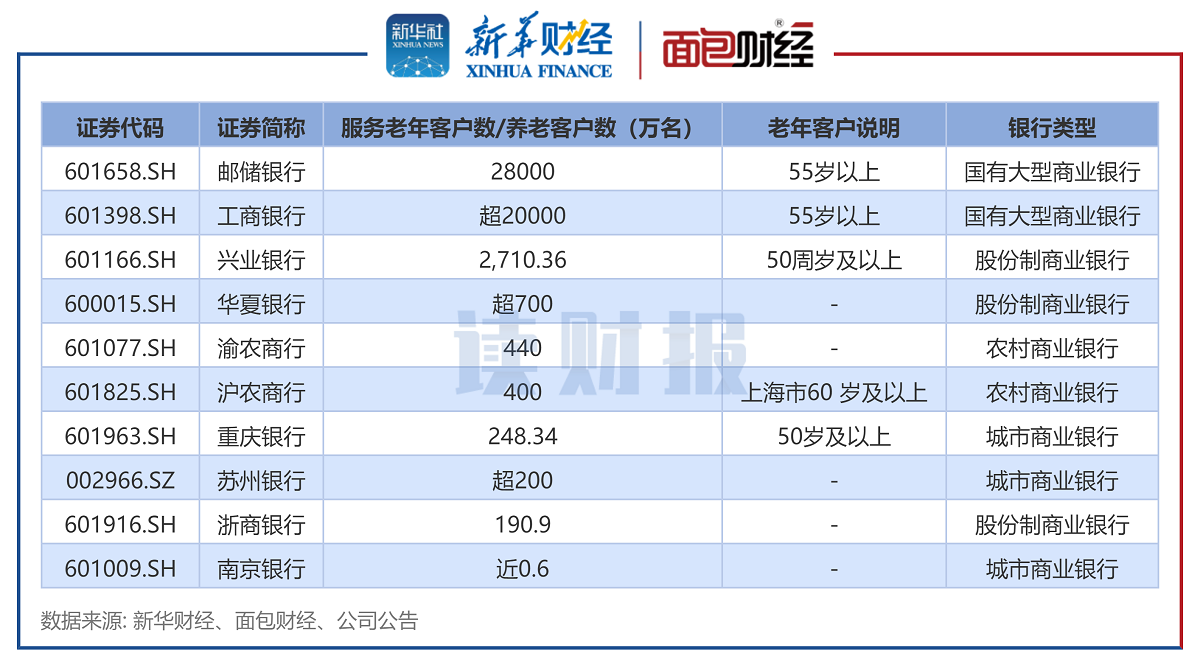
Core Viewpoint - The central financial work conference emphasizes the development of five key areas in finance: technology finance, green finance, inclusive finance, pension finance, and digital finance, with a focus on enhancing support for key sectors such as technological innovation and green transformation [1][2] Group 1: Pension Finance Development - By the end of 2024, Postal Savings Bank and Industrial and Commercial Bank of China (ICBC) each served over 200 million elderly clients [3][4] - The personal pension system has been fully implemented, leading to a rapid increase in personal pension account openings at several listed banks, with ICBC, Bank of Communications, and CITIC Bank seeing their account numbers double [1][7] - As of the end of 2024, China Bank and China Merchants Bank each had over 10 million personal pension accounts [1][7] Group 2: Growth in Personal Pension Accounts - A total of 12 listed banks reported significant growth in personal pension accounts, with China Bank and China Merchants Bank each exceeding 10 million accounts [7][8] - CITIC Bank reported a 136.04% increase in personal pension accounts compared to the previous year, while Industrial Bank saw a 47.67% increase [10][8] - The personal pension account numbers for Beijing Bank and Shanghai Bank surpassed 170,000 and 159,530 respectively by the end of 2024 [7][8] Group 3: Diversification of Pension Financial Products - The National Financial Regulatory Administration has issued guidelines to enhance the quality of pension finance, encouraging banks to diversify their product offerings and improve service adaptability [11][12] - China Bank has launched 262 personal pension products, covering various financial instruments, positioning itself as a leader in product variety [11] - Agricultural Bank of China is focused on enhancing the coverage and quality of its pension financial services, while CITIC Bank has developed a comprehensive pension financial product and service system [12]