储蓄存款

Search documents
建设银行副行长唐朔:储蓄存款总量超过18万亿,定期存款到期承接率较好
Bei Jing Shang Bao· 2026-03-27 13:08
Core Viewpoint - China Construction Bank has experienced rapid growth in savings deposits, exceeding 18 trillion yuan, with time deposits nearing 12 trillion yuan, indicating a strong overall acceptance rate [1] Group 1 - The bank plans to continuously monitor market dynamics to adapt to changes in customer needs and fund flows [1] - The focus will be on enhancing service quality and optimizing asset allocation to promote high-quality development of deposits [1] - The bank aims to expand transaction-based funds by focusing on key settlement products and scenario coverage [1] Group 2 - China Construction Bank will provide a comprehensive service package that includes settlement, wealth management, credit, and equity services to meet the financial needs of corporate and individual clients [1] - The strategy involves creating an integrated operating model that connects both corporate and individual sides [1]

阿联酋中央银行黄金储备预计到2025年将接近380亿迪拉姆
Shang Wu Bu Wang Zhan· 2026-02-23 15:30
Core Insights - The Central Bank of the UAE (CBUAE) projects its gold reserves to grow by 64.93% to reach 37.902 billion dirhams by the end of December 2025, up from 22.981 billion dirhams at the end of December 2024 [2] - As of December 2025, the gold reserves are expected to show a month-on-month increase of 1.64%, reaching 37.291 billion dirhams as of the end of November 2025 [2] Deposits Overview - As of December 2025, current deposits are expected to exceed 12.64 trillion dirhams, compared to approximately 11.09 trillion dirhams at the end of December 2024 [2] - Savings deposits are projected to reach 400.51 billion dirhams by the end of December 2025, up from 317.488 billion dirhams at the end of December 2024 [2] - Fixed deposits are anticipated to surpass 11.65 trillion dirhams by the end of December 2025, compared to 9.457 trillion dirhams at the end of December 2024 [2]
部分银行下调存款利率!
Zhong Guo Jing Ying Bao· 2026-01-08 00:31
Group 1 - Several small and medium-sized banks have recently lowered their deposit interest rates, with some banks reducing the one-year fixed deposit rate by up to 30 basis points (BP) [1][2] - For example, Puyang Zhongyuan Village Bank announced a reduction in various fixed deposit rates effective January 7, 2026, with three-month, six-month, and one-year rates decreasing by 30 BP to 1.05%, 1.25%, and 1.40% respectively [2] - Anhui Xin'an Bank and Qing'an Rural Commercial Bank also announced reductions in their deposit rates, with Qing'an reducing rates for various terms by 5 to 30 BP [2][3] Group 2 - The overall trend for deposit rates is downward, influenced by the current macroeconomic environment and the expectation of further monetary easing, including potential cuts in reserve requirements and interest rates [4][5] - The People's Bank of China has indicated a commitment to maintaining a moderately loose monetary policy to keep social financing costs low, which may lead to lower loan rates for residents and businesses [4] - Analysts predict that as loan rates decrease, deposit rates will also continue to decline, reflecting ongoing pressure on banks to manage their funding costs [5]
天天基金养老投教再进上市公司 详解养老税优账户投资之道
天天基金网· 2025-12-30 08:26
Core Viewpoint - The personal pension system in China is becoming a focal point for investors as it approaches its one-year anniversary of full implementation, emphasizing the importance of individual pension planning and investment education [1][21]. Group 1: Event Overview - The "From Planning to Steady Growth" pension education event took place in Shenzhen, featuring a leading global printed circuit board company, Pengding Holdings, which reported a revenue of 35.14 billion yuan in 2024 [2]. - The event was hosted by Tian Tian Fund in collaboration with Dongfang Caifu Securities, aiming to leverage public fund expertise and corporate resources to enhance understanding of the personal pension system [1][21]. Group 2: Pension System Insights - The speaker, Deng Hequan, outlined the three pillars of China's pension system: the first pillar being social security, the second pillar being enterprise annuities, and the third pillar being personal pensions, highlighting the necessity of personal savings due to the pressures on the current social security system [8]. - The urgency for personal pension planning is underscored by the aging population trend and the limitations of the current pay-as-you-go social security system [8]. Group 3: Tax-Advantaged Accounts - Deng provided detailed insights on tax-advantaged accounts, explaining that contributions of up to 12,000 yuan per year can be deducted from taxable income, with a low tax rate of 3% upon retirement withdrawals, effectively providing a "tax discount" on income [11]. - For example, individuals with a monthly income of 30,000 yuan can save up to 2,400 yuan in taxes annually, while those earning 100,000 yuan can save up to 5,400 yuan [11]. Group 4: Investment Strategies - The discussion included comparisons of various investment products such as savings, financial products, commercial pension insurance, and public funds, emphasizing the importance of selecting suitable products based on individual risk preferences [14]. - The core principle of pension investment is to prioritize stability and long-term holding, rather than focusing solely on high returns [16]. Group 5: Interactive Engagement - The event featured an interactive quiz segment to reinforce learning, with participants answering questions related to the pension system and tax-advantaged accounts, demonstrating high engagement from attendees [19]. - Participants expressed a commitment to long-term holding in pension investments, moving away from the tendency to react to short-term market fluctuations [19]. Group 6: Future Initiatives - Tian Tian Fund plans to continue its educational initiatives by collaborating with more listed companies, aiming to disseminate professional pension planning knowledge to a broader audience [21].

个人养老金账户,怎么做定投?|投资小知识
银行螺丝钉· 2025-12-27 13:51
Group 1 - The article discusses two investment styles: dividend strategy representing value style and leading strategy representing growth style, noting that long-term performance is similar while short-term performance may vary [2] - It suggests diversifying investments across different styles to benefit regardless of which style performs better, and emphasizes the importance of rebalancing based on the performance of each style [2] - For personal pension accounts, it is recommended to invest a maximum of 12,000 yuan annually or to make regular investments monthly or weekly, with flexibility to skip contributions if funds are tight [2][3] Group 2 - The article outlines a strategy for selling and taking profits from pension index funds, advising to invest when the index is undervalued and to hold when it is at normal valuation, while taking profits when it is overvalued [5] - It mentions that if index funds are no longer suitable for investment, funds can be redirected to government bonds, savings deposits, or wealth management products [5] - A weekly update on the personal pension account's index fund investment plan will be provided through the public account, including specific investment varieties, amounts, rebalancing strategies, and profit-taking operations [5]

这份参与才能享受的福利,今年的额度即将清零
中泰证券资管· 2025-12-26 07:03
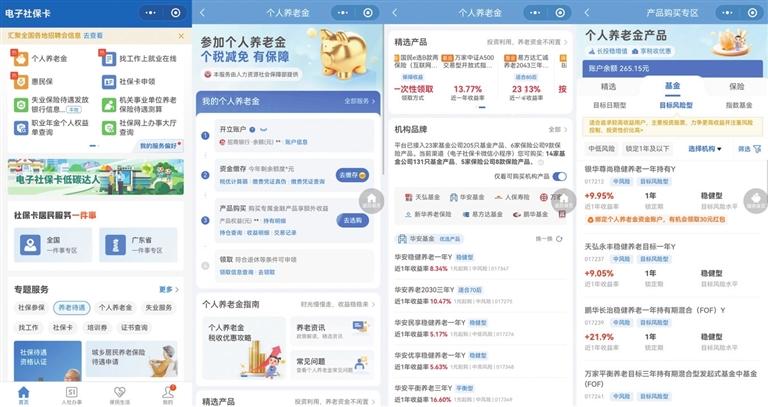
Core Viewpoint - The article emphasizes the importance of personal pension accounts as a supplementary retirement savings option, highlighting the tax benefits and investment opportunities they provide for individuals planning for retirement [3][5]. Group 1: Understanding Personal Pensions - The personal pension system is designed to allow individuals to prepare additional retirement savings beyond the basic social security, which ensures a minimum living standard [5]. - The personal pension offers four key features: individual accounts, self-directed investment options, deferred taxation, and closed operation until retirement age [6]. Group 2: Tax Savings from Personal Pensions - Contributions to personal pension accounts can be deducted from taxable income, effectively acting as a "tax refund" [10]. - The amount of tax saved depends on the individual's tax bracket, with higher tax rates yielding more significant savings [12]. - For example, individuals with an annual taxable income exceeding 960,000 yuan can save up to 5,400 yuan annually [11]. Group 3: Investment Options and Benefits - Personal pension funds can be invested in various products, including savings deposits, insurance products, wealth management products, and public funds [15]. - The article notes that as of December 15, 2025, there are 1,256 personal pension products available, with different risk-return profiles suitable for various investors [15]. - Public funds within personal pension accounts have shown promising returns, with over 98% of funds reporting positive returns since inception [18]. Group 4: Participation Process - The process to participate in personal pensions involves three steps: account opening, fund transfer, and investment [20]. - Individuals can choose how much to contribute each year, but they can only open one account across different banks, which may offer different investment products [22].

截至12月19日产品目录达1257只 个人养老金投资选择更加丰富
Jing Ji Ri Bao· 2025-12-20 02:24
Core Viewpoint - The personal pension system in China has been fully implemented nationwide after three years of pilot programs, providing diverse retirement security options for citizens [1][2]. Group 1: System Development - The personal pension system is a government-supported, voluntary, and market-operated supplementary pension insurance system, forming the third pillar of China's multi-tiered pension insurance framework [2]. - The system was officially launched in November 2022 in 36 cities, with nationwide implementation announced in December 2024 [2]. - The system aims to complement basic pension insurance and employer-sponsored pensions, creating a multi-layered structure of "basic security + employer supplement + personal savings" [3]. Group 2: Product Supply Optimization - Since the implementation of the personal pension system, the range of pension products has expanded, now including savings deposits, financial products, commercial pension insurance, public funds, government bonds, and specific pension savings [4]. - As of December 19, the personal pension product catalog includes 1,257 products, with 466 in savings, 446 in insurance, 308 in funds, and 37 in financial products [4]. - The inclusion of electronic government bonds enhances the investment options available, catering to various risk preferences and improving the system's inclusivity [5]. Group 3: Challenges and Recommendations - Despite over 72 million personal pension accounts opened, actual contributions and investments remain low, indicating a need for increased public awareness and motivation for long-term pension planning [6]. - Factors contributing to the low engagement include insufficient public understanding of the system, market volatility affecting product returns, and limited appeal of the tax incentives for higher-income individuals [6]. - Recommendations include optimizing tax incentives, enhancing liquidity options, and simplifying the investment process to encourage active participation in personal pension planning [7].
个人养老金投资选择更加丰富
Jing Ji Ri Bao· 2025-12-20 01:01
Core Viewpoint - The personal pension system in China has expanded its investment options and improved its structure over the past three years, providing a more diverse range of retirement security choices for the public [1][2][3]. Group 1: System Development - The personal pension system is a government-supported, voluntary, and market-operated supplementary pension insurance system, forming the third pillar of China's multi-level pension insurance framework [2]. - The system was officially implemented in November 2022 in 36 cities, with nationwide promotion starting in December 2024, and further regulations were established to enhance its operational framework [2][3]. - The system aims to alleviate the financial burden on public pensions and provide targeted retirement security for various employment groups, including flexible workers and those in new industries [3]. Group 2: Product Supply Optimization - Since the implementation of the personal pension system, the range of investment products has expanded significantly, now including savings bonds, specific pension savings, and index funds, in addition to existing options [4][5]. - As of December 19, 2024, there are 1,257 personal pension products available, categorized into savings (466), insurance (446), funds (308), and wealth management products (37) [4]. - The inclusion of electronic savings bonds enhances the investment choices available to pension account holders, providing low-risk options and improving the overall accessibility of the system [4][5]. Group 3: Challenges and Recommendations - Despite over 72 million personal pension accounts being opened, actual contributions and investment levels remain low, indicating a need for increased public awareness and motivation for long-term retirement planning [7]. - Factors contributing to the low engagement include insufficient public understanding of the system, market volatility affecting product returns, and limited appeal of the annual tax-advantaged contribution cap of 12,000 yuan for higher-income individuals [7][8]. - Recommendations for improvement include optimizing tax incentives, enhancing liquidity options, and creating a one-stop digital platform to streamline account management and investment processes [8].
保障升级+税收优惠 个人养老金,为未来加一份“稳稳的幸福”
Shen Zhen Shang Bao· 2025-12-17 00:14
Core Insights - The personal pension system has gained significant attention and participation from citizens since its full implementation [1][17] - Recent policies have expanded the accessibility of personal pensions, allowing early withdrawals under specific circumstances such as major illness, long-term unemployment, or low-income situations [6][7] Group 1: Tax Benefits - The personal pension scheme offers substantial tax benefits, allowing individuals to deduct contributions up to 12,000 yuan annually from their taxable income, with potential tax savings of up to 5,400 yuan per year for higher earners [16][24] - The tax structure follows a deferred taxation model, where contributions and investment earnings are tax-exempt until withdrawal, which is taxed at a lower rate of 3% [16][23][24] Group 2: Product Variety - The personal pension account allows participants to choose from a variety of financial products, including savings deposits, bank wealth management, commercial pension insurance, and public funds, enabling customized investment strategies [8][9][10][11] - All products are vetted by financial regulatory authorities to ensure safety, stability, and long-term value preservation [11][19] Group 3: Accessibility and Convenience - Opening a personal pension account is straightforward, requiring only a bank card and facial recognition for online setup, with multiple banks available for account creation [12] - The system is designed to facilitate easy access and understanding for participants, with dedicated services to assist in account setup and tax benefit utilization [17] Group 4: Participant Demographics - The personal pension system is inclusive, allowing flexible employment individuals to participate, thus broadening the demographic reach [18] - Feedback from participants indicates a positive reception, with many appreciating the tax savings and the ability to secure their retirement funds [14][15][16]
月存千元,轻松养老:螺丝钉个人养老金定投实盘|第422期直播回放
银行螺丝钉· 2025-12-16 14:03
Core Viewpoint - The article discusses the benefits and strategies of investing in personal pension accounts, emphasizing tax deductions and suitable investment options for individuals based on their income levels [3][5][7]. Group 1: Personal Pension Account Benefits - Contributions to personal pension accounts made before December 31 can enjoy tax deductions for the year 2025, with an annual contribution limit of 12,000 yuan [3]. - Individuals with higher incomes benefit more from tax deferrals associated with personal pension accounts, making it more attractive for them compared to those with lower incomes [5][8]. Group 2: Investment Options - Personal pension accounts can invest in five categories: commercial pension insurance, savings deposits, wealth management, public funds, and government bonds [10]. - As of September 30, 2025, there are 91 index funds included in the personal pension account, covering 16 mainstream stock indices [12][13]. Group 3: Index Fund Strategies - Recommended combinations for index funds include the pairing of the CSI 300 and the CSI 500, which covers large and mid-cap stocks [16][17]. - Another effective strategy is combining leading stocks (A-series indices) with dividend strategies, which is currently adopted in personal pension investment plans [19]. Group 4: Investment Style and Performance - A-shares exhibit characteristics of style rotation between growth and value, with growth styles performing better in certain years [25][28]. - Long-term performance between growth and value styles shows minimal difference, although short-term variations exist [28]. Group 5: Investment Management - Diversified allocation and rebalancing can lead to more stable excess returns, with suggested allocations between different strategies [35][36]. - The personal pension account allows flexible contributions, with options for annual, monthly, or weekly investments [38]. Group 6: Common Questions - The investment plan is suitable for individuals who can accept the volatility of index funds and ideally should be at least five years away from retirement [49][50]. - Personal pension accounts are generally closed, with funds accessible only under specific conditions, such as reaching retirement age [54].