产融结合

Search documents
广西兴宾区“糖业无忧”项目启动
Qi Huo Ri Bao Wang· 2025-10-24 00:41
Group 1 - The "Sugar Industry Worry-Free" project initiated by Zhengzhou Commodity Exchange in Guangxi Xingbin District aims to provide income security for nearly 50,000 acres of sugarcane planting, supported by various government levels and financial institutions [1][2] - The project is the first county-level initiative approved by Zhengzhou Commodity Exchange in Guangxi, highlighting the region's significance as a major sugarcane production area in China [1][2] - The project addresses the long-standing issue of price volatility in the sugar market, which has affected both sugarcane farmers' income and the stable operation of sugar enterprises [1][2] Group 2 - The "Sugar Industry Worry-Free" project employs an "insurance + futures + sugar enterprises" model, providing risk protection for farmers while encouraging sugar companies to manage risks through the futures market [2][3] - This project upgrades traditional price insurance to income insurance, combining the advantages of both types of insurance to better meet the comprehensive protection needs of sugarcane farmers [2][3] - The implementation of the project is expected to establish a long-term cooperation mechanism among government, sugar enterprises, banks, insurance, and futures markets, enhancing agricultural risk management and supporting rural financial development [3]
甜蜜事业添保障,稳企安农促发展——广西兴宾区“糖业无忧”项目启动正当时
Qi Huo Ri Bao· 2025-10-24 00:16
Group 1 - The "Sugar Industry Worry-Free" project initiated by Zhengzhou Commodity Exchange in Guangxi Xingbin District aims to provide income security for nearly 50,000 acres of sugarcane planting, supported by various government levels and financial institutions [1][2] - The project is the first county-level initiative approved by Zhengzhou Commodity Exchange in Guangxi, highlighting the region's significance as a major sugarcane production area in China [1][2] - The project addresses the long-standing issue of price volatility in the sugar market, which has affected the income stability of sugarcane farmers and the operational stability of sugar enterprises [1][2] Group 2 - The "Sugar Industry Worry-Free" project employs an "insurance + futures + sugar enterprises" model, providing risk protection for farmers while encouraging sugar companies to manage risks through the futures market [2][3] - This project upgrades traditional price insurance to income insurance, combining the advantages of both types of insurance to better meet the comprehensive protection needs of sugarcane farmers [2][3] - The implementation of the project is expected to establish a long-term cooperation mechanism among government, sugar enterprises, banks, insurance, and futures markets, enhancing agricultural risk management and supporting rural financial development [3]
财达证券董事长张明:明确三方面战略布局以深度金融服务赋能高质量发展
Xin Lang Cai Jing· 2025-10-23 21:05
Core Viewpoint - The Jiangsu integration of industry and finance seminar highlighted the importance of deepening the integration of industry and finance for high-quality development in Jiangsu province [1] Group 1: Company Initiatives - Caida Securities emphasizes its commitment to integrity, compliance, professionalism, and stability in its operations as a state-owned listed financial institution [1] - The company plans to enhance financial services through a "full-chain service" approach to support the construction of industrial ecosystems [1] - Caida Securities aims to leverage its research institute and various professional platforms to strengthen its research and service capabilities in key areas such as industrial cluster cultivation and state-owned enterprise financing mechanisms [1] Group 2: Event Overview - The seminar was co-hosted by the Jiangning District People's Government, Jiangning Economic and Technological Development Zone Management Committee, Caida Securities, and China Minsheng Bank Nanjing Branch [1] - Participants included representatives from local governments, financial regulatory bodies, state-owned enterprises, listed companies, and financial institutions [1]

锚定产业周期破局金融赋能实体经济发展
Zhong Guo Zheng Quan Bao· 2025-10-22 20:16
Core Insights - The forum hosted by China Galaxy Securities focused on investment opportunities and risk management in the commodity market amidst global industrial chain adjustments and green low-carbon transitions [1][2] Group 1: Market Dynamics - Experts highlighted that the commodity market is facing new opportunities and challenges due to deep adjustments in the global industrial chain and the ongoing green low-carbon transition [1] - The complexity of the commodity market has increased significantly this year due to various macroeconomic and geopolitical factors [2] - Commodities are seen as essential for the real economy, serving as a "thermometer" for economic conditions and playing a crucial role in resource allocation and risk management [1][2] Group 2: Company Strategy - China Galaxy Securities aims to become a trusted "full-chain service provider" for institutional clients, integrating traditional financial services with deep involvement in the commodity sector [2] - The company is committed to enhancing its capabilities in risk management and cross-border services to navigate the complex market environment [2] - There is a recognition that securities firms have a long way to go in serving the real economy and promoting the integration of finance and industry [2] Group 3: Investment Strategies - The chief economist of China Galaxy Securities emphasized the urgency of economic transformation and the need for a systematic approach to supply-side reforms [3] - The company is exploring innovative approaches to transition from traditional service models to full-chain ecological service providers in the commodity sector [3] - A comprehensive analysis framework for commodity pricing is suggested, considering supply-demand fundamentals, financial attributes, inventory cycles, and macro liquidity [3] Group 4: Future Outlook - Experts agree that the commodity market has entered a complex new phase driven by macro debt cycles, global geopolitical situations, industrial policies, and energy transitions [4] - The coal market is supported by effective production control policies and low transportation costs, while demand for coal in China is expected to grow at an annual rate of 5%-6% [4] - In the oil market, there are contrasting trends in refining and chemical profits, with expectations of tight supply for heavy crude oil due to geopolitical tensions [5]

中粮资本:公司聚焦于服务主业、产融结合
Zheng Quan Ri Bao Zhi Sheng· 2025-10-21 11:13
Core Viewpoint - COFCO Capital leverages the industrial advantages of COFCO Group and its own professional capabilities to focus on serving its main business and integrating production with finance, particularly through risk management services in the bulk commodity sector [1] Group 1: Services Offered - COFCO Capital provides hedging services for bulk commodities to upstream and downstream entities in the agricultural sector, effectively mitigating the impact of price fluctuations on production and operations [1] - The company offers services such as "banking and futures" to agricultural producers, providing price risk protection and guaranteed purchase orders to address issues arising from extreme weather conditions that lead to reduced production and income [1]

延安苹果产业尝到期货“甜头”
Qi Huo Ri Bao Wang· 2025-10-21 00:43
Core Insights - The apple industry in Yan'an has become a crucial pillar of the local agricultural economy, but it faces challenges such as weakened seasonal patterns and competition from substitute fruits [1] - The maturation of the apple futures market is providing new opportunities for risk management and high-quality development in the apple industry [1] Group 1: Challenges Faced by the Apple Industry - Apple procurement merchants in Yan'an are experiencing uncertainty due to fluctuating market conditions, leading to concerns about over-purchasing or under-purchasing apples [2] - The increase in apple production in 2023 compared to 2022 has not alleviated the market's unpredictability, causing anxiety among merchants [2] Group 2: Adoption of Futures and Options - A merchant successfully utilized futures contracts to hedge against price fluctuations, pre-selling 26,000 jin of apples at an average price of 9,308 yuan/ton, which allowed for secure procurement [3] - The merchant achieved a profit of 53,000 yuan from the futures market, despite a decline in the wholesale price of apples by 3.38% from mid-October to December [3] Group 3: Innovative Risk Management Strategies - The merchant later sought advice on options trading to mitigate potential losses from price drops after the Spring Festival, successfully using options to earn premiums [4] - The understanding of risk management through futures and options has led to a significant shift in the merchant's approach to business operations [4] Group 4: Industry Development and Integration - The general manager of Chengxin Agricultural Development Co. emphasized the importance of having a reliable pricing reference in the spot market to effectively engage in futures hedging [5] - The "e+Gold" apple industry development system promotes standardized production and order-based procurement, enhancing stability and reliability in the apple supply chain [5] Group 5: High-Quality Development through Financial Integration - The integration of futures and options tools, along with innovative practices like the "e+Gold" system, is driving deep development in the Yan'an apple industry [6] - The futures market's price discovery function aids stakeholders in making informed production and operational decisions, while its hedging capabilities mitigate price volatility risks [7] - The apple industry is exploring new business models, such as "equity + dividends" and "cooperatives + farmers," to promote comprehensive development and integration of various operational aspects [7]
平安银行:金融之力托举先进智造,助小零件撑起大飞机
Quan Jing Wang· 2025-10-17 08:10
Group 1 - The core viewpoint is that Xi'an is transforming into an advanced manufacturing hub, particularly in the aerospace sector, with a goal to establish a leading aviation manufacturing and low-altitude industry cluster by 2030, aiming for an annual output value exceeding 350 billion yuan [1] - The "Advanced Intelligent Manufacturing Loan" product by Ping An Bank is designed to support companies in the aerospace sector, providing financial resources to foster innovation and development in hard technology [1][2] - Xi'an has developed a complete aviation industry chain with over 2,000 upstream and downstream enterprises, highlighting the collaborative nature of the industry [2] Group 2 - Companies like Zhonghang Gas Spring and Tuolisi are experiencing financial pressure due to the high costs and long timelines associated with aerospace manufacturing, necessitating bank support for their operations [2][3] - Ping An Bank's tailored financial solutions aim to alleviate the funding challenges faced by these companies, enabling them to complete essential research and development processes [2][3] - The titanium industry in Baoji, particularly represented by Baotai Group, is crucial for the aerospace sector, with Ping An Bank providing comprehensive financial services to support its growth [5][6] Group 3 - Ping An Bank is implementing a collaborative "government-bank-enterprise" model to enhance the financial support for advanced manufacturing, focusing on customized services for the aerospace industry [7] - The bank has established specialized teams to improve financing efficiency and integrate various financial resources to support the entire lifecycle of technology enterprises [7][8] - The commitment to integrating financial services with hard technology aims to foster sustainable growth in the manufacturing sector, ensuring that innovation is supported by adequate financial backing [8]

解码上海生物医药全链条创新生态——走进上海生物医药创新成果展
第一财经· 2025-10-17 06:32
Core Viewpoint - The article highlights the achievements and developments in Shanghai's biopharmaceutical industry during the "14th Five-Year Plan" period, emphasizing innovation, reform, and the establishment of a comprehensive ecosystem for biopharmaceutical innovation [1][3][9]. Group 1: Innovation Achievements - Shanghai has approved a total of 30 domestic Class 1 innovative drugs and 45 domestic Class 3 innovative medical devices from 2021 to September 2025, showcasing its leading position in drug and device innovation in China [3]. - The number of overseas licensing transactions (License-out) from Shanghai reached 38 in 2024, accounting for 35% of the national total, with a transaction value of $30.7 billion, representing 47% of the national total [3]. - Research output from Shanghai has significantly increased, with 3 out of 12 papers listed in "Best of Cell 2024" published by Shanghai researchers, and the number of papers in top global medical journals rising from 24 in 2021 to 52 in 2024, totaling 127 [4]. Group 2: Policy and Reform - Shanghai has implemented a series of policies aimed at addressing bottlenecks in the biopharmaceutical sector, including 14 policy regulations covering various key areas such as drug regulation, medical device innovation, and commercialization of innovative drugs [8]. - The exhibition highlighted new policies such as the "Opinions on Supporting the Full Chain Innovation Development of the Biopharmaceutical Industry" and the "Action Plan for Promoting the Full Chain Development of High-end Medical Devices" [8]. Group 3: Industry Growth - The biopharmaceutical industry in Shanghai has expanded from 761.7 billion yuan in 2021 to 984.7 billion yuan in 2024, with an average annual growth rate of 8.94%, and is projected to exceed 1 trillion yuan in 2025 [9]. - By the end of 2024, there were 2,183 large-scale biopharmaceutical enterprises in Shanghai, including 675 manufacturing companies and 569 service companies [9]. - Major multinational pharmaceutical companies have established their headquarters or R&D centers in Shanghai, with 19 out of the top 20 global pharmaceutical and medical device companies present [9].

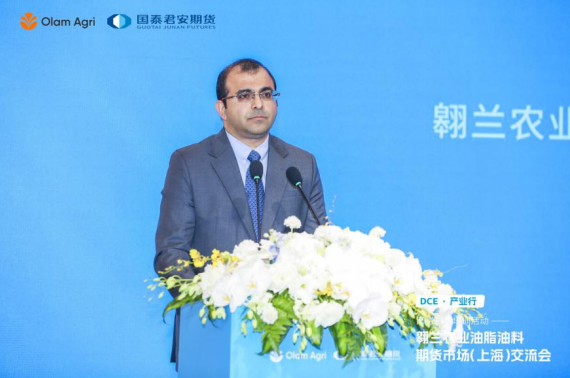
翱兰农业油脂油料期货市场(上海)交流会成功举办
Qi Huo Ri Bao· 2025-10-17 03:28
Core Insights - The event "DCE Industry Tour - Production and Finance Base Training Activity" hosted by Aolan Agriculture successfully gathered over a hundred representatives from various sectors of the oilseed and oil market, highlighting the industry's strong interest in futures and derivatives knowledge exchange and risk management practices [1][16] - Aolan Agriculture's President for China and ASEAN, He Manxiu, emphasized the company's role in managing market risks through participation in futures trading, enhancing market liquidity and price transparency [1][3] - The rapid development of China's futures and derivatives market has significantly improved its ability to serve the real economy, with more enterprises utilizing futures tools to hedge against price volatility, particularly in the foreign exchange and commodity sectors [3][4] Industry Developments - The establishment of production and finance bases by futures exchanges is crucial for connecting financial tools with industry needs, helping enterprises, especially small and medium-sized ones, to effectively utilize futures and derivatives for risk management [4][5] - The global economic order is undergoing profound restructuring, with market participants needing to be cautious of the divergence between "emotional recovery" and "actual tariff increases" [7] - The soybean market is showing signs of bottoming out despite being in a bear market, with key factors such as La Niña's impact on South American production and China's purchasing decisions influencing market direction [9] Market Trends and Risk Management - The interlinkage between futures and options markets plays a vital role in responding to policy shocks, as demonstrated by the impact of tariff changes on market prices [11][16] - The roundtable discussions focused on trends in the oilseed market, with insights on U.S. soybean exports, domestic demand for soybean meal, and the implications of South American production on imports [13][14] - The outlook for domestic soybean oil consumption remains stable, with key factors including the recovery of the catering industry and export conditions being closely monitored [14][16]
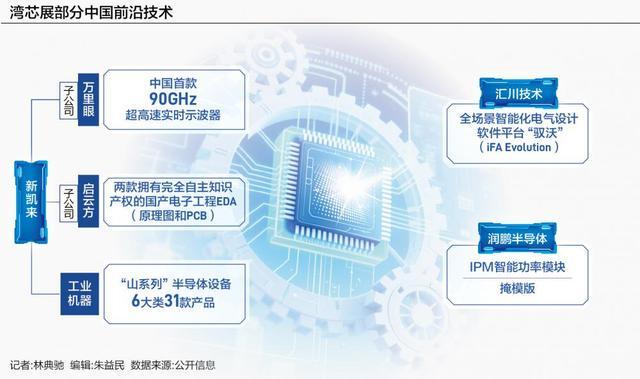
“湾芯展”新品齐发,中国半导体产业走向“多点突破”
2 1 Shi Ji Jing Ji Bao Dao· 2025-10-16 22:37
Core Insights - The 2025 Bay Area Semiconductor Industry Ecosystem Expo (Bay Chip Expo) opened in Shenzhen, showcasing significant advancements in the semiconductor industry, particularly by companies like New Kai Lai and its subsidiary Wan Li Yan, which introduced a high-speed real-time oscilloscope that breaks bandwidth limits set by the Wassenaar Arrangement [1][4][5] - The event attracted over 600 exhibitors and featured key areas such as wafer manufacturing, advanced packaging, and specialized ecosystems for AI chips and edge computing, highlighting the rapid evolution from passive replacement to independent innovation within the industry [4][10] - Major companies like Huazhong Microelectronics and North China Innovation are now able to produce equipment that rivals or surpasses foreign counterparts, changing public perception of domestic semiconductor equipment [1][4] Company Highlights - New Kai Lai showcased 16 products at the expo, covering the entire chip manufacturing process, with Wan Li Yan's 90GHz oscilloscope ranking second globally in its category, crucial for testing advanced chips [4][5] - Huazhong Microelectronics announced progress on its 12-inch wafer manufacturing lines, focusing on high-end power products, with plans to achieve full production by the end of 2024 [7] - Huizhou Technology introduced a new software platform aimed at enhancing industrial automation, promising significant reductions in design and debugging time [5][6] Investment and Industry Trends - The Shenzhen Semiconductor and Integrated Circuit Fund was launched with an initial scale of 5 billion yuan, focusing on semiconductor equipment, chip design, and advanced packaging, indicating a strong commitment to long-term investment in the sector [9][10] - The "Big Fund Phase III" with a registered capital of 344 billion yuan is set to play a crucial role in supporting China's semiconductor industry, particularly in equipment and technology development [10][11] - The industry is transitioning from a "middle strong, both ends weak" structure to a phase of "multiple breakthroughs" and "core limitations," with significant progress in mid-process equipment and materials, although challenges remain in advanced lithography and high-end materials [11]