代币化

Search documents
美联储主席大热门沃勒:加密货币技术“没啥好怕” 美联储应与业界共推支付创新
Hua Er Jie Jian Wen· 2025-08-21 00:54
Core Viewpoint - The blockchain seminar held before the Jackson Hole global central bank conference highlighted the importance of embracing technological innovations in digital assets and stablecoins to drive economic growth in the U.S. [1] Group 1: Technological Innovation in Payments - Christopher Waller, a Federal Reserve governor, emphasized that the current advancements in computing power, data processing, and distributed networks are fostering innovative payment services [1] - Waller stated that the evolution of payment systems is primarily driven by technological progress, with private sector innovations leading the way, while the Federal Reserve plays a supportive role [3][4] Group 2: Collaboration Between Public and Private Sectors - Waller advocated for collaboration between the Federal Reserve and the private sector to explore the potential of decentralized finance (DeFi) technologies, which could enhance traditional payment systems [2][3] - He highlighted the need for the Federal Reserve to continue embracing technological advancements to modernize services and support private sector innovation [3][5] Group 3: Research on New Payment Technologies - The Federal Reserve is currently researching innovations in payment technologies, including tokenization, smart contracts, and the application of artificial intelligence [3][4] - Waller expressed the importance of understanding these trends to better support private enterprises using related infrastructure and to evaluate the potential of emerging technologies to improve existing Federal Reserve platforms and services [4] Group 4: Positive Outlook on Cryptocurrency - Waller's remarks come amid a broader acceptance of the cryptocurrency industry within the Federal Reserve, as another official, Michelle Bowman, also praised the benefits of new technologies like AI and cryptocurrencies [5] - The discussions at the seminar indicate a growing recognition of the need for banks and regulators to adapt to the evolving landscape of digital assets to maintain their relevance in the economy [5]
理事沃勒呼吁美联储开放创新 支持数字资产与稳定币
智通财经网· 2025-08-20 22:28
Group 1 - The Federal Reserve should continue to support technology and innovation, particularly in emerging fields like digital assets and artificial intelligence, to modernize the U.S. payment system and drive economic growth [1][2] - The recent shift in the Federal Reserve's regulatory stance towards cryptocurrencies and related businesses is seen as a significant victory against "crypto de-banking," as it has gradually withdrawn special oversight of banks involved in crypto activities [1][2] - The Federal Reserve's July FOMC meeting minutes indicated that some participants believe stablecoins could enhance payment system efficiency and increase demand for underlying assets, such as U.S. Treasuries [2] Group 2 - Waller emphasized the importance of collaboration between the Federal Reserve and the private sector to embrace a "technology-driven revolution" propelled by innovations like tokenization, smart contracts, and distributed ledgers [2][3] - The Federal Reserve is actively researching new financial technology innovations, including tokenization and artificial intelligence, to enhance the payment system [3] - The introduction of the FedNow instant payment network aims to enable real-time fund transfers for eligible banks, helping the U.S. catch up with rapidly developing global real-time payment systems [2]
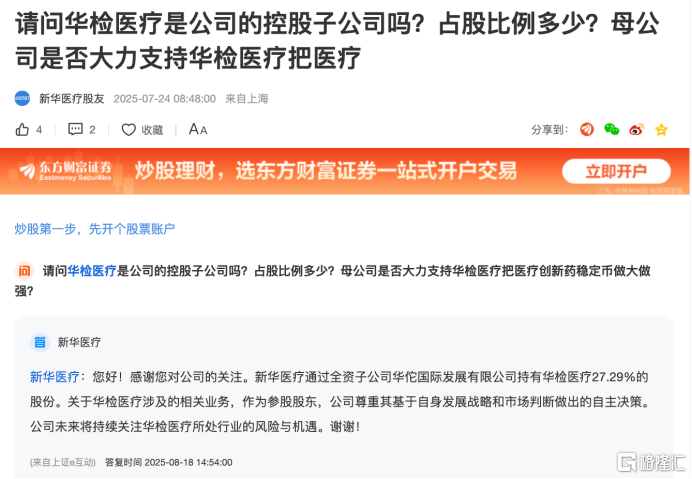
新华医疗回应投资者关切:华检医疗(01931.HK)RWA生态提供"新发展思路"
Ge Long Hui· 2025-08-19 06:59
Core Viewpoint - The recent strategic transformation of Huajian Medical aims to evolve from a traditional medical testing service provider to a "global innovative drug asset digital trading platform operator," attracting significant market and investor attention [1][2]. Group 1: Company Strategy and Innovations - Huajian Medical is exploring the RWA exchange ecosystem, providing a new development model for the medical industry, addressing core pain points in innovative drug financing and market access [4]. - The RWA exchange ecosystem aims to leverage blockchain technology to ensure asset rights, pricing, and cross-border transactions, facilitating a more efficient pathway for innovative drugs to reach global investors [4][8]. - The collaboration with BGI to establish an innovative drug intellectual property tokenization fund is part of Huajian Medical's strategy to create a three-in-one model of "innovative drug assets + RWA exchange + stablecoin" [8]. Group 2: Stakeholder Relationships - Xinhua Medical holds a 27.29% stake in Huajian Medical, indicating a strategic partnership that could yield collaborative opportunities in the future [1][5]. - Xinhua Medical's responses on investor platforms reflect a rational and cautious approach towards Huajian Medical's developments, while also hinting at potential strategic synergies [5][10]. - The relationship allows Xinhua Medical to benefit from Huajian Medical's profit growth without directly engaging in compliance risks associated with RWA and stablecoin [10][12]. Group 3: Market Potential and Future Outlook - The market potential for tokenized real assets is projected to exceed $18 trillion by 2033, with a compound annual growth rate of 53% since 2025, highlighting the significant growth opportunities in the innovative drug and medical sectors [10]. - Huajian Medical's innovative approach positions it as a unique investment opportunity, with its valuation supported by the scarcity premium and early-stage growth potential [10][12].


亦辰集团(08365)与EF HongKong及EF Commodities订立合伙协议 并可能向Esperanza进行股权投资
智通财经网· 2025-08-18 15:09
Group 1 - The company has entered into a partnership agreement with EF HongKong and EF Commodities to promote and sell digital gold-backed instruments and security tokens in Hong Kong, establishing a strategic position in the growing digital asset market [1][2] - The partnership is seen as a strategic move to leverage the company's expertise in financial services and diversify its service offerings, particularly in the rapidly evolving tokenized asset market in Asia [2][3] - The company has signed a memorandum of understanding with EF HongKong to explore potential equity investment in Esperanza, aiming to strengthen the strategic partnership and participate in the growth of Esperanza's digital asset platform [2][3] Group 2 - The proposed investment aligns with the company's strategy to deepen its presence in Hong Kong's fast-developing digital asset ecosystem, potentially acquiring equity in Esperanza to gain access to innovative tokenization technology and exclusive product offerings [3] - The investment opportunity is expected to accelerate the company's digital transformation and create additional high-margin revenue streams through platform synergies [3] - EF HongKong specializes in providing security token issuance solutions, utilizing its affiliated regulatory framework to tokenize investment opportunities under Hong Kong's securities regulations [3][4]
a16z深度解析:银行、资管与金融科技公司的“区块链转型指南”(美版)
Hua Er Jie Jian Wen· 2025-08-17 11:27
Group 1: Core Insights - Traditional financial institutions are accelerating the integration of blockchain technology into their core infrastructure to enhance competitiveness and unlock new growth sources [1][2] - Major banks like JPMorgan and Citibank are implementing blockchain in payment and settlement processes through projects like tokenized deposits, indicating a shift from speculative asset trading to a foundational technology for financial services [1][2] - Asset management firms are leveraging blockchain to create new distribution channels, with companies like BlackRock and Franklin Templeton issuing tokenized funds that directly reach digital-native investors [1][5] Group 2: Banking Sector Innovations - Blockchain is becoming a key tool for banks to modernize outdated backend systems, which often rely on legacy programming languages like COBOL [2] - The choice of blockchain platforms is critical for banks, with recent regulatory guidance opening up opportunities for public blockchain adoption [2] - Tokenized deposits from JPMorgan and Citibank allow for significant reductions in settlement times and operational costs, enhancing capital efficiency [2] Group 3: Asset Management Trends - Tokenization is expanding product distribution and liquidity for asset management companies, particularly in U.S. Treasury and money market funds [5][6] - The integration of traditional asset management products with DeFi protocols is creating new leverage and yield strategies, indicating a shift towards direct user engagement [6] - Asset management firms are adopting a multi-chain strategy to enhance distribution, as seen with Franklin Templeton's BENJI token being issued across eight different blockchains [6] Group 4: Fintech Developments - Fintech companies are utilizing blockchain to leapfrog existing financial systems, particularly in cross-border payments and embedded finance [7] - Establishing Layer 2 networks on top of Layer 1 blockchains like Ethereum is seen as a balanced approach for fintech firms to optimize specific use cases [7][8] - Companies like Stripe and PayPal are integrating stablecoin payments to facilitate instant global settlements and reduce transaction costs [8]

Coinbase Global (COIN) FY Conference Transcript
2025-08-13 18:17
Summary of Coinbase Conference Call Company Overview - **Company**: Coinbase - **Industry**: Cryptocurrency Exchange and Blockchain Services Key Points and Arguments Regulatory Environment - The current U.S. administration is the most pro-crypto, leading to significant regulatory clarity, including the recently enacted Genius Act for stablecoins [6][22] - The Clarity Act is expected to progress through the Senate, with optimism for its passage by year-end [22][24] Revenue Composition - Approximately 40% of Coinbase's revenue comes from non-trading activities such as stablecoin, interest income, staking, and custody [3] - Trading revenue constituted about 60% in the last quarter, indicating a balanced revenue model [7] Product Development and Expansion - Coinbase is focused on expanding its product offerings, including derivatives, payments, and tokenization [4][11] - The company has launched new products like the Base app, perpetual futures, and tokenized securities [4][10] - The Base app aims to integrate various functionalities, including trading, payments, and social networking [56][58] Derivatives Market - Coinbase has seen strong growth in derivatives trading, with a total notional volume of $1 trillion in Q2, up from $800 billion in Q1 [18] - The company is the first U.S. regulated futures exchange to offer 24/7 futures for major cryptocurrencies [17] International Expansion - Coinbase has secured a MICA license in Luxembourg, facilitating easier market entry across Europe [25][27] - The company has launched operations in countries like Singapore, Brazil, Canada, and Australia, generating revenue exceeding direct operating costs [27][28] Stablecoin Strategy - USDC is positioned as a compliant payment stablecoin, with significant market cap growth anticipated following regulatory clarity [29][30] - The company emphasizes the importance of compliance and transparency in the stablecoin market [31][33] Partnerships - Coinbase has established partnerships with major banks like JPMorgan and PNC, enhancing its infrastructure and service offerings [34][36] - Collaborations with merchants like Shopify aim to drive USDC adoption among a broader audience [39][40] Tokenization Ambitions - Coinbase aims to tokenize various asset classes, believing that regulatory clarity will enable this evolution [42][44] - The company envisions a future where all assets are tokenized, facilitating 24/7 global markets [46] Capital Allocation Strategy - Coinbase has a strong balance sheet with $9.3 billion in USD resources and plans to focus on both organic growth and potential acquisitions [61][63] - The company is committed to generating positive adjusted EBITDA across all operating environments [63] Future Outlook - Coinbase is focused on three main priorities: growing trading business, expanding payment offerings, and establishing itself as a trusted partner in the crypto ecosystem [65][66] - The company is investing in a diverse portfolio of products to stabilize revenue streams as it moves away from speculative trading [67] Additional Important Content - The company acknowledges that not all products will succeed, but it is willing to make bets on innovation and quickly pivot if necessary [67] - The Base app is still in early stages, with a focus on user engagement and integration of various services [59][60]

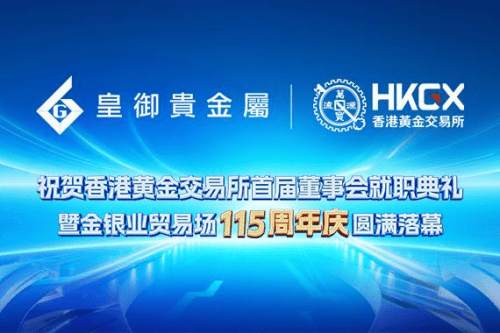
皇御贵金属祝贺香港黄金交易所首届董事会就职典礼暨贸易场115周年庆圆满举办
Sou Hu Cai Jing· 2025-08-13 08:04
Group 1 - The core event was the inauguration of the first board of directors of the Hong Kong Gold Exchange, marking a significant milestone for the future development of the precious metals market in Hong Kong [1][3] - The Hong Kong Gold Exchange aims to become a global hub for gold and commodity trading, focusing on "gold digitalization and tokenization" as part of its modernization strategy [3][4] - The exchange is committed to creating a more efficient and transparent trading ecosystem, leveraging its 115 years of history and expertise [3][4] Group 2 - The company, Huangyu Precious Metals, is recognized as the highest-level AA member of the Hong Kong Gold Exchange, emphasizing its commitment to safety, transparency, and speed in trading services [4][5] - Huangyu Precious Metals employs advanced technology to ensure zero-latency trading and 24/7 global market connectivity, enhancing the trading experience for investors [4][5] - The company is focused on providing tailored electronic services for different types of investors, including professional and novice traders, through intelligent trading systems and mobile platforms [4][5] Group 3 - The Hong Kong Gold Exchange's first board of directors is expected to further solidify Hong Kong's position as an international gold hub, with Huangyu Precious Metals playing a key role in this transformation [7] - The collaboration between Huangyu Precious Metals and the Hong Kong Gold Exchange aims to establish Hong Kong as a "gold digital financial center," enhancing the investment landscape through technological advancements [7]
Exodus Movement (EXOD) Conference Transcript
2025-08-12 18:00
Summary of Exodus Movement (EXOD) Conference Call - August 12, 2025 Industry Overview - The conference focused on the cryptocurrency industry, featuring discussions from leaders of major companies including Mara Holdings, Exodus Movement, and Coincheck Group NV [1][2]. Key Companies and Their Insights Mara Holdings - **Company Overview**: Largest publicly traded bitcoin miner, established in 2017, raised approximately $6 billion in capital [3][4]. - **Bitcoin Holdings**: Holds over 50,000 bitcoins, with more than half self-mined [4]. - **Operational Focus**: Converts underutilized energy into computing power for bitcoin mining, operates 16 data centers across four continents [5]. - **Recent Investment**: Acquired majority control of French company Xion, focusing on low carbon energy and AI opportunities in Europe and the Middle East [6]. Exodus Movement - **Company Overview**: Only publicly traded self-custodial digital asset wallet, operational for ten years, supports over 40 blockchain networks [7][8]. - **Unique Offerings**: Introduced a common stock token and partnerships with major industry players like Ledger and MetaMask [8][9]. - **Revenue Model**: Generates revenue in bitcoin and requires employees to accept salaries in bitcoin, holding over 2,000 bitcoins in treasury [74]. Coincheck Group NV - **Company Overview**: Headquartered in the Netherlands, operates one of Japan's largest crypto exchanges [11][12]. - **Recent Partnership**: Collaborated with Makari, integrating Coincheck API into their super app, which has 23 million daily active users [12][13]. - **Strategic Vision**: Aims to be a global crypto service financial holding company, focusing on acquisitions and global opportunities [14]. Core Perspectives on Digital Assets - **Regulatory Landscape**: All speakers emphasized the inevitability of global regulation in the crypto space, with a shift towards traditional financial integration [17][20]. - **Tokenization**: The belief that everything will eventually be tokenized, extending beyond finance to areas like identity and property [27][34]. - **Market Dynamics**: Discussion on the proliferation of stablecoins and the potential for a universal currency model, with the U.S. dollar remaining dominant [25][36]. Investment Strategies and Market Trends - **Bitcoin as an Asset**: Mara Holdings views bitcoin as a long-term hold, similar to gold mining, with expectations of continued appreciation despite volatility [63][70]. - **Corporate Treasury Strategies**: Increasing interest from companies like Tesla and Apple in holding bitcoin as part of their treasury strategies [76][80]. - **Market Disruption**: Predictions of significant disruption in traditional financial markets due to the rise of crypto, with potential declines in national stock exchanges [43][44]. Additional Insights - **Quantum Computing Risks**: Concerns about the future impact of quantum computing on bitcoin security, with discussions on the need for quantum-resistant technologies [81][86]. - **Self-Custody vs. Custodial Services**: Ongoing debate about the advantages and challenges of self-custody in crypto, particularly among older generations [108][111]. - **Competitive Landscape**: The crypto ecosystem is highly competitive, with varying fee structures and user experiences across platforms [94][99]. Conclusion - The conference highlighted the rapid evolution of the cryptocurrency industry, the importance of regulatory clarity, and the potential for significant market disruption as digital assets become more integrated into traditional finance. The insights from key industry players underscore the ongoing transformation and the need for adaptability in investment strategies.

《天才法案》点燃稳定币发行热潮 但实际用例扩张却难题重重
智通财经网· 2025-08-12 13:04
Core Insights - The new U.S. law, known as the GENIUS Act, establishes the first federal regulations for stablecoins, paving the way for their integration into mainstream finance [1][5] - Major financial institutions, including Bank of America and Citigroup, are preparing to launch their own dollar-backed stablecoins, indicating a shift towards "on-chain finance" [1][8] - The rise of stablecoins is linked to the increasing demand for efficient payment systems and cross-border transactions, with significant growth in their usage observed [2][3] Regulatory Framework - The GENIUS Act, signed into law by President Trump, aims to promote the use of digital assets and provides official guidelines for stablecoins, which are typically pegged to the U.S. dollar [1][5] - The act requires issuers to comply with anti-money laundering (AML) and Know Your Customer (KYC) regulations, adding compliance costs for non-bank financial institutions [7][8] Market Dynamics - Stablecoins are seen as "on-chain dollars," backed 1:1 by high-liquidity dollar assets, offering a new payment medium that combines stability and efficiency [2][3] - The monthly settlement volume of stablecoins has reached approximately $650 billion to $700 billion, demonstrating their growing role in financial transactions [3] Tokenization Trends - The concept of tokenization, particularly Real-World Assets (RWA), is gaining traction, with predictions that the market for tokenized assets could exceed $18 trillion by 2033, growing at a CAGR of 53% since 2025 [4] - Tokenization allows traditional assets to be represented as digital tokens on the blockchain, enhancing efficiency and reducing settlement risks [3][4] Challenges and Considerations - Experts caution that the new regulations will not immediately simplify the process for companies looking to adopt stablecoins, as they must navigate complex regulatory and technological challenges [5][6] - Companies must determine the specific use cases for stablecoins, which could influence their decision to create proprietary stablecoins or integrate existing ones [7][8] Institutional Interest - Major banks are actively considering the issuance of their own stablecoins, with executives from Bank of America and Citigroup expressing interest in this area [8] - The regulatory landscape will significantly impact how banks approach stablecoin issuance, particularly regarding capital requirements and liquidity management [8][9] Blockchain Considerations - The choice between public and private blockchains for stablecoin issuance is a critical decision for companies, with banks likely favoring private or permissioned blockchains for enhanced governance and control [9][10] - The ongoing interest in established blockchain networks highlights the importance of reliability and scalability in the stablecoin ecosystem [10][11]


港股异动 | 复星国际(00656)午后飙升逾20% 报道称复星已确定在港申请稳定币牌照
Zhi Tong Cai Jing· 2025-08-12 06:49
Core Viewpoint - Fosun International (00656) has seen a significant stock price increase of over 20% following reports that the company has confirmed its application for a stablecoin license in Hong Kong [1] Group 1: Stock Performance - Fosun International's stock rose by 20.6%, reaching HKD 6.44, with a trading volume of HKD 287 million [1] Group 2: Stablecoin License Application - The company has established a complete team for the stablecoin license application in Hong Kong [1] - On August 6, Fosun's team, led by Guo Guangchang, met with Hong Kong's Chief Executive John Lee and Financial Secretary Paul Chan [1] - The Financial Secretary oversees the Hong Kong Monetary Authority, which is responsible for the approval of stablecoin licenses [1] Group 3: Trademark Registrations and Business Expansion - On July 21, Fosun International's subsidiary submitted trademark applications for "Xing Coin" and "Fosun Wealth RWA," indicating an accelerated move into virtual assets and tokenization [1] - Fosun International has obtained an upgraded Type 1 license from the Hong Kong Securities and Futures Commission, allowing it to provide comprehensive account services through a Virtual Asset Trading Platform (VATP) [1] - The company’s subsidiary, Xinglu Technology, held a product launch summit for RWA on July 23, planning to introduce version 1.0 of its virtual asset trading system [1] - CEO Cai Hua has indicated that multiple asset tokenization projects are in progress, and the trademark registrations suggest the establishment of a blockchain-based ecosystem [1]