全球气候治理

Search documents
习近平在联合国气候变化峰会发表视频致辞
证监会发布· 2025-09-25 00:30
Group 1 - The core message emphasizes the importance of global climate governance and the need for unwavering confidence and action in the face of challenges, particularly from certain countries that are moving against the trend of green and low-carbon transformation [2] - The article highlights the necessity for fairness and justice in climate action, urging developed countries to fulfill their obligations for emissions reduction and to provide more financial and technological support to developing nations [2] - It calls for deepened international cooperation in green technology and industry, aiming to ensure the free flow of quality green products globally, thereby benefiting all regions [2] Group 2 - China has announced its new round of Nationally Determined Contributions (NDCs), aiming for a 7%-10% reduction in greenhouse gas emissions from peak levels by 2035, with a target for non-fossil energy consumption to exceed 30% of total energy consumption [3] - The targets include increasing wind and solar power capacity to over six times the 2020 levels, aiming for 360 million kilowatts, and achieving a forest stock of over 24 billion cubic meters [3] - The commitment also includes making new energy vehicles the mainstream of new vehicle sales and establishing a national carbon trading market covering major high-emission industries, with a vision for a climate-resilient society [3]

习近平在联合国气候变化峰会发表视频致辞
国家能源局· 2025-09-25 00:20
Core Points - The article emphasizes the importance of global climate governance and the need for countries to commit to their national contributions, especially in light of the 10th anniversary of the Paris Agreement [3][4] - It highlights China's new round of national contributions, aiming for a significant reduction in greenhouse gas emissions and an increase in non-fossil energy consumption by 2035 [4] Group 1: Key Messages from Xi Jinping's Speech - Xi Jinping calls for unwavering confidence in the green and low-carbon transition, urging the international community to maintain direction and momentum despite some countries' resistance [3] - The speech stresses the importance of fairness and justice, advocating for respect for developing countries' rights and responsibilities, and emphasizing that developed nations should lead in emission reductions and support developing nations with funding and technology [3] - There is a call for deepened international cooperation in green technology and industry to ensure the free flow of quality green products globally [3] Group 2: China's National Contributions - By 2035, China aims to reduce its total greenhouse gas emissions by 7%-10% from peak levels, with a target for non-fossil energy consumption to exceed 30% of total energy consumption [4] - The total installed capacity for wind and solar power is expected to reach over six times that of 2020, targeting 360 million kilowatts [4] - China plans to increase forest stock to over 24 billion cubic meters and make new energy vehicles the mainstream of new vehicle sales, alongside establishing a national carbon trading market covering major high-emission industries [4]

习近平:到2035年风电、太阳能发电装机达到2020年的6倍以上、力争达到36亿千瓦
Xin Hua She· 2025-09-25 00:12
Core Points - China announced its new round of Nationally Determined Contributions (NDCs) at the UN Climate Change Summit, aiming for a 7%-10% reduction in greenhouse gas emissions from peak levels by 2035 [4] - The share of non-fossil energy consumption in total energy consumption is targeted to exceed 30% [4] - Wind and solar power generation capacity is expected to reach over six times the 2020 levels, striving for a total of 360 million kilowatts [4] - Forest stock volume is projected to exceed 24 billion cubic meters [4] - New energy vehicles are set to become the mainstream of new vehicle sales [4] - The national carbon trading market will cover major high-emission industries, and a climate-resilient society is to be fundamentally established [4] Summary by Sections Confidence in Green Transition - The global green low-carbon transition is seen as an inevitable trend, despite some countries moving in the opposite direction [3] - The international community is encouraged to maintain confidence and continue actions towards implementing NDCs [3] Responsibility and Fairness - The global green transition should respect the development rights of developing countries and aim to reduce rather than increase the North-South gap [3] - Developed countries are urged to fulfill their obligations for early emission reductions and provide more financial and technical support to developing nations [3] Cooperation for Green Development - There is a significant demand for global green development, necessitating enhanced international collaboration on green technology and industry [3] - Efforts should be made to ensure the free flow of high-quality green products globally, benefiting all regions [3]

习近平在联合国气候变化峰会发表视频致辞
Xin Hua She· 2025-09-24 18:56
Core Points - The year marks the 10th anniversary of the Paris Agreement and a critical juncture for global climate governance, emphasizing the need for unwavering confidence and action in green and low-carbon transformation [1] - China announced its new round of Nationally Determined Contributions (NDCs), aiming for a 7%-10% reduction in greenhouse gas emissions from peak levels by 2035, with non-fossil energy consumption exceeding 30% of total energy consumption [2] Group 1 - The international community should maintain confidence and momentum in climate governance despite some countries moving against the trend [1] - Emphasis on fair and just principles, respecting the development rights of developing countries, and ensuring developed nations fulfill their emission reduction obligations [1] - The need for international cooperation in green technology and industry to ensure the free flow of quality green products globally [1] Group 2 - By 2035, China's total installed capacity for wind and solar power is targeted to exceed six times that of 2020, aiming for 360 million kilowatts [2] - Forest stock is expected to reach over 24 billion cubic meters, and new energy vehicles are to become the mainstream of new vehicle sales [2] - The establishment of a national carbon trading market covering major high-emission industries is part of China's commitment to climate adaptation [2]
我国“双碳”目标提出5周年,交出亮眼成绩单!
Xin Hua She· 2025-09-24 02:05
Core Insights - The article highlights the significant progress made in China's green transformation and the achievement of its "dual carbon" goals over the past five years, emphasizing the importance of energy in this transition [1][2][3] Energy Transition - As of June 2023, China's renewable energy installed capacity exceeded 2.159 billion kilowatts, accounting for approximately 59.2% of total installed power generation capacity [1] - The proportion of non-fossil energy consumption increased from 15.9% in 2020 to 19.8% in 2024, while coal consumption's share decreased from 56.8% in 2020 to 53.2% in 2024 [1] - Wind and solar power installed capacity reached 1.68 billion kilowatts, more than three times the capacity in 2020, achieving international commitments six years ahead of schedule [1] Industrial Decarbonization - The process of industrial decarbonization is accelerating, with over 150 million tons of outdated steel production capacity eliminated by the end of 2024 [2] - By the end of 2024, 6,430 national-level green factories will be cultivated, contributing to approximately 20% of the total output value of the manufacturing industry [2] - The "new economy" sectors accounted for over 18% of GDP, with high-tech manufacturing value added reaching 16.4% of large-scale industry in the first half of the year [2] Environmental Improvement - By 2024, China's forest coverage rate is expected to exceed 25%, with forest stock exceeding 20 billion cubic meters, and grassland vegetation coverage reaching 50.32% [3] - The annual carbon sink from forests and grasslands is projected to exceed 1.2 billion tons of CO2 equivalent, ranking first in the world [3] - Over 90% of urban residential communities have implemented waste sorting, and more than 60% of consumers are opting for new energy vehicles [3] Global Climate Leadership - China has made significant contributions to global climate governance, actively participating in the Paris Agreement and providing 60% of global wind power equipment and 70% of solar photovoltaic components [3] - The country has signed 54 climate change cooperation memorandums with 42 developing countries, implementing over 300 capacity-building projects [3] Future Directions - The National Development and Reform Commission will continue to coordinate efforts towards achieving carbon peak and neutrality goals, promoting a comprehensive green transformation of economic and social development [4]
社会组织能力建设工作坊在青岛举办
Qi Lu Wan Bao· 2025-09-23 04:56
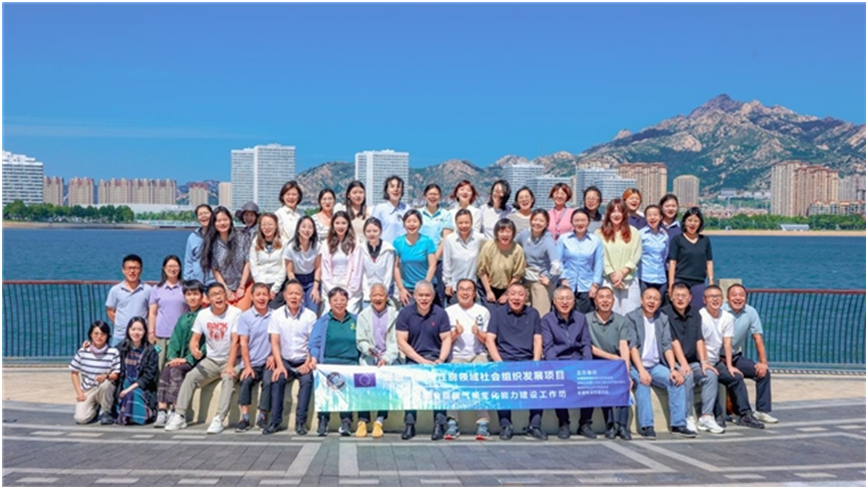
Group 1 - The workshop aimed to enhance the capacity and effectiveness of social organizations in addressing climate change [1][4] - Key discussions included the importance of compliance and asset protection in public welfare, as emphasized by experts [3] - The event featured practical activities, such as visiting fishing villages and participating in beach cleaning, to integrate theory with practice [3] Group 2 - The workshop provided support for social organizations to engage in climate action from various perspectives, including policy, law, and local practices [4] - Future collaborations are anticipated to promote green, equitable, and sustainable climate governance [4]
我国积极稳妥推进碳达峰碳中和 引领绿色低碳发展取得新成效
Xin Hua Wang· 2025-09-22 08:03
Core Insights - China is actively and steadily advancing its carbon peak and carbon neutrality goals, achieving significant results in green and low-carbon development over the past five years [1] Energy Sector - As of June 2023, China's renewable energy installed capacity exceeded 2.159 billion kilowatts, accounting for approximately 59.2% of total installed power generation capacity [2] - The proportion of non-fossil energy consumption increased from 15.9% in 2020 to an expected 19.8% by 2024, while coal consumption is projected to decrease from 56.8% in 2020 to 53.2% by 2024 [2] - Wind and solar power installed capacity has reached 1.68 billion kilowatts, more than three times the capacity in 2020, achieving international commitments six years ahead of schedule [2] Industrial Transformation - The process of industrial decarbonization is accelerating, with over 150 million tons of outdated steel production capacity eliminated [3] - By the end of 2024, China aims to cultivate 6,430 national-level green factories, with their output accounting for about 20% of total manufacturing output [3] - The "new economy" sectors, including new industries, new business models, and new formats, now account for over 18% of GDP [3] Environmental Improvements - By 2024, China's forest coverage rate is expected to exceed 25%, with forest stock exceeding 20 billion cubic meters [4] - The annual carbon sink from forests and grasslands is projected to exceed 1.2 billion tons of CO2 equivalent, ranking first in the world [4] - Over 90% of urban residential communities have implemented waste sorting, and more than 60% of consumers are choosing to purchase new energy vehicles [4] Global Climate Leadership - China has made significant contributions to global climate governance, actively participating in the Paris Agreement and promoting a fair global climate governance system [4] - The country has already met its 2030 targets for wind and solar power capacity and forest stock ahead of schedule, providing 60% of global wind power equipment and 70% of solar photovoltaic components [4] South-South Cooperation - China has signed 54 climate change cooperation memorandums with 42 developing countries, implementing over 300 capacity-building projects [5] - Since 2016, China has mobilized over 177 billion yuan in project funding to support developing countries in addressing climate change [5]
中央财经大学“全球治理框架下的绿色金融创新与合作论坛”在京举办
Zheng Quan Ri Bao Wang· 2025-09-21 08:23
Group 1 - The forum on green finance innovation and cooperation was held in Beijing, marking the 10th anniversary of the International Research Institute for Green Finance at Central University of Finance and Economics [1] - The forum focused on key topics such as green finance innovation practices and empowering industrial green transformation, especially at a critical juncture five years after China's "dual carbon" goals were proposed [1] - The president of Central University of Finance and Economics highlighted that China's green finance practices provide replicable and promotable experiences for global green governance, including the establishment of a top-level design for green finance and support for green industry development through green credit and green bonds [1] Group 2 - The China Securities Regulatory Commission emphasized three main aspects of capital market support for green low-carbon development: facilitating qualified green low-carbon enterprises to list and finance, enriching green financial products, and leveraging the futures market to support green economic development [1] - The director of the International Research Institute for Green Finance stated that the institute will continue to focus on policy theory research, practical results transformation, and international cooperation to contribute to the high-quality development of China's green finance and global sustainable development [2]
新预测:美国气候政策转向拖累全球气候治理
Xin Hua Wang· 2025-09-16 09:21
Core Viewpoint - In the first half of this year, U.S. greenhouse gas emissions surged, leading to a global increase in emissions compared to the same period last year, with a new forecast indicating that the U.S. government's shift towards fossil fuel support will hinder global climate governance [1] Group 1: U.S. Climate Policy Changes - The U.S. energy and climate policy has undergone the most drastic shift in recent years since President Trump returned to the White House, which will reduce the U.S. emission reduction rate to half of what was achieved in the past 20 years [1] - In the best-case scenario, where fossil fuels become more expensive and renewable energy is rapidly deployed, U.S. greenhouse gas emissions could only decrease by 43% by 2040, significantly lower than the previous administration's commitment to reduce emissions by 61% to 66% from 2005 levels by 2035 [1] Group 2: Global Climate Impact - The shift in U.S. climate policy is expected to have profound implications for the global climate crisis, potentially leading to an increase in U.S. greenhouse gas emissions by the end of the 2030s if the development of clean energy is severely constrained by economic and political factors [1]
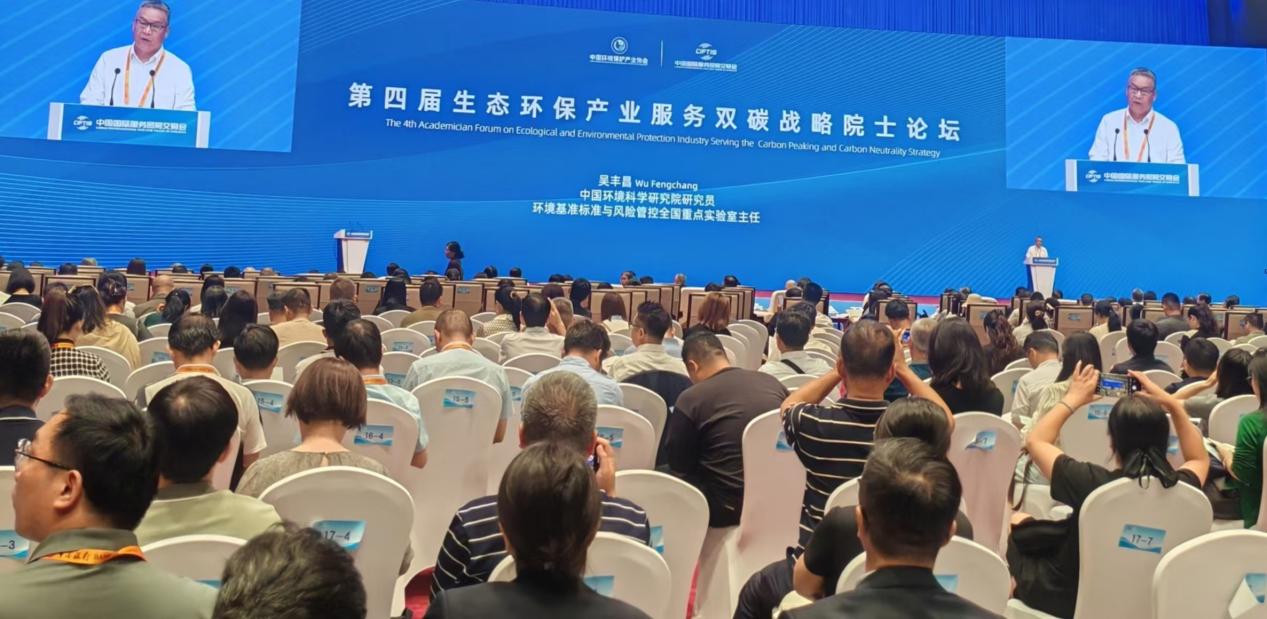
科技领航智绿融合:第四届生态环保产业服务“双碳”战略院士论坛举行
Zhong Guo Jing Ji Wang· 2025-09-15 04:48
Core Insights - The 2025 China International Service Trade Fair held from September 10 to 14 focused on the theme of ecological and environmental services, emphasizing the "dual carbon" strategy and the integration of technology and green development [1][3] Group 1: Event Overview - The fourth Ecological and Environmental Industry Service "Dual Carbon" Strategy Forum was a key event during the fair, aiming to gather global expertise to support China's dual carbon strategy and ecological civilization [1][3] - The forum highlighted the importance of technological innovation and intelligent integration in driving green transformation across industries [1][4] Group 2: Government and Institutional Support - China is recognized as a proactive participant in global climate governance, achieving significant milestones in green and low-carbon development [3] - Beijing's government emphasizes the dual carbon strategy as a guiding principle for high-quality development and supports the ecological and environmental industry as a priority sector [3][4] Group 3: Technological Advancements - Experts discussed advancements in green low-carbon development in the oil and petrochemical sectors, AI-enabled atmospheric composition remote sensing technology, and smart water treatment equipment manufacturing [4] - The forum focused on the integration of artificial intelligence, digital technology, and new materials with green technology to create a new "smart + green" industry ecosystem [5] Group 4: International Collaboration - The forum aimed to deepen international scientific cooperation and technology transfer, supporting the construction of a green "Belt and Road" initiative to enhance China's influence in global environmental governance [5]