
多层次医疗保障体系

Search documents
动辄百万的创新药,如何让商保买单?
Hu Xiu· 2025-08-13 04:39
Core Insights - The article emphasizes the urgent need for innovative payment pathways for high-value drugs, particularly CAR-T therapies, highlighting the challenges these therapies pose to health insurance systems and the necessity for commercial health insurance to adapt beyond traditional models [1] Group 1: Policy Framework - The government has positioned commercial health insurance as the "second pillar" of medical insurance, aiming to create a collaborative system comprising basic medical insurance, commercial health insurance, and charitable support [2] - The recent policy documents outline the establishment of a commercial health insurance directory for innovative drugs, prioritizing drugs with high innovation and clinical value [3] Group 2: Market Goals and Implementation - The goal is to cover 500 million people by 2030, with a projected market size for commercial health insurance reaching 2 trillion yuan by 2030, where payments related to innovative drugs will account for over 30% (approximately 600 billion yuan) [4] - A data integration platform is proposed to facilitate collaboration between medical institutions and pharmaceutical companies, promoting data sharing and streamlined payment processes [4] Group 3: Opportunities and Challenges - Three key opportunities for commercial health insurance include the establishment of a dedicated payment directory for innovative drugs, enhanced data access for insurance companies, and the development of comprehensive evidence for drug approval [5] - Four main challenges include data barriers due to concerns over data privacy, misalignment in product offerings between insurers and pharmaceutical companies, difficulties in hospital collaboration, and inefficient patient outreach strategies [6][7][8][9] Group 4: Strategic Recommendations for Pharmaceutical Companies - Companies are encouraged to collaborate in data sharing initiatives, providing real-world evidence to assist insurers in optimizing payment models [10] - Joint product development between pharmaceutical companies and insurers is recommended to enhance clinical value assessment and risk pricing [11] - Pharmaceutical companies should lead initiatives to establish dual payment agreements with hospitals, ensuring that insurance settlements are not included in medical insurance assessments [12] - A multi-faceted approach involving patient engagement strategies is essential to improve outreach and increase insurance coverage among healthy populations [14] Group 5: Lifecycle Strategy - Companies should embed commercial insurance payment considerations during the clinical trial phases to prepare for future insurance directory inclusion [15] - Prior to market launch, companies should focus on submitting comprehensive health technology assessment reports to facilitate early inclusion in commercial insurance directories [16] - During the initial market phase, leveraging commercial insurance to enhance patient access and data collection for future medical insurance negotiations is crucial [18] - Post-medical insurance inclusion, companies should focus on building a comprehensive care model that integrates economic evaluations and real-world data collection [19][21] Conclusion - The positioning of commercial health insurance as a second pillar opens a pathway for innovative drug payments, but successful implementation requires a shift from policy compliance to ecosystem collaboration, ensuring patient accessibility and commercial sustainability by 2030 [23]
2021年末北京保险业资产总规模1.3万亿元
Xin Hua Wang· 2025-08-12 06:29
Group 1 - The total asset scale of Beijing's insurance industry reached 1.3 trillion yuan by the end of 2021, growing by 19.4% compared to the beginning of the year, ranking second nationwide and accounting for 5.1% of the national total, an increase of 0.3 percentage points year-on-year [1] - Non-auto insurance business of property insurance companies in Beijing saw a year-on-year growth of 12.6%, with its business proportion approaching 60%, an increase of 5.4 percentage points year-on-year [1] - The comprehensive reform of auto insurance led to a nearly 20% decrease in average premiums for commercial auto insurance, with the comprehensive cost ratio being 1.7 percentage points lower than the national average [1] Group 2 - In 2021, Beijing's insurance industry provided risk protection for the entire society with a year-on-year increase of 2.9 times, and paid various claims amounting to 83.85 billion yuan, a year-on-year growth of 13.6% [2] - The industry actively engaged in disaster prevention services, with pre-paid claims and disaster prevention expenses increasing by 24.3% and 11.1% year-on-year, respectively [2] - Beijing's insurance sector supported pandemic prevention efforts by achieving full coverage of basic insurance for adverse reactions to first and second category vaccines, covering over 90% of the national COVID-19 vaccination doses [2]
从保健康人到保人健康——商业健康险渐成大众新需求
Xin Hua Wang· 2025-08-12 06:20
Group 1: Health Insurance Market Growth - The commercial health insurance market in China has rapidly developed, with a variety of products and expanding service coverage [1] - In 2021, health insurance premium income reached 880.36 billion yuan, a year-on-year increase of 7.7%, while claims paid amounted to 408.53 billion yuan, up 39.9% [1] Group 2: Major Insurance Products and Services - Health insurance products mainly include disease insurance, medical insurance, medical accident insurance, nursing insurance, and disability income loss insurance [1] - The introduction of critical illness insurance has alleviated the financial burden on urban and rural residents, with over 140 million claims paid by China Life in 2021 [2] Group 3: Big Illness Insurance System - The big illness insurance system was established to reduce the financial burden of major illnesses for urban and rural residents, covering 1.22 billion people [3] - The reimbursement rate for insured individuals has increased by 10 to 15 percentage points [3] Group 4: Supplementary Medical Insurance - The rapid development of short-term medical insurance, particularly "Hui Min Bao," has provided additional medical coverage for residents [4] - By the end of 2021, 27 provinces had launched over 200 "Hui Min Bao" products, with total premiums exceeding 14 billion yuan [5] Group 5: Long-term Care Insurance - Long-term care insurance has become a focus due to aging population issues, with over 1 billion people covered by pilot programs [7] - The pilot programs have provided long-term care services to over 700,000 disabled elderly individuals [7] Group 6: Innovations in Insurance Products - Companies are increasingly offering insurance products tailored for new citizens, with 55 products available from Nongyin Life [6] - The "Ai Ta Bao" product, aimed at women, has been launched to enhance coverage and services for female citizens [6]

中华财险湖南湘潭中支:群众有依靠 保险惠民生
Xin Hua Wang· 2025-08-12 06:13
Group 1 - The company has been providing urban and rural residents' major illness insurance services in Xiangtan since 2016, leveraging its expertise in insurance management and policy health insurance services [1][2] - In 2023, the company handled major illness insurance claims amounting to 10.9683 million yuan, benefiting 2,382 individuals [2] - The company adheres to the principle of "government-led, cost recovery, and service-oriented," receiving recognition from both insured individuals and medical insurance departments for its efficient services [2] Group 2 - Xiangtan is the only pilot city in Hunan Province for long-term care insurance, aimed at improving the social security system and alleviating the financial burden of long-term care for the elderly and disabled [4] - The company won the bid for the long-term care insurance project in December 2020, covering approximately 380,000 insured individuals in Xiangtan [6] - In 2023, the company paid out 1.62 million yuan from the long-term care fund [6] Group 3 - The company has implemented medical inspections to ensure the effective operation of medical insurance funds, discovering 3,105 issues related to fraud and improper charges, amounting to 3.3 million yuan [7] - The company conducted self-inspection actions involving 58 designated medical institutions, resulting in the return of 1.21 million yuan to the medical insurance fund [7] - The company is committed to enhancing the quality of health insurance services and contributing to the multi-level medical security system [7]

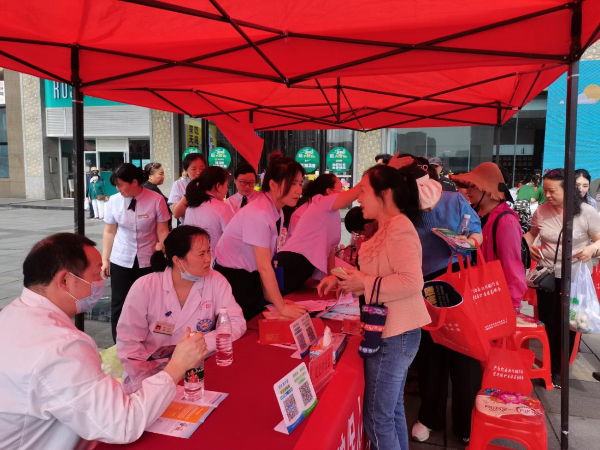
健康中国筑牢幸福根基
Jing Ji Ri Bao· 2025-08-11 22:25
Core Points - The Chinese government prioritizes public health and has established a comprehensive basic medical security system covering over 1.3 billion people, with life expectancy increasing from 35 years at the founding of New China to 79 years by 2024 [1] - The multi-tiered medical insurance system has been significantly improved, allowing for direct settlement of medical expenses across provinces, with an expected 238 million cross-province medical visits by the end of 2024 [2][3] - The pharmaceutical industry is experiencing a surge in innovation, with 48 new drugs approved in 2024 and a shift from "follow-up innovation" to "original breakthroughs" [5] Group 1: Medical Insurance and Coverage - By the end of 2024, approximately 1.327 billion people will be covered by basic medical insurance, maintaining a coverage rate of over 95% [3] - The cumulative financial relief for low-income rural populations during the 14th Five-Year Plan period exceeds 650 billion yuan [3] Group 2: Pharmaceutical Innovation - The first domestically developed long-acting interferon for hepatitis B has been launched, significantly reducing treatment costs and improving patient access [4] - The rapid development of the pharmaceutical industry is supported by government policies that facilitate faster access to innovative drugs [4] Group 3: Public Health and Disease Prevention - A robust infectious disease reporting system has been established, enhancing early detection and response capabilities for major chronic diseases [6][7] - The vaccination strategy has been adjusted to strengthen herd immunity, with a high vaccination rate of over 90% among eligible children [8]
上海出台“18条措施”:商保与医药创新“双向赋能”
2 1 Shi Ji Jing Ji Bao Dao· 2025-08-08 13:21
Core Viewpoint - The recent measures released by Shanghai's financial and healthcare regulatory bodies aim to enhance the synergy between commercial health insurance and the biopharmaceutical industry, promoting high-quality development through 18 specific initiatives [1][2]. Group 1: Policy Measures - The 18 measures are designed to create a "dual empowerment" mechanism between commercial health insurance and biopharmaceutical innovation, addressing product innovation, payment mechanisms, service models, and regulatory innovation [1][3]. - The measures include establishing a multi-party payment mechanism involving health insurance, commercial insurance, charitable organizations, and pharmaceutical companies to facilitate the clinical application of innovative drugs and devices [3][4]. - The policy encourages the use of innovative drugs listed in the commercial insurance directory without counting them towards the basic medical insurance's out-of-pocket rate, alleviating concerns for medical institutions [3][4]. Group 2: Data Empowerment - The measures propose upgrading health data sharing capabilities to support product design, actuarial pricing, and risk assessment for commercial insurance [4][5]. - The initiative aims to integrate health insurance data into commercial insurance settlements, ensuring comprehensive coverage across various medical institutions [4][5]. - By utilizing shared data, the policy seeks to provide precise pricing for specific groups, enhancing the diversity of insurance products [4][5]. Group 3: Service Models - The measures promote a full-cycle health management service model, encouraging collaboration between commercial insurance and medical institutions to provide comprehensive health services [5][6]. - This approach aims to shift the focus from post-claim reimbursement to proactive health management, improving the continuity and effectiveness of health services [5][6]. Group 4: Regulatory Innovation - The measures propose a "regulatory sandbox" pilot mechanism for innovative commercial health insurance products, ensuring compliance and sustainability while preventing misuse of policies [5][6]. - The focus is on balancing the interests of various stakeholders, including regulatory bodies, pharmaceutical companies, and insurance providers, to facilitate effective policy implementation [6][7]. Group 5: Implementation Challenges - The successful implementation of these measures requires addressing challenges such as defining the scope of "innovative drugs" and establishing negotiation mechanisms between insurance institutions and pharmaceutical companies [6][7]. - Ensuring data security during the sharing process is critical, as it involves sensitive personal and medical information [6][7]. - Coordination among multiple departments is essential for effective policy execution, necessitating a structured approach to manage diverse interests [7][8].
中端医疗险如何更好触达消费者
Jin Rong Shi Bao· 2025-08-08 08:01
Core Insights - The demand for mid-range health insurance products is rising due to increased health management awareness among residents and diverse medical insurance needs [1][2] - Major insurance companies are actively launching mid-range health insurance products, driven by opportunities arising from healthcare payment reform [1][2] - The growth of mid-range health insurance is a natural outcome of the multi-tiered healthcare system, addressing consumer needs for better medical services without the high costs of premium insurance [1][3] Market Dynamics - The mid-range health insurance market is becoming competitive, providing consumers with more choices to meet their multi-tiered healthcare needs [2] - However, the market faces challenges such as product homogeneity, complex terms, and low consumer recognition [2][3] - Insurance companies need to optimize product design to cater to diverse consumer needs and enhance market acceptance [2][3] Product Development - Companies should adopt modular design concepts to offer customizable coverage options, allowing consumers to select and combine benefits according to their needs [2] - There is a need for timely inclusion of innovative drugs and new technologies in mid-range health insurance coverage [2][3] Service Enhancement - Improving service quality and customer experience is essential, including offering value-added services and simplifying claims processes [3] - Regular employee training is necessary to enhance staff understanding of insurance terms and medical knowledge [3] Risk Management - Establishing a robust risk management system is crucial for assessing and monitoring medical risks, as well as controlling payout costs [3] Consumer Awareness - Increasing consumer awareness and understanding of mid-range health insurance is vital for market growth [3] Industry Impact - The rise of mid-range health insurance is significant for improving the multi-tiered healthcare system in China, meeting demands for high-value medications and innovative therapies [3][4] - The development of mid-range health insurance is expected to foster collaboration between the insurance and pharmaceutical industries [3][4]
医保、商保协同发力 破解创新药“支付难”瓶颈
Jin Rong Shi Bao· 2025-08-08 08:01
7月1日,国家医保局联合国家卫生健康委出台的《支持创新药高质量发展的若干措施》(以下简称 《若干措施》)发布。其中提出的"增设商业健康保险创新药品目录"备受关注。 在当日国家医保局举行的新闻发布会上,国家医保局医药管理司司长黄心宇表示:"基本医保和商 业健康保险都是我国多层次医疗保障体系的重要组成部分。《若干措施》提出了加强对创新药研发支 持,支持创新药进入医保药品目录和商保创新药目录,鼓励创新药临床应用,提高创新药多元支付能 力,以及强化组织保障等5方面16条具体举措。未来一段时间,将为支持我国创新药的高质量发展提供 积极助力。" 《若干措施》提出,适应多层次医疗保障体系发展需要,增设商业健康保险创新药品目录,重点纳 入创新程度高、临床价值大、患者获益显著且超出基本医保保障范围的创新药,推荐商业健康保险和医 疗互助等多层次医疗保障体系参考使用。 商保重要性日益凸显 数据显示,我国基本医保体系已覆盖超过13亿人,参保率稳定在95%。2024年,医保基金支出达 2.97万亿元,为医疗体系运行和医药产业发展提供了坚实保障。自2018年以来,149种创新药(主要为1 类创新药)纳入医保目录,占新增药品数量的17%。 ...
城市商业医疗险迎监管新规
Jin Rong Shi Bao· 2025-08-08 07:04
Core Viewpoint - The recent regulatory notice aims to standardize the rapidly growing urban commercial health insurance sector, emphasizing its role as a beneficial supplement to basic medical insurance and ensuring sustainable development while protecting consumer rights [1][2][5]. Group 1: Regulatory Framework - The notice outlines multiple aspects for regulating urban commercial health insurance, including promoting inclusivity, adhering to commercial principles, and enhancing product management and pricing accuracy [1]. - It emphasizes the need for insurance companies to operate under market principles, ensuring that products are developed based on consumer needs and historical data [4][9]. Group 2: Market Dynamics - Urban commercial health insurance has gained popularity due to its government backing, low entry barriers, and high coverage, but it faces sustainability risks due to issues like unclear responsibilities and high product homogeneity [3][7]. - As of October 2024, there are 298 urban commercial health insurance products, with a slowdown in new product launches, indicating ongoing discussions about sustainability in the sector [7]. Group 3: Pricing and Risk Management - The notice calls for precise risk management and differentiated pricing based on demographic factors such as age and health status, aiming to prevent adverse selection and ensure the viability of insurance products [7][8]. - Insurance companies are required to conduct regular assessments of their products' profitability and adjust pricing and coverage accordingly to maintain sustainability [8]. Group 4: Consumer Protection and Market Conduct - The notice mandates that insurance companies enhance sales practices, ensuring accurate communication of product features and preventing misleading sales tactics [10]. - It also prohibits unhealthy competition practices, such as price wars, and emphasizes the importance of fair competition and consumer rights protection [9][10]. Group 5: Collaborative Governance - The notice encourages collaboration among various stakeholders, including regulatory bodies and local governments, to create a coherent framework for urban commercial health insurance [11]. - It aims to clarify the distinction between commercial and social insurance, promoting a better understanding of their roles in the healthcare system [11].
“惠民保”重普惠破“内卷” 精准定价商业可持续
Jing Ji Ri Bao· 2025-08-07 03:50
日前,国家金融监督管理总局下发《关于推动城市商业医疗险高质量发展的通知》(以下简称《通 知》),规范城市定制型商业医疗保险业务,推动这一普惠性商业保险产品实现可持续发展。城市定制 型商业医疗险在业内俗称"惠民保",由保险公司依据《中华人民共和国保险法》市场化运作,对于分散 和转移健康风险、减轻被保险人高额医疗费用负担具有重要意义和积极作用。 扩面提质突出普惠性 近年来,保险业围绕人民群众的优质医疗保障需求,优化"惠民保"产品供给,及时将医疗新技术、新药 品、新器械应用纳入责任范围,为人民群众提供覆盖广泛、公平可得、保费合理、保障有效的保险服 务。 众惠财产相互保险社董事长李静认为,"惠民保"作为基本医保的重要区域性补充,在多层次医疗保障体 系建设中承担着衔接基础保障与个性化需求的重要职能,是连接基本医保与商业健康险的纽带。"惠民 保"在一定程度上缓解了公众面对高额医疗费用的负担,有助于拓展保险的深度和广度,也引导公众进 一步关注商业保险。因此,规范发展的"惠民保"可提升保障体系韧性,使医保基金更多聚焦基础托底功 能,形成"基本医疗保险广覆盖、城市商业医疗险精准补充"的梯次保障架构。 今年4月下旬,2025年度 ...