
资本市场

Search documents
智元远征A2机器人为第七届金麒麟机器人及高端制造行业最佳分析师颁奖(现场图)
Xin Lang Zheng Quan· 2025-11-28 08:12
专题:2025分析师大会:资本市场"奥斯卡"启幕 11月28日,2025分析师大会暨第七届新浪财经"金麒麟"最佳分析师颁奖盛典隆重召开。逾300名权威学 者、公私募掌舵人、上市公司董事长、顶级基金经理、首席分析师齐聚上海,共同探讨中国资本市场的 未来机遇。 同时,第七届新浪财经金麒麟最佳分析师评选结果隆重揭晓。 现场,智元远征A2机器人作为"神秘颁奖嘉宾"给最佳分析师颁奖。 第六名 国金证券研究团队 (首席分析师:赵智勇;团队成员:臧雄、倪蕤、曹小敏、刘晓舟、屈奇、杨文建) 第三名 浙商证券研究团队 (首席分析师:邱世梁;联席首席:王华君、张雷;团队成员:何家恺、周艺轩、王家艺、张菁、刘 巍、黄华栋、陈明雨、李思扬、陈姝姝、孙旭鹏、王一帆、陈晨、姬新悦、周向昉、陈红、谢金翰、尹 仕昕、杨子伟、汪成、曹宇、张筱晗) 第四名 东吴证券研究团队 (首席分析师:周尔双;团队成员:李文意、钱尧天、韦译捷、黄瑞) 第五名 国泰海通证券研究团队 (首席分析师:肖群稀;联席首席:赵玥炜;团队成员:赵靖博、毛冠锦、李启文、刘绮雯、刘麒硕、 黄龙、丁嘉一) 第七届新浪财经金麒麟机器人及高端制造行业"最佳分析师"荣誉榜如下: 第一 ...

常州亮出“十五五”资本市场目标:新增上市公司30家、力争50家
Zheng Quan Shi Bao Wang· 2025-11-28 08:01
周伟简要介绍了近年来常州推动民营企业上市工作。他说,常州将抢抓综合改革试点宝贵机遇,锚 定"十五五"新增上市公司30家、力争50家目标,精准发力、久久为功,持续壮大资本市场"常州板块"。 常州各级党委政府部门将立足"1028"产业体系,加快构建"政府引导、市场主导、专业服务"上市服务体 系,积极推动资本、产业、创新、人才等要素联动,用好龙城科创基金等政府引导基金,加快形成资本 助力产业升级、产业吸引人才汇聚、人才推动创新发展的良性循环。希望广大民营企业勇当资本市场 的"生力军",主动拥抱资本市场,聚焦主业、苦练内功,争做行业标杆和百年老店。 截至目前,常州全市拥有境内外上市企业90家,存量A股上市公司数量列全国同类城市前列,民营企业 占比九成以上。今年以来,新增上市公司4家,新增新三板挂牌企业12家。会上,发布了证券公司常州 地区业绩榜单、常州市重点上市后备企业梯队。今年,常州共有816家企业列入上市后备企业库,其中 重点后备企业243家。会上,18个重点项目与券商集中签约。 11月27日,常州市推动优质民营企业高质量上市工作会议召开。省委金融工委副书记聂振平,江苏证监 局副局长毕庆锋,上海证券交易所市场发展 ...
第七届新浪财经金麒麟证券分析师·未来之星荣耀揭晓
Xin Lang Zheng Quan· 2025-11-28 06:22
Core Insights - The 2025 Analyst Conference and the 7th Sina Finance "Golden Unicorn" Best Analyst Awards Ceremony took place on November 28, gathering over 300 authoritative scholars, public and private fund leaders, listed company chairpersons, top fund managers, and chief analysts in Shanghai to discuss future opportunities in the Chinese capital market [1] Group 1: Event Overview - The event featured discussions on the future opportunities in the Chinese capital market [1] - The results of the 6th Sina Finance Golden Unicorn Best Analyst Awards were announced [1] Group 2: Award Winners - Ten analysts were awarded the title of Securities Analyst: Future Star, representing various institutions and research industries, including: - Wang Zihao from Changjiang Securities in the New Energy Vehicles and Components sector - Jiang Tao from GF Securities in the Public Utilities sector - Xue Hongwei from Dongfang Securities in the Electronics sector - Fang Yi from Guotai Junan Securities in Strategy Research - Pang Jiajun from CITIC Securities in the Electronics sector - Yang Jiani from Guojin Securities in Macroeconomic Research - Yang Xu from Zhongtai Securities in the Electronics sector - Liu Jie from Tianfeng Securities in the Banking sector - Lin Chengwei from Zheshang Securities in Macroeconomic Research - Dai Yongbo from Huafu Securities in Robotics and High-end Manufacturing [1]



从资源依赖到科技争先 资本驱动山西产业提质焕新
Zheng Quan Shi Bao· 2025-11-27 19:32
证券时报记者赵黎昀 中国上市公司协会发布的2025年上市公司现金分红榜单中,山西辖区多家上市公司上榜。其中,潞安环 能在股息率榜单中排名第四位,山西汾酒同时上榜现金分红总额榜单与股利支付率榜单。 山西资本市场的快速提质发展,离不开持续优化的市场环境。 近年来,山西证监局守牢风险底线,推动重点领域风险防范化解。2021年以来,山西成功推动16家"僵 尸"或不活跃机构注销私募基金管理人登记,尾部劣质机构得到有效出清。稳妥处置*ST当代退市风 险,实现了辖区首家退市公司"退得下、退得稳"。永泰能源运用"并购重组+银团贷款+回购增持"方式, 有效化解面值退市风险。"十四五"时期,山西交易所债券市场保持"零违约",为市场健康稳定发展营造 了良好的信用环境。 山西辖区境内上市公司总量已达到41家,总市值提升至8392.34亿元,利润总额期间提升幅度达 91.84%。山西上市公司营业收入规模从3222.73亿元增至5614.33亿元,增长74.21%。 "企业不断提质增效,让投资者获得感持续提升。2024年,山西辖区上市公司累计派发现金分红198.5亿 元,户均分红4.84亿元,全国排名居前。"山西证监局相关负责人介绍,山 ...
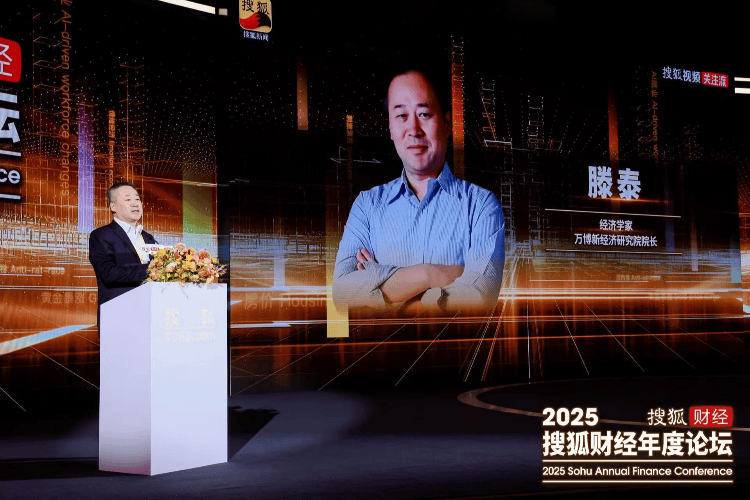
滕泰建言扩消费:发放万亿级消费补贴,提升农村老年人养老金
Sou Hu Cai Jing· 2025-11-27 14:25
Core Viewpoint - The forum emphasizes the need for unconventional measures to achieve a reasonable annual consumption growth target of 6% during the "14th Five-Year Plan" period, including substantial consumption subsidies and the transfer of state-owned equity to social security funds [2][3][4]. Group 1: Consumption Growth Strategies - The proposal includes issuing over 1 trillion yuan in consumption subsidies, which could significantly boost total demand and GDP growth by 2-3 percentage points [3][4]. - A transfer of 10 trillion yuan of state-owned equity to social security funds is suggested to enhance pension levels for low-income groups, thereby increasing their consumption capacity [4]. - The potential wealth effect from capital market expansion is highlighted, with a projection that the market value could reach 200-250 trillion yuan by 2030, supporting increased consumer spending [4]. Group 2: Current Economic Challenges - The current economic issue is identified as severe over-investment, with many projects yielding no effective output, as evidenced by fixed asset investments exceeding local GDP in 14 provinces [2]. - A shift towards accepting lower investment growth rates is recommended, focusing on effective investments in areas like artificial intelligence while reducing inefficient investments [2][3].

中国政法大学教授、博导刘纪鹏:股市能否成为拉动经济的引擎 关键是要解决股市制度问题
Bei Jing Shang Bao· 2025-11-27 13:19
北京商报讯(记者 卢扬 程靓)11月27日,在"2025搜狐财经年度论坛"上,中国政法大学教授、博导刘 纪鹏表示,尊重资本,振兴股市是扭转经济下行的不二选择。只要信心在,对中国的未来有希望,资本 市场就能够起来。股市能否成为拉动经济的引擎,关键是要解决股市的制度问题。 ...
广州金融股债并举赋能国企高质量发展
Sou Hu Cai Jing· 2025-11-27 10:34
据了解,广州市高度重视资本市场发展,将北交所、新三板作为广州企业融资发展的重要平台,与北交 所建立了长期持续合作。一是共建北交所全国股转系统华南基地,实现新三板、北交所服务功能的"驻 地化",为广州企业提供及时触达、便捷高效的优质服务。二是建立常态化工作机制,2025年1月印发 《广州市企业赴全国股转系统、北京证券交易所挂牌上市专项工作组工作方案》,成立专项工作组,建 立常态化对接、实时跟踪、定期通报、信息共享的工作机制,形成合力服务广州企业。三是开展多种形 式活动,联合北交所华南基地、广东股权交易中心持续开展企业摸查走访、举办北交所在辅企业交流座 谈会,充实挂牌上市后备力量,提升企业申报效率,连续两年举办广州专精特新企业走进北交所活动, 共有超40家专精特新企业参加,涵盖生物医药、专业设备制造、汽车制造、软件和信息技术服务等行 业。 央广网北京11月27日消息(记者 冯方)11月25日,广州市国有企业北交所专题培训会召开。培训会旨 在帮助广州市国有企业充分了解北交所、新三板以及区域性股权市场的各类融资工具,掌握资本市场最 新政策和规则,推动国有企业抓住新三板、北交所成长机遇,借助资本市场实现加速发展。 本次 ...
管涛:“十五五”时期资本市场将迎来四大机遇 资管配置能力重要性进一步提升
Sou Hu Cai Jing· 2025-11-27 03:49
Group 1 - The core viewpoint is that the "14th Five-Year Plan" period presents four significant opportunities for China's capital market, including policy dividends from deepened reforms, new momentum from economic transformation, improved institutional foundations, and value reassessment to invigorate market vitality [1][2][3] Group 2 - The first opportunity is the comprehensive deepening of reforms that will release policy dividends, with structural issues needing resolution through high-level opening and reform, which is expected to return economic growth to a reasonable range [2][3] - The second opportunity involves economic transformation that will foster new momentum, with emerging industries and the upgrading of traditional industries expected to create a market space of approximately 10 trillion yuan over the next five years [2][3] Group 3 - The third opportunity is the improvement of capital market systems, emphasizing "investor first" principles and promoting coordinated reforms in investment and financing, which will solidify the foundation for healthy market development [3][4] - The fourth opportunity is the value reassessment that will stimulate market vitality, driven by domestic economic transformation, diversification of resident assets, and global asset rebalancing [3][4] Group 4 - Wealth management institutions are expected to play a larger role in asset allocation, particularly in a low-interest and high-volatility environment, with a focus on four key areas for equity asset allocation over the next five years [4] - Gold is highlighted as having continued allocation value, with its share in private investment potentially increasing from just over 2% to 4-5% due to ongoing economic uncertainties [4] Group 5 - The future investment opportunities arising from transformation and upgrading will require enhanced asset allocation capabilities from wealth management institutions to navigate through economic cycles [4][5]
“十五五”规划建议之资本市场展望
Shang Hai Zheng Quan Bao· 2025-11-26 12:09
Group 1 - The "15th Five-Year Plan" outlines a blueprint for China's economic and social development, emphasizing the importance of capital markets in achieving these goals [1][2] - The plan highlights the need for a well-functioning capital market that supports direct financing through stocks and bonds, as well as the development of futures, derivatives, and asset securitization [1][2] - The capital market is expected to play a crucial role in serving the real economy and providing quality financial services to key strategic areas and weak links [3] Group 2 - The overall goal for the capital market in the next five years is to establish a high-quality development framework, improve investor protection mechanisms, and enhance the quality and structure of listed companies [4] - Key reform areas include enhancing the capital market's inclusiveness and adaptability, focusing on serving the real economy, and promoting the development of a multi-tiered bond market [4][5] - The plan aims to create a more attractive environment for long-term capital investment and improve the structure of market funding sources [5][6] Group 3 - The capital market is expected to undergo significant changes, leading to a new balance in investment and financing, with a focus on new economic sectors [7] - By mid-2025, the proportion of strategic emerging industry companies in the A-share market is projected to reach 32.78%, with over 90% of IPOs coming from these sectors [7] - The market is anticipated to see an increase in institutional and long-term capital, with a reported 21.4 trillion yuan in long-term funds held by A-shares as of August 2025, marking a 32% increase from the end of the 13th Five-Year Plan [8] Group 4 - The diversification of financial tools and services is expected to meet the varying needs of different investment and financing entities, with an emphasis on inclusive products for individual investors [9] - The capital market is set to benefit from the comprehensive reform of investment and financing mechanisms, which is anticipated to enhance market activity and investor engagement [12] - The ongoing AI technology wave and global monetary system reshaping are expected to contribute to the revaluation of Chinese assets, providing a solid foundation for future capital market growth [13]
前10个月证券交易印花税增长88% 资本市场回稳拉动相关税收增长
Jing Ji Ri Bao· 2025-11-26 02:15
Group 1 - The core viewpoint of the articles highlights the significant growth in stamp duty revenue from securities transactions, indicating a revitalization of the capital market and increased investor confidence [1][2][3] - In the first ten months of the year, the national stamp duty revenue reached 378.1 billion yuan, a year-on-year increase of 29.5%, with securities transaction stamp duty contributing 162.9 billion yuan, up 88.1% [1] - The A-share market showed a positive trend with a total trading volume of 338.6 trillion yuan, reflecting an 87.7% year-on-year increase, closely aligning with the growth rate of securities transaction stamp duty [1][2] Group 2 - The increase in stamp duty revenue is supported by a series of financial policies aimed at stabilizing the market and expectations, including coordinated efforts from the People's Bank of China and other regulatory bodies [2] - The performance of listed companies has improved, with total operating income reaching 53.46 trillion yuan and net profit at 4.7 trillion yuan, marking year-on-year growth of 1.36% and 5.5% respectively [2] - The technology sector has seen a significant increase in market capitalization, with the electronic industry surpassing the banking sector, now accounting for 12.42% of the total market value, reflecting a shift in investment focus [2][3]