
风险防控

Search documents
全面推动北京公募基金高质量发展 为加快建设金融强国贡献力量
Zhong Guo Zheng Quan Bao· 2025-09-15 22:33
Core Viewpoint - The public fund industry in China is entering a critical phase of deepening reform and improving quality and efficiency, focusing on enhancing investment capabilities, optimizing customer experience, and increasing investor trust [1][2][3] Group 1: Industry Development - The China Securities Regulatory Commission (CSRC) released the "Action Plan for Promoting High-Quality Development of Public Funds," marking a new development stage for the industry [2] - The public fund industry has over 30 trillion yuan in managed assets and more than 800 million investors, playing a vital role in serving the real economy and maintaining financial stability [3] - The industry faces challenges in operational philosophy, functionality, and governance, necessitating reforms to better align with national strategies [3] Group 2: Reform Initiatives - The action plan aims to address market and social concerns, encouraging institutions to focus on core business, optimize supply, and enhance value creation capabilities [3][4] - Beijing is positioned to lead by example in high-quality development due to its concentration of financial resources and institutions [4] Group 3: Business Innovation - The industry is encouraged to innovate and optimize business structures, including the introduction of floating fee rate products and the development of equity products [5][6] - In the first half of 2025, 73 new equity fund products were launched, totaling 41.5 billion yuan, with 1,106 equity funds under management amounting to 1.66 trillion yuan [6] Group 4: Investor Services - The focus is on enhancing the service system centered around investors, including the introduction of personal pension products and a comprehensive investor support system [6][7] - Digital transformation is being promoted to improve service efficiency and enhance investor experience [7] Group 5: Research and Investment Capabilities - The industry is urged to build a research and investment system that aligns with high-quality development, including the establishment of digital research platforms and integrated research teams [7] - Strengthening talent development and optimizing investment decision-making processes are key priorities [7] Group 6: Contribution to the Real Economy - The public fund industry is actively supporting national strategies, including technology innovation and green development, with 48 managed science and technology innovation funds totaling 173.236 billion yuan [8][9] - The industry is also involved in urban modernization projects through REITs, with 37 REITs issued, amounting to 1.03995 trillion yuan [9] Group 7: Investor Protection and Risk Management - Investor protection is prioritized, with ongoing fee reforms leading to significant savings for investors, totaling 7.2 billion yuan in 2024 [10] - A comprehensive risk management framework is being established to enhance regulatory oversight and prevent systemic risks [10]
金融监管总局修订发布《信托公司管理办法》,调整信托公司业务范围
Bei Jing Shang Bao· 2025-09-12 13:38
Core Viewpoint - The Financial Regulatory Administration has revised the "Trust Company Management Measures" to enhance the trust industry's core functions, promote reform and transformation, and effectively manage risks [1][2] Summary by Sections Business Scope - The revised measures outline three main business areas for trust companies: trust business, inherent asset liability business, and other services [1] - Trust business is now categorized into asset service trusts, asset management trusts, and public welfare trusts, reducing the previous five categories to three [1] - Inherent asset liability business now includes provisions for liquidity loans from shareholders and related parties, and allows for liquidity support loans from the trust industry guarantee fund company, while eliminating external guarantee services [1] Other Business Activities - The revised measures remove four intermediary business activities that are unrelated to the core operations of trust companies, including investment fund activities, custody services, and financial consulting [2] - Trust companies must meet relevant qualification requirements set by other regulatory authorities when engaging in activities such as securities underwriting and asset securitization services [2]
最新!信托公司管理办法正式发布!
Jing Ji Guan Cha Bao· 2025-09-12 11:44
Core Viewpoint - The Financial Regulatory Bureau has revised the "Trust Company Management Measures" to enhance the trust industry by focusing on its core responsibilities, deepening reforms, and effectively preventing risks [1][2]. Group 1: Main Revisions - The revised measures emphasize the core business of trust companies, adjusting their business scope to focus on asset service trusts, asset management trusts, and public welfare trusts, while breaking the rigid repayment model [7][8]. - The measures aim to strengthen corporate governance by integrating party building with corporate governance, enhancing shareholder behavior management, and establishing internal assessment mechanisms [7][9]. - Risk prevention is prioritized, with a focus on compliance management and operational risk, requiring comprehensive risk management throughout the trust business process [7][10]. Group 2: Business Scope Adjustments - The business scope has been narrowed to three main areas: asset service trusts, asset management trusts, and public welfare trusts, while eliminating unrelated intermediary businesses [8]. - New provisions allow trust companies to apply for liquidity support loans from the Trust Industry Guarantee Fund Company and to issue bonds directed at shareholders and related parties [8]. Group 3: Corporate Governance Requirements - Trust companies are required to establish a specialized committee for the protection of the rights of clients and beneficiaries, led by independent directors [9]. - There are enhanced requirements for managing shareholder behavior and related transactions, including regular evaluations and reporting of violations [9]. Group 4: Risk Management and Internal Controls - Trust companies must strengthen internal controls and risk management, ensuring that risk preferences align with risk management capabilities [10][11]. - The measures specify requirements for the entire trust business process, including documentation, risk disclosure, and asset management [10]. Group 5: Recovery and Disposal Arrangements - The revised measures enhance the enforceability and operability of recovery and disposal plans, allowing trust companies to seek liquidity support and issue bonds [12]. Group 6: Rectification of Existing Trust Businesses - Trust companies are required to identify and rectify existing businesses in accordance with the new measures, with progress monitored by the Financial Regulatory Bureau [13].
部分淘宝商家暂停黄金回购
Sou Hu Cai Jing· 2025-09-11 07:16
Core Viewpoint - Recent surge in gold prices has led many investors to consider liquidating their gold holdings, but several online platforms, including Taobao, have suspended their gold buyback services due to regulatory changes and risk management concerns [1][2]. Group 1: Online Gold Buyback Services - Multiple Taobao merchants have paused their gold buyback operations, citing adjustments in platform rules as the reason [1]. - The tightening of online gold buyback services is attributed to stricter regulatory policies and the need for enhanced risk control measures [1]. - The implementation of the "Anti-Money Laundering and Counter-Terrorism Financing Management Measures for Precious Metals and Gemstone Practitioners" starting August 1, 2025, requires large cash transactions to be reported to the central bank, increasing compliance burdens on platforms like Taobao [1]. Group 2: Merchant Perspectives - Merchants are exercising caution in their buyback operations due to the volatility in gold prices, which poses a risk of price declines after repurchase [2]. - The complexity of gold identification and purity testing, which requires specialized equipment and personnel, adds to the operational challenges and potential for disputes in the buyback process [2]. Group 3: Offline Gold Recovery Market - Despite restrictions on online buyback services, the offline gold recovery market remains active, with a noticeable increase in gold recovery volumes reported by industry insiders [3][4]. - A Shanghai gold recovery merchant noted that they have been actively purchasing gold, achieving satisfactory profits during price stabilization periods [4].

博弈融资租赁:汽车租赁企业破浪前行(二)
Sou Hu Cai Jing· 2025-09-10 07:40
Group 1 - The core issue for electric vehicle leasing companies is asset risk due to rapid technological updates and depreciation of vehicles, alongside operational wear and tear [1] - Boyi Financial Leasing focuses on vehicle financing leasing services, utilizing a technology-driven closed-loop system for comprehensive monitoring and management of vehicle assets [1][4] - The company employs big data analysis to track market value trends of vehicles, providing scientific vehicle renewal and disposal solutions to mitigate asset depreciation risks [1] Group 2 - The electric vehicle leasing market presents both risks and opportunities, requiring companies to possess strong risk management capabilities to thrive [3] - Boyi Financial Leasing offers professional services and innovative models to support enterprises in navigating this opportunity-rich market [3] - The company's "compliance license + technology closed-loop + resource integration" model creates a robust risk prevention system, acting as a solid "firewall" for partners [4] Group 3 - Boyi Financial Leasing is composed of a team of eight financial industry veterans, each with over ten years of experience in financing leasing, asset management, and financial risk control [6] - The team has successfully managed over 100 million yuan in existing assets, establishing benchmark cases in the vehicle, equipment, and new energy sectors [6]


杨晋柏在海口海关调研
Hai Nan Ri Bao· 2025-09-03 00:32
Core Points - The focus is on enhancing risk prevention and control capabilities in response to the challenges posed by the upcoming closure of Hainan Free Trade Port [2] - Emphasis on combating smuggling as a top priority, leveraging professional advantages to improve regulatory effectiveness [2] - The need for detailed risk scenario analysis and tailored response measures to enhance the effectiveness of anti-smuggling efforts [2] Group 1 - Yang Jinbai conducted research on anti-smuggling and risk prevention work at Haikou Customs [2] - The implementation of a smart regulatory platform for customs in Hainan Free Trade Port was demonstrated [2] - The importance of legal education and public awareness campaigns to create a strong anti-smuggling atmosphere in society [2] Group 2 - The establishment of a joint prevention and control mechanism among Hainan, Guangdong, and Guangxi to strengthen collaboration [2] - The development of a risk prevention mechanism that triggers coordinated responses across multiple points [2] - Continuous pressure testing and practical drills to address weaknesses and enhance operational readiness [2]
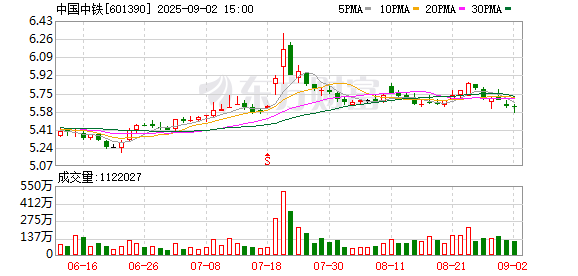
上半年中国中铁、中国铁建营收利润双降
Zhong Guo Neng Yuan Wang· 2025-09-02 10:20
Core Viewpoint - Both China Railway and China Railway Construction reported declines in revenue and net profit for the first half of 2025, attributed to macroeconomic conditions and intensified industry competition [1][2]. Group 1: Financial Performance - China Railway's revenue for the first half of 2025 reached 511.09 billion yuan, a year-on-year decrease of 5.93%, with a net profit of 10.27 billion yuan, down 21.59% [1]. - China Railway Construction's revenue was 489.20 billion yuan, with a net profit of 9.88 billion yuan, reflecting declines of 5.22% and 11.40% respectively [1]. - Both companies experienced a drop in gross margins across their main business segments, with China Railway's real estate development gross margin at 9.15%, down 3.42 percentage points from the previous year [1][2]. Group 2: New Contracts - China Railway signed new contracts worth 1,108.69 billion yuan in the first half of 2025, marking a 2.8% increase year-on-year, with domestic and overseas contract growth rates of -1.2% and 51.6% respectively [2]. - China Railway Construction's new contract total was 1,056.17 billion yuan, a year-on-year decrease of 4.04%, with domestic and overseas contract growth rates of -8.37% and 57.43% respectively [2]. Group 3: Strategic Outlook - The companies plan to enhance their operational capabilities and innovate business models in the second half of 2025, focusing on key markets, projects, and clients to improve performance [3]. - China Railway aims for a total revenue target of approximately 1,132 billion yuan for 2025, having completed 45.15% of this target in the first half [1].


半年报|上半年中国中铁、中国铁建营收利润双降
Zhong Guo Jing Ying Bao· 2025-09-02 09:21
Core Viewpoint - The revenue and profit of China Railway decreased in the first half of 2025 due to macroeconomic conditions and intensified industry competition [1][2]. Financial Performance - In the first half of 2025, China Railway reported a revenue of 511.09 billion yuan, a year-on-year decrease of 5.93%, and a net profit of 10.27 billion yuan, down 21.59% [2]. - China Railway Construction also experienced declines, with revenues of 489.20 billion yuan and a net profit of 9.88 billion yuan, representing decreases of 5.22% and 11.40% respectively [2]. Business Strategy and Goals - For the second half of 2025, the company plans to focus on high-quality growth, accelerate reform and innovation, and strengthen risk management [3]. - The target for total revenue in 2025 is approximately 1,132.0 billion yuan, indicating that the company has completed 45.15% of its annual target in the first half [3]. Margin Analysis - The gross margins across major business segments, including infrastructure construction, design consulting, equipment manufacturing, and real estate development, have all declined, with the real estate development margin at 9.15%, down 3.42 percentage points year-on-year [3]. - China Railway Construction noted a similar trend in its five business segments, with declines in engineering contracting, planning and design consulting, and real estate development, while industrial manufacturing and logistics saw margin increases [3]. Contracting Activity - In the first half of 2025, China Railway signed new contracts worth 1,108.69 billion yuan, a year-on-year increase of 2.8%, with domestic and international contracts growing at rates of -1.2% and 51.6% respectively [3][4]. - China Railway Construction's new contracts totaled 1,056.17 billion yuan, down 4.04%, with domestic and international contracts decreasing by 8.37% and increasing by 57.43% respectively [3]. International Business Development - The growth in new contracts for China Railway was significantly driven by overseas business, which achieved a contract value of 124.87 billion yuan, up 51.6%, accounting for 11.3% of total new contracts [4]. - The company plans to continue focusing on key markets and projects, enhancing operational capabilities and exploring new business models to mitigate market fluctuations [4].
107.89亿元信用卡坏账2.45亿元甩卖,银行出清风险向精细化运营转型?
Mei Ri Jing Ji Xin Wen· 2025-09-01 23:24
Core Viewpoint - The banking industry is accelerating the disposal of credit card non-performing assets, indicating a shift from scale expansion to quality prioritization under regulatory guidance and market mechanisms [1][4]. Group 1: Non-Performing Asset Disposal - Since 2025, financial institutions, including state-owned banks and joint-stock commercial banks, have issued nearly a thousand announcements regarding non-performing loan transfers, with some projects exceeding 10 billion yuan [1][2]. - In the first quarter of 2025, the scale of personal non-performing loan batch transfers reached 37.04 billion yuan, a year-on-year increase of over 700%, with credit card overdraft non-performing loans accounting for 14% [2][3]. - A specific bank announced the transfer of a credit card non-performing loan package with a total principal and interest exceeding 10.7 billion yuan, at a discount rate of only 0.23 [2]. Group 2: Regulatory Support and Policy Changes - Regulatory authorities have intensified policy support for non-performing asset disposal, emphasizing the need for financial asset management companies to enhance their acquisition and management capabilities [3]. - The guidelines issued this year require banks to strengthen risk control and implement strict credit card marketing management, preventing excessive credit issuance [4][5]. Group 3: Industry Transformation and Risk Management - The current wave of credit card non-performing asset disposal is driven by changes in both banking business logic and external environments, including tightened regulations and increased judicial challenges [4][5]. - The large-scale disposal of non-performing assets helps banks reshape their asset quality baseline, utilizing big data and AI to enhance risk control and recovery efficiency [6]. - Future sustainable development of credit card business should focus on three directions: deepening scenario integration, strengthening technological empowerment, and optimizing customer segmentation strategies [6].
107.89亿元信用卡坏账2.45亿元甩卖 银行出清风险向精细化运营转型?
Mei Ri Jing Ji Xin Wen· 2025-09-01 14:26
Core Viewpoint - The banking industry is accelerating the disposal of credit card non-performing assets, indicating a shift from scale expansion to quality prioritization under regulatory guidance and market mechanisms [1][4]. Group 1: Non-Performing Asset Disposal - Since 2025, financial institutions, including state-owned banks and joint-stock commercial banks, have issued nearly a thousand announcements regarding non-performing loan transfers, with some projects exceeding 10 billion yuan [1][2]. - In the first quarter of 2025, the batch transfer scale of personal non-performing loans reached 37.04 billion yuan, a year-on-year increase of over 700%, with credit card overdraft non-performing loans accounting for 14% [2][3]. - A specific joint-stock bank announced the transfer of credit card non-performing loans with an outstanding principal and interest totaling 10.789 billion yuan at a discount rate of only 0.23 [2]. Group 2: Regulatory Support and Policy Changes - Regulatory authorities have intensified policy support for non-performing asset disposal, emphasizing the need for financial asset management companies to enhance their acquisition and management capabilities [3]. - The guidelines require banks to strengthen risk control and implement strict credit card marketing management, preventing excessive credit issuance [4][5]. Group 3: Industry Transformation and Risk Management - The current wave of credit card non-performing asset disposal is driven by changes in banking business logic and external environments, including tighter regulations and increased judicial challenges [4][5]. - The large-scale disposal of non-performing assets helps banks reshape their asset quality baseline, utilizing big data and AI to enhance risk management and recovery efficiency [6]. - Future sustainable development of credit card business should focus on three directions: deepening scenario integration, enhancing technological empowerment, and optimizing customer segmentation strategies [6].