
Scaling Law

Search documents
终于发布的GPT-5,和它改变世界的982天
3 6 Ke· 2025-08-08 04:15
Core Insights - GPT-5 was officially released on August 8, 2023, and quickly dominated the LMArena leaderboard, ranking first in all categories [3][7] - The release of GPT-5 marks a significant advancement in AI capabilities, particularly in reasoning and agentic AI, although it does not represent a leap in performance compared to its predecessor GPT-4 [8][34] - OpenAI has introduced four versions of GPT-5, catering to different user needs and scenarios, including a lightweight version and a chat-specific version [9][11] Group 1: GPT-5 Release and Features - GPT-5 integrates capabilities from both the GPT series and the o series, allowing it to automatically select the optimal model for specific tasks [11][12] - The pricing for GPT-5 is competitive, with API costs lower than those of GPT-4, making it accessible for various applications [14][17] - OpenAI aims to simplify user experience by reducing the complexity of model selection, addressing the "choice paralysis" faced by users [11][12] Group 2: Market Context and Competitive Landscape - The AI landscape is increasingly competitive, with numerous companies releasing open-source models, leading to a narrowing gap between open-source and closed-source models [54][55] - OpenAI's revenue has surged, reaching an annualized figure of $12 billion by July 2025, driven largely by consumer subscriptions [48][50] - Major tech companies like Microsoft, Google, and Meta have also seen significant growth in market value and revenue due to advancements in AI technologies [52][53] Group 3: User Engagement and Adoption - ChatGPT has achieved remarkable user engagement, with 700 million weekly active users, reflecting its deep integration into daily life [42][45] - The application has maintained a strong growth trajectory, becoming the fastest app to reach 1 billion downloads and 500 million monthly active users [47] - OpenAI's strategic focus on user-friendly applications and real-world use cases has enhanced the appeal of GPT-5 across various sectors, including education and healthcare [25][28]


终于发布的GPT-5,和它改变世界的982天
36氪· 2025-08-08 00:07
Core Viewpoint - The article discusses the recent release of GPT-5 by OpenAI, highlighting its advancements and implications in the AI industry, particularly in the context of competition with open-source models and other AI companies [6][9][57]. Group 1: GPT-5 Release and Features - GPT-5 was officially launched on August 8, 2023, and quickly dominated the LMArena leaderboard, ranking first in all categories [10][14]. - The model features a multi-layer architecture that integrates reasoning capabilities and enhances agentic AI abilities [9][15]. - GPT-5 is available in four versions: standard, mini, nano, and chat, catering to different user needs and scenarios [18][19]. Group 2: Competitive Landscape - Prior to GPT-5's release, competitors like Anthropic and Google launched their own models, including Claude 4.1 and Genie 3, respectively [14][15]. - Open-source models have gained significant traction, with many companies releasing competitive alternatives, leading to a more crowded market [54][99]. Group 3: Pricing and Accessibility - GPT-5's API pricing is competitive, with costs lower than previous models, making it accessible for a wider range of users [24][25]. - OpenAI offers GPT-5 through various channels, including paid API access and free versions of ChatGPT, although usage limits apply [28][30]. Group 4: User Engagement and Growth - ChatGPT has seen explosive growth, reaching 700 million weekly active users, which is four times the number from the previous year [75][76]. - The application has become a significant part of daily life, surpassing traditional social media platforms in user engagement [78]. Group 5: Financial Performance - OpenAI's annual revenue reached $12 billion by July 2025, reflecting exponential growth since the launch of ChatGPT [84]. - The revenue model is heavily skewed towards consumer subscriptions, with over 70% of income derived from direct user payments [85]. Group 6: Industry Trends and Future Outlook - The AI industry is witnessing a shift from large-scale models to more efficient training paradigms, as the limitations of the "Scaling Law" become apparent [66][67]. - OpenAI's release of GPT-5 is seen as a response to internal and external pressures, aiming to reaffirm its leadership in the AI space amidst rising competition [57][60].

这家百人“作坊”,凭什么年入70亿,还成了OpenAI的“御用陪练”?
3 6 Ke· 2025-08-02 00:03
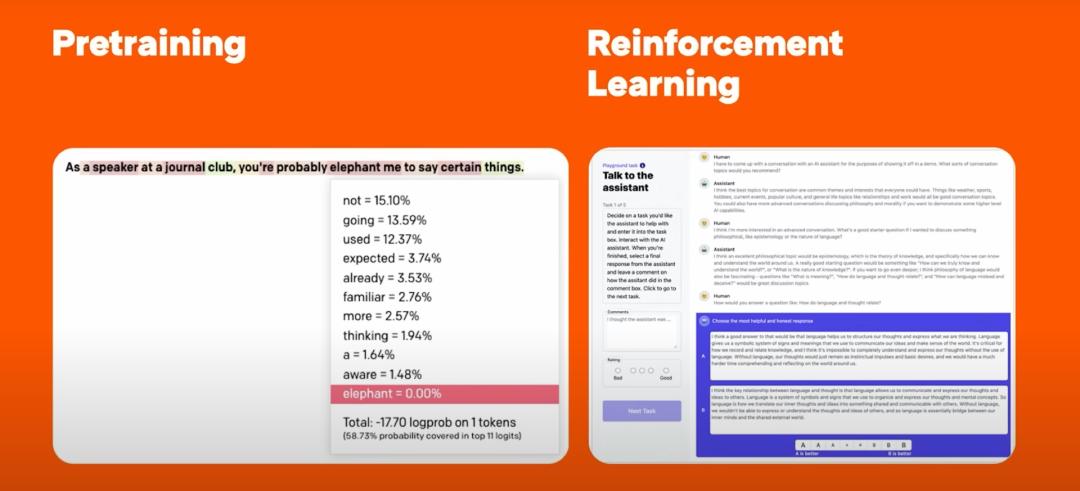
Core Insights - Surge AI, a company with only 110 employees, achieved over $1 billion in annual revenue in 2024, surpassing industry leader Scale AI, which has over a thousand employees and backing from Meta [1][21] - Surge AI is initiating its first round of financing, aiming to raise $1 billion with a potential valuation of $15 billion [1][3] Industry Overview - The data annotation industry is likened to a "feeding" process for AI models, where raw data is transformed into a format that AI can understand [4] - Traditional models, exemplified by Scale AI, rely on a large workforce to handle massive amounts of data, which can lead to quality issues and inefficiencies [5][6] Surge AI's Unique Approach - Surge AI focuses on high-quality data annotation rather than quantity, emphasizing the importance of human expertise over sheer manpower [3][10] - The company employs a selective hiring process, recruiting the top 1% of annotators, including PhDs and Masters, to ensure high-quality output [11][13] - Surge AI targets high-value tasks in AI training, such as Reinforcement Learning from Human Feedback (RLHF), which significantly impacts model performance [13] Technological Integration - Surge AI has developed an advanced human-machine collaboration system that enhances efficiency and quality, allowing a small team to process millions of high-quality data points weekly [15][17] - The platform integrates machine learning algorithms to detect errors and streamline the annotation process, resulting in a productivity rate nearly nine times that of Scale AI [17] Mission and Vision - The founder, Edwin Chen, emphasizes a mission-driven approach, stating that the company is not just about profit but about nurturing Artificial General Intelligence (AGI) [18][19] - Surge AI positions its annotators as "parents" of AI, fostering a sense of purpose and commitment among its highly educated workforce [19] Competitive Landscape - Surge AI's revenue in 2024 exceeded that of Scale AI, which reported $870 million, showcasing its competitive edge in the market [21] - The company has established a unique position by redefining the data annotation problem, focusing on quality and human insight rather than traditional labor-intensive methods [25]
GPT-5真身曝光,首测编程惊艳全网,一句话秒生游戏,OpenAI双雄备战AGI
3 6 Ke· 2025-08-01 10:25
Core Insights - The emergence of the Horizon Alpha model indicates a strong precursor to the anticipated release of GPT-5, showcasing impressive performance metrics and capabilities [1][18][54]. Group 1: Model Performance - Horizon Alpha features a context length of 256K and exhibits rapid response times, excelling particularly in creative writing tasks [3][12]. - In programming, Horizon Alpha demonstrates exceptional capabilities, generating complex games and advertisements with ease, and passing various simulation tests [5][24]. - The model achieved the highest score in the EQ-Bench benchmark for writing, outperforming competitors like o3 and Gemini 2.5 Pro [12][16]. Group 2: Technical Specifications - Horizon Alpha processes tokens at a rate of 120 tokens per second, significantly faster than Claude Sonnet 4, which operates at 60-80 tokens per second [22]. - The model can create a fully functional webpage showcasing simple browser games in just 3 minutes and 48 seconds, highlighting its efficiency and speed [28]. Group 3: User Experience and Design - Horizon Alpha's design capabilities were tested by industry experts, resulting in high-quality outputs that reflect professional design aesthetics [40][41]. - The model's ability to autonomously generate a bank website and other complex designs has garnered positive feedback from users, indicating its advanced functionality [32][39]. Group 4: Future Implications - The ongoing development of Horizon Alpha and its performance suggests that the upcoming GPT-5 will likely be a highly advanced model, potentially setting new standards in AI capabilities [54][67].

一个“蠢问题”改写模型规则,Anthropic联创亲曝:瞄准Claude 5开发爆款应用,最强模型的价值会让人忽略成本负担
3 6 Ke· 2025-07-30 10:42
Anthropic 联合创始人 Jared Kaplan 是一名理论物理学家,研究兴趣广泛,涉及有效场论、粒子物理、宇宙学、散射振幅以及共形场论等。过去几年,他 还与物理学家、计算机科学家们合作开展机器学习研究,包括神经模型以及 GPT-3 语言模型的 Scaling Law。 近期,他在 YC 分享了 Scaling Law 未来如何影响大模型发展,以及对 Claude 等模型的意义。他在演讲中透露,Scaling Law 的发现源于他物理研究中的 习惯:问更基本的、看似"愚蠢"的问题。 在 Jared Kaplan 看来,AI 的大部分价值可能还是来自最强模型。他认为,目前 AI 的发展非常不平衡:AI 在快速进步、事情在迅速变化,模型能力尚未完 全解锁,但我们在释放越来越多的功能。他认为的平衡状态是 AI 发展速度变慢、成本极低。而 AI 的快速进化会让人优先关注能力,而非成本。 我也对理解宇宙本身特别感兴趣,比如事物是如何运作的、我们周围所见的各种现象背后有哪些宏观规律?宇宙从何而来,是决定论吗?人有没有自由意 志?我对这些问题都非常着迷。 幸运的是,从事物理研究的那段时间里,我认识了很多非常聪明、非 ...
一个“蠢问题”改写模型规则!Anthropic联创亲曝:瞄准Claude 5开发爆款应用,最强模型的价值会让人忽略成本负担
AI前线· 2025-07-30 09:09
Core Insights - The core argument presented by Jared Kaplan emphasizes the significance of Scaling Law in the development of AI models, suggesting that the majority of AI's value comes from the most powerful models, and that the current rapid evolution of AI is unbalanced, focusing more on capabilities than costs [1][6][50]. Group 1: Scaling Law and AI Development - Scaling Law is derived from fundamental questions about the importance of data size and model scale, revealing a consistent trend where increasing the scale of pre-training leads to improved model performance [10][13]. - Both pre-training and reinforcement learning phases exhibit clear Scaling Laws, indicating that as computational resources increase, model performance continues to enhance [14][17]. - The ability of AI models to handle longer tasks is increasing, with research indicating that the time span of tasks AI can autonomously complete doubles approximately every seven months [20][23]. Group 2: Future Implications and Recommendations - The future of AI may involve models capable of completing complex tasks that currently require extensive human effort, potentially revolutionizing fields like theoretical physics [25]. - Companies are encouraged to build products that are not yet fully operational, as rapid advancements in AI capabilities may soon enable these products to function effectively [29]. - Integrating AI into existing workflows and identifying new areas for large-scale application are crucial for maximizing the potential of AI technologies [30][31]. Group 3: Claude 4 and Its Enhancements - Claude 4 has improved its performance in programming tasks and has enhanced its memory capabilities, allowing it to retain information over longer interactions [34][35]. - The model's ability to understand nuanced supervision signals has been refined, making it more responsive to user instructions and improving the quality of its outputs [34][36]. Group 4: Challenges and Considerations - The current rapid advancement of AI presents challenges, as the focus on capability may overshadow the need for cost efficiency and balance in AI development [50][51]. - The potential for AI to replace human tasks raises questions about the future roles of individuals in the workforce, emphasizing the importance of understanding AI's workings and integrating it effectively into practical applications [52].

直击WAIC 2025丨AI智能体元年,究竟需要怎样的算力?超节点、高性价比推理芯片还是全栈协同
Mei Ri Jing Ji Xin Wen· 2025-07-29 12:14
每经记者|朱成祥 每经编辑|陈俊杰 站在AI(人工智能)发展的长河中,2025年可能是非常重要的节点。 2025年,被认为是AI走向大规模应用的开始,是AI智能体的元年。随着AI应用爆发,算力芯片的需求 逻辑也被重塑。推理而不是训练,将成为未来算力需求的核心增长点。 此外,人形机器人的发展也将助推对算力芯片的需求。人形机器人分为大脑、小脑和本体,而算力芯片 正是人形机器人大脑的计算核心。 在WAIC 2025上,各大厂商带来了它们的解决方案。比如华为昇腾的384超节点,摩尔线程"AI工厂"理 念,施耐德电气"算电协同"三层架构等。 华鲲振宇副总裁宋璇表示:"AI产业中,我们定位为'国产算力生态的技术转化者'与场景落地者,华鲲 振宇不仅要发展积累AI产品能力,更要坚定地投入到国产AI生态建设中,我们深耕鲲鹏+昇腾生态,通 过与华为在服务器领域深度协同,将生态技术红利精准输送到千行百业。目前我们已实现整机出货量第 一,在金融、运营商、政府等领域积累了深厚实践经验。" 除了华为昇腾这类NPU,在当下火热的GPGPU(通用图形处理器)赛道,国产厂商也带来了各自的产 品。其中摩尔线程以全功能GPU为核心的"云边端"全栈 ...
Kimi K2拿到了世界第一,也杀死了过去的自己
新财富· 2025-07-28 02:58
Core Viewpoint - The release of Kimi K2 marks a significant turning point for the company, indicating a shift from a reliance on scaling laws to a more innovative approach in AI model development and strategy [2][4][22]. Group 1: Kimi K2 Release and Its Impact - Kimi K2 achieved a global fifth ranking in the LMArena leaderboard and first among open-source models, surpassing competitors like Claude 4 and DeepSeek-R1-0528 [2]. - The release is seen as more than just a temporary success; it represents a deeper strategic shift for the company and the industry [4][22]. - Kimi K2 introduces two major advancements: an expansion of model parameters to over 1 trillion and the concept of "model as agent," allowing for tool utilization [23][35]. Group 2: Challenges Faced by Kimi - Kimi's previous strategy relied heavily on scaling laws, believing that larger models and more data would lead to better performance, but this approach faced challenges as high-quality data became scarce [8][13][14]. - The company's user growth strategy was questioned after competitors like DeepSeek demonstrated significant user acquisition without marketing spend, highlighting the need for a more effective product [18][54]. - Kimi's marketing budget reached approximately 900 million RMB in 2024, yet user engagement declined, indicating a disconnect between spending and user retention [17]. Group 3: Strategic Transformation - The company has shifted its focus from aggressive marketing to enhancing model performance and embracing open-source collaboration, reflecting a significant cultural change [55]. - Kimi's team has decided to halt all marketing activities and concentrate resources on foundational algorithms and the K2 model, emphasizing the importance of product quality over quantity [55]. - The strategic pivot is seen as a response to the success of DeepSeek, which has prompted Kimi to adopt more effective architectural choices and prioritize technical research [55][56].

全球AI应用产品梳理:模型能力持续迭代,智能体推动商业化进程-20250723
Guoxin Securities· 2025-07-23 13:20
Investment Rating - The report maintains an "Outperform" rating for the AI application industry [1] Core Insights - The capabilities of AI models are rapidly improving, driven by open-source initiatives that lower costs. Large models have achieved new heights in knowledge Q&A, mathematics, and programming, surpassing human-level performance in various tasks. The introduction of high-performance open-source models like Llama 3.1 and DeepSeek R1 has narrowed the gap between open-source and closed-source models [2][5] - AI agents are becoming more sophisticated, with a surge in new product releases. These agents can perceive their environment, make decisions, and execute actions, enhancing their functionality through the integration of external tools and services [2][30] - The commercial use of AI is on the rise, with significant growth in usage and performance of domestic models. The gap between top models in China and the US is closing, supported by a continuous increase in global AI model traffic [2][50] - AI applications are reshaping traffic entry points, with traditional internet giants leveraging proprietary data and user engagement to integrate AI functionalities into existing applications [2][50] - The open-source movement is increasing investment willingness and accelerating cloud adoption among enterprises, as the proliferation of development tools lowers industry application barriers [2][50] Summary by Sections Model Layer: Rapid Capability Enhancement and Cost Reduction - The mainstream model architecture is shifting towards MoE, allowing for more efficient resource use while enhancing performance. Models like DeepSeek-V3 and Llama 4 have demonstrated low-cost, high-performance capabilities [8][9] - The multi-modal capabilities of models have significantly improved, enabling them to process various data types, thus expanding application scenarios [8][9] - The introduction of chain-of-thought reasoning techniques has improved the accuracy and reliability of model responses [8][9] Commercialization: Continuous Growth in Usage and Strong Performance of Domestic Models - The competition among vendors has led to a significant decrease in inference costs, benefiting application developers and end-users [21][22] - The API call prices for major models have dropped substantially, with some models seeing reductions of up to 88% [21][22] AI Agents: Technological Advancements and Product Releases - AI agents are evolving from traditional models to more autonomous entities capable of independent decision-making and task execution [30][31] - The introduction of protocols like MCP and A2A is enhancing the capabilities and interoperability of AI agents, facilitating complex task execution across different systems [38][39] C-end Applications: AI Empowering Business and Reshaping Traffic Entry - AI applications are expected to redefine traffic entry points, with major players actively positioning themselves in this space [2][50] B-end Applications: Open-source Enhancing Investment Willingness and Cloud Adoption - The development of open-source tools is significantly lowering the barriers for industry applications, accelerating the intelligent transformation of various sectors [2][50]





计算机行业双周报(2025、7、4-2025、7、17):Grok4发布验证ScalingLaw依然有效,英伟达将重启H20对华供货-20250718
Dongguan Securities· 2025-07-18 14:49
Investment Rating - The report maintains an "Overweight" rating for the computer industry, expecting the industry index to outperform the market index by more than 10% in the next six months [31]. Core Insights - The computer industry index has increased by 4.98% over the past two weeks, outperforming the CSI 300 index by 3.31 percentage points, ranking 4th among 31 first-level industries [10][2]. - The SW computer sector's PE TTM (excluding negative values) is 53.97 times, positioned at the 87.27% percentile over the past five years and 74.59% over the past ten years [20][2]. - The release of Grok 4 by xAI is expected to enhance AI application development, with significant implications for AI computing power and investment opportunities [27][21]. Summary by Sections 1. Industry Performance Review - The SW computer sector has shown a cumulative increase of 11.68% this year, outperforming the CSI 300 index by 9.15 percentage points [10][2]. - The top-performing stocks in the computer sector over the past two weeks include Information Development, Puling Software, and Borui Data, with increases of 46.00%, 42.52%, and 41.85% respectively [16][2]. 2. Valuation Situation - As of July 17, 2025, the SW computer sector's PE TTM stands at 53.97 times, indicating a high valuation relative to historical performance [20][2]. 3. Industry News - Key developments include the launch of Grok 4, which is positioned as a leading AI model, and NVIDIA's resumption of H20 chip supplies to China [21][27]. - Google plans to invest $25 billion in AI infrastructure over the next two years, highlighting the growing demand for AI capabilities [21][27]. 4. Company Announcements - Notable announcements include Star Ring Technology's plan to issue H shares and list on the Hong Kong Stock Exchange, aiming to enhance competitiveness and brand image [24][2]. 5. Weekly Perspective - The report emphasizes the potential of Grok 4 to drive advancements in AI applications, suggesting a focus on investment opportunities in AI computing power and related sectors [27][2]. 6. Recommended Stocks - Suggested stocks for attention include: - GuoDianYunTong (002152.SZ) for its stable growth in fintech and deepening layout in data elements and computing power [29]. - Shenzhou Digital (000034.SZ) as a core partner in the "Kunpeng + Ascend" industrial chain, expected to benefit from rising domestic computing power demand [29].