
低空经济

Search documents
史上第五次3万亿,大盘怎么走?
Jin Rong Jie· 2026-01-11 13:23
Group 1 - The A-share market has reached a new high, with the Shanghai Composite Index closing above 4100 points and trading volume hitting 3.15 trillion yuan, marking the fifth instance in history of such high trading volume, which typically indicates a peak in the market [1] - Investors are advised to consider two key factors when deciding whether to hold or sell stocks that have not seen significant gains: alignment with the main market trend and the presence of capital support. Stocks in strong sectors like commercial aerospace may be worth holding, while those in weaker sectors with declining trading volume should be reduced [1] Group 2 - The commercial aerospace sector, currently showing a 52% index increase, is still considered to have potential for further growth, despite historical patterns where major themes have seen around 70% gains before adjustments [2] - Investors are encouraged to focus on core stocks with orders and technological barriers, avoiding purely speculative plays. The recent interest in AI marketing is seen as a response from funds looking to capitalize on divergences in the commercial aerospace sector [2]
华创交运|低空经济周报(第61期):国家安全视角再论无人机攻与防;航空强国系列建议关注商发产业链-20260111
Huachuang Securities· 2026-01-11 12:42
Investment Rating - The report maintains a "Buy" recommendation for the transportation industry, particularly focusing on the low-altitude economy and drone sectors [2]. Core Insights - The report emphasizes the growing importance of drones in modern warfare, highlighting their low cost and high efficiency, with global military drone spending expected to grow from $14.9 billion in 2025 to $28.6 billion by 2034, at a CAGR of 7.5% [4][8]. - It suggests a focus on companies involved in drone manufacturing and military applications, such as Aerospace Rainbow and Zhongyun Drone, as well as industrial drone representatives like Zongheng Co. and Green Energy Huichong [4][13]. - The report also discusses the urgent need for anti-drone systems, estimating a global market potential of $63 billion by 2025, with a CAGR of 11-13% from 2025 to 2030 [15][16]. Summary by Sections Industry Overview - The transportation industry includes 121 listed companies with a total market capitalization of ¥34,170.25 billion, representing 2.69% of the overall market [2]. - The absolute performance of the industry over the past 12 months is 9.0%, while relative performance has decreased by 16.9% [2]. Drone Warfare and Anti-Drone Systems - Drones are increasingly recognized as a new force in modern warfare, with significant applications in recent conflicts [5][6]. - The report highlights the successful test flights of new drone models, such as the Rainbow-7 and the "Jiutian" drone, showcasing advancements in China's drone capabilities [11][12]. - The anti-drone market is driven by both military and civilian needs, with a focus on protecting critical infrastructure [15][16]. Aviation Industry and Engine Manufacturing - The report identifies the aviation engine sector as a critical area for investment, noting that China is still in the early stages of developing its civil aviation engines, with a market penetration of less than 1% [19][20]. - It recommends focusing on the commercial aviation engine supply chain, including key players like Aero Engine Corporation of China and its suppliers [21][24]. Market Performance - The Huachuang Transportation Low Altitude 60 Index increased by 7.6% over the past week and year, outperforming major indices like the CSI 300 [28][30]. - Notable stock performances include Aerospace Electronics, which saw a 35% increase, and Haige Communication, which rose by 27% [33][34]. Investment Recommendations - The report suggests a multi-faceted approach to investment, focusing on various segments of the low-altitude economy, including manufacturers, supply chains, and digital infrastructure [38][39]. - Key companies to watch include Wan Feng Ao Wei, Xie Rui, and Zhongyun Drone, among others, as they are positioned to benefit from the growth in low-altitude applications and infrastructure [39][46].
这台空中“货拉拉”5分钟可装卸 应急运输半日达
Xin Hua She· 2026-01-11 12:29
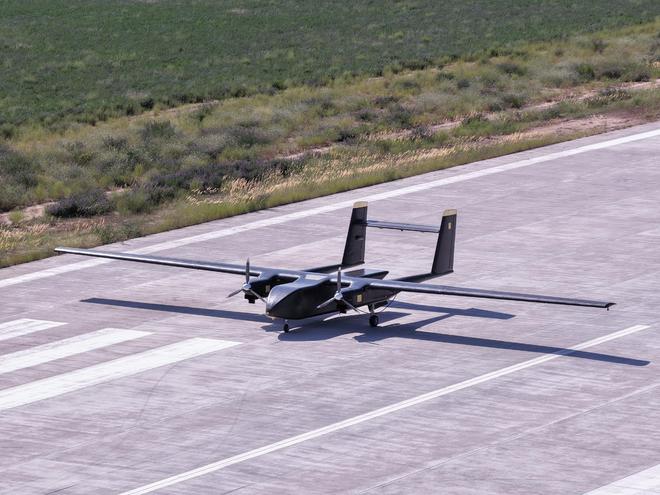
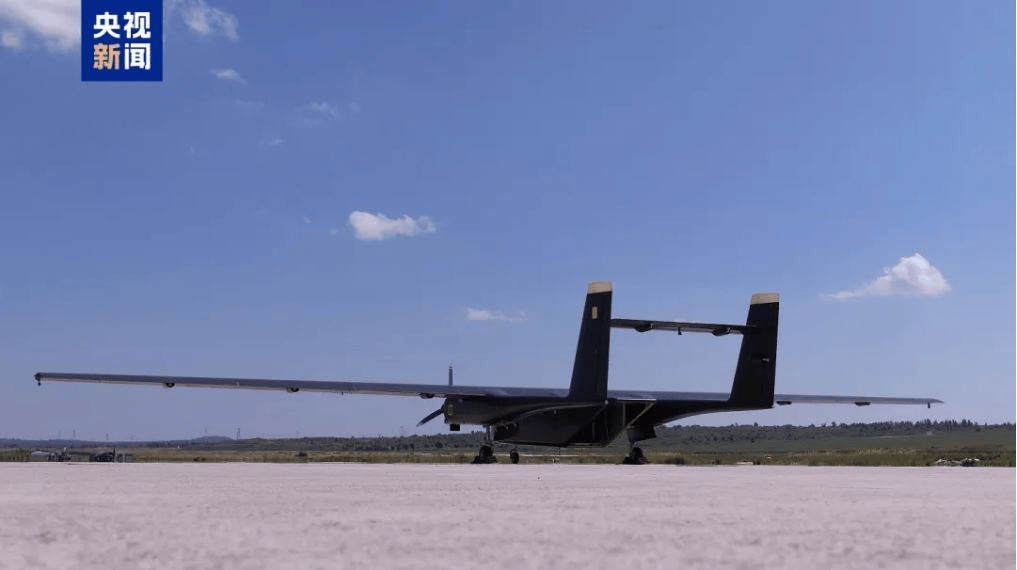
Core Insights - The "Tianma-1000" unmanned transport aircraft successfully completed its maiden flight, showcasing its capabilities in emergency rescue and logistics delivery [1] Group 1: Product Features - The "Tianma-1000" is developed by China North Industries Group Corporation and integrates multiple functions including logistics transport, emergency rescue, and material delivery [2] - It features a dual-engine design with a maximum range of 1800 kilometers, enabling the establishment of an "aerial express" service [2] - The aircraft is equipped with intelligent route planning and autonomous obstacle avoidance capabilities, allowing it to navigate complex terrains and unfamiliar airspace safely [2] Group 2: Operational Efficiency - The "Tianma-1000" can autonomously load and unload one-ton cargo within five minutes, significantly reducing time and labor costs [3] - It is capable of delivering essential supplies such as food, medicine, and equipment directly to remote areas within half a day, addressing logistical challenges in hard-to-reach locations [3] Group 3: Versatility and Adaptability - The aircraft has a service ceiling of 8000 meters and requires a takeoff distance of less than 200 meters, allowing it to operate from unpaved surfaces like grass and compacted dirt roads [4] - It is equipped with an optical guidance system for landing, enabling high-precision autonomous landings in low visibility conditions such as rain, snow, and fog [4] - Future applications of the "Tianma-1000" include civil logistics, disaster relief, border supply, and special transportation, contributing to the development of China's low-altitude economy [4]

军工开年暴涨!512810单周狂飙13.57%连刷历史纪录!商业航天成份股批量新高
Xin Lang Cai Jing· 2026-01-11 11:44
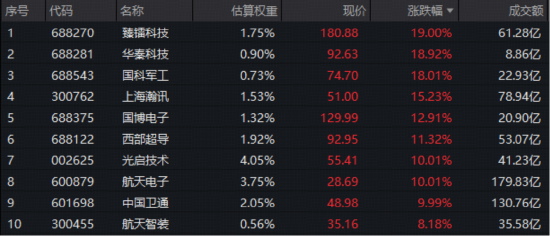
Core Viewpoint - The military industry is experiencing a significant surge, with the military ETF Huabao (512810) showing strong performance as 73 out of 80 constituent stocks rose, and several stocks hitting historical highs [1][8]. Group 1: Market Performance - The military ETF Huabao (512810) opened high and surged over 5.5% during the day, closing with a gain of 3.91%, marking four consecutive days of record highs [2][9]. - The ETF recorded a trading volume of 1.32 billion yuan, the highest in nearly a month, and has seen a steep increase of 13.57% this week, significantly outperforming major indices like the Shanghai Composite Index (+3.82%) and the ChiNext Index (+3.89%) [2][9]. Group 2: Stock Highlights - Notable stocks within the ETF include Zhangbo Technology (688270) with a 19% increase, Huamai Technology (688281) up by 18.92%, and Guoke Military Industry (688543) rising by 18.01% [2][9]. - Other significant performers include Shanghai Chaoxun (300762) with a 15.23% rise, Guobo Electronics (688375) up 12.91%, and Western Superconductor (688122) increasing by 11.32% [2][9]. Group 3: Industry Catalysts - The booming military market is driven by multiple factors, including the ongoing development of commercial aerospace under the "Aerospace Power" strategy, which is expected to see the commercial aerospace industry in China reach a scale of 8 trillion yuan by 2030 [4][11]. - The Huabao ETF covers 24 commercial aerospace concept stocks, accounting for over 32% of its total weight [4][11]. Group 4: Global Military Trade Outlook - According to Huatai Securities, the global military trade market is expected to grow, with China's market share in military trade at only 5.87% from 2020 to 2024, compared to the United States' 42.64% [5][12]. - The ongoing geopolitical tensions, such as the India-Pakistan conflict, are expected to highlight the international competitiveness of Chinese military equipment, positioning military trade for rapid growth in the upcoming "14th Five-Year Plan" [5][12].
“空中货拉拉”首飞背后:无人运输机争食1.5万亿元低空经济“蛋糕”
Sou Hu Cai Jing· 2026-01-11 11:09
Core Viewpoint - The successful first flight of the "Tianma-1000" unmanned transport aircraft marks a significant advancement in China's drone industry, particularly in the low-altitude economy, which is expected to grow rapidly in the coming years [1][3][10]. Group 1: Development of Unmanned Transport Aircraft - The "Tianma-1000" is China's first unmanned transport aircraft capable of adapting to high-altitude complex terrains, with a maximum payload of 1 ton and a range of 1800 kilometers [3][4]. - The aircraft is designed for multiple functions, including logistics transport, emergency rescue, and material delivery, addressing challenges in remote area supply and significantly reducing logistics costs [3][4]. - The "W5000," developed by White Whale Airlines and Beihang University, is the world's largest unmanned cargo aircraft, with a maximum takeoff weight of 10.8 tons and a payload capacity of 5 tons, showcasing the advancements in the sector [4][6]. Group 2: Market Potential and Economic Impact - The low-altitude economy in China has reached a scale of 505.95 billion yuan in 2023, with a year-on-year growth of 33.8%, indicating a strong growth trajectory [11][14]. - Predictions suggest that the low-altitude economy will maintain a compound annual growth rate of over 25%, potentially reaching 1.5 trillion yuan by 2025 and 3.5 trillion yuan by 2035 [11][14]. - The government has established a supportive policy framework for the development of the low-altitude economy, with significant initiatives included in the national planning documents [14][16]. Group 3: Industry Trends and Future Outlook - The industry is witnessing a surge in the number of unmanned transport aircraft, with various models like the "TP series" and "Double-tailed Scorpion D" emerging since 2022 [9][13]. - There is a growing demand for unmanned transport solutions in remote areas, where traditional logistics methods are inefficient and costly [13]. - The regulatory environment is becoming more cautious, with a focus on safety as the industry matures, which may impact the pace of new aircraft certifications [11][13].
手握低空经济王牌矩阵 上海向世界eVTOL之都迈进
Xin Lang Cai Jing· 2026-01-11 10:59
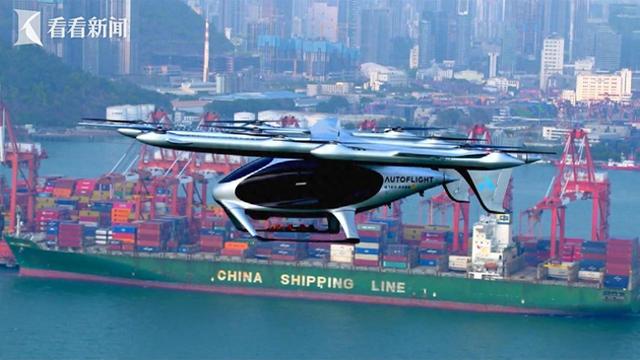
Core Viewpoint - The article emphasizes the development of the low-altitude economy in Shanghai, aiming to establish it as a global hub for electric vertical takeoff and landing (eVTOL) aircraft by 2028, with a projected industry scale of approximately 80 billion yuan. Group 1: Industry Development - The "14th Five-Year Plan" suggests creating emerging pillar industries and accelerating the development of strategic emerging industry clusters, including the low-altitude economy [1] - Shanghai has gathered over half of the country's leading eVTOL companies, leveraging its advanced manufacturing capabilities and complete industrial chain [1] - The total order value for eVTOL companies in Shanghai's Minhang District exceeded 15 billion USD in 2025 [5] Group 2: Technological Advancements - The eVTOL aircraft acts as a "supermarket" for airborne systems, integrating supply chain, R&D, manufacturing, and operational services, significantly reducing the R&D time for manufacturers from several months to about one month [7] - A new generation of lightweight transponder products has been launched, reducing weight to 300-400 grams and costs from over 100,000 yuan to 20,000-30,000 yuan, making eVTOLs more affordable [10] Group 3: Policy Support and Infrastructure - Shanghai's recent support measures include financial incentives for R&D and assembly projects, with up to 100 million yuan for complete manufacturing projects and 5 million and 2 million yuan for key technology breakthroughs and pilot verification platforms, respectively [13] - The establishment of a technology R&D joint center and other facilities is planned to enhance collaboration between state-owned and private enterprises in the low-altitude industry [14] Group 4: Testing and Application Scenarios - Shanghai is accelerating the implementation of application scenarios, transforming urban areas into supply chains, testing grounds, and future markets, with 30 companies having applied for test flights at two urban testing sites [16] - The city plans to create a matrix of testing sites, including various scenarios to explore a comprehensive "Shanghai solution" for standards, airworthiness, and testing [18][20]

烟台市新城发展创投基金注册落地
Qi Lu Wan Bao· 2026-01-11 10:01
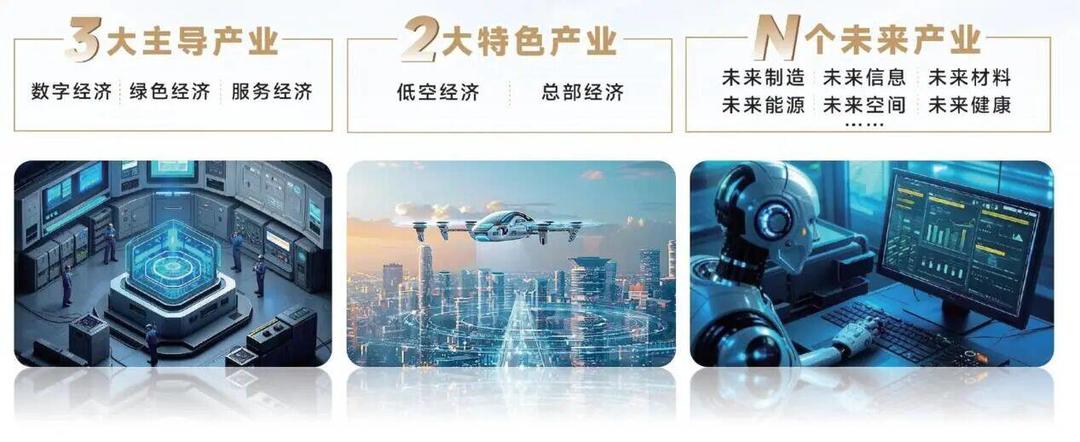
Core Insights - The Yantai New City Development Venture Capital Fund has been officially registered, aimed at enhancing capital support for industrial development and accelerating the construction of the Jiahe-Happiness New City project [1] - The fund has a total scale of 2 billion yuan, with an initial scale of 1 billion yuan, and is led by the Yantai Financial Group [1] - The fund focuses on investment in key areas such as digital economy, green economy, and low-altitude economy, aligning with the "3+2+N" industrial system construction needs of the Happiness New City [1] Group 1 - The fund serves as a specialized venture capital fund to support the development of the Jiahe-Happiness New City, injecting strong capital momentum into industrial development [1] - It aims to enhance the core competitiveness of the modern industrial system and significantly improve green and low-carbon technological innovation capabilities [1] - The fund will integrate fiscal policies, financial tools, and industrial resources to strengthen its impact on the city's industrial development [1] Group 2 - Yantai Financial Group plans to continue leveraging the fund's effectiveness by constructing a matrix of large-scale funds, including a sustainability fund and a merger fund [2] - The goal is to create a capital ecosystem that promotes collaboration among industry, investment, and government, providing robust support for the high-quality development of the city's real economy [2] - This initiative aims to inject "capital vitality" into the local economy, facilitating the transformation and upgrading of urban infrastructure [2]
利好来了!卫星、商业航天、机器人……国常会,重要部署!证监会:上调!影响一周市场的十大消息
券商中国· 2026-01-11 09:39
Group 1 - The State Council of China has implemented a package policy to promote domestic demand through fiscal and financial collaboration, aiming to enhance effective demand and innovate macroeconomic regulation [2] - The policy includes optimizing service industry loans and personal consumption loan interest subsidies to boost consumer spending, as well as supporting private investment through loan interest subsidies for small and micro enterprises [2] - Measures will be taken to ensure the effective implementation of these policies, enhancing the sense of gain for the public and businesses [2] Group 2 - The China Securities Regulatory Commission (CSRC) has announced a significant increase in the rewards for whistleblowers reporting securities and futures violations, with the maximum reward raised from 300,000 yuan to 1 million yuan [3][4] - The new regulations emphasize the importance of whistleblowers in maintaining market integrity and protecting investors' rights, aligning with international practices [4] - The reward structure has been adjusted to include cases that severely disrupt market order or harm financial security, with a new reward rate of 3% of the penalties collected [4] Group 3 - China has applied for over 200,000 satellite frequency resources from the International Telecommunication Union (ITU), with more than 190,000 satellites coming from the Wireless Radio Innovation Institute [5] - This move indicates a significant expansion in China's satellite capabilities, paralleling developments from companies like SpaceX, which has received approval to deploy an additional 7,500 second-generation Starlink satellites [5] Group 4 - The Ministry of Finance and the State Taxation Administration of China announced the cancellation of VAT export tax rebates for photovoltaic products starting April 1, 2026, and for battery products starting January 1, 2027 [6] - This marks the first comprehensive cancellation of export tax rebates for the photovoltaic industry since the policy was introduced in 2013, aimed at reducing trade friction and improving fiscal resource allocation [6] - The adjustment is expected to help stabilize export prices and mitigate the rapid decline in export prices, contributing to a more rational return in foreign markets [6] Group 5 - The Shanghai Municipal Government has released a three-year action plan to support the transformation and upgrading of advanced manufacturing industries from 2026 to 2028, focusing on structural optimization and innovation [7] - The plan encourages investments in emerging fields such as commercial aerospace and humanoid robotics, aiming to accelerate the development of innovative products like electric vertical takeoff and landing vehicles [7] Group 6 - The U.S. Department of Commerce has withdrawn a plan to place restrictions on Chinese-manufactured drones, which was initially proposed due to national security concerns [8] - This decision reflects a shift in U.S. policy regarding the import of Chinese drones, which could have implications for the drone manufacturing industry [8] Group 7 - The U.S. labor statistics report indicated a lower-than-expected increase in non-farm employment for December, leading to a significant shift in market expectations regarding potential interest rate cuts by the Federal Reserve [9] - The unemployment rate fell to 4.4%, which analysts believe has effectively closed the door on imminent rate cuts, with the probability of a 25 basis point cut in January dropping to 5% [9] Group 8 - The CSRC has approved the IPO registrations for three companies, indicating ongoing activity in the capital markets [11] - Upcoming new stock issuances include two companies scheduled for the week of January 12-16, 2026, reflecting continued interest in public offerings [12] Group 9 - Approximately 500 billion yuan worth of restricted shares will be unlocked this week, with 26 companies set to release a total of 2.519 billion shares [14] - The companies with the highest market value of unlocked shares include Zhongke Lanyun and Tianxin Pharmaceutical, which could impact market liquidity and stock prices [14]

中国年轻一代开拓低空经济新蓝海
Xin Hua She· 2026-01-11 08:44
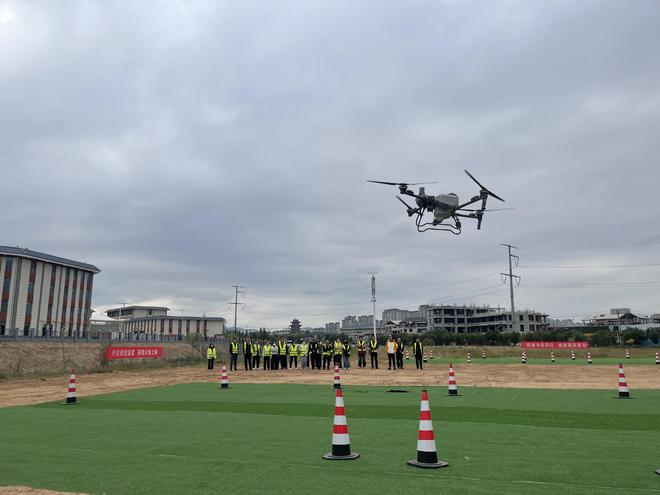
Group 1 - The low-altitude economy in China is rapidly evolving, with young individuals becoming key drivers of this industrial transformation [2][4] - The Gansu province is actively promoting drone training programs, integrating employment training funds to support unemployed individuals, rural laborers, and college graduates [4][3] - The drone industry is expanding, with the civil aviation product output value in China expected to exceed 160 billion yuan in 2024, marking a 23.6% year-on-year growth [4][5] Group 2 - Companies like Gansu Qingfei Aviation Technology Co., founded by Wei Cunxin, are offering various services including drone license training and low-altitude application solutions for government and corporate clients [3][4] - The local government is providing free drone training programs to enhance employment opportunities, with over 100 participants in three training sessions [4][3] - The future planning of low-altitude economy in provinces like Guangdong and Chongqing indicates a clear regional focus and development path, suggesting a promising outlook for the industry [5][4]
打造“万辆级”产能催生“万亿级”赛道,助推低空经济飞得更高
Yang Shi Wang· 2026-01-11 04:55
Core Viewpoint - The article discusses the rapid development of the low-altitude economy in Shenzhen, highlighting its integration into logistics, inspection, and cultural tourism, and the establishment of a comprehensive low-altitude transportation hub in the Greater Bay Area [1][15][28]. Group 1: Low-Altitude Economy Development - The "14th Five-Year Plan" suggests the creation of emerging pillar industries, accelerating the development of strategic emerging industry clusters such as the low-altitude economy [1]. - Shenzhen has hundreds of drone routes operating simultaneously during peak hours, showcasing an efficient "invisible industrial chain" behind these operations [6][7]. - The low-altitude channels in Shenzhen connect various cities, enabling rapid delivery of components and goods, with examples including a one-hour delivery from Bao'an to Songshan Lake and a 25-minute delivery from Zhuhai to Dong'ao Island [13]. Group 2: Industry Applications and Talent Development - The low-altitude economy is not only focused on logistics and inspection but also spurs new sectors like cultural tourism and high-end equipment manufacturing, increasing market demand and creating a need for specialized talent [16][27]. - A drone performance company in Shenzhen has been busy preparing for numerous shows, indicating a growing demand for drone performances, with events featuring thousands of drones [18][20]. - The industry is witnessing a rapid expansion of talent, with professionals like drone route planners quickly becoming experts and expanding their operational scope to over 100 kilometers [22][25]. Group 3: Infrastructure and Standardization - The efficient collaboration within the industrial chain and the rise of new sectors are supported by institutional innovation and standardization, addressing common challenges in the low-altitude economy [28]. - Guangdong has established the first provincial-level standardization technical committee for the low-altitude economy, aiming to create key standards for the industry [36]. - The province plans to implement the first provincial local standard for drone parcel transportation in island scenarios by March 2026, providing comprehensive guidelines for the entire process [36].
