
绿色金融

Search documents
21评论丨加快建设金融强国,积极参与国际金融治理
2 1 Shi Ji Jing Ji Bao Dao· 2025-11-04 22:43
Core Viewpoint - The recent release of the "Suggestions on Formulating the 15th Five-Year Plan for National Economic and Social Development" emphasizes the importance of accelerating the construction of a financial powerhouse, highlighting the need for enhanced competitiveness and influence in the global financial landscape [2] Group 1: Financial Development Goals - The 15th Five-Year Plan sets the overarching requirement of building a financial powerhouse, with a focus on enhancing China's global financial competitiveness and participation in international financial governance reform [2] - The plan identifies the construction of a modern industrial system and technological innovation as key strategic tasks that require robust financial support [2] Group 2: Monetary Policy and Macro-Prudential Management - The plan calls for the improvement of the central bank system and the establishment of a comprehensive macro-prudential management framework to ensure effective monetary policy transmission [3] - Emphasis is placed on balancing the timing and intensity of monetary policy, avoiding excessive liquidity while ensuring sufficient support for economic recovery [3] - The plan advocates for enhanced coordination between monetary and fiscal policies to support major projects and maintain financial stability [3] Group 3: Macro-Prudential Management System - A comprehensive macro-prudential management system will be developed to monitor systemic risks more accurately and maintain financial market stability [4] - The plan includes optimizing the macro-prudential assessment framework and enhancing the regulatory focus on systemically important financial institutions [4] - The toolbox for macro-prudential policies will be expanded to address potential liquidity risks and ensure coordinated efforts among various regulatory frameworks [4] Group 4: Financial Sector Innovations - The plan outlines the development of five key areas: technology finance, green finance, inclusive finance, pension finance, and digital finance, which are essential for supporting national strategies and optimizing financial resource allocation [5] - Technology finance aims to create a robust support system for technological innovation, while green finance focuses on facilitating the transition to a low-carbon economy [5] - Inclusive finance seeks to provide targeted financial support to small and micro enterprises and rural sectors, contributing to common prosperity [5] Group 5: Capital Market Development - The plan emphasizes enhancing the inclusiveness and adaptability of capital market systems, promoting direct financing through equity and bond markets [6] - It aims to shift the focus from financing-led to balanced investment and financing, encouraging long-term capital to enter the market [6] - The development of various financial products, including futures and asset securitization, will be prioritized to support the real economy [6] Group 6: Financial Institution Optimization - The plan proposes optimizing the financial institution system to ensure that various financial entities focus on their core businesses and improve governance [7] - It highlights the importance of small and medium-sized financial institutions and encourages policies to support their development [7] - Large financial institutions are urged to enhance their global competitiveness and adapt to international markets [7] Group 7: Financial Regulation and Risk Management - The plan calls for strengthening financial regulation and enhancing collaboration between central and local regulatory bodies to build a comprehensive risk prevention and resolution system [8] - It emphasizes the need for proactive risk monitoring and the application of regulatory technology to improve risk management capabilities [8] - The legal framework for financial regulation will be updated to address the challenges posed by digital finance and complex financial products [8] Group 8: Financial Infrastructure Development - The plan stresses the importance of building a secure and efficient financial infrastructure to support the stable operation of the financial system [9] - A robust financial infrastructure will enhance service delivery to the modern industrial system and improve China's influence in global financial governance [9] Group 9: Financial Openness and International Cooperation - The plan outlines a strategy for deepening financial openness, transitioning from market access to institutional openness [10] - It aims to create a comprehensive open ecosystem that includes the development of the Shanghai International Financial Center and the promotion of digital currency [10] - The plan emphasizes the need to balance openness with security, using macro-prudential management and regulatory measures to mitigate risks [10]

“五项工程”让“智造岛城”强起来
Xin Hua Ri Bao· 2025-11-04 22:29
Group 1 - Changjiang Samsung Energy Technology Co., Ltd. recently listed on the Beijing Stock Exchange, raising 60 million yuan for the construction of a research and development center focused on hydrogen energy equipment and offshore engineering [1] - Yangzhong has implemented five innovation projects this year, including "Peak Engineering" for innovation entities and "Strong and Superior Engineering" for industrial technology, aiming to create an innovation system that integrates enterprises, markets, and research [1] - The city aims to enhance its innovation ecosystem by strengthening the role of enterprises and attracting innovative projects, as stated by Yangzhong's mayor [1] Group 2 - Jiawang Huadian Co., Ltd. expects an annual output value of 90 million yuan this year, with a market share of 12% to 13% in its sector, having invested nearly 3 million yuan in R&D [2] - Several innovative companies in Yangzhong have made significant advancements, such as Tongfa Industrial Co., Ltd. developing a fire pump that fills a technical gap in the industry [2] - Seven companies in Yangzhong have had their technology products recognized as "new technologies and new products" at the provincial level this year [2] Group 3 - Yangzhong has organized over 10 industry-academia-research activities this year, resulting in more than 60 cooperation agreements [3] - Jiangsu Daqian Kaifan Switch Co., Ltd. has invested 150 million yuan in upgrades, achieving a 104% increase in production capacity and a 94% increase in output value by 2024 compared to 2022 [4] - The city has established a tiered cultivation system for smart factories, with 25 enterprises recognized as advanced smart factories this year [4] Group 4 - Weiteng Group's new distribution and renewable energy industrial base has begun operations, funded by both public offerings and self-financing [5] - Yangzhong provides ongoing support for listed companies, including policy assistance and financing roadshows, with three main board listed companies recognized as national "specialized, refined, and innovative" small giants [5] - As the only provincial-level green financial innovation reform pilot zone in Zhenjiang, Yangzhong promotes industrial transformation and project quality improvement through financial vitality [6] Group 5 - As of the end of September, Yangzhong's total loan balance reached 135.918 billion yuan, with technology loans at 25.145 billion yuan and green finance loans at 29.896 billion yuan [6]
在大山里“种”出好日子
Ren Min Ri Bao Hai Wai Ban· 2025-11-04 21:32
Core Viewpoint - The development of the under-forest economy in Hunan has transformed natural resources into significant economic benefits, creating a sustainable model that balances ecological protection with economic growth [10]. Group 1: Bamboo Shoot Processing - Hunan Green Land High-tech Agricultural Development Co., Ltd. has processed bamboo shoots into various products, achieving a sales target of 80 million yuan this year, supported by a full industrial chain model [11]. - The company has integrated land use rights and introduced a unique "forest rights loan" system, allowing for significant financial support and expansion of production capabilities [12]. Group 2: Herbal Medicine Production - The cultivation of Epimedium (Yin Yang Huo) has become a lucrative venture, with an annual output value of 10,000 to 20,000 yuan per mu, benefiting local farmers and creating job opportunities [14]. - The Jingzhou Guoling Technology Co., Ltd. has established a successful model of intercropping Reishi mushrooms with young trees, reducing land costs and enhancing soil fertility [14]. Group 3: Yellow Essence Cultivation - Hunan Xin Zhu Ecological Agricultural Technology Co., Ltd. has developed a comprehensive processing and sales system for yellow essence, with a projected annual sales volume of 1,500 tons [15]. - The company has successfully integrated various sales channels, including e-commerce and traditional retail, to maximize market reach [15]. Group 4: Camellia Oil Industry - Hunan's camellia oil industry is recognized for its high oil content and health benefits, with a total area of 23.71 million mu and an output value of 94.3 billion yuan [16]. - The industry leverages technological innovations throughout the production chain, enhancing efficiency and product quality [17][18]. Group 5: Employment and Economic Impact - The under-forest economy in Hunan generates over 670 billion yuan in annual output value, directly employing more than 3 million people and increasing farmers' income by over 2,800 yuan per capita [15].
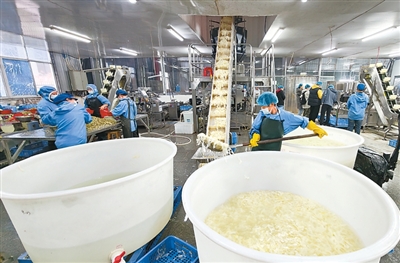
金融监管总局副局长周亮: 持续深化内地与香港互联互通
Zhong Guo Zheng Quan Bao· 2025-11-04 20:20
Group 1 - The core viewpoint emphasizes the need for increased financial openness and cooperation between mainland China and Hong Kong, aligning with international standards and responding to the financial industry's demands in Hong Kong [1] - The Financial Regulatory Bureau plans to deepen financial cooperation with Hong Kong, enhancing its status as an international financial center through high-level financial openness and regulatory collaboration [1][3] - The issuance of catastrophe bonds by mainland insurance companies in Hong Kong is supported, which aims to enrich investment options in the Hong Kong market and bolster its role as an international risk management center [2] Group 2 - There is a focus on enhancing cooperation in various financial sectors, including technology finance, green finance, inclusive finance, pension finance, and digital finance, leveraging Hong Kong's advantages in innovation and intellectual property protection [3] - The regulatory framework will be improved to balance risk prevention and development promotion, ensuring high-quality financial development in both regions while maintaining financial security [3] - The initiative includes supporting banks and insurance institutions in Hong Kong to provide comprehensive financial services for mainland enterprises, facilitating their international expansion [2]
持续深化内地与香港互联互通
Zhong Guo Zheng Quan Bao· 2025-11-04 20:17
Core Insights - The Financial Regulatory Administration aims to enhance financial openness and cooperation between mainland China and Hong Kong, responding to the financial industry's needs in Hong Kong and Macau [1][2] - There is a focus on expanding high-level financial services and deepening connectivity between the two regions, with an emphasis on risk prevention and regulatory cooperation [1][2] Group 1: Financial Cooperation and Development - The Financial Regulatory Administration plans to support Hong Kong's role as an international financial center by deepening financial cooperation with mainland China [1] - Initiatives include the issuance of catastrophe bonds by mainland insurance companies in Hong Kong, which will provide new investment products and enhance the market's offerings [1] - The administration will promote the financial service facilitation in the Greater Bay Area, leveraging Hong Kong's advantages in international trade and finance [2] Group 2: Sector-Specific Collaborations - There is a commitment to enhance cooperation in various financial sectors, including technology finance, green finance, inclusive finance, pension finance, and digital finance [2] - The administration aims to utilize Hong Kong's strengths in technology innovation and intellectual property protection to support the development of digital currencies and electronic payments [2] - The collaboration will also focus on advancing green finance practices and regulatory alignment to contribute to global low-carbon transitions [2] Group 3: Risk Management and Regulatory Framework - The Financial Regulatory Administration emphasizes the importance of balancing risk prevention with development, aiming to improve the regulatory cooperation framework between mainland China and Hong Kong [2] - There is a proactive approach to addressing external risks and maintaining financial security and stability in the country [2]
2022年以来中信金融资产收购中小银行不良资产包债权约2200亿元
Zhong Guo Jin Rong Xin Xi Wang· 2025-11-04 12:03
Core Insights - The company has acquired approximately 220 billion yuan of non-performing asset packages from small and medium-sized banks since 2022, successfully winning multiple cross-regional asset packages and large individual assets [1] - In 2024, the company's net profit attributable to shareholders surged to 9.618 billion yuan, marking its best performance in six years, with a net profit of 6.168 billion yuan in the first half of the year and an annualized return on equity (ROE) of 21.1% [1] - The company has optimized its asset structure and quality, with nearly 90% of its non-performing asset management division's assets and 98.3% of its revenue coming from its core business, showing a nearly 40% increase since early 2022 [1] Business Development - The company has created a unique risk management model leveraging the comprehensive advantages of CITIC Group, addressing real estate risks through 93 relief projects totaling 55.9 billion yuan, ensuring the delivery of 75,900 residential units [2] - The company has invested 2.6 billion yuan to support the construction of pumped storage power stations and has participated in the capital increase of State Grid New Source, focusing on green finance and energy transition [2] - Over the past three years, the company has invested more than 25 billion yuan in strategic emerging industries and ecological environmental protection, utilizing various financial tools such as market-oriented debt-to-equity swaps and mergers and acquisitions [2]
国元保险河南分公司:农险服务提质升级 助力“三农”稳发展
Zhong Guo Jin Rong Xin Xi Wang· 2025-11-04 11:49
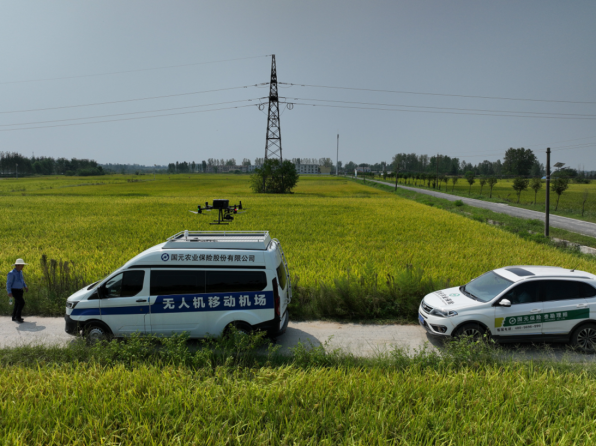
Core Viewpoint - Guoyuan Insurance's Henan branch has demonstrated significant achievements in supporting agricultural development and rural revitalization through innovative insurance products and efficient claims services, particularly in response to adverse weather conditions [1][3]. Group 1: Agricultural Insurance Services - The company has implemented emergency plans and established special working groups to efficiently conduct claims assessments and payouts in response to adverse weather, such as the "rotten field rain" in 2023 and the combined drought and rain in 2025, with total advance payments reaching 68.45 million yuan [1]. - Guoyuan Insurance has developed a "heaven, air, and ground" integrated inspection system using satellite remote sensing and drone aerial photography to enhance underwriting precision, claims efficiency, and digital management [1][3]. - The company has launched innovative agricultural insurance products, including price and feed cost insurance for pigs, corn, soybeans, and peanuts, utilizing the price risk hedging function of futures to mitigate market price volatility [3]. Group 2: Financial and Technological Innovations - Since 2021, the company has provided over 5 billion yuan in ecological risk protection through green finance products like forest and carbon sink insurance, and has offered agricultural production risk protection totaling 24.761 billion yuan to 2.9858 million farming households [3]. - The company has established a rural insurance big data center and optimized mobile service platforms to enhance risk control and service levels, promoting intelligent and transparent agricultural insurance services [3]. - Guoyuan Insurance has actively developed pension insurance products to support the construction of a multi-tiered pension security system [3]. Group 3: Community Engagement and Support - The company organizes agricultural technology expert teams and volunteer service teams to provide knowledge dissemination, technical training, disaster reduction, and material donations during critical farming periods [4]. - Guoyuan Insurance offers 24/7 service to clients during adverse weather events to ensure smooth claims processing [4]. - The company has established 216 township-level "three rural" insurance service stations and 3,246 village-level service points in Henan Province, achieving full coverage of its service network [6].
沪市债券新语|累计发行逾9500亿元 上交所持续优化绿债市场建设
Xin Hua Cai Jing· 2025-11-04 10:21
Core Insights - The Chinese green bond market has made significant progress in policy support, scale growth, and product innovation, indicating a trend of high-quality development by 2025 [1][4] Group 1: Market Growth and Performance - In the first half of 2025, 170 issuers participated in green bond issuance, with a total of 249 bonds issued, amounting to 491.55 billion yuan, representing a 25.13% increase in issuance quantity and a 97.47% increase in issuance scale compared to the same period last year [1] - The green bond index in China showed a steady upward trend, rising in 79 out of 120 days, with a full price index of 113.0521 points as of June 30, 2025, up 0.95% from the end of 2024 [2] - By the end of September 2025, the Shanghai Stock Exchange had issued over 950 billion yuan in green and low-carbon transition bonds, with approximately 82.4 billion yuan issued from January to September 2025 [2] Group 2: Product Innovation and Market Mechanisms - The Shanghai Stock Exchange has introduced special arrangements for market-making and trading mechanisms for green corporate bonds to enhance liquidity and pricing efficiency [3] - Various types of green bonds have been introduced, including low-carbon transition bonds, blue bonds, and carbon-neutral bonds, creating a complementary product system [2] Group 3: Policy and Regulatory Framework - The development of the green bond market is supported by policies such as the 2024 guidelines for accelerating green transformation and the 2025 white paper on the quality evaluation of the green bond market [4] - The regulatory focus is shifting towards preventing and penalizing "greenwashing" and enhancing market transparency [1][6] Group 4: Challenges and Future Outlook - Key challenges include the risk of "greenwashing," insufficient information disclosure, and the need for unified standards in green bond issuance [6] - The market is expected to generate trillions of yuan in financing demand under the dual carbon goals, with ongoing efforts to improve incentive mechanisms, information disclosure, and international collaboration [7][8]
证券公司践行ESG:绿色金融与CCER实践探讨
Zheng Quan Ri Bao Wang· 2025-11-04 09:43
Core Insights - The transition to a green economy is a core direction for high-quality development in China, driven by the "dual carbon" goals, with financial institutions positioned as key players in this transformation [1][2] Green Finance Market - China's green finance market is experiencing rapid growth, with green credit reaching a new scale of 6.52 trillion yuan in 2024, and total outstanding loans exceeding 35 trillion yuan [2] - The green bond market is also active, with 477 products issued in 2024, totaling approximately 244.19 billion yuan, and cumulative issuance surpassing 4.16 trillion yuan [2] - The carbon market, however, is lagging, with carbon emission allowances (CEA) trading volume at 18.9 million tons and transaction value at 18.114 billion yuan, indicating a need for market activation [2] Role of Securities Companies - Securities companies are crucial participants in the green finance ecosystem, acting as connectors and innovators, particularly in the green bond sector where they underwrote 167.405 billion yuan of green bonds, accounting for 24.57% of total issuance [3] - They are also exploring carbon market participation, with 16 firms qualified for carbon trading, and are developing innovative products like green financial derivatives and sustainable asset-backed securities [3][4] CCER Market Participation - Securities firms are at an early stage in the CCER market, focusing on voluntary carbon emission reductions, which are essential for China's climate governance and future carbon market dynamics [4][5] - The CCER market has seen the introduction of six methodologies and public consultations for new methodologies, expanding the scope for project development across various sectors [5][6] Pathways for Securities Firms in CCER - Securities companies can engage in CCER through three main pathways: 1. Establishing proprietary trading and carbon asset management to capture market opportunities [6] 2. Innovating carbon financial derivatives to enhance market liquidity [7] 3. Directly participating in CCER project development to provide comprehensive services [8] International Integration and Long-term Value - The development of CCER projects aligns with China's transition from carbon peak to carbon neutrality, with potential for significant market activity post-peak [10] - There is a growing emphasis on aligning CCER with international carbon standards, particularly with the EU, which could enhance the value of domestic carbon assets significantly [10][11] Conclusion - Securities companies play a vital role in activating the CCER market and supporting the broader green finance landscape, with strategies focused on immediate market engagement and long-term international integration [12]
香港这一峰会,主要监管部门齐发声!
Zheng Quan Shi Bao· 2025-11-04 09:34
Group 1: Hong Kong Financial Market Developments - Hong Kong's stock market average daily trading volume exceeded $32 billion this year, doubling from last year [2] - In the first ten months of this year, Hong Kong had 80 IPOs raising over $26 billion, ranking first globally in IPO fundraising [2] - The Hong Kong government is actively promoting reforms to enhance efficiency in financing and risk management for overseas companies [2] Group 2: Monetary Policy and Financial Support - The People's Bank of China (PBOC) has implemented a moderately loose monetary policy, lowering the reserve requirement ratio by 0.5 percentage points and providing 1 trillion yuan in long-term liquidity [3] - PBOC has reduced policy interest rates by 0.1 percentage points and structural monetary policy tool rates by 0.25 percentage points to lower financing costs [3] - A total of 500 billion yuan has been allocated for consumption and pension refinancing, with an additional 300 billion yuan for technology innovation and transformation [3] Group 3: Cross-Border Financial Cooperation - PBOC has supported the Hong Kong Monetary Authority in launching a 100 billion yuan trade financing liquidity arrangement, with nearly 30 billion yuan in transactions initiated by the end of September [4] - The issuance of offshore RMB central bank bills in Hong Kong has reached 255 billion yuan this year, with a total balance of 170 billion yuan [4] - The number of bank accounts opened by Hong Kong and Macau residents has reached 475,000, facilitating cross-border financial services [4] Group 4: Regulatory and Market Opening Initiatives - The China Securities Regulatory Commission (CSRC) highlighted three achievements in capital market opening during the 14th Five-Year Plan, including increased foreign ownership in financial firms and enhanced market connectivity [8] - The CSRC aims to improve cross-border investment facilitation and strengthen communication with international investors [8] - The CSRC encourages international institutions to invest in China, emphasizing the importance of long-term investment and risk management [9]