
区域经济一体化

Search documents
迟福林:应对共同挑战,中日韩应加快签署自贸协定
Sou Hu Cai Jing· 2025-08-27 00:22
Core Viewpoint - The signing of the China-Japan-South Korea Free Trade Agreement (FTA) is crucial for addressing common challenges and enhancing regional economic integration, which is a strategic choice in the context of changing global geopolitical and economic landscapes [1][2][3] Economic Cooperation and Trade Dynamics - China, Japan, and South Korea are at a critical juncture in their economic cooperation, with intra-regional trade declining from approximately $850 billion in 2021 to about $737 billion in 2024, a decrease of 13.5% [2] - The trade dependency ratio among the three countries has fallen from 19.4% to 16.5%, significantly lower than that of the EU (65.7%) and North America (40.1%) [2] Importance of FTA Negotiations - Accelerating FTA negotiations is seen as a wise move to avoid the agreement becoming irrelevant, similar to past experiences with the EU [3] - The combined GDP of China, Japan, and South Korea accounts for 24% of the global total, and their trade volume represents about 20% of global trade, contributing 70% of Asia's economic growth and 36% of global economic growth [3] Potential Economic Impact - The FTA could lead to a GDP increase of 0.3% to 1.1% for the three countries [4] - The service trade sector is becoming increasingly important, with the total service trade volume of the three countries exceeding $1.63 trillion, highlighting the need for cooperation in this area [5] Service Trade Opportunities - Digital services are among the fastest-growing sectors, with China's digital service exports reaching $366.6 billion in 2023, a 3.5% increase [6] - There is significant potential for cooperation in areas such as cross-border data processing, digital healthcare, and smart manufacturing services [7] Regional Economic Integration - The FTA is expected to play a leading role in upgrading the Regional Comprehensive Economic Partnership (RCEP) from its current 1.0 version to a higher level [9][10] - The RCEP is currently at a critical point of transition, with the service trade import and export volumes in the region showing substantial growth from 2011 to 2023 [10] Future Market Dynamics - By 2024, the combined economic scale of China, Japan, and South Korea is projected to reach $24.64 trillion, representing 22.13% of the global economy and 80.43% of the RCEP region [11] - The FTA could facilitate the establishment of high-level economic rules in areas such as digital economy and intellectual property, supporting the creation of a unified regional market [11]
上合组织是全球南方团结合作的重要平台(国际论坛·弘扬“上海精神”:上合组织在行动)
Ren Min Ri Bao· 2025-08-26 22:22
Group 1 - The Shanghai Cooperation Organization (SCO) emphasizes a cooperative model based on principles of consensus, respect for sovereignty, non-interference in internal affairs, and equality among member states, facilitating dialogue and cooperation for development [2][3] - The upcoming 2025 SCO summit in Tianjin is expected to be the largest since the organization's inception, highlighting the constructive cooperation between Uzbekistan and China as a key factor for the SCO's stability and development [2] - The SCO is becoming an important platform for global South countries to enhance strategic autonomy and achieve sustainable development, with the "SCO+" model providing opportunities for more developing countries through collaborative efforts in various fields [2] Group 2 - China, as a significant member of the SCO, promotes equality, mutual respect, and win-win cooperation, actively implementing various initiatives within the SCO framework since assuming the rotating presidency for 2024-2025 [3] - China has successfully organized events such as the SCO National Green Development Forum and the 42nd meeting of the SCO Regional Anti-Terrorism Structure, enhancing regional cooperation and logistics through initiatives like the opening of the first international road transport line to Uzbekistan [3][4] - Uzbekistan is advancing connectivity, sustainable development, youth exchanges, and joint research within the SCO framework, with rapid growth in trade with China, which is its largest trading partner and a key source of investment [4] Group 3 - The former Secretary-General of the SCO emphasizes the organization's stability and expansion into new areas such as digital transformation and green development despite geopolitical challenges [5] - Future development of the SCO should focus on regional economic integration, trade facilitation, digitalization, and cooperation in green energy and climate initiatives, enhancing the organization's global influence [5]

南共体聚力打造区域经济韧性
Jing Ji Ri Bao· 2025-08-26 21:57
Group 1 - The 45th Southern African Development Community (SADC) Summit focused on advancing industrialization, agricultural transformation, and energy transition to create a more resilient SADC [1] - The summit emphasized regional economic integration, development, and the implementation progress of the SADC 2020-2030 Regional Indicative Strategic Development Plan [1][2] Group 2 - Key priorities from the summit include establishing a regional development fund to enhance economic resilience and mobilize long-term investments [2] - The summit called for the acceleration of the SADC "North-South Economic Corridor" planning, including economic value assessments and investment plans [2] - Agriculture's critical role in ensuring food security and self-sufficiency was highlighted, urging member states to enhance agricultural productivity and climate adaptability [2] - Coordination of tariff policies among SADC member states was emphasized to facilitate trade and eliminate barriers to regional economic integration [2] Group 3 - The summit's agenda aligns closely with the African Union's development initiatives and South-South cooperation, showcasing the commitment of Southern African countries to these goals [3] - The African Union's Agenda 2063 emphasizes economic self-reliance and sustainable development, with the second ten-year implementation plan starting in 2024 [3] Group 4 - Despite challenges, the trade and investment environment in Africa is improving, with internal trade growth positively impacting GDP and foreign direct investment in SADC member states [4] - Structural reforms have been implemented across various African regional organizations to promote economic integration and cross-border trade facilitation [4] Group 5 - In response to external pressures, African nations are accelerating regional economic cooperation and trade diversification to enhance economic resilience [5] - South Africa was elected as the rotating chair of the SADC for the 2026 summit, with a commitment to support the SADC 2050 vision for regional integration [5]
王文涛部长会见韩国总统特使朴炳锡
Xin Lang Cai Jing· 2025-08-26 05:29
Core Viewpoint - The meeting between Chinese Commerce Minister Wang Wentao and South Korean special envoy Park Byeong-seok emphasizes the importance of China-South Korea economic cooperation and the commitment to deepen bilateral relations, particularly in trade and supply chain stability [1] Group 1: Bilateral Trade and Economic Cooperation - Since the establishment of diplomatic relations 33 years ago, bilateral trade between China and South Korea has increased over 60 times, with China being South Korea's largest trading partner and South Korea being China's second largest trading partner [1] - The Chinese side expresses willingness to work with South Korea to implement the leaders' consensus, maintain stable supply chains, and accelerate the second phase of the China-South Korea Free Trade Agreement negotiations [1] Group 2: Regional and Multilateral Cooperation - Both parties acknowledge the challenges facing the international economic order and multilateral trade rules, emphasizing the need to uphold the multilateral trade system and promote regional economic integration [1] - The South Korean side expresses a desire to closely communicate with China to find new opportunities for cooperation in light of changes in economic and industrial development [1]
先进制造业集群冲进“国家队”川渝力量抱团出击
Si Chuan Ri Bao· 2025-08-25 22:15
Core Insights - The Chengdu-Chongqing region has established itself as a significant advanced manufacturing cluster, with the electronic information advanced manufacturing cluster projected to reach a scale of 1.72 trillion yuan in 2024, reflecting a nearly 4% year-on-year growth and accounting for 10.6% of the national total [1][2] - The region has been recognized for its strong industrial capabilities, with five national advanced manufacturing clusters approved in the past five years, including electronic information and biomedicine clusters, contributing to the modernization of the industrial system [1] Industry Developments - The Chengdu-Chongqing electronic information advanced manufacturing cluster has seen a significant increase in its national share from 7.6% in 2016 to 10.6% in 2024, indicating a robust growth trajectory [1] - The cluster includes over 1,300 enterprises that have utilized a public service platform for product supply and demand matching, resulting in financing of approximately 784 million yuan for over 60 companies [1] - The biomedicine sector in the Chengdu Medical City has developed a comprehensive ecosystem with over 600 upstream and downstream collaboration enterprises, focusing on areas such as antibody drugs and medical devices [1] Company Initiatives - The establishment of multiple subsidiaries by Jiuzhou Group in Chongqing, including two in the past three years, highlights the company's commitment to integrating into the Chengdu-Chongqing economic circle and participating in the burgeoning electric vehicle supply chain [1] - Jiuzhou Group aims to leverage a model of "capital cooperation + technology output + scenario operation + industry incubation" to establish a benchmark for cross-regional industrial development [1] - The Chengdu Medical City and Chongqing International Biocity are collaborating to enhance biopharmaceutical research and development, sharing resources and expertise to deepen industry cooperation [2]
务实合作践行“上海精神”——访巴基斯坦伊斯兰堡和平与外交研究所所长阿西夫
Zhong Guo Jing Ji Wang· 2025-08-25 02:07
2025年上海合作组织峰会将于8月31日至9月1日在中国天津举行,届时包括上合组织所有成员国在内的 20多个国家的领导人和10个国际组织的负责人将出席峰会相关活动。上合组织天津峰会将成为其成立以 来规模最大的一届峰会。对此,巴基斯坦伊斯兰堡和平与外交研究所主任穆罕默德·阿西夫·努尔在接受 经济日报记者采访时表示,上合组织是一个追求公平的全球治理模式的"意愿团体",此次峰会有望成为 重塑全球秩序、迈向更包容未来的一个转折点。 "此次峰会是弘扬'上海精神'和催化全球治理体系改革的关键时刻。"阿西夫说,"上海精神"是上合组织 的基石,它倡导一种优先考虑主权和共同繁荣的合作模式,并且明确反对霸权。中国在2024年至2025年 担任轮值主席国期间,主导上合组织举办了包括数字经济、绿色发展和安全论坛在内的100多场活动, 为体现"上海精神"原则的实质性讨论奠定了基础。即将到来的上合组织天津峰会,将会为世界提供一个 协调共同目标的平台,进一步放大上合组织的精神与理念。此次峰会前所未有的规模彰显了上合组织的 包容性,预计讨论的议题涉及多领域、多维度,这些都充分表明,上合组织是一个追求公平的全球治理 模式的"意愿团体",不会出 ...
务实合作践行“上海精神” ——访巴基斯坦伊斯兰堡和平与外交研究所所长阿西夫
Jing Ji Ri Bao· 2025-08-24 21:55
阿西夫认为,上合组织对区域经济一体化的承诺,在中国担任2024年至2025年轮值主席国期间广泛的议 程中显而易见。上合组织天津峰会是在中国主办了超过100场活动的基础上召开的,这些活动中近一半 聚焦于贸易、投资、能源和数字经济。当前,全球贸易有割裂趋势,这已使得区域经济韧性成为一种战 略必需。在这一点上,上合组织可以通过将内部韧性机制化、创建共同繁荣机制,并让区域一体化进程 切实惠及各方,使在政治上较为谨慎的成员国都能有动力去捍卫"上海精神",将反霸权主义立场转化为 实实在在的资产。同时,上合组织的重要价值还来自于具有安全叠加效应的经济外交,上合组织作为大 型区域多边组织,能够与多个国家和地区进行贸易,同时不让外部势力左右其内部凝聚力。 阿西夫进一步指出,如果想让"上海精神"得到更好的贯彻执行,上合组织成员国需要妥善处理分歧。分 歧通常难以在短期内解决,因此需要的共识不是消除这些分歧,而是为其设立隔离机制,使其不至于影 响组织的更广泛议程。上合组织可以倡导一个更成熟的争端解决机制,该机制在理想状态下能够谨慎运 作,并能够带来切实的降级效果。上合组织拥有这样的潜力。 阿西夫表示,上合组织能够在当前国际环境下为区 ...
李克强出席第17届东亚峰会
Xin Hua She· 2025-08-22 08:43
Group 1 - The meeting highlighted the complex international and regional situation, with ongoing challenges in energy, food, and financial risks, while the region maintains overall peace and stability [2][3] - Li Keqiang proposed three key initiatives: promoting strategic dialogue, enhancing mutual cooperation, and supporting ASEAN's central role in regional architecture [3][4] - The importance of maintaining freedom of navigation in the South China Sea was emphasized, with China advocating for peace and stability in the region [3][4] Group 2 - The meeting discussed various international and regional issues, including the Ukraine crisis, emphasizing respect for sovereignty and territorial integrity, and the need for peaceful resolutions [4] - Leaders agreed on the necessity of unity among regional countries to address current international tensions and challenges, promoting open and inclusive multilateralism [4] - The focus was placed on enhancing cooperation in areas such as trade, energy, food security, and climate change to foster economic recovery and sustainable development in East Asia [4]
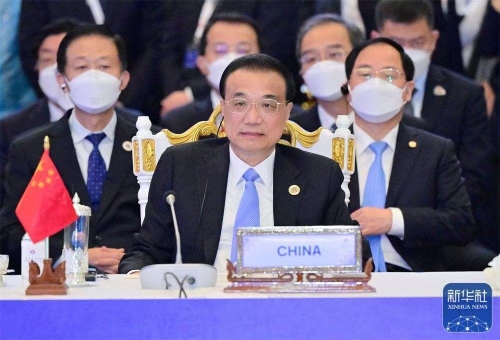
“以更密切的老中合作造福两国人民”——访老挝副总理吉乔
Ren Min Ri Bao· 2025-08-17 10:17
Group 1 - Laos and China have achieved significant progress in various fields of cooperation under the frameworks of the Belt and Road Initiative and ASEAN-China cooperation, benefiting both nations [1] - The China-Laos Railway, which opened in December 2021, has become a vital transportation channel, with over 10.07 million passengers and 12.6 million tons of goods transported in the first half of this year, marking a 1.7% and 25.9% year-on-year increase respectively [1] - The railway has boosted regional economic cooperation and attracted more foreign investment into Laos, leading to new infrastructure projects such as highways connecting Laos with Vietnam and Thailand [1] Group 2 - Ongoing projects include the development of a 500kV/230kV power grid in Vientiane, the comprehensive development of the Vientiane Saysettha Economic Zone, and the second, third, and fourth phases of the China-Laos Highway [2] - The ASEAN-China Free Trade Area 3.0 negotiations have been completed, which will enhance economic integration and cooperation in supply chains, digital economy, and green economy between ASEAN and China [2] - China is recognized as a major market driving regional economic growth, and the partnership between ASEAN and China is expected to contribute to regional stability and prosperity [2]
加快共建RCEP区域共同大市场(观象台)
Ren Min Ri Bao Hai Wai Ban· 2025-08-15 21:29
Core Viewpoint - The article discusses the profound changes in the global geopolitical and economic landscape, emphasizing the shift towards regional economic integration in Asia as a response to challenges posed by the "America First" policy and the need for a unified market under the RCEP framework [1]. Group 1: Regional Economic Integration - The dependency of Asian economies on intra-regional trade reached 57.4% in 2022, with Asian service trade achieving a surplus of $40.55 billion [1]. - By 2024, the GDP of Asian economies is projected to account for nearly half of the global economy, highlighting the significance of regional economic integration for sustainable development [1]. Group 2: RCEP Development - The RCEP is at a critical juncture, facing challenges such as low utilization rates and weak governance mechanisms since its signing in November 2020 [2]. - Upgrading RCEP from version 1.0 to 2.0 is essential for creating a more competitive and unified market, which could potentially increase global trade by $500 billion [1][2]. Group 3: RCEP 2.0 Objectives - RCEP 2.0 aims to transform from a traditional tariff reduction agreement to a platform for deep economic integration, enhancing the flow of regional resources and better connecting supply chains [3]. - The initiative includes facilitating cross-border movement of people, particularly in sectors like healthcare and education, and strengthening the use of local currencies in financial markets [3]. Group 4: Expansion and Cooperation - RCEP should pursue expansion by inviting new members such as Hong Kong, Chile, and Sri Lanka, and establishing high-level coordination mechanisms to ensure mutual benefits for ASEAN countries [4]. - The signing of a free trade agreement between China, Japan, and South Korea is expected to play a pivotal role in advancing RCEP from 1.0 to 2.0, fostering a "RCEP+" effect that enhances regional cooperation [4].