开源模型

Search documents
最新外国「自研」大模型,都是套壳国产?
机器之心· 2025-11-01 04:22
Core Insights - The article discusses the emergence of Chinese open-source AI models as significant players in the global AI landscape, suggesting that foreign developers may need to start learning Chinese due to the influence of these models [1][29]. Group 1: New Model Releases - Cursor has released a major update to its AI code tool, introducing its own code model called Composer, which utilizes a new interface for collaborative work among multiple intelligent agents [5]. - The Composer model, trained using reinforcement learning, is a large MoE model that excels in handling actual code and operates at a speed four times faster than similar models [6][8]. - Cognition has also launched its latest AI model, SWE-1.5, which boasts a parameter count in the hundreds of billions and significantly enhances speed, outperforming Haiku 4.5 by 6 times and Sonnet 4.5 by 13 times [9]. Group 2: Model Development and Origins - There are speculations that both Cursor's Composer and Cognition's SWE-1.5 models are based on Chinese AI models, with evidence suggesting that Cognition's model is customized from Zhiyu's GLM 4.6 model [14][21]. - The release of these models has sparked discussions about the reliance on Chinese open-source models, with industry experts indicating that many new models are fine-tuned rather than built from scratch due to the high costs associated with training foundational models [24][25]. Group 3: Market Trends and Implications - The article highlights the growing dominance of Chinese open-source models in the AI sector, with significant market share held by models like Alibaba's Qwen, which has been leading in downloads and usage since 2025 [30][32]. - The increasing capabilities of these models are not only aiding developers but are also becoming essential for startups, indicating a shift in the competitive landscape of global AI [32][35]. - The article concludes that the positions of followers and leaders in the AI model technology race are gradually changing, with Chinese models establishing a leading status [36].


中国AI的性价比,已成全球杀器
Feng Huang Wang· 2025-10-31 06:47
Core Insights - Chinese AI models are rapidly gaining traction in the global market due to their high cost-performance ratio, as highlighted by Airbnb's CEO Brian Chesky, who prefers Alibaba's Qwen model over OpenAI's offerings for practical applications [1][2] - The trend of international companies shifting to Chinese AI models is becoming more pronounced, with significant endorsements from notable investors and startups [2][3] - The open-source strategy and cost-effectiveness of Chinese AI models are reshaping the competitive landscape, as evidenced by the widespread adoption of models like Qwen and DeepSeek [3][4] Group 1: Chinese AI Models' Competitive Edge - Chinese AI models, such as Kimi K2 and Qwen, are noted for their superior performance and significantly lower costs compared to American counterparts like OpenAI and Anthropic [2][4] - Alibaba's Qwen3 series supports hybrid reasoning modes and has achieved over 300 million downloads globally, establishing itself as a leading open-source model family [4] - The trend of using Chinese models is not isolated; a significant percentage of AI startups in Silicon Valley are reportedly utilizing these models, indicating a shift in market dynamics [4][5] Group 2: Challenges Faced by Western Tech Giants - Major tech companies like Microsoft and Amazon are experiencing workforce reductions due to the high costs associated with AI infrastructure and the need to reallocate resources [5][6] - The high prices of advanced AI chips, such as Nvidia's H100, are contributing to the financial strain on these companies, leading to significant layoffs as a cost-control measure [6][7] - Nvidia's market valuation has surged, reflecting the increasing demand for AI capabilities, while OpenAI's operational costs are rising sharply, indicating a challenging financial landscape for AI development [7][8] Group 3: Future of AI Competition - The competition in AI is evolving beyond mere technological advancements to include factors like open ecosystems and refined services, as emphasized by Nvidia's CEO Jensen Huang [8][9] - The potential for the U.S. to lose its competitive edge in AI is acknowledged, with a call for more engineers and skilled workers to support the growth of AI infrastructure [9]





Wan2.2-Animate又火了,5分钟让抠脚大汉秒变高冷女神。
数字生命卡兹克· 2025-10-30 01:33
Core Viewpoint - The article discusses the capabilities and implications of the open-source model Wan2.2 Animate, which allows users to create highly realistic face-swapping videos and animations, highlighting its potential in various creative fields while also addressing the ethical concerns associated with such technology [1][25][26]. Group 1: Technology and Features - Wan2.2 Animate can generate natural face-swapping videos by using a combination of user-uploaded videos and images, achieving impressive results in mimicking expressions and movements [1][4][6]. - The model allows for voice modulation alongside visual changes, enhancing the realism of the generated content [9]. - It supports both action imitation and character replacement, enabling users to create videos with different characters while maintaining the original background [14][15][16]. Group 2: Accessibility and Open Source - Wan2.2 Animate is notable for being open-source, which differentiates it from other similar models that are not publicly available [14][25]. - The model can be easily accessed and utilized by anyone, significantly lowering the barrier to entry for animation and video creation [25][26]. - It can be deployed in various settings, including enterprises and film productions, allowing for cost-effective animation and special effects [25]. Group 3: Creative Applications - The technology can be used for various creative projects, including recreating classic film scenes or generating dance videos with different characters [12][26]. - It opens up new possibilities for independent animators and filmmakers, enabling them to bring their characters to life with minimal investment [25][26]. - The potential for reviving deceased actors in new films through AI-generated likenesses is also discussed, showcasing the transformative impact of this technology on the film industry [26]. Group 4: Ethical Considerations - The article raises concerns about the misuse of such technology, particularly in creating misleading or harmful content that could undermine trust in digital media [26]. - It emphasizes the importance of responsible use of technology, likening it to fire that can either warm or destroy [26].

288亿独角兽!复旦女学霸创业3年,被黄仁勋和苏妈同时押注
深思SenseAI· 2025-10-30 01:04
Core Insights - Fireworks AI has achieved an annual revenue of $280 million within three years and is valued at $4 billion, making it the fastest unicorn in the AI inference sector [1] - The company completed a $254 million Series C funding round led by Lightspeed, Index Ventures, and Evantic, with participation from Nvidia, AMD, Sequoia Capital, and Databricks [1] - Fireworks AI focuses on inference services, positioning itself as a provider of stable and efficient AI inference experiences rather than model training [5][16] Company Overview - Fireworks AI was founded by Jo Lin, a key creator of the PyTorch framework, along with a team of experienced engineers from Meta and Google [5][6] - The company serves over 10,000 enterprise clients and processes more than 100 trillion tokens daily [1][5] - Its core products include Serverless Inference, On-Demand Deployments, and Fine-tuning & Eval services, all designed to optimize the inference process [11][12] Market Positioning - Fireworks AI differentiates itself by not focusing on model training but rather on optimizing the economics of the inference layer [5][16] - The company offers a unique value proposition by providing customizable services that allow enterprises to leverage their specific data for model fine-tuning [16][19] - The inference market is competitive, with direct competitors including Together AI, Replicate, and major cloud providers like AWS and Google Cloud [15][16] Business Model - Fireworks AI's business model revolves around providing a stable inference experience, with services priced based on token usage and GPU time [11][12] - The company emphasizes the importance of customization and ease of use, allowing developers to integrate AI capabilities without extensive hardware management [11][16] - The focus on "one-size-fits-one AI" allows for tailored solutions that improve over time as more data is fed into the system [19][21] Future Outlook - Jo Lin predicts that 2025 will be a pivotal year for AI, marked by the rise of agent-based applications and a surge in open-source models [20][21] - Fireworks AI aims to enhance its Fire Optimizer system to improve inference quality and maintain its competitive edge [20] - The ultimate vision is to empower developers to create customized AI solutions, ensuring that the control of AI products remains with those who understand their specific needs [21][22]

黄仁勋演讲揭露,全球开源模型阿里通义市占率第一
Jing Ji Guan Cha Wang· 2025-10-29 10:51
Core Insights - Open-source models have become significantly powerful, accelerating AI application development, and are essential for developers, researchers, and companies globally [1] - Alibaba's Tongyi Qwen has captured a substantial market share in the open-source model space since 2025, with its lead continuing to expand [1] - The reliance on open-source models is critical for startups and nations, with NVIDIA emphasizing the need to maintain leadership in the open-source domain despite strong closed-source models in the U.S. [1] Group 1 - Alibaba Tongyi Qwen is perceived as superior and more cost-effective than OpenAI, with significant adoption in Silicon Valley [2] - Influential figures in the tech industry, including Airbnb's CEO and former OpenAI CTO, have acknowledged the impact of Tongyi Qwen on their work and research [2] - Major companies like Apple and Amazon are integrating Tongyi Qwen into their products and services, indicating its growing importance in the AI landscape [2]
硅谷大佬带头弃用OpenAI、“倒戈”Kimi K2,直呼“太便宜了”,白宫首位AI主管也劝不住
3 6 Ke· 2025-10-28 10:39
Core Insights - Silicon Valley is shifting from expensive closed-source models to cheaper open-source alternatives, driven by cost considerations and performance improvements [1][2][14] - The Kimi K2 model, developed by a Chinese startup, has gained traction due to its superior performance and significantly lower costs compared to models from OpenAI and Anthropic [1][5][14] - The introduction of the DeepSeek model, which offers a 50% reduction in API costs, is putting pressure on the U.S. AI industry to adapt [3][8] Cost Considerations - Chamath Palihapitiya highlighted that the decision to switch to open-source models is primarily based on cost, as existing systems like Anthropic's are too expensive [2][5] - The DeepSeek model charges $0.28 per million inputs and $0.42 per million outputs, while Anthropic's Claude model costs approximately $3.15 for similar services, making DeepSeek 10 to 35 times cheaper [3][8] Model Performance and Transition Challenges - Transitioning to new models like DeepSeek requires significant time for adjustments and fine-tuning, complicating the switch despite the cost benefits [2][6] - Companies are facing a dilemma on whether to switch to cheaper models or wait for existing models to catch up in performance [6][10] Open-Source vs. Closed-Source Dynamics - The current landscape shows that high-performance closed-source models are predominantly from the U.S., while high-performance open-source models are emerging from China [10][12] - The open-source movement is seen as a way to counterbalance the power of large tech companies, but the leading open-source models are currently from China [8][10] Security and Ownership Concerns - There are concerns regarding the ownership and potential security risks associated with using Chinese models, but deploying them on U.S. infrastructure mitigates some of these risks [12][16] - The competitive landscape encourages rigorous testing for vulnerabilities, which is seen as a positive development for model safety [16][17] Future Implications - The ongoing shift towards open-source models may lead to significant changes in the AI industry, particularly in terms of cost and energy consumption [5][10] - Companies are exploring solutions to manage rising energy costs associated with AI operations, indicating a need for sustainable practices in the industry [11][12]
硅谷大佬带头弃用 OpenAI、“倒戈”Kimi K2!直呼“太便宜了”,白宫首位 AI 主管也劝不住
AI前线· 2025-10-28 09:02
Core Insights - The article discusses a significant shift in Silicon Valley from expensive closed-source AI models to more affordable open-source alternatives, particularly highlighting the Kimi K2 model developed by a Chinese startup [2][3] - Chamath Palihapitiya, a prominent investor, emphasizes the cost advantages of using the Kimi K2 model over models from OpenAI and Anthropic, which he describes as significantly more expensive [3][5] - The conversation also touches on the competitive landscape of AI, where open-source models from China are putting pressure on the U.S. AI industry [5][10] Cost Considerations - Palihapitiya states that the decision to switch to open-source models is primarily driven by cost considerations, as the existing systems from Anthropic are too expensive [3][5] - The new DeepSeek 3.2 EXP model from China offers a substantial reduction in API costs, with charges of $0.28 per million inputs and $0.42 per million outputs, compared to Anthropic's Claude model, which costs approximately $3.15 per million [5][10] Model Performance and Transition Challenges - The Kimi K2 model boasts a total parameter count of 1 trillion, with 32 billion active parameters, and has been integrated by various applications, indicating its strong performance [2][5] - Transitioning to new models like DeepSeek is complex and time-consuming, often requiring weeks or months for fine-tuning and engineering adjustments [3][7] Open-Source vs. Closed-Source Dynamics - The article highlights a structural shift in the AI landscape, where open-source models from China are gaining traction, while U.S. companies are primarily focused on closed-source models [10][12] - There is a growing concern that the U.S. is lagging in the open-source AI model space, with significant investments from Chinese companies leading to advancements that challenge U.S. dominance [10][12] Security and Ownership Issues - Palihapitiya explains that Groq's approach involves obtaining the source code of models like Kimi K2, deploying them in the U.S., and ensuring that data does not return to China, addressing concerns about data security [15][18] - The discussion raises questions about the potential risks of using Chinese models, including the possibility of backdoors or vulnerabilities, but emphasizes that open-source nature allows for community scrutiny [18][19] Future Implications - The article suggests that the ongoing competition between U.S. and Chinese AI models could lead to significant changes in the industry, particularly in terms of cost and energy consumption [6][12] - There is a recognition that the future of AI will be decentralized, with numerous players in both the U.S. and China contributing to the landscape, making it essential to address national security concerns [19][20]


“比OpenAI更好更便宜!”爱彼迎CEO一句话引爆硅谷,阿里AI正悄然拿下全球科技巨头
Di Yi Cai Jing· 2025-10-22 10:01
这一系列胜利的背后,是阿里巴巴清晰的战略抉择。阿里巴巴CEO吴泳铭曾明确提出,要将通义千问打 造为"AI时代的Android"——通过全面开源,与全球开发者共建一个开放、繁荣的AI生态。如今,这一 战略正结出硕果。截至目前,通义千问系列模型在全球的累计下载量已突破6亿次,催生了超过17万个 衍生模型。 从爱彼迎的成本考量,到亚马逊的机器人大脑,再到苹果的本土化策略,全球科技巨头们正用实际行动 投票,宣告一个由OpenAI一家独大的AI时代正在走向终结。当"更快、更便宜、足够好"的开源模型成 为主流选择,一个更加多元、开放的AI竞争格局已然到来。围绕着模型能力、生态构建和商业化落地 的全球AI新战事,枪声已经打响。 爱彼迎的公开"站队",只是冰山浮出水面的一个角。事实上,通义千问在全球科技巨头客户名单中攻城 略地的迹象早已显现。此前市场多次传闻,苹果公司正计划在其中国市场的iPhone、iPad及Mac等核心 产品线中,引入通义千问以支持其AI功能。而全球AI芯片霸主英伟达的CEO黄仁勋,更是在财报电话 会上毫不吝啬赞美之词,称阿里巴巴的通义千问是"开源AI模型中最好的",其免费发布后"在美国、欧 洲及其他地区 ...
美国焦虑中国AI开源模型领先,英伟达看中的 Reflection AI是啥由头?
傅里叶的猫· 2025-10-21 15:34
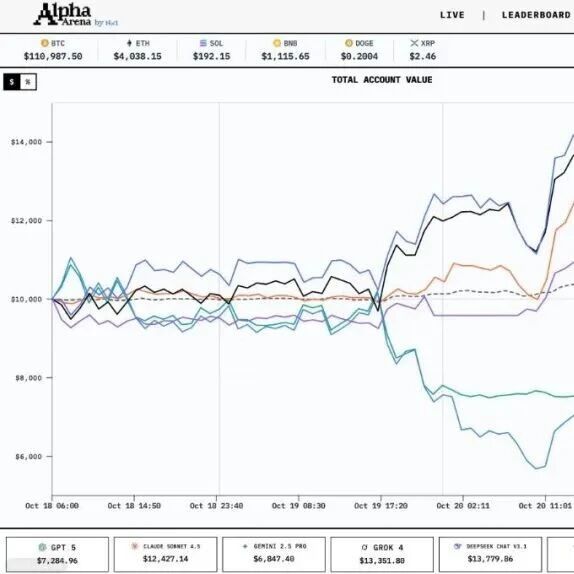
Core Insights - The article discusses the rise of Chinese open-source models in the AI industry, highlighting the recent launch of DeepSeek's OCR model, which is a breakthrough in the field of "optical context compression" [2] - DeepSeek's performance in the Alpha Arena competition demonstrates its competitive edge, achieving a 40.4% return in three days, outperforming other models [5] - Reflection AI, a new company in the open-source space, recently raised $2 billion, with a valuation of $8 billion, indicating a shift in investor interest towards open-source models [7][9] Group 1: Chinese Open-Source Models - Chinese open-source models are gaining significant market share internationally, with increasing discussions around their capabilities [2] - DeepSeek's new OCR model is not just another tool but a significant advancement in processing large amounts of text data efficiently [2] Group 2: DeepSeek's Competitive Performance - DeepSeek-V3.1 achieved a remarkable 40.4% return in a cryptocurrency trading competition, surpassing competitors like Grok 4 and Claude [5] Group 3: Reflection AI's Funding and Valuation - Reflection AI completed a $2 billion funding round, raising its valuation to $8 billion, a significant increase from $545 million in March [7][9] - The company aims to become a leading player in the open-source AI space, similar to DeepSeek [7] Group 4: Industry Trends and Future Outlook - The demand for open-source models is expected to create sustainable business models, with potential for smaller AI companies to grow into major tech giants [10] - Reflection AI's CEO emphasizes the need for continuous funding to remain competitive in a rapidly evolving market [10]
张亚勤院士:AI五大新趋势,物理智能快速演进,2035年机器人数量或比人多
机器人圈· 2025-10-20 09:16
Core Insights - The rapid development of the AI industry is accelerating iterations across various sectors, presenting significant industrial opportunities [3] - The scale of the AI industry is projected to be at least 100 times larger than the previous generation, indicating substantial growth potential [5] Group 1: Trends in AI Development - The first major trend is the transition from discriminative AI to generative AI, now evolving towards agent-based AI, with task lengths doubling and accuracy exceeding 50% in the past seven months [7] - The second trend indicates a slowdown in the scaling law during the pre-training phase, with more focus shifting to post-training stages like reasoning and agent applications, while reasoning costs have decreased by 10 times [7] - The third trend highlights the rapid advancement of physical and biological intelligence, particularly in the intelligent driving sector, with expectations for 10% of vehicles to have L4 capabilities by 2030 [7] Group 2: AI Risks and Industry Structure - The emergence of agent-based AI has significantly increased AI risks, necessitating greater attention from global enterprises and governments [8] - The fifth trend reveals a new industrial structure characterized by foundational large models, vertical models, and edge models, with expectations for 8-10 foundational large models globally by 2026, including 3-4 from China and the same from the U.S. [8] - The future is anticipated to favor open-source models, with a projected ratio of 4:1 between open-source and closed-source models [8]