
数字化转型

Search documents
机构白皮书:高科技行业对核心技术人才的竞争已进入“刚需”阶段
Xin Hua Cai Jing· 2026-02-27 07:54
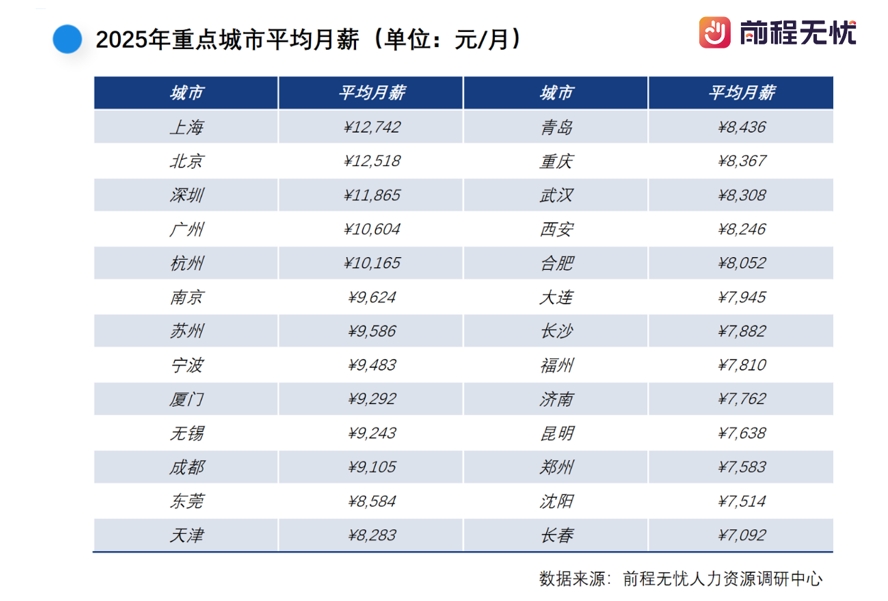
Group 1 - The high-tech industry is projected to have the highest salary adjustment rate of 4.9% by 2025, driven by competition for core technical talent in key areas like artificial intelligence and semiconductors [1] - First-tier cities, particularly Shanghai (12,742 CNY/month) and Beijing (12,518 CNY/month), show significant salary advantages, reflecting the strong support of high-tech industries and high-level talent density [1] - New first-tier cities like Hangzhou (10,165 CNY/month) and Nanjing (9,624 CNY/month) are rapidly closing the salary gap with Guangzhou, indicating the growing influence of the Yangtze River Delta economic circle [1] Group 2 - Integrated circuit design engineers in first-tier cities have an average annual salary of 400,591 CNY, while cloud computing architects earn close to 500,000 CNY (491,253 CNY), highlighting the high value of these positions [2] - The manufacturing and automotive industries are expected to have salary adjustment rates of 4.3% and 4.1% respectively by 2025, with traditional "blue-collar" jobs transitioning to "digital craftsmen" [2] - The pharmaceutical and health industry maintains a salary adjustment rate of 4.4% in 2025, driven by aging trends and biotechnological innovations, with key positions like bioinformatics engineers earning 293,820 CNY in first-tier cities [2] Group 3 - The financial industry is projected to have a lower salary adjustment rate of 3.0% in 2025, influenced by stricter regulations and market volatility, with a further decline to 2.9% expected in 2026 [3] - Despite an increase in disposable income for urban residents (4.2% growth in 2025), consumer willingness is becoming more rational, reflected in the consumer goods industry's salary adjustment rate of 3.7%, slightly below the industry average [3] - The salary gap between first-tier and non-first-tier cities remains around 30%, indicating a concentration of high-end consumer resources in first-tier cities [3]
宁波银行管理层新老交替有序 内生增长动能充沛
Quan Jing Wang· 2026-02-27 05:43
2025年全年,宁波银行实现营业收入719.68亿元,同比增长8.01%;归属于母公司股东的净利润达 293.33亿元,同比增长8.13%,增速高于行业平均水平。盈利能力保持高位。截至2025年末,宁波银行 不良贷款率维持在0.76%,连续18年低于1%;拨备覆盖率为373.16%,处于上市银行领先水平,风险抵 补能力充足。 宁波银行估值提升计划具体方案指出,公司坚守初心使命,筑牢高质量发展护城河:强化客户导向,推 进数字化系统升级与平台化服务,构建跨境金融能力。强化全面风险管理,实施"全流程、全链条、全 周期、全方位"风控体系,提升数据驱动的风险识别与处置能力。 夯实公司治理基石,提升规范化运作水平方面:公司治理架构清晰,股东会、董事会、管理层职责分 明,独立董事专业履职,股权结构合理,主要股东资质优良,合规性持续提升。 2月26日,宁波银行(002142)发布第九届董事会第一次会议决议公告显示,宁波银行完成第九届董事 会换届,原董事长陆华裕因到龄离任,由内部培养的资深管理者庄灵君接任董事长,冯培炯接任行长。 二人均在宁波银行任职超20年,具备全面的业务经验与风险管控能力,此前已分别担任行长、副行长等 关键 ...

太平鸟数字化转型:引领时尚行业的智能化未来
Sou Hu Cai Jing· 2026-02-27 05:30
Core Insights - The company is actively optimizing its online shopping platform and enhancing social media marketing to adapt to the evolving market environment and consumer demands [1][3] - The collaboration with Huawei marks the beginning of the company's digital transformation, focusing on building smart factories and integrating data for precise marketing [3][5] - The company has successfully integrated multiple e-commerce platforms, providing a consistent shopping experience across channels [3] - The use of social media platforms for high-quality content has significantly increased brand awareness and consumer interaction [3][5] - Collaborations with well-known influencers and artists have expanded the brand's market reach and product offerings [5] - The company's digital transformation efforts are setting a benchmark for the fashion industry's digital development, aiming for a more intelligent and personalized future [5]


报告: 集成电路工程师年薪超40万 新一线城市薪资加快追赶一线城市
Di Yi Cai Jing· 2026-02-27 05:03
Core Insights - The report highlights the evolving salary landscape in China, indicating that compensation data serves as a barometer for industry health and policy direction amid global economic shifts and technological advancements [1] Group 1: Salary Trends in Major Cities - First-tier cities remain the highest salary hubs, with Shanghai and Beijing leading at 12,742 CNY/month and 12,518 CNY/month respectively, supported by high-tech industries and talent density [2] - New first-tier cities like Hangzhou (10,165 CNY/month) and Nanjing (9,624 CNY/month) are rapidly closing the salary gap with Guangzhou, indicating a potential shift towards becoming "high cost-performance employment centers" [2] - Salary disparities are smaller among grassroots employees across regions, while high-paying mid-to-senior level positions are concentrated in first-tier cities, reflecting a trend of high-end talent migration to Beijing, Shanghai, and Shenzhen [2] Group 2: High-Tech and Integrated Circuit Industry Salaries - The high-tech sector leads with a salary increase of 4.9% in 2025, driven by government support for AI and semiconductor industries, creating a "necessity" for core technical talent [3] - Integrated circuit design engineers earn an average annual salary of 400,591 CNY in first-tier cities, while cloud computing architects approach 491,253 CNY, highlighting the value of these roles in the market [3] - Traditional "blue-collar" roles are transitioning to "digital craftsmen," with automotive algorithm engineers earning 384,258 CNY in first-tier cities, reflecting the shift towards smart vehicles [3] Group 3: Manufacturing and Consumer Goods Salary Adjustments - The manufacturing sector's salary increase is expected to slightly decline to 4.0% in 2026, indicating a shift towards enhancing labor efficiency to mitigate cost pressures [4] - The consumer goods sector is experiencing a more conservative salary increase of 3.7% in 2026, as companies aim to retain core talent amid profitability challenges [5] - Brand managers in the consumer goods industry earn an average of 373,094 CNY in first-tier cities, while e-commerce and live-streaming operations are becoming essential, with salaries around 146,530 CNY and 142,865 CNY respectively [5] Group 4: Future Salary Trends - The salary trends from 2025 to 2026 suggest a shift from "general increases" to "targeted incentives," emphasizing the value of cross-disciplinary, digital, and business-driving talent as core assets in a competitive landscape [6]
生产“工业味精”,如何给合规管理“提鲜”
Xin Lang Cai Jing· 2026-02-27 04:58
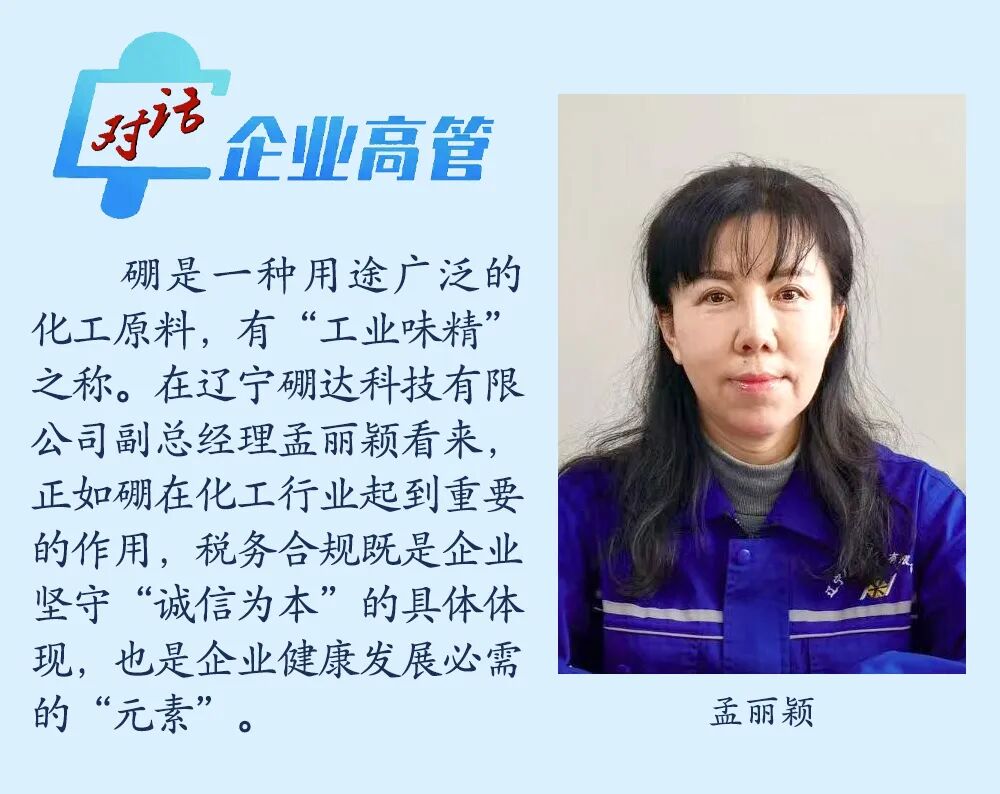
Core Viewpoint - Boron is a widely used chemical raw material, essential for various industries, and tax compliance is crucial for the healthy development of companies like Boron Technology [3][6]. Group 1: Company Overview - Boron Technology specializes in deep processing of boron products, with core products including hexagonal boron nitride, anhydrous borax, and boron nitride coatings [6]. - The company holds approximately 20% of the domestic market share for hexagonal boron nitride and about 25% for anhydrous borax, with exports to South Korea, Russia, and Europe [6]. Group 2: Tax Compliance Management - The company has established a tax compliance management mechanism that includes six core operational standards to monitor and prevent tax risks throughout the entire process [8]. - The six core operational standards include verification of raw material invoices, cost aggregation during processing, tax accounting for finished product inventory, invoicing and reporting during sales, tax matching for fund payments, and policy documentation retention [8]. Group 3: Digital Transformation - Boron Technology has implemented an ERP management system to enhance management efficiency, achieving a 40% improvement in tax processing efficiency and a 100% accuracy rate in tax declarations [9]. - The ERP system includes a "smart tax management" module that automates the calculation and generation of tax declarations, ensuring accurate tracking of costs and expenditures [9]. Group 4: Employee Training and Compliance Culture - The company integrates tax compliance into its corporate culture, making it a shared responsibility among all employees through regular training on legal regulations related to production and operations [10]. - Over the past three years, the company has invested over 14.48 million yuan in R&D, with R&D expenses accounting for more than 6% of sales revenue [10]. Group 5: R&D Compliance Management - A cross-departmental project team has been established to clarify the responsibilities of R&D, finance, and business personnel in managing R&D expenses [11]. - The company has developed standardized systems for recording and managing R&D expenses, ensuring compliance and promoting a cycle of technological innovation driving business development [11].
新引进500万以上项目314个!2025年清远工业干了这些大事
Xin Lang Cai Jing· 2026-02-27 04:57
Group 1 - The manufacturing value-added growth rate is 6.7%, which is 3.5 percentage points higher than the provincial growth rate of 3.2% [2] - The city ranks third in the province for manufacturing investment growth, indicating stable growth in the manufacturing sector [2][3] - The city has successfully introduced 314 projects with investments below 5 million and 175 projects for orderly industrial transfer, completing 253.6% of the provincial task [3] Group 2 - The main platforms in Qingyuan, including Qingcheng, Qingxin, and Fogang industrial parks, have been rated as the best in the province, showcasing a focus on clustered and specialized development [4] - The city has implemented the "High-Quality Development Action Plan for Industrial Parks," which includes reforms in approval services and the establishment of a service mechanism for parks [6] Group 3 - The city is focusing on building a modern industrial system, categorizing and nurturing emerging, traditional, and future industries [8] - A total of 172 small enterprises have been upgraded to standardized industrial enterprises, contributing to the industrial base [26] Group 4 - The city has created 3 provincial-level characteristic industrial clusters, ranking first in northern Guangdong [11] - The food industry in Qingcheng has been selected as a pilot county for provincial food industry cultivation, with two pilot counties in total [12] Group 5 - The city has established 31 provincial-level enterprise technology centers and has one enterprise listed in the Ministry of Industry and Information Technology's key cultivation list for pilot platforms [32] - A total of 13 new provincial-level green factories have been added, bringing the cumulative total to 39, leading in both new and cumulative numbers in northern Guangdong [32] Group 6 - The electronic information manufacturing industry has achieved an output value of 362.9 billion, with a year-on-year growth of 14.8% [44] - The city has built 11,462 5G base stations, achieving full coverage in key areas, with a broadband user base of 1.398 million and a 5G user base of 2.864 million, resulting in a penetration rate of 71.8% [43]

报告: 集成电路工程师年薪超40万, 新一线城市薪资加快追赶一线城市
Di Yi Cai Jing· 2026-02-27 04:57
Group 1 - The core point of the article highlights that first-tier cities remain the highest salary centers in China, with significant salary advantages over other regions, particularly in high-tech and advanced industries [1][2] - In 2025, the average monthly salary in Shanghai is ¥12,742 and in Beijing is ¥12,518, indicating strong support from high-tech industries and a dense population of skilled talent [2][3] - New first-tier cities like Hangzhou and Nanjing are rapidly catching up in salary levels, with Hangzhou at ¥10,165 and Nanjing at ¥9,624, suggesting a potential shift towards becoming "high cost-performance employment centers" [2][3] Group 2 - The high-tech industry leads with a salary increase of 4.9% in 2025, driven by competition for core technical talent in key areas like artificial intelligence and semiconductors [4] - Integrated circuit design engineers in first-tier cities earn an average annual salary of ¥400,591, while cloud computing architects approach ¥491,253, reflecting the high value of these positions [4][6] - Traditional "blue-collar" roles are evolving into "digital craftsmen," with automotive algorithm engineers earning up to ¥384,258 in first-tier cities, highlighting the shift towards smart vehicles [4][5] Group 3 - The consumer goods sector is experiencing a slight salary increase, with a forecasted adjustment of 3.7% in 2026, as companies aim to retain core talent amid profitability pressures [7][8] - Brand managers in the consumer goods industry earn an average annual salary of ¥373,094 in first-tier cities, emphasizing the importance of brand asset development [8] - E-commerce and live-streaming operation roles are becoming essential, with e-commerce operation specialists earning approximately ¥146,530 and live-streaming operation specialists earning around ¥142,865 in first-tier cities [8]
官司落槌确定性回归,科源制药各项业务稳步推进
Zhong Guo Ji Jin Bao· 2026-02-27 02:10
Core Viewpoint - The court ruling against Koyuan Pharmaceutical's subsidiary, Shandong Linuo Pharmaceutical Co., Ltd., regarding a contract dispute with Jiangsu Saibang Pharmaceutical Co., Ltd. will directly impact the company's 2025 financial performance, leading to a significant reduction in net profit [1] Group 1: Financial Impact - The court ruling requires the company to recognize approximately 16.107 million yuan in non-operating expenses, which will reduce the net profit attributable to shareholders to an estimated range of 12.0897 million to 18.1345 million yuan, representing a decline of 70% to 80% compared to the previous year [1] - The adjustment only affects non-recurring profit and loss items, with the company's net profit excluding these items remaining unchanged at a range of 20.1171 million to 29.0581 million yuan, consistent with prior forecasts [1] Group 2: Legal Context - The contract dispute with Jiangsu Saibang Pharmaceutical has been ongoing, with some of Linuo Pharmaceutical's bank accounts previously frozen, affecting 57 million yuan, which is 4.19% of the company's latest audited net assets attributable to shareholders [2] - The first-instance ruling reduces uncertainty regarding the case, but the judgment is not yet effective as it is still within the appeal period [2] Group 3: Operational Performance - Despite the ongoing litigation, the company has been steadily advancing its business operations, with multiple new products set to launch in 2025, indicating a rich product pipeline [2] - Linuo Pharmaceutical's profitability has shown significant growth in the first half of 2025 compared to the same period last year, reflecting strong operational performance [2] - The company is also making strides in digital transformation, with its intelligent factory project in Jinan included in the provincial major industrial transformation reserve projects [2]
山东工业“智”变,不是选择题
Sou Hu Cai Jing· 2026-02-27 01:54
Core Insights - The industrial economy is undergoing a fundamental restructuring, with traditional growth dividends diminishing and challenges such as rising labor costs and intensified market competition becoming the norm [1] - Digital transformation is identified as a key strategy for industrial entities to adapt and thrive in this changing landscape, particularly through the integration of "artificial intelligence + manufacturing" [1][2] Group 1: Digital Economy Goals - By 2025, the digital economy in Shandong is expected to account for over 50% of GDP, with a 9 percentage point increase over five years [2] - The coverage rate of digital transformation among large-scale industrial enterprises in Shandong is projected to reach 95.1%, and the output value of high-tech industries is anticipated to constitute 55.3% of large-scale industrial output [2] Group 2: Industrial Transformation Strategy - Shandong aims to adopt a systematic approach to digital transformation, moving away from piecemeal upgrades to a dual strategy of "two lines of operation and dual empowerment" [2][3] - The province has cultivated over 1,100 leading artificial intelligence enterprises, with a 150% growth over five years, and the core AI industry revenue reaching 120 billion yuan, accounting for one-tenth of the national total [2] Group 3: Enhancing Traditional Industries - Traditional industries in Shandong are to be revitalized through digitalization, focusing on energy reduction in steel, emission control in chemicals, precision in equipment manufacturing, and customization in textiles [3] - Maintaining the foundational strength of traditional industries is deemed essential for pursuing new growth avenues [3] Group 4: Implementation of Digital Transformation - The industrial development cycle necessitates a deep, vertical approach to digital transformation, avoiding superficial trends and focusing on integrating digital solutions into production processes [4] - Shandong is committed to developing 80 "industrial brains" in key sectors and aims to strengthen 100 vertical industry models, achieving full coverage across 41 industrial categories [4] Group 5: Leadership in Digital Empowerment - The establishment of leading enterprises is crucial for driving industrial transformation, with examples such as Weichai Power's digital platform significantly reducing simulation analysis time and Haier's platform enhancing production efficiency by over 50% [4] - The focus is on nurturing benchmark enterprises that can lead and inspire others in the digital transformation journey [4]
陕西省委书记赵一德、省长赵刚与中兴通讯董事长方榕一行座谈
Di Yi Cai Jing· 2026-02-27 00:54
Core Viewpoint - The meeting between Shaanxi provincial leaders and ZTE Corporation's chairman emphasizes the importance of digital transformation and collaboration in advancing the digital economy in Shaanxi province [1] Group 1: Government Initiatives - Shaanxi province is actively seizing opportunities in digitalization, networking, and intelligence as part of the implementation of the 20th National Congress of the Communist Party of China [1] - The provincial government aims to strengthen digital technology innovation and accelerate the digital transformation of industries [1] Group 2: Company Strategy - ZTE Corporation views Shaanxi as a core area for its strategic layout and is committed to leveraging the province's advantages in education, industry, location, and application scenarios [1] - The company plans to expand high-end projects focusing on computing power, digital infrastructure, industry empowerment, and ecosystem co-construction to inject new momentum into Shaanxi's high-quality development [1]
