
碳排放双控

Search documents
助推经济社会发展绿色转型
Ren Min Ri Bao Hai Wai Ban· 2025-08-05 01:35
国家发改委修订相关办法,把好节能降碳"源头关"—— 助推经济社会发展绿色转型 固定资产投资项目节能审查和碳排放评价是从源头提高新上项目能源利用效率、减少碳排放的一项重要 制度,是中国节能降碳制度体系的重要组成部分。近日,国家发展改革委修订印发《固定资产投资项目 节能审查和碳排放评价办法》(以下简称《办法》),自2025年9月1日起施行。据了解,此举旨在贯彻 落实党中央、国务院关于节能降碳的部署要求,进一步健全有关制度规定、着力提升管理效能,推动经 济社会高质量发展。 促进用能主体节能增效 节能审查制度有什么作用?据国家发展改革委有关负责人介绍,节能审查制度建立实施以来,在提高能 源利用效率、促进产业提质升级等方面发挥了重要作用。一是从源头减少能源浪费和二氧化碳排放,二 是推动产业转型升级,三是促进用能主体节能增效。 "节能审查依据节能政策制度和法规标准等要求,指导项目建设单位在开工建设前优化项目能源管理机 制,完善工艺技术路线设计和节能高效设备选型等方案,可有效减少不合理能源消费、提高能源利用效 率。"该负责人说,"十四五"以来,全国每年通过节能审查有效减少项目不合理设计能耗约1400万吨标 准煤,相当于减少 ...
助推经济社会发展绿色转型(锐财经)
Ren Min Ri Bao Hai Wai Ban· 2025-08-04 22:48
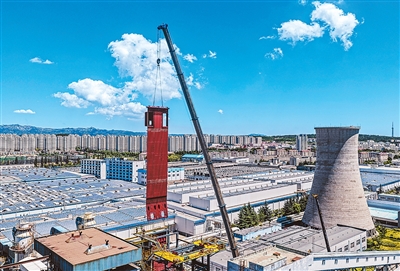
近日,山东省荣成市热电厂内机械轰鸣,高温次高压供暖锅炉节能改造工程施工正酣。改造完成后,供 暖锅炉的热效率将得到有效提高,煤炭消耗量将进一步降低,既能保障冬季供暖的稳定性与充足性,又 能为当地节能减排、推动绿色低碳发展。 李信君摄(人民视觉) 固定资产投资项目节能审查和碳排放评价是从源头提高新上项目能源利用效率、减少碳排放的一项 重要制度,是中国节能降碳制度体系的重要组成部分。近日,国家发展改革委修订印发《固定资产投资 项目节能审查和碳排放评价办法》(以下简称《办法》),自2025年9月1日起施行。据了解,此举旨在 贯彻落实党中央、国务院关于节能降碳的部署要求,进一步健全有关制度规定、着力提升管理效能,推 动经济社会高质量发展。 促进用能主体节能增效 节能审查制度有什么作用?据国家发展改革委有关负责人介绍,节能审查制度建立实施以来,在提 高能源利用效率、促进产业提质升级等方面发挥了重要作用。一是从源头减少能源浪费和二氧化碳排 放,二是推动产业转型升级,三是促进用能主体节能增效。 "节能审查依据节能政策制度和法规标准等要求,指导项目建设单位在开工建设前优化项目能源管 理机制,完善工艺技术路线设计和节能高效设备选 ...

国家发改委:碳排放双控列入2025年下半年工作部署
Xin Hua Wang· 2025-08-04 02:23
郑栅洁表示,要着力稳就业、稳企业、稳市场、稳预期,进一步做强内循环、优化外循环、搞好双循 环。同时更大力度稳定就业,扎实维护粮食、能源、产业链供应链等重点领域安全,做好迎峰度夏、迎 峰度冬能源电力保供工作,加强安全生产和防灾减灾,强化重点行业领域风险隐患治理,加强普惠性、 基础性、兜底性民生建设。 为扎实做好下半年发展改革工作,努力完成全年预期目标和"十四五"规划各项任务,日前,国家发展改 革委就下半年九方面工作进行部署。 国家发展改革委主任郑栅洁在会上表示,发展改革系统要扎扎实实做好下半年发展改革工作,努力完成 全年预期目标和"十四五"规划各项任务,为"十五五"良好开局打好基础。一是聚焦重大变化、重要指 标、重大问题等做好形势分析和研判。二是扎实做好"十四五"规划收官各项工作。三是加大力度稳投资 促消费。四是因地制宜培育壮大新质生产力。五是纵深推进全国统一大市场建设。六是坚定不移扩大高 水平对外开放。七是以碳排放双控全面转型推动绿色低碳发展。八是全面推进区域城乡协调发展。九是 强化综合统筹和综合平衡。 ...
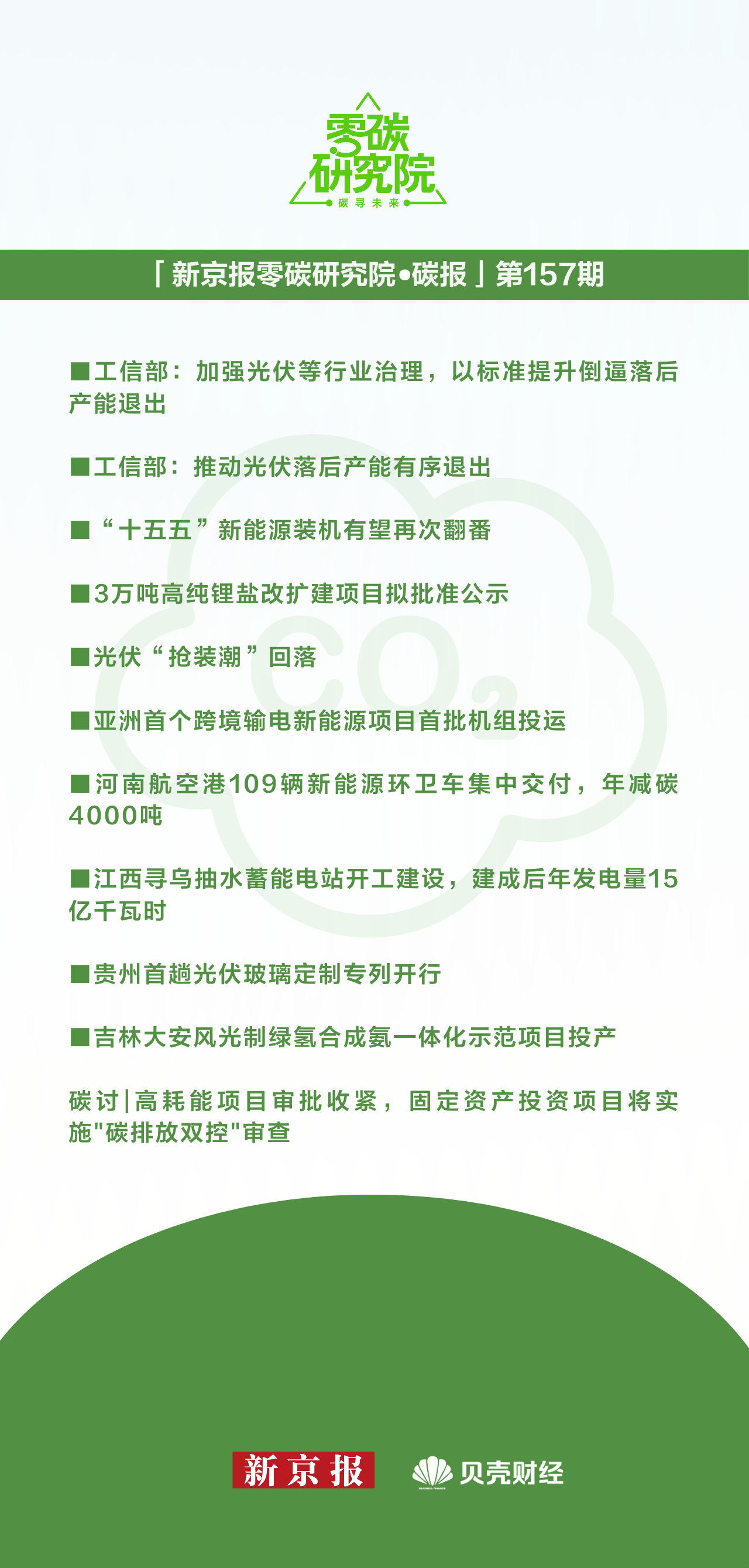
一周碳要闻:高耗能项目将实施碳排放双控审查(碳报第157期)
Xin Jing Bao· 2025-08-01 07:52
Group 1: Industry Dynamics - The Ministry of Industry and Information Technology (MIIT) emphasizes the need to strengthen governance in the photovoltaic industry, pushing for the exit of outdated production capacity through enhanced standards [1][5] - MIIT is promoting the orderly exit of backward capacity in the photovoltaic sector, encouraging innovation and quality improvement while establishing a fair market environment [2][4] - The recent initiatives by MIIT mark a transition for the photovoltaic industry from "incremental expansion" to "stock optimization" [5] Group 2: Renewable Energy Growth - China's renewable energy generation is expected to maintain rapid growth, with a projected generation of 1.84 trillion kilowatt-hours in 2024, a 25% year-on-year increase, contributing over 60% to the overall power generation growth [6][7] - By the end of 2024, China's cumulative renewable energy installed capacity is anticipated to reach 1.41 billion kilowatts, accounting for 42% of the total installed capacity, surpassing coal power [7] - The growth in renewable energy capacity and generation is crucial for increasing the share of non-fossil energy consumption, with projections indicating that by 2030, installed capacity for wind and solar power will need to reach at least 2.5 billion kilowatts [7] Group 3: Project Developments - A lithium salt production project by Zhongmin Resources in Jiangxi is set for expansion, with a total investment of 121 million, aiming to enhance production capacity and reduce costs [8] - The first phase of the Laos Mengsong 600 MW wind power project has commenced commercial operation, marking a significant step in cross-border renewable energy supply in Asia [10] - The construction of the Jiangxi Xunwu pumped storage power station has begun, expected to generate over 1.5 billion kilowatt-hours annually upon completion [12] Group 4: Policy Changes - The National Development and Reform Commission has introduced new regulations for fixed asset investment projects, integrating carbon emission evaluations into energy-saving reviews, effective from September 1 [15][18] - The new regulations aim to tighten approvals for high-energy-consuming projects, reflecting a shift towards a dual control mechanism for energy consumption and carbon emissions [14][19] - The regulations will require energy-saving reports to include carbon emission metrics, enhancing the scrutiny of projects that may impact regional carbon peak processes [20][21]
高耗能项目审批收紧,将实施“碳排放双控”审查
Xin Jing Bao· 2025-08-01 07:47
Core Viewpoint - The new regulations mark a significant upgrade in China's energy conservation and carbon emission control system, transitioning from "energy consumption dual control" to "carbon emission dual control" [1][2] Group 1: Regulatory Changes - The new regulations integrate carbon emission evaluation into the energy conservation review process, reflecting a systemic restructuring based on the high correlation between energy saving and carbon reduction [2] - The new regulations require energy reports to include core indicators such as total carbon emissions, structure, and per-unit product carbon emissions, compared against national and industry standards [3] - The regulations impose stricter controls on coal consumption, including all projects with annual coal consumption exceeding 1,000 tons into the review scope, which is a more stringent standard than previous energy consumption criteria [3] Group 2: Management Upgrades - The new regulations establish a dynamic adjustment mechanism for review authority and centralize management of major projects, with the National Development and Reform Commission directly reviewing projects with significant energy consumption [4] - A clear hierarchical management system is constructed, with provincial departments responsible for reviewing projects above 10,000 tons of standard coal, preventing the delegation of approval authority to lower levels [4] Group 3: Review Process Optimization - The new regulations require energy reports to include dedicated sections analyzing carbon emissions and reduction measures, assessing their impact on regional energy conservation and carbon reduction goals [5] - The review content is detailed, covering major energy-consuming equipment and calculation methodologies, which encourages enterprises to optimize technical routes from the design phase [5] Group 4: Impact on Industry and Energy Structure - The implementation of the new regulations is expected to enhance emission reduction effects, with previous energy conservation reviews reducing unreasonable energy consumption by approximately 14 million tons of standard coal annually, equating to a reduction of nearly 30 million tons of CO2 [6] - The regulations will guide the flow of energy factors towards high-efficiency, low-carbon industries, and accelerate the replacement of fossil fuels with renewable energy [7] - While the new regulations present challenges in compliance costs for enterprises, they also offer opportunities for long-term operational cost reduction and enhanced market competitiveness through energy efficiency improvements [7] Group 5: Implementation Outlook - To ensure the successful implementation of the new regulations, the National Development and Reform Commission will focus on policy promotion, refining business guidelines, and strengthening dynamic management [8] - Local governments face challenges in establishing carbon emission evaluation capabilities and aligning industrial policies with green development goals [8] - The effectiveness of the new regulations will depend on the improvement of carbon emission accounting and monitoring systems, local regulatory capabilities, and the synergy of incentive and constraint mechanisms [8] Group 6: Contribution to Climate Goals - The new regulations represent a crucial step in China's efforts to address climate change and promote high-quality development, contributing to the country's carbon peak and carbon neutrality goals [9]
国家发展和改革委员会部署下半年九方面工作
Xin Hua She· 2025-08-01 01:54
原标题:国家发展改革委部署下半年九方面工作 为扎实做好下半年发展改革工作,努力完成全年预期目标和"十四五"规划各项任务,国家发展和改革委 员会就下半年九方面工作进行部署。 这是从31日召开的2025年上半年发展改革形势通报会上了解到的。 国家发展和改革委员会主任郑栅洁在会上表示,发展改革系统要扎扎实实做好下半年发展改革工作,努 力完成全年预期目标和"十四五"规划各项任务,为"十五五"良好开局打好基础。一是聚焦重大变化、重 要指标、重大问题等做好形势分析和研判。二是扎实做好"十四五"规划收官各项工作。三是加大力度稳 投资促消费。四是因地制宜培育壮大新质生产力。五是纵深推进全国统一大市场建设。六是坚定不移扩 大高水平对外开放。七是以碳排放双控全面转型推动绿色低碳发展。八是全面推进区域城乡协调发展。 九是强化综合统筹和综合平衡。 郑栅洁表示,要着力稳就业、稳企业、稳市场、稳预期,进一步做强内循环、优化外循环、搞好双循 环。同时更大力度稳定就业,扎实维护粮食、能源、产业链供应链等重点领域安全,做好迎峰度夏、迎 峰度冬能源电力保供工作,加强安全生产和防灾减灾,强化重点行业领域风险隐患治理,加强普惠性、 基础性、兜底性民 ...
纵深推进全国统一大市场建设 破除“内卷式”竞争
Qi Huo Ri Bao Wang· 2025-07-31 19:24
Group 1 - The meeting emphasized the need for the development reform system to fully implement the decisions of the Central Committee and the State Council, focusing on stabilizing employment, enterprises, markets, and expectations, while strengthening the internal circulation and optimizing external circulation to achieve annual targets and tasks of the 14th Five-Year Plan [1] - Key areas of focus include conducting analysis and research on major changes, important indicators, and significant issues, with an emphasis on stabilizing employment and expanding domestic demand through policy preparation [1] - The meeting highlighted the importance of solidifying investment and promoting consumption, enhancing government investment project management, and stimulating private investment to boost market vitality and consumption [1][2] Group 2 - The meeting called for deepening the construction of a unified national market, eliminating "involution" competition, and promoting the healthy and high-quality development of the private economy [2] - There is a commitment to expanding high-level opening up, balancing "bringing in" and "going out," and promoting high-quality cooperation in the Belt and Road Initiative [3] Group 3 - The meeting stressed the need for a comprehensive transition to green and low-carbon development through dual control of carbon emissions and energy consumption, establishing a new mechanism for this transition [4] - It also emphasized the importance of regional and urban-rural coordinated development, implementing strategies for regional coordination, and promoting rural revitalization [4] - The meeting underscored the need for comprehensive planning and balance to stabilize employment, ensure the safety of key areas such as food, energy, and supply chains, and enhance public welfare services [4]
破除“内卷式”竞争!国家发改委最新发声
证券时报· 2025-07-31 15:00
Core Viewpoint - The National Development and Reform Commission (NDRC) emphasizes the importance of maintaining economic stability and high-quality development in the face of external pressures and risks, highlighting the resilience and potential of China's economy [1][2]. Group 1: Economic Analysis and Strategy - The NDRC reports that China's economy has shown steady progress in 2023, with major economic indicators performing well and new productive forces developing positively [1]. - The meeting underscores the need for a comprehensive analysis of significant changes, key indicators, and major issues, focusing on stabilizing employment and expanding domestic demand [2]. - The NDRC aims to enhance investment and consumption, stimulate private investment, and implement high-quality policies to boost market vitality [2]. Group 2: Policy Implementation and Planning - The NDRC is committed to executing the decisions of the Central Government, ensuring the completion of the "14th Five-Year Plan" and preparing for the "15th Five-Year Plan" [2]. - There is a focus on fostering new productive forces, promoting the "Artificial Intelligence +" initiative, and advancing the digital economy [2]. - The NDRC plans to deepen the construction of a unified national market and promote healthy development of the private economy [2]. Group 3: Sustainable Development and Safety - The NDRC emphasizes the transition to a green and low-carbon economy, establishing a new mechanism for energy consumption and carbon emission control [2]. - The meeting highlights the importance of regional and urban-rural coordinated development, ensuring food, energy, and supply chain security [2]. - There is a commitment to enhancing safety measures and disaster prevention, prioritizing the safety of people's lives [2].

国家发展改革委部署下半年九方面工作
Xin Hua She· 2025-07-31 14:27
Core Points - The National Development and Reform Commission (NDRC) has outlined nine key areas of focus for the second half of the year to ensure the completion of annual targets and the "14th Five-Year Plan" tasks [1] - NDRC Director Zheng Zhaojie emphasized the importance of stabilizing employment, businesses, markets, and expectations while enhancing both domestic and international economic cycles [1] Summary by Categories Economic Analysis and Planning - Focus on analyzing and assessing major changes, important indicators, and significant issues [1] - Ensure the completion of the "14th Five-Year Plan" [1] Investment and Consumption - Increase efforts to stabilize investment and promote consumption [1] Production Capacity - Cultivate and strengthen new types of productive forces based on local conditions [1] Market Development - Advance the construction of a unified national market [1] International Trade - Expand high-level opening up to the outside world [1] Environmental Initiatives - Promote green and low-carbon development through comprehensive carbon emission control [1] Regional Development - Advance coordinated development between urban and rural areas [1] Risk Management - Strengthen comprehensive planning and balance across various sectors [1] Employment and Supply Chain Security - Focus on stabilizing employment, maintaining the safety of food, energy, and industrial supply chains, and ensuring energy supply during peak seasons [1]
破除“内卷式”竞争!国家发改委最新发声
Zheng Quan Shi Bao Wang· 2025-07-31 12:46
Core Viewpoint - The National Development and Reform Commission (NDRC) emphasizes the importance of maintaining economic stability and growth in the second half of 2025, highlighting the resilience and potential of China's economy despite facing external pressures and risks [1][2]. Group 1: Economic Performance and Outlook - China's economy has shown strong performance in the first half of the year, with major economic indicators reflecting positive trends and new achievements in high-quality development [1]. - The NDRC acknowledges the challenges ahead but remains confident in the long-term positive trends and supportive conditions for high-quality development [1][2]. Group 2: Policy Implementation and Focus Areas - The NDRC is committed to implementing the decisions of the Central Government, focusing on stabilizing employment, businesses, and market expectations while enhancing both domestic and international economic cycles [2]. - Key areas of focus include investment promotion, consumer stimulation, and the cultivation of new productive forces, particularly in artificial intelligence and digital economy [2][3]. Group 3: Strategic Initiatives - The NDRC plans to strengthen the construction of a unified national market, promote high-level opening up, and ensure the safety of key sectors such as food, energy, and supply chains [2][3]. - Emphasis will be placed on green and low-carbon development, as well as coordinated regional and urban-rural development strategies [2][3].