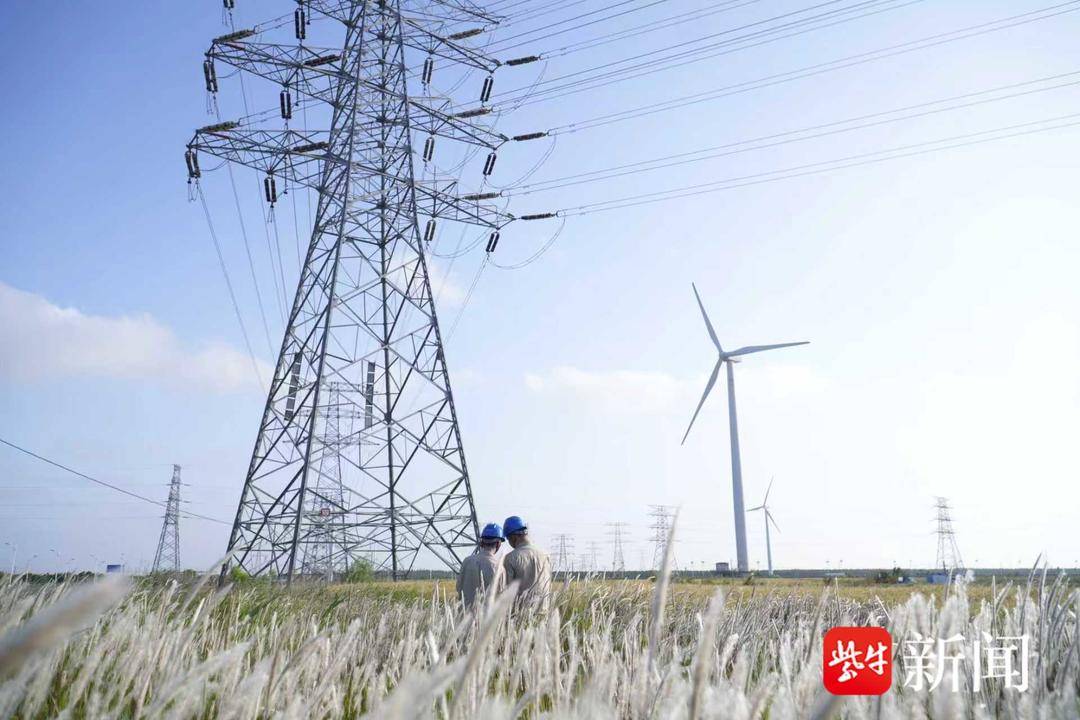
绿色低碳发展

Search documents
优良天数率超90% 绘就长江黄河上游生态屏障新图景
Huan Qiu Wang· 2026-01-17 12:51
Core Viewpoint - The article highlights the significant progress made in ecological protection and sustainable development in Sichuan, showcasing the province's efforts to harmonize economic growth with environmental conservation as it enters the new phase of the 14th Five-Year Plan in 2026 [2][15]. Environmental Quality Improvement - In 2025, Sichuan achieved a historic breakthrough in air quality, with PM2.5 concentration dropping below 30 micrograms per cubic meter for the first time, and further improving to 25.3 micrograms in the first ten months of 2026, marking the best performance since monitoring began [5]. - The province's good air quality days stabilized around 90%, ranking among the top in the country, with heavy pollution days reduced by 80% compared to a decade ago [5]. Water Quality Management - Sichuan has maintained a 100% compliance rate for drinking water sources at the county level and above for six consecutive years, successfully eliminating 124 urban and 284 rural black and odorous water bodies [6]. - The water quality of major rivers, including the Yangtze and Yellow Rivers, has consistently remained at Class II or above, with rural sewage treatment rates increasing from under 20% in 2019 to 78% [6]. Soil and Waste Management - The province has implemented strict controls on soil pollution sources, maintaining stable soil environmental quality, and has established over 3,400 "waste-free city cells" [9]. - The comprehensive utilization rate of construction waste has increased from 55% at the end of the 13th Five-Year Plan to 70%, leading the western region [9]. Biodiversity and Ecological Restoration - Sichuan has designated 148,700 square kilometers as ecological protection red lines, effectively safeguarding critical ecological spaces and enhancing biodiversity through the establishment of national parks and ecological corridors [10]. - The population of wild giant pandas has increased, with the number of sightings in the wild rising from 135 to 185 between 2024 and the present [10]. Green Economic Development - Sichuan has taken the lead in implementing carbon market initiatives, with cumulative trading volumes exceeding 1.2 billion yuan, and has promoted over 3,018 ecological projects to drive industrial transformation [11]. - The green low-carbon industry is thriving, with significant developments in sectors such as photovoltaic energy, drone technology, and lithium battery production, contributing to a diversified green energy industry [11]. Ecological Civilization Demonstration - By the end of 2025, Sichuan had established 43 ecological civilization demonstration zones and 14 "Green Water and Green Mountains are Golden Mountains and Silver Mountains" practice innovation bases, ranking third nationally and first in the western region [14]. - The province's efforts in ecological civilization have led to improved ecological protection and green development, with significant achievements in areas like grassland and forest conservation [14].

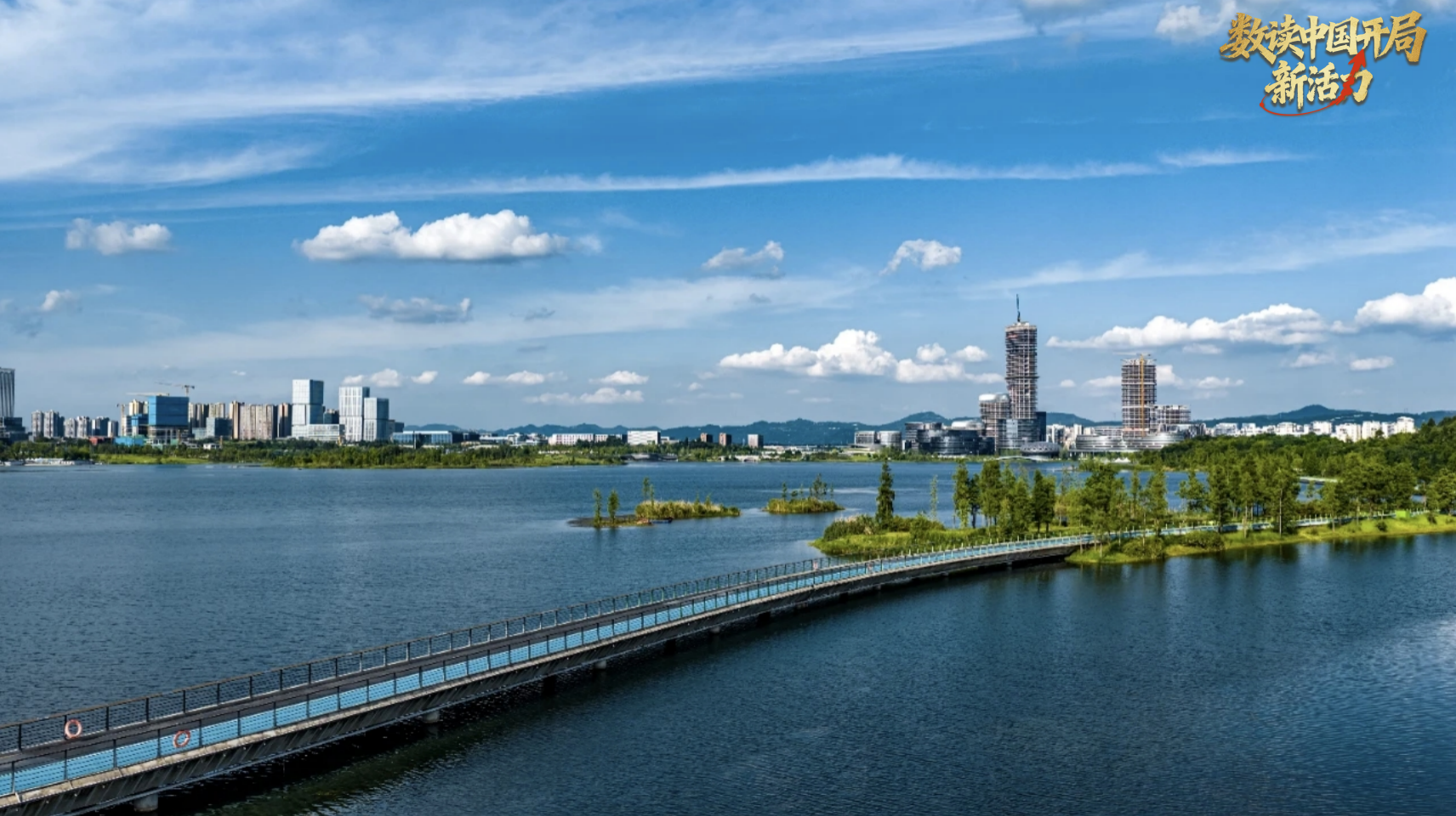
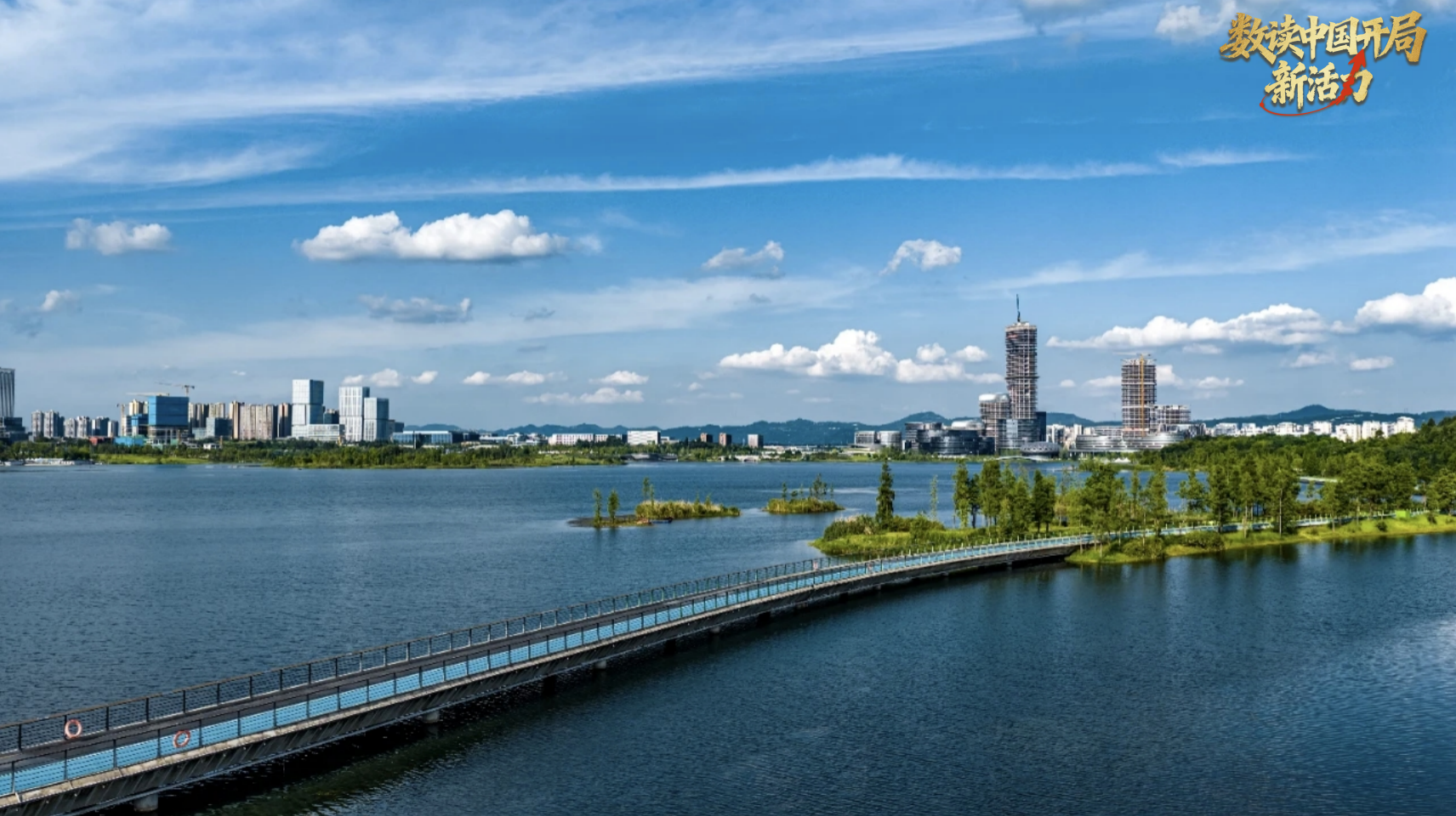
数读中国开局新活力︱优良天数率稳超90% 绘就长江黄河上游生态屏障新图景
Yang Guang Wang· 2026-01-17 12:37
Core Viewpoint - The article highlights the significant progress made in ecological protection and sustainable development in Sichuan, showcasing the transformation of ecological advantages into development momentum as the province enters 2026 [2][15]. Group 1: Air Quality Improvement - In 2025, Sichuan achieved a historic breakthrough in air quality, with PM2.5 concentration dropping below 30 micrograms per cubic meter for the first time, and further improving to 25.3 micrograms in the first ten months of 2026, marking the best performance since monitoring began [6]. - The rate of good air quality days stabilized around 90%, ranking among the top in the country, with heavy pollution days reduced by 80% compared to a decade ago [6]. Group 2: Water Quality Enhancement - Sichuan has maintained a 100% compliance rate for drinking water source quality for six consecutive years, with all urban and rural black and odorous water bodies eliminated [7]. - The quality of water at 203 national monitoring points and 142 provincial monitoring points has consistently achieved a good rate of 100% for two years [7]. Group 3: Soil and Waste Management - The province has effectively managed soil pollution through strict controls on heavy metal industries and has seen a significant increase in the rate of rural sewage treatment from less than 20% in 2019 to 78% [9]. - Sichuan has established over 3,400 "waste-free city cells," with the comprehensive utilization rate of construction waste rising from 55% at the end of the 13th Five-Year Plan to 70% [9]. Group 4: Biodiversity and Ecological Restoration - Since the 14th Five-Year Plan, Sichuan has designated 148,700 square kilometers as ecological protection red lines, significantly enhancing biodiversity and protecting species such as the giant panda [11]. - The number of wild giant pandas has increased from 135 to 185 due to habitat restoration and ecological corridor construction [11]. Group 5: Green Economic Development - Sichuan has implemented a carbon market with a cumulative trading volume exceeding 1.2 billion yuan, promoting green low-carbon industries [12]. - The photovoltaic industry in Leshan achieved a production value of 78.46 billion yuan in 2023, with over 50% of the top global companies in the crystalline silicon sector located there [12]. Group 6: Ecological Civilization Demonstration - By the end of 2025, Sichuan had established 43 ecological civilization demonstration zones, ranking third nationally and first in the western region [14]. - The province's efforts in ecological protection and green development have been recognized, with successful cross-provincial collaborations in ecological governance [14].
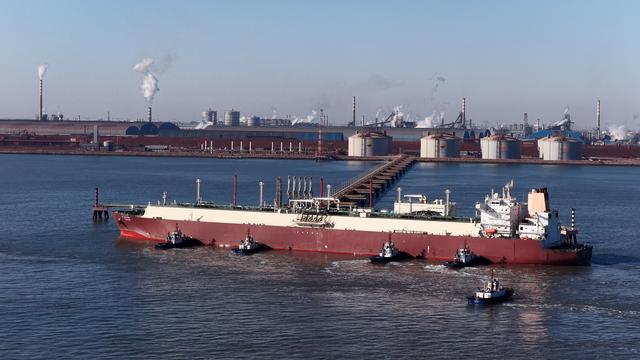
累计接卸600船,唐山LNG接收站全天候“送暖”京津冀
Bei Jing Ri Bao Ke Hu Duan· 2026-01-17 10:04
Core Insights - The "Al Mariah" vessel, carrying 261,000 cubic meters of LNG, successfully docked at the Tangshan LNG receiving station, marking the 600th LNG transport ship to arrive since the station's establishment [1] - The Tangshan LNG receiving station is one of the first LNG receiving stations in China designed, procured, constructed, and operated independently by China National Petroleum Corporation (CNPC), and it plays a crucial role in ensuring gas supply for the Beijing-Tianjin-Hebei region, especially during winter [1][2] - Since its inception in 2013, the Tangshan LNG receiving station has received LNG from 25 countries and regions, with a maximum daily gas supply accounting for 35% to 40% of Beijing's winter gas consumption [1] Group 1 - The arrival of the "Al Mariah" vessel provides reliable energy support for regional heating and industrial production during winter [2] - In 2025, the Tangshan LNG company plans to achieve an annual gasification and external supply of 5.969 billion cubic meters, including 5.175 billion cubic meters through gasification and 794 million cubic meters via truck [2] - The station has received over 23.56 million tons of LNG and supplied over 32.5 billion cubic meters of natural gas during the 14th Five-Year Plan period, contributing to reduced carbon dioxide emissions by replacing other fuels with clean natural gas [2] Group 2 - The Tangshan LNG receiving station has achieved a total external supply of over 66 billion cubic meters and received more than 47.8 million tons of LNG since its first shipment in 2013 [2] - The station's recent implementation of night-time docking capabilities allows for a reduction of up to 12 hours in vessel port time, significantly enhancing the terminal's utilization and winter LNG receiving capacity [3] - Maintenance work during the summer window has improved the safety and operational stability of the unloading equipment, ensuring a robust supply of natural gas for the upcoming winter [3]
从一杯咖啡渣,看浙江如何撬动“十五五”绿色新图景
Xin Lang Cai Jing· 2026-01-16 14:57
Group 1 - Zhejiang province is the birthplace and pioneer of the "Two Mountains" concept, focusing on green transformation and ecological civilization construction as key government priorities for the 14th Five-Year Plan and 2026 [1][6] - Zhejiang Jiake New Materials Technology Co., Ltd. transforms waste materials like coffee grounds and coconut shells into eco-friendly phone cases, achieving a 70% reduction in carbon emissions [1][4] - The company plans to invest 120 million yuan to build a bio-based materials base, which is expected to reduce the consumption of petrochemical raw materials by 2,000 tons annually, equivalent to a reduction of 10,000 tons of carbon emissions [4] Group 2 - Lishui city, where Jiake New Materials is located, has an 80% forest coverage rate and is recognized for its high environmental quality, contributing to its reputation as "China's Ecological First City" [4][5] - Since 2019, Lishui has implemented the first national pilot for ecological product value realization, achieving significant reforms and innovations in green finance products [5] - Zhejiang province is actively promoting green low-carbon development, with initiatives to develop energy-saving, environmental protection, and resource recycling industries while controlling high-energy consumption projects [6][7]
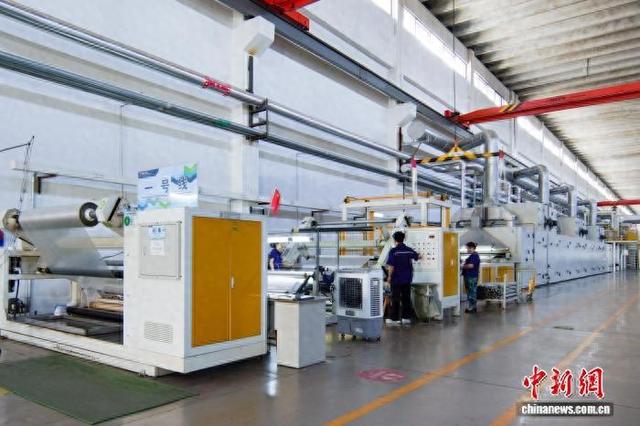
短期业绩承压不改长期向好,解码广西能源的价值底色与成长机遇
Cai Fu Zai Xian· 2026-01-16 13:33
Core Viewpoint - Guangxi Energy is expected to face significant external challenges in 2025, with projected net profit attributable to shareholders ranging from -170 million to -220 million yuan, representing a year-on-year decrease of 369.89% to 449.27% [1] Group 1: Performance Challenges - The performance pressure in 2025 is attributed to multiple short-term external factors rather than a fundamental issue with the company's core operational capabilities [2] - Key short-term factors include adverse natural conditions leading to reduced hydropower generation and increased costs due to market rules affecting electricity pricing, which have negatively impacted revenue [2] - The decrease in hydropower generation has also resulted in higher electricity purchases, further squeezing profit margins in the supply segment [2] Group 2: Long-term Value and Support - Despite short-term fluctuations, Guangxi Energy's core investment value and competitive advantages remain intact, supported by regional energy strategies [3] - The "14th Five-Year" energy plan in Guangxi aims to increase the share of non-fossil energy consumption to over 35% by 2030, positioning Guangxi Energy to benefit from this policy [3] - The company has established a diversified energy business system, with a total installed capacity of 2.3571 million kilowatts as of September 2025, a 169% increase from the end of the "13th Five-Year" period, and approximately 70% of this capacity is from clean energy sources [3] Group 3: Growth Drivers - The gradual commissioning of new energy projects is expected to provide ongoing growth momentum, with the first offshore wind project contributing significant electricity generation and profits [4] - The company has made progress in various renewable energy projects, including onshore wind and solar, with a total installed capacity of 550,000 kilowatts for onshore wind [4] - The electricity grid construction has improved, with a total line length of 7,720 kilometers, an 18.5% increase from the end of the "13th Five-Year" period, enhancing service to nearly 400,000 users [4] Group 4: Strategic Outlook - Guangxi Energy's strategic planning aligns with the "14th Five-Year" energy development blueprint, presenting vast opportunities for growth [5] - The company aims to optimize its energy structure and increase the share of non-fossil energy, aligning with national carbon neutrality goals [5] - Guangxi's position as an energy cooperation hub with ASEAN countries offers potential for cross-border electricity trading and expansion into overseas markets [5][6]

新华解码丨推动工业用能低碳转型 绿色微电网建设如何发力?
Xin Hua Wang· 2026-01-16 12:10
Core Insights - The article discusses the launch of the "Guidelines for the Construction and Application of Industrial Green Microgrids (2026-2030)" by five departments, aiming to transform industrial enterprises from energy consumers to integrated energy producers and consumers, thereby promoting energy conservation and carbon reduction in key industrial sectors [1][2]. Group 1: Industrial Green Microgrid Overview - Industrial green microgrids are described as small green energy systems within factories and industrial parks that can generate, store, and interact with the larger power grid, enhancing energy security and market competitiveness [1]. - In 2024, industrial electricity consumption in China is projected to exceed 60% of the total electricity consumption, highlighting the importance of green microgrid construction for reducing carbon emissions [1]. Group 2: Current Status and Challenges - Over 300 industrial green microgrid projects are currently operational across the country, with ongoing technological advancements; however, the overall development remains in the pilot and demonstration phase, facing challenges in technical standards and market mechanisms [2]. Group 3: Construction Principles and Content - The guidelines outline key construction principles, including a minimum of 60% self-consumption of renewable energy generated on-site, and the utilization of by-products from industries like steel for energy generation [3]. - New energy storage technologies are emphasized as crucial for the effective operation of industrial green microgrids, with a focus on diverse storage solutions such as sodium-ion batteries and thermal storage [3]. Group 4: Digitalization and Management - Digitalization is identified as a vital technical pathway for carbon management systems within industrial green microgrids, with a call for the integration of AI, big data, and industrial internet technologies to enhance energy efficiency and carbon management capabilities [3]. Group 5: Investment Models - The guidelines propose two investment models: self-built by industrial enterprises or parks, and third-party co-construction, which allows for flexibility in meeting diverse operational needs [4]. Group 6: Market Participation and Economic Benefits - The guidelines suggest exploring new revenue models for industrial green microgrids to participate in electricity market transactions, aiming to enhance economic efficiency and shorten investment recovery periods [5]. - The guidelines are viewed as a comprehensive and actionable policy document that will accelerate the low-carbon transition in the industrial sector and support the achievement of carbon neutrality goals [5].
商道创投网·会员动态|九爪智能·完成数千万Pre-A轮融资
Sou Hu Cai Jing· 2026-01-16 11:43
《商道创投网》创业家会员·单位简介 《商道创投网》创投生态圈·本轮投融观点是什么? 九爪智能成立于2021年,位于广州市,是一家专注于AI视觉与多模态传感融合的智能分选技术企业。 公司通过自主研发软硬件一体化分选体系,将算法与复杂真实场景深度绑定,形成了在分选精度、稳定 性和人工替代能力上的显著优势。其核心团队成员多来自产业龙头,拥有深厚的机器视觉、物联网技术 积累以及丰富的环保装备和环卫运营经验。 商道创投网创始人王帥表示,九爪智能的本轮融资是智能分选技术在环保领域的重要进展。当前,国家 政策持续支持绿色低碳发展和循环经济建设,相关政府部门出台了一系列支持创业投资的文件,行业从 业者积极响应并加速技术落地。从创投机构角度看,九爪智能的技术实力和市场潜力得到了充分认可, 其团队背景也为项目发展提供了坚实保障。对于融资方而言,九爪智能的创业精神和在环保赛道的创新 实践值得肯定。未来,随着技术的不断成熟和市场拓展,九爪智能有望在循环经济领域发挥更大作用, 推动行业高质量发展。 《商道创投网》创业家会员·本轮融资用途是什么? 九爪智能创始人李希卓表示,本轮融资将主要用于核心算法和设备的迭代升级,加速技术在更多真实场 ...

风光可测!两部门联动建设“一体化能源气象服务体系”
2 1 Shi Ji Jing Ji Bao Dao· 2026-01-16 07:34
到2027年,基本建立一体化能源气象服务体系 新能源正在从"靠天吃饭"向"知天而用"转变。 近日,中国气象局、国家能源局联合发布《关于推进能源气象服务体系建设的指导意见》(以下简称《指导意见》),《指导意见》明确要完成全国风电和光 伏发电资源普查等20项重点任务。 文件设定了清晰的目标:到2027年,覆盖能源规划选址及供应保障、资源监测预报、防灾减灾、气候生态效应评估、电力市场交易等全场景和短临至月季年 尺度无缝隙的一体化能源气象服务体系基本建立,自主可控的风能太阳能专业数值模式和能源电力气象人工智能专业模型业务化运行。国省两级建立有技术 平台、有服务产品、有业务流程、有服务对象的能源气象服务业务。 业内人士向21世纪经济报道记者表示,文件明确规划了基础设施建设、预报预测能力及服务能力三大板块,共计20项具体任务,社会科技企业可充分借鉴此 思路以提升其服务能力。至2027年建立一体化能源气象服务体系,理想的发展模式宜采用"双轨并行"策略:国家层面应依托相关部门力量,构建基础设施、 提升核心预报能力,并承担宏观服务职能;社会力量则应专注于提供更细致、更具针对性的精细化服务,通过市场机制实现成本消化与高效适配。 ...
“中国的发展始终坚持以人为本”
Ren Min Ri Bao· 2026-01-15 22:08
"中国式现代化的实践证明,每个国家都要找到适合自身国情的道路。中国式现代化是全体人民共同富 裕的现代化,这种发展范式为广大发展中国家提供了新选择。"特立尼达和多巴哥联合民族大会党国际 关系书记尼古拉斯·莫里斯在接受本报记者采访时表示。 (文章来源:人民日报) 莫里斯此前到上海参访交流,洋山港码头的自动化作业给他留下深刻印象。该码头通过5G、北斗导 航、人工智能调度系统提升了综合效率,并依托无人驾驶运输车、智能堆场等完善了低碳设施布 局。"洋山港不只是在解决货物运输问题,而是创造性地拿出了系统性解决方案:降低碳排放,提高货 物运输效率,吸引投资,促进经济增长。这种系统性思维让发展更具可持续性。"莫里斯说,像特多这 样受气候变化影响较大的国家,更需要找到兼顾发展与环保的发展路径,"中国发展工业自动化积累的 经验很有启发和借鉴意义"。 走进特斯拉上海超级工厂,莫里斯进一步感受到"中国速度":这个外商独资整车制造项目从签约到投产 仅用一年多。"特斯拉在中国的业绩十分亮眼,这得益于中国富有活力的政策。中国在科技领域大力培 养人才,非常了不起。"中国在电动汽车领域的快速发展,让莫里斯真切感受到,中国将推动绿色低碳 发展落 ...
江苏海上风电并网规模居全国第一
Yang Zi Wan Bao Wang· 2026-01-15 08:08
Core Insights - Jiangsu Province is set to achieve a cumulative offshore wind power grid-connected capacity of 13.49 million kilowatts by the end of 2025, leading the nation and accounting for nearly 30% of China's total offshore wind power capacity [1][3]. Group 1: Offshore Wind Power Capacity - Jiangsu's offshore wind power grid-connected capacity has surpassed 13 million kilowatts, reaching 13.49 million kilowatts, making it the largest in the country [3]. - The offshore wind power in Jiangsu can provide over 30 billion kilowatt-hours of green electricity annually to the Yangtze River Delta region, equivalent to a reduction of over 22 million tons of carbon dioxide emissions [3]. Group 2: Development and Infrastructure - Jiangsu has developed a comprehensive offshore wind power industry chain over nearly 20 years, covering intertidal zones, nearshore, and far offshore areas [3]. - The city of Yancheng has the largest offshore wind power grid-connected capacity in the country, exceeding 7.2 million kilowatts [3]. - Jiangsu has established the first 110 kV and 220 kV offshore booster stations in the country and operates the largest offshore wind power grid-connected transmission and transformation project [5]. Group 3: Technological Advancements - Jiangsu is focusing on key technological breakthroughs in large-capacity wind turbine control, deep-sea transmission, and intelligent operation and maintenance during the 14th Five-Year Plan period [6]. - The province aims to enhance the synergy between offshore wind power and the grid, contributing to a new type of power system that is clean, low-carbon, safe, and efficient [6]. Group 4: Green Energy Utilization - Jiangsu is promoting green electricity usage in industrial parks and enterprises, with pilot projects in Nantong, Yancheng, and Lianyungang to increase the proportion of green electricity [5]. - In the Rudong Coastal Economic Development Zone, green electricity is delivered directly to enterprise workshops, with one company achieving an average green electricity usage rate of 80%, reducing carbon emissions by nearly 6,000 tons monthly and lowering electricity costs by about 5% [5].