
金融安全

Search documents
存取钱将有新要求!央行等三部门发文
Jing Ji Wang· 2025-08-11 03:37
Core Viewpoint - The People's Bank of China, along with the National Financial Regulatory Administration and the China Securities Regulatory Commission, has released a draft management method for customer due diligence and transaction record retention, reflecting a commitment to international anti-money laundering obligations and enhancing financial security and stability [1][3]. Group 1: Regulatory Changes - The new management method provides specific requirements for various financial institutions regarding customer due diligence and transaction record retention, serving as an operational guide to improve risk management and compliance within the industry [3]. - The draft removes the rigid requirement from the 2022 regulations that mandated financial institutions to understand and register the source or purpose of cash transactions exceeding 50,000 RMB [3][4]. Group 2: Risk Management and Compliance - Financial institutions, including policy banks and commercial banks, are required to conduct customer due diligence for transactions over 50,000 RMB or equivalent to 10,000 USD, ensuring the collection of basic customer identity information and retention of identification documents [3]. - The removal of the cash source or purpose registration does not indicate a relaxation of anti-money laundering regulations; instead, it allows for enhanced due diligence in higher-risk scenarios, balancing risk management with the need for efficient financial services [6]. Group 3: Industry Perspectives - Analysts emphasize the need for banks to find a dynamic balance between compliance and customer experience, suggesting the use of technology to improve efficiency and reduce unnecessary disruptions while maintaining anti-money laundering compliance [6][7]. - Recommendations include optimizing processes for low-risk customers, utilizing digital tools for information updates, and strictly protecting customer privacy by adhering to the principle of collecting only necessary information [7].

微众银行上线“微业贷官方营销号码查询”功能,前置打击伪冒银行营销电话乱象
Zhong Guo Chan Ye Jing Ji Xin Xi Wang· 2025-08-11 03:06
Group 1 - The core viewpoint of the news is that WeBank has launched the "WeLoan Official Marketing Number Inquiry" function to combat illegal loan intermediary services and protect consumer rights [1][2] - The initiative is part of a broader crackdown on financial crimes, particularly targeting fraudulent marketing calls that impersonate financial institutions [1] - Since the launch of the reporting campaign in November 2024, WeBank has received 2,791 reports involving 2,910 suspicious numbers, with a fraud rate of 98.8% among verified numbers [1] Group 2 - The new inquiry function allows consumers to verify marketing numbers quickly, providing a safeguard against harassment and financial fraud [2] - The verification process is user-friendly, taking only 5 seconds to return results, clearly indicating whether a number is an official marketing channel or a fraudulent one [2] - WeBank emphasizes that it does not charge any intermediary fees during the loan application process and encourages consumers to use only official channels for loan services [2]
取款超5万要说明用途?三部门发文
Sou Hu Cai Jing· 2025-08-11 00:08
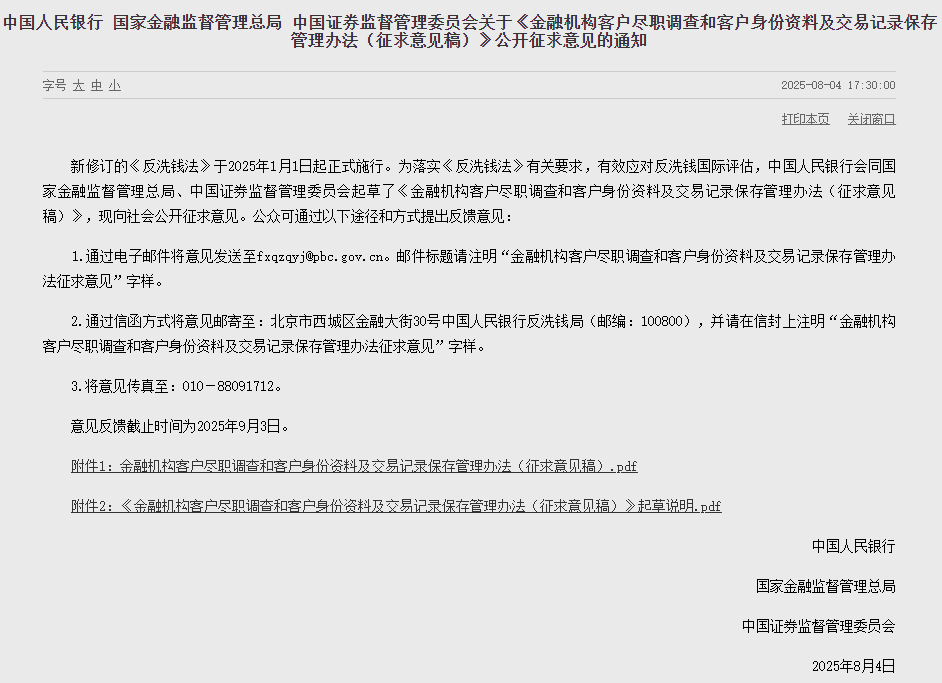
该征求意见稿已于8月4日起向社会公开征集意见,截止日期为9月3日。 近日,中国人民银行、国家金融监督管理总局、中国证监会联合发布《金融机构客户尽职调查和客户身份资料及交易记录保存 管理办法(征求意见稿)》(以下简称《管理办法》),面向社会公开征求意见。 | 中国人民银行 | 国家金融监督管理总局 | 中国证券监督管理委员会 | 征求意见稿 | | --- | --- | --- | --- | | 这份新规中最引人注目的变化是:取消了2022年版监管规则中关于个人办理单笔5万元以上现金存取业务需"了解并登记资金来 | 源或用途"的硬性要求。 | | | | 此外,在为客户提供现金汇款、实物贵金属买卖等等一次性交易金额业务超过5万元的,金融机构仍需开展尽职调查,并登记客 | 户身份基本信息,留存客户有效身份证件或者其他身份证明文件的复印件或者影印件。 | | | 《征求意见稿》第九条 据报道,2022年,针对自然人客户单笔存取5万元以上现金的反洗钱监管规则,曾引发广泛社会争议。 这一规定在当时引发了社会广泛关注,"个人存取现金超5万元需登记资金来源或用途"迅速登上热搜。公众意见呈现分歧:部分 声音认为此举增加了 ...
绝不允许“职业背债”蔓延
Jing Ji Ri Bao· 2025-08-04 22:08
Group 1 - The emergence of "professional debt" scams poses a significant threat to financial institutions and the overall economic order, as individuals sell their personal credit to take on others' debts for high profits, which is fundamentally fraudulent [1] - "Professional debtors" are often victims of these scams, facing substantial debts that can damage their personal credit and expose them to legal consequences for potential criminal activities such as fraud and money laundering [1] - Illegal loan intermediaries play a central role in this fraudulent scheme, targeting individuals with poor credit histories and colluding with bank employees to facilitate loans through bribery and corruption [1] Group 2 - The issue of "professional debtors" directly impacts national financial security and the welfare of vulnerable populations, as these individuals often lack the ability to repay debts, leading to increased non-performing loans and a strain on financial resources [2] - There is a call for stringent measures to combat the illegal activities associated with "professional debt," including increasing the costs of crime for all parties involved and enhancing internal controls within banks to prevent such practices [2] - Legal education and community outreach are essential to raise awareness about the risks associated with "professional debt," ensuring that more individuals understand the potential legal ramifications [2]
科普|稳定币为何成为全球立法焦点?一文读懂监管逻辑与制度博弈
Xin Lang Cai Jing· 2025-07-31 23:49
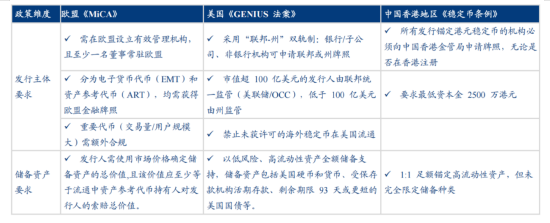
Core Viewpoint - Stablecoins, once a gray area in the blockchain world, are now being actively integrated into regulatory frameworks by governments worldwide, indicating a shift towards a new order in global digital finance [1] Group 1: Definition and Importance of Stablecoins - Stablecoins are digital currencies that anchor their value to fiat currencies (e.g., USD, HKD, EUR), providing price stability and programmability, serving as a crucial bridge between traditional finance and the Web3 world [2] - As of May 2025, the global market capitalization of stablecoins is projected to reach approximately $245.8 billion, reflecting a year-on-year growth of about 53%, with monthly stablecoin transaction volumes expected to exceed $3.7 trillion, a growth of over 150% from the previous year [2] Group 2: Need for Regulation - The rapid expansion of stablecoins has revealed several risks, such as insufficient reserve transparency and stability mechanisms, prompting global regulatory bodies to intervene [3] - Issues like the lack of transparency in reserves (e.g., USDT's undisclosed asset backing) and the failure of algorithmic mechanisms (e.g., Terra UST's collapse) highlight the necessity for clear regulatory boundaries and legal frameworks [3] - The IMF has warned that unregulated stablecoins could threaten monetary sovereignty and has recommended the establishment of unified standards to address their cross-border impacts [3] Group 3: Global Regulatory Approaches - Major economies are accelerating the establishment of stablecoin regulatory frameworks, with the EU leading by passing the MiCA regulation, categorizing stablecoins as electronic money tokens (EMT) and implementing a unified licensing system [4] - The US is proposing the GENIUS Act and state-level regulations that include a ban on unlicensed issuances and a requirement for 100% reserves [4] - Hong Kong's recently implemented Stablecoin Regulation adopts a dual-track model of licensing and sandboxing, setting a compliance benchmark globally [4] Group 4: Highlights of Hong Kong's Regulatory Model - The "licensing system" principle in Hong Kong mandates that any entity wishing to issue or circulate stablecoins must obtain a license from the HKMA, effectively curbing unauthorized issuances and associated risks [5] - Key regulatory standards include a minimum capital requirement of HKD 25 million, 100% asset backing for all stablecoins, prohibition of interest payments to users, regular audits, and compliance with AML and KYC standards [6][7] Group 5: Political and Financial Implications of Stablecoin Legislation - The legislative process surrounding stablecoins reflects deeper geopolitical and financial dynamics, including the competition between digital currencies and national sovereign currencies [9] - The control over cross-border payment channels and the establishment of who can legally issue stablecoins are central to the ongoing power struggle in the financial landscape [9] - Stablecoins are not just a form of currency but are also reshaping the foundational infrastructure of global finance, influencing the future of asset circulation [9] Group 6: Future Trends in Stablecoin Regulation - The potential for a unified international regulatory standard is a focal point for regulators and policymakers, with institutions like the BIS and FSB advocating for coordinated frameworks [10] - The emergence of a "stablecoin rating" system by third parties or official bodies may help users identify quality stablecoins [10] - The relationship between stablecoins and central bank digital currencies (CBDCs) is becoming increasingly intertwined, with some countries exploring parallel mechanisms [10]
最高人民法院发布4起提级管辖典型案例
Yang Shi Wang· 2025-07-29 02:21
Core Viewpoint - The implementation of the elevated jurisdiction system in China's judicial process is crucial for enhancing the supervision and guidance of lower courts, ensuring fair and efficient resolution of disputes, and promoting the correct and unified application of law [1][2]. Group 1: Overview of Elevated Jurisdiction - The Supreme People's Court has issued guidelines to strengthen and standardize the elevated jurisdiction and retrial processes, emphasizing the role of higher courts in unifying legal application and preventing local protectionism [1][2]. - The first batch of typical cases under the elevated jurisdiction was published in 2024, showcasing the practical application of this system [1]. Group 2: Characteristics of Typical Cases - The typical cases published demonstrate the effectiveness of elevated jurisdiction in resolving disputes efficiently and justly, particularly in areas with frequent similar cases [2]. - The cases highlight the establishment of clear adjudication rules for new types of cases, ensuring consistent legal standards across jurisdictions [3]. - Elevated jurisdiction has proven effective in preventing local protectionism, safeguarding the legal rights of vulnerable groups [4]. Group 3: Specific Case Summaries - Case 199: A series of trademark infringement disputes were resolved through mediation, establishing compensation standards and promoting awareness of intellectual property rights among local businesses [5][6][7]. - Case 200: The court clarified the legal nature of illegal foreign exchange trading involving virtual currencies, contributing to the maintenance of national financial security [9][10][11]. - Case 201: The court addressed the rights of "foreign married women" and their children in compensation claims, reinforcing gender equality and social governance [13][14][15][16][17]. - Case 202: The court clarified the application of international treaties in air cargo transport disputes, enhancing the protection of both domestic and foreign parties' rights [18][19][20][21][22].
寓教于乐学反假 童心同行勇反诈
Zhong Guo Jin Rong Xin Xi Wang· 2025-07-25 07:33
Core Viewpoint - The event organized by Citic Bank's Zunyi Xinpu branch aims to enhance financial safety awareness among children aged 8-12, focusing on recognizing anti-counterfeiting features of the Renminbi and preventing telecom fraud [1][5]. Group 1: Event Overview - Citic Bank conducted an interactive educational activity in the Xinpu Street community children's home, utilizing a "lecture + interaction + practice" format to teach basic financial safety skills [1]. - The event included a "real money treasure hunt" game, where children learned to identify seven anti-counterfeiting features of the 2015 version of Renminbi banknotes [1][2]. Group 2: Educational Methods - An innovative teaching method called "one look, two touches, three comparisons" was employed to engage children in learning about the anti-counterfeiting features of the Renminbi [1]. - A "little teacher classroom" segment was included, allowing children to explain anti-counterfeiting features, reinforcing their learning through peer teaching [1]. Group 3: Fraud Awareness - The bank addressed common scams targeting elementary school students, such as the phone watch scam and game recharge traps, using real-life examples to educate children [1][5]. - Children were taught the "three no" principles: not trusting unknown calls or online information, not disclosing personal information or verification codes, and not transferring money to unverified accounts [1]. Group 4: Engagement and Impact - The event engaged over 30 community children and staff, distributing 40 anti-fraud manuals, and fostering a lively atmosphere for learning [4]. - The community children's home director praised the event for its professional explanations and engaging methods, indicating a desire for future collaboration with Citic Bank to enhance financial safety education [5].


守住钱袋子 护好幸福家——江苏银行上海分行多维发力筑牢金融安全防线
Zheng Quan Zhi Xing· 2025-07-25 02:00
Core Viewpoint - Jiangsu Bank's Shanghai branch is actively promoting financial safety and preventing illegal financial activities through a month-long campaign titled "Guarding the Wallet, Protecting the Happy Home" [1] Group 1: Campaign Overview - The campaign employs a "online + offline" integrated approach and a "wide coverage + precision" dual strategy to enhance public awareness and ability to identify illegal financial activities [1] - The campaign focuses on three core themes: anti-money laundering, prevention of illegal fundraising, and anti-fraud [2] Group 2: Implementation Strategies - A comprehensive "1+N" promotional plan was developed to ensure orderly and precise execution of the campaign [2] - Various promotional methods were utilized, including electronic posters, multimedia presentations, and distribution of informational brochures at bank branches [2] - The bank organized over 70 promotional activities, reaching nearly 10,000 individuals, ensuring that education on financial safety was accessible [2] Group 3: Targeted Outreach - The bank customized its outreach efforts to vulnerable groups, particularly focusing on the elderly and new employment sectors [3] - Specific initiatives included community seminars and lectures aimed at raising awareness of financial risks associated with elder care services [3] - For new employment groups like delivery riders and ride-hailing drivers, the bank conducted themed lectures to teach practical skills for identifying scams [3] Group 4: Future Plans - The bank plans to continue its regular promotional management to build a robust financial safety network, fulfilling its legal obligations to prevent illegal financial activities [3]

中方大手一挥,再抛9亿美债,美联储拒绝投降,最大债主国诞生
Sou Hu Cai Jing· 2025-07-23 03:07
Group 1 - China has reduced its holdings of US Treasury bonds by $900 million in May, marking the third consecutive month of reduction, bringing its total holdings down to $756.3 billion [1][3] - The reduction is not a result of a deliberate sell-off but rather a reflection of market fluctuations, as China actually increased its holdings of long-term bonds by nearly $5 billion during the same period [3][5] - The ongoing geopolitical tensions and the desire for asset safety are driving China to diversify its investments away from US Treasuries towards gold, euro assets, and projects related to the Belt and Road Initiative [3][5] Group 2 - The Federal Reserve's monetary policy, characterized by rising bond yields and a reluctance to lower interest rates, has created a mismatch in the bond market, affecting foreign investors' willingness to hold US debt [5][8] - President Trump’s push for lower interest rates aims to alleviate the government's debt burden, which has become a significant expenditure as the national debt exceeds $36 trillion [5][6] - The conflict between Trump and Fed Chairman Powell has escalated, with Powell emphasizing that monetary policy should not be influenced by political pressures, highlighting the importance of maintaining the integrity of the dollar [6][11] Group 3 - Japan has overtaken China as the largest holder of US Treasury bonds, with holdings reaching $1.14 trillion, while the shift in rankings reflects a broader global reassessment of the attractiveness of US debt [9][11] - Canada's aggressive purchase of over $65 billion in US Treasuries in May indicates a strategic move to support the US market amidst rising financial pressures, showcasing the intertwined political and economic relationship between the two countries [8][9]

民生银行济南市中支行进社区普及人民币知识,共筑金融安全防线
Qi Lu Wan Bao· 2025-07-21 02:16
Core Points - The event aimed to enhance community residents' understanding of Renminbi and financial security awareness [1] - The activity included various educational methods tailored to different age groups, focusing on counterfeit detection and legal knowledge [2] - The initiative received positive feedback from residents and aims to strengthen the relationship between the bank and the community [3] Group 1 - The event was themed "Understanding Renminbi, Protecting Wealth Security" and focused on educating residents about counterfeit detection and relevant laws [1] - Bank staff set up an engaging booth with materials like brochures and counterfeit samples, attracting many residents to participate [2] - Different approaches were used for various age groups, with hands-on demonstrations for the elderly and interactive games for younger residents [2] Group 2 - The event not only improved residents' ability to identify counterfeit currency but also raised their financial security awareness [3] - The bank plans to continue similar financial education initiatives in more communities, schools, and enterprises [3] - The activities contributed to maintaining financial stability and promoting social harmony [3]
