
金融服务实体经济

Search documents
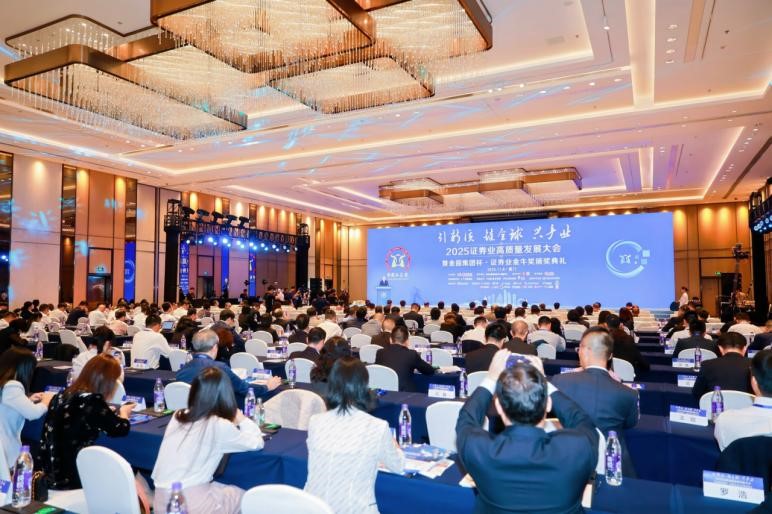
光大证券获“金牛成长证券公司”等多项证券业金牛奖
Zhong Zheng Wang· 2025-11-11 01:38
Core Viewpoint - The 2025 Securities Industry High-Quality Development Conference highlighted the achievements of Everbright Securities, which received multiple awards for its growth and investment banking team, reflecting its commitment to serving the real economy and aligning with national strategies [1][2]. Group 1: Awards and Recognition - Everbright Securities won the "Golden Bull Growth Securities Company" and "Golden Bull Growth Investment Banking Team" awards at the conference [1]. - Everbright Securities' subsidiary, Everbright Asset Management, received the "2025 Annual Golden Bull Securities Collective Asset Manager" award, with two of its products recognized for excellence in mixed bond asset management [1]. Group 2: Strategic Focus and Development - In 2023, Everbright Securities has focused on implementing the spirit of the Central Financial Work Conference and the Central Economic Work Conference, emphasizing strategic positioning and business transformation [1]. - The company aims to integrate its development with national strategic goals by enhancing its roles as a direct financing service provider, capital market gatekeeper, and social wealth manager [1]. Group 3: Future Direction - Everbright Securities plans to align its actions with the spirit of the 20th National Congress of the Communist Party, focusing on risk management, reform, innovation, and corporate governance to support the construction of a modern industrial system and social services [2].

光大证券荣获证券业金牛奖两项大奖
Zhong Guo Zheng Quan Bao· 2025-11-10 13:00
Core Points - The 2025 Securities Industry High-Quality Development Conference and the Golden Bull Award Ceremony were held in Xiamen, Fujian, where Everbright Securities won two awards: "Golden Bull Growth Securities Company" and "Golden Bull Growth Investment Banking Team" [1] Group 1 - The "Golden Bull Award" is known for its fair, open, and impartial principles, aiming to select outstanding securities companies with strong performance, standardized management, and significant development potential, contributing to the long-term healthy development of the capital market [2] Group 2 - In 2023, Everbright Securities has implemented the spirit of the Central Financial Work Conference and the Central Economic Work Conference, maintaining strategic positioning and emphasizing functional positioning while deepening business transformation [5] - The company focuses on serving the real economy, aligning its development with national strategic goals, and enhancing its role as a direct financing service provider, capital market gatekeeper, and social wealth manager [5] - Everbright Securities has targeted key national strategic areas in its investment banking business, providing specialized services and differentiated products to meet the financing needs of the real economy, exemplified by successful projects such as the listing of Nantong Taihe Chemical Co., Ltd. on the Growth Enterprise Market and the issuance of green financial bonds by Qirui Huayin Automotive Finance Co., Ltd. [5] - The company aims to align with the "14th Five-Year Plan" and the spirit of the 20th National Congress of the Communist Party of China, focusing on its main responsibilities, risk management, reform, innovation, and governance to better support the construction of a modern industrial system and social welfare services [5]

海证期货携手浙江联华再续苹果产业助农新篇
Zhong Zheng Wang· 2025-11-10 06:09
Core Insights - The collaboration between Haizheng Futures and Zhejiang Lianhua Huashang Group aims to directly supply high-quality apples from Shaanxi to retail terminals during promotional events [1] Group 1: Collaboration and Strategy - Haizheng Futures and Zhejiang Lianhua leverage internal synergies to explore new financial services for the real economy, expanding their cooperation from Shanghai to the Zhejiang market based on the successful pilot in 2024 [1] - The project exemplifies resource integration and business collaboration under the guidance of state-owned enterprise party building [1] Group 2: Operational Model - The core of the project utilizes a mature "spot-futures linkage" model, allowing Haizheng Futures to lock in high-quality apple sources while ensuring stable supply and helping farmers mitigate price volatility risks [1] - Apples are inspected and packaged at the production site, then efficiently transported to Zhejiang Lianhua's warehouses, enabling quick availability to consumers during promotional periods [1]
申万宏源助力北京首农食品集团20亿元小公募公司债成功发行
申万宏源证券上海北京西路营业部· 2025-11-05 02:18
Group 1 - The core viewpoint of the article highlights the successful issuance of the 2025 public offering of renewable corporate bonds by Beijing Shounong Food Group, with a scale of 2 billion yuan and a coupon rate of 1.96% [2] - The bonds were oversubscribed with a multiple of 3.62 times, indicating strong investor interest [2] - The funds raised will be used for productive expenditures, emphasizing the company's commitment to enhancing its operational capabilities [2] Group 2 - Beijing Shounong Food Group is a state-owned agricultural industry group under the Beijing Municipal Government, playing a crucial role in food supply security in the capital [2] - The company has established a comprehensive industrial chain covering breeding, planting, breeding, product processing, trade circulation, and terminal sales across various food categories [2] - The issuer is recognized as a key player in ensuring food supply and safety in the capital, contributing to the integration of agricultural product supply networks in the Beijing-Tianjin-Hebei region [2] Group 3 - Shenwan Hongyuan Securities demonstrated strong financial capabilities and bond underwriting strength, enhancing its market influence in the Beijing-Tianjin-Hebei region [3] - The company aims to continue serving national strategies and the real economy, focusing on high-quality regional economic development [3]

郑州银行发布三季度报:资产规模增速创历史新高,营收利润延续双增长趋势
2 1 Shi Ji Jing Ji Bao Dao· 2025-11-05 01:02
Core Viewpoint - Zhengzhou Bank reported significant growth in total assets and liabilities for Q3 2025, indicating strong performance and a solid foundation for future business expansion [1][2]. Group 1: Financial Performance - As of the end of Q3 2025, Zhengzhou Bank's total assets reached 743.55 billion yuan, a year-on-year increase of 9.93%, marking the highest growth rate in the same period historically [1]. - The bank's total liabilities amounted to 685.94 billion yuan, reflecting a growth of 10.62% compared to the end of the previous year [1]. - The bank's net profit attributable to shareholders was 2.28 billion yuan, a year-on-year increase of 1.56%, while operating income reached 9.40 billion yuan, up 3.91% from the previous year [3]. Group 2: Asset and Liability Management - Zhengzhou Bank's loan and advance total reached 406.72 billion yuan, with a steady growth of 4.91% year-on-year, demonstrating robust credit deployment [1][2]. - The bank's total deposits reached 459.52 billion yuan, an increase of 13.59% from the previous year, with personal deposits growing by 22.44% to 267.14 billion yuan [2]. - The bank's provision coverage ratio stood at 186.17%, up 19.94 percentage points year-on-year, while the non-performing loan ratio was 1.76%, a decrease of 0.1 percentage points [3]. Group 3: Strategic Focus - Zhengzhou Bank is committed to supporting the local economy by focusing on key industries and projects, enhancing financial services for small and medium-sized enterprises [2]. - The bank has implemented targeted relief measures for businesses, demonstrating its role as a stabilizing force in the local market [2].
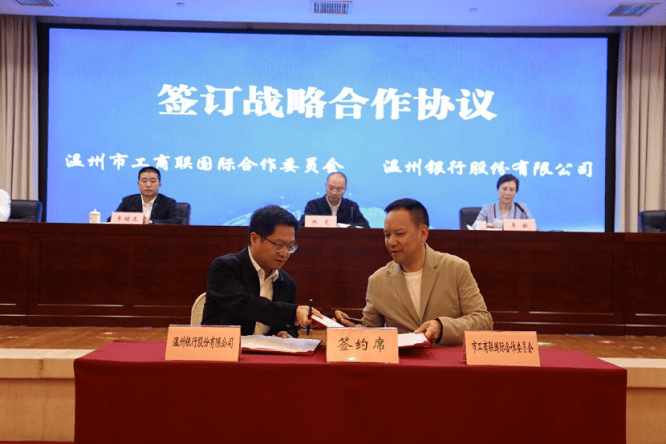
银商联手!温州银行20亿元金融支持加码温商国际化
Sou Hu Cai Jing· 2025-11-04 09:15
Core Insights - The strategic cooperation between Wenzhou Bank and the Wenzhou Federation of Industry and Commerce International Cooperation Committee aims to integrate financial resources with the Wenzhou business network to support local enterprises in global competition and attract overseas Wenzhou businesses back to invest [1][3]. Group 1: Financial Support and Services - Wenzhou Bank will prioritize support for member enterprises of the International Cooperation Committee, providing a total credit line of 2 billion RMB for cross-border finance, fund settlement, and credit financing [3]. - The bank will offer tailored financial service plans for recommended "global investment partners," key overseas projects, and local multinational companies, including preferential credit approval, interest rate discounts, and fee reductions [3]. Group 2: Training and Information Services - Wenzhou Bank will enhance collaboration in information services by providing regular training on cross-border financial policies, exchange rate risk management, and international settlement practices to improve the financial capabilities of local enterprises [3][4]. - This initiative aims to strengthen the global market risk response capabilities and overall competitiveness of Wenzhou businesses [3][4]. Group 3: Strategic Importance - This cooperation represents a significant step for Wenzhou Bank in fulfilling its mission as a local bank and deepening its engagement with the local economy, while also being a key element in promoting the internationalization of Wenzhou businesses [4]. - Both parties intend to use this signing as a new starting point to explore new paths and models for financial services to the real economy and enhance Wenzhou's openness [4].
申万宏源助力中国铁建30亿元超短期融资券成功发行
申万宏源证券上海北京西路营业部· 2025-11-04 02:09
Group 1 - The core viewpoint of the article emphasizes the successful issuance of a super short-term financing bond by China Railway Construction Corporation, amounting to 3 billion yuan with a maturity of 180 days and a coupon rate of 1.63% [2] - The issuer aligns its development strategy with national long-term goals, focusing on enhancing market competitiveness through innovation and reform in key sectors such as railways, highways, subways, municipal projects, and housing construction [2] - The collaboration between China Railway Construction and Shenwan Hongyuan in this bond issuance highlights the latter's commitment to supporting the real economy and contributing to social development [2]


交通银行前三季度营收、净利润均实现同比增长
Zheng Quan Ri Bao Zhi Sheng· 2025-11-03 04:09
Core Insights - The core viewpoint of the news is that Bank of Communications has demonstrated steady operational development in the first three quarters of 2025, with key financial indicators showing positive growth compared to the previous year [1][2]. Financial Performance - The bank achieved operating income of 199.645 billion yuan, representing a year-on-year increase of 1.80% [1]. - Net interest income and net fee and commission income both experienced positive growth, increasing by 1.46% and 0.15% respectively [1]. - The net profit attributable to shareholders reached 69.994 billion yuan, up by 1.90% year-on-year [1]. - Total assets amounted to 15.50 trillion yuan, reflecting a growth of 4.02% compared to the end of the previous year [1]. Loan and Financial Services - The customer loan balance stood at 9.07 trillion yuan, marking a 6.04% increase from the end of the previous year, with an additional 31.2 billion yuan year-on-year [1]. - The bank has focused on enhancing financial services for the real economy, with significant growth in technology finance, digital finance, pension finance, and manufacturing loans, all exceeding the average growth rate of corporate loans [1]. Strategic Initiatives - As a state-owned bank headquartered in Shanghai, Bank of Communications is deeply integrated into the strategic tasks assigned to Shanghai, enhancing its capabilities in technology finance and expanding its market leadership in financial services [2]. - The bank has established cooperation with 65 major municipal projects and 191 district-level projects in Shanghai during the reporting period [2]. - The bank facilitated "Bond Connect" transactions totaling 650.1 billion yuan and "Swap Connect" transactions of 634.4 billion yuan [2]. Risk Management - The bank maintains a prudent management philosophy, focusing on refined risk management and enhancing control over key risk areas [2]. - The non-performing loan ratio is reported at 1.26%, a decrease of 0.05 percentage points from the end of the previous year [2]. - The provision coverage ratio stands at 209.97%, an increase of 8.03 percentage points compared to the end of the previous year [2].

企业家利好!这家银行放大招
中国基金报· 2025-11-01 01:19
Core Viewpoint - The article emphasizes the importance of providing tailored financial services to entrepreneurs, recognizing their role as a driving force in economic development and innovation in Shenzhen [1][12]. Group 1: Entrepreneurial Support - China Bank has been focusing on the needs of entrepreneurs, offering comprehensive services that address their challenges throughout different stages of business development [1][2]. - The bank's private banking services have grown significantly, with over 198,900 clients and a managed financial asset scale of 3.14 trillion yuan by the end of 2024 [1]. Group 2: Early-stage Support - For early-stage tech companies facing challenges like asset-light operations and financing difficulties, China Bank provides customized financing solutions [4]. - A case study highlights how a tech entrepreneur benefited from a "financing + wealth management" service, alleviating cash flow issues and allowing focus on R&D [4][5]. Group 3: Growth Phase Assistance - During the growth phase, China Bank enhances resource integration capabilities for companies, offering cross-border resources and industry chain collaboration [7]. - The bank's one-stop solutions facilitate overseas expansion, including cross-border payroll services for foreign employees [7]. Group 4: Support for Listed Companies - For listed companies, China Bank plays a crucial role in connecting them with capital markets and facilitating family wealth succession [9]. - The bank organizes events like board secretary exchanges and industry forums to foster resource sharing among entrepreneurs [9]. Group 5: Long-term Partnership - China Bank adopts a dedicated team service model, providing ongoing asset allocation reports and investment strategy advice [11]. - The bank's services extend beyond financial support, offering lifestyle benefits and exclusive events for entrepreneurs [11][12]. Group 6: Comprehensive Service Ecosystem - China Bank has established a four-dimensional service ecosystem that integrates digital, spatial, value, and time elements, supporting entrepreneurs throughout their business lifecycle [13]. - Entrepreneurs have expressed that this comprehensive support system not only aids in wealth succession but also injects vitality into their business development [13].


光大银行:将继续坚守金融服务实体经济本源
Zheng Quan Ri Bao Zhi Sheng· 2025-10-31 13:13
Core Viewpoint - Everbright Bank emphasizes its commitment to serving the real economy and aims to enhance the quality and efficiency of its services through various strategic measures [1] Group 1 - The bank will continue to focus on optimizing its asset-liability structure to improve financial service capabilities [1] - Efforts will be concentrated on developing unique operational characteristics to differentiate its services [1] - The bank aims to enhance comprehensive financial service levels for clients, contributing to stable revenue growth [1]
