
金融高水平对外开放

Search documents
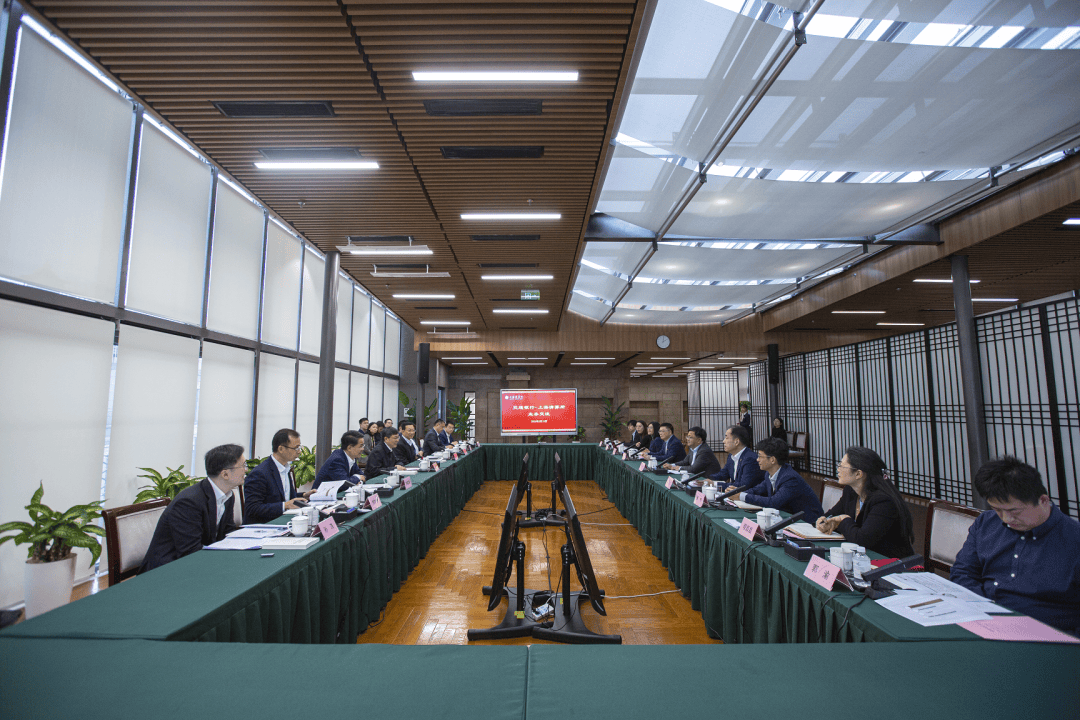
交通银行董事长任德奇到上海清算所调研指导
Sou Hu Cai Jing· 2026-03-19 11:04
Group 1 - The core discussion focused on enhancing financial services to the real economy and promoting high-level financial openness and the internationalization of the RMB [3] - Both parties agreed to deepen cooperation in areas such as centralized clearing, registration and custody, and the development of carbon markets, aiming to support the construction of a financial powerhouse [3] - The meeting emphasized the importance of collaboration in serving the central bank's functions and contributing to the development of Shanghai as an international financial center [3] Group 2 - Bank of Communications is recognized as a comprehensive clearing member of the Shanghai Clearing House and has received awards for being an "Excellent Clearing Member" and "Excellent Settlement Member" [2][3]


金融高水平对外开放蹄疾步稳
Jin Rong Shi Bao· 2026-02-04 05:32
Core Viewpoint - The establishment of AIA Asset Management and Aegon Asset Management in Shanghai marks a significant step in the high-level opening of China's financial market, showcasing the commitment of international capital to China's financial reform and development [1][4]. Group 1: Company Establishment - AIA Asset Management and Aegon Asset Management held their opening ceremony on January 28, marking the debut of the first wholly foreign-owned insurance asset management companies in Shanghai [1]. - The approval for the establishment of these companies was granted by the Financial Regulatory Bureau in December 2025, following a rapid six-month preparation period [2][3]. - AIA Asset Management is fully owned by AIA Life Insurance with a registered capital of 100 million yuan, while Aegon Asset Management, backed by the 180-year-old Aegon Group, has a registered capital of 250 million yuan [3]. Group 2: Strategic Importance - The simultaneous launch of these institutions is seen as a landmark event for Shanghai's financial sector and reflects the dual engagement of China's financial industry with international capital [4]. - Both companies aim to leverage their global expertise to provide diversified and international asset management services to Chinese institutional investors [3][5]. Group 3: Market Insights - The past five years have seen an average annual growth rate of about 8% in the assets under management in China's trust, wealth management, and insurance asset management sectors, making it the second-largest asset and wealth management market globally [6]. - International insurance giants view China as a market with significant growth potential, leading to increased investment and participation from foreign institutions [6]. - The entry of foreign firms is expected to enhance the diversity of products and services available in the Chinese insurance market, benefiting consumers and pushing local firms to improve their professional capabilities [6].

外资保险资管接连落地 保险细分市场开放提速
Xin Lang Cai Jing· 2026-01-29 16:41
Core Viewpoint - The opening of two foreign-owned insurance asset management companies in Shanghai marks a significant step in the high-level opening of China's financial sector, reflecting foreign investors' confidence in the Chinese insurance market and its growth potential [1][3]. Group 1: Opening of Foreign Insurance Asset Management Companies - On January 28, AIA Asset Management and Holland Insurance Asset Management officially opened in Shanghai, becoming the first foreign-owned insurance asset management companies in the city [3]. - The approval process for these companies was notably swift, taking only about six months from the initial approval by the financial regulatory authority to the opening, showcasing the effectiveness of China's financial opening and improved business environment [3][4]. Group 2: Policy Changes and Market Entry - Recent policy changes, including the Ministry of Commerce's issuance of the "Pilot Tasks" document, aim to support foreign insurance institutions in directly establishing insurance asset management companies in Shenzhen, breaking down previous entry barriers [4][5]. - Traditionally, foreign entities had to follow a two-step process to establish insurance asset management companies in China, but the new pilot program allows for direct establishment, enhancing market entry efficiency [4][5]. Group 3: Impact on the Asset Management Market - The Chinese asset management market is substantial, with a total scale reaching approximately 33.3 trillion yuan (about 4.6 trillion USD) as of the end of 2024, reflecting a year-on-year growth of 10.6% [6]. - The entry of foreign insurance asset management companies is expected to deepen their participation in the Chinese market, introduce international experience, and enhance the professionalism and internationalization of the domestic insurance asset management industry [6]. - Foreign firms bring expertise in long-term asset management and alternative investments, which can address domestic shortcomings and stimulate local institutions to innovate and improve their professional capabilities [6].

离岸观澜 | 2026年自贸离岸债市场开闸 存量市场更新步伐加快
Xin Hua Cai Jing· 2026-01-28 11:32
Core Viewpoint - The successful issuance of the first offshore bond in the Shanghai Free Trade Zone marks a significant innovation in China's offshore financial market, providing a new pathway for non-bank financial institutions to expand internationally [1][2]. Group 1: Offshore Bond Issuance - The first offshore bond, issued by Dongfang Zhisheng Co., with a scale of 200 million RMB and a maturity of 364 days at an interest rate of 1.88%, was successfully completed [1]. - The issuance was supported by Dongfang Securities Co., which provided cross-border guarantees, highlighting a new role for non-bank financial institutions in offshore debt financing [2][3]. Group 2: Market Dynamics and Regulatory Framework - The new regulations for offshore bonds, effective from March 1, 2026, provide clear institutional expectations for issuers, defining the boundaries and encouraging RMB pricing [4]. - The Shanghai Free Trade Zone's offshore bond market has quickly become a vital channel connecting high-quality domestic assets with foreign capital, with significant interest from international investors [2][4]. Group 3: Future Outlook and Market Potential - The upcoming maturity of a large volume of existing offshore bonds in 2026, with a total outstanding amount of approximately 67.8 billion RMB, indicates a critical period for the market [5]. - Experts believe that the offshore bond market will attract foreign investors due to its high credit quality and stable yields, especially in the context of global monetary policy shifts [5][6]. - The development of a more robust offshore bond framework is expected to enhance the international use of the RMB, positioning offshore bonds as a key support for China's financial globalization [6].
上海金融系统部署“十五五”开局工作 稳步扩大金融高水平对外开放
Jie Fang Ri Bao· 2026-01-24 01:36
Group 1 - The core viewpoint of the news is the strategic planning for Shanghai's financial system, focusing on risk prevention, strong regulation, and promoting high-quality development to enhance the city's international financial center capabilities by 2025 [1][2] - The meeting emphasized the importance of ensuring a strong start for the "14th Five-Year Plan" in 2026, with a focus on expanding high-level financial openness and supporting enterprises in international ventures [2] - Key initiatives include deepening structural reforms in financial supply, enhancing the adaptability and competitiveness of the modern financial system, and creating a robust financial market and infrastructure [2] Group 2 - The financial system aims to improve the quality and efficiency of services to the real economy and actively engage in five major financial initiatives [2] - There is a commitment to building a first-class business environment that is market-oriented, law-based, and internationally aligned, ensuring a stable and predictable institutional framework [2] - To support economic growth, Shanghai will accelerate policy implementation, promote credit issuance, enhance capital market activity, and innovate insurance products [2]
上海市委常委、常务副市长吴伟:稳步扩大金融高水平对外开放,重点推动跨境金融和离岸金融加快发展
Xin Lang Cai Jing· 2026-01-23 13:45
Core Viewpoint - The Shanghai financial system aims to enhance its capabilities and services while ensuring risk management and regulatory compliance, setting a solid foundation for the "14th Five-Year Plan" and preparing for the "15th Five-Year Plan" [1][2]. Group 1: Financial Development Goals - By 2025, the Shanghai financial system will focus on risk prevention, strong regulation, and promoting high-quality development, enhancing financial resource allocation and service quality for the real economy [1][2]. - The goal is to expand high-level financial openness, particularly in cross-border and offshore finance, to better support enterprises in international ventures and the Belt and Road Initiative [2]. Group 2: Financial Market and Infrastructure - There is a commitment to develop a robust financial market system, including a collaborative financial institution framework and diverse financial products and services [2]. - The emphasis is on creating a safe and efficient financial infrastructure to support these developments [2]. Group 3: Financial Growth and Support - The financial system is tasked with accelerating growth and ensuring a strong start to the year, leveraging national macro policies to support financial stability [3]. - Financial institutions are encouraged to increase credit issuance and innovate insurance products to support key sectors and industries [3]. Group 4: Party Leadership and Governance - The leadership of the Communist Party is highlighted as a fundamental characteristic of China's financial development, with a focus on strengthening party governance within the financial system [4]. - There is an emphasis on cultivating a positive financial culture and enhancing the talent pool in the financial sector, including attracting high-level overseas financial professionals [4].
金融监管总局明确今年五大重点任务,信号大
21世纪经济报道· 2026-01-16 03:06
Core Viewpoint - The 2026 regulatory work meeting emphasizes the integration of risk prevention, strong regulation, and promotion of high-quality development as the main tasks for the year, marking the beginning of the "14th Five-Year Plan" [1][2]. Group 1: Five Key Tasks - The meeting outlined five key tasks for 2026: 1. Effectively and orderly advance the risk resolution of small and medium-sized financial institutions 2. Rigorously prevent and resolve risks in related fields 3. Significantly enhance the industry's high-quality development capabilities 4. Comprehensively strengthen and improve financial regulation 5. Continuously improve the quality and efficiency of financial services to the economy and society [3][5]. Group 2: Risk Resolution Focus - The emphasis on resolving risks in small and medium-sized financial institutions remains a priority, with a shift from "accelerating progress" to "effectively and orderly advancing risk resolution," focusing on controlling existing risks and preventing new ones [5]. - The meeting highlighted the need for a normalized operation of urban real estate financing coordination mechanisms and legal compliance in supporting the resolution of financing platform debt risks [5][6]. Group 3: High-Quality Development - The meeting stressed the importance of proper planning and steady advancement in reducing and improving small and medium-sized financial institutions, optimizing institutional layout, and addressing disorderly competition [6]. - It also called for banks and insurance institutions to focus on their main businesses and promote high-level financial openness [6]. Group 4: Strengthening Financial Regulation - The meeting focused on addressing substantive risks and practical issues, enhancing regulatory capabilities, and implementing classified and graded supervision [6]. - It emphasized the importance of consumer protection and active participation in international financial governance reform [6]. Group 5: Enhancing Financial Services - The meeting placed significant emphasis on improving the quality and efficiency of financial services, including support for major strategies, key areas, and weak links, as well as promoting consumption and investment [6]. - Compared to 2025, the focus for 2026 is more on structural support and guiding long-term capital [6]. Group 6: Achievements in 2025 - In 2025, significant progress was made in risk resolution, with 394 banking institutions approved for exit through mergers or dissolutions, doubling the number from 2024 [8]. - The urban real estate financing coordination mechanism was expanded, and illegal financial activities were actively combated, laying a foundation for 2026's risk resolution efforts [8][9].

金融监管总局:有力有序有效推进中小金融机构风险化解
Zheng Quan Shi Bao Wang· 2026-01-15 13:05
Core Insights - The Financial Regulatory Administration held a meeting on January 15, 2026, to summarize the work of 2025 and arrange key tasks for 2026 [1] Group 1: Risk Management - The meeting emphasized the need to effectively and orderly resolve risks in small and medium-sized financial institutions, focusing on addressing existing risks and preventing new ones to maintain a "no explosion" baseline [2] - There is a strong emphasis on preventing and resolving risks in related fields, including the establishment of a normalized urban real estate financing coordination mechanism and legal support for debt risk resolution of financing platforms [2] Group 2: Industry Development - The meeting highlighted the importance of enhancing the high-quality development capabilities of the industry, including the need for careful planning and the reduction and quality improvement of small and medium-sized financial institutions [2] - Continuous efforts will be made to rectify disorderly competition and standardize industry order, while banks and insurance institutions are urged to focus on their main businesses and develop in a differentiated manner [2] Group 3: Regulatory Enhancement - There is a commitment to comprehensively strengthen and improve financial regulation, focusing on substantive risks and practical issues, while enhancing the capacity for legal regulation and implementing classified and graded supervision [2] - The design and construction of the "Financial Supervision Project" will be accelerated, and the responsibilities for consumer protection will be effectively fulfilled [2] Group 4: Financial Services Improvement - The meeting stressed the need to enhance the quality and efficiency of financial services for the economy and society, with a focus on supporting major strategies, key areas, and weak links [2] - Financial support will be strengthened for emergency disaster relief, elderly health, rural revitalization, and better financing services for small and micro enterprises to promote stability in businesses and employment [2]
期待“十五五”时期继续深化合作
Xin Lang Cai Jing· 2026-01-13 07:26
Group 1 - Shanghai is focusing on becoming a world-class modern metropolis with an emphasis on five key centers, enhancing its international financial center's competitiveness and influence [1] - UBS has hosted 26 Greater China seminars in Shanghai, discussing investment opportunities presented by China to global investors, and is committed to strengthening its operations in China [2] - UBS is one of the largest wealth management institutions globally, ranked 139th in the Fortune Global 500, and has established 11 branches in Shanghai [3] Group 2 - The Shanghai government is encouraging UBS to increase its investment in the city, bringing long-term capital and innovative solutions to support local enterprises [1] - UBS aims to act as a bridge for international investors looking to invest in China and assist Chinese investors in expanding globally [2]

龚正会见瑞银集团首席执行官安思杰
Di Yi Cai Jing· 2026-01-12 13:28
Group 1 - Shanghai is focusing on becoming a world-class socialist modern international metropolis, with finance being one of its most important urban functions [2] - The city is implementing high-level financial openness and enhancing its financial market, product, institution, and infrastructure systems to strengthen its international financial center [2] - UBS has been hosting the Greater China Conference in Shanghai for 26 years and is encouraged to increase its investment and collaboration with local enterprises [2][3] Group 2 - UBS is one of the largest wealth management institutions globally and ranks 139th in the Fortune Global 500, with 11 branches established in Shanghai [4] - UBS expresses its commitment to China and Shanghai, aiming to facilitate international investment into China and support Chinese investors in going global [3]