AI训练

Search documents
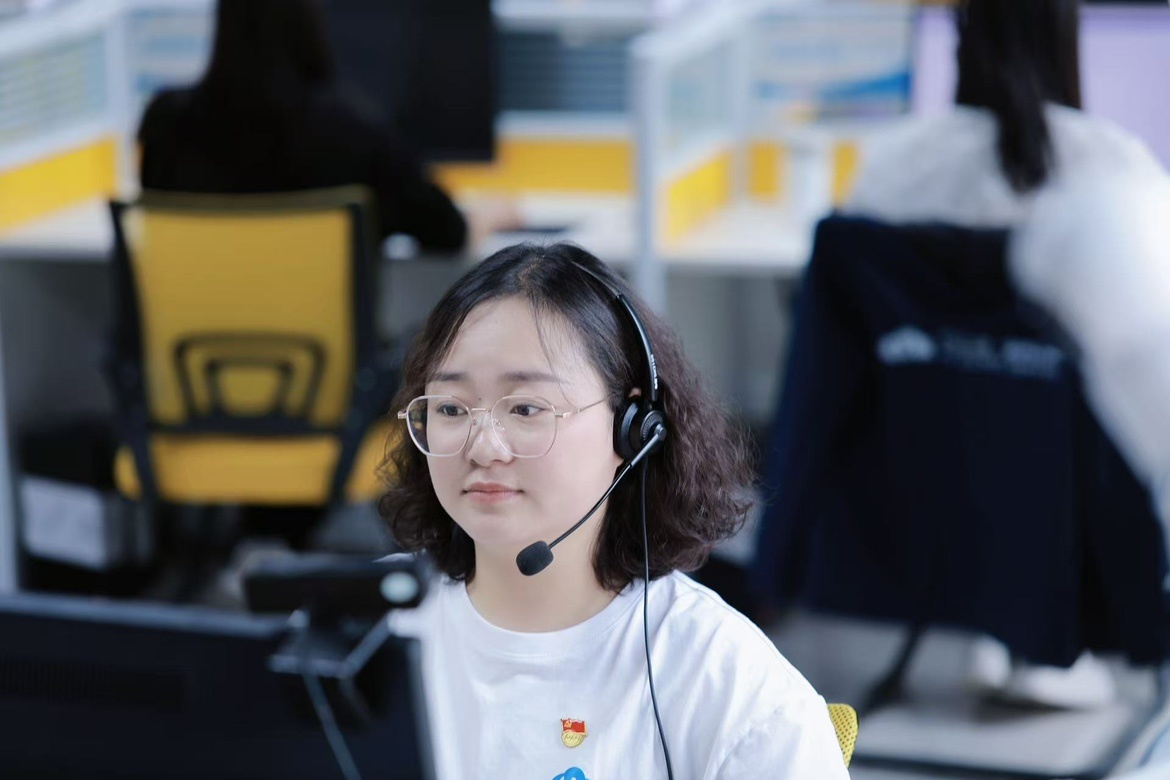
北京大学数字金融研究中心最新报告:AI训练呈现普惠性
Huan Qiu Wang· 2025-09-05 05:15
Core Insights - The report highlights the significant positive impact of AI training on customer service workers, showing an average salary increase of 14% compared to traditional training methods [1][3] - AI training demonstrates inclusive benefits across various demographics, particularly for workers aged 45 and above, who show the most improvement in service standards [1][3] Group 1: AI Training Impact - AI training leads to a 14.02% increase in average salary for newly hired customer service representatives within the first six months [1] - Customer service representatives who underwent AI training experienced a 29.46% reduction in daily customer complaints and a 29.70% decrease in quality inspection failures [1][3] Group 2: Demographic Benefits - The benefits of AI training are evident across different genders, age groups, and urban-rural divides, with the most significant improvements seen in those aged 45 and above [3] - After six months, customer service representatives aged 45 and above showed a 33.46% reduction in daily quality inspection failures, outperforming other age groups [3] Group 3: Advanced Training Scenarios - AI training is particularly effective when simulating complex customer scenarios, resulting in a 79.79% decrease in negative feedback and a 49.40% reduction in quality inspection failures for trained representatives after five months [3][6] - The use of AI to simulate various customer identities and emotional states enhances the training experience, improving skills, efficiency, and income for customer service workers [3][7] Group 4: Broader Implications - The report emphasizes that AI's most profound impact is not just efficiency but fundamentally reshaping labor and employment dynamics [6] - The Chinese government's "AI+" action plan aims to accelerate the transition of the service industry towards intelligent-driven services, promoting a new model that combines automated and human services [6][7] - Ant Group's digital platform is positioned as a leader in utilizing AI training to enhance worker capabilities and create a more inclusive employment ecosystem [6][7]

海天瑞声跌2.12%,成交额1.96亿元,主力资金净流入551.37万元
Xin Lang Cai Jing· 2025-09-04 07:37
Core Viewpoint - The stock of Hai Tian Rui Sheng has experienced fluctuations, with a recent decline of 2.12% and a year-to-date increase of 24.29%, indicating volatility in its market performance [1]. Financial Performance - For the first half of 2025, Hai Tian Rui Sheng reported revenue of 157 million yuan, a year-on-year increase of 69.54%, and a net profit attributable to shareholders of 3.80 million yuan, reflecting a significant growth of 813.65% [2]. - Cumulative cash dividends since the company's A-share listing amount to 57.50 million yuan, with 46.80 million yuan distributed over the past three years [3]. Shareholder Information - As of June 30, 2025, the number of shareholders for Hai Tian Rui Sheng decreased by 14.71% to 10,700, while the average number of tradable shares per shareholder increased by 17.25% to 5,643 shares [2]. - Notable institutional holdings include the sixth-largest shareholder, Caitong Asset Management Digital Economy Mixed Fund, with 1.12 million shares, and the eighth-largest, Nuoan Active Return Mixed Fund, which increased its holdings by 23,070 shares [3]. Market Activity - As of September 4, 2023, the stock price was 122.02 yuan per share, with a trading volume of 196 million yuan and a turnover rate of 2.61%, resulting in a total market capitalization of 7.36 billion yuan [1]. - The stock has seen a recent decline of 18.65% over the last five trading days and a 10.15% drop over the past 20 days, while it has increased by 18.52% over the last 60 days [1]. Business Overview - Hai Tian Rui Sheng, established on May 11, 2005, and listed on August 13, 2021, specializes in the research, design, production, and sales of AI training data [1]. - The company's revenue composition includes 69.43% from intelligent voice, 19.63% from computer vision, 10.16% from natural language, and 0.78% from application services related to training data [1].

易华录跌2.02%,成交额3.83亿元,主力资金净流出4002.88万元
Xin Lang Cai Jing· 2025-08-29 04:08
Core Viewpoint - The stock of Beijing EasyHualu Information Technology Co., Ltd. has experienced fluctuations, with a recent decline of 2.02% and a total market capitalization of 17.076 billion yuan as of August 29 [1] Company Overview - EasyHualu was established on April 30, 2001, and went public on May 5, 2011. The company specializes in providing intelligent traffic management solutions through its self-developed integrated command platform software, ATMS [2] - The revenue composition of EasyHualu is 59.45% from digital systems and infrastructure, and 40.55% from data operations and services [2] - The company operates within the IT services sector and is involved in various concept sectors including tax informationization, elderly care industry, smart parking, AI training, and facial recognition [2] Financial Performance - For the first half of 2025, EasyHualu reported a revenue of 307 million yuan, a year-on-year decrease of 9.31%, while the net profit attributable to shareholders was -317 million yuan, reflecting a year-on-year increase of 14.02% [2] - Since its A-share listing, EasyHualu has distributed a total of 415 million yuan in dividends, with no dividends paid in the last three years [3] Shareholder Information - As of June 30, 2025, EasyHualu had 69,900 shareholders, an increase of 0.37% from the previous period, with an average of 9,990 circulating shares per shareholder, a decrease of 0.36% [2] - The top ten circulating shareholders include notable entities such as E Fund's ChiNext ETF and Hong Kong Central Clearing Limited, with varying changes in their holdings [3]

优刻得跌2.10%,成交额2.03亿元,主力资金净流出3061.91万元
Xin Lang Cai Jing· 2025-08-28 02:37
Core Viewpoint - UCloud's stock price has shown significant growth this year, with a 100% increase year-to-date, indicating strong market interest and potential investment opportunities [1][2]. Financial Performance - For the first half of 2025, UCloud reported revenue of 791 million yuan, representing a year-on-year growth of 8.37%. However, the company experienced a net loss attributable to shareholders of 79.65 million yuan, which is an improvement of 26.56% compared to the previous period [2]. - The company has not distributed any dividends in the last three years, with a total payout of 21.13 million yuan since its A-share listing [3]. Stock Market Activity - As of August 28, UCloud's stock price was 27.96 yuan per share, with a market capitalization of 12.758 billion yuan. The stock experienced a net outflow of 30.62 million yuan in principal funds [1]. - UCloud has appeared on the stock market's "龙虎榜" (Dragon and Tiger List) eight times this year, with the most recent appearance on February 14, where it recorded a net purchase of 17.92 million yuan [1]. Shareholder Information - As of June 30, 2025, UCloud had 40,200 shareholders, a decrease of 2.53% from the previous period. The average number of circulating shares per shareholder increased by 3.42% to 10,083 shares [2]. - The top ten circulating shareholders include notable funds, with 博时上证科创板人工智能ETF being the sixth largest, holding 3.66 million shares, an increase of 1.34 million shares from the previous period [3].

再论寒武纪20250822
2025-08-24 14:47
Summary of Key Points from the Conference Call Industry Overview - The conference call primarily discusses the AI chip market in China, focusing on companies like ByteDance and Cambricon (寒武纪) [2][8][12]. Core Insights and Arguments - **Deepseek V3.1 Release**: The new version integrates large language models and deep reasoning models, improving training efficiency and reducing computational power consumption, surpassing GPT-5 in certain aspects [2][3]. - **ByteDance's Investment**: ByteDance, as the largest AI chip purchaser in China, is expected to invest 60 billion RMB in 2025 and potentially 80 billion RMB in 2026, significantly impacting the domestic AI chip market, especially with Nvidia's products facing limitations [2][8][10]. - **Nvidia's Market Position**: Nvidia will mainly provide B30 and B40 chips in 2026, but issues with interconnectivity and HBM may lead to a decline in market share, creating opportunities for domestic AI chips [2][9][10]. - **Cambricon's Positioning**: Cambricon has completed large-scale adaptations with ByteDance, positioning itself favorably for future procurement, which could significantly increase its revenue from hundreds of millions to potentially billions [2][12][17]. - **FP8 and UE8M0 FP8 Formats**: The introduction of FP8 and UE8M0 FP8 formats reduces computational power consumption while maintaining training effectiveness, giving Cambricon a competitive edge in the AI chip market [4][6][16]. Additional Important Insights - **Market Demand**: The demand for AI chips in China is expected to remain strong, with ByteDance's procurement plans indicating a robust growth trajectory [8][10]. - **Profitability Potential**: Cambricon's revenue is projected to grow from over 20 billion RMB to between 30 billion and 50 billion RMB if it captures a portion of ByteDance's procurement [12][14]. - **Competitive Landscape**: The domestic AI chip market is fragmented, with major players like Alibaba, Baidu, and Tencent using various suppliers, but Cambricon's established relationship with ByteDance gives it a significant advantage [13][17]. - **Future Prospects**: Cambricon's future looks promising, with expectations of substantial revenue growth and high profit elasticity due to fixed costs and successful product testing [14][18]. Conclusion - The conference call highlights the evolving landscape of the AI chip market in China, emphasizing the strategic positioning of Cambricon and ByteDance's significant role in shaping market dynamics. The anticipated growth in demand and technological advancements present substantial investment opportunities in this sector.

2396部片,一片罚15万,Meta用BT偷片训练AI,遭天价索赔
猿大侠· 2025-08-23 06:37
Core Viewpoint - Meta is facing serious copyright allegations from Strike 3 Holdings, which claims that Meta has been using adult films to train its AI models without authorization, potentially infringing on the copyrights of 2396 films and engaging in over 100,000 unauthorized distribution transactions [2][17]. Group 1: Allegations Against Meta - Strike 3 Holdings accuses Meta of systematically using BitTorrent technology to illegally stream and share its adult films since 2018 for AI training purposes [2][12]. - The lawsuit claims that Meta not only downloaded these films but also continued to "seed" them for months, indicating active participation in the BitTorrent network [3][5]. - Evidence presented by Strike 3 Holdings shows that 47 IP addresses linked to the seeding activities are registered under Meta's name, suggesting a corporate-level involvement in the copyright infringement [4][5]. Group 2: Implications of the Allegations - The use of adult films for AI training may allow Meta to create highly realistic virtual adult content at minimal cost, raising ethical concerns about the company's practices [15][16]. - The lawsuit highlights that this strategy could expose minors to adult content by bypassing age verification mechanisms, as the films were originally paid content [14]. - Strike 3 Holdings demands that Meta cease its infringing activities, delete all unauthorized content used for AI training, and pay potential damages amounting to $359 million, with $150,000 per film [18][23]. Group 3: Meta's Response - Meta has stated that it is reviewing the lawsuit but believes the allegations from Strike 3 Holdings are inaccurate [22]. - Despite being informed of the alleged infringement, Meta's BitTorrent activities reportedly continued, raising questions about the company's compliance with copyright laws [20][21].


优刻得涨2.00%,成交额3.86亿元,主力资金净流出65.15万元
Xin Lang Cai Jing· 2025-08-22 02:01
Company Overview - UCloud Technology Co., Ltd. is located at 619 Longchang Road, Yangpu District, Shanghai, established on March 16, 2012, and listed on January 20, 2020 [2] - The company operates as a neutral third-party cloud computing service provider, offering a secure and reliable cloud computing service platform [2] - Revenue composition includes: Public Cloud 50.63%, Hybrid Cloud 35.41%, Cloud Communication 8.26%, Private Cloud 2.75%, Solutions and Others 1.90%, Edge Cloud 1.05% [2] Financial Performance - For the first half of 2025, UCloud achieved operating revenue of 791 million yuan, a year-on-year increase of 8.37%, while the net profit attributable to shareholders was -79.65 million yuan, a year-on-year increase of 26.56% [2] - Since its A-share listing, UCloud has distributed a total of 21.13 million yuan in dividends, with no dividends paid in the last three years [3] Stock Performance - As of August 22, UCloud's stock price increased by 2.00% to 27.50 yuan per share, with a total market capitalization of 12.55 billion yuan [1] - Year-to-date, UCloud's stock price has risen by 96.71%, with a 4.44% increase over the last five trading days, 4.25% over the last 20 days, and 35.53% over the last 60 days [1] - The company has appeared on the trading leaderboard eight times this year, with the most recent appearance on February 14, where it recorded a net buy of 17.92 million yuan [1] Shareholder Information - As of June 30, 2025, UCloud had 40,200 shareholders, a decrease of 2.53% from the previous period, with an average of 10,083 circulating shares per shareholder, an increase of 3.42% [2] - The top ten circulating shareholders include notable funds, with the Bosera CSI Star Market Artificial Intelligence ETF being the sixth largest shareholder, increasing its holdings by 1.34 million shares [3]
院士孵化,机器人合成数据公司获合肥国资A轮融资丨早起看早期
36氪· 2025-08-22 00:21
Core Viewpoint - DeepTrust Technology has completed Series A financing to enhance its synthetic data generation technology and continuous learning framework, focusing on applications in autonomous driving, industrial scenarios, and embodied robotics [5][10]. Group 1: Company Overview - DeepTrust Technology, founded in 2019 and incubated by Turing Award winner Yao Qizhi, is headquartered in Hefei High-tech Zone and specializes in a closed-loop toolchain for "data collection - data processing - simulation training" [5][11]. - The company has launched three core products: Oasis Rover for data collection, Oasis Data for data platform, and Oasis Sim for simulation systems, serving the fields of autonomous driving, robotics, and industrial digital twins [5][8]. Group 2: Market Context and Challenges - The Ministry of Industry and Information Technology requires L3+ vehicles to complete 10 million kilometers of equivalent testing, while traditional manual modeling takes 6 months for 1 million kilometers, leading to high costs and insufficient coverage of extreme scenarios [7]. - Industrial scenarios such as nuclear power and ports face challenges with low digital twin accuracy and high cross-scenario adaptation costs [7]. Group 3: Technological Innovations - The core technologies of DeepTrust Technology include a continuous learning framework and world models, which enhance the realism, challenge, and diversity of scenarios through a closed loop of "real data seeds → multi-agent dynamic adversarial → autonomous generalization iteration" [8][10]. - The world model integrates various technologies to build a digital twin system that is consistent in geometry, physics, and semantics, including dynamic environmental modeling and multi-agent interaction prediction [10]. Group 4: Performance and Growth - DeepTrust Technology's synthetic data technology has been validated across multiple fields, significantly improving testing efficiency for autonomous driving algorithms by 2.1 million times in collaboration with a leading automotive company [10]. - The company experienced exponential revenue growth last year, with high-fidelity simulation and synthetic data software products being the main revenue drivers, and has established partnerships with over 10 leading automotive and industrial enterprises [10][11]. - The team consists of 80 members, with 10% holding PhDs from top overseas universities, and the founder, Yang Zijiang, is a professor at the University of Science and Technology of China with extensive research experience [11].

GB200出货量上修,但NVL72目前尚未大规模训练
傅里叶的猫· 2025-08-20 11:32
Core Viewpoint - The article discusses the performance and cost comparison between NVIDIA's H100 and GB200 NVL72 GPUs, highlighting the potential advantages and challenges of the GB200 NVL72 in AI training environments [30][37]. Group 1: Market Predictions and Performance - After the ODM performance announcement, institutions raised the forecast for GB200/300 rack shipments in 2025 from 30,000 to 34,000, with expected shipments of 11,600 in Q3 and 15,700 in Q4 [3]. - Foxconn anticipates a 300% quarter-over-quarter increase in AI rack shipments, projecting a total of 19,500 units for the year, capturing approximately 57% of the market [3]. - By 2026, even with stable production of NVIDIA chips, downstream assemblers could potentially assemble over 60,000 racks due to an estimated 2 million Blackwell chips carried over [3]. Group 2: Cost Analysis - The total capital expenditure (Capex) for H100 servers is approximately $250,866, while for GB200 NVL72, it is around $3,916,824, making GB200 NVL72 about 1.6 to 1.7 times more expensive per GPU [12][13]. - The operational expenditure (Opex) for GB200 NVL72 is slightly higher than H100, primarily due to higher power consumption (1200W vs. 700W) [14][15]. - The total cost of ownership (TCO) for GB200 NVL72 is about 1.6 times that of H100, necessitating at least a 1.6 times performance advantage for GB200 NVL72 to be attractive for AI training [15][30]. Group 3: Reliability and Software Improvements - As of May 2025, GB200 NVL72 has not yet been widely adopted for large-scale training due to software maturity and reliability issues, with H100 and Google TPU remaining the mainstream options [11]. - The reliability of GB200 NVL72 is a significant concern, with early operators facing numerous XID 149 errors, which complicates diagnostics and maintenance [34][36]. - Software optimizations, particularly in the CUDA stack, are expected to enhance GB200 NVL72's performance significantly, but reliability remains a bottleneck [37]. Group 4: Future Outlook - By July 2025, GB200 NVL72's performance/TCO is projected to reach 1.5 times that of H100, with further improvements expected to make it a more favorable option [30][32]. - The GB200 NVL72's architecture allows for faster operations in certain scenarios, such as MoE (Mixture of Experts) models, which could enhance its competitive edge in the market [33].


英伟达的“狙击者”
虎嗅APP· 2025-08-18 09:47
Core Viewpoint - The article discusses the explosive growth of the AI inference market, highlighting the competition between established tech giants and emerging startups, particularly focusing on the strategies to challenge NVIDIA's dominance in the AI chip sector. Group 1: AI Inference Market Growth - The AI inference chip market is experiencing explosive growth, with a market size of $15.8 billion in 2023, projected to reach $90.6 billion by 2030 [7] - The demand for inference is driving a positive cycle of market growth and revenue generation, with NVIDIA's data center revenue being 40% derived from inference business [7] - The significant reduction in inference costs is a primary driver of market growth, with costs dropping from $20 per million tokens to $0.07 in just 18 months, a decrease of 280 times [7] Group 2: Profitability and Competition - AI inference factories show average profit margins exceeding 50%, with NVIDIA's GB200 achieving a remarkable profit margin of 77.6% [10] - The article notes that while NVIDIA has a stronghold on the training side, the inference market presents opportunities for competitors due to lower dependency on NVIDIA's CUDA ecosystem [11][12] - Companies like AWS and OpenAI are exploring alternatives to reduce reliance on NVIDIA by promoting their own inference chips and utilizing Google’s TPU, respectively [12][13] Group 3: Emergence of Startups - Startups are increasingly entering the AI inference market, with companies like Rivos and Groq gaining attention for their innovative approaches to chip design [15][16] - Rivos is developing software to translate NVIDIA's CUDA code for its chips, potentially lowering user migration costs and increasing competitiveness [16] - Groq, founded by former Google TPU team members, has raised over $1 billion and is focusing on providing cost-effective solutions for AI inference tasks [17] Group 4: Market Dynamics and Future Trends - The article emphasizes the diversification of computing needs in AI inference, with specialized AI chips (ASICs) becoming a viable alternative to general-purpose GPUs [16] - The emergence of edge computing and the growing demand for AI in smart devices are creating new opportunities for inference applications [18] - The ongoing debate about the effectiveness of NVIDIA's "more power is better" narrative raises questions about the future of AI chip development and market dynamics [18]